Shurink vs Thermage in Korea: How HIFU and RF Target Different Skin Layers
A column from ATTITUDE Clinic explaining how Shurink (HIFU) and Thermage (RF) work differently beneath the skin, and how that difference shapes pain, recovery, and your visit schedule in Gangnam, Seoul.
Written by ATTITUDE Clinic Editorial Team
Many people book a lifting consultation and then get stuck on the question, "Should I get Shurink or Thermage?" The names sound familiar, but it is rare to find someone who explains how the two procedures differ beneath the skin and why that changes pain, recovery, and when to book the next visit. This article compares Shurink and Thermage along two axes, layers and energy, and covers what to decide first when your stay in Korea is short.
The short answer
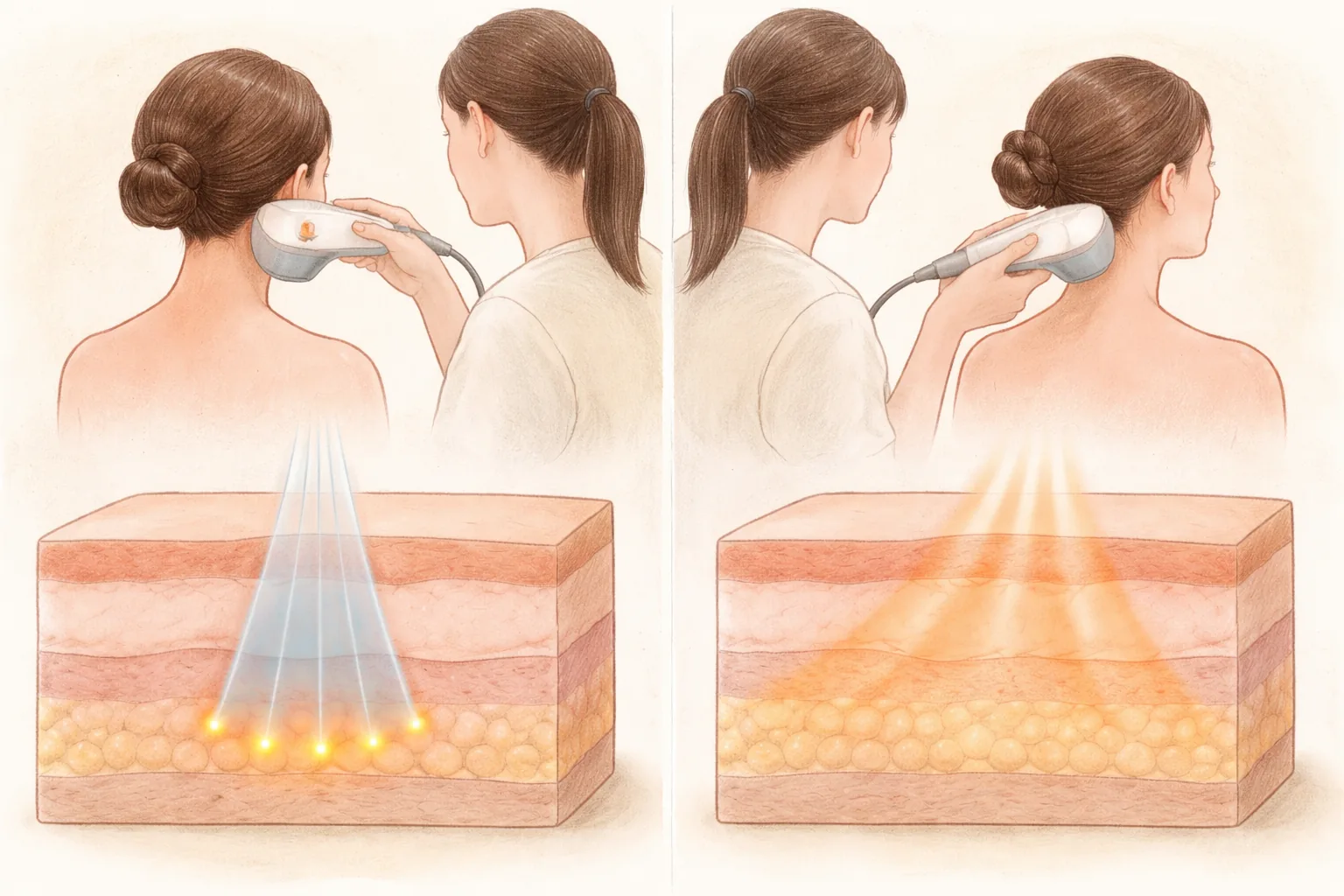
Shurink focuses ultrasound into small thermal points from the dermis down to the SMAS layer, while Thermage uses radiofrequency to heat broadly from the dermis into the subcutaneous fat. So if deep-layer sagging and jawline contour are your concern, a Shurink-type treatment is usually considered first, and if broad-area loss of elasticity and skin texture are the concern, a Thermage-type treatment comes first. The two are not so much substitutes as layers that can be combined, and whether to do them in one session or spaced apart is decided by your skin condition. Whichever you choose, the extent and timing of results vary with skin thickness and regeneration speed.
How does Shurink lift and how does Thermage heat?
First, the two procedures aim at different depths. The method Shurink uses is called focused ultrasound, or HIFU for short. It concentrates ultrasound energy at a single point, like light through a magnifying glass, leaving small thermal points at a set depth from the dermis to the SMAS layer depending on the cartridge. The SMAS layer is a thin sheet deeper than the dermis that supports the facial muscles and skin, and its loosening with age is cited as one cause of sagging. A column from ATTITUDE Clinic also describes Shurink-type treatments as concentrating heat "at a set depth, in small points."
Thermage uses electrical energy, that is, radiofrequency (RF). The current passes through skin tissue and turns into heat, and unlike Shurink, which pierces a single point, it heats a broad area at once from the dermis down to the subcutaneous fat layer. DermNet NZ's guide to radiothermoplasty explains that Thermage-type procedures deliver radiofrequency to deep skin layers to immediately contract tissue and stimulate collagen production, with new collagen growing over about 6 months. Both methods leave heat below the dermis rather than burning the epidermis, expecting collagen to tighten over time.
This difference leads to differences in which areas are chosen. Areas like the cheeks, where tissue is thick and stretches broadly, tend to suit Thermage relatively well, while areas that fold deeply, like the jawline or around the eyes, tend to suit Shurink-type treatments relatively well. Even on the same face, the device changes depending on which area you want to address first.
If the name is the same, are the results the same?
The question of why results differ even with the same named procedure is an old one. The reasons come down to three things. First, the starting skin condition differs. How thick your skin is, how much ability to produce collagen remains, and whether your skin type is dry or sensitive all change how it responds and recovers even to the same stimulation. Second, even with the same skin condition, the combination, order, and intensity differ. Third, the details of how the plan is actually carried out divide the results. This is also why a column from ATTITUDE Clinic keeps to a flow in which the doctor personally handles everything from consultation to procedure.
DermNet NZ's guide states this point more clearly. It notes that results of Thermage-type procedures are hard to predict, that they have no effect in some people, and that some see improvement immediately or within a few weeks while others see it only after 2–3 months. Since new collagen grows for up to 6 months after the procedure, that means there is room to watch for changes until then. It is better to adjust the expectation that "one session improves everyone to the same degree at the same time" here.
What determines the results?
Four main factors determine results. Which layer is targeted, how strongly the energy is delivered, how much the shots are divided, and how much interval is left until the next procedure. The higher the energy level and the more shots delivered to one area, the stronger the thermal stimulation reaching the target layer, but the burden of pain and recovery grows along with it. Cases needing strong energy because sagging is deep and cases using low energy for prevention feel very different even for the same procedure.
Intervals work the same way. A column from ATTITUDE Clinic notes that with Shurink-type treatments it is hard to feel a big change right after the procedure, and if there is change it usually appears gradually over 2–3 months, while with Thermage an initial firm feeling is followed by further change usually over 2–6 months. The repeat schedule is set by the doctor based on progress, roughly around 1 year. The reason maintenance periods vary so much between individuals is that the rate at which collagen is synthesized and broken down differs with the degree of SMAS layer loosening, age, UV exposure, and lifestyle habits.
Different layers mean different pain and recovery
Pain is governed less by the procedure name than by energy level and the nerve density of each area. Areas close to bone with dense nerves, like the jawline, cheekbones, forehead, and around the eyes, feel relatively sensitive, while thick-tissue areas like the cheeks feel less even at the same intensity. Shurink-type treatments are often described as a deep, stinging sensation as they pierce instantly to deep layers, and Thermage-type treatments as a broad, hot, lingering sensation from heating near the surface.
DermNet NZ's guide notes that Thermage-type procedures mostly do not require local anesthesia, sedation, or painkillers, and that if you mention heat or discomfort during the procedure, the intensity is adjusted up or down. Procedure time can take 1–2 hours depending on the area and the number of passes over the tip. Redness and swelling right after the procedure tend to settle within 1–2 hours, or at most a few days, and the reported side effect rate is under 1%, with swelling and redness common and burns, blisters, and scarring mentioned rarely.
For sensitive areas like around the eyes, protective equipment is especially important. The US Food and Drug Administration (FDA) medical device adverse event report includes a case of an eye burn after a Thermage procedure, with redness and swelling for two days followed by scabbing and pain. The report stresses that when treating the eyelids, metal eye shields can transmit radiofrequency heat to the eye and should not be used, and that properly sized plastic shields should be used. If the eye area is being treated as well, it is worth raising this point in consultation.
Same day or separate sessions?
If you are concerned about both deep and broad layers, there is the option of combining the two procedures. A column from ATTITUDE Clinic explains that deep layers may be handled with Shurink-type treatment and shallow layers and broad areas with Thermage. However, whether to do them in one session on the same day or to space them apart depends on your skin condition and recovery margin, so it is better to set the overall plan first. If you are a short-stay visitor, you should also weigh whether you can observe progress within your stay.
Table 1 Same day or separate sessions?
Category
Shurink (HIFU)
Thermage (RF)
Energy method
Ultrasound concentrated at a single point
Current passing through tissue to generate heat
Main layers treated
Set depth from the dermis to the SMAS layer
Broadly from the dermis to the subcutaneous fat
Best-suited concerns
Deep sagging, jawline contour
Broad-area elasticity, skin texture
How change appears
No big change right after, gradual over 2–3 months
An initial firm feeling, then gradual over 2–6 months
Swipe sideways to see the whole table.
In short Shurink places points in deep layers, and Thermage heats broad layers. Where your current concern lies across the layers comes first, and whether to treat on the same day or separately is decided by your skin condition and schedule.
If this sounds like your situation
When a ceremony or shoot is only weeks away
Because change appears gradually with these procedures, it is hard to expect a dramatic difference within days. Redness and swelling may remain, so it is better to mention the gap to important events first in consultation. If your schedule is tight, you can consider lowering the intensity and dividing the sessions.
If you are a short-stay visitor to Korea
It is safer to leave room in your schedule for your recovery state on the day of the procedure and the next day. Most people can wear makeup and return to daily life the next day, but redness may remain depending on the individual. Setting both your return flight and the point at which to check progress after the procedure makes the next plan easier to make.
If your skin is sensitive or prone to redness
Sensitivity to the same intensity differs with skin type and thickness. If redness tends to linger, lowering the energy level and dividing the areas is considered. If you have had pigmentation flare up or prolonged redness after a previous procedure, it is good to report that history as it is.
If you want consistent maintenance
Repeat timing is set based on progress, roughly around 1 year. At first, record when the effect begins to fade, and bringing that record to the next consultation helps set the interval.
Tell us before your consultation Recent UV exposure and outdoor activity, medications you are taking and ingredients you apply to your skin, reactions and procedure dates from previous treatments, your length of stay in Korea, and important events.
How ATTITUDE Clinic proceeds
AI skin analysis record — Your skin condition is recorded and organized with a device so you and the doctor look at the same information together. This record is reference material to support consultation and does not make a medical diagnosis.
Doctor consultation — The analysis record is combined with your concerns, lifestyle habits, and previous treatment experience to decide together which device to use, in what order, and at what intensity. This is where what is needed and what is not is separated.
Procedure performed by the doctor — The doctor personally performs the procedure according to the plan set in consultation, adjusting intensity while watching your skin's response during the treatment.
Recovery and aftercare — Progress after the procedure is checked and the timing of the next visit is explained.
Four steps your doctor sees to in person
From the diagnostic device to the treatment bed, the doctor you first consult takes care of everything.
01
Precision diagnosis
In a private diagnosis room the whole face is photographed, recording even skin conditions that are hard to see with the eye.
02
Skin analysis
The doctor goes through your pore, pigmentation, wrinkle and firmness results with you on screen and explains what comes first.
03
One-to-one design
With your skin, the balance of your face, the change you want and your schedule in view, you decide the treatment and its extent together.
04
Treatment by your doctor
The doctor who consulted you performs the treatment from start to finish in a private treatment room. No one takes over halfway.
“I take injection pain seriously.”
Co-Director Dr. Lee Dong Hun
Many people hesitate over injection treatments because they hurt. So we went back over everything, from the anesthetic to the products used.
Careful numbing, unhurried timingWe allow plenty of time for a special numbing cream to take full effect, and add anesthetic injections for the treatments and areas that need them.
Fine needles, finished quicklyInjection treatments use fine needles, and the doctor finishes them personally in a short time, adjusting along the way by watching how you are doing.
Even the product formulation countsThe same treatment can feel more or less demanding depending on the product, so we take that into account too.
The anesthetic method and whether it is used are decided after an examination, according to the treatment, the area and your condition. How much it hurts varies from person to person.
The devices ATTITUDE Clinic handles for this topic are Shurink (Classys, HIFU) and Thermage FLX (Solta, monopolar RF). Prices are disclosed by unit, such as shot count and kJ, and the same standard is used on pages in other languages. You can find more detailed device information in Treatments and Pricing.
Aftercare and side effects
After the procedure, manage care in this order.
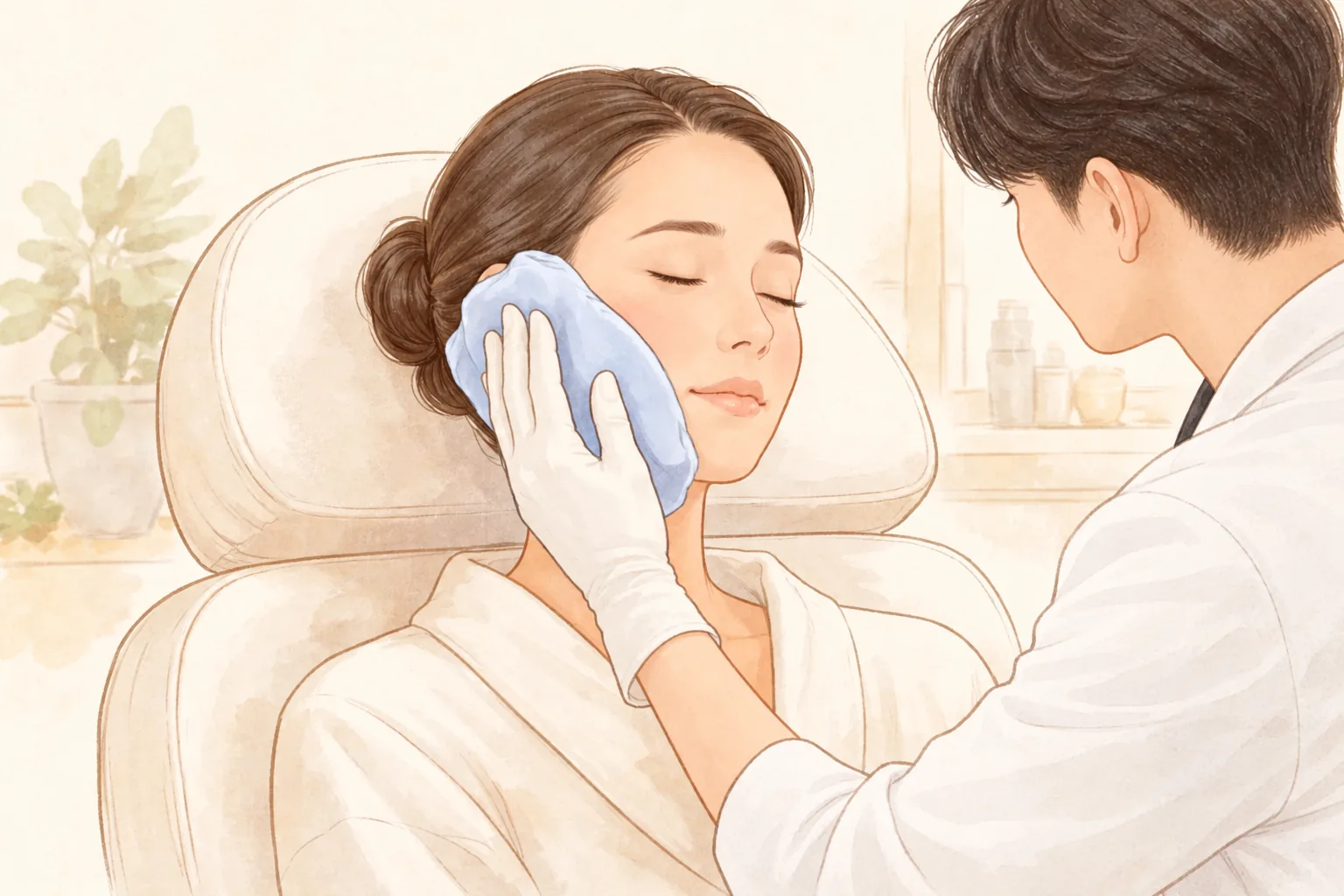
Soothing — If there is redness or heat on the day of the procedure, cool it with cold compresses. It is better to confirm the method with the medical staff.
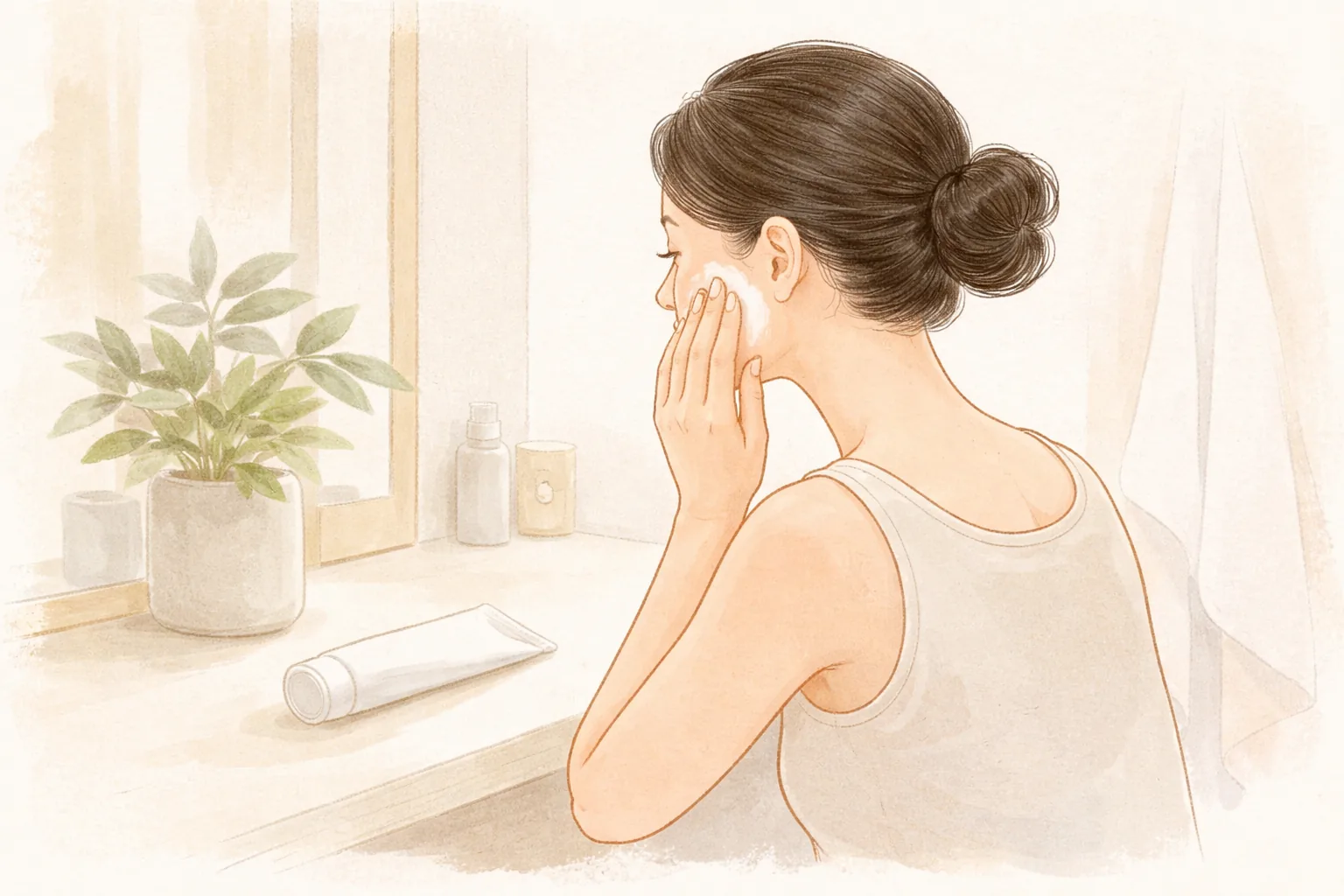
Moisturizing — Dryness slows recovery, so apply enough of the mild moisturizer you normally use.
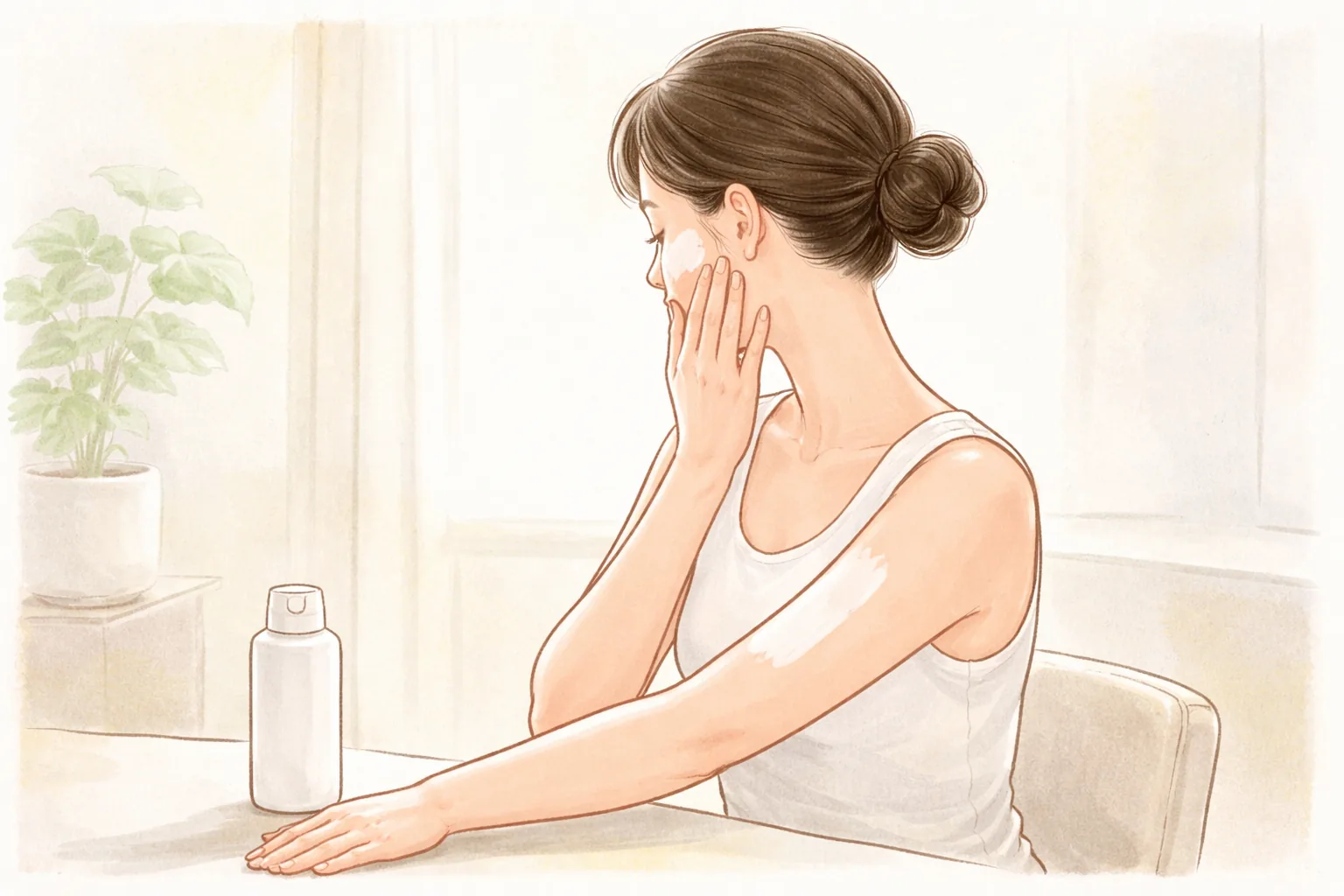
Sun protection — During this period the skin's barrier is temporarily weakened, so apply sunscreen more carefully than usual.
Checking progress — Record when redness and swelling settle and when you begin to feel change, and bring it to your next consultation.
Common reactions are swelling, redness, mild heat, small bruises, and temporary numbness or reduced sensation, and they usually settle within a few days. Rarely, burns, blisters, small scars, temporary facial muscle weakness, and unwanted fat-layer volume loss can occur. It is better to avoid saunas, intense exercise, and alcohol on the day of the procedure.
There are also signals to contact us about rather than wait. These are if blisters form or pain gradually worsens, if you feel something wrong with your eyes such as blurred vision, or if redness does not improve after several days and spreads. These changes may be signals outside the expected range, so it is safer to receive care right away.
Frequently asked questions
Which is better, Shurink or Thermage?
The criterion for deciding which is better is which layer your current concern lies in. If deep sagging and jawline contour are the main concerns, Shurink-type treatment suits you relatively well, and if broad-area elasticity and skin texture are the concern, Thermage-type treatment suits you relatively well. If both concerns are present, combining treatments by layer is also considered. Either way, responses differ with skin thickness and regeneration speed, so the starting point is to describe the degree of sagging and the areas you want addressed in detail during consultation.
Can I have both on the same day?
There are cases where it is possible, but it depends on your skin condition. A combination using Shurink for deep layers and Thermage for shallow layers and broad areas is sometimes recommended. However, doing them at once can increase the burden on your skin, so the decision is made by looking at your recovery margin and schedule together. If your stay is short, it is better to set aside a few days for recovery after the procedure when planning your flight.
Which is more painful?
Energy level and area govern the felt sensation more than the procedure name. Shurink-type treatments are often described as a deep, stinging sensation as they pierce instantly to deep layers, and Thermage-type treatments as a broad, hot, lingering sensation. Areas with dense nerves, such as the jawline, cheekbones, forehead, and around the eyes, feel more sensitive. If you are sensitive to pain, you can discuss anesthesia options and energy level adjustment in consultation.
When do results appear, and how often do I get it done?
With Shurink-type treatments it is hard to feel a big change right after the procedure, and if there is change it usually appears gradually over 2–3 months. With Thermage-type treatments, an initial firm feeling is followed by further change usually over 2–6 months, and part of that initial feeling may be due to swelling. Repeat timing is set based on progress, roughly around 1 year. Even for the same procedure, the speed at which new collagen grows differs between people, so the timing you feel results differs; it is better not to judge by a single session.
What should I look at first in consultation when choosing a clinic?
It is better to look at who designs the plan and by what standards rather than the device names. Ask which layer the sagging comes from, which device will be used in what order and at what intensity, and how adjustments will be made based on your response during the procedure. Bringing previous treatment records helps review whether the device, dose, and interval at the time suited your skin. Whether prices are disclosed by unit, and whether the same standard applies to pages in other languages, is also a starting point for comparison.
At a glance
Table 2 At a glance
Item
Key point
Energy method
Shurink concentrates ultrasound at a point, Thermage heats broadly with RF
Layers targeted
Shurink from the dermis to the SMAS layer, Thermage from the dermis to subcutaneous fat
Best-suited concerns
Deep sagging and contour for Shurink, broad elasticity and texture for Thermage
When change appears
Shurink gradually over 2–3 months, Thermage over 2–6 months, with individual variation
Repeat interval
Around 1 year on average, decided by the doctor based on progress
Common reactions
Swelling, redness, mild heat, small bruises, temporary reduced sensation
This article offers general health information. It is not a substitute for diagnosis or treatment based on your own condition, so please talk through your situation with a doctor.