How Long Do Skin Boosters Last? When Skin Booster Results Begin to Show
When skin booster results start to show, how long they last, what factors shape the timeline, and the principles behind collagen-stimulating injections and aftercare.
Written by ATTITUDE Clinic Editorial Team
Search for skin boosters and you will find conflicting answers to "when does it start working" and "how long does it last." One article says you feel it within days; another says it takes months. This article explains where that gap comes from and which factors actually move the start date and the duration.
The short answer first
A skin booster is not a filler that plumps up a space — it is closer to an injection that waits for your skin to build its own change. Many people notice it over weeks rather than on the day of treatment, and general guidance on collagen-stimulating injections places the point of checking results at 2–3 weeks or later (American Academy of Dermatology). Exactly when that is, and how long the change stays, varies with skin thickness and regeneration rate, your starting condition, and the number and spacing of sessions. Rather than pinning it to one number like "a few weeks, a few months," the more realistic approach is to understand what sets that speed in your own skin.
Why don't skin boosters show on the day of treatment?
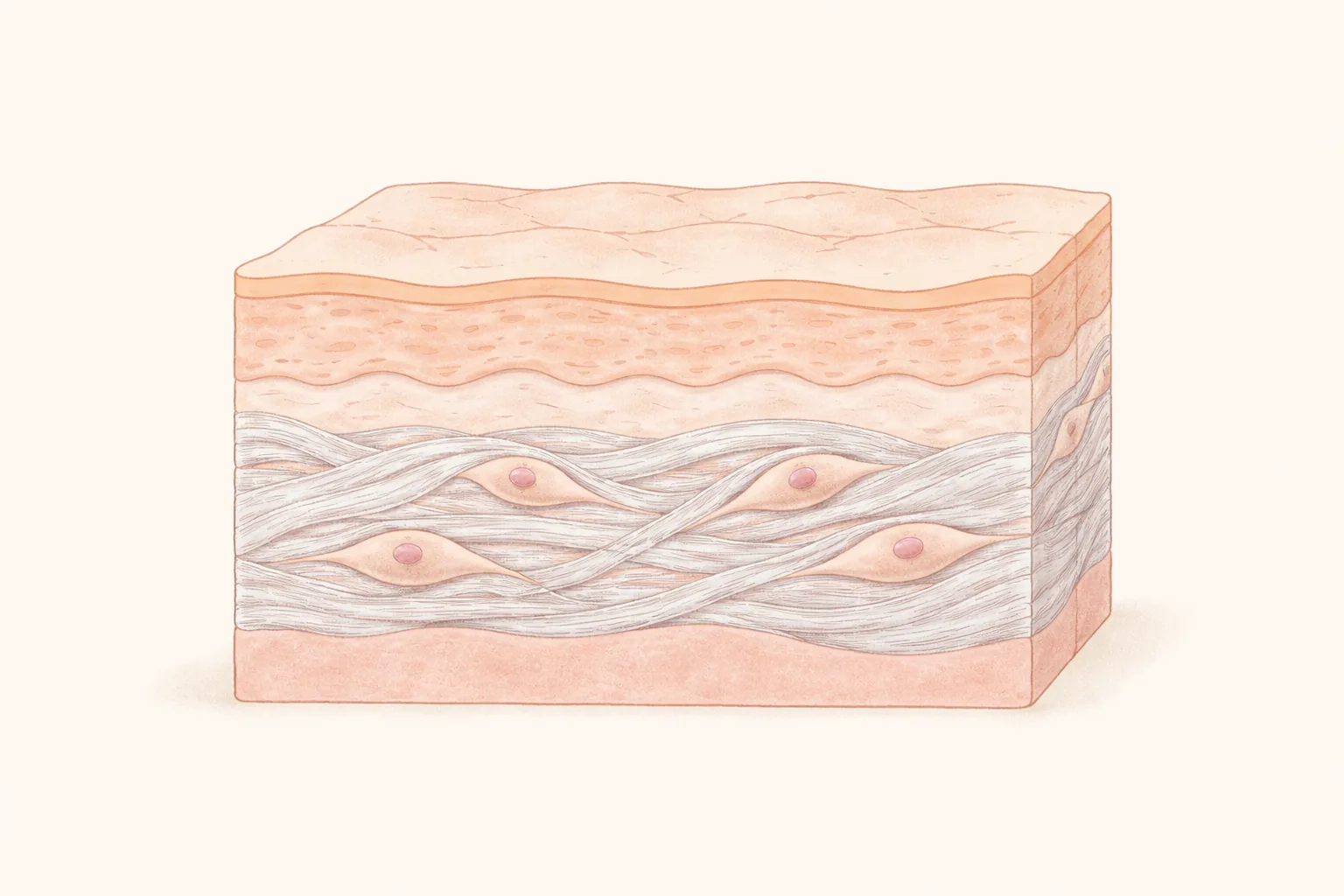
In ATTITUDE Clinic's treatment guide, skin boosters sit under the category of treatments delivered directly into the skin's foundation (treatment guide). Skin boosters are described as delivering moisture or regenerative ingredients directly into the skin, or stimulating fibroblasts — the cells in the skin that produce support structures like collagen (Exosomes: does spraying them on after treatment actually work?). With the fibroblast-stimulating route, the result comes not from the stimulation itself but from the collagen built afterward. Collagen is not something the practitioner puts in — your body makes it, so even a well-designed plan needs time to produce it.
One common misunderstanding here is the idea that "an injection should change things right away." Fillers such as hyaluronic acid gel, collagen, and calcium hydroxylapatite, which fill a space with the injected material itself, are described as showing results immediately, while injections in the poly-lactic acid family that prompt your body to make collagen are distinguished as showing results after 2–3 weeks (American Academy of Dermatology). It is a bit like pasting new paper on a wall versus rebuilding the pillars behind the wall. The first shows today; the second takes time.
Of course, this is general guidance describing the collagen-stimulating injection family. Even within the same family, formulations and mechanisms differ from product to product, so you cannot apply one product's timeline directly to another. Which route suits your skin — which product, at which layer, at what spacing — is decided in consultation.
What factors move the start date?
The biggest variable is your starting line. How thick your skin is, how much capacity it still has to make collagen on its own, and what your skin's circulation and regeneration rate look like differ from person to person. ATTITUDE Clinic's column explains that skin type, skin thickness and structure, and regeneration rate (age, lifestyle habits, hormonal status) make the stimulation felt and the results differ even from the same treatment (Why do results differ even from the same treatment?). That is why, after the same treatment on the same day, one person says their texture changed at 2 weeks while another only feels it after 2 months.
Second is the number of sessions and their spacing. Because collagen takes time to be built and settle into place, plans tend to use repeated sessions with intervals rather than bunching everything into one visit. How many sessions at what spacing depends on your skin condition and goals, and rather than fixing the sessions on a calendar in advance, judging progress first and planning the next step is more helpful for reading results. The same column notes that they also review whether the previous treatment's device and dosage or spacing did not suit the skin, or whether results were judged too early.
Third is the detail of execution. Even with the same plan, results diverge depending on which layer is targeted, how many points the dose is divided across, and at what intensity it is delivered. This is also why the same practitioner handles both the consultation and the treatment.
What determines how long results last?
How long results last is not decided by product lifespan alone. How much collagen your body built and how much remains, plus how quickly your skin ages again afterward, work together. ATTITUDE Clinic's column also notes that with treatments that send regenerative signals, the onset of effects and the duration can vary with your individual skin condition, lifestyle habits, and the product used (Exosomes: does spraying them on after treatment actually work?). UV exposure, sleep, smoking, and skincare habits add to this.
So a sentence like "one shot lasts a few months" is better read with conditions attached. What moves the duration in your favor is completing the planned number of sessions and reducing irritation while your skin settles after treatment. Among collagen-stimulating injections, some products are guided for gentle massage of the treated area several times a day for about 5 minutes over 1–2 weeks (American Academy of Dermatology). Which products need massage and for how many days differs by product, so it is worth confirming before treatment starts.
Table 1 What determines how long results last?
Type
How it works
General guidance on when results are checked
Concerns it suits
Space-filling fillers (hyaluronic acid gel, etc.)
The injected material fills the space
Immediately after treatment
Lost volume, wrinkles
Collagen-stimulating injections
Stimulate your body to make collagen
Distinguished as 2–3 weeks or later
Firmness and texture you want to improve over time
Skin boosters (PN, HA, etc.)
Deliver moisture and regenerative ingredients, or stimulate fibroblasts
Planned in consultation based on skin condition
Skin texture, dryness, fine lines
Treatments that send regenerative signals
Deliver regenerative signals to cells
Varies with skin condition and lifestyle habits
As support to aid recovery
Swipe sideways to see the whole table.
In short skin booster changes come not from the injected material but from the collagen your body builds, so they tend to be felt over weeks rather than right after treatment. What sets the start date and the duration is not the product name alone but your skin's regeneration rate, the number and spacing of sessions, and your aftercare.
If this sounds like you
A wedding or a shoot is only weeks away
Because collagen needs time to settle, plan with some buffer rather than right before the event. If you have a fixed date, tell the clinic at your first consultation. It becomes the basis for adjusting the treatment timing and session spacing to that day.
You want ongoing maintenance
Rather than finishing in one go, plans tend to use repeated sessions with intervals. Recording how your skin changes between sessions helps when planning the next step. Knowing the product, dosage, and dates of any previous treatments makes adjustment easier.
Your skin is sensitive or flushes easily
How quickly redness and swelling subside differs from person to person. If recovery after a previous treatment was slow, tell the clinic in advance. It becomes the basis for adjusting intensity and spacing.
You are a short-stay visitor
Plans are made within the range where progress can be checked during your stay. Telling the clinic your departure date and when you could next visit makes it easier to match session spacing.
Tell us before your consultation your recent UV exposure and travel schedule, medications you take and topical ingredients you use (retinol, acids, and so on), the product, dosage, and dates of previous injections or laser treatments and how you reacted then, and any fixed dates such as a wedding or a shoot.
How ATTITUDE Clinic handles this
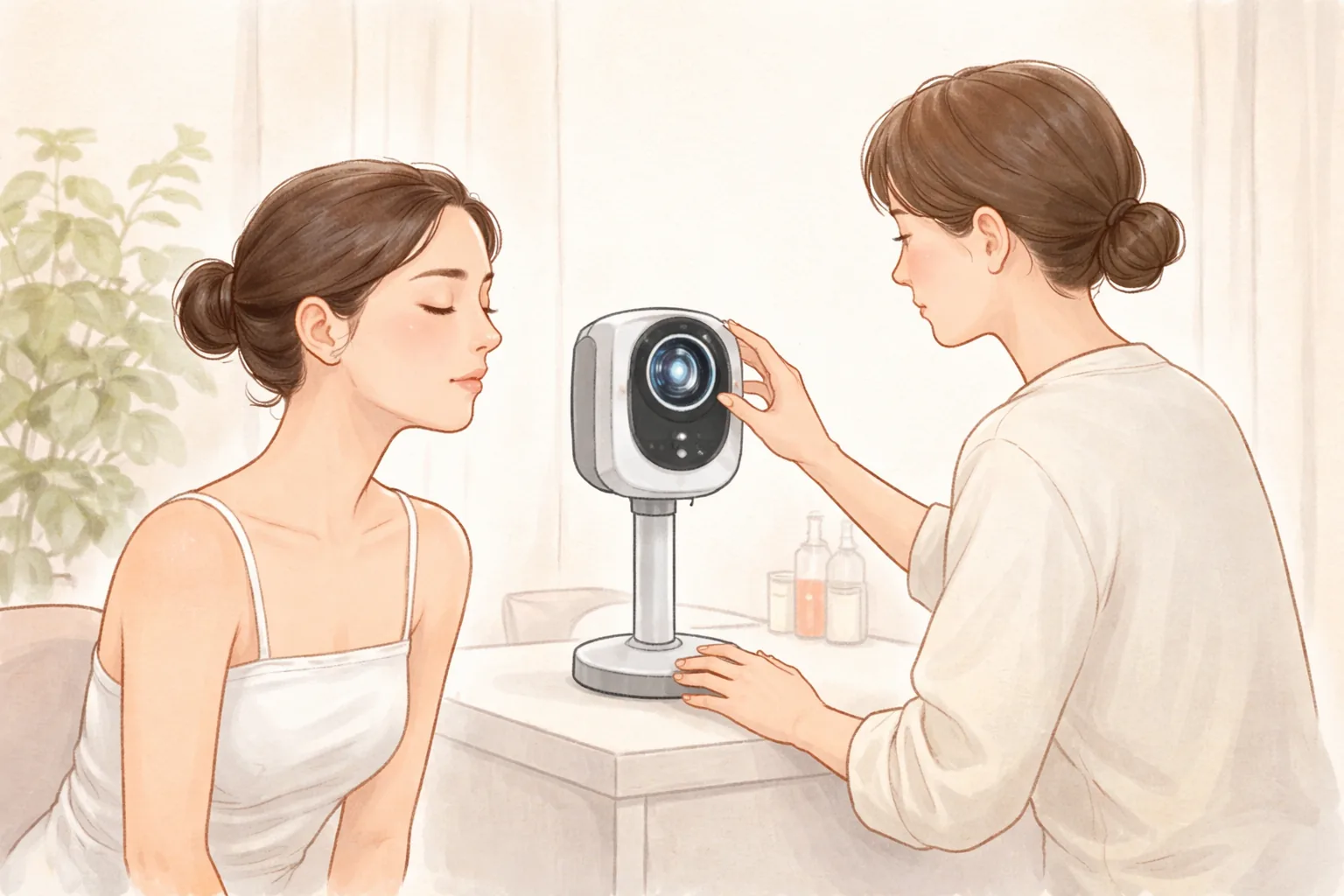
AI skin analysis record — Your skin condition is recorded and organized so you and the practitioner look at the same information. The analysis tool only records and organizes information and does not make a medical diagnosis; judgment rests with the doctor.
Doctor consultation — The analysis record is combined with your concerns, lifestyle habits, and previous treatment history to decide together what is needed and what is not, and in what combination, order, and intensity. Expectations about the start date and duration are also aligned here.
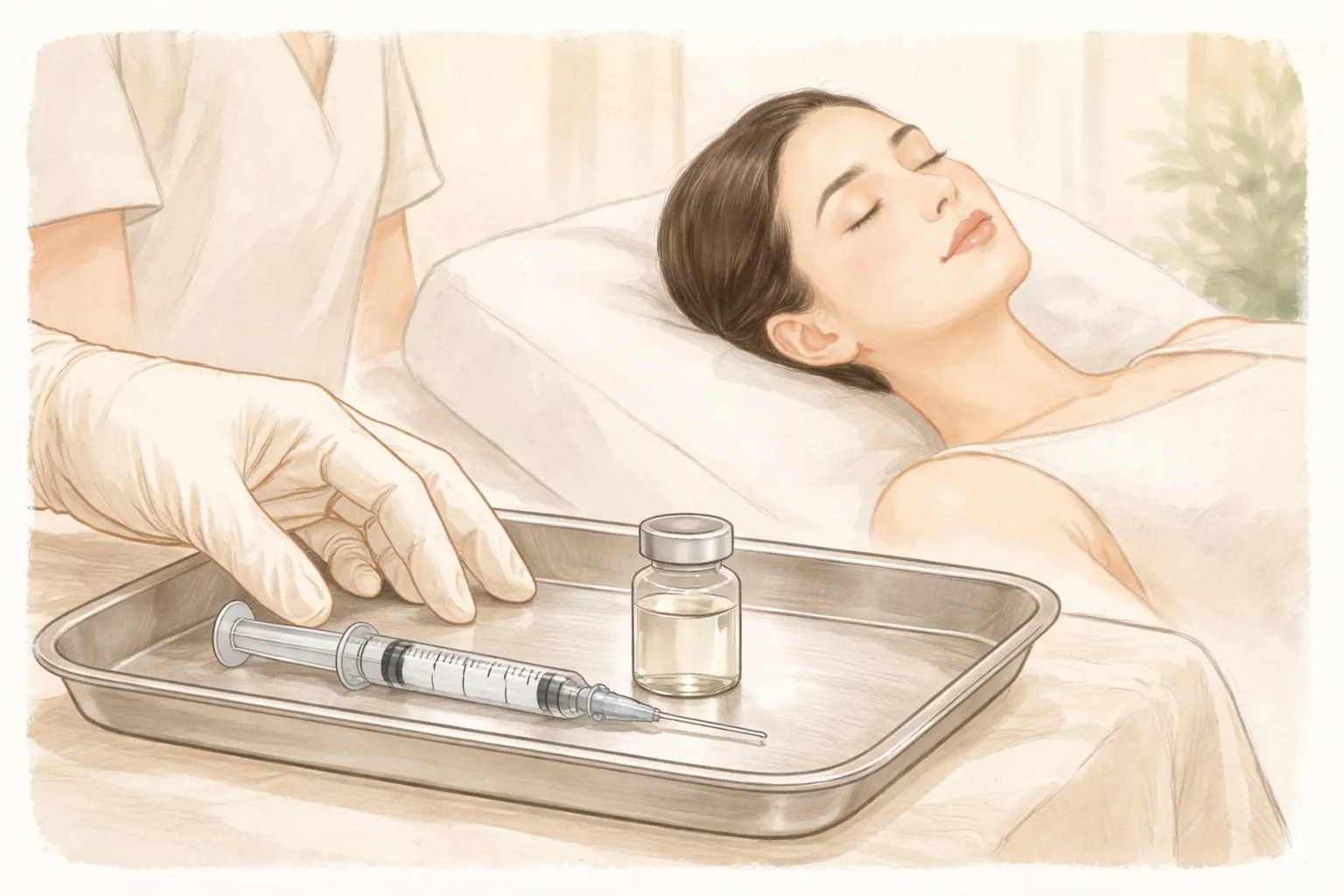
Treatment performed by the doctor — The doctor personally carries out the plan set in consultation and adjusts while watching your skin's response during treatment. This flow exists so the plan and the execution do not drift apart.
Progress check and planning — After treatment, progress is reviewed and the next session and its spacing are decided. ATTITUDE Clinic's treatment guide lists injectable skin boosters alongside device treatments such as Potenza, Pico toning, and Thermage·Ultherapy (treatment guide).
Aftercare and side effects
Recovery guidance differs by product and treatment method, so you receive guidance matched to that product on site. In general, you cover the following.
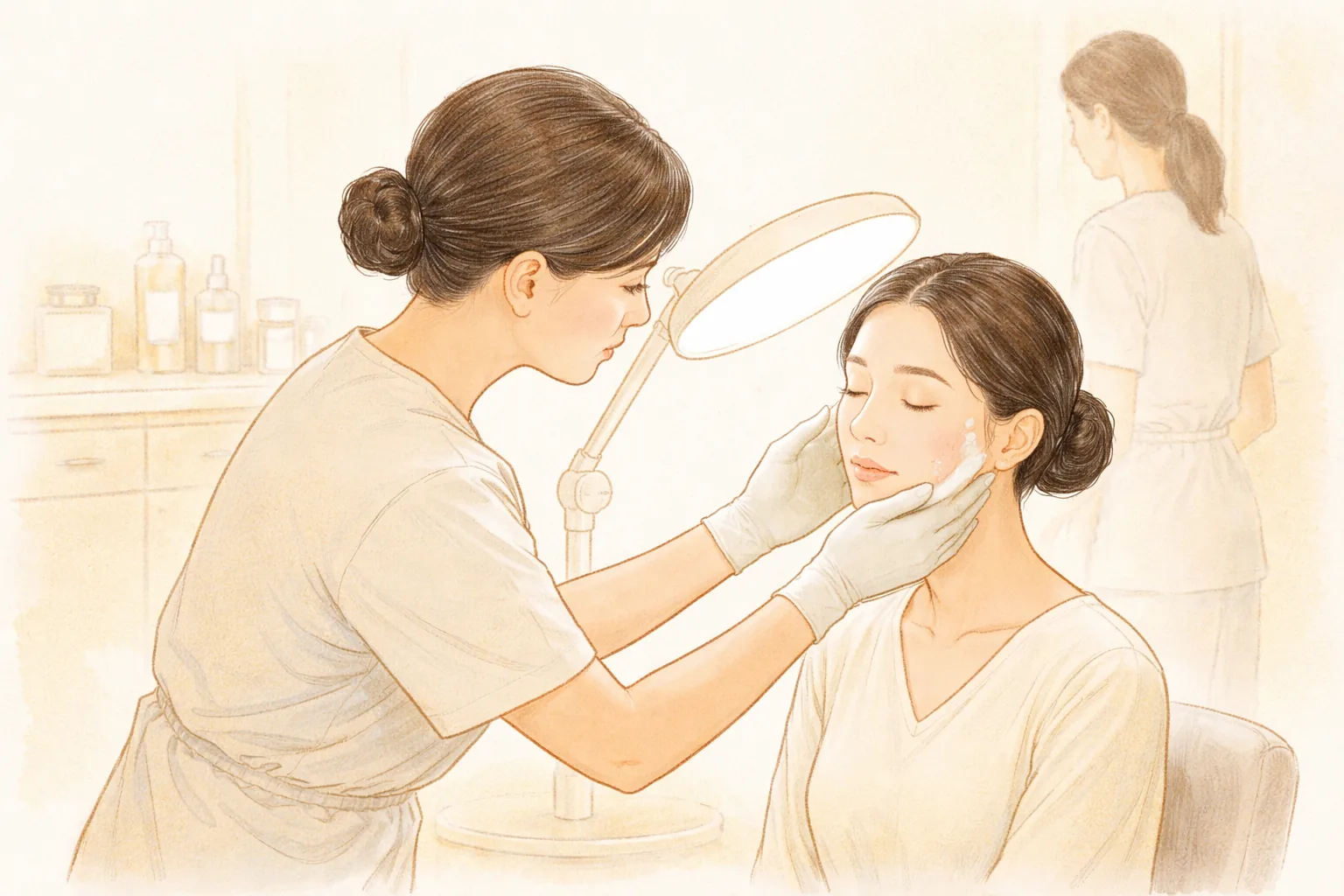
Calming — Redness and swelling are common right after treatment and usually subside within a few days.
Check whether massage is needed — Among collagen-stimulating injections, some products are guided for gentle massage of the area several times a day for about 5 minutes over 1–2 weeks (American Academy of Dermatology). Whether this applies to you and for how long is confirmed before treatment.
Reduce irritation — Avoid rubbing or strongly irritating the treated area until recovery is complete.
Check progress — Watch whether redness and swelling are heading in the right direction, and do not leave any unexpected change unattended.
After injectable treatments, redness, swelling, tenderness when pressed, and bruising are common and usually subside within a few days. Less commonly, temporary pigment changes (skin becoming darker or lighter), blisters, lumps after injection, burns, or scars can occur (Why do results differ even from the same treatment?). If you notice an unexpected change such as pain that does not improve and keeps worsening, it is better to check right away rather than waiting for the next session.
Frequently asked questions
When do skin boosters start working?
It tends to be felt over weeks rather than on the day of treatment. Collagen-stimulating injections are generally distinguished as having results checked at 2–3 weeks or later (American Academy of Dermatology), but when you actually feel it depends on your skin thickness and regeneration rate. Those starting from a good baseline with fast regeneration may feel it earlier, while those with less capacity to build collagen may feel it more slowly. Change also tends to stabilize as sessions accumulate, so it is better not to judge from a single result. Your exact expected timeline is set in consultation based on your skin.
How long do skin boosters last?
How long results last is a combination of product lifespan and how quickly your skin ages again. ATTITUDE Clinic's column notes that with treatments that send regenerative signals, the onset of effects and the duration can vary with skin condition and lifestyle habits (Exosomes: does spraying them on after treatment actually work?). UV exposure, sleep, and smoking add to this. So a number like "a few months" should be read with its conditions attached, and a maintenance plan is more realistically set after reviewing progress.
How many sessions, and at what spacing?
Because collagen needs time to be built and settle, plans tend to use repeated sessions with intervals. The exact number and spacing depend on your skin condition and goals, and rather than locking sessions to a calendar in advance, the next step is decided after reviewing progress. ATTITUDE Clinic's column explains that they also review whether results were judged too early (Why do results differ even from the same treatment?). Knowing the product, dosage, and dates of previous treatments helps when planning.
How is this different from filler?
Space-filling fillers work by having the injected material create volume immediately, while collagen-stimulating injections work by prompting your body to make collagen. The American Academy of Dermatology also distinguishes hyaluronic acid gel, collagen, and calcium hydroxylapatite as immediate, and the poly-lactic acid family as showing results at 2–3 weeks or later (American Academy of Dermatology). If your goal is to refill lost volume right away, filler fits; if it is to lift skin texture and firmness over time, a collagen booster fits. When both goals are present, the plan is sometimes split into stages.
What should I check when choosing a clinic?
First is whether they review your previous treatment records and build the session plan with you. What product is used and who handles the consultation and the treatment are also worth checking. ATTITUDE Clinic describes a flow of recording your condition with AI skin analysis, consulting with the doctor, and having the doctor perform the treatment (Why do results differ even from the same treatment?). Rather than phrases that guarantee results, how they explain the start date and duration — and under what conditions — is more useful for your judgment.
At a glance
Table 2 At a glance
Item
Key point
Start date
Felt over weeks rather than right after treatment; collagen-stimulating injections are generally distinguished as 2–3 weeks or later
Duration
Decided by product lifespan together with how quickly your skin ages again
Factors that shape results
Skin thickness and regeneration rate, starting condition, session count and spacing, detail of execution
Session planning
Repeat with intervals, and set the next plan after reviewing progress
This article offers general health information. It is not a substitute for diagnosis or treatment based on your own condition, so please talk through your situation with a doctor.