Skin Treatment Quotes in Korea: How Packages and Aftercare Are Priced
How to read skin treatment quotes on the same baseline: the units prices are built on (shots, kJ, cc, sessions), VAT notation, added areas, what consultation, anesthesia and recovery care include, and what to line up when comparing packages.
Written by ATTITUDE Clinic Editorial Team
The first time you get a dermatology quote, the numbers look different across clinics and line items even for treatments with the same name, and it's hard to know where to start comparing. A single line reading "1 session" doesn't tell you which dosage that session means, or whether the amount includes VAT. This article walks through how to put quotes on the same baseline, and what to ask at consultation so the amount you'll actually pay becomes clear.
The short answer first
To compare quotes, you have to line up the units the prices are built on before anything else. Even for the same lifting treatment, the price is set by the number of shots delivered; for the same injectable, by cc or vial; and what you actually pay depends on whether VAT is inside the listed amount and whether consultation, anesthesia and post-treatment recovery care are included in that figure. Some clinics, like ATTITUDE Clinic, publish a per-item unit price list and show VAT separately, so it's more accurate to treat the listed price as a starting point and settle the final amount at consultation and on the written quote. That said, how your skin responds and how fast it recovers differ from person to person, so even quotes matched to identical conditions can lead to different perceived results and different next appointments.
Why do quotes for the same treatment come out different?
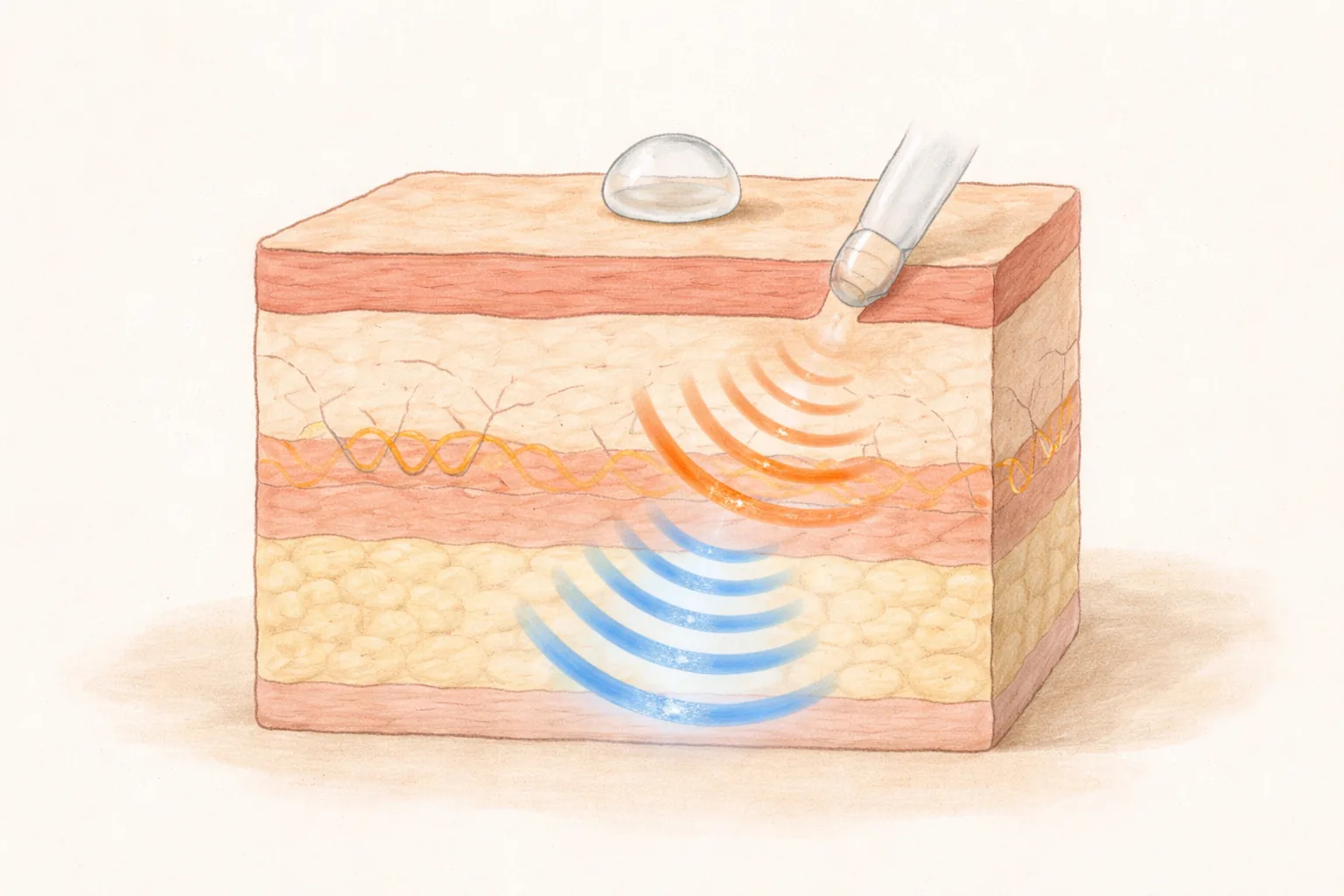
Even for a single concern like loss of elasticity, the devices branch in several directions. Ultherapy and Shurink Universe use HIFU (focusing ultrasound into heat at a single point), Thermage FLX heats below the skin with radiofrequency current, Onda uses microwaves, and Titanium lifting uses a three-wavelength laser, each working on a different principle (treatment guide). When the principle differs, the depth and area the energy reaches differ, and so does the unit the quote is counted in. HIFU and radiofrequency are priced by shots, Onda and Titanium by kJ (a unit of energy), and injectables by cc or vial (one bottle of product).
So why do two people get different shot counts listed for the same device? Because skin differs in thickness, in how much collagen-building capacity remains, and in which treatments came before (column). Even for the same concern, if the layer and area needed differ, the amount of energy to deliver differs, and that number shows up directly in the quote. That's why the gap between two quotes is often less about which one is more expensive and more about what was agreed to be done and how much of it.
Table 1 Why do quotes for the same treatment come out different?
With the same device, a different shot count means a different amount delivered
Radiofrequency lifting (Thermage FLX, XERF)
Shots
Whether the price is a flat full-face rate or per shot changes the comparison
Microwave and three-wavelength laser (Onda, Titanium lifting)
kJ
The price is set by total energy, which differs from a per-hour rate
Filler and skin booster (Rejuran Healer, Juvelook, Sculptra)
cc / vial
There may be an added-area charge on top of the 1cc price
Pigment toning (Pico toning, laser toning)
1 session / 5 sessions / 10 sessions
Bundling sessions changes the per-session price
Swipe sideways to see the whole table.
In short the first thing to look at in a quote is the unit. Once you know whether it's counted in shots, kJ, cc or sessions, you can place two amounts on the same conditions, and once you then match VAT and what's included, the real payment amount appears.
Where do the listed price and the amount you pay diverge?
ATTITUDE Clinic's price list separates a regular price and a discounted price for each item, and shows every amount excluding VAT (price guide). The number you see is not the amount you'll pay but one written with tax left out. If the price list says VAT is excluded, the payment can be larger than the listed figure, so pinning down in words at consultation whether it's included or added separately means no surprises at the payment step.
Some items add to the price depending on the area. On the price list, the same filler carries a separate charge when an area such as the lips or neck lines is added, and other areas like under-eyes, temples and forehead are broken out the same way. Calculating from the base 1cc price alone leaves you short of the actual payment amount.
For items with a discounted price, check the conditions that apply too. The amount you pay changes depending on the period, who is eligible, and whether it stacks with other items, so it's more accurate to confirm the conditions at consultation than to copy the discounted figure across. The size of the discount itself doesn't change what the treatment involves.
Packages versus single sessions: what belongs on the same baseline?
When comparing a package with single sessions, match three things: the total number of sessions, the volume per session, and how it's settled if you change or stop partway. If the volume per session differs and you only put the totals side by side, the amount of treatment you actually receive differs. On the price list, pigment toning items are split into 1 session, 5 sessions and 10 sessions, which shows there's a structure for paying by bundled sessions (price guide).
Whether a package works in your favor, and whether diagnosis comes before or after the package, depends on the conditions. A fixed package isn't wrong in itself, but comparison starts with asking why each item is needed and what could be left out (column). ATTITUDE Clinic's principle is to decide together what's needed and what isn't, based on the analysis record and examination.
Conditions for stopping or changing are run differently from clinic to clinic, so asking for the total number of sessions, volume per session, validity period and settlement terms on change or cancellation to be written on the quote makes later comparison easier. Decide from a verbal explanation alone and the baseline can blur a few months down the line.
Are consultation, anesthesia and recovery care in the quote?
From a price list that only lists treatment items, it's hard to tell whether consultation, anesthesia or post-treatment recovery care is included. On ATTITUDE Clinic's price list, care items such as LDM, Omega Light, Aqua Peel and Cryo are listed with their own prices (price guide). If you plan to have recovery care, whether it's part of the treatment fee or calculated separately changes the total.
Whether anesthesia is used during the treatment is another thing to ask. The American Academy of Dermatology's consultation guidance advises confirming expected results, risks, alternatives, the number of sessions needed and treatment time, whether anesthesia is used, recovery time and when you can return to daily life, preparation and aftercare, and cost (AAD guide). That guidance is general material for US patients and doesn't apply as-is to Korean practitioner qualifications or insurance and tax standards, but it works unchanged as a checklist of what's inside a quote.
Knowing the recovery period in advance lets you plan schedule and cost together. If you have a fixed date such as a wedding or a shoot, when to time the treatment and how many recovery-care visits to book get decided alongside the amount.
How do you fill in what the price list can't tell you?
The conditions behind the numbers have to be confirmed in words at consultation. Asking about the number of sessions needed and treatment time, whether anesthesia is used, recovery time, and preparation and aftercare together naturally brings out what a quote covers (AAD guide). At a clinic that keeps the flow of the director personally handling the treatment so the plan made at consultation and the actual treatment don't drift apart, there's also less room for the conditions written on the quote to change in the treatment room.
Booking is one of those conditions too. ATTITUDE Clinic separates requesting a booking from confirming it, and it's confirmed after the clinic contacts you to verify. Same-day requests are accepted for time slots 1 hour or more from the current time, and there's a last acceptance time (booking guide). If you're on a short overseas stay, lining up session intervals and the booking confirmation process first keeps the plan from wobbling.
If this sounds like you
When a wedding or shoot is a few weeks away
The time recovery takes colliding with your schedule makes the date the problem before the money. How long redness or swelling takes to settle differs by treatment type and intensity, so it's better to set the treatment date and recovery-care schedule together at consultation.
When you want ongoing maintenance
With repeat treatments, the interval between sessions drives the result. If you're considering a 5-session or 10-session bundle, you'll be looking not just at the total number of sessions but at volume per session and the terms if the interval stretches out midway.
When your skin is sensitive or flushes easily
If your skin is thin or sensitive, the same device is started with energy kept conservative and adjusted while watching the response during treatment. Telling the clinic your treatment history and how you reacted then helps set the intensity.
When you're an overseas visitor on a short stay
What matters is whether session intervals can be compressed into a few days and which treatments can be bundled into one visit. Confirming the booking confirmation process and the recovery schedule first makes it easier to fit the plan inside your stay.
Tell us before your consultation your recent sun exposure and time outdoors, medications you're taking and skincare ingredients you're using, your prior treatment history and how you reacted then, any fixed dates such as a wedding or shoot, and how much time you can give to recovery. These five things are used together to shape the quote and set treatment intensity.
How ATTITUDE Clinic handles this
AI skin analysis record — Your skin condition is recorded and organized so you and the doctor look at the same information. The analysis tool is a reference for recording and organizing information and does not make a medical diagnosis.
Director consultation — Your concerns, lifestyle habits and past treatment experience are added to the analysis record to decide together what's needed and what isn't, and in what order and intensity.
Treatment performed by the director — The director personally carries out the plan set at consultation, adjusting while watching your skin's response during treatment.
Recovery and next appointment check — After treatment, your recovery is reviewed and the interval and volume of the next session are set again. Prices are published per item unit, with VAT shown separately.
For lifting we have Ultherapy, Thermage FLX, XERF, Onda, Titanium lifting and Shurink Universe; for pores and scars, Potenza and fractional laser (erbium); and for pigment and redness, Pico toning, laser toning and Vbeam. Injectable items cover Botox (botulinum toxin) and dermal filler, along with skin boosters such as Rejuran Healer, Juvelook and Sculptra (treatment guide).
Aftercare and side effects
Calming — Right after treatment the skin is warmer and redness remains. Cool it down, and hold off for a while on saunas or hot baths that add heat.
Moisturizing — The skin barrier is temporarily weaker and can become dry. Apply a low-irritation moisturizer often.
Sun protection — This is a period when pigment changes are more likely. Carry sunscreen and apply it when you go out.
Checking progress — Watch whether redness and swelling settle within a few days. If changes continue that differ from what you expected, check in rather than waiting for the next appointment.
After laser, energy devices or injectable treatments, redness, swelling, tenderness when pressed and bruising are common and usually settle within a few days. Rarely, temporary pigment changes (skin becoming darker or lighter), blisters, lumps after injection, burns or scars can occur (column). If there are changes that differ from what you expected, such as pain that doesn't improve and keeps getting worse, it's safer to contact the clinic rather than wait.
Frequently asked questions
Is VAT included in the listed prices?
ATTITUDE Clinic's price list shows every amount excluding VAT. The number on the price list can be smaller than what you'll pay, and pinning down in words at consultation whether it's included or added separately means you'll know the difference at the payment step. Clinics label things differently, so when comparing with another clinic, this condition has to be matched first before the amounts sit on the same baseline.
Are consultation and treatment fees billed separately?
The price list shows treatment items and care items separately, which tells you that recovery care is calculated as its own line item. Whether consultation itself carries a fee and whether anesthesia is included in the amount differ by item, so the practical approach is to ask for consultation fees, anesthesia fees and recovery care to be written as separate lines on the quote.
Is paying for a package always the better deal?
It depends on whether the total number of sessions and the volume per session are on the same terms. Items split into 1 session, 5 sessions and 10 sessions, like pigment toning, are structured so the per-session price drops as you bundle, but you can only judge whether it actually works in your favor after checking the terms if the interval stretches or you stop midway. Why each item is needed, and what could be left out, are questions worth asking alongside.
Do more shots or a higher volume mean a better result?
Shot count and volume are values that follow from setting the layer and area needed, based on skin thickness, the cause of sagging and your capacity to recover. Scaling up the number alone doesn't scale up the result, and the volume for the next session is set again based on how things have progressed and how your skin responded. When the response shows and how fast recovery goes differ by skin condition, so the same number of sessions can feel different from one person to the next.
What should I look at to choose a clinic with clear pricing and consultation?
Rather than comparing numbers alone, look at what the consultation explains. A clinic that covers expected results and risks, alternatives, the number of sessions needed and whether anesthesia is used, recovery time, preparation and aftercare, and cost together is easier to judge (AAD guide). Whether prices are published per item unit, and whether the flow is to decide together what's needed and what isn't, are benchmarks too.
At a glance
Table 2 At a glance
Item
Key point
Starting point for comparing quotes
Match the unit the price is built on first (shots, kJ, cc, sessions)
Listed price
ATTITUDE Clinic's price list shows every amount excluding VAT
Added areas
Filler and similar items may carry an added-area charge
Judging a package
Look at total sessions, volume per session, and settlement on change or cancellation
What to ask at consultation
Expected results, risks, alternatives, anesthesia, recovery time, aftercare, cost
The flow
AI skin analysis record → director consultation → treatment performed by the director → progress check
This article offers general health information. It is not a substitute for diagnosis or treatment based on your own condition, so please talk through your situation with a doctor.