Smile Lines and Crow's Feet: Why They Form and What Makes Them Deeper
How wrinkles form inside the skin, how UV, smoking, repeated expressions and volume loss deepen them, and where injectables and energy devices act on expression lines versus static lines.
Written by ATTITUDE Clinic Editorial Team
You stand in front of the mirror, and your eyes go to the corners first. After you smile, you press a fingertip into the line that stays by your mouth. In the clinic we often hear questions like "Why did this line show up on me earlier than on other people?" and "Is there something in my habits that is making my wrinkles deeper?" This article walks through the order in which wrinkles form inside the skin, what speeds that up, and where treatments act on expression lines versus static lines.
The short answer
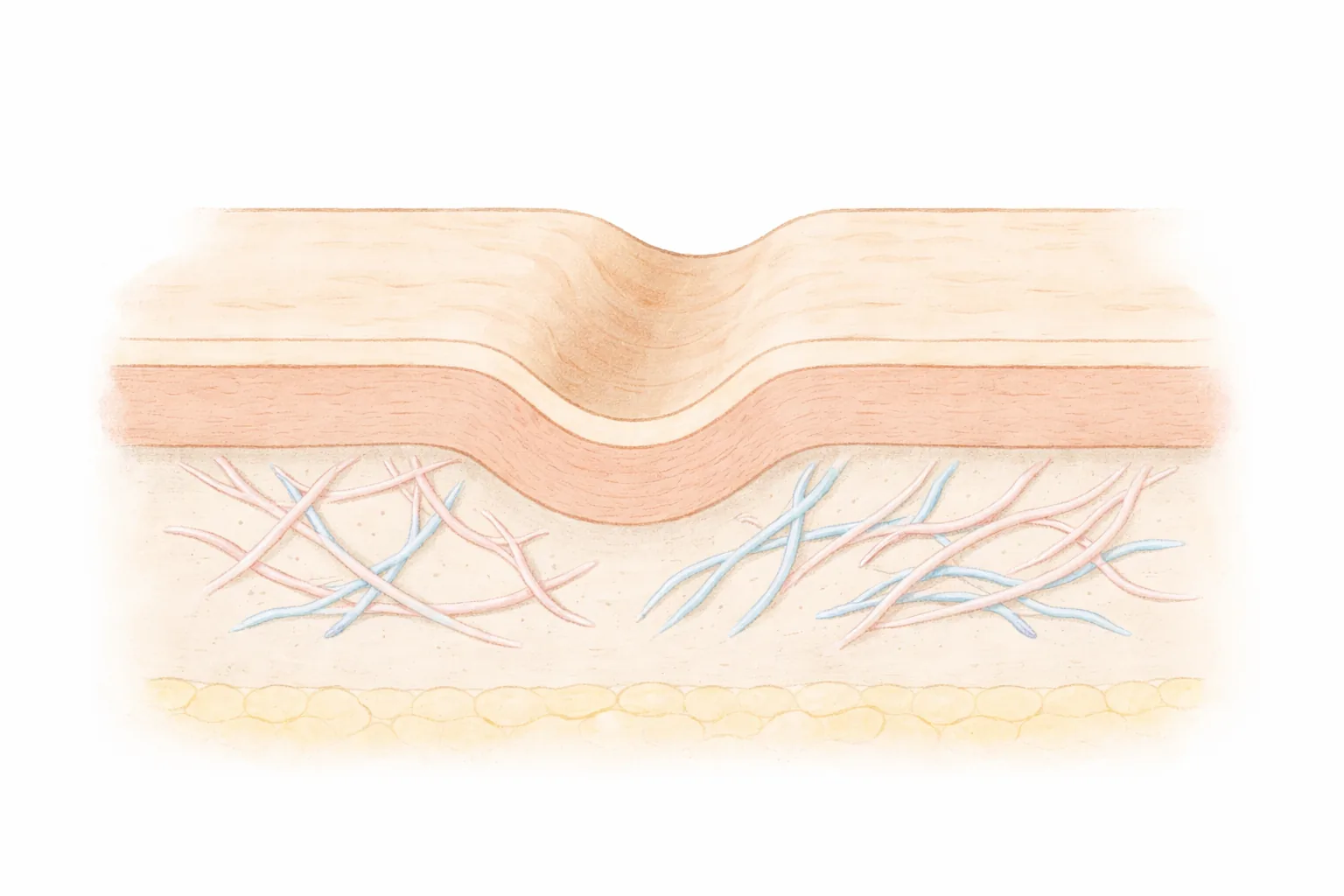
Wrinkles never come from one cause. When collagen (the protein that keeps skin firm) and elastin decline, skin can no longer smooth out the places where it has been folded, and the more often you repeat the same expression, the more that fold settles in as a line. UV and smoking break down the skin's structure faster, and when cheek volume declines, areas that fold naturally, like the nasolabial folds, stand out more. That is why wrinkles are read in three parts: the muscles that create expressions, lost volume, and skin texture.
In what order do wrinkles form inside the skin?
When you smile or frown, your skin folds. With enough elasticity, the crease smooths out along with the expression, but once collagen and elastin decline, the crease stays. Cleveland Clinic's laser resurfacing guide explains that lasers vaporize the outer layer of skin and stimulate new collagen fibers to grow. That means the rebuilding of collagen sits at the center of wrinkle improvement.
Three forces create wrinkles. The first is the fold created when muscles pull on the skin during an expression. The second is the skin itself thinning and its texture becoming uneven. The third is skin folding as facial volume declines with age. The US Food and Drug Administration (FDA) states in its filler guide that fillers are used to improve facial lines and volume loss caused by age or certain conditions. This is also why nasolabial folds cannot be explained by a single line.
One term worth noting. Skin aging caused by UV is called photoaging. In its dermabrasion guide, Cleveland Clinic lists sun damage and wrinkles as targets for treatment, and notes that recent UV exposure before a procedure can leave pigment changes in the skin. Photoaging is both something to manage and a variable to be careful about before and after treatment.
Why do the eye area and nasolabial folds stand out first?
The eye area moves countless times a day. Every smile, blink and squint folds and unfolds the skin. Cleveland Clinic's laser resurfacing material also addresses fine lines around the eyes, under the eyes, on the forehead and around the mouth separately. The more often an area folds, the sooner lines settle in, even under the same loss of elasticity.
Nasolabial folds are a little different. They are not expression lines that appear only when you smile; they remain even at rest. As skin sags and cheek volume declines, the fold running from beside the nose down to the corner of the mouth deepens. This is exactly the "facial lines and volume loss due to age" that the FDA describes as a use of fillers. That is why examining a single muscle is not enough for nasolabial folds; volume, skin thickness and the degree of sagging have to be read together.
So why do some people worry only about fine lines around the eyes, and others only about their nasolabial folds? Because expression habits, facial structure, skin thickness and healing speed differ. A column on why results differ even from the same treatment also names skin type and thickness, and the ability to produce new collagen, as the first factors.
What makes wrinkles worse?
The biggest external factor is UV. UV reaches deep layers of the skin and damages collagen and elastin, and once those changes accumulate, fine lines turn into deep wrinkles. Cleveland Clinic's recovery guidance after dermabrasion advises avoiding direct sunlight for at least 3–6 months and applying sunscreen every day. That is because UV reaching skin that has become sensitive after a procedure can remain as pigment changes.
Smoking is another variable. Tobacco reduces blood flow and slows healing. In the same guidance, Cleveland Clinic recommends no smoking for at least 2 weeks before dermabrasion and explains the reason as reduced blood flow and delayed healing. When oxygen and nutrients do not reach the skin properly, collagen is also rebuilt more slowly.
Repeated expressions cannot be ignored either. The FDA states that botulinum toxin products are injectables that keep muscles from tightening so wrinkles are less visible. Turned around, that means a habit of constantly tightening the same muscle repeatedly creates folds in the same place.
Last is volume. With age, fat and tissue in the face decline, leaving more room for skin to fold. Under the same UV and the same expression habits, wrinkles look deeper on a face that has lost volume.
Expression lines vs. static lines: where do treatments act?
Wrinkles that stand out only during expressions are caused by muscle movement. FDA-approved botulinum toxin products are used for temporary improvement of frown lines, forehead lines and crow's feet, and the effect is not permanent. In clinical trials, local reactions such as pain, swelling, redness and bruising at the injection site were reported along with facial weakness, eyelid drooping and eyebrow drooping. Rarely, cases of double vision, dry eyes, and difficulty swallowing and breathing have appeared. For cosmetic purposes, treatment is not recommended during pregnancy or breastfeeding.
Lines that remain at rest and lost volume are the territory of fillers. The FDA states that most approved fillers are eventually broken down and absorbed by the body, so the effect is temporary, and injections may need to be repeated to maintain the desired look. The risks need to be understood as well. If filler enters a blood vessel, tissue necrosis, stroke and blindness can occur, and although the probability is low, it can be permanent if it happens. Removing or reducing filler because of side effects may require additional procedures or surgery, and some fillers may be difficult or impossible to remove. The FDA also makes clear that the safety of using fillers and botulinum toxin together has not been evaluated in clinical trials.
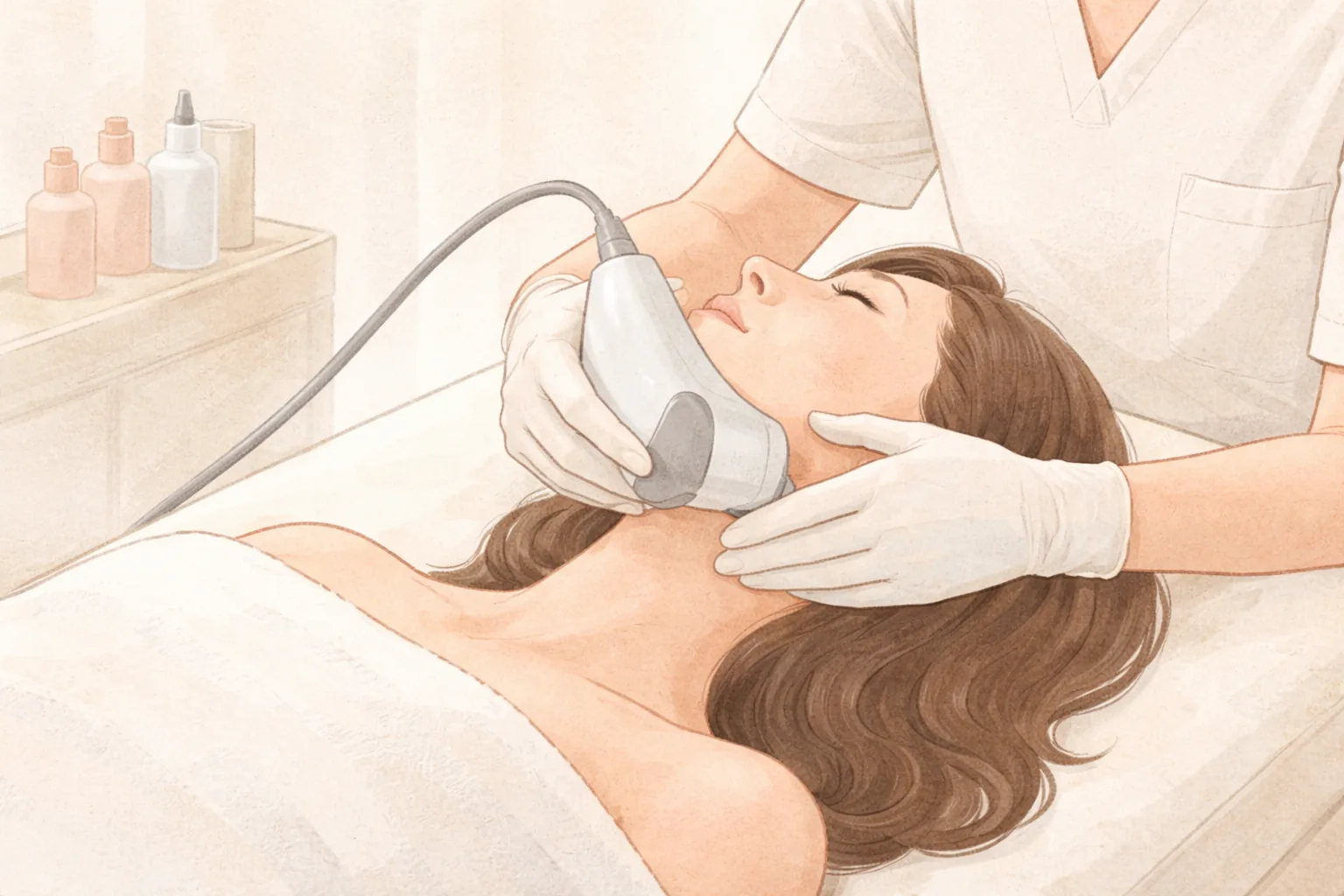
Skin texture and elasticity are handled by heat-based devices. An ATTITUDE Clinic column explains that methods delivering heat or ultrasound, such as Ultherapy, Thermage, Shurink and Onda, differ in how deep inside the skin the stimulation reaches. Even for the same concern of "loss of elasticity," which device to use first, at what intensity, and whether to combine treatments such as skin boosters or Potenza depends on the skin's condition and the time available for recovery.
There is also the approach of refining the skin's surface with lasers. However, the laser resurfacing guide notes that it may not be suitable for skin tones prone to pigmentation, deep wrinkles, or cases with a lot of sagging. Even for the same wrinkle, which approach fits depends on skin tone and thickness.
Table 1 Expression lines vs. static lines: where do treatments act?
Category
What it targets
Best for
What is reviewed in consultation
Botulinum toxin injection
Muscles that tighten during expressions
Crow's feet that stand out when smiling, frown lines and forehead lines
Repeated expression habits, previous treatment history
Filler
Lost volume and lines that remain at rest
Nasolabial folds, hollow cheeks
Skin thickness, how much change is wanted, explanation of complication risks
Heating inside the skin to induce collagen regeneration
Sagging, loss of elasticity
Depth the stimulation reaches, time available for recovery
Skin boosters and Potenza
Skin foundation and texture
Fine lines, dry and uneven skin texture
Skin barrier condition, previous reactions
Swipe sideways to see the whole table.
In short Expression lines center on muscle, lines that remain at rest and volume center on filler, and skin texture and elasticity center on energy devices. No single option is the answer; the combination and order differ depending on which force is creating wrinkles on your face now. Many people receive several treatments together, but the safety of all combinations has not been verified, so the order and intervals are decided together in consultation.
If this sounds like your situation
When a ceremony or a shoot is a few weeks away
Expression line treatments often bring a natural expression back within a few days, but laser-based treatments come with redness and flaking on top. According to the laser resurfacing guide, redness and swelling last a few days right after the procedure, flaking appears around 5–7 days, and it can take two to three months for the new skin to return to its original color. If you have a fixed date, schedule the treatment that much earlier.
When nasolabial folds bother you along with hollow cheeks
Nasolabial folds often come from a combination of a line and volume, so treating only the muscle can look unnatural. In that case, how to view volume and in what order to address skin sagging are decided together. Fillers are temporary and may need repeating, and although rare, there is a risk of vascular complications, so the explanation before treatment needs to be heard in full.
When the eye area is thin and dry and fine lines show first
The skin around the eyes folds often and the expression muscles sit close by, so fine lines settle in first. When dryness is added, the texture looks more uneven, so while tidying up moisturizing habits, whether to address expression muscles or skin texture is considered separately.
When considering treatment during a short stay from overseas
With a short stay, treatments with long recovery periods are a burden. Injectable treatments with short downtime and device treatments that leave a few days of redness are separated, and the order is set around your departure date. It helps to check in advance what reactions may appear after treatment and how to get in touch.
Tell us before your consultation Recent UV exposure (travel or outdoor activity), medications you are taking and any blood-clotting related medication, retinoid or acid skincare you are using, the device and dose of any previous treatment and how you reacted then, and upcoming events (ceremony, shoot, business trip) all help us build the plan.
How ATTITUDE Clinic proceeds
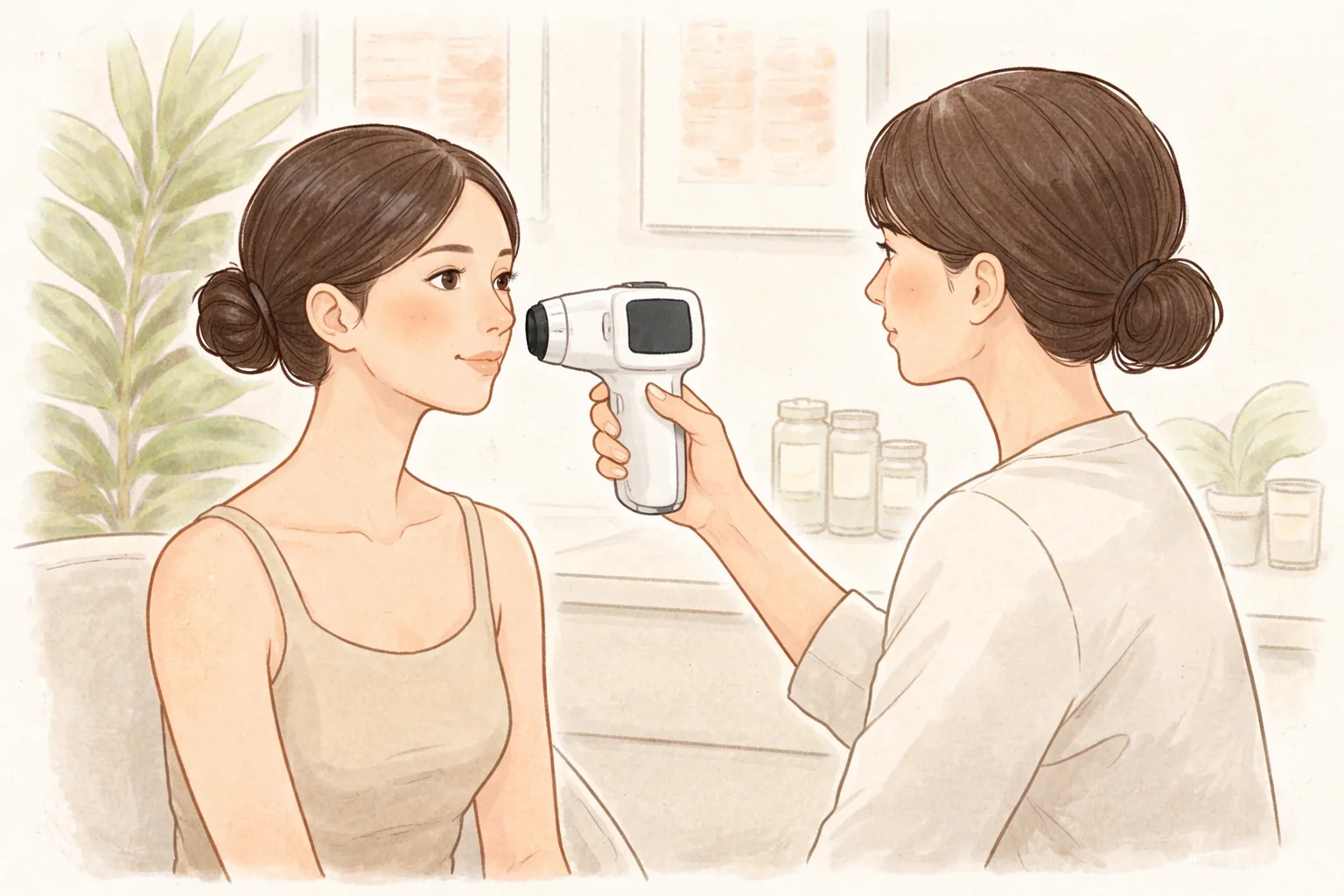
AI skin analysis record — Your skin condition is recorded and organized so you and the doctor look at the same information together. The analysis tool is a reference that records and organizes information to support the consultation and does not make a medical diagnosis. Judgment rests with the doctor.
Doctor consultation — The analysis record is combined with your concerns, lifestyle habits and previous treatment experience to decide together what is needed and what is not, and which combination, order and intensity to use.
Treatment performed by the doctor — So that the plan set in consultation and the actual treatment do not diverge, the doctor performs the treatment directly and adjusts intensity while watching the skin's response during the procedure.
Recovery and follow-up — Reactions after treatment are checked and the next interval is set. ATTITUDE Clinic's pricing guide discloses all amounts by unit, with VAT guided separately.
Devices relevant to this topic are Ultherapy, Thermage FLX, Shurink and Onda for lifting, Potenza for skin texture and pores, and botulinum toxin and skin booster injections (treatment guide).
Aftercare and side effects
Soothing — Redness, heat and swelling are common right after treatment. According to the laser resurfacing guide, redness, swelling, itching and stinging can last several days. While skin is flaking, do not scratch or peel it off. Scratching can lead to scarring or infection.
Moisturizing — While skin is flaking, it becomes dry. The same guidance recommends applying a petroleum-jelly type occlusive moisturizer or ointment thinly twice a day until the skin heals.
Sun protection — During recovery, avoid direct sunlight, and once things have settled, apply sunscreen every day. The dermabrasion guide advises applying SPF 30 sunscreen daily after recovery.
Checking progress — Whether a reaction is one that settles within a few days or a change that does not improve over time is checked, and the next interval is set.
Common reactions start with redness, swelling, tenderness when pressed, and bruising. After injectable treatments, pain, redness and bruising at the injection site are common, and with botulinum toxin, eyelid drooping, eyebrow drooping and facial weakness have been reported. Rarely, temporary darkening or lightening of pigment, blisters, lumps after injection, burns or scars can occur. Reactions such as double vision, dry eyes, and difficulty swallowing and breathing are rare, but need immediate medical attention if they appear.
After treatment, reactions such as redness and flaking tend to improve over a few days to a week. If you move outside that pattern, with pain gradually worsening, blisters forming, or a clear change in color, we recommend seeking care rather than waiting.
Frequently asked questions
Which treatment suits wrinkles around the eyes?
The answer depends on the cause. If they are expression lines that stand out when you smile, botulinum toxin, which targets the muscle, is a candidate, and FDA-approved indications include frown lines, forehead lines and crow's feet (FDA guide). Fine lines that remain at rest fit an approach that addresses skin texture, and if sagging is present as well, lifting devices are considered. The skin around the eyes is thin and sensitive, so intensity and approach are decided in consultation.
When does wrinkle Botox take effect and how long does it last?
According to the FDA guide, the effect of botulinum toxin products is temporary improvement, and fillers are also broken down in the body, so repeat treatment may be needed (FDA guide). When it appears and how long it lasts depend on muscle movement, the treatment area and the dose used. If you have a history of repeated treatment in the same area, the plan is built by looking at how you reacted then, so bringing records of previous treatments helps.
Why do nasolabial folds form and how are they approached?
Nasolabial folds form from a combination of expression muscles, skin sagging and loss of cheek volume. According to the FDA guide, fillers are used to improve facial lines and volume loss due to age (FDA guide). So a single approach of only treating the muscle or only filling volume can look unnatural, and facial structure and skin thickness are read together to set the order. Fillers are temporary and rare serious vascular complications have been reported, so we recommend deciding after hearing the risks in full.
Can my expression look awkward after wrinkle Botox?
It is possible. In clinical trials, facial weakness, eyelid drooping and eyebrow drooping were reported (FDA guide). These changes are influenced by how much the muscle tightens and by the injection site and dose. To reduce the chance of an awkward expression, it helps to talk specifically in consultation about how much expression you want to keep.
What should I look at when choosing a clinic for wrinkle treatment?
According to the FDA guide, you should consult a clinician with treatment experience who is knowledgeable about fillers, anatomy and complication management, and receive a full explanation of risks and benefits before treatment (FDA guide). Whether properly labeled, sealed, approved products are used is also something to check. At ATTITUDE Clinic, the doctor handles everything from consultation to treatment, and the pricing guide discloses prices by unit. You can confirm in consultation which devices and products will be used, and in how many shots or cc.
At a glance
Table 2 At a glance
Item
Key point
How wrinkles form
Collagen and elastin decline and creases remain, with UV and smoking speeding it up
Why the eye area shows first
It folds with every expression and the skin is thin
Nasolabial folds
Form from a combination of muscle, skin sagging and loss of cheek volume
Expression lines
Botulinum toxin targeting the muscle is central; the effect is temporary
Static lines and volume
Addressed with filler; repeat treatment may be needed and there is a risk of vascular complications
Aftercare
Managed in the order of soothing, moisturizing, sun protection and progress checks
This article offers general health information. It is not a substitute for diagnosis or treatment based on your own condition, so please talk through your situation with a doctor.