Thermage Korea: Genuine Tips, Real Devices, and What to Check
What Thermage actually is, how to check genuine devices and tips, eye protection in eye Thermage, and what determines shots, results, and cost—straight from Gangnam, Seoul.
Written by ATTITUDE Clinic Editorial Team
Researching Thermage can be confusing—same name, different explanations and prices at every clinic. You hear "domestic Thermage," you hear that genuine tips must be opened in front of you. This article covers what the name Thermage actually refers to, and what to check in a consultation to confirm genuine devices and tips.
Bottom line first
Thermage is the brand name of an RF (radiofrequency) lifting device made by Solta Medical. ATTITUDE Clinic's treatment and price guide lists it as Thermage FLX · Solta. Thermage is a product name, so "domestic Thermage" is used to describe RF devices from other manufacturers. Genuine verification starts with the device's manufacturer and model, which tip is used in treatment, and—for eye-area work—the eye shield material. Results and cost vary with shot count, energy level, skin thickness, and operator skill.
Is "Thermage" a device name or a treatment name?
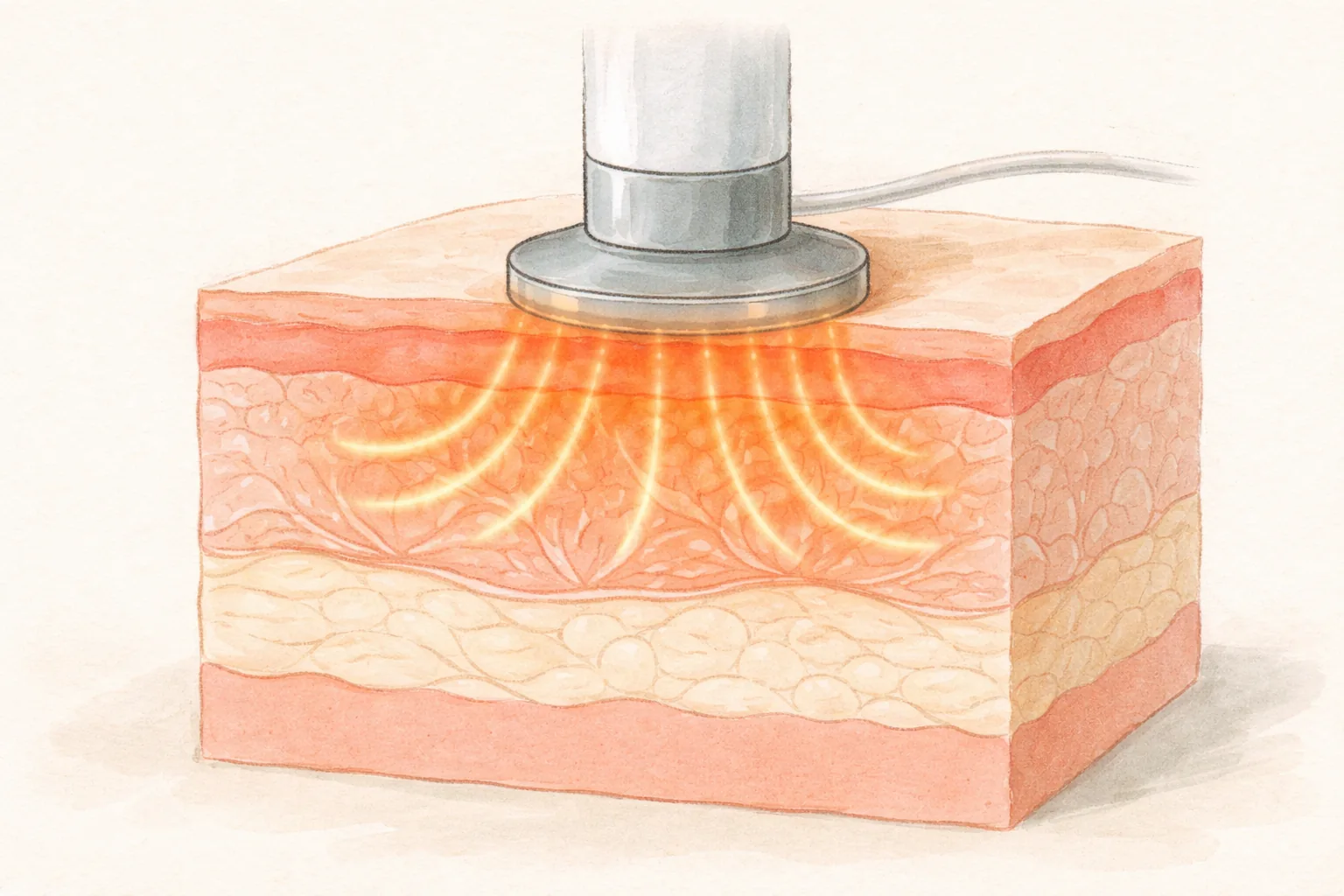
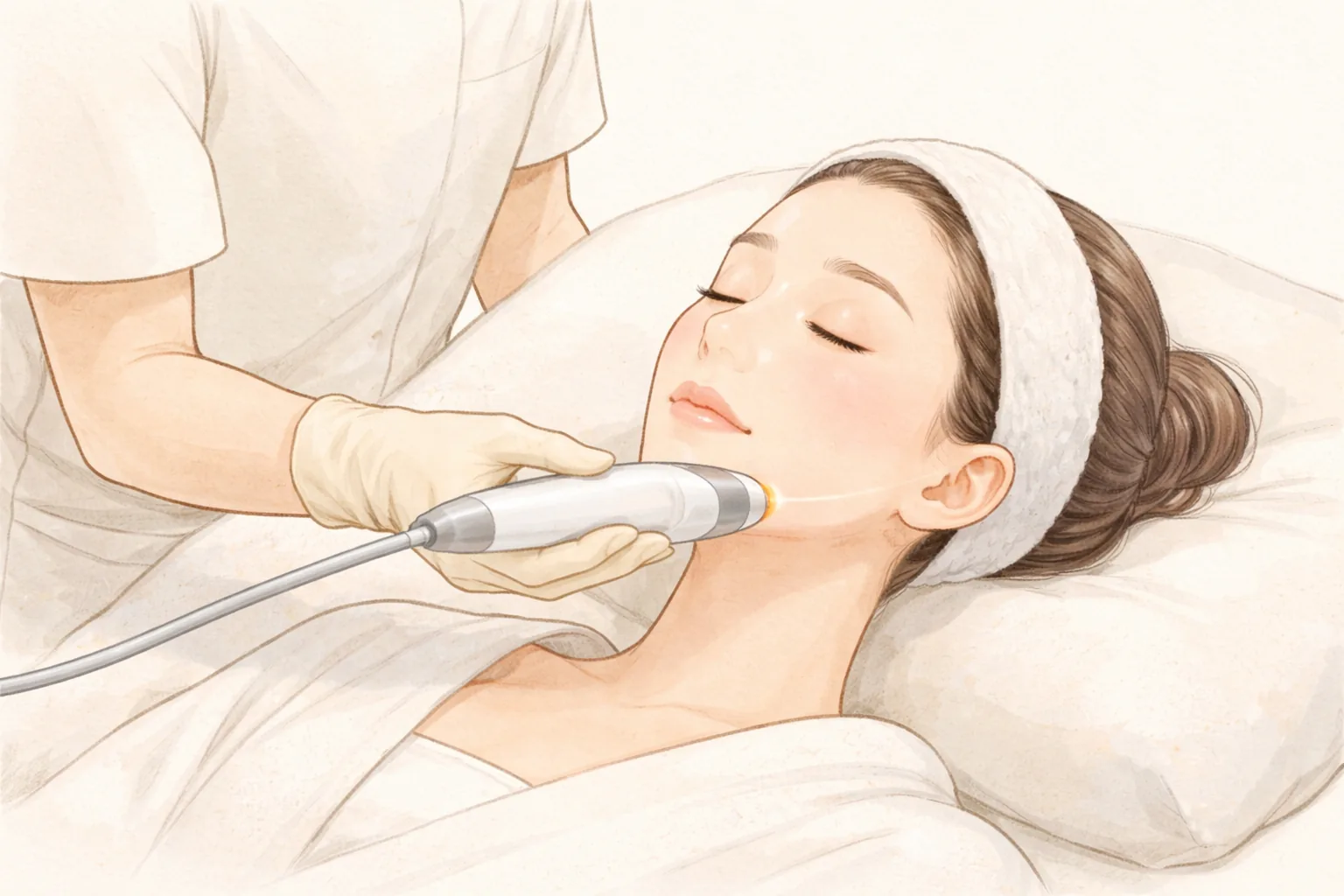
Thermage is commonly used to describe a lifting treatment that heats skin with RF energy. According to DermNet, Thermage delivers RF energy to the collagen layer via an electrode tip (ThermaTip); the heat contracts collagen, and new collagen grows over about 6 months. Collagen is the protein that keeps skin firm—as it declines with age, fine lines and sagging appear.
The RF approach itself is explained in a ATTITUDE Clinic column. Thermage uses electrical energy that turns into heat as it passes through tissue, broadly heating from the dermis to the subcutaneous fat layer—different in depth and spread from Ultherapy and Shurink, which focus ultrasound at a single point. Even under the same word "lifting," what happens inside the skin differs.
Here's where "domestic Thermage" comes in. Thermage is a manufacturer's product name, so calling another maker's RF device "Thermage" may mean different device generations and tip configurations. The ATTITUDE Clinic treatment and price guide separates RF lifting into Thermage FLX · Solta and XERF · Lutronic. That's why, when you hear a device name, confirm which manufacturer's which model.
How do you verify genuine devices and tips?
Verification starts with three things. First, the manufacturer and model printed on the device body. Second, which tip is used in treatment—as DermNet notes, Thermage delivers RF via an electrode tip, and the tip is a consumable that transfers energy to skin. Third, for eye-area treatment, the eye shield material.
The US FDA medical device adverse event report describes an eye burn after Thermage. In it, the manufacturer emphasizes that plastic eye shields must be used at the appropriate size, and that metal shields can conduct RF heat directly to the eye and are not suitable for Thermage. Shields are not provided by the manufacturer by default, so before eye-area treatment, ask in consultation which shield is used.
The same report notes the tip used was not returned for evaluation, making cause confirmation difficult. If used tips and device records are kept, verification is easier should a problem arise. That's why it helps to ask in consultation whether the tip is opened in front of you, whether tip number and expiry can be checked, and how treatment records are kept.
Why do results and cost differ for the same Thermage?
The first factor is your skin's starting condition. A ATTITUDE Clinic column notes skin type, thickness and structure, and collagen regeneration speed vary between people. Same age, similar concern—different starting line, different response to the same treatment.
The second is the plan. Per DermNet, Thermage results are hard to predict, and for some people no effect appears. Some see change right after or within weeks; others feel change only after 2–3 months. New collagen grows for up to 6 months, so changes can continue through that period.
The third is shot count, energy level, and area distribution. DermNet says treatment time varies with the area treated and the number of passes of the tip. Different face sizes and concern areas mean the same 600 shots are divided differently across cheeks, jawline, and nasolabial area. A ATTITUDE Clinic column also notes that even with the same analysis results, the combination, order, and intensity should be set differently.
Cost differences follow the same logic. Tips are consumables—more shots means more usage and longer treatment time. The ATTITUDE Clinic treatment and price guide splits Thermage into 600 shots and 900 shots, and eye Thermage into 225 shots and 450 shots, reflecting this planning difference. Rather than judging by number alone as cheaper, it's more accurate to look at how many shots go to which area.
Table 1 Why do results and cost differ for the same Thermage?
Category
Delivery
Mainly suits
Check
Thermage FLX · Solta
Monopolar RF, broad heating from dermis to subcutaneous fat
Overall facial firmness, skin texture, large areas
Manufacturer and model, shot count, tip use
Eye Thermage Thermage Eye
RF via eye-specific tip
Eye-area fine lines, eye-area firmness
Eye shield material and size, tip configuration
XERF · Lutronic
Monopolar RF lifting
Firmness management for large areas
Manufacturer and model, energy settings
Ultherapy · Merz
HIFU, small thermal points from dermis to SMAS depth
Deep sagging, jawline lifting
Cartridge depth, per-area planning
Swipe sideways to see the whole table.
In short, genuine verification starts with checking the device manufacturer and model, the tip used, and—for eye-area work—the eye shield material, rather than the name Thermage. Shot count and energy level are set to face size, skin thickness, and concern areas, so numbers alone don't compare.
How far should you look at pain and recovery?
Per DermNet, Thermage usually doesn't require local anesthesia, sedation, or painkillers. During treatment you tell the clinician about heat and pain levels, and the RF level is raised or lowered accordingly. Treatment time can take 1–2 hours depending on the area and number of passes.
A ATTITUDE Clinic column explains the wide pain variation by energy level and per-area nerve density. Higher energy and more shots per area mean more pain. Bony, nerve-dense areas like jawline, cheekbones, forehead, and eyes feel more sensitive, while thicker areas like cheeks feel less painful at the same energy.
Right after treatment, redness and swelling may remain. DermNet says redness and swelling can last 1–2 hours, or longer—days—and can be covered with makeup. The same source says Thermage's reported adverse event rate is under 1%, with common side effects of swelling and redness, and rare risks of burns, blisters, and scarring.
The Korean-language ATTITUDE Clinic column lists common side effects as redness, swelling, small bruising, and temporary numbness and reduced sensation, usually settling within days. Rarely, burns, blisters, small scars, temporary facial muscle weakness, and unwanted fat-layer volume loss can occur. If you have unexpected symptoms like blisters or worsening pain, get care right away.
Why does eye Thermage need extra checking?
Eye-area skin is thin and the eye structure is close, so there's more to check than other areas. In the case described in the US FDA medical device adverse event report, an eye burn occurred despite using an eye shield during treatment; the report describes redness and swelling for 2 days after, then crusting and pain. It's a single case report, so it can't be generalized as common in eye Thermage.
In the same report, the manufacturer emphasizes plastic eye shields should be used at the appropriate size during Thermage, and metal shields can conduct RF heat directly to the eye and cause damage. Shields aren't provided by the manufacturer by default, so what the clinic prepares is a check point. The ATTITUDE Clinic treatment and price guide lists Eye Thermage Thermage Eye in 225-shot and 450-shot configurations for the eye area.
DermNet says Thermage works well across multiple skin types, unlike laser treatments. But for thin areas like the eye, energy settings and shield preparation govern results and safety—so check both separately in consultation.
In these situations
Before an event or shoot
Redness and swelling can last 1–2 hours, or days, right after treatment, so space it from important events. If a shoot is near, set the date considering how long redness takes to settle, and confirm when makeup is possible.
For ongoing management
DermNet says Thermage benefits can last 5–10 years but adds that only time will tell. A ATTITUDE Clinic column advises setting repeat timing around 1 year based on progress. It's better approached as an individual plan than a single treatment.
Sensitive or easily reddened skin
DermNet says Thermage suits multiple skin types, but how much redness and warmth remains varies by energy level. A ATTITUDE Clinic column also advises asking about anesthesia options and energy level adjustment at consultation if you're sensitive to pain.
International visitors on a short stay
The treatment itself is about 1–2 hours, and most people can do daily activities including makeup from the next day. If your stay is short, set the follow-up check point and next visit timing in consultation.
Tell us before consultation Recent sun exposure, medications you're taking and skincare ingredients you use (retinol, acids, etc.), reactions to previous treatments, important events like weddings or shoots, and previous treatment records (device, shots, dosage, date, reaction) help make the consultation specific.
How ATTITUDE Clinic proceeds
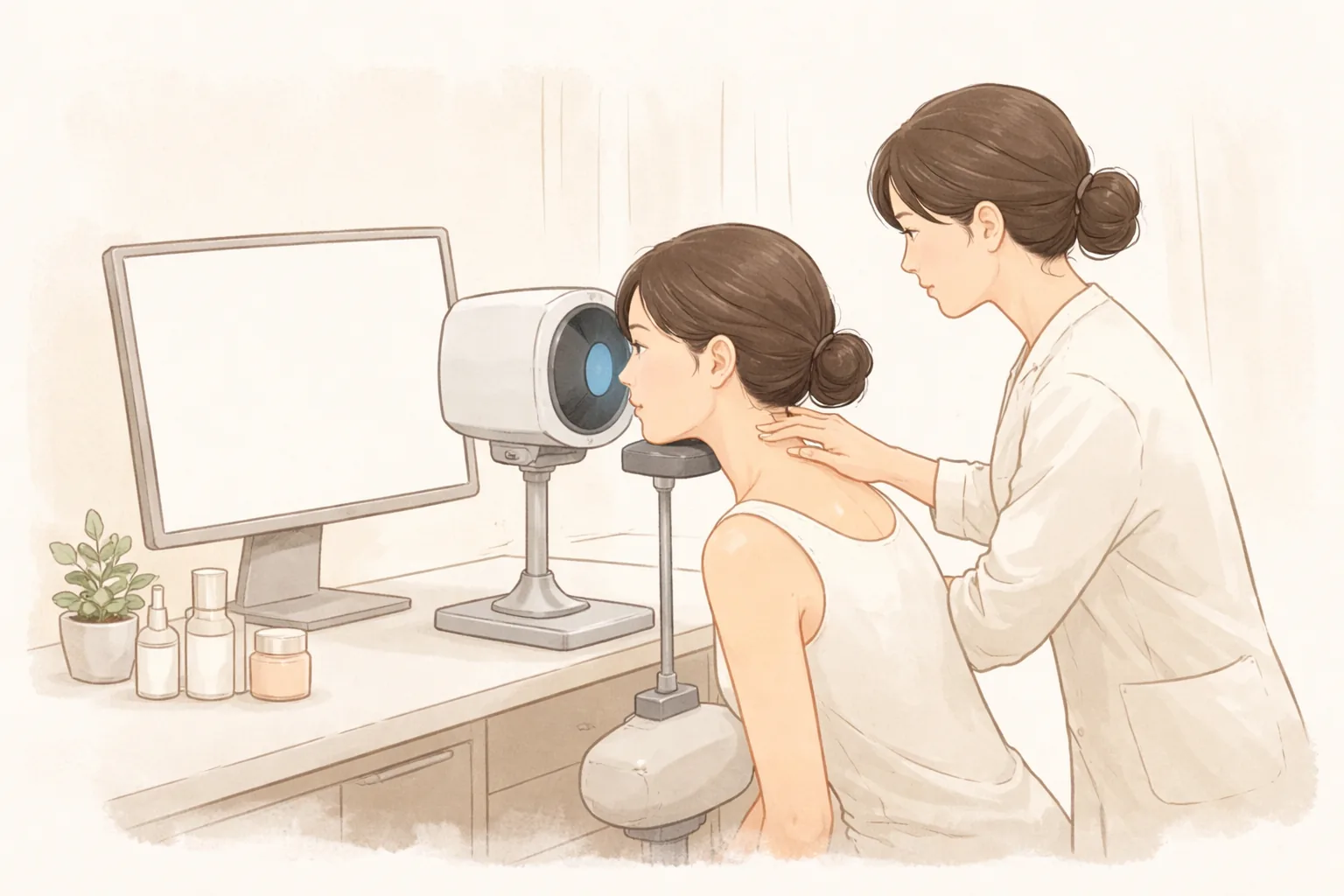
AI skin analysis record — Skin condition is recorded and organized so you and the doctor look at the same information. The analysis tool is a reference aid for consultation and does not make a medical diagnosis. A ATTITUDE Clinic column also notes the judgment is made by the director.
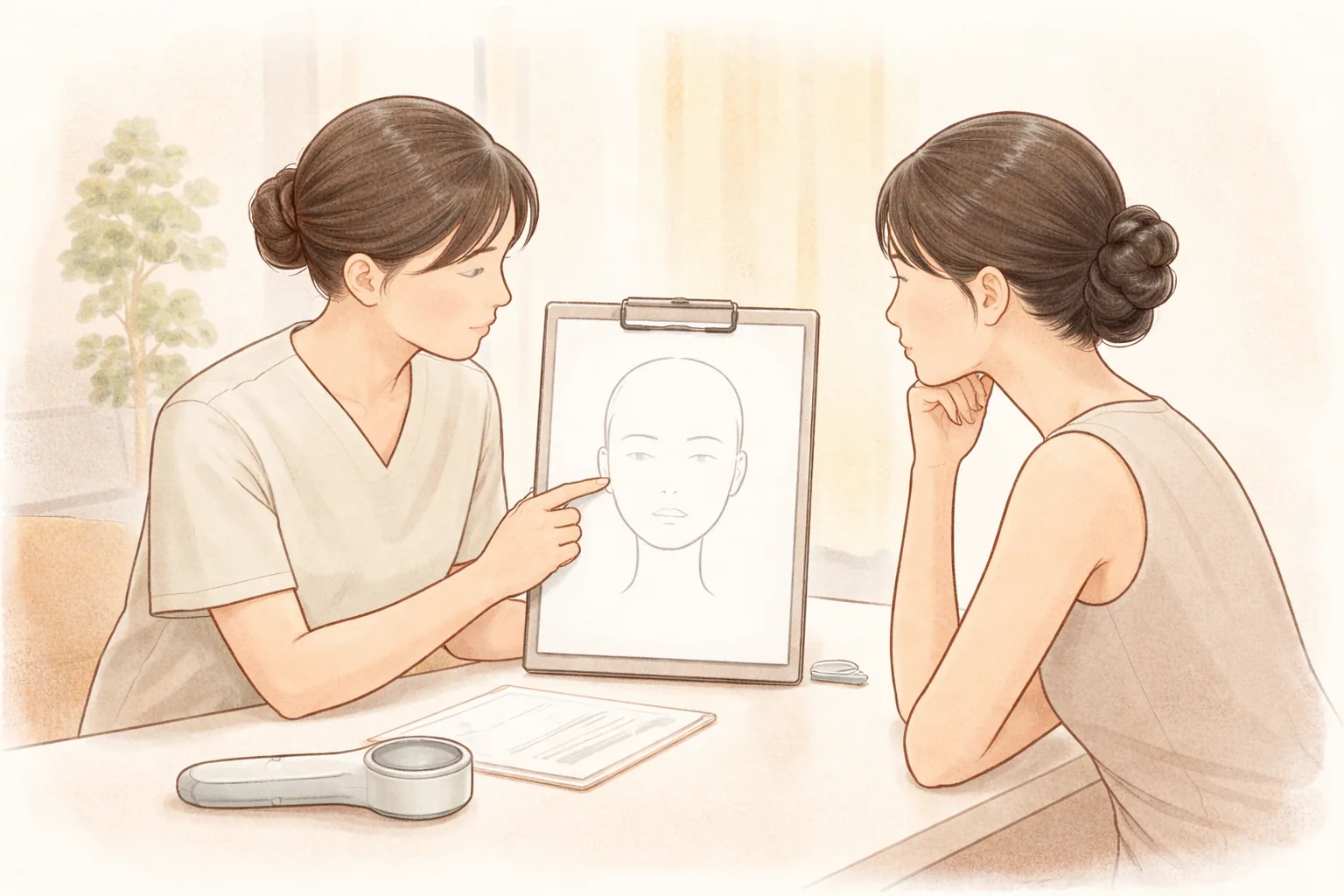
Director consultation — Analysis records plus concerns, lifestyle habits, and previous treatment experience determine what's needed and what isn't, combination and order, and intensity. Device manufacturer and model, shot count, and tip use are also confirmed here.
Treatment by the director — The director performs the planned design directly and adjusts based on skin response during treatment, so the consultation plan and actual treatment don't diverge.
Recovery, care, and follow-up — Aftercare and next visit timing are explained. Repeat timing is set around 1 year based on progress.
Related devices listed in the ATTITUDE Clinic treatment and price guide include Thermage FLX · Solta, Eye Thermage Thermage Eye, XERF · Lutronic, Ultherapy · Merz, and Shurink · Classys. Prices are published by unit, with VAT separate.
Aftercare and side effects
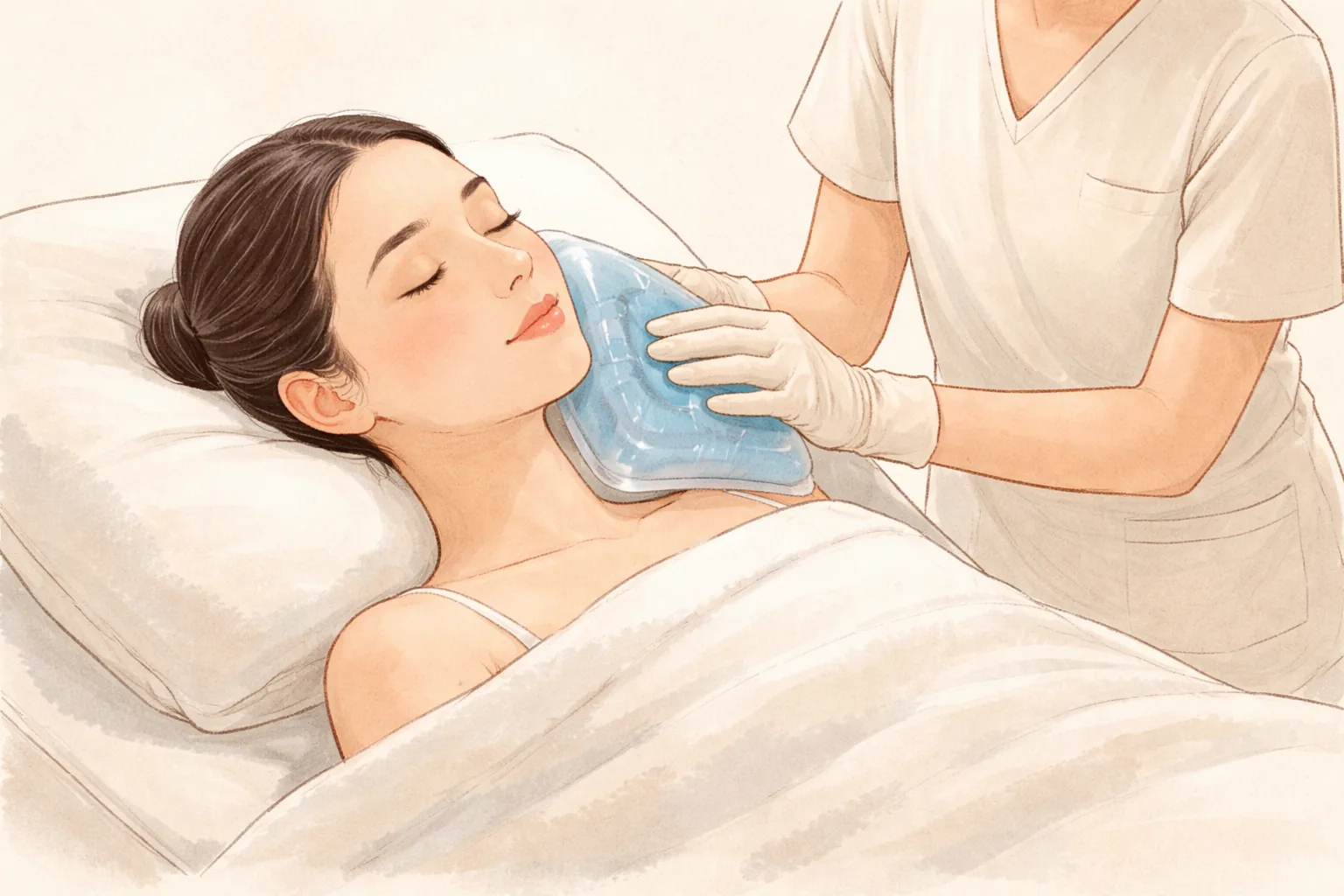
Calming — Cold compresses can help with swelling right after treatment. Avoid saunas, strenuous exercise, and alcohol on the day.
Sun protection — Apply sunscreen more carefully than usual for several days after. During this period the skin's barrier is temporarily weaker—to prevent pigmentation.
Return to daily life — Most people can do daily activities including makeup from the next day. How much redness and warmth remains varies by energy level.
Follow-up — Watch whether swelling and redness settle within days and whether pain is worsening. If anything differs from expectations, get care right away.
Common side effects are redness, swelling, small bruising, and temporary numbness and reduced sensation, usually settling within days. DermNet says Thermage's reported adverse event rate is under 1%, with swelling and redness, and rare risks of burns, blisters, and scarring. The Korean-language ATTITUDE Clinic column notes rare burns, blisters, small scars, temporary facial muscle weakness, and unwanted fat-layer volume loss. For eye-area treatment, eye burn cases are rarely reported, as in the FDA report, making eye shield material and size a check point. If blisters appear, pain worsens, or you have vision changes or eye pain, don't wait—get care.
Frequently asked questions
How far is "domestic Thermage" accurate?
Thermage is the brand name of an RF lifting device made by Solta Medical. The ATTITUDE Clinic treatment and price guide lists Thermage and XERF each with different manufacturer names. Calling a domestic manufacturer's RF device "domestic Thermage" is closer to using a brand name as a generic term. When you hear a device name, confirming manufacturer and model makes it clear which device it is. Even with the same RF method, heat depth and tip configuration can differ, so the name alone doesn't prove it's the same treatment.
How do you check genuine devices and tips?
Check the device body's manufacturer and model, the tip used in treatment, and—for eye-area work—the eye shield material. Tips are consumables that transfer energy to skin and are replaced each treatment. You can also ask whether the tip is opened in front of you, whether tip number and expiry can be checked, and how treatment records are kept. As in the FDA report, if used tips aren't kept, verification can be harder if a problem arises. For eye treatment, whether a plastic shield is used at the appropriate size is a separate check item.
Are more shots better?
More shots don't proportionally improve results. DermNet says treatment time varies with the area treated and the number of passes of the tip, and adds that results are hard to predict. Face size, skin thickness, and concern areas differ between people, so the same 600 shots are distributed differently. A ATTITUDE Clinic column also notes that even with the same analysis results, the combination, order, and intensity should be set differently. It's better to hear and agree on how many shots go to which area.
How painful is Thermage, and what's recovery like?
Per DermNet, it usually proceeds without local anesthesia or sedation, and you report heat and pain levels during treatment so the RF level can be adjusted. A ATTITUDE Clinic column explains that higher energy levels and nerve-dense areas feel more sensitive. How much redness remains and recovery speed vary with skin thickness, regeneration, and energy level. Right after treatment, redness and swelling can last 1–2 hours, or days, and most people can do daily activities from the next day. If you're sensitive to pain, ask about anesthesia options and energy level adjustment at consultation.
How do you choose a clinic good at Thermage?
Look at whether they explain the device manufacturer and model, tip use, and eye shield preparation for eye treatment. Whether they specifically explain how shots are distributed across areas is another check point. A ATTITUDE Clinic column explains that carrying analysis records, consultation, and treatment through the same flow affects results. You can also see whether they review previous treatment records in consultation and decide together what's needed and what isn't. A place that answers clearly what to check, rather than guaranteeing results, helps your judgment.
At a glance
Table 2 At a glance
Item
Key
What Thermage is
Brand name of an RF lifting device made by Solta Medical
"Domestic Thermage"
Not a brand name, but a term for other manufacturers' RF devices
Genuine verification
Device manufacturer and model, tip use, eye shield material for eye treatment
What determines results
Shot count, energy level, skin thickness, area distribution, operator skill
Pain and recovery
Usually without anesthesia, redness and swelling 1–2 hours or days, return to daily life next day
This article offers general health information. It is not a substitute for diagnosis or treatment based on your own condition, so please talk through your situation with a doctor.