Thermage Korea Before and After: How to Tell If It Suits Thin Skin and a Lean Face
Thermage FLX and eye Thermage in Korea explained for international visitors: what the RF energy actually does, why sagging depth, skin thickness and collagen renewal matter more than age, and what to prepare at a Sinsa Station (Gangnam, Seoul) consultation.
Written by ATTITUDE Clinic Editorial Team
Thermage is one of those treatments whose name everyone knows, yet the moment you ask "am I actually a good fit for it?" the answer gets fuzzy. Some say it is decided by age, others say a face without much fat will only look hollower — so the decision keeps getting postponed. This article works through it in order: what Thermage actually does inside the skin, which skin conditions and age ranges change how suitable it is, and what is worth preparing before a consultation.
The short answer first
Thermage is a non-invasive lifting treatment that uses radiofrequency (RF) heat — electrical energy that turns into heat as it passes through tissue — to warm the dermis and subcutaneous fat layer broadly, contracting collagen and prompting it to rebuild. A single number like your age does not decide suitability; how far the sagging has progressed, your skin thickness and how volume is distributed matter more. If early volume loss, skin that is just starting to loosen, fine lines around the nose and mouth, or lost elasticity over a broad area are your concerns, it is worth putting Thermage near the top of the list at a consultation (DermNet). Conversely, if the skin sags severely and volume loss is obvious, guidance suggests surgery may be the better choice than Thermage — so where you set your expectations matters.
What Thermage does inside the skin
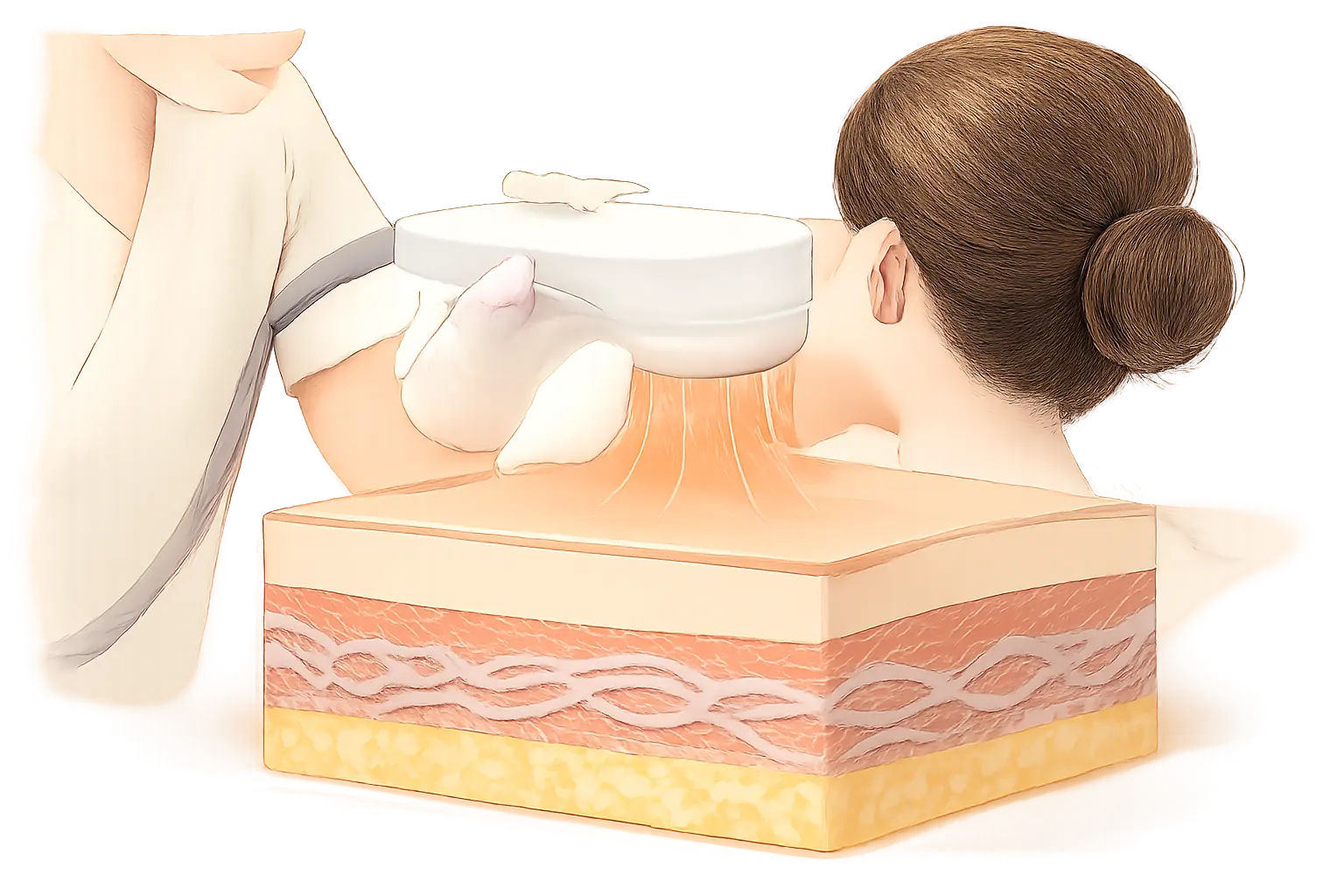
Skin is layered from the surface down: epidermis, dermis, then the subcutaneous fat layer. Collagen — the protein that gives skin its structural support — is most abundant in the dermis. As we age, this collagen gradually declines, which is where fine lines and sagging come from (DermNet).
The Thermage tip sits flush against the skin and delivers radiofrequency to the collagen layer. The heat generated as electrical energy passes through tissue contracts collagen for an immediate tightening effect, and at the same time switches on the signal to make new collagen. That new collagen does not fill in overnight — it builds gradually over roughly 6 months — which is why the change is often felt more strongly some months later rather than right after treatment (DermNet).
There is a common point of confusion here. Even though they sit under the same "lifting" label, Thermage and Ultherapy or Shurink Universe (HIFU) use heat differently. As set out in an ATTITUDE Clinic column, Thermage warms a broad plane from the dermis down through the subcutaneous fat layer, while Ultherapy and Shurink Universe (HIFU) concentrate ultrasound into small points at a set depth (ATTITUDE Clinic). So one deeply sagging area and broadly dulled elasticity call for different tools.
Three things checked before age
First, the depth of the sagging and its cause. Even the same complaint of a blurred jawline can come from lost elasticity in the skin itself or from shadowing caused by lost volume, and the approach differs. Because Thermage broadly warms the skin and the shallow fat layer, it tends to suit people whose concern is skin texture and lost elasticity over a wide area (ATTITUDE Clinic).
Second, skin thickness and tissue structure. Whether your skin is thin and whether the tissue filling it is dense change how the same energy level feels and what result it produces (ATTITUDE Clinic). For people with little facial fat in particular, it is worth checking together whether heat reaching the fat layer might reduce volume further.
Third, your skin's power to make collagen again. Because collagen synthesis speed varies with age, lifestyle and hormonal status, the point at which change appears differs from person to person even after the same treatment (ATTITUDE Clinic). This difference is hard to judge from a mirror alone, which is why the skin needs to be examined in person and previous treatment history reviewed before treatment.
According to DermNet guidance, Thermage tends to work best at the early signs of ageing: early volume loss, skin laxity, and lines around the nose and mouth. For people whose skin is very loose and sagging, the improvement Thermage can offer is smaller and surgery may be more appropriate; where surgery is not an option, it can be performed with adjusted expectations (DermNet). It is also worth remembering that Thermage is not limited in certain skin colours the way lasers can be because of pigmentation risk — it can be used across skin types (DermNet).
Table 1 Three things checked before age
Category
What it heats
Concerns it suits
What to review at consultation
Thermage FLX (face)
Broadly from the dermis through the subcutaneous fat layer
Skin texture, lost elasticity over a broad area, early to moderate sagging
Depth of sagging, volume distribution, shot allocation
Eye Thermage (eye area)
Thin eye-area skin with a dedicated tip
Fine lines around the eyes, eye-area sagging
Use of eye shields, eye-area skin thickness
Ultherapy · Shurink Universe (HIFU)
Small heat points at a set depth
Localised, deeper sagging along the jawline and eye area
Location of sagging, depth needed
Swipe sideways to see the whole table.
In short Suitability for Thermage is decided not by what age you are but by what stage the sagging has reached and what condition the skin is in. Early to moderate sagging and lost elasticity over a broad area are areas Thermage handles well, while deep, obvious sagging calls for reviewing other tools or methods alongside it. Either way, it is closer to maintenance in which intervals are set while watching progress than to a one-and-done concept.
Does a lean face suit it better?
You often hear that Thermage suits a thin face better, but that is only half true. DermNet guidance says Thermage tends to work best for people with a thin face who are just beginning to consider surgery (DermNet). The important condition here is not thinness itself but that the sagging is still early and there is room for collagen to respond.
The opposite case is different: a lean face where sagging is already obvious. When broad heat is applied to a face without enough volume to support it, a change in which fat-layer volume looks reduced can rarely occur (ATTITUDE Clinic). So on a thin face, deciding where to apply heat and where not to touch becomes especially important. Splitting the plan into areas that need volume and areas that have lost elasticity is the core of the consultation.
Choosing a device by the amount of facial fat alone is also risky. Even among lean faces, where volume is lacking and where sagging stands out differs from person to person. The approach needs to preserve some areas without stimulating them and design others toward raising elasticity.
What decides pain and recovery?
For Thermage, DermNet notes that most people do not need local or injected anaesthesia, sedatives or painkillers. Instead, throughout the procedure the patient reports the level of heat and pain they feel, and energy levels are raised or lowered based on that feedback to reach the heat needed for treatment (DermNet). So pain is less something to endure and more a value you adjust while speaking up.
The pain experience varies widely with energy level and the nerve density of each area. The jawline, cheekbones, forehead and eye area — close to bone and dense with nerves — are relatively sensitive, while thicker areas like the cheeks tend to feel less painful at the same energy (ATTITUDE Clinic). Procedure time depends on the treatment area and the number of passes of the tip; DermNet says it can take about 1–2 hours from start to finish (DermNet).
Recovery is generally short. Redness and swelling may last 1–2 hours, or at most a few days, and the redness can be covered with makeup (DermNet). Results, however, are hard to predict: some people notice change immediately or within a few weeks, while others only feel it after 2–3 months (DermNet). Judging at the one-month mark without knowing this makes it easy to conclude the treatment did not work.
If this sounds like your situation
When a wedding or a shoot is a few months away
New collagen takes roughly 6 months to grow, so planning 3–6 months before a big event is the natural approach (DermNet). Redness and swelling usually settle within a few days, but if something important is coming up days later, allow for the possibility of lingering swelling and heat, and coordinate the timing at your consultation.
When you want to keep it up over time
Thermage does not end with a single session. Because collagen naturally declines with age, repeat timing is usually decided around 1 year by looking at progress (ATTITUDE Clinic). Rather than fixing a multi-year plan from the start, it is more realistic to record how your skin responds after the first treatment and set the next interval together.
When your skin is thin or flushes easily
Skin thickness and sensitivity make the same energy level land differently (ATTITUDE Clinic). In these cases the approach is to start at a lower energy level and adjust while watching progress, which makes a consultation that orders what to do first and what to leave for later especially important.
If you are an international visitor on a short stay
Short downtime is an advantage, but you should know in advance that changes appear gradually over 2–6 months (ATTITUDE Clinic). Because it is hard to judge progress within a short stay, it is better to leave a record of the treatment — shots used and energy settings — so it can be picked up again on your next visit.
Tell us before your consultation Details on recent sun exposure and upcoming schedule, medications you are taking and active ingredients you apply to your skin, the devices, shot counts, doses, dates and reactions of previous treatments, any history of sensitive skin reactions, and dates you definitely want to avoid all help us build the plan.
How ATTITUDE Clinic proceeds
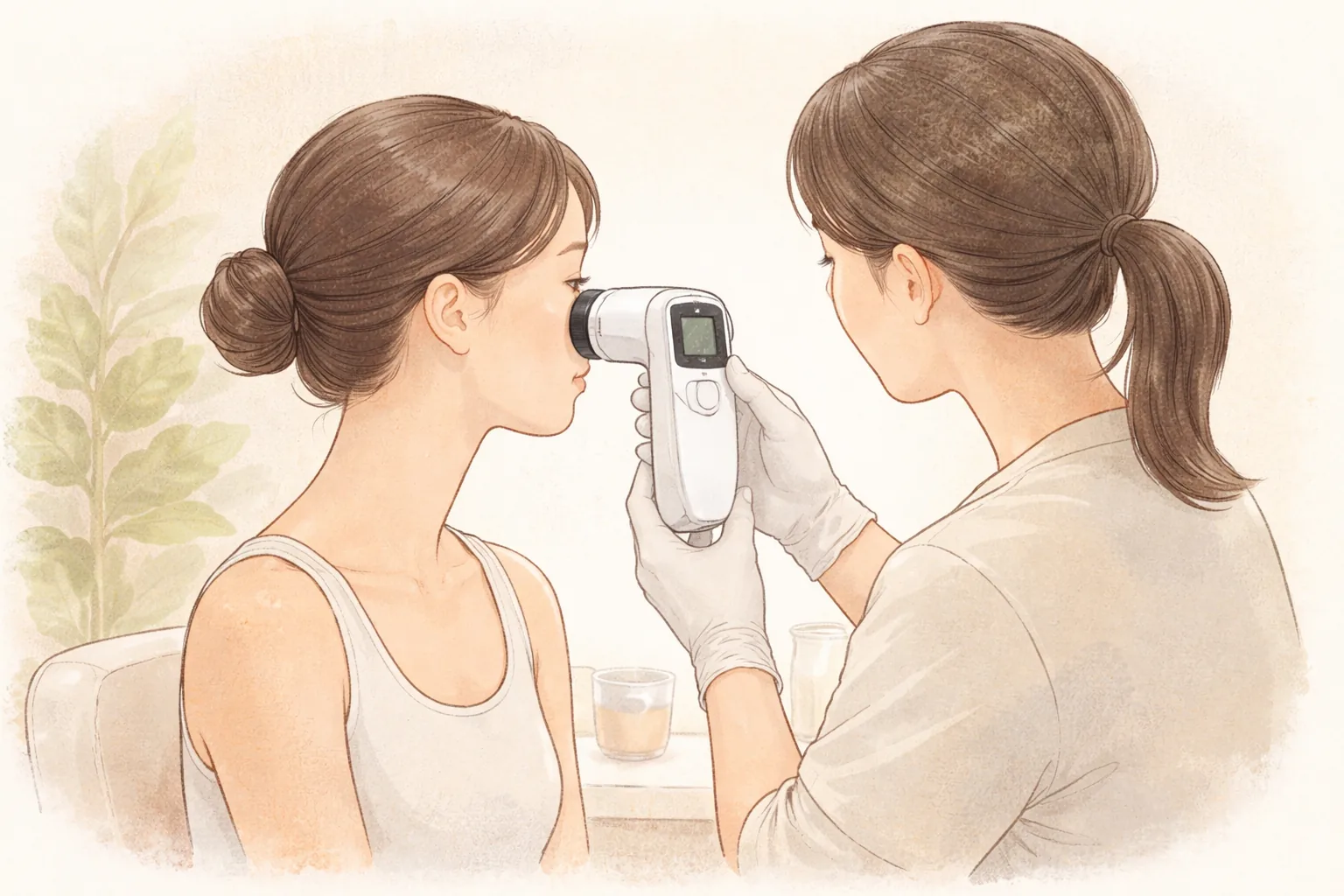
AI skin analysis record — Your skin condition is recorded and organised so you and the doctor look at the same information. This record is reference material to support the consultation, and the analysis tool does not make a medical diagnosis. The judgement is the director's (ATTITUDE Clinic).
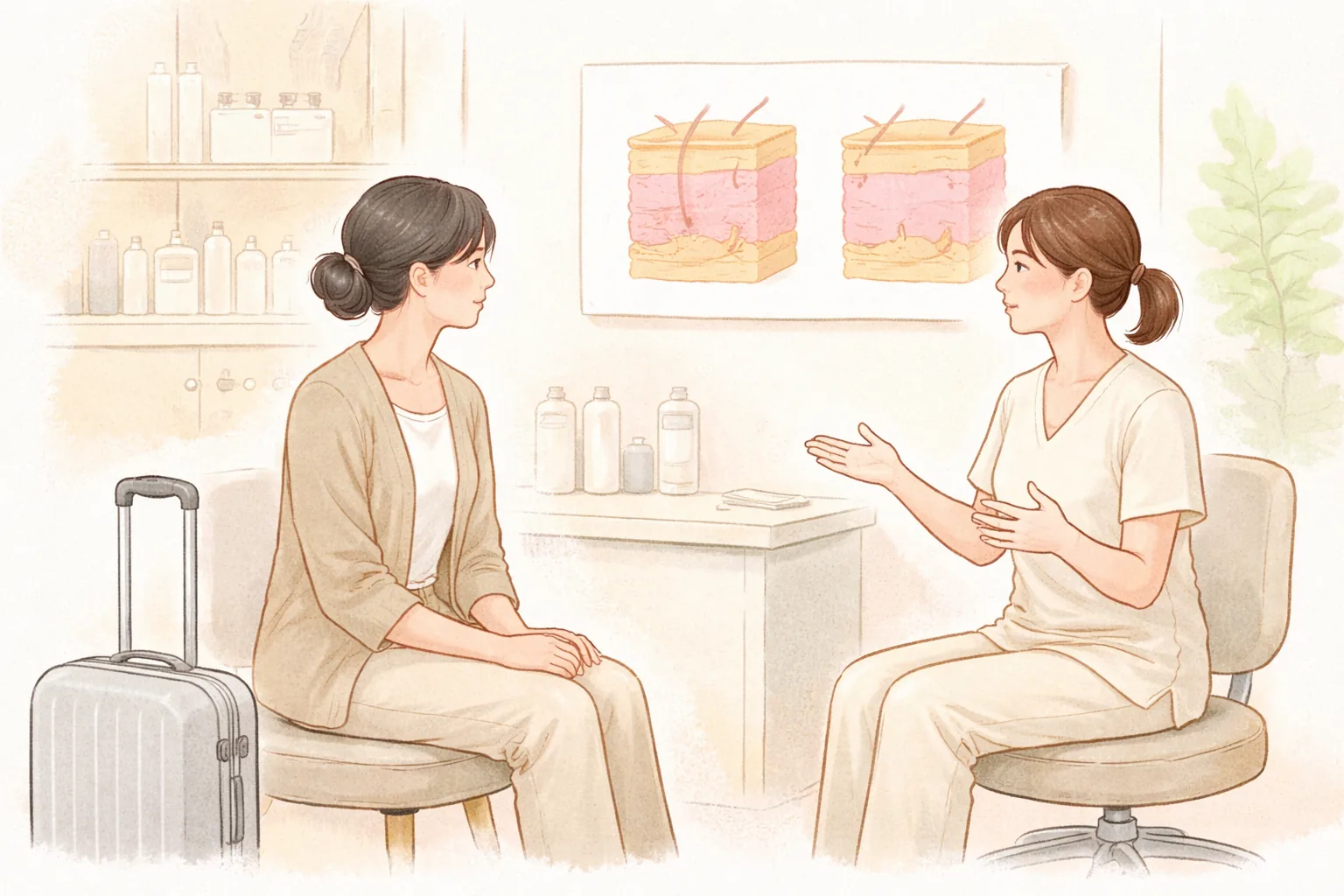
Director consultation — Your concerns, lifestyle habits and previous treatment experience are added to the analysis record to decide together which devices to use, in what combination, order and intensity. Even with the same analysis result, the plan can differ from person to person (ATTITUDE Clinic).
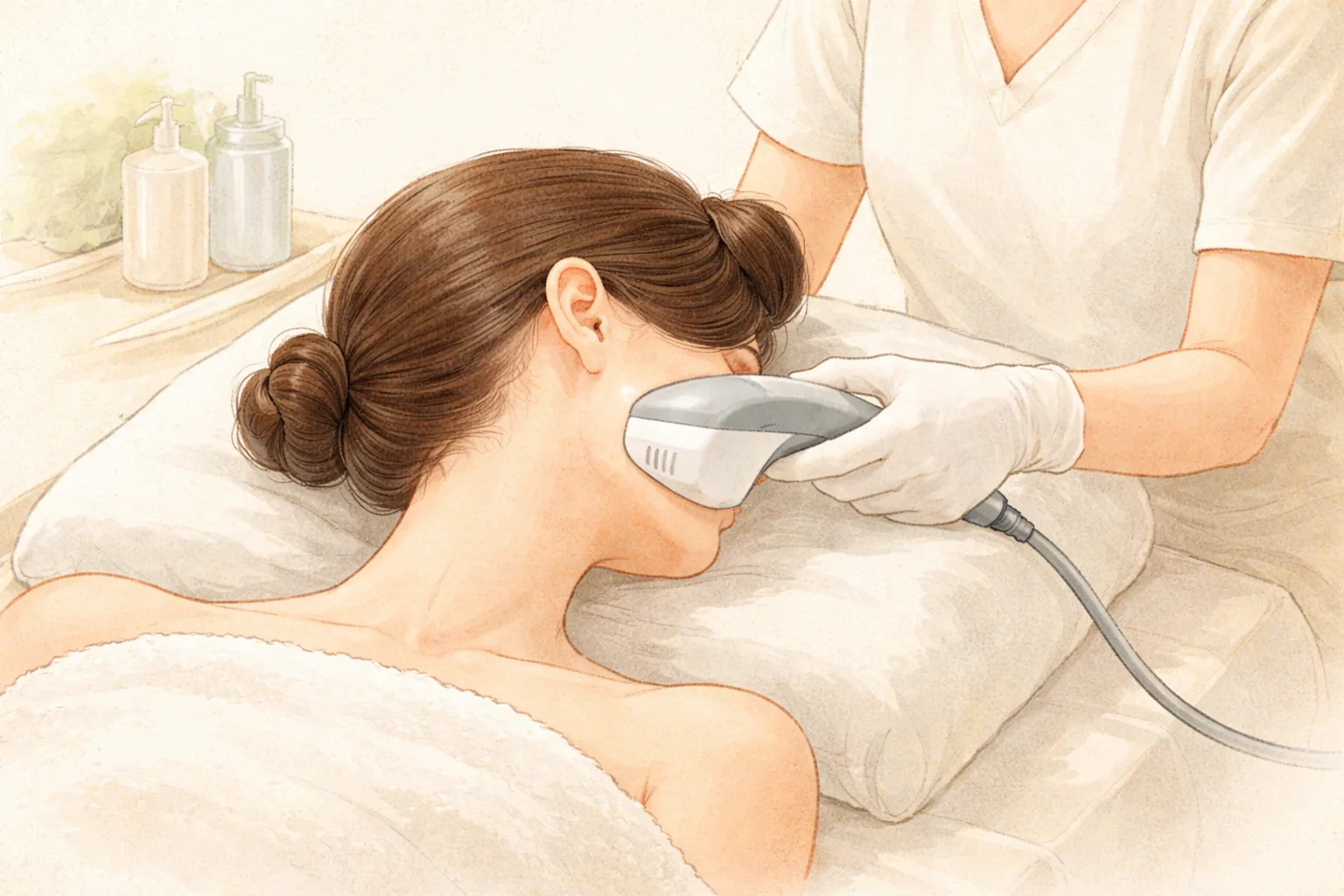
Treatment performed by the director — The director personally performs the treatment as planned in the consultation, adjusting intensity while watching the skin's response. This flow keeps the plan and the execution aligned (ATTITUDE Clinic).
Progress record and next interval guidance — After assessing your skin condition, the appropriate energy level and next visit timing are advised individually (ATTITUDE Clinic).
On this topic, the devices ATTITUDE Clinic handles are Thermage FLX (Solta) and eye Thermage, and the shot units and eye-area dedicated tip configurations are published in the treatment and pricing information (ATTITUDE Clinic). The clinic also offers XERF (monopolar RF) in the same radiofrequency family, Ultherapy and Shurink Universe (HIFU) in the ultrasound family, and Onda (microwave lifting) in the microwave family, so combinations are designed differently depending on where and how deep the sagging is (ATTITUDE Clinic).
Aftercare and side effects
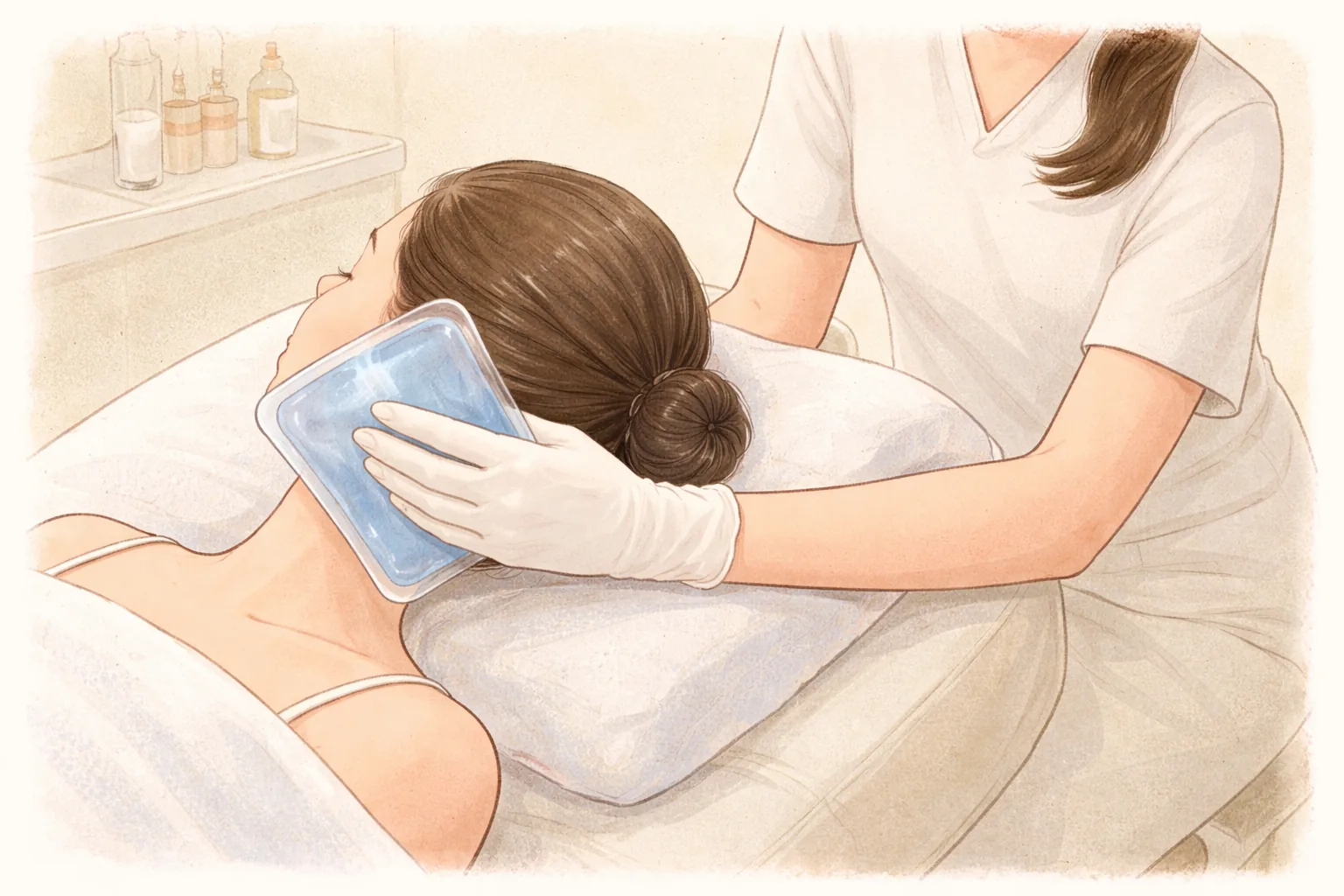
Soothing — Heat and redness may remain right after treatment. Cold compresses can help with swelling; check the method with your clinician (ATTITUDE Clinic).
Moisturising — Because collagen remodelling continues over the months after treatment, keeping up moisturising at home supports recovery (ATTITUDE Clinic).
Sun protection — For a few days after treatment the skin barrier is temporarily weaker, so applying sunscreen more carefully than usual helps you recover without pigmentation (ATTITUDE Clinic).
Adjusting habits that day — It is better to avoid saunas, hot baths, strenuous exercise and alcohol, and most people can return to daily life including makeup from the next day (ATTITUDE Clinic).
Common reactions are redness and swelling, tenderness when pressing along the jawline, small bruises, and temporary numbness or reduced sensation, which usually settle within a few days. Rarely, burns and blisters, small scars, temporary facial muscle weakness, and unwanted reduction in fat-layer volume can occur (ATTITUDE Clinic). According to DermNet, the reported side-effect rate is under 1%, with swelling, redness, and the risk of burns, blisters and scars as the main items (DermNet).
Protection matters especially for eye-area treatment. A US FDA medical device adverse event report includes a case of an eye burn after a Thermage procedure, and the instructions for use list blisters and redness as known side effects, noting the procedure creates heat in the upper layers of the skin and that burns with blistering and crusting are possible (FDA). The same report stresses that a metal eye shield can actually conduct radiofrequency energy to the eye and cause damage, so a correctly sized plastic eye shield should be used (FDA). A single report cannot establish the cause on its own, but it clearly shows why shield choice and fitting matter when treating the eye area.
There are signals that mean you should come back rather than wait. If you notice changes other than expected — blisters, pain that keeps worsening, or redness and swelling that does not settle after several days — it is safer to be seen than to watch and wait (ATTITUDE Clinic).
Frequently asked questions
Does a lean face make Thermage a better fit?
Thinness alone does not determine suitability. DermNet guidance says Thermage tends to work best in the early stage, when the face is thin and surgery is just starting to be considered (DermNet). Conversely, if volume is already lacking and sagging is obvious, broad heat can affect fat-layer volume, so the plan separates areas to preserve volume from areas to tighten. The thinner the face, the more the outcome turns on how shot allocation and energy level are set.
Can age alone decide which device to use?
There is guidance that Thermage works well at the early signs of ageing stage, but that criterion is the stage of sagging and the skin's condition, not age (DermNet). It is hard to claim a particular device is the right answer because you are in your 30s or 40s; even at the same age, skin thickness and collagen renewal speed differ, so plans differ too (ATTITUDE Clinic). At consultation, where the sagging appears and how volume is distributed are reviewed before age.
Is 600 shots the right answer?
Shot count is a value that varies with face size, treatment area, and the current state of your skin and subcutaneous tissue, so numbers alone cannot tell you what is good or bad. Thermage FLX is offered in 600-shot and 900-shot units, and eye Thermage in 225-shot and 450-shot units, so options differ with the area needed (ATTITUDE Clinic). Rather than the number of shots someone else had, it is better to hear why a particular range is needed for you.
Why does the eye shield matter in eye Thermage?
The eye area has thin skin and the eye itself is vulnerable to heat, so how a shield is used during treatment is directly tied to safety. The FDA report explains that a metal eye shield can conduct radiofrequency energy to the eye and cause damage, so a correctly sized plastic shield should be used (FDA). If you are preparing for eye-area treatment, check at consultation which shield is used and whether a dedicated eye tip is used.
What should you look at when choosing a clinic for Thermage?
Rather than deciding by device name and price alone, look at how the clinic distinguishes and explains the cause of sagging and how it builds the plan. The criteria are whether the flow is in place: recording your skin condition to review together before treatment, reviewing previous treatment history, then deciding combination, order and intensity (ATTITUDE Clinic). And because the details — adjusting intensity during the procedure and managing anaesthesia and reactions — separate outcomes even with the same plan, it is worth checking who performs the consultation and the treatment (ATTITUDE Clinic).
At a glance
Table 2 At a glance
Item
Key point
Mechanism
Radiofrequency broadly warms from the dermis through the subcutaneous fat layer, prompting collagen contraction and remodelling
Suitable stage
Early to moderate changes such as early volume loss, skin laxity, and lines around the nose and mouth
Age criterion
Depth of sagging, skin thickness and collagen renewal matter more than age
When the face is lean
It may suit early stages well, but the plan is split to preserve volume in some areas
Pain and recovery
Usually performed without anaesthesia, levels adjusted via heat feedback, redness and swelling from 1–2 hours to a few days
Repeat timing
Individual variation is large; usually decided around 1 year by looking at progress
This article offers general health information. It is not a substitute for diagnosis or treatment based on your own condition, so please talk through your situation with a doctor.