Titanium Lifting Laser Pain and Anesthesia: What to Expect | ATTITUDE Clinic
How Titanium lifting laser treatment feels, how numbness is planned, how long the session lasts, and what the first day after is like — based on ATTITUDE Clinic and AAD guidance.
Written by ATTITUDE Clinic Editorial Team
The first question people searching for Titanium lifting ask is "how much does it hurt?" They also want to know whether numbing cream alone is enough to get through it, whether certain areas sting more than others, and whether the intensity can be turned down mid-session if it hurts. This article walks through how Titanium lifting delivers heat to the skin, what determines the pain, the order in which anesthesia is prepared, and how the day after the session unfolds.
The short answer first
Titanium lifting is a lifting treatment that uses a 3-wavelength laser and is applied to both the face and body on the same principle (ATTITUDE Clinic treatment guide). Pain is decided less by "it's a laser, so it hurts" and more by which intensity is used and how much energy goes into one area, and even at the same intensity, how it feels differs by how densely nerves are packed in each zone (ATTITUDE Clinic column). Numbing cream is one of the preparations that lowers pain, and on top of it, how the energy level, total amount, and treatment speed are set all play a role. According to the American Academy of Dermatology, firming treatments may involve some discomfort during the session, but it usually stays at that level and most finish within 1 hour (AAD guide). In the end, which anesthesia and which intensity suit you is decided during consultation.
How does Titanium lifting deliver heat to the skin?
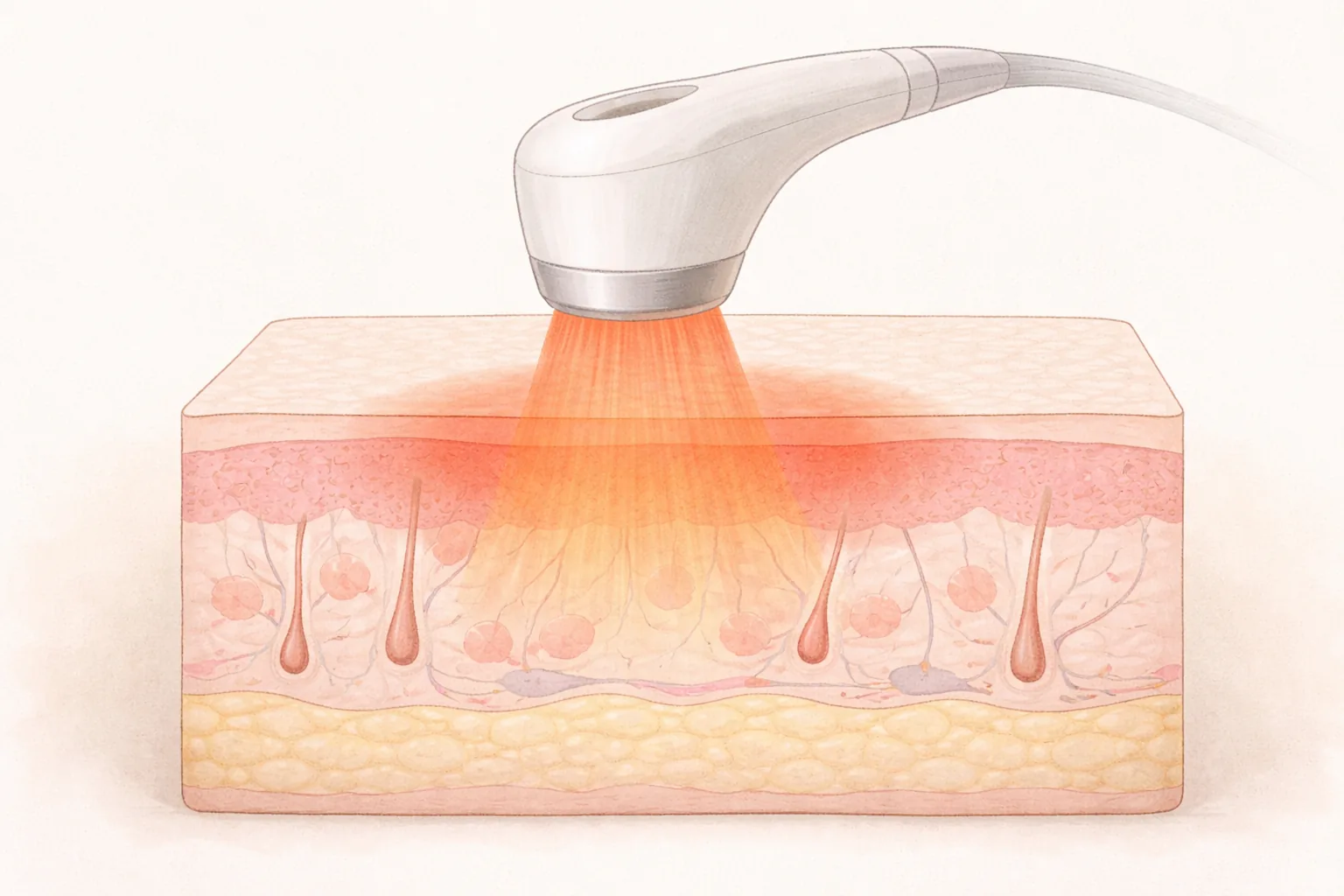
The common goal of lifting treatments is to use heat stimulation so that collagen (the protein that keeps skin firm and supported) gradually remodels. HIFU (high-intensity focused ultrasound) concentrates ultrasound at a single point to create small thermal points from the dermis down to the SMAS layer, while RF (radiofrequency) is described as heating a broad area from the dermis down to the subcutaneous fat layer (ATTITUDE Clinic column). Titanium differs from both in that it is a lifting treatment that uses laser energy, and the ATTITUDE Clinic treatment guide introduces it as a treatment that uses a 3-wavelength laser and is applied to the face and body (treatment guide).
In laser-based treatments, how much energy the skin absorbs and how that total is divided affect both the result and the pain. That is why what is decided first in consultation is not "how many sessions" but "at what intensity and how much in one go." The treatment guide also lists Titanium dosage in 10kJ units, which shows that how the total is distributed is the starting point of the plan (treatment and pricing guide). Even if the same device is used on the face and body, tissue thickness differs, so the total amount needed differs too.
Why can one person tolerate the same Titanium and another find it painful?
Two things are cited as the reason pain varies so much: the energy level and the number of shots delivered to one area. The higher the intensity and the greater the number of shots, the stronger the heat stimulation reaches deeper layers, and the pain grows along with it. How it feels can differ greatly between a case with marked sagging that needs strong energy and a case using low energy for prevention, even though it is the same treatment (ATTITUDE Clinic column).
The other factor is the area. Places close to bone with densely distributed nerves, such as the jawline, cheekbones, forehead, and eye area, tend to feel more sensitive, while areas with thicker tissue like the cheeks tend to hurt less even at the same energy (same column). Individual differences such as skin thickness and healing speed overlap with this. ATTITUDE Clinic explains that even at the same age, whether skin is thick or thin and how much capacity remains to create new collagen differ, so the plan itself has to differ (Why do results differ even from the same treatment?).
The reason the story that "Titanium has almost no pain" circulates is that the stimulation felt at the surface is not as strong as people expect. However, that statement does not apply equally to every area and every intensity. As the session progresses, the same intensity can feel different, so speaking up right away instead of enduring an uncomfortable moment makes it easier to adjust the intensity.
Is numbing cream alone enough to get through it?
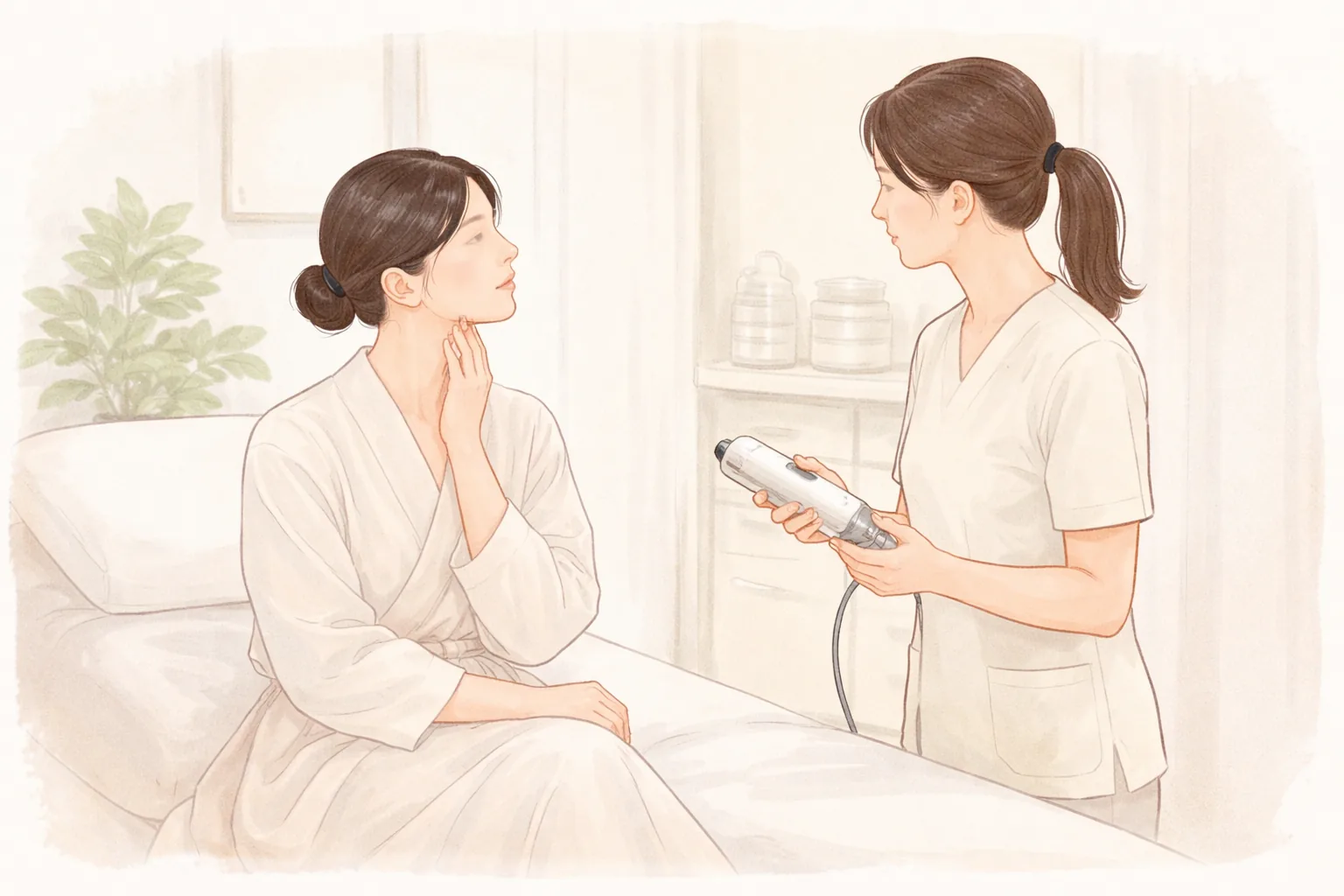
Anesthesia method is one of the items discussed during consultation. The ATTITUDE Clinic column also advises that if you are sensitive to pain, you should ask in advance about anesthesia options and energy level adjustment during consultation (ATTITUDE Clinic column). Numbing cream is one of those options, and it is not structured so that the cream alone decides how it feels. Even with the same anesthesia, the sensation changes depending on at what intensity and to which area the energy is distributed.
The American Academy of Dermatology guide explains that firming treatments may involve some discomfort, but it usually stays at that level (AAD guide). So instead of asking "does the cream bring the pain to 0," asking "what anesthesia is used, and how can the intensity be adjusted during the session" is more helpful for preparation. The type of anesthesia and how long it lasts differ by treatment area and skin condition, so it is confirmed during consultation.
How do the session time and the first day after unfold?
Firming treatments mostly finish within 1 hour, and in many cases makeup is possible right after (AAD guide). Energy-based lifting can leave slight redness and a mild heat sensation for a day or two after the session due to heat stimulation, and most people can return to makeup and daily life from the next day, with downtime guided as about 1–2 days (ATTITUDE Clinic column).
Table 1 How do the session time and the first day after unfold?
Method
Where the heat reaches
Concerns it suits
Sensation during the session
Titanium (3-wavelength laser)
Face and body via laser energy
When firming care that heats from the surface is needed
Varies with intensity and total amount; a sensation of warmth building up
Ultherapy·Shurink (HIFU)
Small thermal points at a set depth from dermis to SMAS
Areas sagging deeply and locally, like the jawline and eye area
A deep, hot sensation
Thermage (RF)
Broadly from dermis to subcutaneous fat layer
Firmness loss across broad areas like cheeks to neck
A warm sensation that lingers
Swipe sideways to see the whole table.
How far HIFU and RF deliver heat, and why pain varies so much, are covered in the ATTITUDE Clinic column (column).
In short Titanium lifting pain is not the result of numbing cream alone but of energy intensity, nerve density by area, and skin thickness together. The more a sensitive area overlaps with strong intensity, the greater the sensation, so setting the anesthesia method and energy level together during consultation is the realistic approach.
If this sounds like your situation
When an important event is less than a week away
Redness and a mild heat sensation can remain for a day or two after the session, and downtime is guided as about 1–2 days, so it is better not to schedule days when your face matters, such as a shoot or an interview, right next to the treatment day. If your schedule is tight, ask first whether the intensity and total amount can be lowered during consultation. If you give the date first, the plan can be built around it.
If you are sensitive to pain or struggled with a past treatment
If you tell us which area hurt unusually much during a previous lifting treatment and at what intensity, it helps decide how to handle the same area. Anesthesia options and energy level are items discussed during consultation, so it is good to request them in advance. During the session too, if it is uncomfortable, tell us right away and the intensity will be adjusted.
If your skin is thin and reddens easily
If your skin is on the thin or sensitive side, the same intensity can feel stronger. We also check whether redness has come up before the session and whether there is an area that recently had laser or peeling. In this case, lowering the intensity by one step and adjusting after watching progress is discussed.
If you are concerned about both face and body
Titanium applies the same device to the face and body, but tissue thickness differs, so the total amount needed and the sensation differ. Whether to treat both areas in one visit or split them changes the recovery process and the sensation. If the overall order is set during consultation, there is less to decide on the treatment day.
Tell us before your consultation Please let us know your recent UV exposure, the skincare ingredients you are currently applying, and any medications you are taking. For previous treatments, telling us the device name, timing, and even the reaction at the time as far as you remember helps the review (ATTITUDE Clinic column). Also let us know how sensitive you are to pain, whether a lack of sleep or fatigue has left you in poorer condition, and when your important dates are.
How ATTITUDE Clinic proceeds
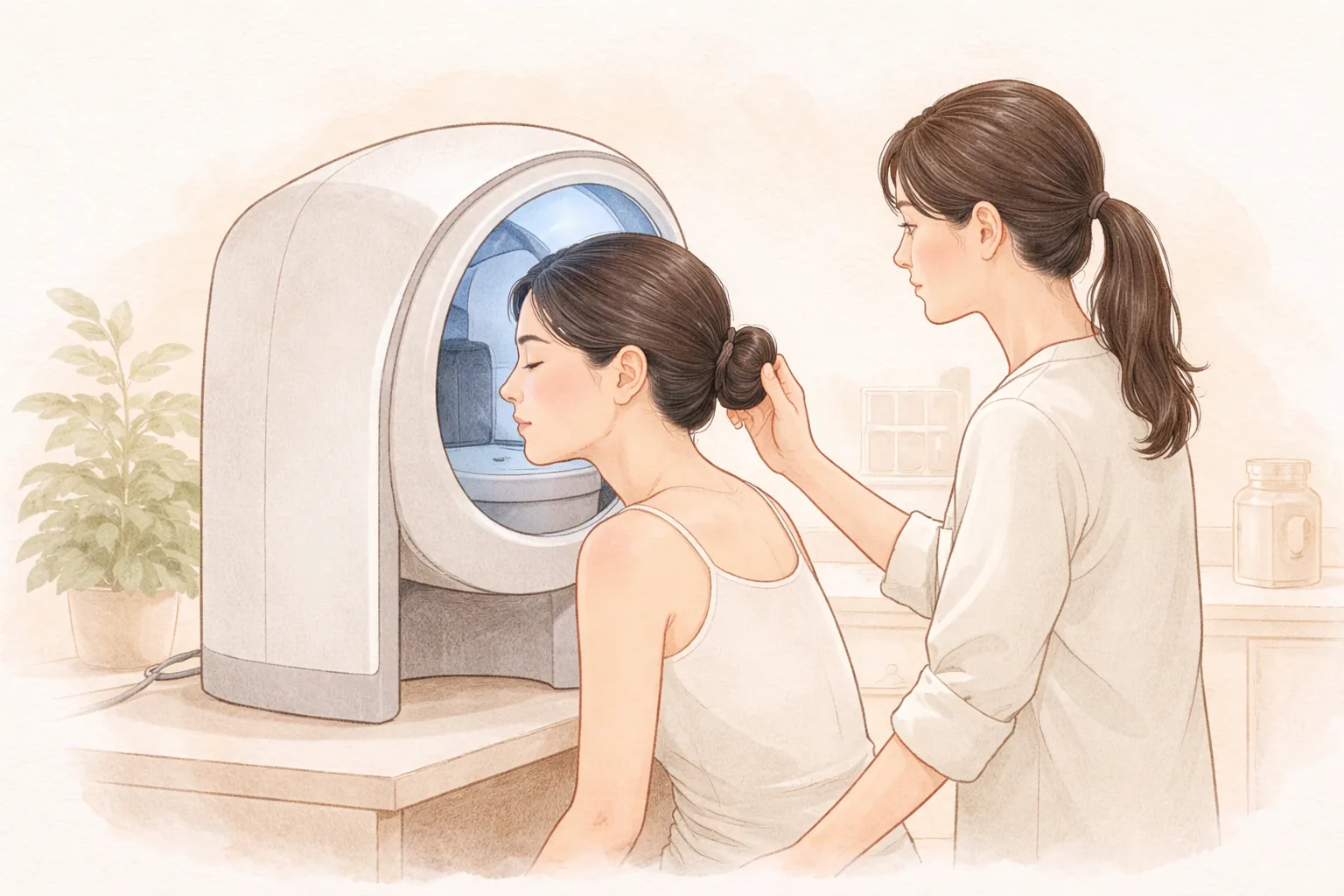
AI skin analysis record — Skin condition is recorded and organized so that you and the doctor look at the same information together. The analysis tool records and organizes information and does not make a medical diagnosis. The judgment is made by the doctor.
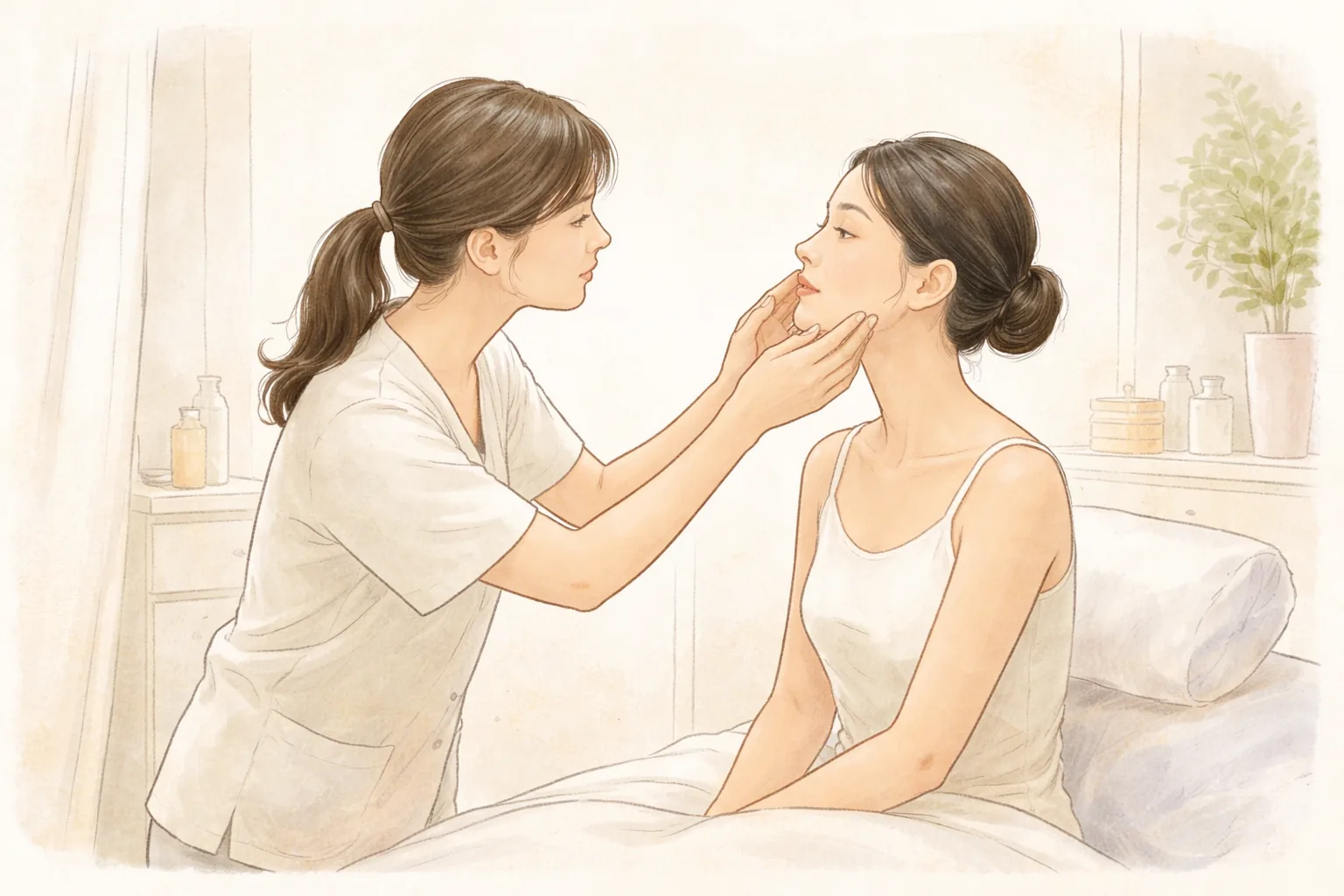
Doctor consultation — Your concerns, lifestyle habits, and previous treatment experience are added to the analysis record to decide together what is needed and what is not, which combination and order, and at what intensity. Anesthesia method and energy level are also decided here.
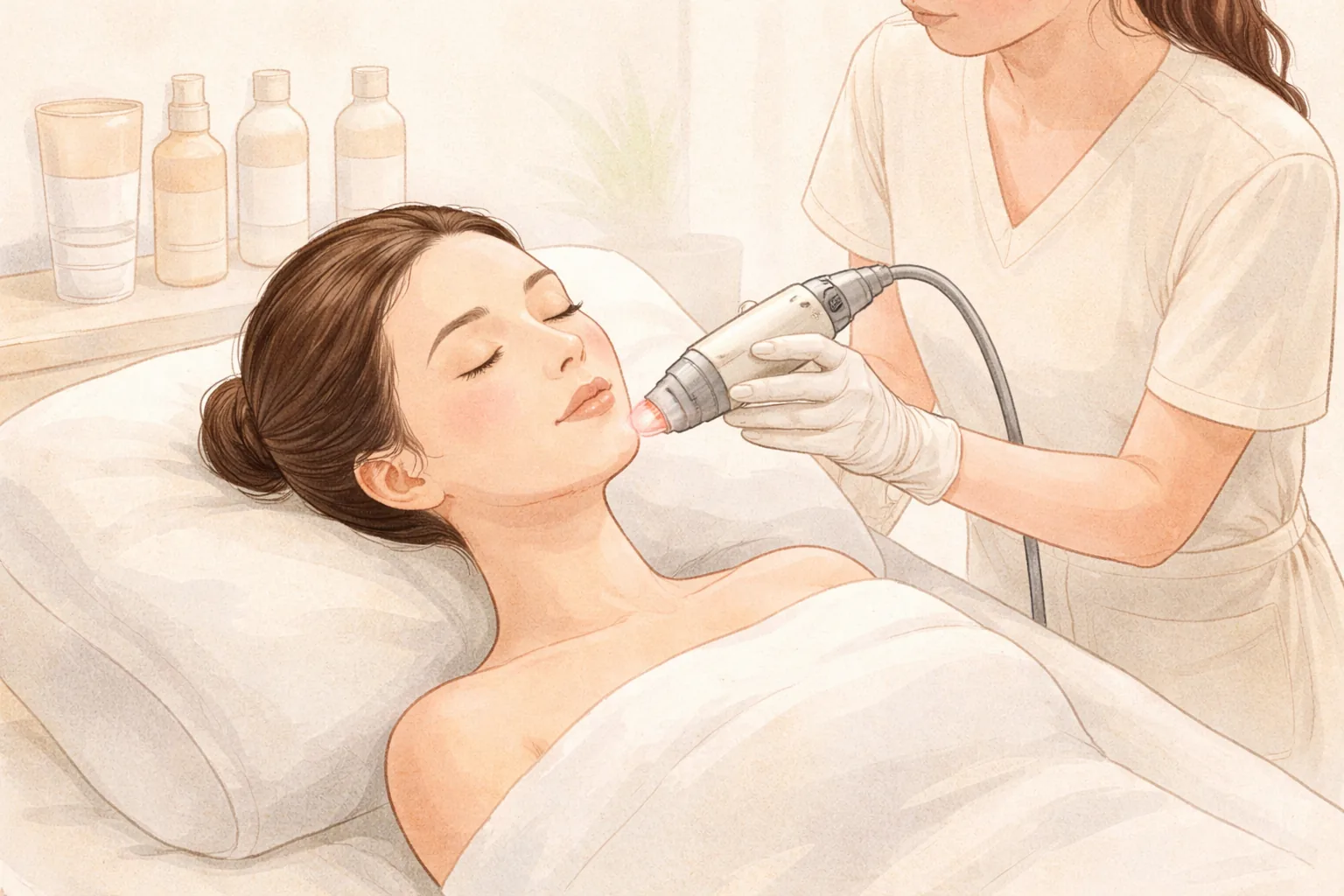
Treatment performed by the doctor — The doctor performs the treatment directly according to the plan, adjusting intensity while watching the skin's response during the session. This is to keep the plan set in consultation and the actual treatment from diverging.
Recovery and follow-up — The response after treatment is checked and the next visit is scheduled. ATTITUDE Clinic's principles are to disclose pricing by unit, to decide together what is needed and what is not, and for the doctor to handle everything from consultation to treatment (ATTITUDE Clinic column).
The devices ATTITUDE Clinic handles for this topic are Titanium (face and body) and Titanium Hyper (face and body), with HIFU-line Ultherapy and Shurink and RF-line Thermage as comparisons (treatment and pricing guide). Which one suits you is decided together after looking at your skin.
Aftercare and side effects
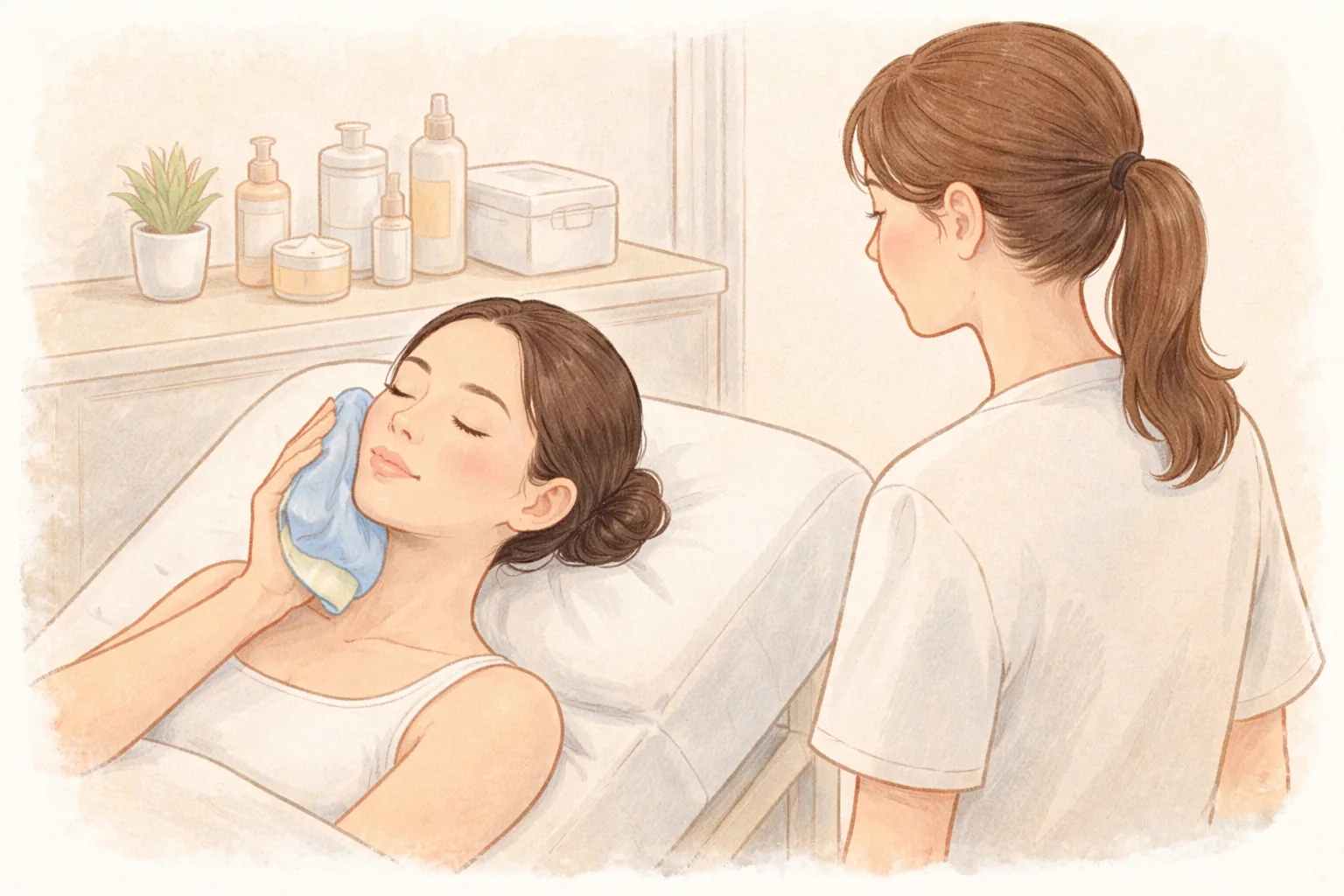
Soothing — Right after the session, cold compresses can help with swelling. The method and duration are confirmed with the medical staff (ATTITUDE Clinic column).
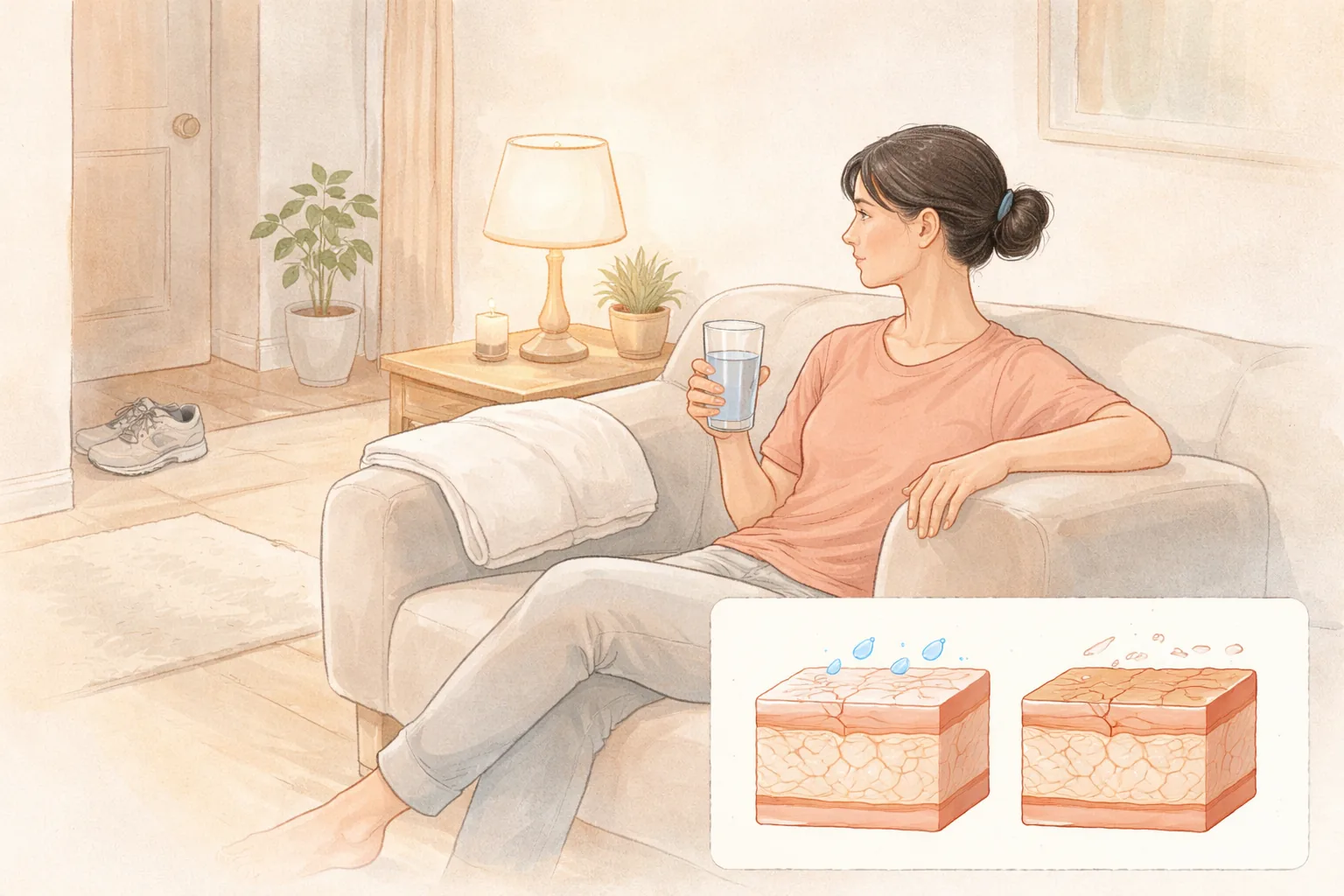
Avoid heat and stimulation that day — It is better to avoid saunas, strenuous exercise, and alcohol on the day itself.
UV protection — For a few days after the session, apply sunscreen more carefully than usual. During this period the skin barrier is temporarily weakened, so protection matters for recovering without pigmentation.
Follow-up — From the next day, daily life including makeup is possible, and how much redness and mild heat sensation remain differs by individual and energy level. If unusual reactions remain, visit to have them checked.
Common reactions include redness, swelling, tenderness when pressing along the jawline, small bruises, and temporary numbness or reduced sensation, and they usually subside within a few days. Rarely, burns or blisters, small scars, temporary facial muscle weakness, and unwanted fat-layer volume loss can occur (ATTITUDE Clinic column). After laser and energy device treatments, pigment changes that temporarily darken or lighten the skin, and lumps after injections, can also appear rarely (Why do results differ even from the same treatment?). If you have symptoms different from what you expected, such as blisters or pain that keeps worsening, do not wait and get care right away.
Frequently asked questions
How painful is Titanium lifting?
It is not something that can be answered with a fixed number. Pain varies with energy level, shot count, and nerve density by area, and areas close to bone with densely packed nerves, such as the jawline, cheekbones, forehead, and eye area, feel more sensitive. Areas with thicker tissue like the cheeks feel less even at the same energy. How it feels differs greatly between a case with marked sagging that needs strong energy and a case using low energy for prevention.
Is numbing cream alone enough to get through it?
Anesthesia is an item decided during consultation, and if you are sensitive to pain, you are advised to ask in advance about anesthesia options and energy level adjustment. The cream alone does not decide how it feels. Even with the same anesthesia, how the energy is distributed to which area at what amount changes the sensation, so setting the intensity and total amount together during consultation is the realistic approach. The American Academy of Dermatology guide also explains that firming treatments may involve some discomfort, but it usually stays at that level.
Can I put on makeup and go to work right after?
Firming treatments mostly finish within 1 hour, and makeup is often possible right after. Energy-based lifting can leave redness and a mild heat sensation for a day or two after the session, but most people can return to daily life from the next day, with downtime guided as about 1–2 days. It is better to avoid saunas, strenuous exercise, and alcohol on the day itself. Recovery speed differs by energy level and skin condition.
How long do the effects last, and how often should I get it?
For lifting treatments, the flow described is that after 1 session, progress is reviewed and the doctor decides the repeat interval at roughly around 1 year. The reason maintenance periods vary so much between individuals is that the speed at which collagen is synthesized and broken down differs with the degree of tissue firmness loss, age, UV exposure, and lifestyle habits. How the treatment intensity was set also has an influence. Titanium plans also differ with skin condition and total amount, so building an individual schedule at the first consultation is standard.
How should I choose a clinic?
It is good to first look at whether they explain how the anesthesia method and energy level are decided before treatment. Whether they review previous treatment records (device, dosage, date, reaction) when you bring them, and whether they decide together what is needed and what is not, are also items to check. Whether the person who consults is the same person who performs the treatment is also cited as a factor affecting results. ATTITUDE Clinic's principles are to decide together what is needed and what is not based on the analysis record and examination, and for the doctor to handle everything from consultation to treatment (column).
At a glance
Table 2 At a glance
Item
Key point
Principle
Lifting using a 3-wavelength laser, applied to face and body
What determines pain
Energy level, shot count (total amount), nerve density by area, skin thickness
Anesthesia
Method guided during consultation; the cream alone does not decide how it feels
Session time
Mostly within 1 hour; makeup often possible right after
After the session
Redness and mild heat sensation for a day or two, downtime 1–2 days, UV protection important
Repeat interval
Doctor decides after reviewing progress; individual differences are large
This article offers general health information. It is not a substitute for diagnosis or treatment based on your own condition, so please talk through your situation with a doctor.