Ultherapy Swelling and Recovery: When Can You Return to Normal?
Why Ultherapy causes swelling and tenderness, what determines how much you get, when you can return to normal, aftercare, common reactions and rare side effects.
Written by ATTITUDE Clinic Editorial Team
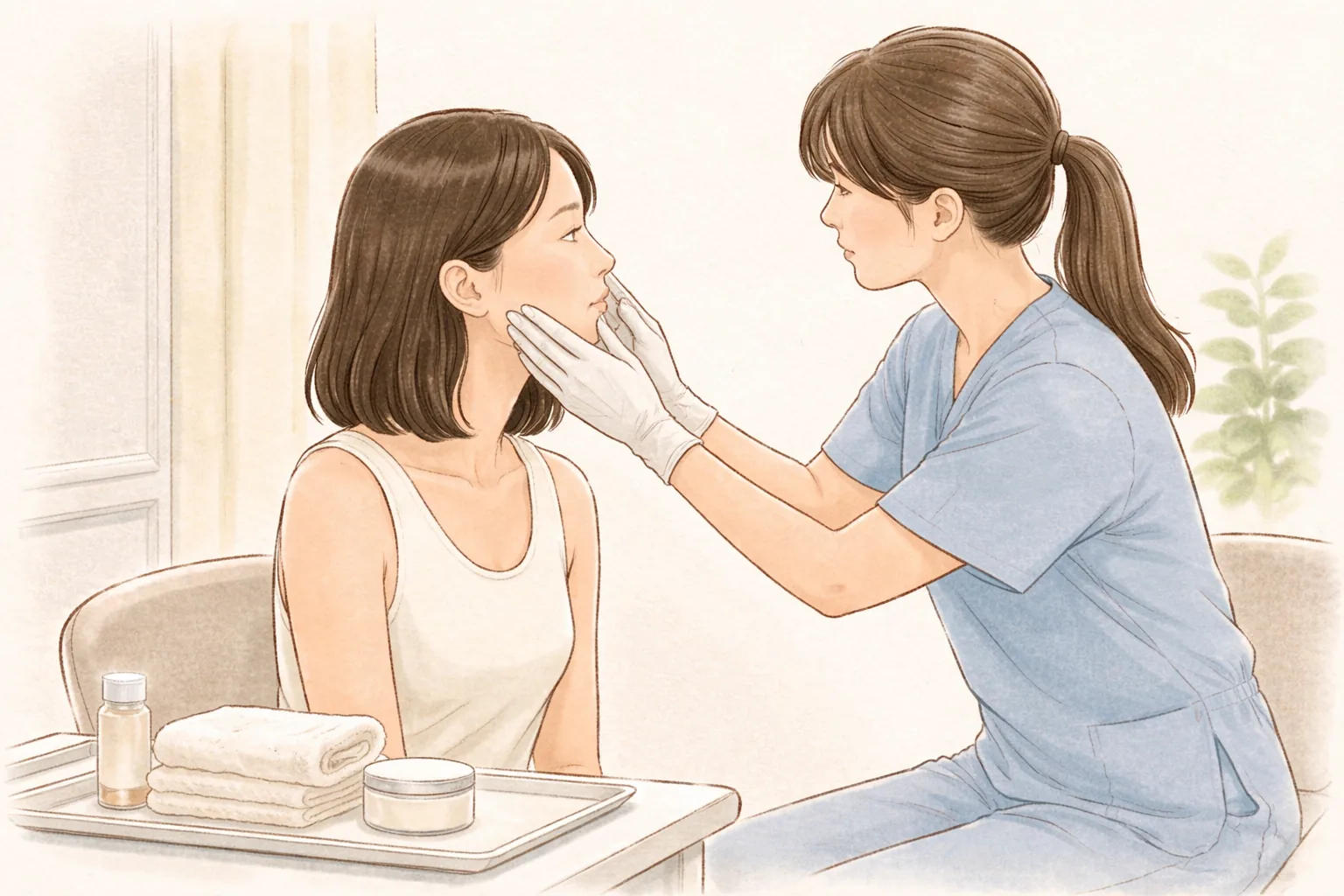
Once you book Ultherapy, the words you probably search most are "swelling" and "recovery." You wonder how puffy you will look in the mirror that evening, whether you can schedule work or plans the next day, and whether long-lasting swelling means something went wrong. This article starts with what Ultherapy actually does inside the skin, then covers why swelling and tenderness happen, what determines how much you get, when you can return to normal, and what to look after afterwards.
The short answer first
Ultherapy is usually described as a treatment with almost no downtime. According to Cleveland Clinic's guide, redness can remain for about 1 hour after the procedure, and some people get mild swelling, bruising or tenderness when pressed, but these are usually mild and temporary. You can wear makeup and return to your usual skincare right after if you want. Tenderness when pressed, however, can last up to 1 month, and the degree of swelling and redness depends on the energy level used, the number of shots and the area treated. The results that emerge as new collagen forms move on a different clock from the settling of swelling, usually appearing gradually over 2–3 months.
What does Ultherapy do inside the skin?
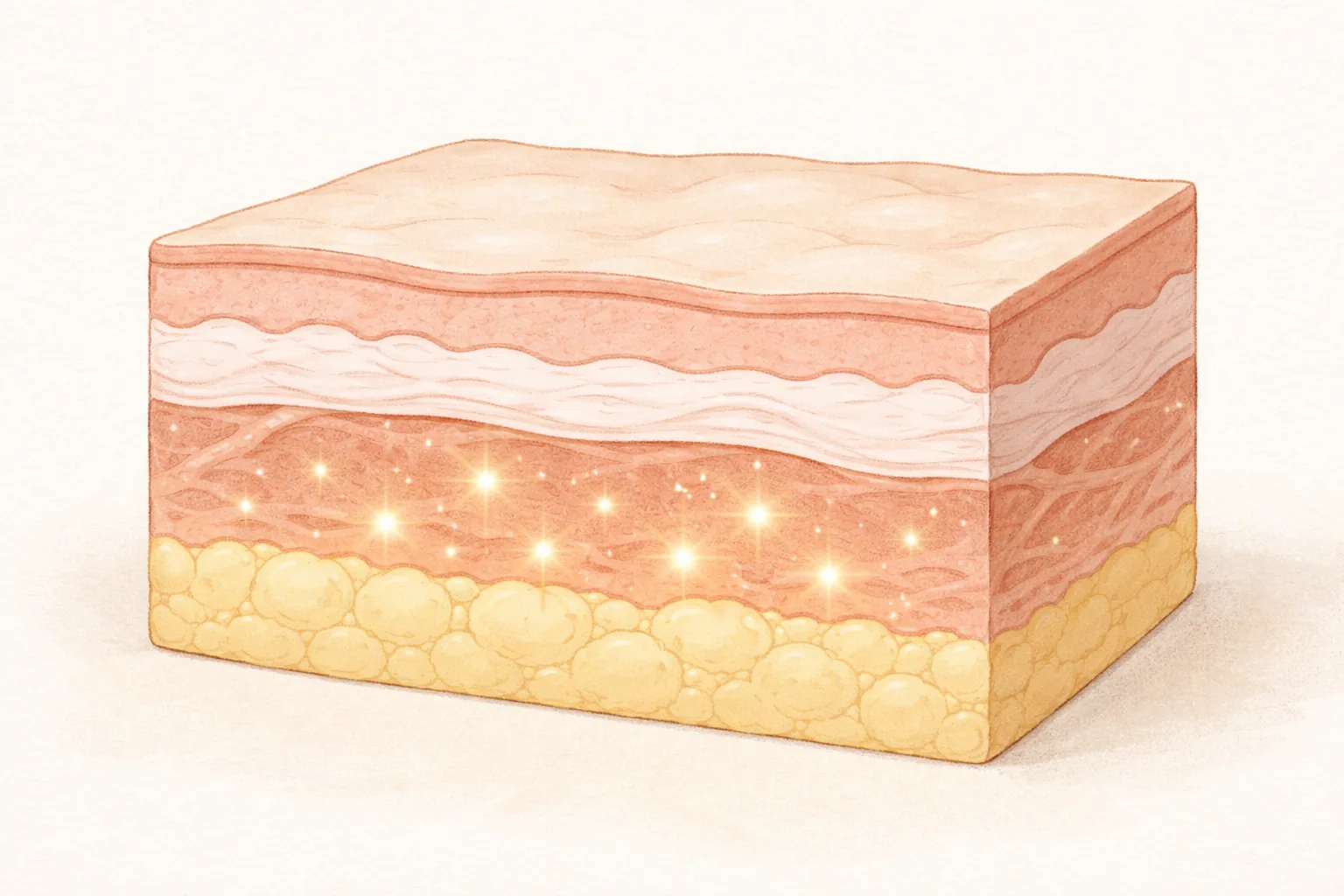
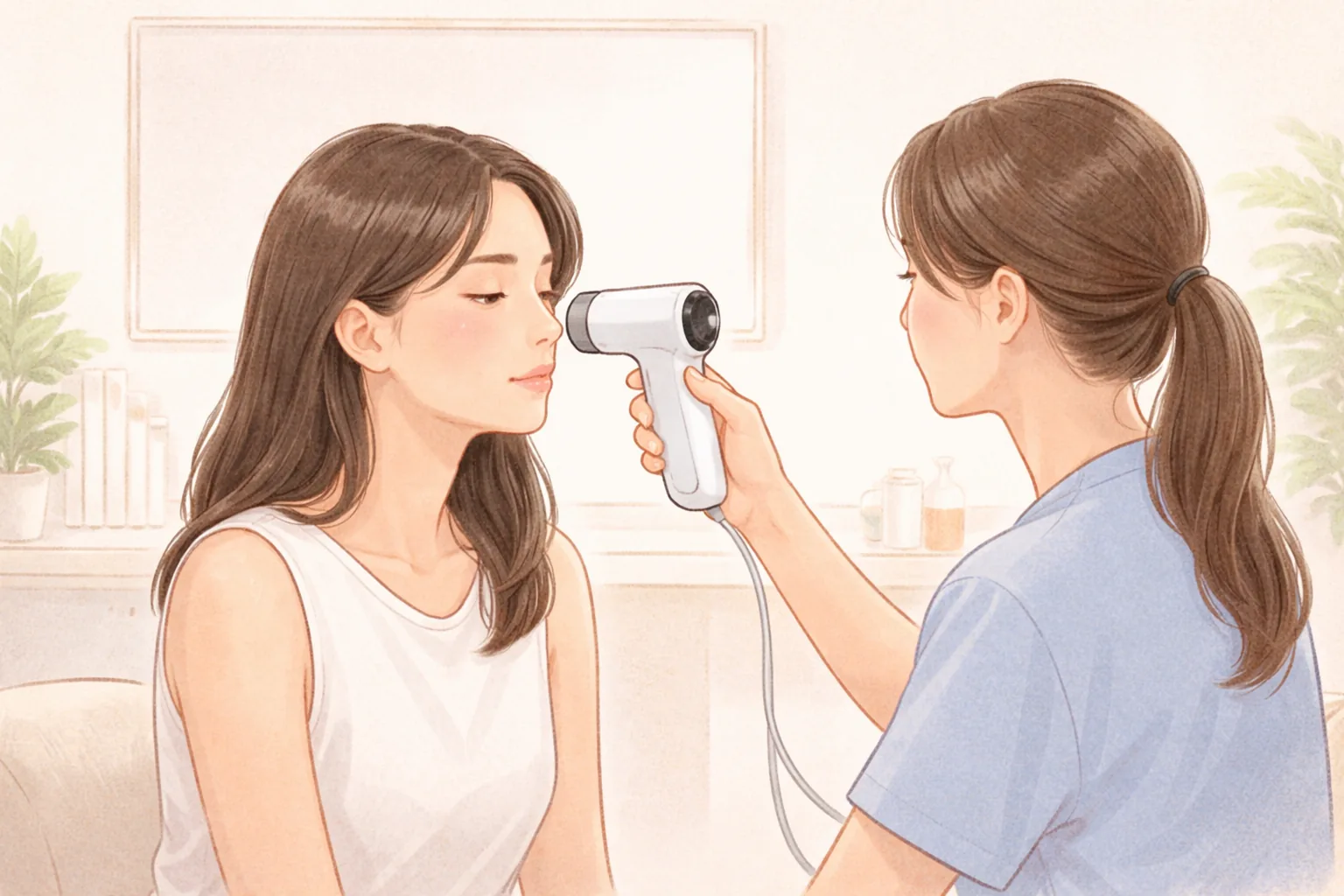
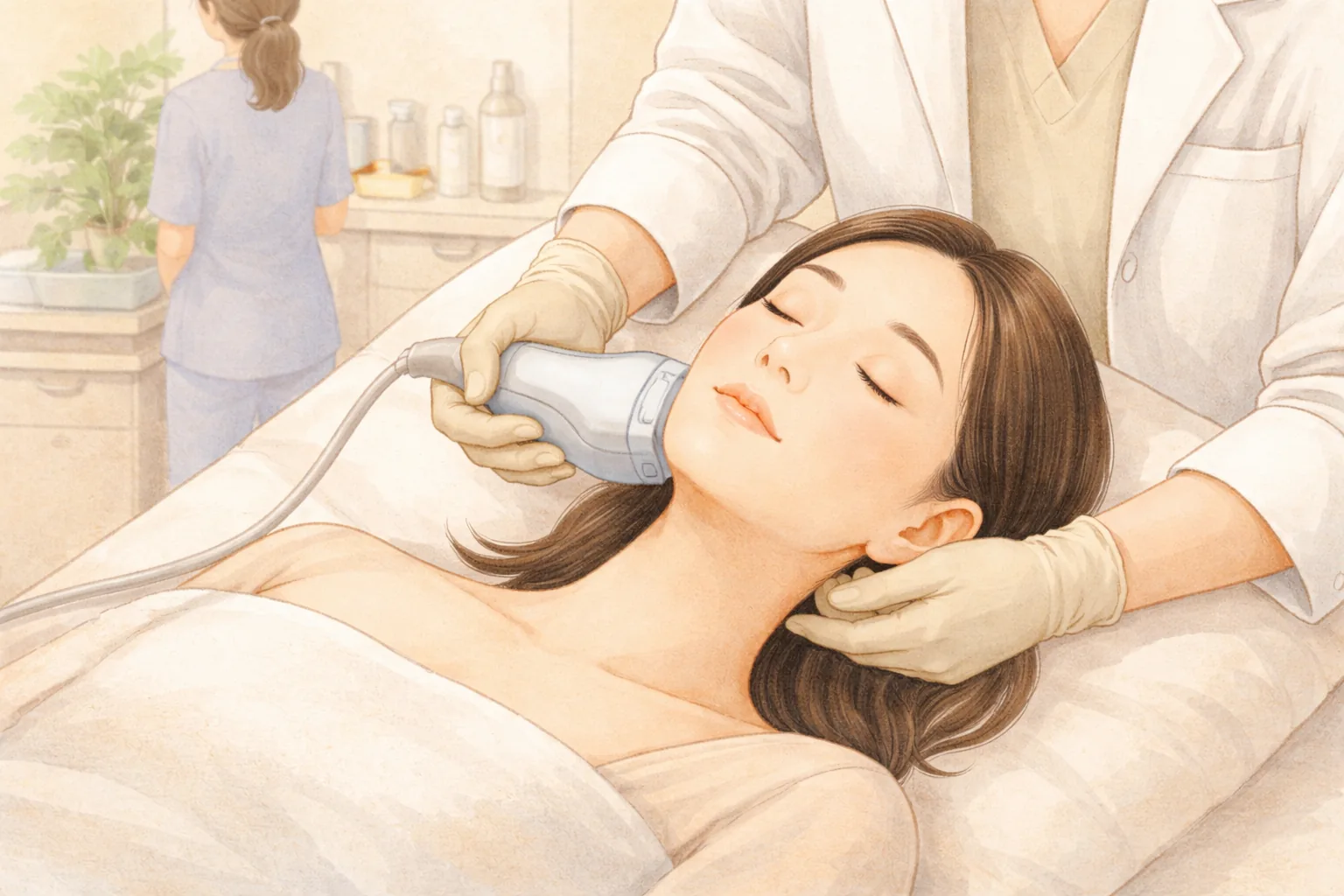
Ultherapy uses HIFU (high-intensity focused ultrasound). Like focusing sunlight through a magnifying glass onto one point, it concentrates ultrasound energy inside the skin, creating small thermal points at depths set by each cartridge, from the dermis down to the SMAS layer. The SMAS is a thin layer deeper than the dermis that supports the facial muscles and skin, a bit like the lining inside a garment. As we age, this layer stretching is considered a major cause of sagging. In the ATTITUDE Clinic column, this heat is described as slightly contracting collagen (the protein that keeps skin firm) and, above all, setting gradual remodeling in motion.
The key point is that this energy passes through the surface of the skin and reaches deep layers. Cleveland Clinic's material also explains that Ultherapy uses focused ultrasound to stimulate collagen in very deep layers of the face and neck, lifting and tightening loose skin. It is not a method that peels the surface but one that places points inside the skin to trigger a healing response. That is why the recovery looks different from a laser. Rather than peeling or scabbing on the surface, the heated areas briefly turn red and swell, then settle.
So why does it swell and hurt? Heated tissue increases blood flow during recovery and draws fluid to the area. Swelling and redness are the visible part of that process. In other words, how uncomfortable you feel is decided by where "how strong the treatment was" meets "how much your skin reacts to that stimulation."
Swelling and tenderness: what determines how much you get?
The first variable is the energy level and number of shots. According to the ATTITUDE Clinic column, the higher the energy level and the more shots delivered to one area, the stronger the thermal stimulation reaching the SMAS layer and the greater the tenderness. A case where sagging is pronounced and strong energy is needed and a case using low energy for prevention can feel very different even under the same treatment name.
The second is the area. Areas close to bone with dense nerves, such as the jawline, cheekbones, forehead and eye area, feel more sensitive at the same energy, while thicker areas like the cheeks tend to hurt less. Cleveland Clinic's material also notes that some patients experience bruising and tenderness along the bones of the face and neck. If one area stays swollen unusually long, that is why you should look at both the tissue thickness of that area and the treatment intensity.
The third is your skin's own reactivity. Even at the same intensity, dry, oily, combination and sensitive skin react and recover differently, and skin thickness and collagen-producing capacity vary from person to person. A column on why the same treatment gives different results describes these differences as differences in the starting line. Slower recovery does not necessarily mean the treatment was wrong.
There is one common misunderstanding here: the idea that "swelling a lot means the effect is that much greater." Swelling is a temporary response to thermal stimulation, and results appear on the timeline of collagen being rebuilt. Less swelling does not mean a smaller result, and more swelling does not mean a bigger one.
Table 1 Swelling and tenderness: what determines how much you get?
Category
What it does inside the skin
Mainly used for
Recovery course
Ultherapy (HIFU)
Small thermal points at set depths from dermis to SMAS by cartridge
Jawline, deep and localized sagging
No major change right after, redness for about 1 hour, tenderness lasts longer
Shurink Universe (HIFU)
Same ultrasound family, differing in depth reached and energy delivery method
When starting localized lifting lightly
Similar course to Ultherapy, varies with intensity
Thermage FLX (RF)
Electrical energy heats broadly from dermis to subcutaneous fat
Skin texture, loss of elasticity over a wide area
Initial firm feeling (some swelling) then settles
Eye Ultherapy
A configuration separately described for the eye area
Thin, delicate eye area
Eye skin is thin, so reactions and bruising are watched together
Swipe sideways to see the whole table.
The three treatments are each listed separately in the ATTITUDE Clinic treatment guide. They are grouped under the same name "lifting," but what they do inside the skin differs, so the shape of recovery differs too.
In short Ultherapy redness and swelling usually settle within 1–2 days, and makeup and your usual skincare are possible right after. Tenderness, however, can remain for up to 1 month, so if you have plans, it is better to schedule the treatment with some buffer.
When can you return to normal?
Cleveland Clinic's material states that Ultherapy has no downtime, that you can wear makeup right after if you wish, and that you can return to your usual skincare routine. Redness may remain for about 1 hour but usually fades naturally. Swelling, bruising and tenderness, however, can last a few days longer in some people, so if you have photos or an important presentation where your face will be visible, it is easier on your mind to leave room around the treatment date.
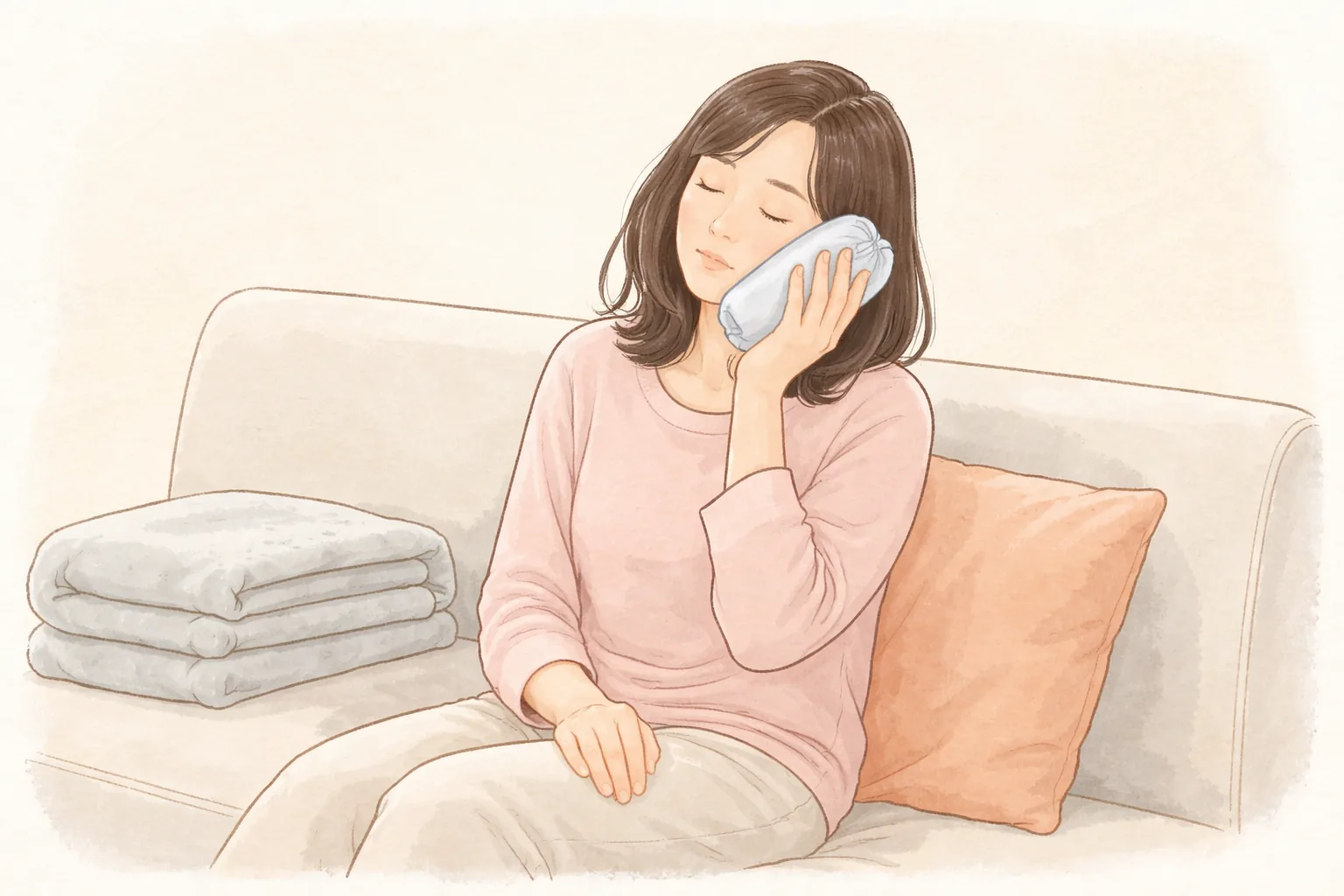
The day of the procedure needs a little care. It is better to avoid saunas, strenuous exercise and alcohol, and cold compresses can help if tenderness or swelling bothers you. Washing and applying makeup can usually be done without issue from the next day.
It also helps to remember that your skin's barrier is temporarily weaker during this time. Applying sunscreen more carefully than usual helps you recover without pigmentation. How much redness and warmth remains varies with the energy level.
Recovery and results move on different clocks
Many people look in the mirror the day after treatment to judge the result. Ultherapy, however, rarely gives a big change right after, and any change usually appears gradually over about 2–3 months. Cleveland Clinic's material also explains that some feel immediate improvement, but the complete result may be seen over 3–6 months. In other words, finishing recovery quickly and getting results quickly are separate matters.
How long results last varies from person to person, and the timing of a repeat session is decided by watching progress, roughly around 1 year. The degree of SMAS layer elasticity loss, age, usual sun exposure and lifestyle habits affect the rate at which collagen is synthesized and broken down, and the intensity used also plays a part. So rather than finishing with one session, it is more natural to approach it as an individually designed plan.
It is also worth remembering that Ultherapy is not a replacement for surgical facelift. Cleveland Clinic's material explains that it can be an option for people who want to delay surgery or are looking for a less invasive method. Where you set your goal changes the standard for satisfaction.
If this applies to you
If you have a ceremony, shoot or important event coming up
Redness lasts about 1 hour, and swelling and bruising can last a few days, so it is safer to leave at least 1–2 weeks before your event. Tenderness can remain for up to 1 month, so if a facial massage or strong stimulation is planned, it is better to adjust the timing. If you mention the nature of your event and how much recovery time you have during consultation, we can plan the timing to match.
If you want to manage firmness steadily
Since how long results last differs from person to person, the timing of a repeat session is decided by watching progress. Use roughly 1 year as a reference, but judge differently if you have high sun exposure or collagen loss is fast. Recording the date of your previous treatment, the number of shots and how you reacted then helps when planning the next one.
If your skin is sensitive or flushes easily
Depending on skin type, the degree of reaction and recovery speed differ even with the same stimulation. You will decide together how to set the energy level and whether to proceed all at once or split into sessions. Redness, swelling and tenderness are common after energy-device treatments but usually settle within a few days.
If you are an overseas visitor on a short stay
Makeup and washing are possible right after, and there is almost no downtime, so it is not hard to fit into your schedule. However, since results appear gradually over 2–3 months, it is difficult to see all the changes within your stay. If you have records of previous treatments, bringing them helps the review.
Tell us before consultation Your recent sun exposure and outdoor activity, medications you are taking, products you apply to your skin (especially stimulating ingredients like retinol), the device, number of shots and date of any previous lifting or injection treatment and how you reacted then, and any date-fixed plans like a ceremony or shoot.
How ATTITUDE Clinic proceeds
AI skin analysis record — Your skin condition is recorded and organized so you and the doctor look at the same information together. The analysis tool is reference material that organizes information and does not make a medical diagnosis. The doctor makes the judgment.
Doctor consultation — Your concerns, lifestyle habits and previous treatment experience are added to the analysis record, and you decide together which device to use first, how to set intensity and order, and whether to proceed at once or split sessions. The time available for recovery and your schedule are also reflected here.
Treatment performed by the doctor — The doctor performs the treatment according to the plan set in consultation and adjusts intensity while watching your skin's reaction during the procedure. This flow is meant to keep the plan and the execution aligned.
Recovery and aftercare guidance — You are given precautions after treatment, sunscreen and moisturizing guidance, and the next visit is scheduled after watching your progress.
The devices we offer on this topic are Ultherapy (Merz), Eye Ultherapy, Shurink Universe (Classys) and Thermage FLX (Solta). In the treatment guide, Ultherapy and Eye Ultherapy are listed as separate configurations, and Shurink Universe and Thermage are categorized under different energy types. Prices are disclosed by unit, and VAT is separate.
Aftercare and side effects
After the procedure, you can take care of things in this order.
Calming — Cold compresses can help if swelling or warmth bothers you. Please confirm the method with the medical staff.
Avoiding stimulation on the day — It is better to avoid saunas, strenuous exercise and alcohol.
Moisturizing and washing — Makeup and washing are possible right after, but it is better to hold off on strongly stimulating products for a while.
Sunscreen and checking progress — For a few days, apply sunscreen more carefully than usual and watch for any changes different from what was expected.
Common reactions are redness and swelling, tenderness when pressing along the jawline, small bruises, and temporary numbness or reduced sensation. They usually settle within a few days but can last longer, and tenderness can continue for up to 1 month. Rarely, burns or blisters, small scars, temporary facial muscle weakness, or unwanted loss of fat-layer volume can occur. This is why the process of diagnosing and setting the energy level and treatment depth matters.
There are also signs to check without waiting: blisters, pain that keeps getting worse, or redness that does not fade and spreads after a few days. These changes fall outside the expected range explained before treatment, so it is safer to be seen right away.
Frequently asked questions
How long does swelling last after Ultherapy?
Swelling usually settles within a few days. Cleveland Clinic's material states that some patients get mild swelling, bruising and tenderness, but that these are mild and temporary, and that tenderness can last up to 1 month. The degree and duration of swelling depend on the energy level used, the number of shots and the tissue thickness of the treated area. If swelling increases after a few days or is severe on only one side, it is better to consult.
Can I return to daily life the same day? What about makeup?
There is almost no downtime, so returning to daily life is usually possible, and Cleveland Clinic's material states you can wear makeup right away if you wish. Redness may remain for about 1 hour, and bruising or tenderness can last a few days in some people. On the day, avoid saunas, strenuous exercise and alcohol, and manage swelling with cold compresses. If you have an important event, leave room around the date.
How painful is it? How is anesthesia handled?
Pain varies widely with the energy level and the nerve density of each area. Areas close to bone with dense nerves, such as the jawline, cheekbones, forehead and eye area, feel relatively more sensitive, while thicker areas like the cheeks feel less. Cleveland Clinic's material explains that there may be prickling or a warm sensation during the procedure, and that if pain occurs it appears briefly at the moment the ultrasound energy is delivered. If you are sensitive to pain, tell us during consultation and we will decide the anesthesia method together.
When should I consider the next treatment?
The timing of a repeat session is decided by watching progress, roughly around 1 year as a reference. How long results last depends on the degree of SMAS layer elasticity loss, age, sun exposure and lifestyle habits, and treatment intensity. Since changes appear gradually over 2–3 months, it is better not to judge too early. Bringing records of the device and number of shots from your previous treatment and how you reacted then makes planning the next one easier.
What should I check when choosing a clinic?
It helps to check which device is used, whether cartridges are genuine, and who performs the plan set in consultation. Even under the same treatment name, the device, energy delivery method and depth reached differ, and the suitable design differs with skin thickness and sagging. Also look at whether swelling and recovery time were discussed in consultation, and whether you were given aftercare precautions and a way to contact the clinic if something abnormal happens. Whether the recovery plan is set during consultation affects real satisfaction.
At a glance
Table 2 At a glance
Item
Key point
How it works
Focused ultrasound creates small thermal points at set depths from dermis to SMAS to induce collagen remodeling
Right after
Redness for about 1 hour, some get mild swelling, bruising and tenderness
Return to normal
Almost no downtime, so makeup, washing and usual skincare are possible right away
Pain variation
Energy level, number of shots and nerve density by area determine how much
When results appear
If any, changes usually appear gradually over 2–3 months, with complete results up to 3–6 months
Repeat timing
Varies by individual, decided by watching progress roughly around 1 year
Warning signs
Blisters, worsening pain, spreading redness — check right away
This article offers general health information. It is not a substitute for diagnosis or treatment based on your own condition, so please talk through your situation with a doctor.