Can You Combine Lifting Treatments? How to Decide Order and Spacing
What happens under the skin when lifting treatments are layered, how order and spacing are decided, and the recovery timeline — based on ATTITUDE Clinic resources and the American Academy of Dermatology.
Written by ATTITUDE Clinic Editorial Team
When you search for lifting treatments, questions naturally follow: "Can I get Thermage FLX after Ultherapy?" or "Is it okay to do both in one day?" The confusing part isn't whether they can be combined at all — it's that what to do first and how long to wait between them seem to differ from person to person. This article covers what happens beneath the skin when lifting treatments are layered, how order and spacing are decided, and the sequence of recovery.
The bottom line first
They can be combined. But it's not fixed as "combining is always better" or "you must always separate them." Each lifting treatment targets a different layer and moves heat in a different way, so a combination that divides responsibilities between things that can't substitute for each other is possible. Whether to do both in one session or split them across a few days to a few weeks depends on skin thickness, depth of sagging, how much recovery time you have, and how sensitive your skin is. That's why in consultation, we first sort out "what's needed now and what can wait" before deciding order.
Why can they be combined — each lifting treatment heats a different layer
At the center of sagging is the SMAS layer. It's a thin membrane deeper than the dermis that supports the facial muscles and skin, often compared to the lining inside a jacket. The core of lifting is how deeply and precisely heat energy is delivered to this membrane.
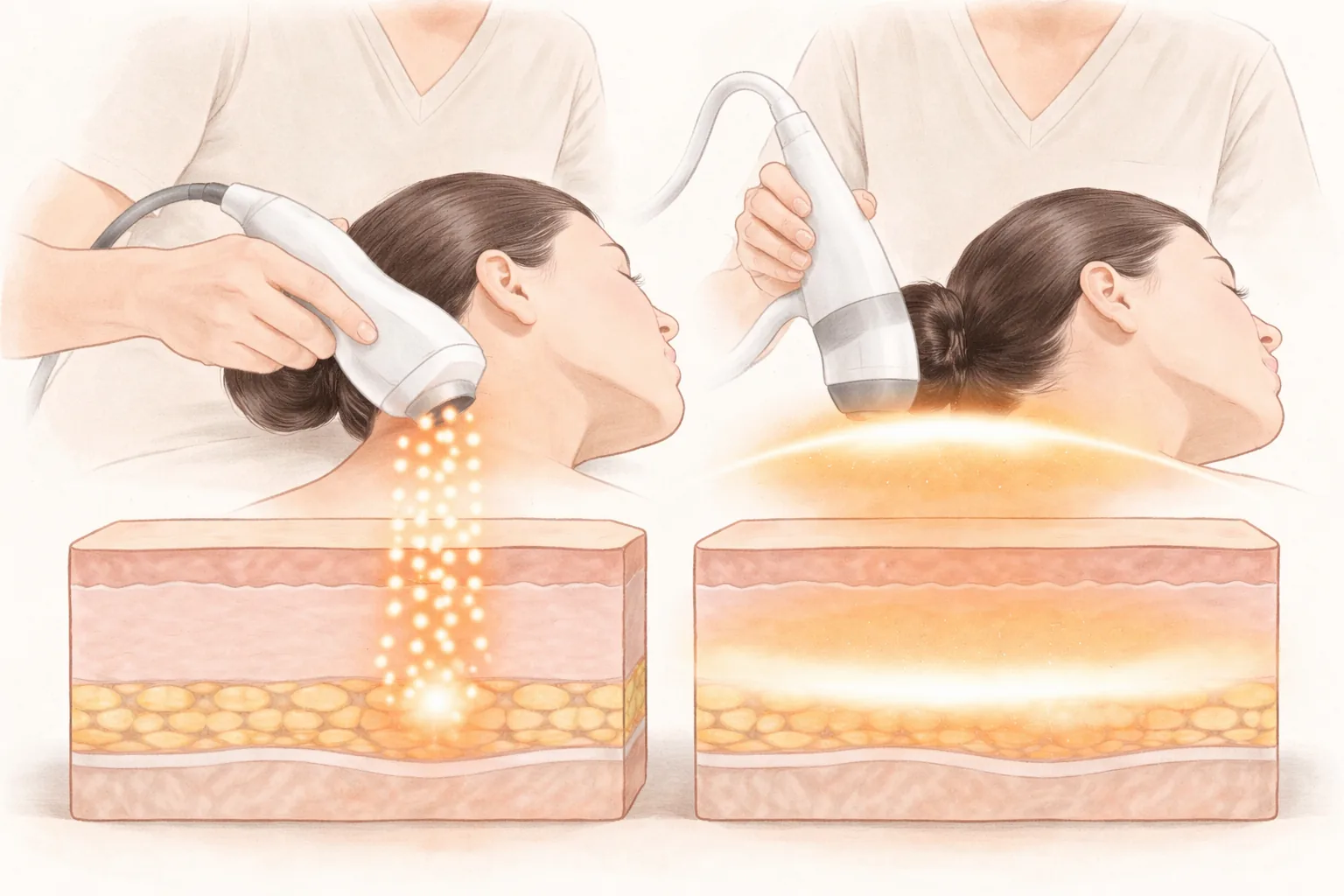
The approaches fall broadly into two categories. HIFU (high-intensity focused ultrasound), used by Ultherapy and Shurink Universe (HIFU), concentrates ultrasound at a single point like a lens focusing light, creating small thermal points at a set depth between the dermis and the SMAS layer. RF (radiofrequency), used by Thermage FLX, converts electrical energy into heat as it passes through tissue, heating a broad area from the dermis to the subcutaneous fat layer all at once. It's similar to the difference between focusing light through a magnifying glass onto one point and standing broadly in front of a heater. The principles and pain differences between these two families are also covered in an ATTITUDE Clinic column.
This difference is exactly why treatments can be layered. If you're concerned about both a locally deep sag along the jawline and broadly lost elasticity across the cheeks and neck, it's hard for one device to address both tasks at once. So combinations are considered where the deep layer is handled by the HIFU family and the broad layer and skin texture by the RF family. At ATTITUDE Clinic too, the doctor examines your skin and decides together with you which of the two families fits, and whether to use both.
What determines order and spacing
The first is the depth of sagging. Skin that's only stretched on the surface and skin that has dropped down to the SMAS layer need different energy and reach even with the same lifting treatment, and which family comes first also splits here.
The second is skin thickness and sensitivity. If your skin is thin or tends to redden easily, the same intensity can feel more irritating, so the plan shifts toward splitting sessions rather than layering them at once to observe your reaction.
The third is how much recovery time you have. How much redness and swelling remain after a treatment varies with the energy level. Most people can return to daily life the next day, but if you have a tight schedule, the order gets adjusted. If you're sensitive to pain, anesthesia method and intensity adjustment are also worth discussing.
The fourth is your history of previous treatments. Which device, how many shots, what intensity, and how your skin reacted then become the starting point for the next plan. An ATTITUDE Clinic column also notes that even with the same combination, whether you do it all at once or split it across sessions can change the recovery process and how it feels.
The fifth is your target timing. Changes appear over months rather than on the day of the treatment, so if you have an important event, the timing is worked backward from that date.
Same day or split sessions?
Combining a deep layer and a shallow layer is possible in itself. However, whether to do both treatments in one session or split them with an interval depends on your skin condition, so it's better to design the overall plan first in consultation, as noted by an ATTITUDE Clinic column. In practice, even with the same combination, whether you do it all at once or split it across sessions can change the recovery process and how results feel.
It's also worth distinguishing that even within RF, recovery differs by delivery method. Unlike non-invasive methods where the device is placed on the skin surface, minimally invasive methods that insert a thin tube or needle into the skin to deliver heat require anesthesia, involve a few days of recovery, and sometimes require wearing a compression garment. This is also why American Academy of Dermatology resources explain these two branches separately. Which one suits your skin is judged by skin thickness and recovery time rather than by treatment name.
Table 1 Same day or split sessions?
Category
How heat is delivered
Main concerns targeted
What to expect
Ultherapy · Shurink Universe (HIFU)
Ultrasound concentrated at a point creates small thermal points at a set depth from dermis to SMAS
Locally deep sagging along the jawline, eye area
Major changes are uncommon; if there are changes, they appear gradually over about 2–3 months
Thermage FLX (RF)
Electrical energy broadly heats dermis to subcutaneous fat
Lost elasticity and skin texture across broad areas like cheeks and neck
After an initial firm feeling (some swelling), further changes over 2–6 months
Other lifting such as Onda · Titanium lifting
Microwaves, 3-wavelength laser, etc., varies by family
Facial or body areas
Varies by family and intensity; planned in consultation
Swipe sideways to see the whole table.
In summary Layering lifting treatments is possible, and assigning treatments that target different layers is a common approach. However, whether to do them the same day or split them is determined by your skin condition and recovery time, so building the overall plan first rather than choosing treatment names first keeps results more stable.
If this applies to you
When you have a fixed date like a wedding or photo shoot
Because when changes appear and when they settle differ, timing is worked backward from your schedule. If you plan to layer treatments, spacing them out rather than cramming both into one session reduces the recovery burden. A point a few months before the shoot is better for planning than right before it.
If you want ongoing maintenance
Approaching it as a concept of personalized design rather than a single treatment fits better. Repeat timing is usually decided around 1 year based on progress, and which treatments to add in between is adjusted based on your skin's response.
Sensitive or easily reddened skin
Even at the same intensity, irritation can feel stronger, so the plan shifts toward starting at a lower energy level or leaving generous intervals between treatments. If you're sensitive to pain, it's better to discuss anesthesia method and intensity adjustment in consultation.
International visitors on a short stay
If your stay is short, a plan with a short recovery period takes priority. If your schedule makes it hard to manage sun protection and moisturizing yourself after the treatment, the treatment scope is reduced. Telling us your stay schedule in consultation lets it be factored into the plan.
Please tell us before your consultation
Recent sun exposure and travel schedule, medications you're taking and skincare ingredients you're using (retinol, acids, etc.), the device, intensity, and reaction of previous treatments, dates you want to avoid like ceremonies or photo shoots, and your sensitivity to pain.
How ATTITUDE Clinic proceeds
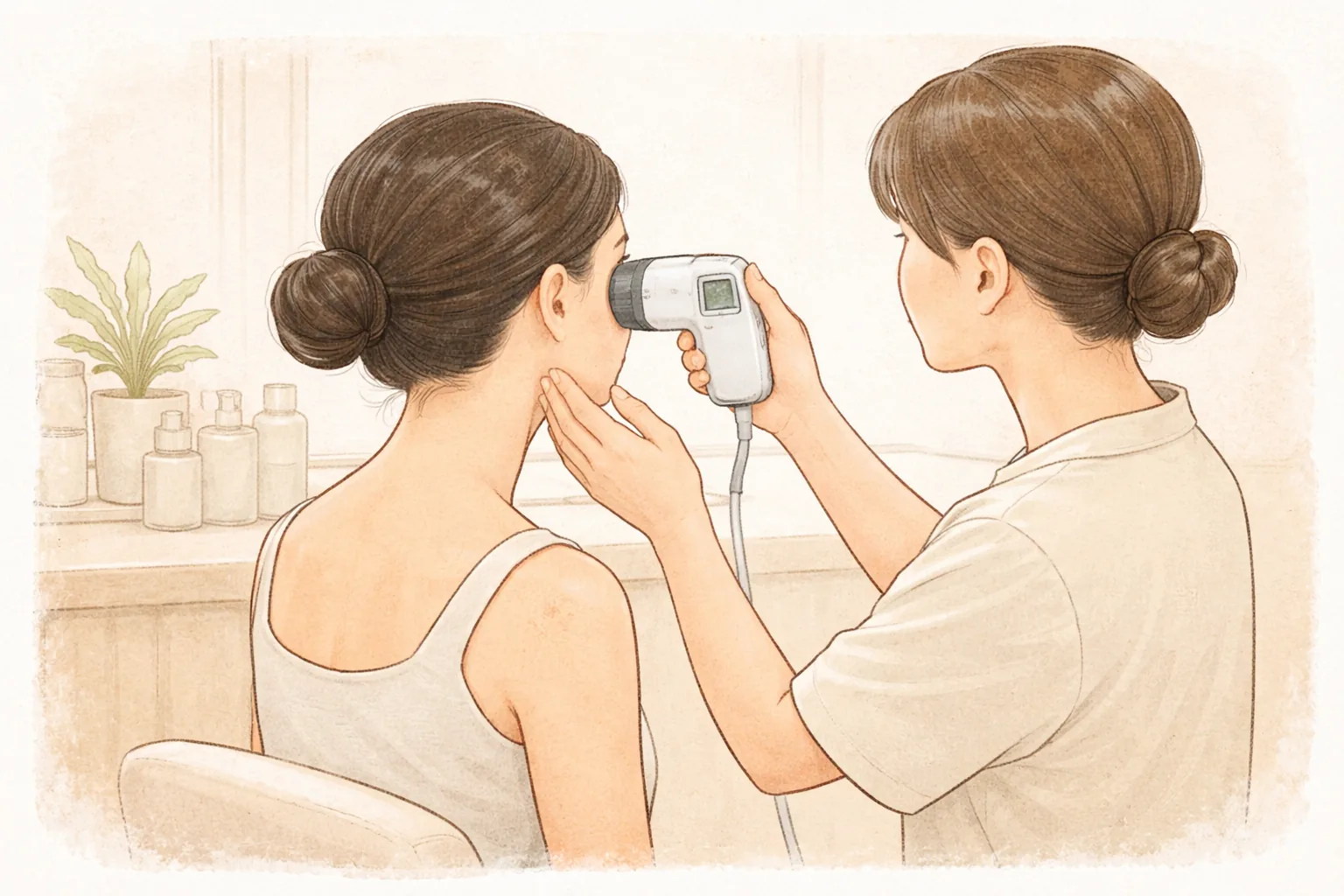
AI skin analysis record — We record and organize your skin condition so you and the doctor look at the same information together. The analysis tool is a reference that records and organizes information to support consultation, and does not make a medical diagnosis.
Doctor consultation — We add your concerns, lifestyle habits, previous treatment history and reactions, and upcoming schedule to the record, and decide together what's needed and what can wait, and which combination, order, and intensity to use.
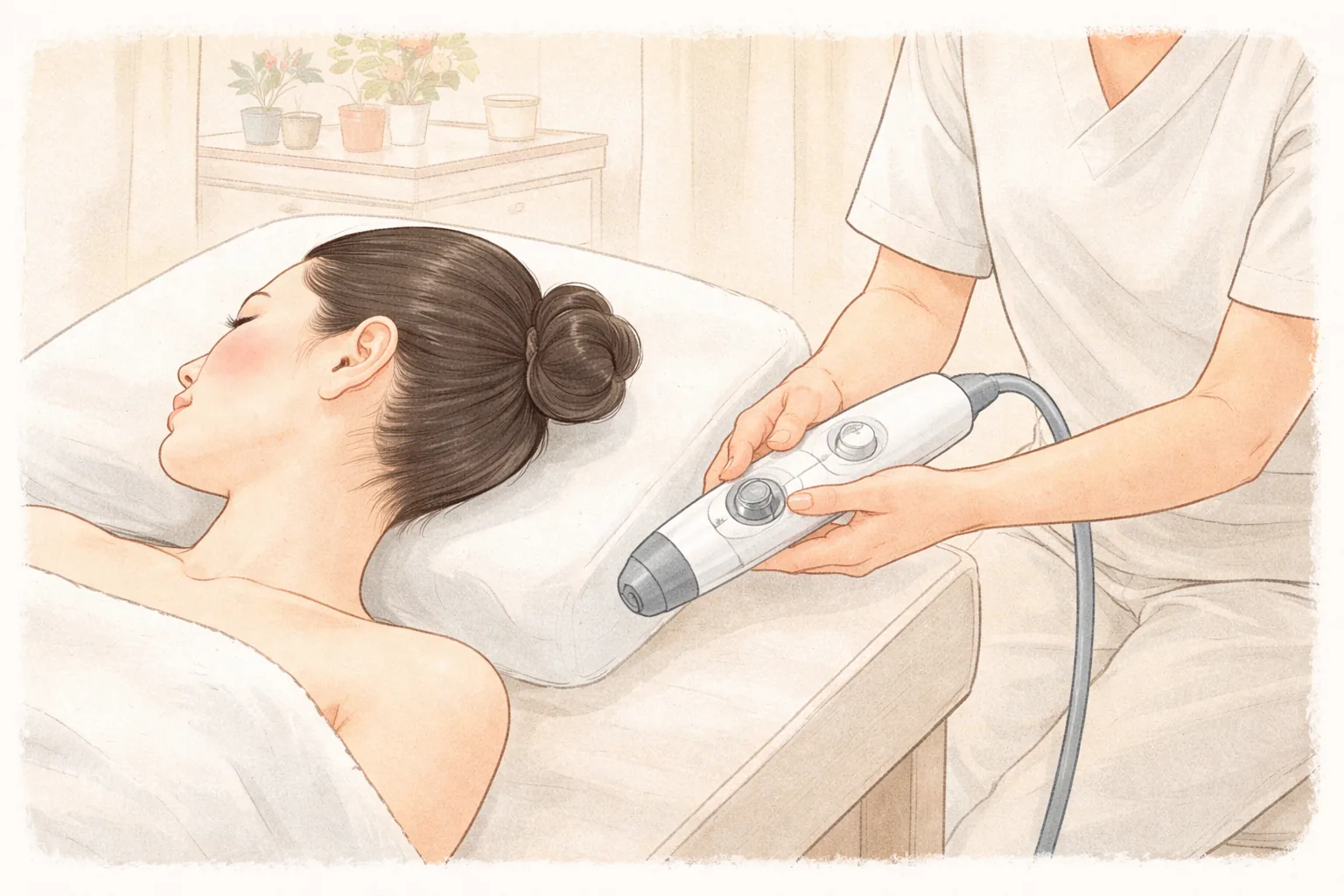
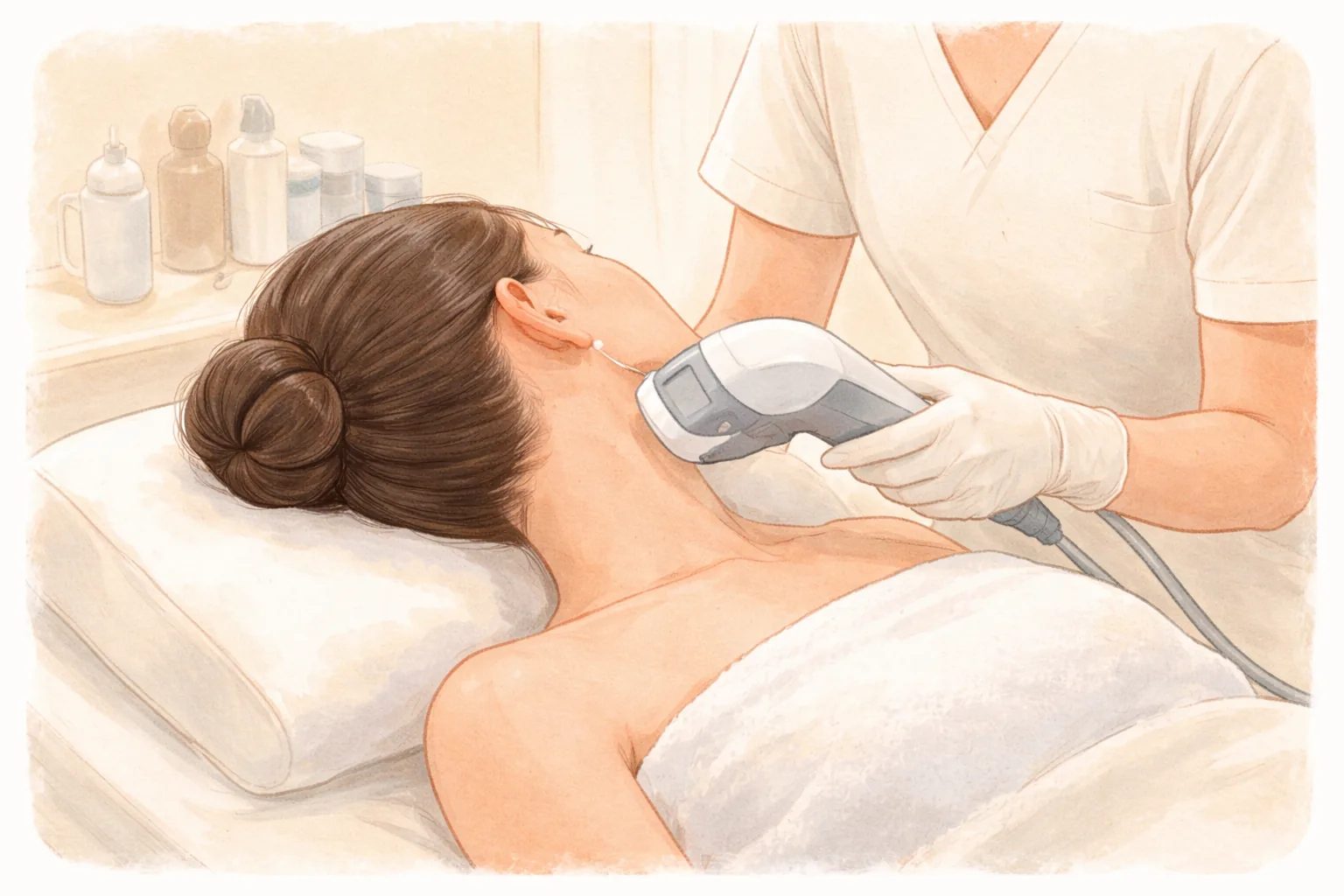
Treatment performed by the doctor — The doctor personally performs the treatment according to the plan set in consultation, adjusting intensity while watching your skin's response during the procedure. This is to keep the design and execution aligned.
Recovery and follow-up — We check your progress after the treatment and set the next visit timing.
Devices used for this topic include Ultherapy · Shurink Universe (HIFU ultrasound), Thermage FLX and XERF (monopolar RF) (RF), Onda (microwave lifting), and Titanium lifting (diode laser) (3-wavelength laser). You can check devices, manufacturer names, and per-unit prices at ATTITUDE Clinic treatment guide, and VAT is separate.
Post-treatment care and side effects
Soothing — Cold compresses right after the treatment may help with swelling. It's best to ask the medical staff about method and duration.
Moisturizing — Your skin barrier is temporarily weakened, so moisturize more than usual.
Sun protection — For a few days, apply sunscreen carefully to recover without pigmentation.
Progress check — How much redness and warmth remain varies with the energy level, so the next plan is adjusted while watching the recovery flow.
On the day, avoid saunas, strenuous exercise, and alcohol, and most people can return to daily life including makeup from the next day.
Side effects, from common to rare: temporary swelling and redness, warmth, small bruises, tenderness along the jawline when pressed, and temporary numbness or reduced sensation — these usually subside within a few days. Rarely, burns or blisters, small scars, temporary facial muscle weakness, and unwanted fat layer volume loss can occur. If you notice changes different from what's expected, such as blisters or progressively worsening pain, it's safer to seek care rather than wait.
Frequently asked questions
Can I combine it with other lifting treatments?
Yes. A common approach is to use the HIFU family for the deep layer and the RF family for the shallow layer and broad areas. However, whether to do both in one session or split them with an interval depends on your skin condition, so it's better to build the overall plan first in consultation. Order and intensity aren't a fixed right answer — they're decided by the person's skin and recovery time, and whether you do it all at once or split it can change the recovery process and how it feels.
Between Ultherapy and Thermage FLX, which should come first?
There's no fixed order. If sagging is locally deep, the HIFU family tends to fit better; if lost elasticity is spread broadly, the RF family tends to fit better, and which comes first splits here. The two families aren't substitutes for each other but divide layers, so order is decided by looking at the target area and skin thickness together. If there's a record of previous treatments, the intensity and reaction from then are added to the judgment.
When do results start to appear?
With Ultherapy · Shurink Universe (HIFU), it's hard to feel major changes right after the treatment, and if there are changes, they appear gradually over about 2–3 months. With Thermage FLX, you may feel firmness early on — some of it is swelling — and further changes usually appear over 2–6 months. According to American Academy of Dermatology resources, non-invasive ultrasound treatment usually produces gradual lifting and tightening within 2–6 months after 1 session and can improve further with additional treatments, while RF usually gives some immediate firmness after 1 session with peak results at about 6 months. When and how much change appears differs from person to person depending on the rate of new collagen production.
Can I return to daily life right on the treatment day?
Most people can return to daily life including makeup from the next day. However, how much redness and warmth remain varies with the energy level, so even the same treatment feels different depending on intensity. On the day, it's better to avoid saunas, strenuous exercise, and alcohol. If it's a minimally invasive method that inserts needles to deliver heat, anesthesia and a few days of recovery follow, so it's good to first distinguish which branch your treatment falls into.
What should I check at a clinic when considering combined lifting?
How the plan is built matters more than treatment names. Points to check: which device and which manufacturer's product is used; whether the consultation asks about previous treatment history, schedule, and recovery time; whether the same medical staff handles both consultation and treatment; and whether you hear an explanation of what's needed and what can wait. If an analysis tool is used, you'll also hear that its results are a reference to support consultation, not a diagnosis. The final decision is made by you after consultation.
At a glance
Table 2 At a glance
Item
Key point
Can they be combined
Yes. Combinations that divide treatments targeting different layers and delivery methods are used
What determines order
Depth of sagging, skin thickness and sensitivity, recovery time, previous treatment history, target timing
Same day vs split
Depends on skin condition; build the overall plan first in consultation
How results feel
HIFU family: if changes appear, gradually over about 2–3 months; RF family: initial feeling then 2–6 months
Repeat timing
Usually around 1 year, decided by the doctor based on progress
Cautions
Avoid saunas, strenuous exercise, and alcohol on the day; manage sun protection and moisturizing
This article offers general health information. It is not a substitute for diagnosis or treatment based on your own condition, so please talk through your situation with a doctor.