Coretox Price: How 50U Standards and Treatment Areas Shape the Cost
How Coretox pricing changes with unit standards, treatment area doses, VAT, and what's included—what to check at your Sinsa Station consultation to see the total.
Written by ATTITUDE Clinic Editorial Team
Once you've decided on Coretox, the cost is usually where things stall. The same product appears as a 50U standard in one place and per-area units in another, so even side by side, the total you'll actually pay is hard to grasp. For visitors on a short stay in Korea, knowing this before booking makes the consultation faster. This article lays out what shapes the Coretox price and what to ask at the consultation to see your real total.
The Bottom Line First
Coretox pricing isn't determined by the product name alone. The total changes based on how many units the listed price is based on, which area gets how many units, what a session includes (consultation, anesthesia, follow-up), and whether VAT is included. Coretox injection is a type A botulinum toxin product registered as a prescription drug in the Ministry of Food and Drug Safety's integrated drug information system, and its approved indication is the temporary improvement of glabellar lines (MFDS Drug Information System). Cosmetic procedures usually aren't covered by insurance, so cost is something you confirm at the consultation, where you also hear about indications, risks, benefits, and alternatives (American Academy of Dermatology).
What Makes Up the Coretox Price
First is the labeled unit. Botulinum toxin doses are counted in units (a measure of how much toxin is actually active). At ATTITUDE Clinic's treatment and pricing page, Coretox is listed as 50U standard, 100U standard, per wrinkle-area units, and 3cc skin Botox, with all prices excluding VAT (ATTITUDE Clinic treatments and pricing). The reason one product has multiple standards is that the amount used per session varies by area and goal.
Second is the one-vial-one-patient rule. The labeling states that because the drug and diluent contain no preservative, 1 vial must be used for only 1 patient, and once dissolved it should be administered within 24 hours (MFDS). This means leftover product can't be passed to the next person, so the amount prepared for that session becomes that session's cost. The unit-based pricing structure comes from here.
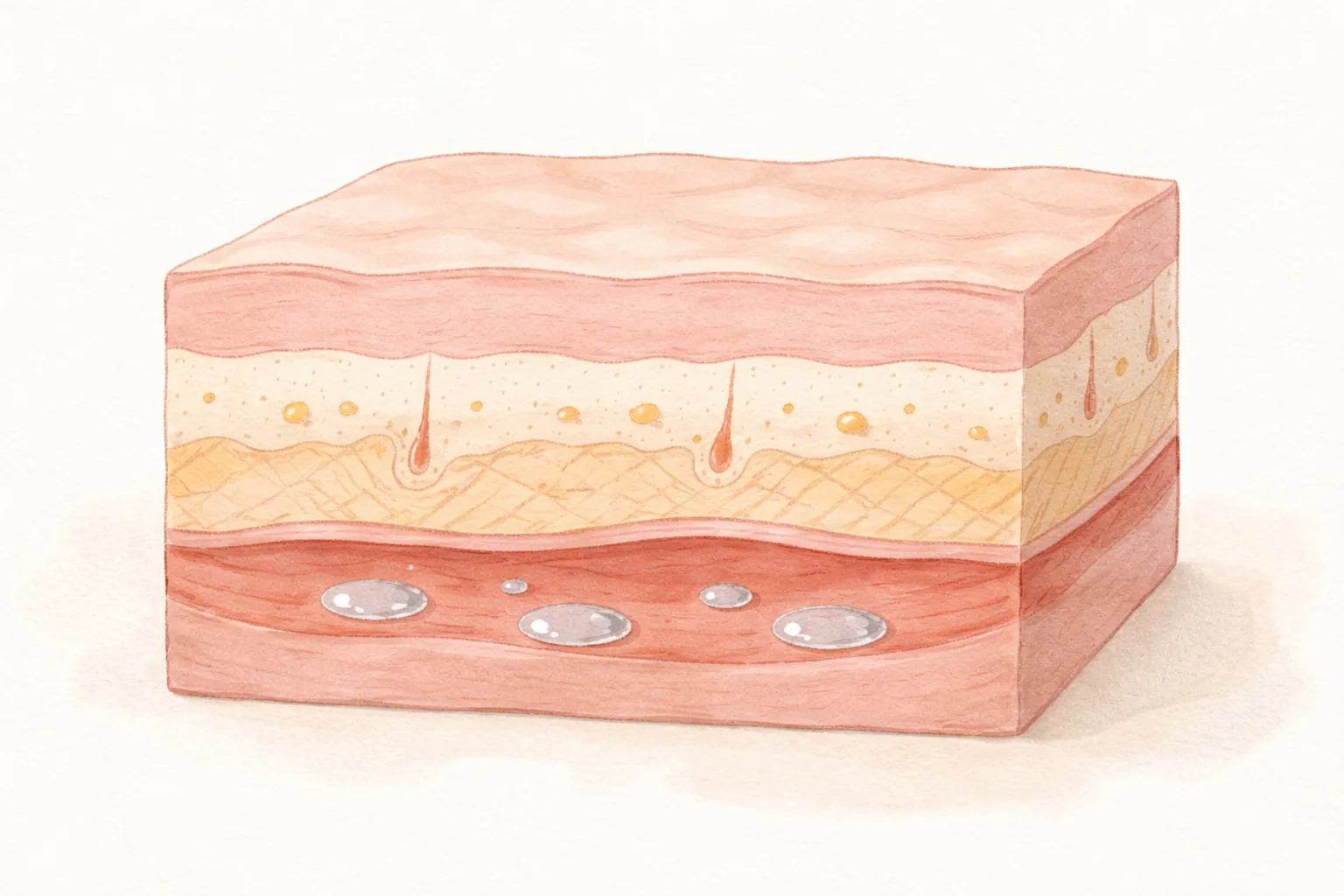
Third is the area and muscle. The labeling notes that because muscle location, size, and usage habits differ between individuals, the effective dose is determined by observing how the injected muscle moves (MFDS). Even for the same glabellar lines, the units needed differ from person to person, and if the area shifts to the forehead, eye area, or jaw, the number changes too. Planning multiple areas at once increases the total accordingly.
Fourth is what's included in the price. Whether consultation, anesthesia, and follow-up are included in one price, and whether a follow-up visit adds another consultation, changes how heavy the cost feels. Fifth is who performs it. Because results depend heavily on the skill and experience of the person performing the procedure, the AAD recommends asking at the consultation how many times they've performed this procedure and how many patients with your skin tone and age range they've treated (AAD).
Units and Shots Are Different Numbers
Shots are the number of needle insertions, while units are the amount of toxin injected. The labeling's glabellar lines dosage dilutes 100U with 2.5mL of saline to make 4U per 0.1mL, then injects 0.1mL into each of five sites—two corrugator muscles and one procerus—for a total of 20U (MFDS). To increase or decrease the dose, you adjust the injection volume between 0.05mL and 0.15mL, not add more needle sticks.
So does more shots mean more product? Not necessarily. The same 20U can be split into five injections, or divided further to match the muscle shape. That's why at the consultation you should ask how many units go into which muscle and what expression that muscle creates, rather than how many shots. Pre-treatment consultations also cover whether anesthesia is used, how long the procedure takes, and how much recovery time is needed (AAD).
The Illusion When Labeled Units Differ
Listing the same product as 50U makes the number look small, while listing per-area units means calculating each area separately. Listing it as 3cc like skin Botox measures by volume rather than units, so the very basis of counting changes. On the clinic's price page, Coretox is divided by these standards, and products like Neurinox, Jeomin, Allergan Botox, and Dysport are listed at different prices in the same table (ATTITUDE Clinic treatments and pricing). Different product lines show different price ranges, but that difference doesn't speak to the size of the effect. Where the differences between products come from is better confirmed through product-specific explanations at the consultation.
When comparing, look at three things together: how many units the listed price is based on, how much is actually needed for your intended area, and whether the final amount includes VAT. ATTITUDE Clinic publishes all prices by unit and offers the same prices on every language page, with VAT separate (ATTITUDE Clinic column).
Table 1 The Illusion When Labeled Units Differ
Standard
Counting Unit
What to Check at Consultation
50U standard
Units
How many units go into which area per session
100U standard
Units
Whether all 100U is used on a large area or split
Per wrinkle/special-area units
Different units per area
Whether the dose is adjusted by muscle even in the same area
Skin Botox 3cc standard
Volume (cc)
Which area and by what method it's injected
Swipe sideways to see the whole table.
In short when comparing prices, the numbers that matter are not the product name but the units, the area, and the labeling standard. Once you align the labeled units first, what to ask at the consultation becomes clear.
Approved Use and the Scope Set at Consultation
Coretox's approved indication is the temporary improvement of glabellar lines in adults aged 20 to 65 (MFDS). Using it for other purposes like the jaw or skin Botox falls outside the approved indication, so you first state which area and why, then align dose and expectations at the consultation. The glabella is the reference because its expression muscles move relatively consistently and are easy to observe, whereas other areas vary greatly in muscle thickness and use between individuals.
The labeling states that safety and efficacy were evaluated up to 16 weeks for glabellar lines, and that the safety and efficacy of frequent administration have not been clinically evaluated (MFDS). This sentence also means the basis for short-interval plans is thin. Shorter intervals raise the annual total as well, so interval is a factor that touches both results and cost.
Visit Schedule and Interval Change the 1-Year Burden
Looking only at the per-session price blurs the picture, because the annual burden depends on how often you plan to continue. The labeling's evaluation up to 16 weeks for glabellar lines is a reference for gauging the next timing (MFDS), but how to continue after that is decided by looking at the response and interval records from the previous treatment. For short-stay visitors, it's better to decide in advance whether to finish treatment in one visit and continue after returning home, or to have one more session during the stay. Once the schedule is set, the consultation can calculate the total, recovery period, and next visit timing together.
If This Applies to You
When You Want to Know the Total Before Booking
The reason the listed price and the actual amount feel different is usually VAT and area dose. At the consultation, confirming in words how much per how many units and how much including VAT finishes the calculation before booking.
If You're a Short-Stay Visitor
The procedure itself can be done in one visit, but when maintenance is needed should be considered before your trip. If you tell them your return date, they can plan what fits within that time and how to continue afterward.
When Planning Multiple Areas at Once
Combining forehead, glabella, and eye area, or adding the jaw, stacks up the units needed per area. Whether to do it all at once or split it and decide based on response is a decision made alongside recovery time and budget.
When Maintenance Feels Shorter Than Last Time
The most useful record is which product, which area, how many units, and what interval you had before. With that record, whether to adjust dose or interval this time becomes much clearer.
Please Tell Us Before Your Consultation recent sun exposure and travel schedule, medications you're taking (such as anticoagulants) and active skincare ingredients, the product name, area, dose, date, and response of previous Botox treatments, dates when your face must not swell such as photo shoots or events, pregnancy or breastfeeding status, and a history of neuromuscular conditions like myasthenia gravis—sharing these makes the consultation more accurate.
How ATTITUDE Clinic Proceeds
AI Skin Analysis Record — skin condition is recorded and organized with a device. The analysis tool only records and organizes information and does not make a medical diagnosis; the doctor makes the judgment.
Doctor Consultation — the record is combined with your concerns, lifestyle habits, and previous treatment experience to decide together which area gets how many units and at what interval. Cost is also confirmed here by unit.
Doctor-Performed Procedure — the doctor personally performs the plan set at the consultation and adjusts the dose while observing muscle response during the procedure.
Follow-Up and Next Interval Planning — post-treatment response and expression changes are checked, and the next visit timing is recorded.
Among the injectable items ATTITUDE Clinic offers related to this topic, Coretox is included as 50U and 100U, 3cc, and per-area units (pricing).
Aftercare and Side Effects
Soothing — on the day of treatment, don't rub or press the injection sites, and wash your face gently.
Moisturizing — dryness makes redness last longer. Apply plenty of low-irritation moisturizer.
Sun Protection — for several days, apply sunscreen when going out.
Follow-Up — for a few days after treatment, watch for changes in expression and swelling, and check your progress at the timing advised in the consultation.
After injections, redness, swelling, tenderness when pressed, and bruising at the injection sites are common and usually subside within a few days (ATTITUDE Clinic column). Depending on the area, the eyelid may droop or expressions may look awkward, and headache or dizziness may appear briefly. Rarely, allergic reactions or symptoms from the toxin spreading to nearby areas have been reported, and the labeling warns that symptoms such as sudden muscle weakness, hoarseness, difficulty swallowing, difficulty breathing, and double vision can occur (MFDS). If such symptoms appear, don't wait for your next appointment—seek care immediately. Pain that doesn't improve and worsens, or changes different from what you expected, are also signals that need checking rather than watching (column).
Frequently Asked Questions
Where does the Coretox price differ?
The biggest factors are the labeled unit and the dose. The same Coretox shows different numbers depending on whether it's listed as 50U or per wrinkle-area units, and the total changes with the units actually injected and the number of areas. Whether VAT is included and whether consultation and follow-up are part of one price are also items to check. ATTITUDE Clinic publishes prices by unit and offers the same prices on every language page (pricing). If you tell them the area and the change you want before booking, they can lay out the price based on the units needed.
Should I ask by units or shots?
Units are the basis. The labeling's glabellar lines dosage specifies the dilution concentration and injection volume in units, and states that dose adjustment is also done by injection volume (MFDS). The number of shots is just a result of dividing by muscle shape, so shots alone don't tell you how much went in. At the consultation, it's good to ask how many units go into which muscle and by what standard that dose was set.
What should I check when choosing a clinic?
The AAD recommends asking at the consultation how many times they've performed this procedure and how many patients with your skin tone and age range they've treated (AAD). Results depend heavily on the skill and experience of the person performing it. Things to check together are the realistically expected results and risks, the anesthesia method, recovery time, and the cost. Cosmetic procedures usually aren't covered by insurance, so it's good to confirm the total in words before payment.
I'm staying a short time—can it be done in one visit?
The procedure itself can be done in one visit, but whether the next timing falls within your schedule is a separate matter. The labeling's evaluation up to 16 weeks for glabellar lines is a reference for gauging timing (MFDS). If you tell them your stay schedule and return date at the consultation, they can plan what fits within that time and organize how to continue afterward.
From how many sessions should I worry about tolerance?
There's no standard that draws a line by number of sessions. Even with the same number, it differs based on whether intervals were close and whether cumulative dose was large, and the reason the effect feels different than before isn't necessarily the drug. The labeling also states that the safety and efficacy of frequent administration have not been clinically evaluated (MFDS). That's why the consultation first checks which product, how many units, and at what interval you had before, and how the response was then.
At a Glance
Table 2 At a Glance
Item
Key Point
Factors setting the price
Labeled unit (units/cc), area and dose needed, VAT, what's included
Units and shots
Units are the amount injected; shots are the number of injections. Dose adjustment is by injection volume
Approved indication
Temporary improvement of glabellar lines in adults aged 20–65, evaluated up to 16 weeks
Interval
Shorter means thinner evidence and higher 1-year total. Decided by previous response records
Performance
The doctor personally performs the plan set at consultation and adjusts while observing response
Common reactions
Redness, swelling, tenderness, bruising. Difficulty swallowing or breathing, etc.—seek care immediately
This article offers general health information. It is not a substitute for diagnosis or treatment based on your own condition, so please talk through your situation with a doctor.