Fraxel, erbium fractional and pico fractional are often mixed up. Here's what each name actually refers to, what decides results and recovery time, and what to confirm at your consultation.
Written by ATTITUDE Clinic Editorial Team
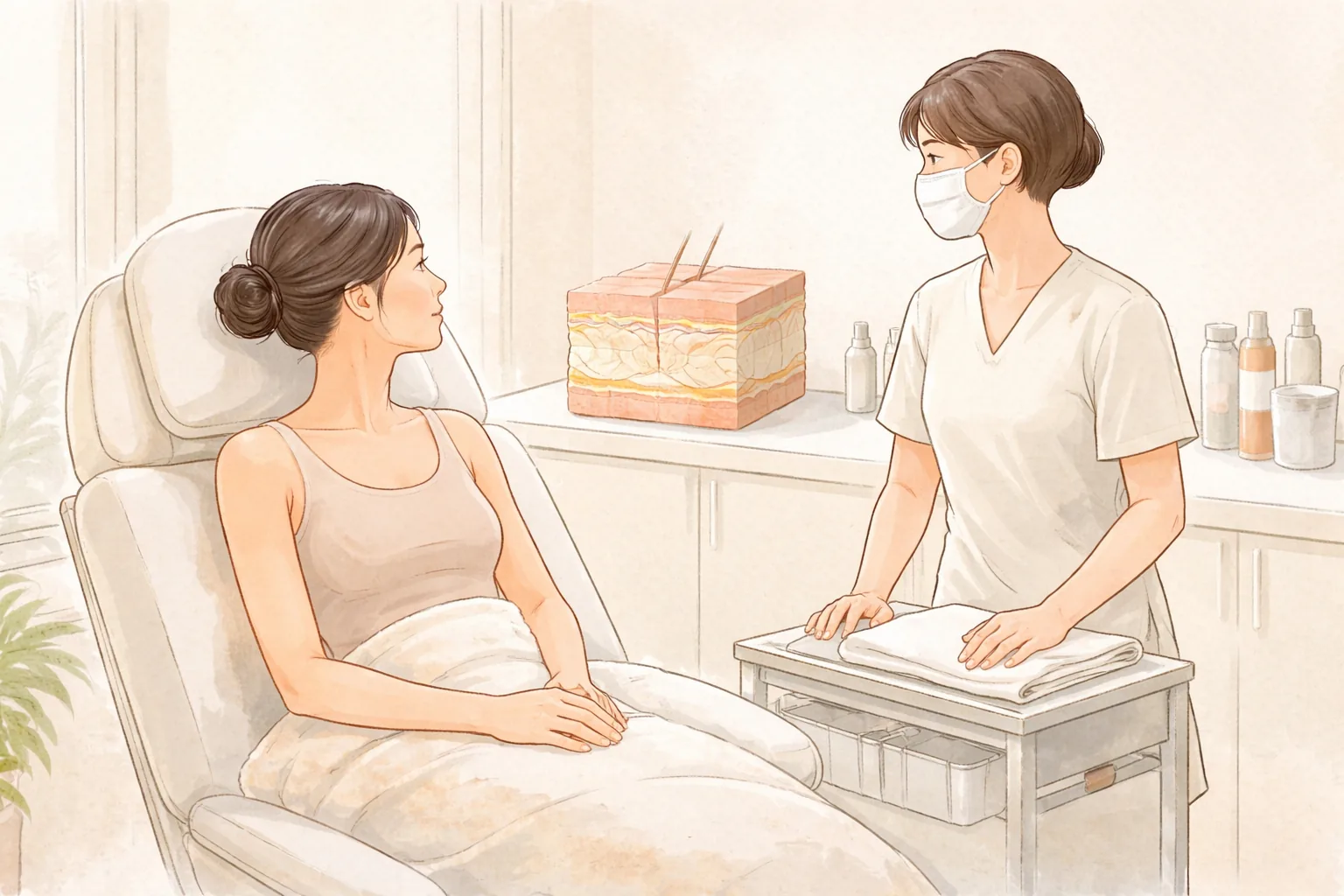
If you've been searching for fractional laser treatments, you've probably seen 'erbium', 'Fraxel' and 'pico fractional' mixed together and wondered how they differ. The answer to "how many days is recovery?" seems to change from article to article, which makes it even more confusing. Here we'll walk through why one name can't tell you which is better, and what you should separate out and confirm at a consultation.
The bottom line first
'Fraxel' is a term that spread from a specific device brand, while the accurate method name is 'fractional' (delivering energy in tiny units rather than covering the whole area at once). Picosecond lasers lean toward selectively breaking up melanin pigment, while fractional-type lasers like erbium fractional are closer to creating micro-injuries and prompting regeneration. So it's not the name but whether your concern is pigment or pores and scars that decides the choice. Recovery time varies far more with power output and treatment scope than with the device name.
What's behind the name 'Fraxel'?
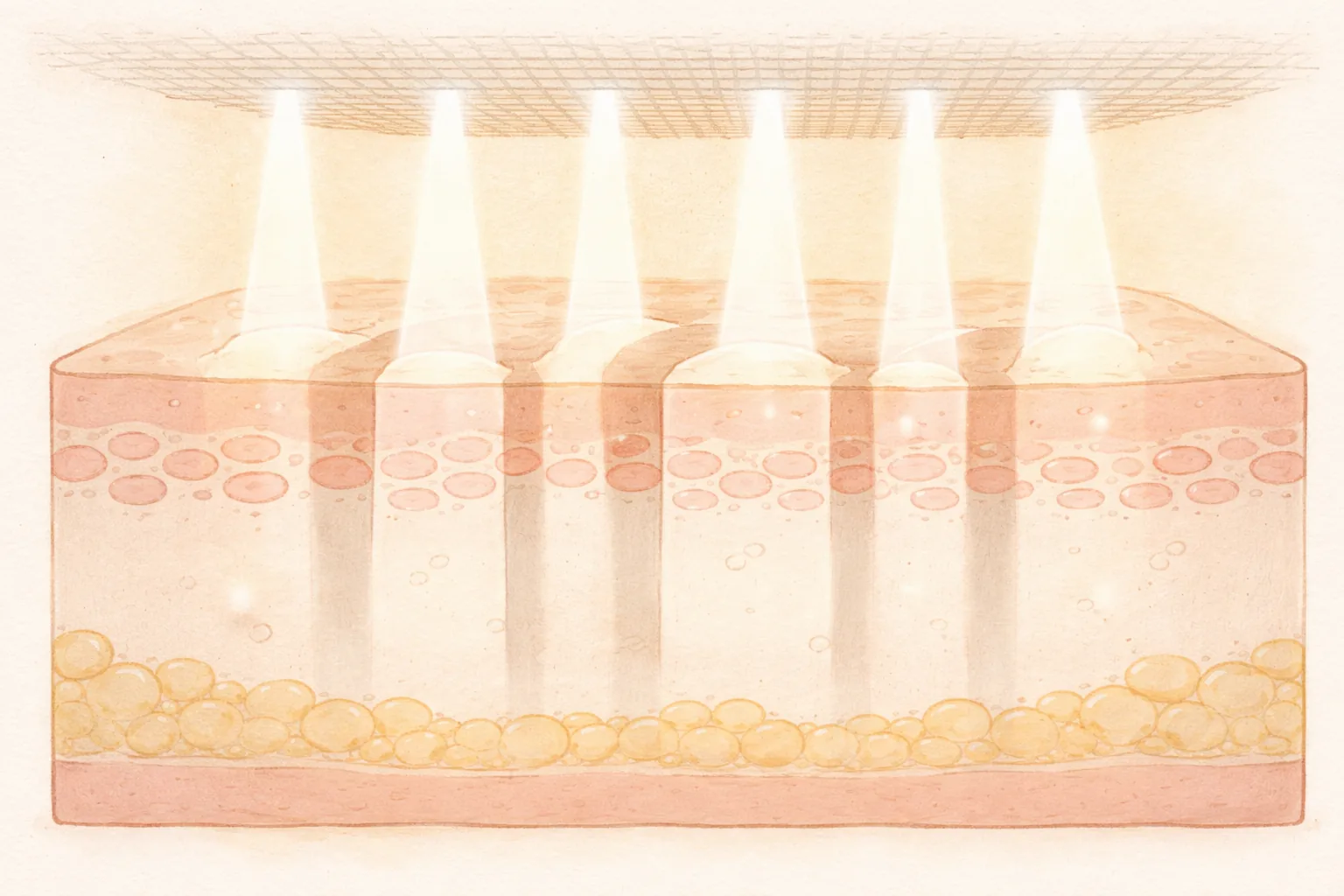
Fractional delivery doesn't treat the entire skin surface at once. It delivers energy only to some of the holes, like a sieve, leaving the rest of the tissue intact. The healthy cells that remain receive regeneration signals, build new collagen, and fill in the treated spots.
What a laser does to skin falls into two broad categories. One is selective pigment breakdown (using the property of absorbing only certain colors, like melanin, to destroy pigment cells), and the other is triggering regeneration after micro-injury. Picosecond lasers weight the former, fractional-type lasers the latter. 'Picosecond' means the light's on-off time is on the order of 1 trillionth of a second, a pulse designed to reduce how far heat spreads into surrounding tissue. ATTITUDE Clinic's column also separates these two axes, noting that in practice the two approaches may be combined on the same day or only one may be focused on depending on the concern.
So what does 'pico fractional' refer to? It's sometimes used when a picosecond-type device is delivered in a fractional pattern, but even with similar names, the target and intensity differ by device and settings. It's hard to judge whether a treatment suits your skin from the name alone, so at consultation it's more reliable to check the wavelength, delivery method, power output and density separately.
What does fractional delivery do in the skin?
For concerns where the epidermis and dermis structure itself has changed — pores and scars, for example — fractional-type treatments that trigger regeneration after micro-injury are mainly used. According to the American Academy of Dermatology, as skin recovers after laser resurfacing, collagen and elastin are produced, and as a result scars become less noticeable.
With pores, there isn't just one cause. When sebum production is high, pore openings enlarge; when collagen and elasticity decline, the skin around pores sags and creates shadows; and when the pore wall is damaged by acne inflammation or a history of squeezing, the enlarged state remains even after healing. As summarized in ATTITUDE Clinic's column, treatment addresses the sebum, elasticity and tissue condition among these. Pore count and innate size are strongly influenced by genetics, so eliminating them completely is difficult — the goal is to make them less noticeable.
Scars are even more subdivided. The American Academy of Dermatology explains that acne scar treatment is planned individually, taking into account scar type and location, number, age and skin tone, and even budget. Even on the same face, ice-pick and rolling scars require different approaches, so one device doesn't handle all scars the same way. Distinguishing active acne from scars already left behind is also part of this step.
What separates results and recovery time?
Even with a treatment of the same name, results and recovery differ because several factors overlap: scar type and depth, the main cause of the pores, skin thickness and tone, the depth at which pigment sits, power output and density, the area treated in one session, treatment intervals, and sun exposure and lifestyle habits after the procedure.
Power output is especially decisive for results. According to the downtime summary in ATTITUDE Clinic's column, even within the same fractional family, low power leaves redness and a sandpaper-like texture for about 3–5 days, while high power brings swelling, oozing and crusting that can take 7–14 days. With picosecond types too, low-power toning is a matter of hours to the same day, while high power for spot removal leaves crusts for about 7–10 days. So the sentence "Fraxel recovery is a few days" is only half right.
Intervals also affect results. For pores and skin texture, 4–6 weeks is a common example, and for acne scars, 4–8 weeks. Because skin needs time to regenerate and for collagen to settle in, narrowing the interval too much can only increase the recovery burden.
Table 1 What separates results and recovery time?
Category
Main concern targeted
Characteristics
Recovery burden (common example)
Picosecond low-power toning
Pigment, skin tone
Short pulses that reduce heat spread gradually clear pigment
A few hours to same day
Picosecond high power
Spot removal
Intensively breaks down pigment
Crusting for about 7–10 days
Fractional low power
Skin texture, fine lines
Delivers micro-injuries in a narrow pattern
Redness and sandpaper texture for 3–5 days
Fractional high power
Acne scars, pores
Delivers regeneration signals deeper and more densely
Swelling, oozing and crusting for 7–14 days
Swipe sideways to see the whole table.
In summary your concern — pigment or pores and scars — comes first, ahead of the device name, and then power output and scope determine the recovery period. Even under the same name, low power and high power downtime can differ several-fold, so it's worth confirming at consultation down to what intensity is applied to which area.
When do results show, and what do you look for?
For pigment concerns, rather than eliminating particles all at once, the approach gradually breaks them down while giving skin time to clear them. ATTITUDE Clinic's column gives common examples: 1–3 sessions for spots (4–8 week intervals), 8–12 or more sessions for melasma or widespread pigment (intervals of at least 1 week), 3–5 sessions for pores and skin texture, and 4–6 sessions for acne scars. These figures vary with skin condition and lifestyle — they're reference points, not a guaranteed schedule.
It's best to set the evaluation point before starting. The American Academy of Dermatology advises discussing specific expected results at consultation and asking for before-and-after materials, including cases with a similar skin tone and type. During the recovery period, when crusts are falling off and redness is subsiding, changes are hard to judge, so comparing photos at a pre-set point after recovery is more realistic.
If this applies to you
When a wedding or photo shoot is a few weeks away
High-power fractional can involve crusting and swelling for nearly 2 weeks, so overlapping with your schedule adds burden. Tell the clinic your remaining time and recovery tolerance first, and discuss alternatives including low power or other methods together. Since the period when skin texture settles only comes after recovery finishes, we don't recommend raising intensity right before an event.
When you want to manage pores and scars over the long term
This is less a one-time treatment than maintenance built up with intervals. While completing sessions at 4–8 week intervals, sun protection and sebum care are what protect your results. Set an evaluation point midway, and if changes fall short, re-plan rather than arbitrarily adding sessions.
If your skin is sensitive or prone to redness
Redness and stinging are common reactions, but some skin responds with slower recovery or darker pigment. If you usually have sensitivity or atopic skin, let the clinic know before treatment and start conservatively with intensity. Hormone-influenced pigment like melasma can actually darken if a strong laser is applied over a large area at once, so a low-power, multi-session approach is used.
If you're an international visitor on a short stay
If your stay is shorter than the recovery period, high-power treatments are hard to choose. If you tell us your dates and return schedule first, we can adjust the plan to intensities and scopes with relatively short recovery. As in the appointment guide, requests and confirmations are handled separately, so if your visit dates are set, it's safer to allow time for a confirmation call.
Please tell us before your consultation your recent sun exposure and outdoor plans, medications you're taking and active ingredients you're applying, reactions after past laser or filler treatments, the date by which your skin needs to recover, and whether you're pregnant or breastfeeding. This information is used to set intensity and intervals.
How ATTITUDE Clinic proceeds
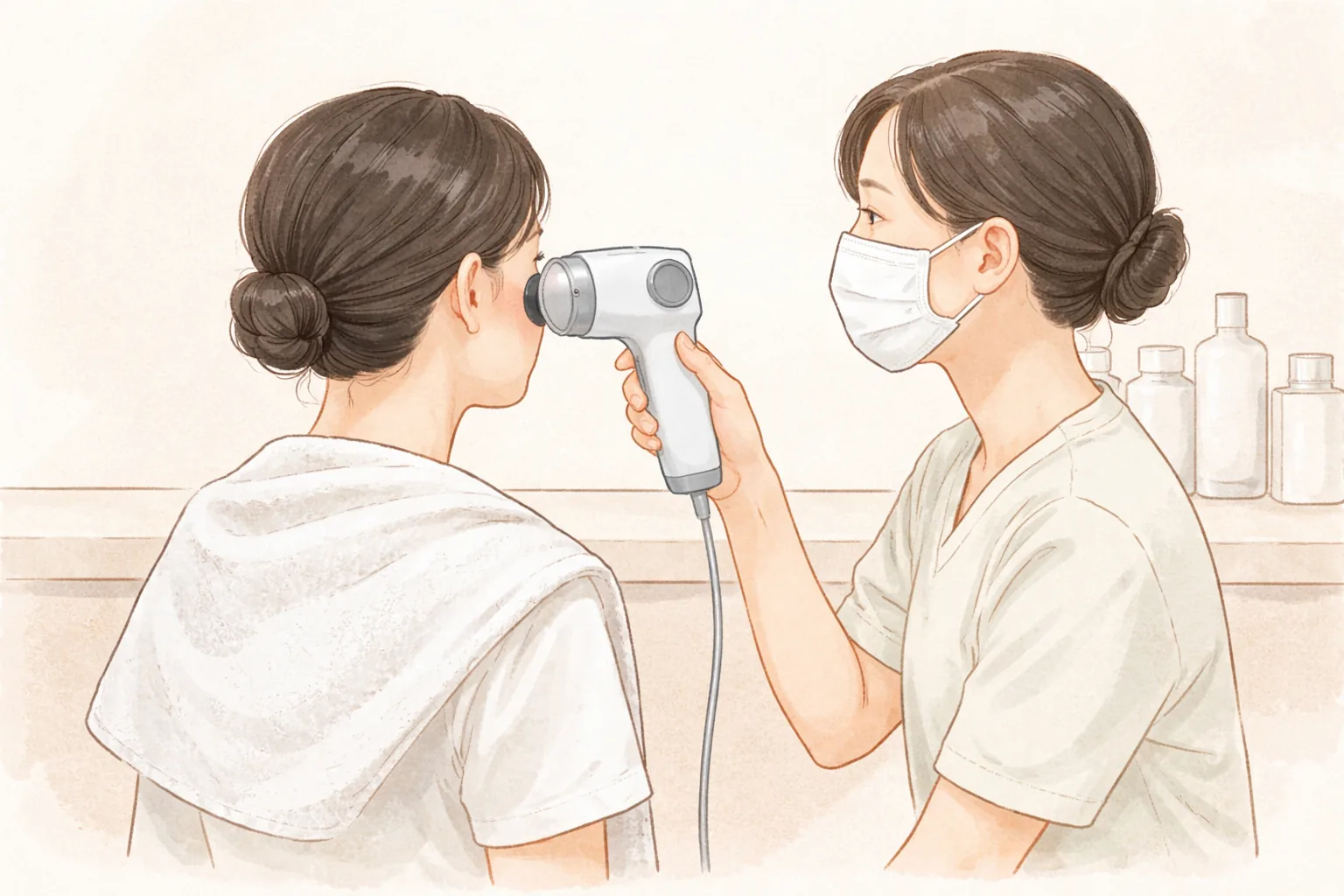
AI skin analysis record — Records pores, pigment and skin texture with an analysis tool. This record organizes information to support the consultation and is not a medical diagnosis. Type assessment and treatment planning are handled by the doctor.
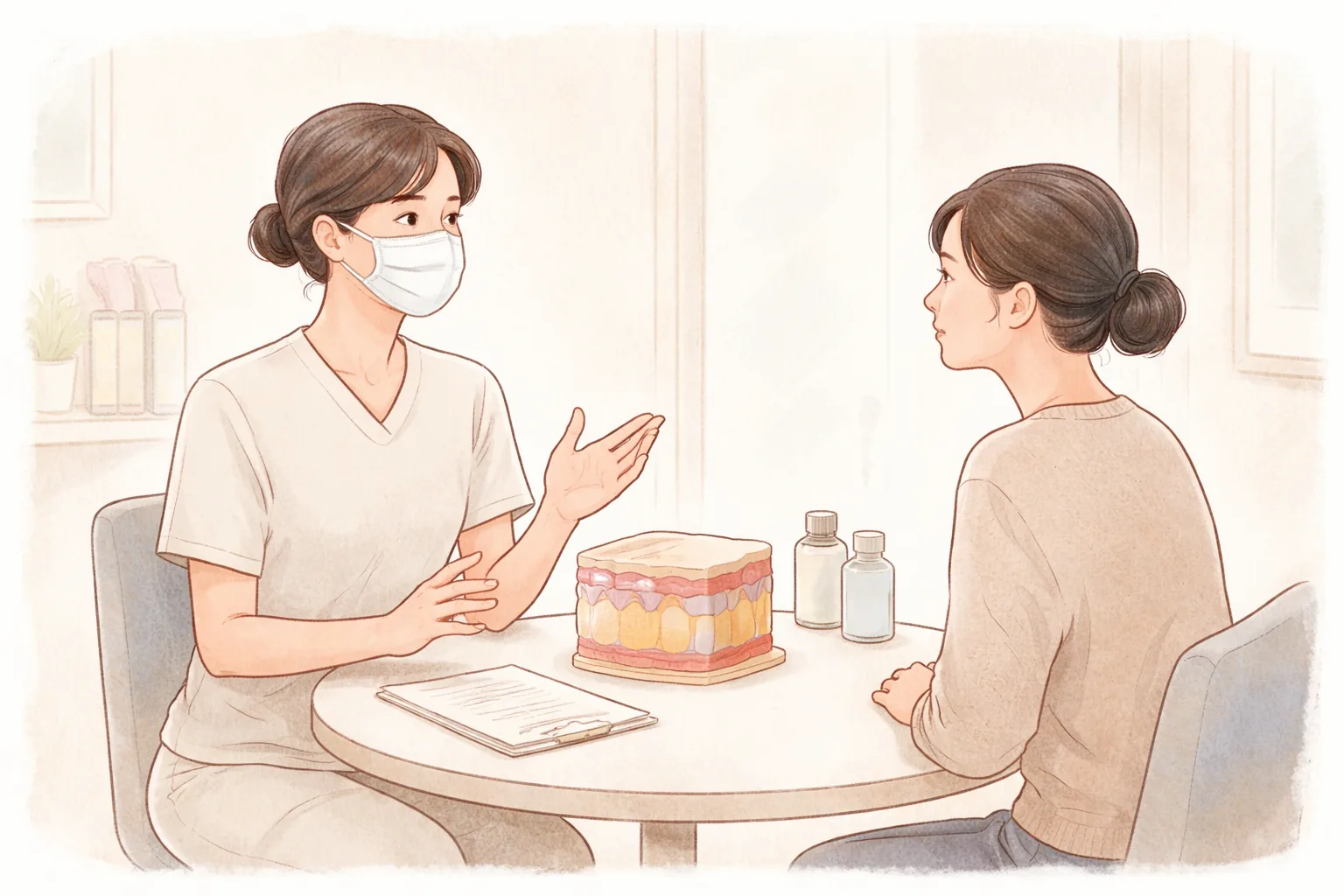
Doctor consultation to interpret causes — Combining the analysis record with skin condition and lifestyle habits, we identify the main cause of enlarged pores or scars and set the management direction. We explain causes before treatment names, and don't recommend treatments you don't need.
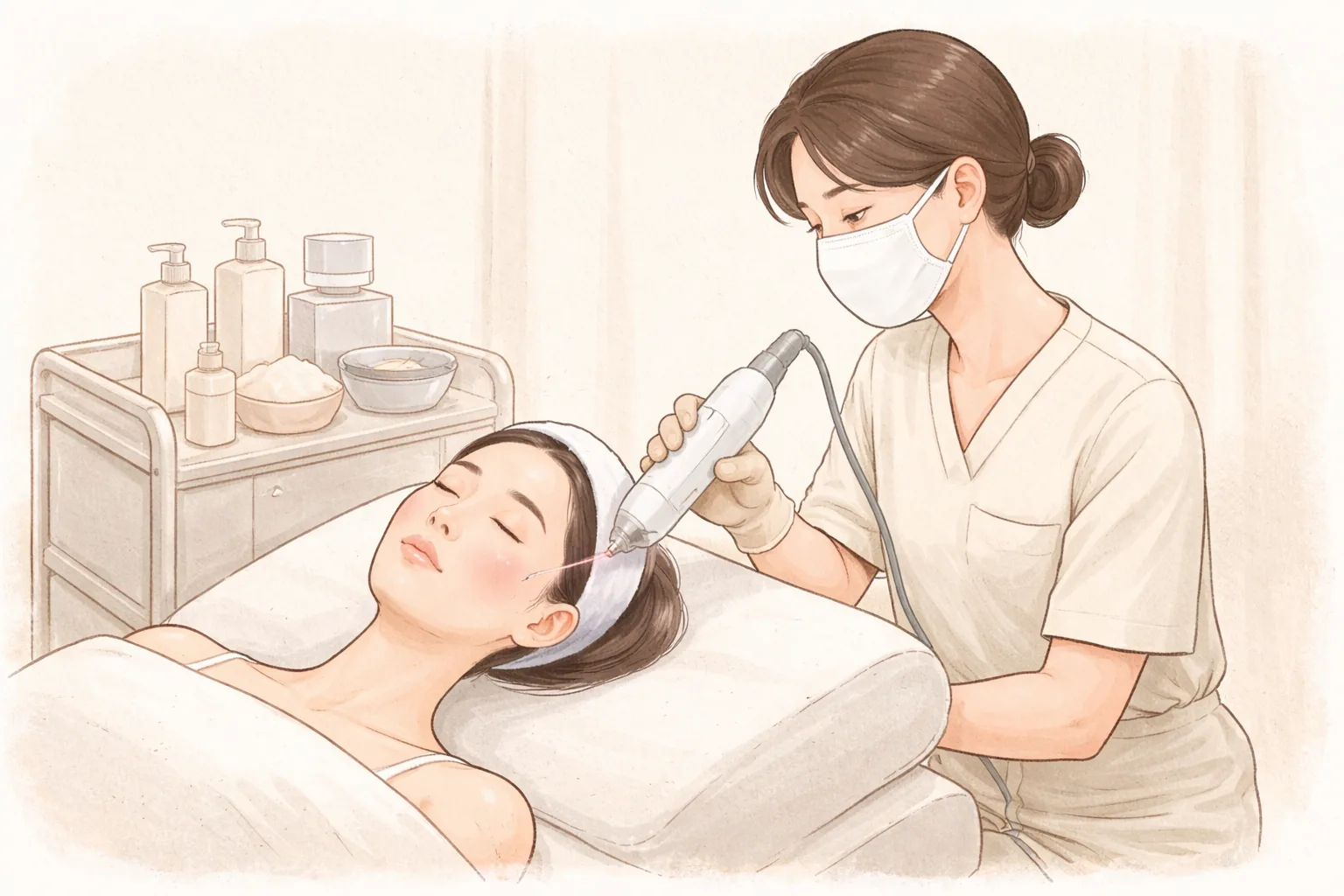
Treatment performed by the doctor — Rather than applying a fixed sequence, intensity and scope are adjusted to that day's skin condition. The devices used include erbium fractional (a fractional laser that helps improve pores and scars through micro-resurfacing), Potenza (RF microneedling that delivers radiofrequency to the dermis via fine needles), and Pico toning (pigment and brightening care using a 1064nm picosecond laser), as listed in ATTITUDE Clinic's treatment guide, and the combination varies with the concern.
Recovery and follow-up check — While following the soothing, moisturizing and sun protection plan given, we check progress at the set point and adjust the next interval. Following the principles of genuine products, exact amounts and set prices, we proceed only as much as needed.
Aftercare and side effects
Right after treatment, the skin's barrier is temporarily weakened. During recovery, care proceeds in order.
Soothing — On the day of treatment, don't rub; gently pat clean with lukewarm water. Avoid saunas, steam rooms and intense exercise for 1–2 weeks.
Moisturizing — Dryness slows recovery, so apply a recovery cream consistently. If crusts form, don't pick at them.
Sun protection — Apply SPF 50+ sunscreen for at least 2 weeks, and reapply about every 2 hours outdoors. Sun exposure during this period creates pigmentation and reverses results.
Follow-up check — If redness and stinging last more than 3 days or suddenly worsen, contact the clinic.
Common reactions are redness, swelling, crusting, and temporary darkening of pigment in the treated area. After erbium fractional or Potenza, dot-like marks, thin crusts and dryness often subside within a few days to 1 week. Rarely, hypopigmented spots, blisters, infection or scarring can occur, and pigment may reappear over time. If a change arises during recovery that's hard to judge on your own, don't switch ointments arbitrarily — ask the clinic where you were treated.
Frequently asked questions
Erbium fractional and pico fractional — the names are similar, so what's different?
Their targets differ. Picosecond types weight selective pigment breakdown, while fractional types like erbium fractional trigger regeneration after micro-injury to address pores, scars and skin texture. Even if 'fractional' appears in both names, intensity and recovery burden vary with settings. Rather than deciding which is better, the answer depends on whether your concern is pigment or structure, so it's best to have both methods' purposes and recovery burdens compared side by side at consultation before deciding.
When can I wash and wear makeup after treatment?
It varies with treatment scope and intensity, so the same timing can't apply to all treatments. In general, low power means shorter recovery, and high power delays washing and makeup by the period crusts are present. Avoid rubbing cleansers and exfoliating until recovery is complete, and switch to patting clean with lukewarm water. The most accurate source for specific resumption timing is the guidance given right after your treatment.
How does erbium fractional act on pores and scars?
Instead of burning the entire skin surface, it delivers energy only to micro-areas, prompting surrounding healthy cells to receive regeneration signals. In this process, collagen and elastin are newly produced and the tissue around pores is reorganized, making pores appear less noticeable. Since scars require different approaches by type, deep narrow scars may involve combining other methods. Remember that this is maintenance built up over multiple sessions at intervals rather than a one-time structural change, and it's easier to set expectations.
Does it hurt a lot? How is anesthesia handled?
The degree felt varies with power output, skin thickness at the treatment area, and the anesthesia method. The American Academy of Dermatology advises confirming at consultation whether anesthesia will be used during the procedure and how pain will be managed. Even in the same treatment, sensation differs by area, so if you've had strong pain before, it helps to mention it in advance. We adjust by tuning intensity or extending anesthesia time.
What should I check when choosing a clinic?
It's better to look at the content of the consultation than the treatment name. Use as criteria whether they explain the cause of your concern first, whether they tell you what you don't need, and whether they explain side effects and recovery time specifically. The American Academy of Dermatology also advises checking the practitioner's experience and cases involving a similar skin tone and type. ATTITUDE Clinic's price list is itemized by treatment, area and session count, and all amounts are shown excluding VAT, so it's good to check both what's included and what's separate.
At a glance
Table 2 At a glance
Item
Key point
What the name means
Fraxel spread from a brand; the accurate method name is fractional
Two families
Picosecond breaks down pigment, fractional triggers regeneration after micro-injury
What decides results
Scar type, cause of pores, skin thickness and tone, power, scope and interval
Range of recovery
Even in the same family, low power 3–5 days vs high power 7–14 days
This article offers general health information. It is not a substitute for diagnosis or treatment based on your own condition, so please talk through your situation with a doctor.