Jaw Botox Aftercare: Your First 24 Hours After Flying Home
Aftercare for jaw botox after your flight home: what to do in the first 24 hours, how bruising, swelling and chewing strength usually change, and when to contact the clinic.
Written by ATTITUDE Clinic Editorial Team
Once you've had botox and left Korea, it's easy to feel unsure about what to do first when you get home. You wonder how long to wait when a bruise appears, when exercise and alcohol are okay again, and whether a weaker feeling when chewing is something you can just watch. The answer comes down to not rubbing the injection area, keeping your upper body upright for the advised time, observing how recovery goes, and knowing the contact thresholds in advance.
The short answer
Botulinum toxin blocks the signals nerves send to muscles, so the targeted muscle rests temporarily. After injection, the basics are: don't rub or press the treated area for 12 hours, stay upright without lying down for 3–4 hours, and avoid strenuous exercise for 24 hours. Bruising is a common reaction and usually settles within a week. Results are usually assessed over 3–4 months, with repeat sessions planned at 3–6 month intervals. If swelling and redness keep worsening, or chewing discomfort and changes in your facial line persist, don't tough it out at home — contact the clinic where you were treated.
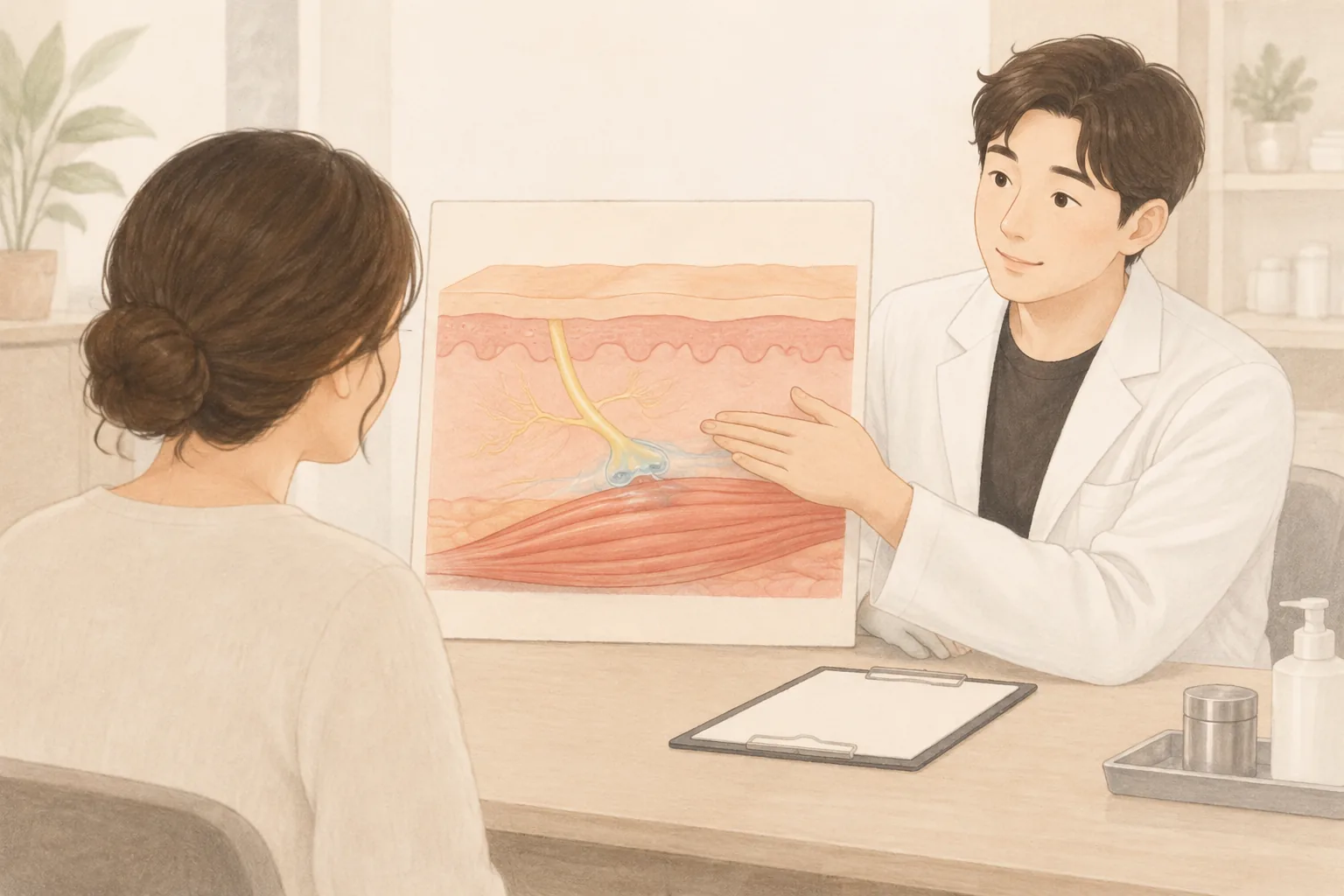
How does botox make a muscle rest?
Botulinum toxin is an injectable made by purifying and diluting a neurotoxin produced by bacteria in a lab. It blocks signal transmission where nerve and muscle meet, so the injected muscle can't contract. According to Cleveland Clinic's guide, botulinum toxin blocks nerve signals so the injected muscle can't tense, and the effect is not permanent. As the muscle starts moving again, wrinkles or jaw muscle volume gradually return, which is why repeat sessions are scheduled around 3–4 months.
American Academy of Dermatology information explains that for wrinkle treatment the effect lasts about 3–4 months, and sometimes longer. It also notes that injections are placed to weaken only the target muscles while touching others less, so your expression doesn't look unnatural. Several areas can be treated in one visit, but muscle size and function differ by area, so the same dose isn't simply applied everywhere.
When injected into a chewing muscle like the jaw (masseter), the muscle rests and its volume decreases. The amount and placement in the masseter shape both how chewing feels and your facial line. An ATTITUDE Clinic column also points out that even a treatment with the same name can produce different results depending on your starting skin condition, the plan, and how it is carried out. ATTITUDE Clinic column
What should you avoid in the first 24 hours after flying home?
The first thing is to avoid irritating the injection area. Cleveland Clinic's guide says not to rub or press the treated area for 12 hours after the procedure, to stay upright without lying down for 3–4 hours, and to avoid strenuous exercise for 24 hours. Washing your face and normal daily activity are fine, but it's safer to avoid rubbing and pressing motions. Pressing or rubbing the injection area with your hands should be avoided on the first day.
Sleep lying down only after 3–4 hours have passed. Lying down right away on the day of treatment can put pressure on the injection area, so even while unpacking and washing up after your flight home, it helps to be mindful of keeping your upper body upright. You can resume strenuous exercise after 24 hours, but if swelling worsens after a long session of vigorous movement, check how things look the next day.
Medications matter too. Anticoagulants and nonsteroidal anti-inflammatory drugs (NSAIDs such as ibuprofen) raise the risk of bruising at the injection site. Alcohol is generally advised against for 24 hours before the procedure, and the timing of drinking afterward is decided in consultation depending on whether you bruise easily. Don't stop any medication on your own — share your full list during consultation.
How much bruising and swelling is normal?
Pain, swelling, redness and bruising at the injection site are common reactions. Cleveland Clinic's guide says most are mild and improve within 1–2 days. The American Academy of Dermatology information notes that bruising lasts about 1 week. Needle marks and bruises fade over time, and swelling usually settles within a few days.
Bruising usually lasts about 1 week, and swelling and redness often settle within 1–2 days. However, if swelling keeps spreading, warmth persists, or pain worsens with no sign of improving, that's hard to consider within the normal range. The ATTITUDE Clinic column also advises checking promptly if something unexpected happens, such as pain that doesn't improve and keeps getting worse.
In the jaw, changes in chewing strength are more noticeable than in other areas. In a study analyzing 2036 masseter botox treatments, temporary reduced chewing strength was most common at 30%, followed by bruising at 2.5% and headache at 0.58%. The masseter botox complications study notes that these reactions are usually temporary and assesses masseter botox as generally safe overall. The study concludes that dividing injections across 3–4 points within the safe zone, at least 1cm from the border, is important for reducing complications.
Table 1 How much bruising and swelling is normal?
Area
Common reactions
What to watch at home
When to consider contacting
Forehead and glabella wrinkles
Bruising, swelling, redness at the injection site
No rubbing for 12 hours, stay upright for 3–4 hours, avoid strenuous exercise for 24 hours
When swelling and redness keep worsening, or new discomfort around the eyes appears
When it hasn't recovered after several weeks, or new changes appear
All areas
Temporary pain and bruising after injection
Share your list of medications and supplements at consultation
When there is warmth, spreading swelling, or worsening pain
Swipe sideways to see the whole table.
In summary Aftercare at home after botox starts with not irritating the injection area and keeping your upper body upright for the advised time. Bruising and swelling usually settle within a few days to a week, and reduced chewing strength in the jaw is often temporary too. However, if swelling and pain keep worsening, or changes in your facial line persist, don't judge the course on your own — tell the clinic where you were treated.
Which reactions are especially common with jaw botox?
The masseter is the muscle responsible for chewing strength, so a feeling of weakness after botox is relatively common. In a study analyzing 2036 treatments, temporary reduced chewing strength was most common at 30%, followed by bruising at 2.5% and headache at 0.58%. Rare reactions were also recorded: limited smile 0.15%, paradoxical bulging (a temporary look of prominence in the cheeks after botox) 0.49%, hollowed cheeks (a change where volume under the cheekbone looks reduced) 0.44%, and sagging 0.20%.
These figures are the rates from one study and vary with injection location and dose and with individual anatomy. Even if chewing feels weaker, it usually recovers over time. If only one side is uncomfortable, or pain when chewing lasts a long time, don't just watch and wait — tell the clinic where you were treated. Use the same rule if the corner of your mouth pulls when you make expressions, or if a look of prominence in the cheeks hasn't lessened after several weeks.
What to check when results appear late or last long
Botox results aren't fixed right after injection. Cleveland Clinic's guide explains that repeat sessions are scheduled around an average of 3–4 months. The American Academy of Dermatology information notes 3–4 months, sometimes longer. When you notice the effect and how long it lasts vary with muscle mass, injection area, dose and individual response.
Some people see the effect return quickly, while others find it lasts longer than expected. Even at the same dose, people whose muscles are naturally larger and used more may feel the effect for a shorter time. Conversely, if you use expression muscles less, or while surrounding muscles adapt, changes may feel slower. Even if your expression looks awkward early on, watch how things go rather than concluding right away, and check at consultation if recovery differs from what you expected.
In these situations
When your flight home is within 24 hours
If long-distance travel is booked right after treatment, tell the clinic your departure time first. Since it's hard to stay upright on a plane, keep to the no-lying-down time on the day of treatment and leave a comfortable buffer in your schedule for the next day. Letting them know your departure and flight time helps the doctor decide on treatment areas and dose.
When a ceremony or photo shoot is 2 weeks away
Even if a bruise remains, it usually settles within a week, but book your treatment date with a buffer before photos. If an important event is within 2 weeks, mention the date at consultation and also say whether you bruise easily. If an area tends to swell for a long time, you can discuss treating areas in stages around your schedule.
When you bruise easily or are taking medication
Anticoagulants and nonsteroidal anti-inflammatory drugs raise the risk of bruising. Don't stop medications or supplements on your own — bring your list to consultation. Alcohol is also generally advised against for 24 hours before the procedure. If you bruise easily, especially avoid positions that press on the area on the first day after treatment.
International visitors on a short stay who fly right back
If your time in Korea is short, there isn't much time to see how things go after treatment. Decide your return date and how you can be contacted in advance, and it helps to keep photos of what you're monitoring at home. Confirm where to contact if an unusual reaction occurs before you leave.
Before your consultation, please tell us Your recent sun exposure and drinking, medications and supplements you're taking (especially anticoagulants and nonsteroidal anti-inflammatory drugs), how you reacted to previous botox, filler or laser treatments, your return date, and important events such as ceremonies or photo shoots.
How ATTITUDE Clinic handles your visit
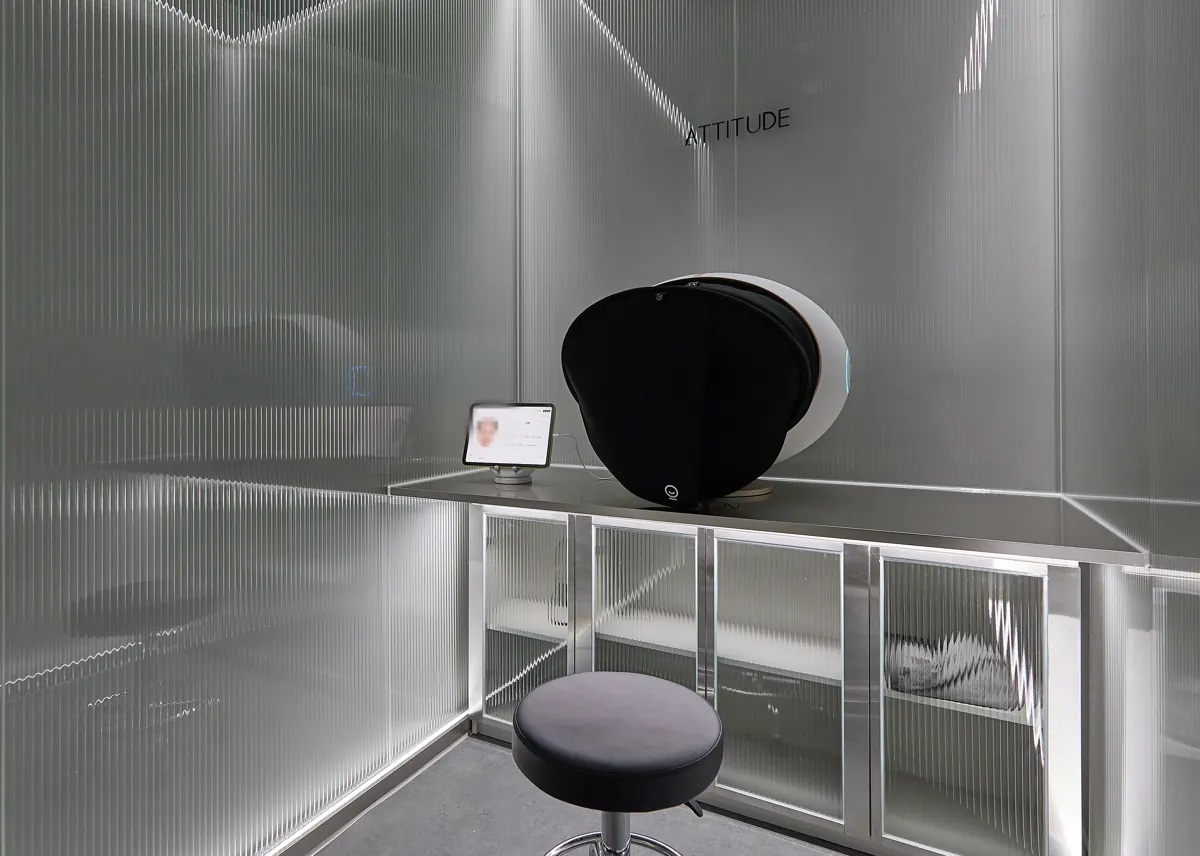
AI skin analysis record Your skin condition is recorded and organized with a device. The analysis tool only records and organizes information and does not make a medical diagnosis — the doctor makes the judgment. The record is reference material so you and the doctor can look at the same information during consultation.
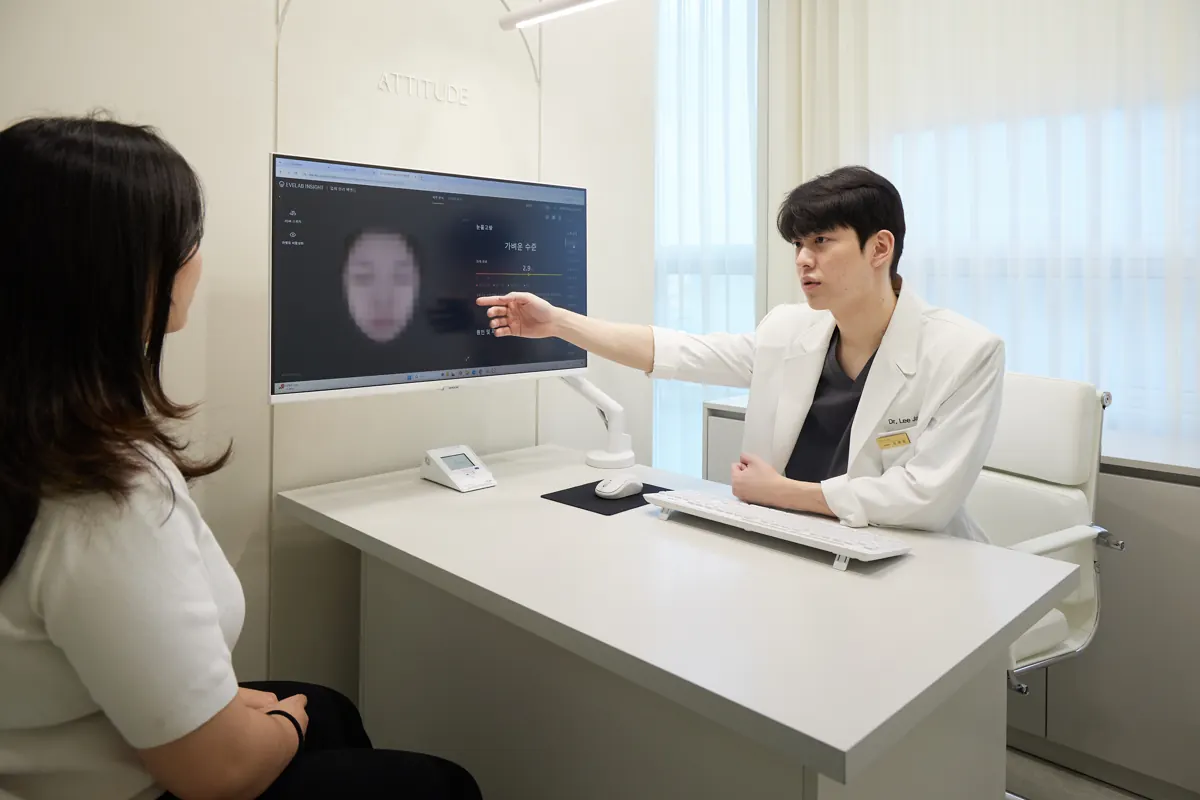
Doctor consultation Your concerns, lifestyle habits, previous treatment experience and return schedule are added to the analysis record to decide areas, dose and order. Whether you bruise easily and whether you take any medications are also checked here.
Treatment performed by the doctor The doctor injects according to the agreed plan and adjusts while watching your response during treatment, so the plan made in consultation and the actual treatment stay aligned.
Guidance on recovery and contact thresholds You're given guidance on the times to be careful after treatment, reactions to watch at home, and when to contact the clinic. Botulinum toxin products and list prices are set out in the treatments and pricing guide, VAT excluded.
Four steps your doctor sees to in person
From the diagnostic device to the treatment bed, the doctor you first consult takes care of everything.
01
Precision diagnosis
In a private diagnosis room the whole face is photographed, recording even skin conditions that are hard to see with the eye.
02
Skin analysis
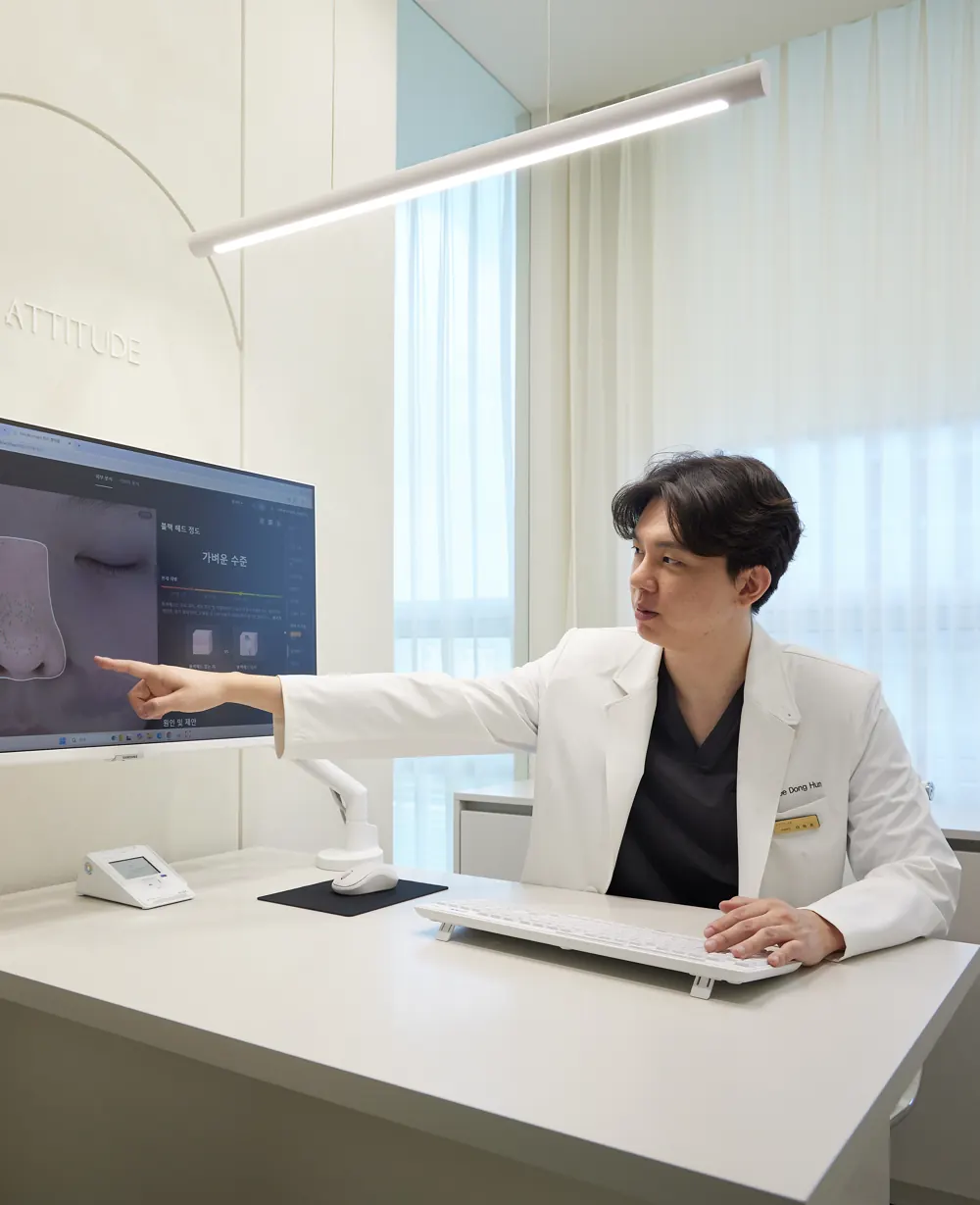
The doctor goes through your pore, pigmentation, wrinkle and firmness results with you on screen and explains what comes first.
03
One-to-one design
With your skin, the balance of your face, the change you want and your schedule in view, you decide the treatment and its extent together.
04
Treatment by your doctor
The doctor who consulted you performs the treatment from start to finish in a private treatment room. No one takes over halfway.
“I take injection pain seriously.”
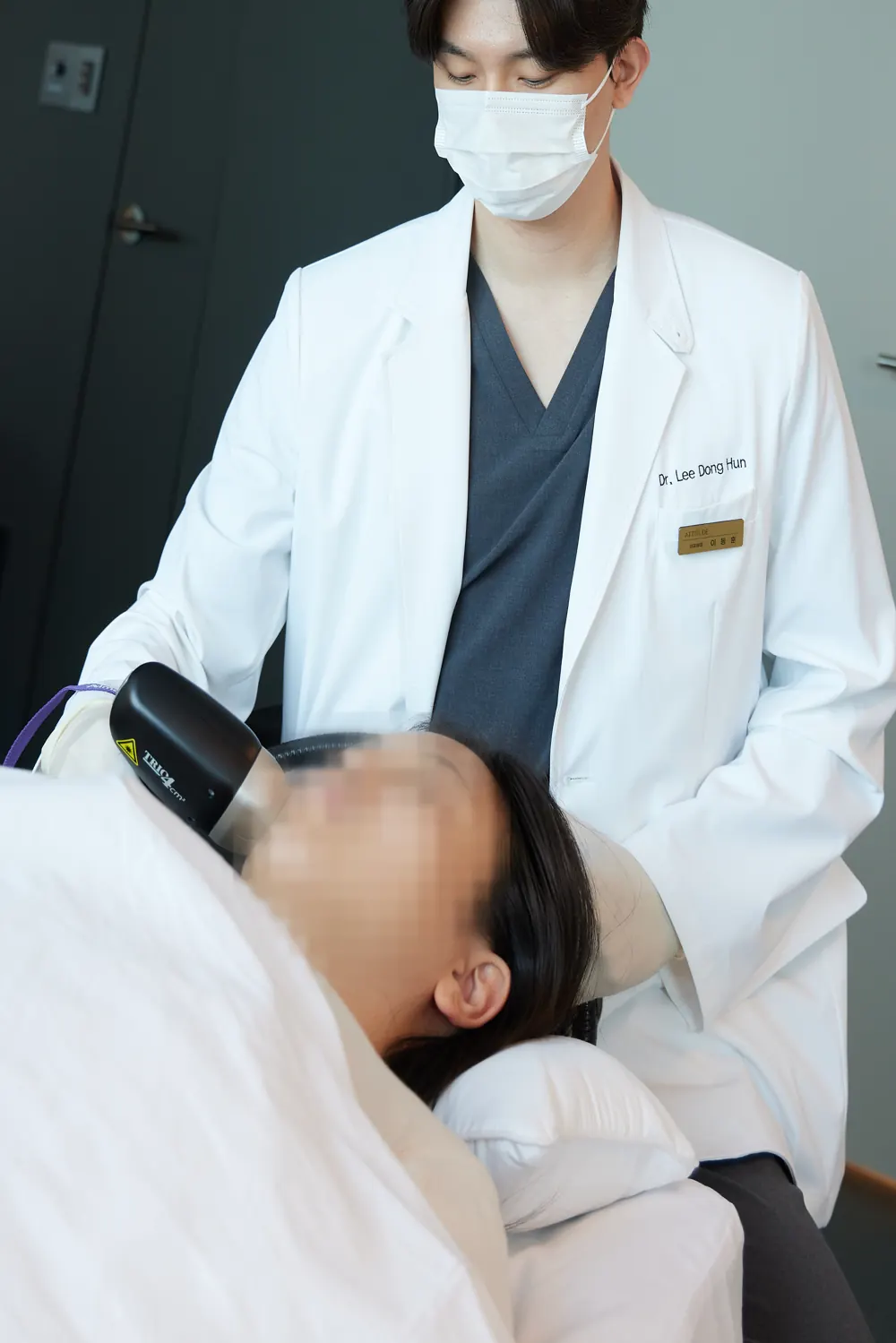
Co-Director Dr. Lee Dong Hun
Many people hesitate over injection treatments because they hurt. So we went back over everything, from the anesthetic to the products used.
Careful numbing, unhurried timingWe allow plenty of time for a special numbing cream to take full effect, and add anesthetic injections for the treatments and areas that need them.
Fine needles, finished quicklyInjection treatments use fine needles, and the doctor finishes them personally in a short time, adjusting along the way by watching how you are doing.
Even the product formulation countsThe same treatment can feel more or less demanding depending on the product, so we take that into account too.
The anesthetic method and whether it is used are decided after an examination, according to the treatment, the area and your condition. How much it hurts varies from person to person.
Aftercare and side effects
Don't rub Don't rub or press the injection area for 12 hours.
Stay upright Stay upright without lying down for 3–4 hours.
Avoid strenuous exercise and alcohol Avoid strenuous exercise for 24 hours, and alcohol is generally advised against for 24 hours before the procedure.
Track your progress Keep photos and notes on the extent of bruising and swelling, chewing strength and changes in expression.
The most common reactions are pain, swelling, redness and bruising at the injection site. They usually improve within 1–2 days, and bruising lasts about 1 week. The American Academy of Dermatology explains that mild side effects usually come from the injection itself. In the jaw, temporary reduced chewing strength was most common at 30%, followed by headache and bruising.
Rarely, limited smile, paradoxical bulging, hollowed cheeks and sagging are reported. These reactions are usually temporary, but if recovery is slow or new changes are clear, contact the clinic where you were treated. If the injection area keeps getting redder with spreading warmth, or swelling and pain worsen, contact the clinic without waiting. Use the same rule if discomfort when chewing or making expressions hasn't lessened after several weeks.
Frequently asked questions
How long does bruising last after botox?
Bruising is a common reaction caused by the needle. The American Academy of Dermatology information notes that bruising lasts about 1 week. Swelling and redness usually settle within 1–2 days. If a bruise spreads or gets darker after 2 weeks, another cause may be involved, so tell the clinic where you were treated. If you bruise easily, it helps to tell them about medications and supplements before treatment.
Is weaker chewing strength normal after jaw botox?
When botox reaches the masseter, the muscle rests and chewing strength can temporarily decrease. In the 2036-treatment study, this reaction was most common at 30%. It's usually temporary and tends to recover, but if only one side is uncomfortable or it lasts a long time, it needs checking. When chewing feels weaker, don't force repeated hard chewing — watch how things go. If pain lasts alongside it, tell the clinic where you were treated.
When do botox results show, and how long do they last?
Results aren't fixed right after injection. Cleveland Clinic notes that repeat sessions are scheduled around an average of 3–4 months. According to the American Academy of Dermatology information, it's 3–4 months, sometimes longer. When you notice the effect and how long it lasts vary with muscle mass, injection area, dose and individual response. Even if your expression looks awkward early on, watch how things go rather than concluding right away, and check at consultation if recovery differs from what you expected.
When can I exercise and drink alcohol after flying home?
Cleveland Clinic's guide says to avoid strenuous exercise for 24 hours after the procedure. There is guidance to avoid alcohol for 24 hours before the procedure; after treatment, timing is decided in consultation if you bruise easily. If you take anticoagulants or nonsteroidal anti-inflammatory drugs, the risk of bruising is higher, so share your medication list in advance. If swelling and pain are severe even after 24 hours, don't rush back to exercise — check how things look.
How should I choose a botox clinic?
The American Academy of Dermatology warns against buying botox online or having it injected in non-medical settings, and advises checking whether it's performed by a licensed person in a medical setting and whether they explain which product is used at what dose. ATTITUDE Clinic records your condition with AI skin analysis and aligns plan and execution through doctor consultation and treatment performed by the doctor. Also check whether they explain contact thresholds and how to record your progress after treatment. Products and list prices are in the treatments and pricing guide.
At a glance
Table 2 At a glance
Item
Key point
First 24 hours after treatment
No rubbing for 12 hours, stay upright for 3–4 hours, avoid strenuous exercise for 24 hours
Bruising and swelling
Bruising lasts about 1 week; swelling and redness often settle within 1–2 days
Jaw reactions
Temporary reduced chewing strength is most common at 30%
How long results last
Average 3–4 months, replanned at 3–6 month intervals
When to contact
Spreading swelling, worsening pain, prolonged chewing or expression discomfort
Choosing a clinic
Medical setting, explanation of product and dose, progress records and contact thresholds
This article offers general health information. It is not a substitute for diagnosis or treatment based on your own condition, so please talk through your situation with a doctor.