Juvelook Volume: Who It Suits Depends on Skin Thickness and Age
A clinic-room guide to juvelook, juvelook volume, and juvelook eye: which skin conditions and concerns they suit, when an instant-volume filler is the better choice instead, and what to expect after treatment.
Written by ATTITUDE Clinic Editorial Team
Search for juvelook and the questions split into two camps. Is it right for a face that has hollowed with age? And can people with thin, sensitive skin have it too? This article walks through what skin conditions and concerns juvelook suits, and on the flip side, when it is better to consider another option first — in the order these are checked in the clinic room.
The conclusion first
Age alone does not decide whether juvelook is right for you. At examination, we first look at how thin the skin has become, whether the current hollowing is a texture problem or a volume-loss problem, and how much capacity for new collagen remains. If the goal is volume that looks filled and defined right away, a dermal filler that shows results immediately is the match; if the goal is addressing skin texture and density over time, juvelook can be discussed. Even with the same product, the experience differs with skin type, thickness, and regeneration speed, so suitability is decided by looking at records and examination together.
What does juvelook do in the skin?
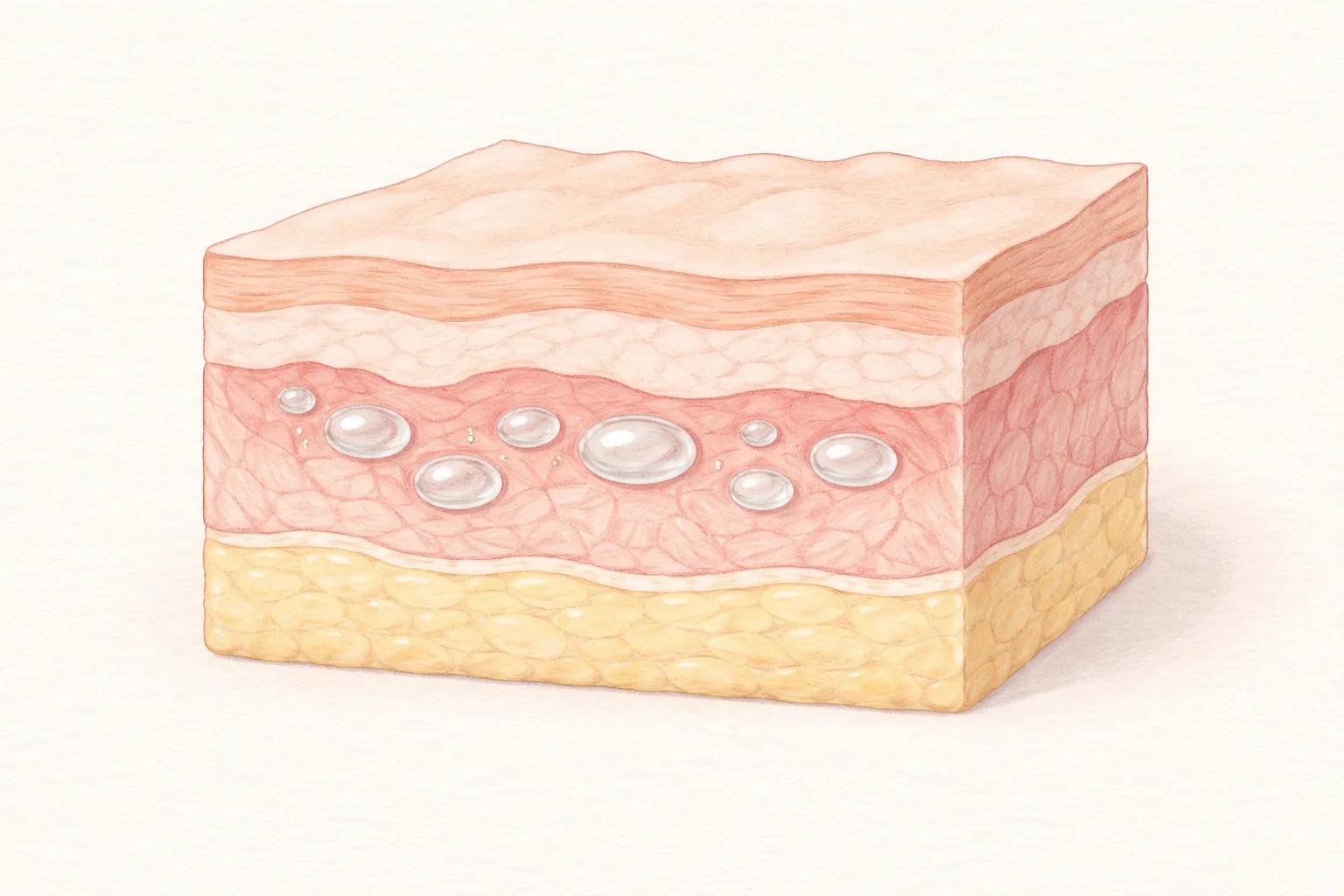
On the ATTITUDE Clinic price list, juvelook skin, juvelook volume, and juvelook eye sit under skin boosters, the category for treatments delivered directly into the skin's deeper layers (Treatments & Pricing). Even within skin boosters — the family of treatments injected not into the surface but into the deeper layer to address texture — the three items are listed in different units, and prices exclude VAT.
Injectable ways of treating the skin differ in when results appear. American Academy of Dermatology guidance notes that fillers that add volume, such as hyaluronic acid gel or calcium hydroxylapatite, show results immediately, while poly-L-lactic acid, which stimulates collagen production, appears gradually over 2–3 weeks (AAD filler consultation and what to check after treatment). This is where the expectation that "if it suits me, it plumps up right there" goes wrong depending on the type of treatment.
The capacity to make collagen on your own — the protein that keeps skin firm — varies with age, lifestyle habits, and hormonal status. If little of this capacity remains, the response to the same stimulation may come slowly and weakly. That is why two people who receive the same treatment may not feel the same change at the same point in time.
What we look at before age: skin thickness and regenerative capacity
When asked in the clinic, "From what age can I have this?" what we actually check is skin condition alongside age. The reasons ATTITUDE Clinic cites for results diverging even with the same treatment are skin type, skin thickness and structure, and regeneration speed (Why do results differ even with the same treatment?). The degree of response to the same stimulation differs by type — dry, oily, sensitive — and the sensation and result differ depending on whether skin is thin or thick, while the speed at which new collagen is made differs from person to person.
Age is not irrelevant either. It is thought that as we age, the skin cells' own regeneration signals decrease (Exosomes: does spraying after treatment really work?). So someone in their 20s with thin skin and disrupted texture can still be a candidate for discussion, and someone in their 50s with remaining regenerative response whose main concern is texture rather than hollowing can still be considered. At examination, we look at skin thickness and regeneration speed, plus the record of treatments received before. Which devices and products, at what dose, when, and how the skin responded then all become material that shapes a different plan this time.
Which concerns it suits, and which it does not
It suits the side where skin feels thinner and less firm, where fine wrinkles and pore texture are noticeable, and where you want change that fills in naturally rather than a single dramatic fill. It is worth discussing if you plan to manage it over several sessions, or if you want the skin itself to become firmer rather than wanting excessive volume.
The opposite side is clear too. If the main goal is filling a hollowed area to look defined immediately, juvelook alone may not be enough. AAD guidance also states that fillers such as hyaluronic acid gel show results immediately, so if volume replacement is the goal, that is considered first.
There are also situations where it is better to postpone treatment. If there is an infection at the treatment site, a lip herpes outbreak, or active inflammatory acne; if you are pregnant or breastfeeding; if you have an autoimmune disease; or if you have had a reaction to a cosmetic or medication, you must tell the doctor first (Exosome column). These items do not apply only to juvelook — they are checked before any injectable treatment that opens the skin.
How many sessions, and at what intervals
Rather than fixing the numbers in advance, the order and intervals are set by looking at the skin's capacity to recover, the time available for recovery, and the influence of accompanying treatments on one another (Why do results differ even with the same treatment?). If there is an unavoidable date — an important shoot or a ceremony — the sessions are arranged around that schedule. Among the questions AAD recommends asking at consultation are how long the procedure takes and how many sessions are needed to reach the desired result (Questions to ask at a cosmetic consultation). Session intervals are not fixed at the first consultation but adjusted while checking progress.
Injectable treatments differ by type in when results appear and in aftercare instructions. Below is general guidance summarized by AAD.
Do not touch the treated area for 3 days unless instructed otherwise
Fat grafting
Right after treatment
Manage according to your clinician's guidance
Swipe sideways to see the whole table.
In summary the 3 days after treatment are mostly a hands-off period, and whether massage is needed depends on the type of treatment. When results begin to show also differs by product family, so two people treated on the same day do not feel the same change in the same week. That is why the next session is scheduled not right after treatment but after reviewing progress.
If this applies to you
When a ceremony or shoot is only weeks away
Treatments delivered into the deeper skin layers tend to show results gradually, so stacking sessions the day before a shoot is not advised. Redness and swelling can take days to settle, so the schedule and recovery time must be calculated together. If a shoot is a few weeks out, avoid a session right before it and arrange one earlier so progress can be checked.
When hollowing is pronounced and volume is needed now
If a hollowed area is visibly sunken and casts shadows in photos, a filler that shows results immediately or another volume treatment may be more suitable. At consultation we first distinguish whether the cause of the hollowing is skin texture or volume loss. If the two overlap, a staged approach is also considered.
Sensitive skin or skin prone to redness
Even at the same intensity, sensitive skin may retain redness and swelling longer. If you tell us about recent irritating treatments or the skincare products you are using, we set the intensity and session intervals differently. After treatment, use only products your doctor has approved.
International visitors on a short stay
With a short stay, intervals between sessions are hard to compress. Cramming several sessions into a few days removes the time to check how the skin responds, so it is better to set priorities around your visit schedule. It is common to leave the country with guidance on care until the next visit.
Tell us before consultation — Let us know about recent UV exposure and travel plans, medications you take and active skincare ingredients (retinol, acids, etc.), reactions you have had to previous treatments, and any important dates you cannot avoid, and we will design around them.
How ATTITUDE Clinic proceeds
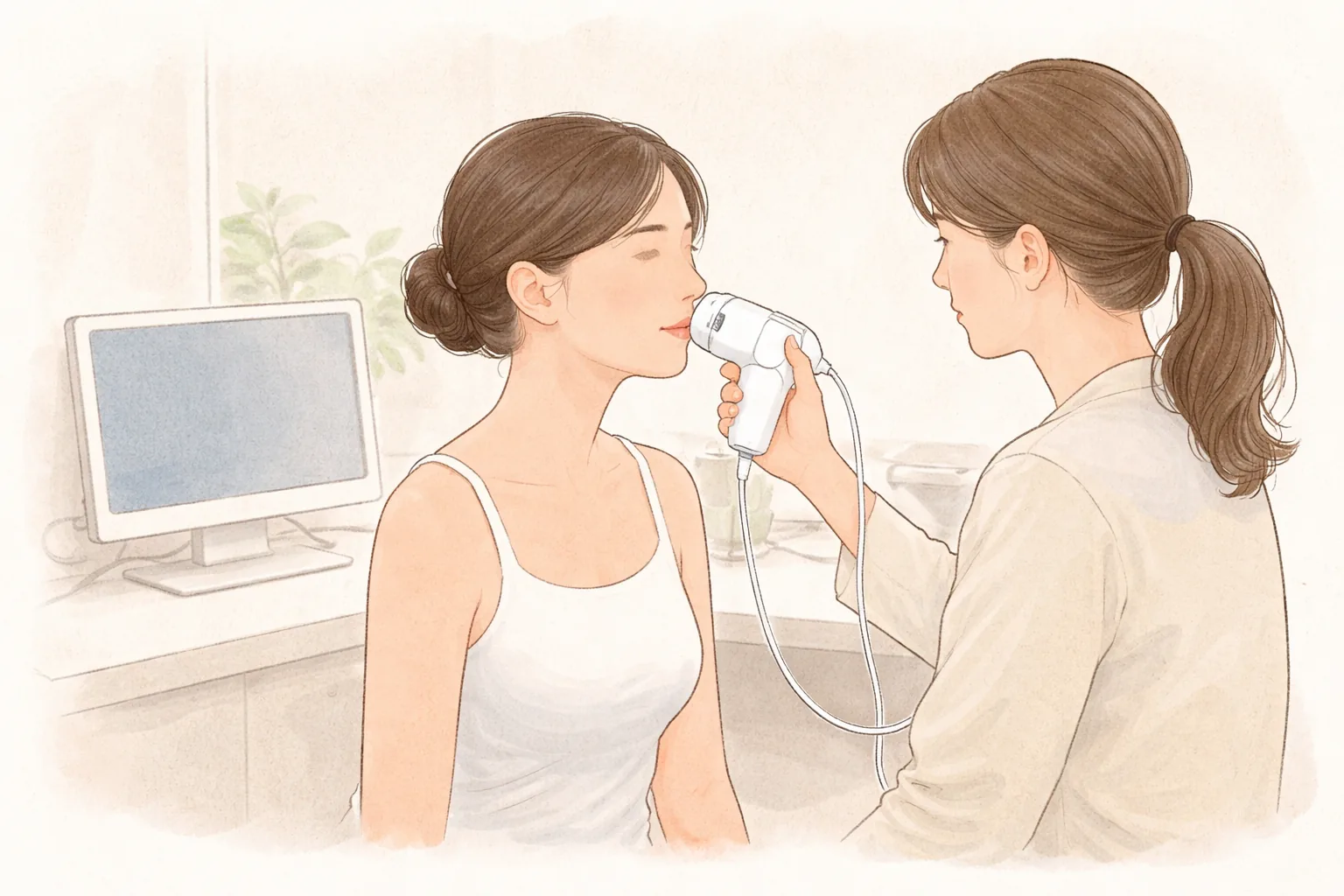
AI skin analysis record — Skin condition is recorded and organized so you and the director look at the same information together. The analysis tool is reference material that records and organizes information and does not make a medical diagnosis. Judgment rests with the director.
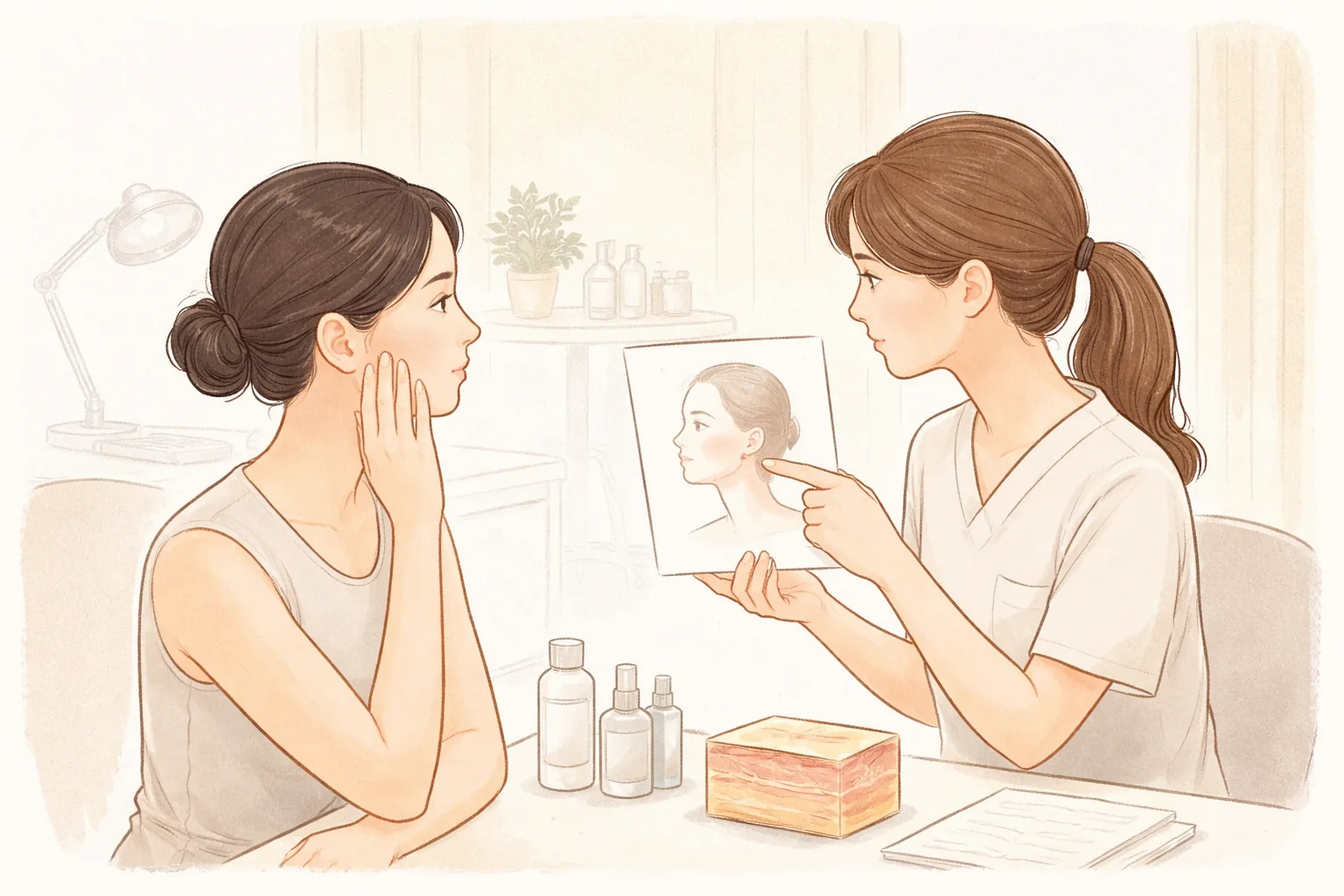
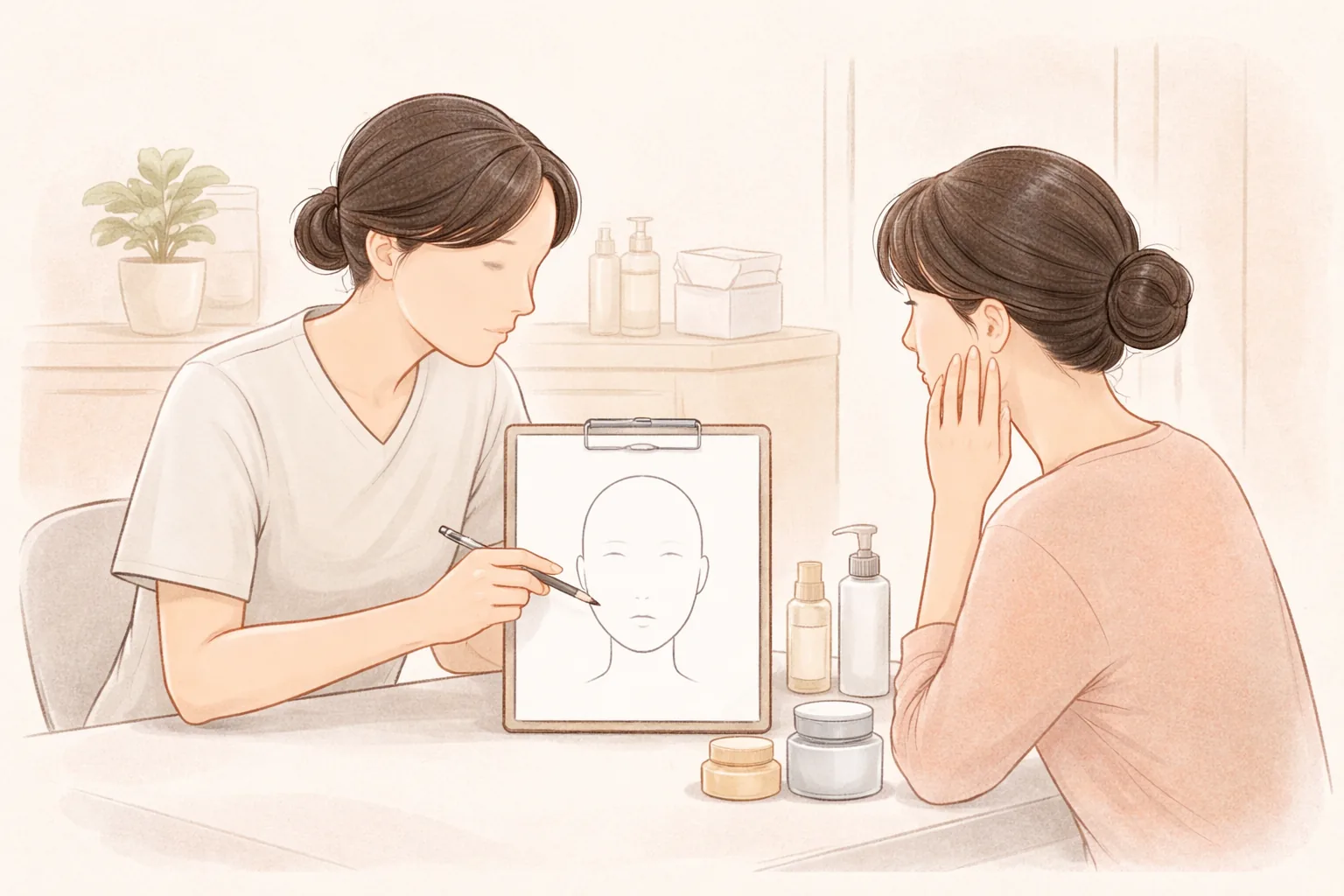
Director consultation — Your concerns, lifestyle habits, and past treatment experience are added to the record to decide together what is needed and what is not, and in what order and intensity. This is also the step where we distinguish whether hollowing is caused by skin texture or volume loss.
Treatment performed by the director — The director personally performs the plan set at consultation. Skin response is watched during treatment to adjust intensity, and anesthesia is handled according to the treatment site and scope.
Recovery and aftercare guidance — You are given precautions right after treatment and the timing of the next session. Ways to support recovery, such as sun protection and moisturizing, are explained as well.
Items reviewed together at consultation for this topic include the skin booster family (juvelook skin, juvelook volume, juvelook eye, Rejuran, Sculptra, Re2O, etc.), lifting devices (Ultherapy, Thermage FLX, Shurink, Onda, XERF, etc.), and Potenza for pores and scars (Treatments & Pricing). What to combine depends on skin thickness and the cause of hollowing.
Aftercare and side effects
Soothing — On the day of treatment, do not rub the treated area hard. Unless instructed otherwise, the basic rule is to leave it alone for about 3 days, and if you are given massage guidance, follow the method and duration exactly.
Cleansing and moisturizing — Use only products your doctor has approved, and pause your usual exfoliants or active-ingredient products until you are told otherwise.
Sun protection — Use sun protection when going out to reduce pigment changes. Right after treatment, skin is more sensitive than usual.
Progress check — The timing of the next session is set after reviewing progress. If there is a change other than expected, such as a lump or color change, do not wait — have it checked.
Common reactions after treatment are redness, swelling, tenderness when pressed, and bruising. They usually settle within a few days. The treatment itself can cause dot-like marks, dryness, or thin crusting, and rarely temporary darkening or lightening of pigment, blisters, lumps after injection, or burns or scars (Why do results differ even with the same treatment?, Exosome column). Lumps or long-lasting inflammation have been reported depending on the injected product, so which product is used is another item to check.
There are also signals that should be checked without waiting. These are pain that keeps worsening, swelling that does not subside after several days, a lump that grows or changes color when touched, and a treatment site that becomes hot and red with a sense of heat. Do not let these changes pass with the thought that they will get better with time — have them checked through a clinic visit.
Frequently asked questions
When is juvelook not a good match?
The most typical case is when immediate, defined volume replacement is the main goal. If the core concern is filling a hollowed area right away rather than skin texture or density, a filler that shows results immediately is considered first. If there is an infection, inflammatory acne, or lip herpes at the treatment site, or if you are pregnant or breastfeeding or have an autoimmune disease, the timing is postponed. If you have a history of reacting to a cosmetic or medication, you must tell us in advance.
Do I have to give up treatment because of my age?
Age alone does not decide it. Someone in their 20s with thin skin and disrupted texture can still be a candidate for discussion, and someone in their 50s with remaining regenerative response whose main concern is texture can still be considered. That said, regenerative signals tend to decrease with age, so when results appear or how many sessions are needed may differ. At consultation we look at age together with skin thickness, past treatment history, and the time you can set aside for recovery.
How do juvelook skin and juvelook volume differ?
On the price list they are separate products listed in different units. Which one suits you is decided not by the product name but by skin thickness, the location of the hollowing, and which layer the hollowing arose in. Even for the same area, the choice splits depending on whether you are addressing thinned skin or volume loss. At consultation we look at the balance of the whole face and decide the combination.
I am worried about lumps that can form after injection.
Lumps or long-lasting inflammation after injectable treatment are a rarely reported reaction, and the risk differs depending on which product is used. How injection depth and dose are set also has an influence. At consultation, check the product to be used, the expected reactions, and how they would be handled if they occur; if a lump is felt after treatment, do not just observe it — seek care. If it is your first time, I especially recommend asking about this first.
What should I look at when choosing where to have treatment?
AAD recommends that at consultation you are given information on indications, risks, benefits, and alternatives, and that you ask how much experience the practitioner has with this treatment and how many patients of your skin tone, type, and age group they have treated (Questions to ask at a cosmetic consultation). Whether your skin condition is recorded and reviewed together, and whether the person who consulted you performs the treatment, are also items to check. If a fixed package is recommended, ask why each item is needed and what can be left out. The more a place can explain where individual differences come from, the more specific the consultation is.
At a glance
Table 2 At a glance
Item
Key point
What decides suitability
Skin thickness, cause of hollowing, remaining regenerative capacity more than age
When results appear
Immediately filling fillers right after treatment; collagen-stimulating types over 2–3 weeks
Basic aftercare
Do not touch for 3 days unless instructed otherwise; massage depends on treatment type
Situations to postpone
Infection, herpes, or inflammatory acne at the site; pregnancy or breastfeeding; autoimmune disease
Signals to check
Worsening pain, swelling that does not subside, a lump that can be felt, color change
Flow of visit
AI skin analysis record → director consultation → treatment by the director → recovery and aftercare
This article offers general health information. It is not a substitute for diagnosis or treatment based on your own condition, so please talk through your situation with a doctor.