Laser Hair Removal Consultation: What to Check for Your Skin Tone and Hair Type
What to check in a laser hair removal consultation: settings and intervals for your skin tone and hair type, risks and alternatives, plus questions on sessions, recovery and cost.
Written by ATTITUDE Clinic Editorial Team
Many people put off a laser hair removal consultation because shaving leaves them red and bumpy, waxing hurts, and they can't keep postponing it forever. The questions that follow are always the same: "Will it be safe for my skin tone?", "How many sessions will I need?", "How red will I be afterwards?" This article walks through what a laser does in the skin, what to check in a consultation, and how to care for your skin before and after treatment.
The short answer first
In a laser hair removal consultation, the first thing to look at is not the device name but whether the expected results, risks and alternatives for your skin tone and hair type have been explained to you. The American Academy of Dermatology advises that in a cosmetic procedure consultation you should check expected results, risks, alternatives, the practitioner's experience, how many sessions are needed and how long they take, recovery and return to daily life, preparation and aftercare, and cost. Even with the same device, intensity and repeat intervals differ with skin tone, hair thickness and density, so sessions and cost are best confirmed in a plan based on your own condition rather than an average. Any procedure can have side effects, and whether the consultation covered how to handle them makes a big difference to the experience.
What does a laser do in the skin?
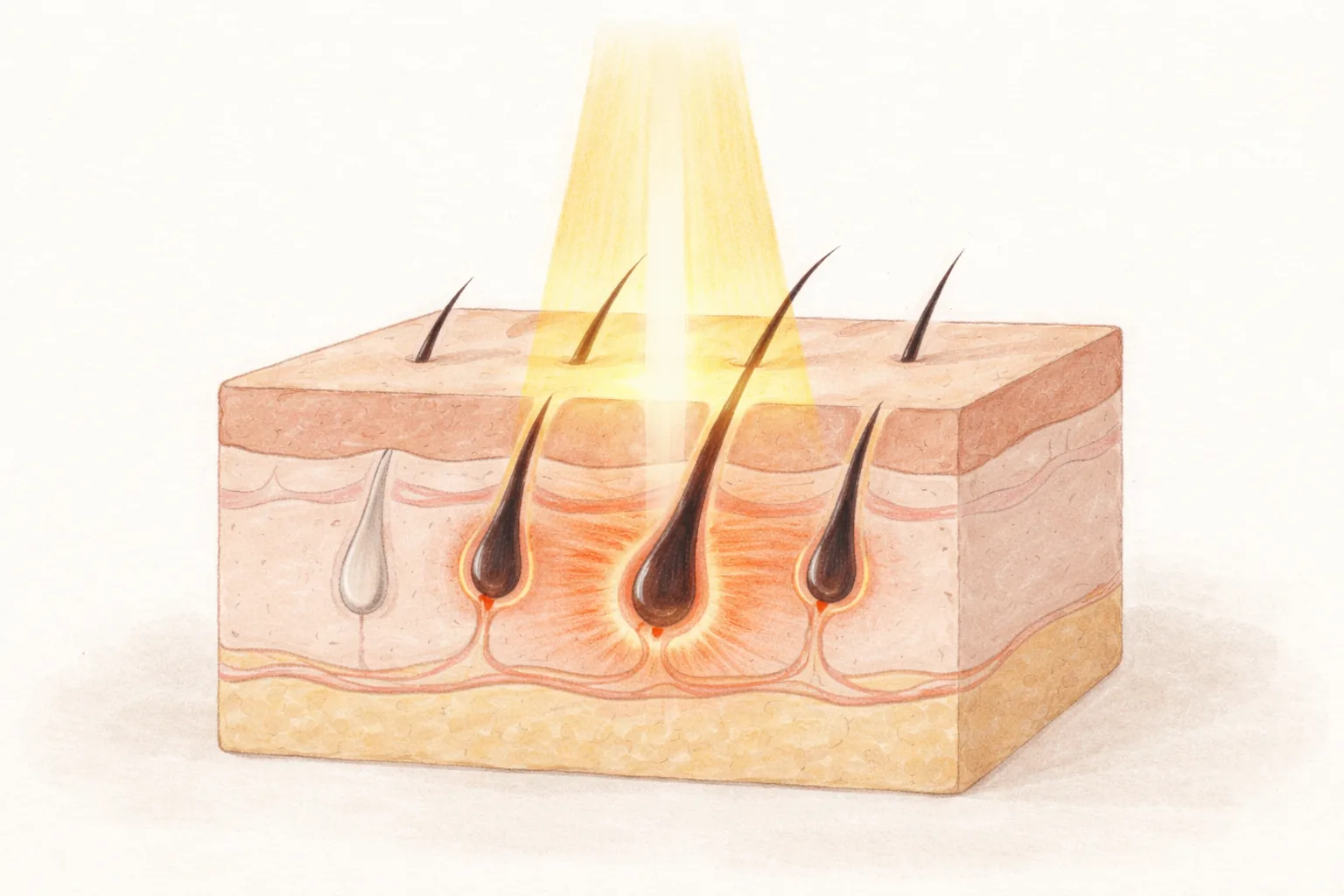
The ATTITUDE Clinic column describes the basic principle of lasers as selective photothermolysis — concentrating energy on the target while leaving the surrounding area less touched. When light gathered at one wavelength reaches the skin, it is absorbed only by targets that respond to that wavelength and converted into heat or impact, while normal tissue is not over-stimulated where possible (Does laser make skin thinner?).
Each wavelength responds to a different target, so lasers aimed at pigment and lasers aimed at blood vessels use different devices. Pigment targets melanin, redness targets oxygen-carrying hemoglobin, and skin texture and scars target the tissue structure itself (Spots, redness, scars — can lasers do it all?).
In hair removal, the target is the melanin in the hair and hair follicle. This is why thicker, darker hair absorbs light better, and why lighter skin tones give a clearer contrast between target and surrounding skin. On the other hand, with darker skin tones the melanin in the skin can also respond to the same light, so the starting intensity is lowered and raised while watching how the skin reacts.
Why are repeat sessions needed, and why do results differ with the same device?
Because each hair grows on its own cycle, a single pass does not catch every hair in a responding phase. Hair removal is therefore carried out over multiple sessions, and how many sessions at what intervals is decided in the consultation after looking at hair thickness and density and the skin's response.
The idea that "the same device gives the same result" spread because the device name is the easiest information to compare. What actually determines the outcome is the wavelength and energy, the treatment area, and the interval allowed for recovery. The ATTITUDE Clinic column also notes that even with the same laser, the experience differs with the settings (Does laser make skin thinner?).
The intended treatment and a side effect are a fine line apart. With settings matched to your skin and action limited to the target, redness and heat settle within a few days. But if the energy is too high for your skin or sessions are repeated before recovery, the risk of side effects such as burns or pigmentation rises (Does laser make skin thinner?).
Each laser targets something different
Even for the same "laser," the device used and the points to check differ with what it targets. The lasers guided by ATTITUDE Clinic, sorted by target, are as follows.
Table 1 Each laser targets something different
Target
ATTITUDE Clinic device examples
Concerns it mainly suits
What to check in consultation
Pigment (melanin)
PicoPlus
Pigmentation concerns such as spots and melasma
Output and cycle matched to pigment type and depth
Blood vessels (hemoglobin)
Vbeam, Genesis toning
Redness, facial flushing
Whether the cause of redness is shallow vessels or skin reactivity
Skin surface and texture
Erbium YAG laser, erbium fractional
Skin texture, pores, shallow scars
How long crusting and redness take to settle, scheduling
Melanin in hair and follicles
The laser used for hair removal (confirm in consultation)
Managing unwanted hair
Intensity and repeat interval matched to skin tone and hair type
Swipe sideways to see the whole table.
In short What determines the result of laser hair removal is not the device list but the settings and intervals matched to your skin tone and hair type. In the consultation, it helps to check which target the procedure addresses and how your previous treatment records are reflected in the next plan.
What should you ask in the consultation?
Rather than "it will get better," it is better to ask about expected results in terms of how far and from when. The American Academy of Dermatology advises asking how many patients with a similar skin tone and skin type to yours the practitioner has treated, and whether you can see the results of those cases. When asking for before-and-after photos, check that the patients are similar to you in condition so you can adjust your expectations (American Academy of Dermatology).
Risks and alternatives should be asked about too. Every medical and surgical procedure carries risk, so it is good to hear what common reactions and rare side effects occur with this procedure, and what alternatives or the option of not doing it exist (American Academy of Dermatology). How long it takes, whether anesthesia is used, the recovery period and when you return to daily life, preparation before the procedure, and skin care afterwards are all checked in the same session.
For cost, don't look only at the total; compare on the same basis by checking what is included. In the ATTITUDE Clinic treatment and price guide, amounts are shown excluding VAT, and it states that the information is general and that individual diagnosis and treatment plans are decided by the medical team during the consultation (Treatment and price guide). Whether anesthesia costs and aftercare are part of the package, and how many sessions it covers, should be placed on the same basis for comparison.
Booking and confirmation are not the same thing. According to the consultation booking guide, a request is confirmed after the clinic contacts you, same-day requests are accepted for time slots 1 hour or more from now, and the last acceptance is 17:30 (Consultation booking guide). If your schedule is tight, it helps to factor this in ahead of time.
How does the procedure feel, and how does recovery go?
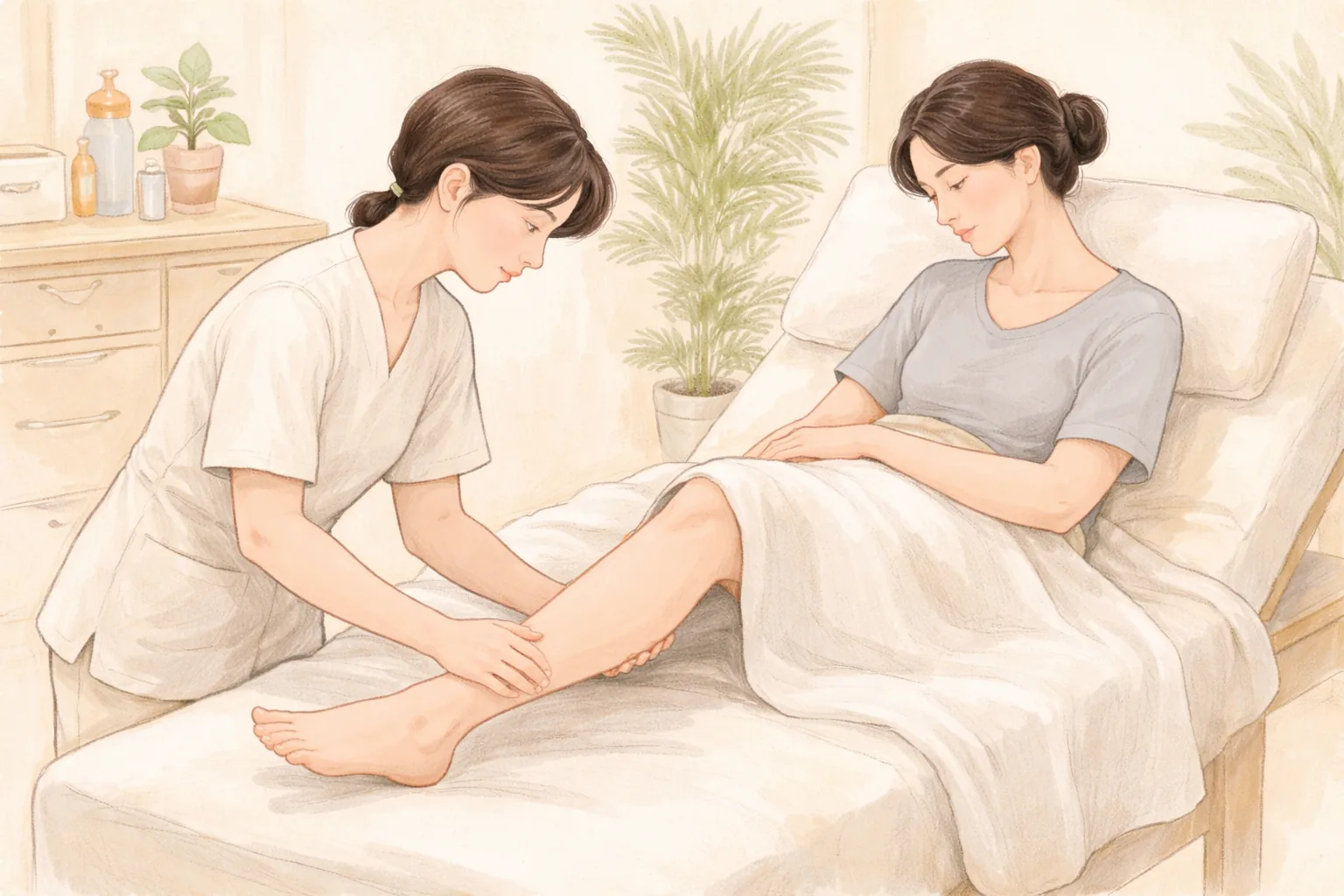
Pain is felt differently depending on the type and intensity of the laser, the treatment area, and individual sensitivity. Even the same procedure can sting more in some areas, and topical anesthesia can reduce discomfort. If the sensation becomes hard to bear during the procedure, tell the practitioner right away and the intensity can be adjusted (Does laser make skin thinner?).
Recovery also differs by procedure. In some cases redness and heat settle relatively quickly, while procedures that refine the skin surface can bring redness, dryness, or thin crusting for a few days. Recovery speed varies from person to person, so if you have an important event such as a wedding, a shoot, or travel, tell the clinic the date in advance. Counting back from your schedule, the type and intensity of the procedure and when to start can be adjusted (Spots, redness, scars — can lasers do it all?).
If this applies to you
If you have a ceremony or a shoot coming up
Having a first-time procedure right before an event can mean redness or sensitized skin coincides with that day. If you tell the clinic the date in advance, the intensity and start timing can be adjusted around it. Recovery periods differ greatly by procedure type, so planning by counting back from the date is safer.
If you want ongoing maintenance
Rather than packing a lot into one session, progressing while respecting the recovery interval puts less strain on the skin. A plan that sets the target area and interval and schedules only as much as is needed makes results more stable.
If your skin is sensitive or flushes easily
If cosmetics sting or your skin has become unusually sensitive, you must tell the clinic before the procedure. Redness from high skin reactivity may have limited room for improvement with lasers, so sorting out the cause comes first (Spots, redness, scars — can lasers do it all?).
If you are visiting on a short stay
If your stay is limited, redness or dryness right after the procedure can affect your plans. Tell the clinic your return date and upcoming schedule, and the intensity and type can be discussed to fit it.
Tell the clinic before your consultation Whether you have had a lot of sun exposure recently, whether you take or apply medications and use skincare with exfoliating ingredients, whether your skin has ever been sensitive after a previous procedure, the hair removal methods you have used so far, and important dates such as ceremonies, shoots and travel. Even for the same procedure, the timing and settings differ with this information.
How ATTITUDE Clinic proceeds
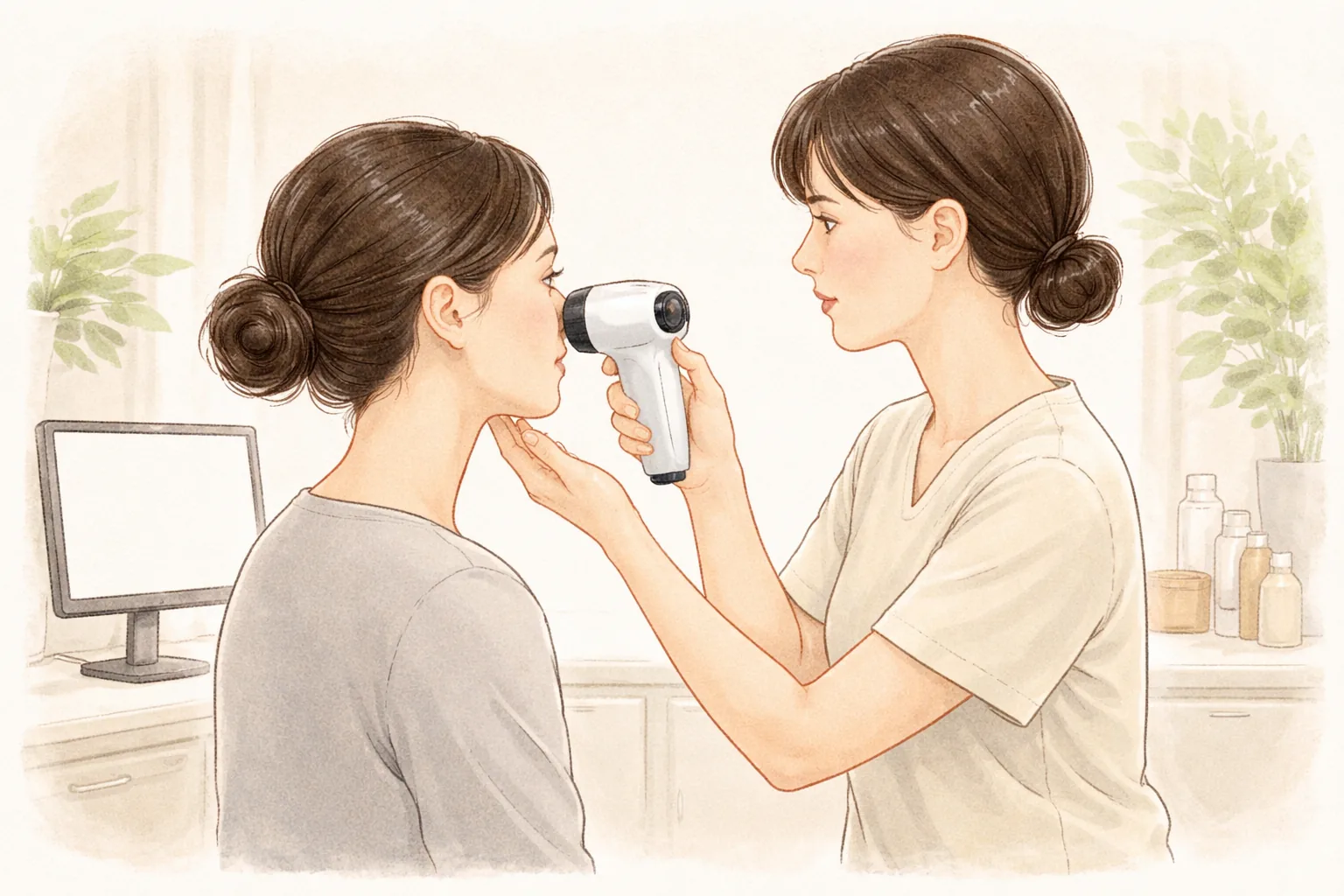
AI skin analysis record — Your current skin condition, including pigment, redness, texture and pores, is recorded with AI skin analysis, and based on that record the doctor judges the cause of your concern. The analysis tool records and organizes information to support the consultation; it is not a medical diagnosis.
Direction set in a doctor consultation — Your schedule, pain sensitivity and skin history are added to the analysis record to decide the procedure type, intensity and timing together. Risks and alternatives, recovery period and cost are also confirmed here.
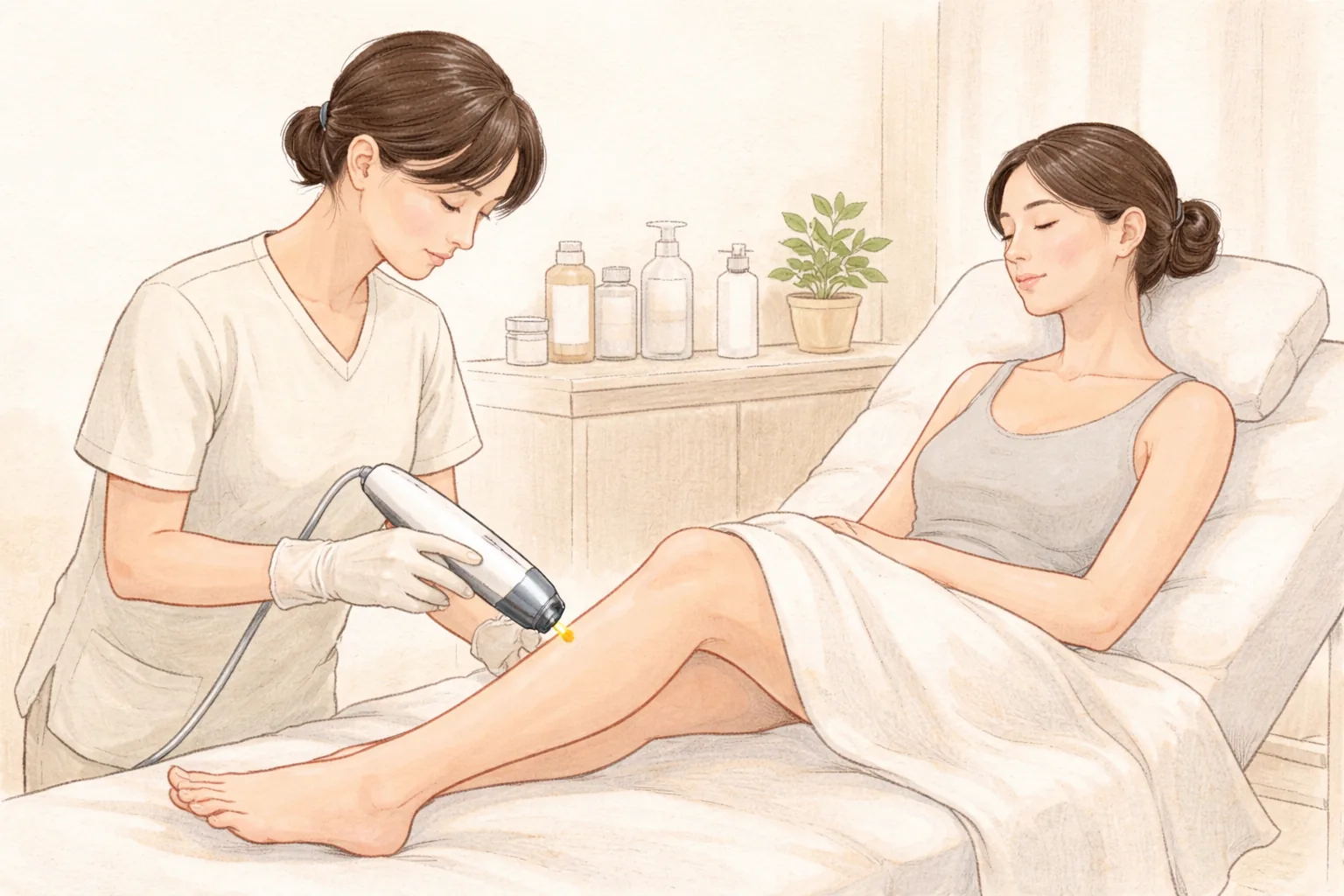
Procedure performed by the doctor — Topical anesthesia is used if needed to reduce discomfort, and the doctor performs the procedure. Procedures beyond what is needed are not recommended.
Recovery and care — After the procedure, sun protection and moisturizing are advised, and saunas and strong exfoliation are to be avoided for the period you are told. Under the principle of genuine products, proper amounts and listed prices, session counts and timing are not set unreasonably.
The lasers guided by ATTITUDE Clinic are divided by target. Pigment uses PicoPlus, blood vessels use Vbeam, and the skin surface uses erbium YAG laser. The device and settings used for hair removal are decided in a consultation after checking your skin tone and hair type.
Aftercare and side effects
Right after the procedure, the skin's barrier is temporarily weakened. Care proceeds in this order.
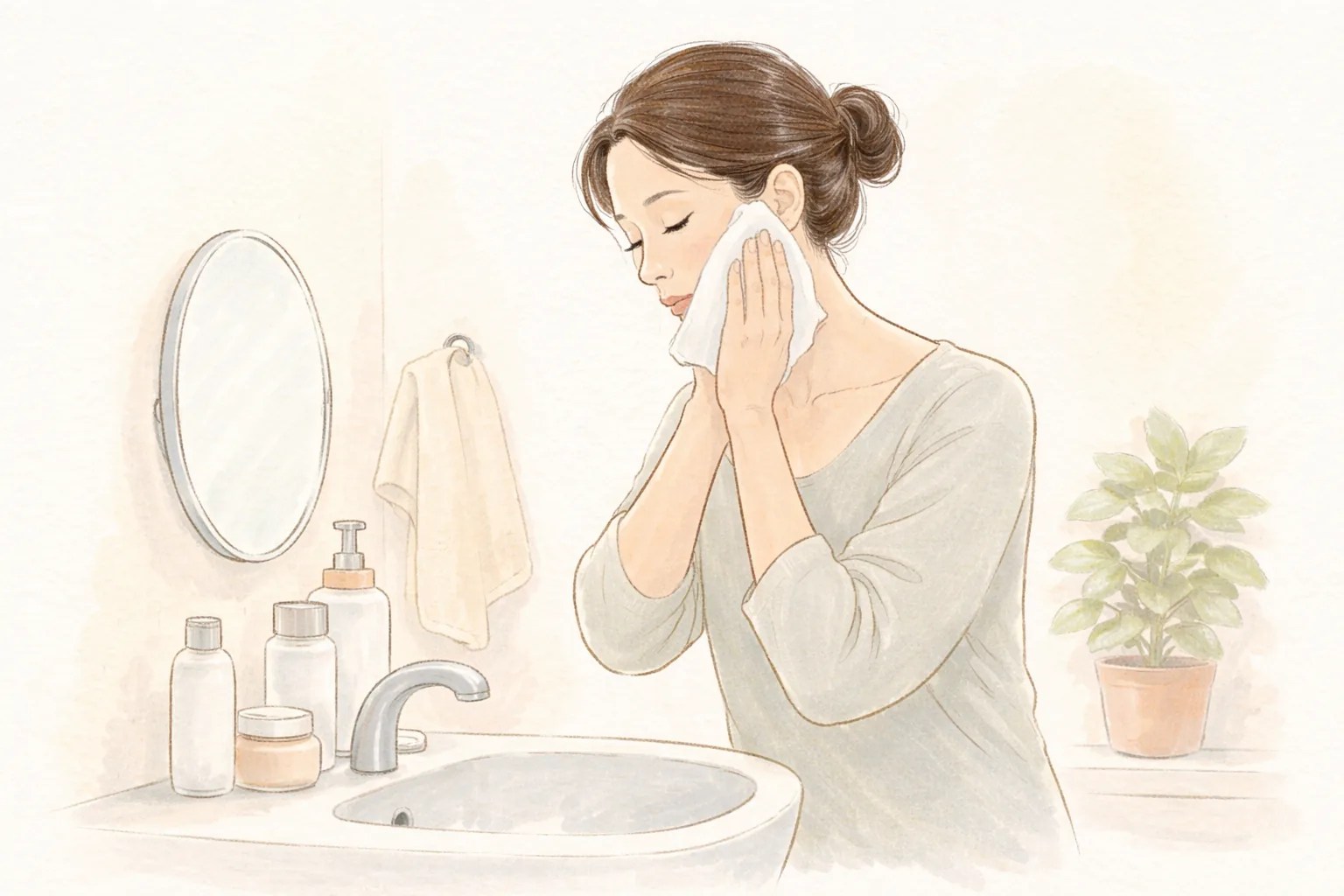
Soothing — On the day of the procedure, wash by gently pressing with lukewarm rather than hot water, and avoid saunas, jjimjilbang and strenuous exercise for 1–2 weeks. Rising heat can dilate blood vessels and reactivate pigment cells.
Moisturizing — Apply moisturizer generously to reduce dryness and itching. If crusting has formed, do not pick at it by hand; wait for it to fall off on its own.
Sun protection — For at least 2 weeks after the procedure, apply SPF 50+ sunscreen and reapply every 2 hours outdoors. If you fail to block UV during this period, pigmentation can appear on the newly formed skin and undo the effect.
Checking progress — Recording when redness and heat settle helps set the intensity of the next session. If it lasts longer than expected or pain worsens, do not endure it; visit the clinic to have it checked.
Side effects can occur even with appropriate settings. Redness, heat, swelling and stinging are common, and lasers that refine the surface can leave thin crusting. Temporary pigmentation can occur especially with darker or tanned skin, and vascular lasers can cause bruising. Rarely, blisters, hypopigmented patches, infection or scarring can occur, or pigment can return over time.
If redness or stinging lasts more than 3 days or suddenly worsens, it is better to contact the clinic rather than wait.
Frequently asked questions
Should I shave before the procedure?
Preparation differs by area and device, so the timing and method of shaving are best confirmed in the consultation. If you have recently waxed or tweezed out the hair root, be sure to mention when. When to start avoiding which preparations is also confirmed in the consultation. Recent sun exposure and the skincare you are using also affect the preparation plan (American Academy of Dermatology).
How many sessions, and at what intervals?
Because each hair grows on its own cycle, not all hair responds at once, so treatment proceeds over multiple sessions. The number and interval differ with hair thickness and density, skin tone and previous treatment response, so a plan based on your own condition is more accurate than an average. In the consultation, ask about the expected number of sessions and interval, how long each takes, and whether anesthesia is used (American Academy of Dermatology). Adjustments are made along the way based on your response, so the number set at first is not fixed in stone.
After the procedure, can I get red or itchy, and can pigment change?
Lasers are a heat-based treatment, so redness, heat, stinging and mild swelling right after the procedure are common. Settings aim for a range that settles within a few days, and moisturizing and sun protection support recovery. When it itches, do not scratch; soothe it with a cold compress. Temporary pigmentation can occur especially with darker or tanned skin, and rarely hypopigmented patches, blisters or scarring can occur (Does laser make skin thinner?). If redness or stinging continues more than 3 days or worsens, visit the clinic to have it checked.
How do I confirm the total cost?
When looking at a price list, check together whether amounts include VAT, whether anesthesia and aftercare are part of the package, and how many sessions it covers. In the ATTITUDE Clinic treatment and price guide, all amounts are shown excluding VAT, and it states that individual diagnosis and treatment plans are decided by the medical team during the consultation (Treatment and price guide). Even for the same area, the total differs with the session package, so comparing by per-session price alone is difficult. It is more accurate to confirm the latest official price list for your plan in the consultation.
How should I choose a clinic?
Look at a few things before the device list. Whether the clinic checks before treatment whether your concern comes from pigment, blood vessels or the skin surface; whether it recommends only the procedures you need and does not set session counts or intensity unreasonably; whether it fully explains pain, recovery schedule and aftercare precautions in the consultation; and whether it is a place where you can have concerns checked if they arise (Does laser make skin thinner?). Asking about the practitioner's experience and cases with a similar skin tone to yours is another approach (American Academy of Dermatology).
At a glance
Table 2 At a glance
Item
Key point
How lasers work
Selective photothermolysis, energy concentrated on the target
Target of hair removal
Melanin in hair and follicles; lighter skin tones give clearer contrast
What determines results
Intensity, area and recovery interval matched to skin tone and hair type
Why repeats are needed
Each hair grows on its own cycle, so not all respond at once
What to check in consultation
Expected results, risks, alternatives, sessions and recovery, preparation and aftercare, cost
Aftercare
Soothing, moisturizing, SPF 50+ sun protection, checking progress
This article offers general health information. It is not a substitute for diagnosis or treatment based on your own condition, so please talk through your situation with a doctor.