Laser Hair Removal Sessions and Spacing: How Hair Color and Skin Tone Shape Your Plan
How the number and spacing of laser hair removal sessions are decided by hair color, skin tone, treatment area and previous response, plus pre- and post-treatment care and signs that need a clinic visit.
Written by ATTITUDE Clinic Editorial Team
When you start looking into laser hair removal, two questions always come up: "how many sessions until the hair stops growing?" and "how far apart should they be?" Every clinic seems to say something different, which makes it more confusing. The answer isn't a single number: hair color and thickness, skin tone, the treatment area, the wavelength and settings, and how your skin responded to earlier sessions all play a part.
The short answer first
There is no single number of sessions or single interval for laser hair removal that fits everyone. According to Mayo Clinic's guidance, most people need several sessions, and occasional touch-up sessions may be needed for maintenance. The date of your next session is set by looking at how long your skin takes to recover from redness and heat, and how the hair regrows. In consultation, you also go over how many sessions you'll need, the results you can expect, the risk of side effects and the cost. Rather than hunting for a fixed number first, knowing the condition of your own hair and skin helps you build a plan.
Why doesn't laser hair removal finish in one session?
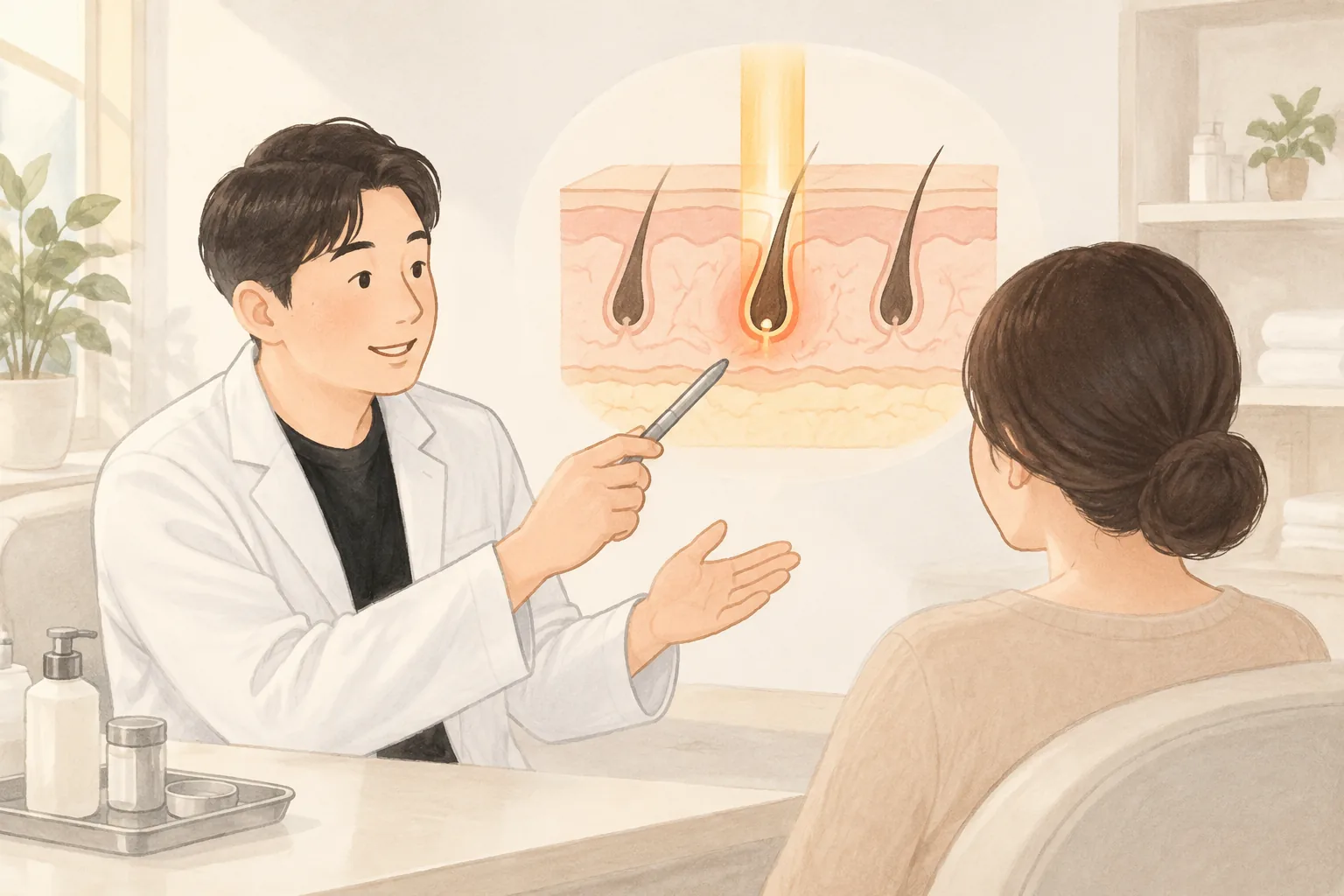
A laser is light concentrated at a single wavelength. When this light is absorbed by melanin, the pigment that gives hair and skin their color, it turns into heat, and that heat damages the hair follicle—the pocket in the skin where hair grows—slowing future hair growth. This is the basic principle described in Mayo Clinic's guidance.
Not every hair responds the same way to a single session. Each hair differs in thickness and color, and how much light the skin absorbs varies with skin tone. Mayo Clinic states that hair color and skin tone affect how well treatment works. That's why treatment is spread over several sessions, and additional sessions are planned when hair grows back over time.
There's also a misconception that laser treatment burns the whole skin surface. Laser works on the principle of selective photothermolysis—concentrating energy on the target while leaving surrounding tissue less affected. It does use heat, but if the heat spreads widely beyond the target it becomes a burn, so wavelength, settings and spacing make the difference. ATTITUDE Clinic's column also explains that with the same laser, who it's done on, with what settings and how often matters more than the device itself.
Hair growing back doesn't only mean the treatment failed. Mayo Clinic notes that laser hair removal greatly reduces hair, but some hair is removed permanently while some may regrow over time. Regrown hair is a signal to plan the next step.
How many sessions will I need?
Mayo Clinic advises that most people need several sessions. Rather than fixing a number in advance, it's more realistic to build a plan at your first consultation based on your hair distribution and skin tone. The AAD (American Academy of Dermatology) also recommends asking at consultation "how many laser treatments will I need" and "what results can I expect."
The conditions that affect the number of sessions are clear. The greater the contrast—dark hair on light skin—the better the laser can target the hair pigment. Blond, white and gray hair have less pigment and respond weakly, and red hair has a different type of melanin that doesn't absorb enough energy. With darker skin tones, the skin's own melanin also absorbs light, so it matters that an experienced clinician chooses the right laser and settings.
So the answer to "how many sessions" depends on the area and the state of the hair. Thin-skinned areas like the face and areas with a lot of movement like the underarms can't be treated with the same intensity. Adjusting the number of sessions as you go, based on redness and changes in the hair, reduces the burden on your skin. ATTITUDE Clinic's column also states that laser isn't a treatment where stronger and more frequent is better, and that it's done only as much as needed.
Session count isn't a promise—it's a plan adjusted as your progress is reviewed.
How is the spacing decided?
Spacing isn't a fixed value like "once every few days." It's based on how long your skin takes to recover from redness and heat after treatment, how fast the hair regrows, and whether there were pigment changes after previous sessions. Repeating treatment on the same area without allowing the recovery period can stress the skin barrier. ATTITUDE Clinic's column explains that repeating treatment before recovery is complete, or using intensity that's too high for your skin condition, can make skin sensitive or leave redness for longer.
Mayo Clinic notes that skin irritation, swelling and discomfort after treatment usually settle within a few hours. If these reactions last longer than expected, that's a signal to lengthen the interval to the next session. Don't stimulate the same area again before recovery is complete.
With darker skin tones, spacing is considered even more carefully. The laser can absorb melanin in the skin as well as in the hair, so if settings aren't right, the risk of burns or pigment changes increases. Whether there was any darkening or lightening of pigment after treatment is also factored into the next plan.
Table 1 How is the spacing decided?
What to check
Why it affects results
What's decided in consultation
Contrast between hair color and skin tone
Dark hair on light skin has high contrast and responds well; blond, white, gray and red hair respond weakly
Wavelength and energy, treatment area
Skin tone
Darker skin has more melanin, raising the risk of burns and pigment changes
Laser type and settings, an experienced clinician
Treatment area
Legs, underarms, upper lip, chin and bikini line each need a different plan
Area and number of sessions, timing of next visit
Response to previous sessions
How long redness, swelling and pigment changes lasted affects the next intensity and spacing
Recovery period and spacing
Swipe sideways to see the whole table.
In summary The number of sessions and the spacing are decided by hair color and skin tone, the treatment area and previous response. Rather than pushing hard all at once, checking recovery and booking the next visit as you go reduces the burden on your skin.
What should I prepare before treatment?
Before treatment, check your recent sun exposure first. The AAD recommends telling your clinician about recent tanning and any tendency to scar. Once treatment is scheduled, follow your clinician's instructions directly: don't tan, outdoors or indoors, and don't use self-tanning products.
Medications you're taking and skincare ingredients you're using are also reviewed at consultation. If you're using retinoids or acids, your skin may be in a sensitized state, so the timing and intensity of treatment are adjusted. Whether and when to shave follows the clinic's instructions. If your skin is red or stinging on the day of treatment, say so rather than keeping it to yourself.
The basics of preparation are following pre-treatment instructions exactly. The AAD also notes that following post-treatment instructions right away helps reduce side effects.
In these situations
If you have a wedding or photo shoot coming up
Having your first hair removal session right before a wedding means redness or swelling could overlap with your schedule. If you tell the clinic your date first, they can calculate the time available to recover and adjust the intensity and start date. It's safer to have your first session well ahead of the event so you can see how your skin responds.
If you want steady maintenance
Rather than going hard all at once, build a plan that respects the interval your skin needs to recover. Each area regrows at a different time, so at each visit the clinic reviews your condition and adjusts the order.
If your skin is sensitive or easily reddened
Redness and heat after laser can linger, so intensity and spacing are set conservatively. If skincare products sting before treatment or your skin feels unusually sensitive, be sure to mention it.
If you're an overseas visitor on a short stay
First, check whether recovery time fits within your stay. If booking a follow-up visit before you fly home isn't possible, the plan may lower the intensity or narrow the treatment area.
Tell us before your consultation
Recent sun exposure and whether you've been tanning
Whether you scar easily
Medications you're taking and skincare ingredients you're using
How long redness, swelling and pigment changes lasted after previous laser sessions
Dates of weddings, photo shoots, trips or business travel
How ATTITUDE Clinic handles your treatment
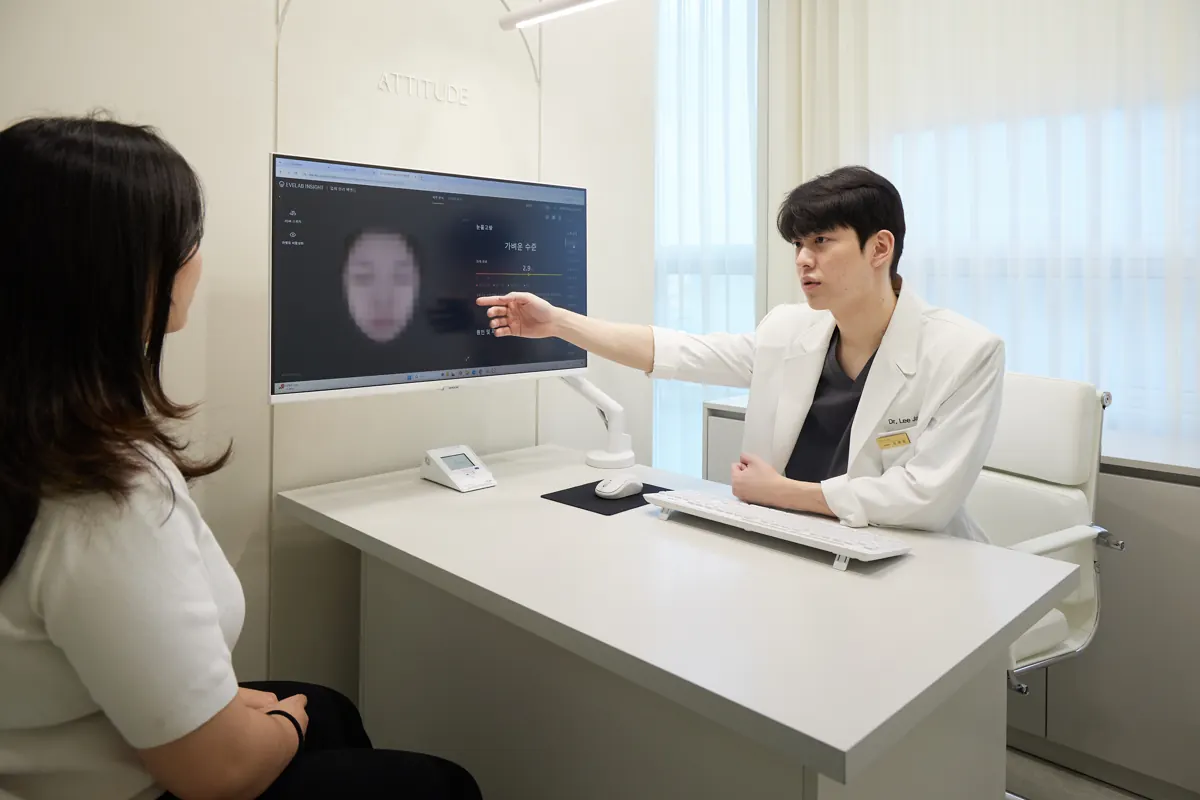
AI skin analysis record Current skin condition—pigment, redness, texture, pores and more—is recorded with a device. This record organizes information to support your consultation; it is not a medical diagnosis.
Plan shaped in a consultation with the doctor The analysis record, together with the treatment area and hair condition, your schedule, pain sensitivity and response to previous sessions, is used to set wavelength, intensity and spacing.
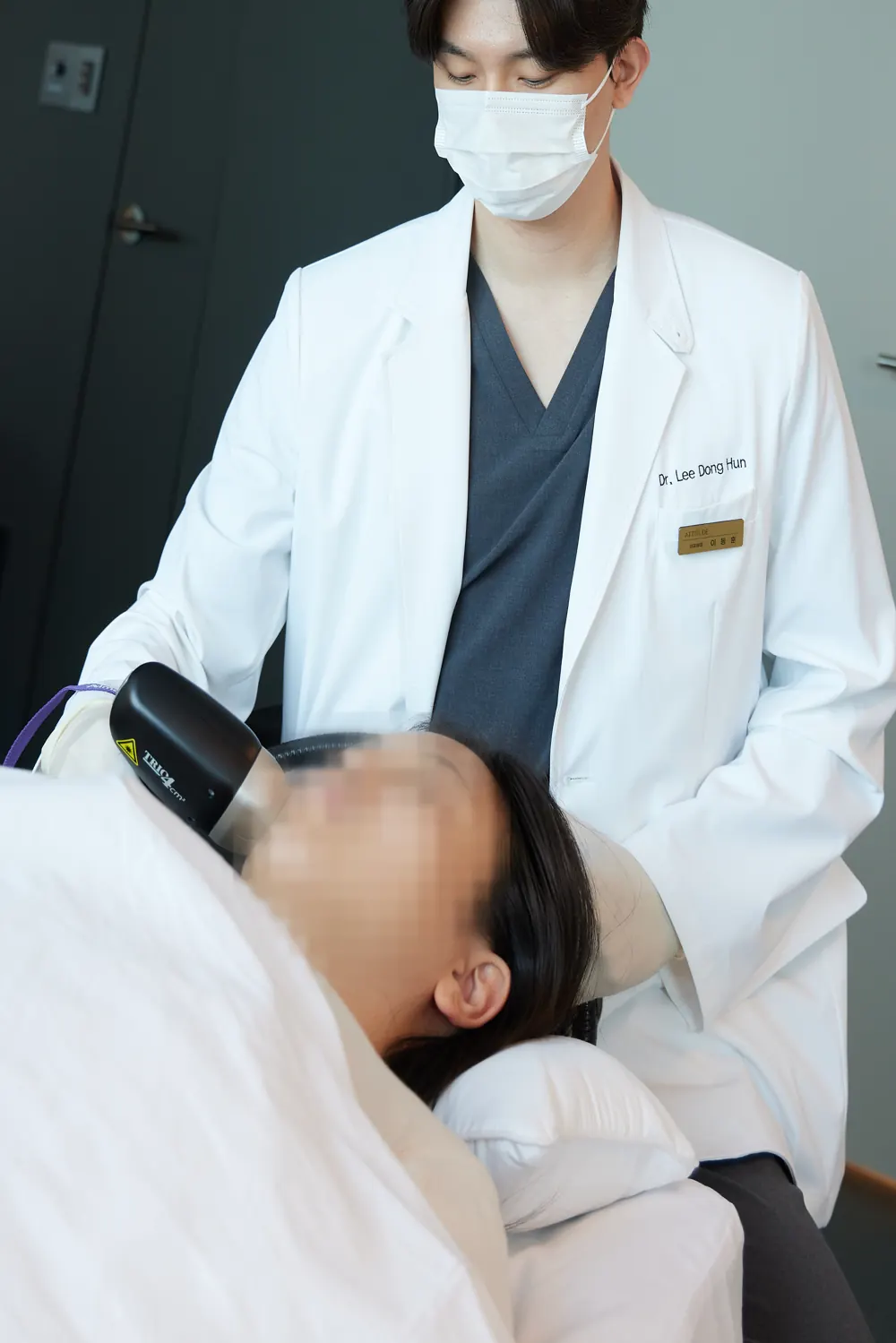
Treatment performed by the doctor Topical anesthetic is used as needed to reduce discomfort, and the doctor performs the treatment directly. We don't recommend more sessions or higher intensity than necessary.
Progress check and care After treatment, redness, swelling and pigment changes are checked, and the timing of your next visit is adjusted. Sun protection and moisturizing are also covered.
Four steps your doctor sees to in person
From the diagnostic device to the treatment bed, the doctor you first consult takes care of everything.
01
Precision diagnosis
In a private diagnosis room the whole face is photographed, recording even skin conditions that are hard to see with the eye.
02
Skin analysis
The doctor goes through your pore, pigmentation, wrinkle and firmness results with you on screen and explains what comes first.
03
One-to-one design
With your skin, the balance of your face, the change you want and your schedule in view, you decide the treatment and its extent together.
04
Treatment by your doctor
The doctor who consulted you performs the treatment from start to finish in a private treatment room. No one takes over halfway.
“I take injection pain seriously.”
Co-Director Dr. Lee Dong Hun
Many people hesitate over injection treatments because they hurt. So we went back over everything, from the anesthetic to the products used.
Careful numbing, unhurried timingWe allow plenty of time for a special numbing cream to take full effect, and add anesthetic injections for the treatments and areas that need them.
Fine needles, finished quicklyInjection treatments use fine needles, and the doctor finishes them personally in a short time, adjusting along the way by watching how you are doing.
Even the product formulation countsThe same treatment can feel more or less demanding depending on the product, so we take that into account too.
The anesthetic method and whether it is used are decided after an examination, according to the treatment, the area and your condition. How much it hurts varies from person to person.
With hair removal too, what matters more than a device name is whether the wavelength, energy and cooling method suit your skin tone and hair thickness. ATTITUDE Clinic believes that with the same laser, who it's done on, with what settings and how often shapes the result.
Aftercare and side effects
Soothing Right after treatment, check that redness and heat are settling. Avoid saunas, hot water and intense exercise for the period you're advised.
Moisturizing Since skin is sensitized, apply a gentle moisturizer generously. Avoid exfoliation and scrubs during the advised period.
Sun protection Apply SPF 50+ sunscreen and reapply about every 2 hours outdoors. Be especially careful for at least 2 weeks after treatment.
Progress check If redness or pain lasts longer than expected, or pigment darkens, come in for a check. Schedule the next session after recovery is complete.
Common reactions are redness, swelling, stinging and temporary pigment changes. Mayo Clinic explains that these usually settle within a few hours, and pigment changes are usually temporary but can rarely persist. With darker skin tones or unsuitable settings, the risk of burns and lasting pigment changes increases. Rarely, blisters, hypopigmentation, infection or scarring can occur.
If redness or heat lasts longer than expected or pain worsens, don't tough it out—come in. The same applies to blisters or pigment that suddenly darkens. Recovery speed and pigment response vary between individuals, so progress can differ even with the same settings.
Frequently asked questions
How many laser hair removal sessions will I need?
Mayo Clinic advises that most people need several sessions, and occasional touch-up sessions may be needed for maintenance. The number needed depends on hair color and skin tone, the treatment area and the wavelength used. Rather than promising an exact number at the first consultation, it's more realistic to have a few sessions and adjust the plan based on your response. Dark hair on light skin tends to respond well, while blond, gray and red hair respond weakly. With darker skin tones, safety comes down to whether an experienced clinician can match the settings.
How far apart should sessions be?
There's no single interval that suits everyone. It's set by how long your skin takes to recover from redness and heat, how the hair regrows, and the pigment response after previous sessions. Because recovery speed and hair growth vary so much between people, the clinic checks your condition at the next visit and either lengthens the interval or keeps it the same, even for the same area. Repeating too often can stress the skin barrier, so avoid stimulating the same area again before recovery is complete. If you've missed the planned interval, the regrown hair is assessed and a new plan is made.
When should I have a touch-up session if hair grows back?
Mayo Clinic explains that laser hair removal greatly reduces hair, but it can regrow over time, and occasional touch-up sessions may be needed for maintenance. Book a consultation when regrown hair looks thicker or darker, or you feel there's more of it than before treatment. The timing of a touch-up is also considered alongside whether your skin has fully recovered from earlier sessions. Rather than repeating the same area at short intervals, the current state of the hair is checked first, then intensity and area are set.
Should I shave before treatment?
Whether and when to shave follows the clinic's instructions. The AAD recommends asking about preparation at your laser hair removal consultation and following your clinician's instructions directly once treatment is scheduled. If you've tanned recently or scar easily, say so first. If your skin is red or stinging on the day of treatment, don't rush the preparation—tell the clinic how your skin is.
How should I choose a laser hair removal clinic?
Rather than choosing based on equipment names alone, look at what the clinic checks during consultation. The AAD recommends asking about the number of sessions, expected results, side effects and risks, and cost. With darker skin tones, it also helps to ask how much experience the clinic has treating people with your skin tone. Also consider whether the clinic can check on you if you have discomfort after treatment, and whether they book your next visit together with you. ATTITUDE Clinic's principle is not to recommend more sessions than necessary, and to set intensity and spacing that suit your skin condition.
At a glance
Table 2 At a glance
Item
Key point
Number of sessions
Mostly several sessions; touch-up sessions may be needed for maintenance
Spacing
Set by recovery speed, hair growth and previous response
Conditions for a good response
Contrast between dark hair and light skin; with darker skin, settings determine safety
Before treatment
Tell the clinic about recent tanning, scarring tendency, medications and skincare
After treatment
Moisturize and protect from the sun; avoid saunas and exfoliation
Changes that need a clinic visit
Redness or pain that lasts, or blisters or pigment changes
Sources and references
메이오클리닉 레이저 제모 안내https://www.mayoclinic.org/tests-procedures/laser-hair-removal/about/pac-20394555
미국피부과학회 레이저 제모 준비 안내https://www.aad.org/public/cosmetic/hair-removal/laser-hair-removal-preparation
에티튜드의원 칼럼: 레이저 시술 후 관리https://theattitudeclinic.com/column/doctor-column/pigment-redness-scars-laser/
This article offers general health information. It is not a substitute for diagnosis or treatment based on your own condition, so please talk through your situation with a doctor.