Mole Removal Korea: How Many Sessions, and How Far Apart?
Mole removal in Gangnam, Seoul usually takes one visit, sometimes two. Here's what sets the interval between sessions, when to change the dressing, and what to do if a mole grows back.
Written by ATTITUDE Clinic Editorial Team
Once you decide to have a mole removed, the first question that comes up is how many visits it will take. You hear that removing everything at once leaves a scar, and also that small moles are over quickly, so it is hard to find a standard. This article explains what determines the number of sessions and the interval between them, and how to handle the healing tape that covers the wound afterward.
The short answer first
Mole removal usually takes a single visit. According to the American Academy of Dermatology, most mole removals are done in one outpatient visit, with an occasional second visit. Whether a second visit is needed is not a fixed number: it depends on the depth and size of the mole, the site, how quickly the wound heals, and whether the lesion needs to be checked with a biopsy. Wound care, including the healing tape, follows the same conditions, so it is more accurate to have the timing of changes guided by how the wound looks. What you need to remember is not the number of sessions but the criteria that decide it.
How many sessions does mole removal take?
According to the American Academy of Dermatology, most mole removals can be done in one outpatient visit, with an occasional second visit. A second visit happens for a few reasons. A mole rooted deep or spread wide may be approached in stages, because cutting deep in one pass increases the risk of scarring. If a biopsy was taken, the next plan is set after the results come back, which naturally creates an interval. A mole that grows back in the same spot is also a reason for a return visit.
There is one condition attached to this question: whether the mole should be removed at all. According to the National Cancer Institute, common moles and dysplastic nevi (moles that look different in shape and color from common moles) mostly do not need to be removed, and doctors mainly remove suspicious lesions that have changed or newly appeared. So before counting sessions, you first decide whether the mole is for cosmetic reasons or is a lesion that needs checking.
Why are some moles done in one go and others in stages?
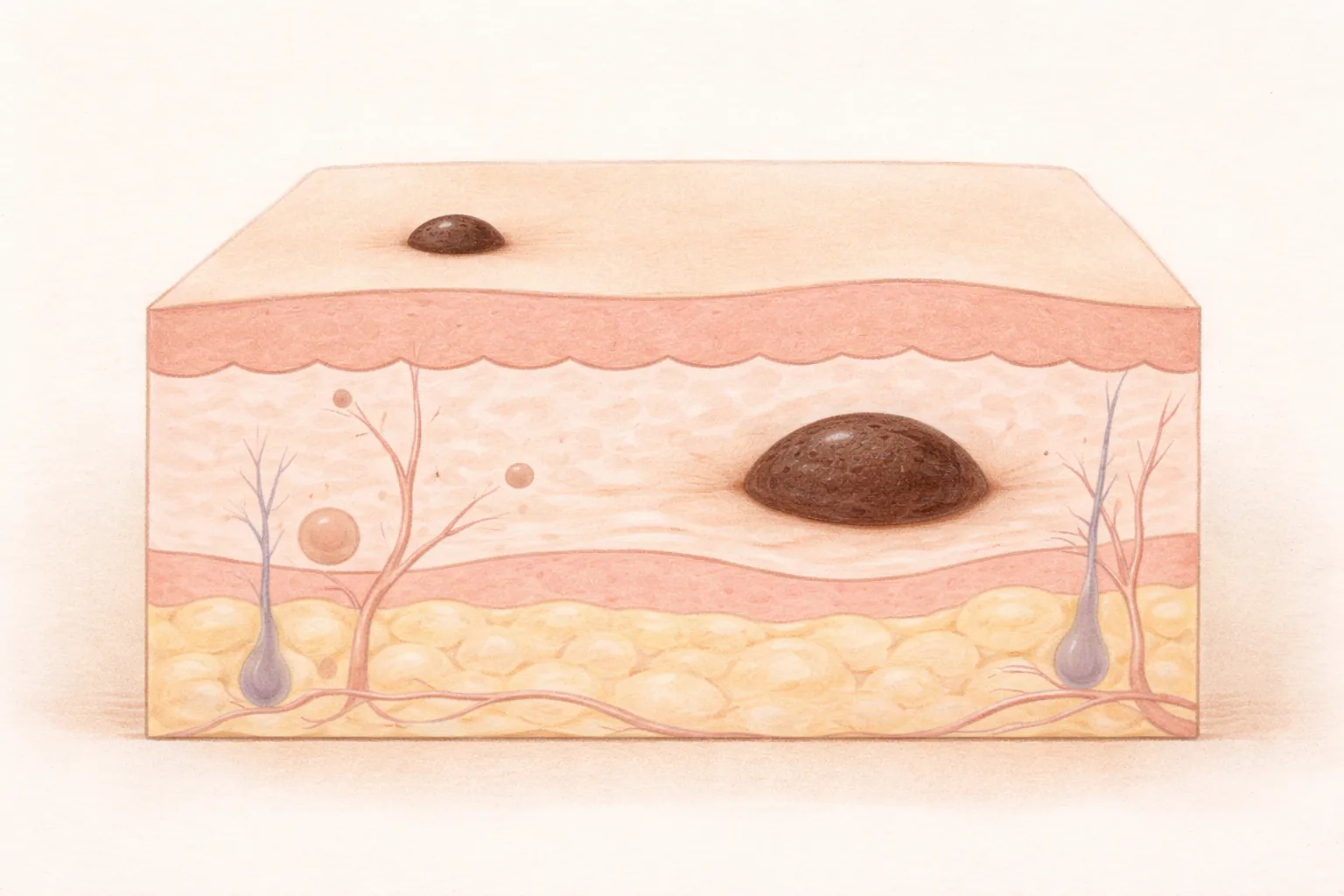
The biggest variable is depth. A mole with pigment close to the epidermis comes off with a shallow removal, while a mole rooted in the dermis involves a different layer even at the same size. The dermis is the layer where the risk of a pitted scar grows the deeper you remove in one pass, so a staged approach that reduces the size over several sessions is used.
The site matters just as much. Areas with thin skin that does not stretch well, such as the nose, eyelids, and lips, heal more slowly and tend to leave marks even for a mole of the same depth. Cheeks and forehead, which are thicker and have more slack, are easier to approach. This is why the number of sessions cannot be decided by the size of the mole alone.
The speed of wound healing also changes the outcome. Skin type and thickness, the ability to make new collagen (the component that keeps skin firm), lifestyle habits, and hormone status differ from person to person, so the same procedure brings different healing speeds and perceived results. The ATTITUDE Clinic column also describes these three as the starting point for differences in results. The timing of the next session is set by watching this healing speed, not by a date marked on the calendar.
Finally, there is differentiation. Some lesions that look like moles need to be checked. Cleveland Clinic distinguishes excision, which cuts out the mole and examines it when a biopsy is needed, from shave excision, which shaves the surface. A shave can obtain a tissue sample but cannot be used to see deep tumor margins. So for lesions that are deep or irregular in shape, excision and confirmation take priority over burning them away with a laser.
What does the number 5mm mean?
When reading about moles, the number 5mm comes up often. The National Cancer Institute describes common moles as usually smaller than 5mm across, even in color, round or oval, and with clear borders. Dysplastic nevi, on the other hand, are usually larger than 5mm, mixed in color, and have irregular borders. This means size and borders are clues that separate lesions.
The ATTITUDE Clinic treatment guide also divides mole removal into 5mm and under and 5mm and over, with guidance by unit. This range is not an absolute treatment standard. At the same size, different depth and site change the approach, and even at 5mm or under, a dark color or blurred border means differentiation comes first. It is enough to view the range as a starting line for the consultation.
One more thing about size: moles can grow and can fade. According to the National Cancer Institute, new moles usually appear up to around age 40, and common moles slowly fade with age. There is no guarantee that a mole you see now will look the same in a few years, so whether to remove it now or watch it is another topic to weigh together in the consultation.
When it looks like a mole but is another lesion
The National Cancer Institute notes that it is rare for a common mole to turn into melanoma, but advises telling a doctor if the color changes, if only one side grows, if the shape, surface, or height changes, if the surface becomes dry and hard, or if it itches, bleeds, or oozes. Cleveland Clinic also advises seeing a doctor if a mole itches, bleeds, is not round, or changes in shape. A mole with these changes should be confirmed with excision and biopsy rather than burned away with a laser. Erasing only the surface can leave skin cancer cells in the skin and raises the risk of scarring and infection. This is why the American Academy of Dermatology advises against cutting off moles yourself or removing them with products.
Table 1 When it looks like a mole but is another lesion
Method
Used for which moles
Features of the procedure
What to check in the consultation
Excision (surgical excision)
Moles that are deep or have irregular borders and need checking, moles that are spread wide
After anesthesia, the mole and surrounding tissue are cut out together, with sutures if needed; bleeding is stopped with pressure or hemostasis
Extent of excision, whether sutures are used, schedule for checking test results
Shave (shaving removal)
Moles raised above the surface
After anesthesia, the surface is shaved off with a blade, and the tissue obtained can be examined
That it cannot be used to check deep margins
Self-removal
Not recommended for any mole
Cutting it yourself or applying products
Risk of leaving skin cancer cells, scarring, infection
Swipe sideways to see the whole table.
In short Mole removal usually takes one outpatient visit, and whether a second visit is needed is decided by the depth and size of the mole, the site, healing speed, and whether a biopsy is done. The timing of healing tape changes follows the same principle: it is based on the wound, not the material you apply.
If this applies to you
When a wedding or shoot is a few weeks away
Moles that are finished in one visit leave room in the schedule. The problem is moles removed in stages or excisions that need sutures, where healing is not over in one go. If you have a fixed date, it is better to mention it first in the consultation and set the order of which moles to treat first together.
When you have several moles and want them handled at once
Removing several on the same day is possible, but the more wounds there are to manage, the greater the felt burden of healing. Planning the number and sites in stages makes wound care and sun protection much easier.
When your skin is sensitive or flushes easily
Sensitive skin stays red and swollen longer even at the same intensity, and pigmentation tends to follow. Telling the clinic about sensitivity and a history of pigment reactions in the consultation helps lower the intensity and range.
When you are an overseas visitor on a short stay
A short visit makes a staged plan hard to set. If you tell the clinic your length of stay and departure date first, you can settle the scope that can be finished within that time and how to manage any remaining wounds.
Tell us before your consultation Recent sun exposure and tanning, medications you are taking (aspirin-type drugs, anticoagulants, etc.), active ingredients you apply to your skin (retinoids, acids, etc.), reactions from previous procedures, and unavoidable dates such as a wedding, a shoot, or departure.
How ATTITUDE Clinic proceeds
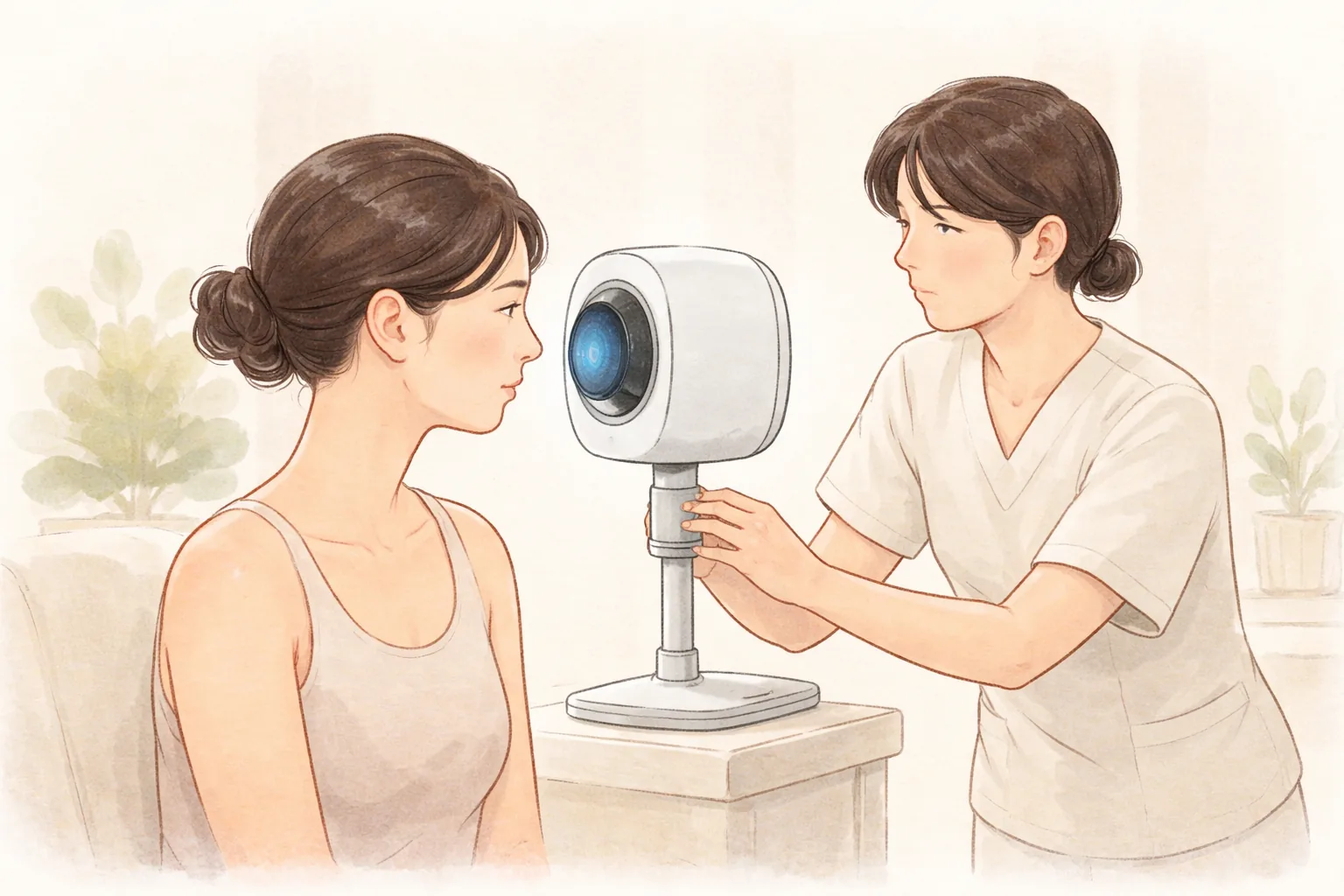
AI skin analysis record — Your skin condition is recorded and organized so you and the doctor look at the same information. The analysis tool organizes information to support the consultation and does not make a medical diagnosis.
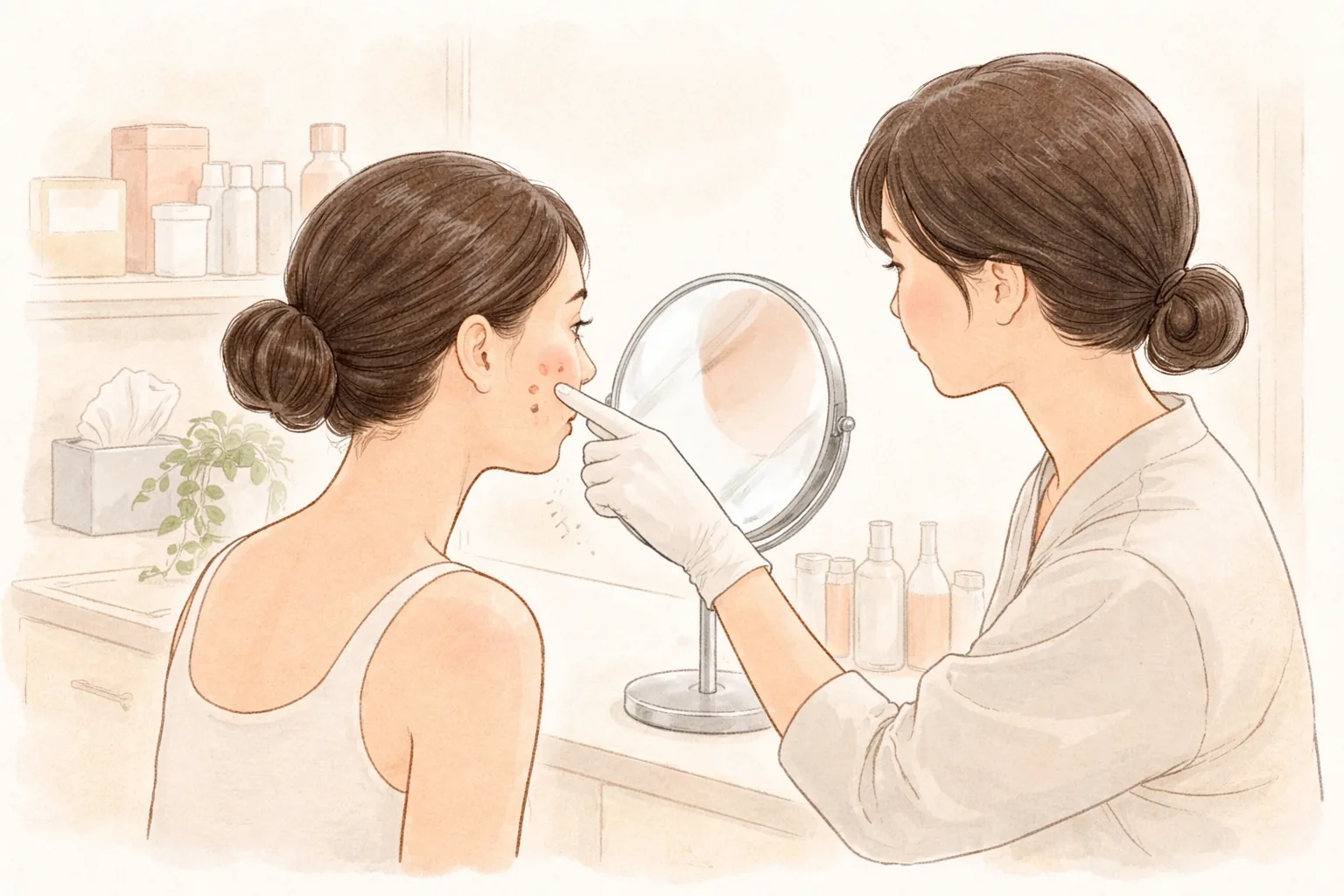
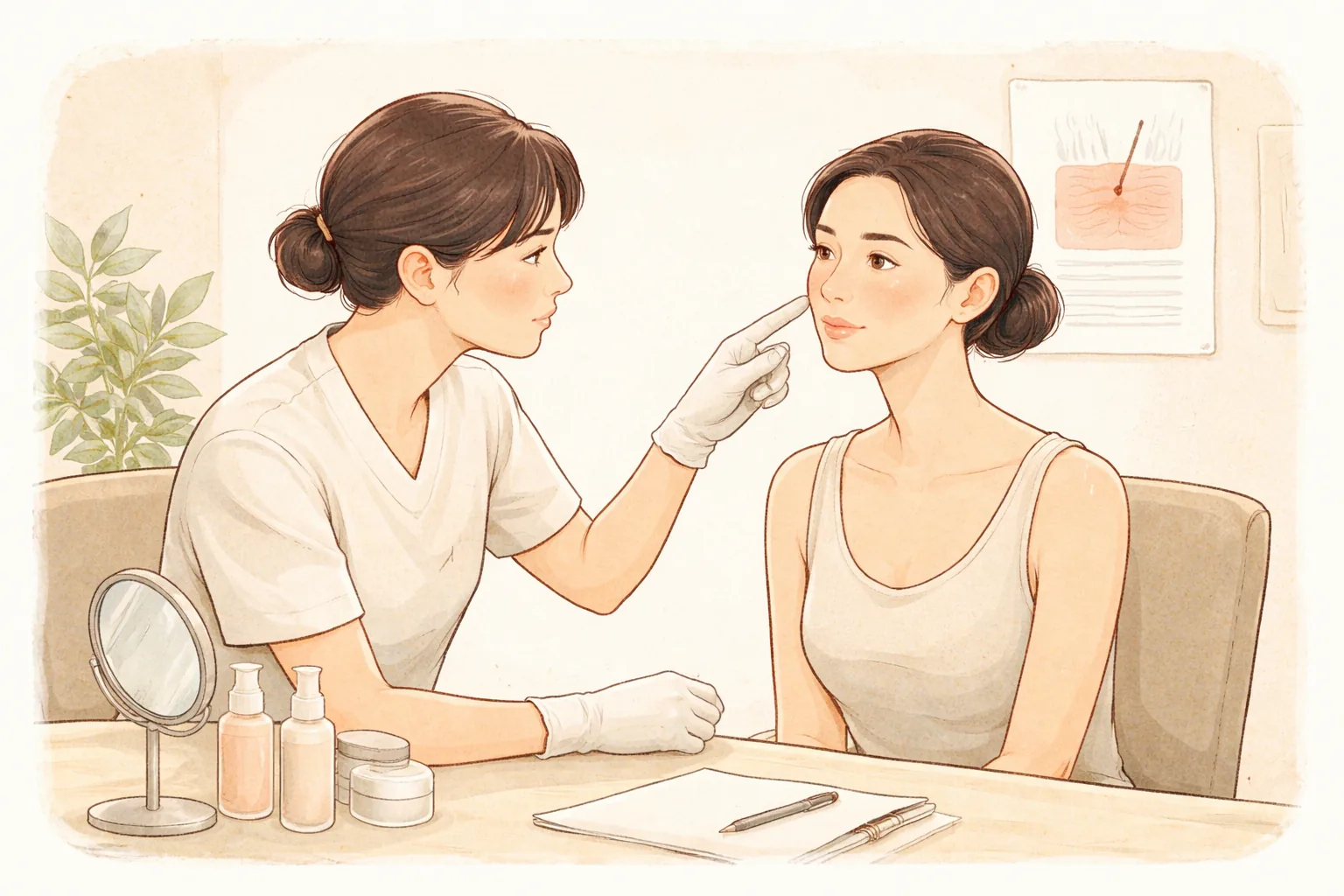
Doctor consultation — The analysis record is combined with the size, depth, and site of the mole, previous procedure experience, and important dates to decide together which mole to start with, by what method, and over how many sessions. This is also the stage where cosmetic moles are separated from lesions that need differentiation.
Procedure by the doctor — The doctor personally performs anesthesia and removal according to the plan set in the consultation and adjusts the intensity while watching skin reactions during the procedure. This is to keep the plan and the procedure aligned.
Healing and follow-up — The healing process is checked, and whether the next session or additional care is needed is judged. The current ATTITUDE Clinic guidance items related to moles are Mole removal and Wart removal.
Aftercare and side effects
Wound protection — If a covering material is used, you are told on the day of the procedure when to change it and how long to keep it on. Because this depends on wound size and the amount of oozing, it is better to follow the instructed cycle than to take it off and put it on often on your own.
Washing and daily life — While a scab is forming, do not rub the area, and avoid schedules that bring sweat and heat, such as saunas, swimming, and intense exercise.
Sun protection — While new skin is coming up, UV can cause pigmentation, so apply sunscreen consistently.
Follow-up — It is not over when the surface has healed; there is still a period of checking whether color and height settle.
Starting with common reactions, bleeding after excision is within the normal range and stops with pressure or hemostasis (Cleveland Clinic). For a few days after the procedure, there may be a stinging or burning feeling, and redness, swelling, tenderness when pressed, and bruising also usually subside within a few days (The ATTITUDE Clinic column). Rarely, temporary darkening or lightening of pigment, blisters, lumps after injection, burns, or scars can occur.
There are also clear signals that you should come back rather than wait. If a mole grows back in the same spot, it is better to book right away and have it checked. The American Academy of Dermatology notes this can be a sign of melanoma. Changes such as color change, changes in shape and height, a surface that becomes dry or hard, itching, bleeding, or oozing are also items the National Cancer Institute advises reporting. Changes that differ from expectations, such as pain that keeps getting worse, are also better not left to wait.
Frequently asked questions
Can I have several moles removed at once?
Yes. But as the number removed in a day grows, so does the number of wounds to manage, which increases the felt burden of healing. The American Academy of Dermatology notes that most mole removals can be done in one outpatient visit, but how many can be handled in that visit depends on the size and site of the moles. If there are several small moles on the face, they may all be handled at once; if large and deep moles are mixed in, the work is staged. More important than the number is the reason the scope for that day was set.
When should I change the healing tape after mole removal?
The wound, not the material, is the standard. In the early stage with a lot of oozing, changes are more frequent; once a scab settles, the cycle gets longer, and how long to keep it on is decided by how much new skin has come up. So it is most accurate to follow the change cycle and wear period given on the day of the procedure. Taking it off often on your own irritates the surface that was healing. If oozing increases, or there is odor or severe pain, contact the clinic rather than waiting.
Will the mole come back after removal?
If the root remains, it can grow back in the same spot. The American Academy of Dermatology advises booking again right away if a mole grows back, because this can be a sign of melanoma. For a regrown mole, how deep it was treated before matters, so bringing previous procedure records helps with planning. Avoid handling it yourself because it came back.
How is the cost of mole removal set?
The cost varies with the number, size range, site, method, and whether a biopsy is done. The ATTITUDE Clinic treatment guide divides mole removal into 5mm and under and 5mm and over and lists guidance by unit, and all amounts exclude VAT. Still, it is hard to set a total from the range alone. Deep moles may be treated in stages, and adding a biopsy changes the items. An exact estimate is confirmed during the consultation.
Where should I have mole removal done?
The first step is judging whether what looks like a mole really is one. The American Academy of Dermatology notes that the trained eye of a dermatologist can usually tell whether something is a mole. There are four things to check in the consultation: who differentiates and treats the mole, whether a biopsy can be done in the same place when checking is needed, how anesthesia is handled, and when the follow-up will be. It also helps to see whether you can receive wound care instructions in writing. More than equipment names, these four decide the outcome and safety.
At a glance
Table 2 At a glance
Item
Key point
Basic number of sessions
Usually one outpatient visit, occasionally a second visit
What sets the number
Depth, size, and site of the mole, healing speed, whether a biopsy is done
Meaning of 5mm
A clue that separates lesions and a range standard in treatment guidance
Healing tape
Change cycle and wear period are set by the wound condition
Check first
Differentiation signals such as color, shape, and size changes, itching, bleeding
This article offers general health information. It is not a substitute for diagnosis or treatment based on your own condition, so please talk through your situation with a doctor.