Mole Removal Side Effects: What's Normal and When to See a Doctor
Learn the common reactions after mole removal, what separates scarring from dark spots laser treatment, and when to contact the clinic. We also cover biopsy criteria for suspicious moles and preparation when you have a flight home.
Written by ATTITUDE Clinic Editorial Team
You might think removing a single mole is no big deal, but seeing the red, swollen spot the day after the procedure can be unsettling. You wonder if scabbing is normal, whether this red mark will harden into a scar, and if you need to visit the clinic again before your flight home. Reactions after mole removal usually follow a predictable sequence, and when they deviate from that sequence is when you need medical attention.
The bottom line first
Redness, swelling, scabbing, and a stinging sensation for a few days right after mole removal are common. With anesthesia, there is little pain during the procedure, but the treated area may sting or burn for a few days afterward (Cleveland Clinic). Scabs are part of the skin covering the wound and building new tissue underneath, and they typically fall off on their own around 7–10 days. On the other hand, if redness and stinging persist beyond 3 days or even worsen, or if a mole regrows at the removal site, don't wait for your next appointment—seek medical care. If a mole's color or border has changed recently, or if it itches and oozes, a biopsy takes priority over removal.
How red and stinging is normal after mole removal?
Pain is the most common concern before the procedure. With anesthesia, there is little pain while the mole is cut or shaved off. The issue is after the anesthesia wears off; a stinging or burning sensation at the treated area for a few days is considered a common reaction (Cleveland Clinic).
In treatments that use lasers on pigment, redness, swelling, and scabbing are typical. A scab is a natural film covering a thin wound, and new skin forms underneath. So it's not unusual for the entire area to look red and bumpy while the scab is present. A red, bumpy scab site is part of the wound healing process. The timing of scab falling off varies by treatment type and depth; for pigment treated with high energy, 7–10 days is commonly cited.
Why does it turn red? Blood vessels expand and inflammatory cells gather during the healing process. This redness remains for a while after the scab falls off. That means it's not yet the stage to conclude the red mark is a scar. However, if the color gets darker or the area starts to bulge, the course may be different, so taking photos from the same angle makes comparison easier during consultation.
Why do scars and dark spots occur, and what makes the difference?
Scarring is the biggest reason people hesitate about mole removal. Since it's a procedure that touches at least one layer of skin, leaving a mark is within the natural range. The American Academy of Dermatology warns against trying to cut off or remove moles at home with medication, citing risks of scarring, infection, and delayed skin cancer diagnosis (AAD). This is not only a hygiene issue but also because it's hard to visually distinguish where the mole ends and normal skin begins.
Dark spots are different from scars. They occur when melanin accumulates excessively at the site of past inflammation, leaving a brown mark, called post-inflammatory hyperpigmentation (PIH). It is more likely in skin prone to pigmentation, with more aggressive treatments, and with sun exposure after the procedure. Right after treatment, the skin's barrier is weakened; if you don't block UV during this period, dark spots can form on the new skin and undo the treatment effect.
Several factors determine whether you lean toward scarring or end up with dark spots: the depth and size of the mole, the skin thickness at the treated area, how the wound was managed, and sun protection. Picking at the scab with your hands removes the new skin growing underneath, which can lead to dark spots or scars. That's why you should leave the scab alone even if it bothers you.
Rarely, hypopigmented spots (light spots), blisters, or scars can occur. Since these differ from common reactions, if blisters form or redness spreads beyond the site, contact the clinic that day.
Table 1 Why do scars and dark spots occur, and what makes the difference?
Reaction
How common
Duration
What to check at consultation
Stinging, burning
Common
A few days
Whether it is decreasing
Redness, swelling
Common
Several days
Whether it is spreading
Scab
Common
About 7–10 days
Whether it was picked
Temporary darkening of pigment
Common
Fades gradually
Whether sun protection was maintained
Hypopigmented spots, blisters, scars
Rare
Assessed at consultation
When and where they appeared
Swipe sideways to see the whole table.
In summary redness, scabs, and a few days of stinging after mole removal are reactions during wound healing. Even for the same reaction, if the color darkens or the area bulges, it's a different issue, so taking photos of the site after the scab falls off makes it easier to compare progress.
How do moles that can be removed with laser differ from those that need testing first?
Most moles cause no problems. According to the National Cancer Institute, most adults have 10–40 common moles, and common moles are usually smaller than 5mm in diameter, round or oval, and have clear borders (NCI). Such moles don't need removal unless they bother you cosmetically. The American Academy of Dermatology notes that most moles don't require treatment and are removed when they rub against clothing, are bothersome, or are suspected of cancer (AAD).
The concern is suspicious moles. Changes such as a different color, irregular growth on one side, changes in shape, height, or surface texture, hardening or bumpiness, itching, bleeding, or oozing are signs to tell your doctor about (NCI). If these changes have appeared in recent months, a biopsy (removing part of the mole for microscopic examination) takes precedence over cosmetic removal.
How are suspicious moles checked? A method called excision removes the entire mole along with some surrounding normal skin, and the tissue is examined under a microscope (AAD). Before the procedure, a device that magnifies the skin is used to examine the mole's borders and color patterns, and photos may be taken for later comparison (Cleveland Clinic). Suspicious moles are not just superficially treated; they are excised and confirmed with tissue examination. If you skip this step and remove the mole, the tissue that needed examination is gone.
So the first thing that is decided at consultation is how to treat this mole. Based on size, depth, location, and recent changes, the removal method, anesthesia, and need for biopsy are determined together.
How long should I watch the mark after the scab falls off?
Just because the scab has fallen off doesn't mean it's over. The new skin underneath is thin, red, and ready to produce pigment. If exposed to UV during this period, color returns to the healed site. For at least 2 weeks after the procedure, apply SPF 50+ sunscreen and reapply every 2 hours outdoors.
Heat is also a factor. When skin temperature rises, blood vessels expand and pigment cells reactivate, which can darken the mark, so it's better to avoid saunas, jjimjilbangs, and intense exercise for 1–2 weeks. Wash your face with lukewarm water rather than hot, and pat gently without rubbing.
Sometimes pigment reappears over time. If a mole regrows at the removal site, that's a different story. The American Academy of Dermatology advises making an appointment promptly if a removed mole regrows, as recurrence can be a sign of melanoma (AAD).
The rate at which the mark fades varies from person to person. Even for the same size mole, the healing pattern differs based on skin thickness, pigment response, and aftercare. If the site is getting darker or bulging, it's better to schedule a consultation rather than watch it.
In these situations
When your flight home is only a few days away
If the time between the procedure and departure is short, the scab may fall off during the flight. If you tell the clinic your departure date at consultation, they can adjust to a less aggressive method or reschedule. It's also reassuring to decide how to ask about progress after returning home and how to take photos right after the procedure.
When a ceremony or photo shoot is coming up soon
Moles on the face leave a red mark for a while. If you have a fixed event date, work backward from that date to schedule the procedure. At consultation, also check whether the mark can be covered with makeup or hidden by hairstyle or a mask.
When you have a long outdoor schedule
If you have travel or outdoor events planned, sun protection after the scab falls off can be easily neglected. Reduce darkening by creating shade with a hat and parasol and scheduling reapplication of sunscreen every 2 hours. It's better to avoid saunas and jjimjilbangs for 1–2 weeks right after the procedure.
When your skin is sensitive or prone to redness
If your skin reddens even from just applying cosmetics, your risk of dark spots is relatively higher. Tell the clinic about sensitive skin or conditions like atopy before the procedure so they can set energy and scope conservatively. Also mention any past experience of prolonged redness or pigmentation after laser treatment for the same reason.
Please tell us before consultation
Recent UV exposure and outdoor activities, medications and allergies, current cosmetics and ointments, past experiences of redness or pigmentation after procedures, and fixed dates like departure or ceremonies.
How ATTITUDE Clinic proceeds
Record and check Record the mole's size, color, border, and recent changes with a device and photos. This record is for comparing progress and is not a diagnosis in itself.
Consultation with the doctor Based on the records, decide together whether to remove, the method, need for biopsy, anesthesia, and recovery period. If you have a departure date or event schedule, tell us at this stage.
Procedure by the doctor After anesthesia, remove the mole, and if there is bleeding, apply pressure or cauterize to stop it, then suture if needed (Cleveland Clinic).
Recovery and follow-up Guide you on aftercare until the scab falls off and compare changes in the mark's color with photos.
Four steps your doctor sees to in person
From the diagnostic device to the treatment bed, the doctor you first consult takes care of everything.
01
Precision diagnosis
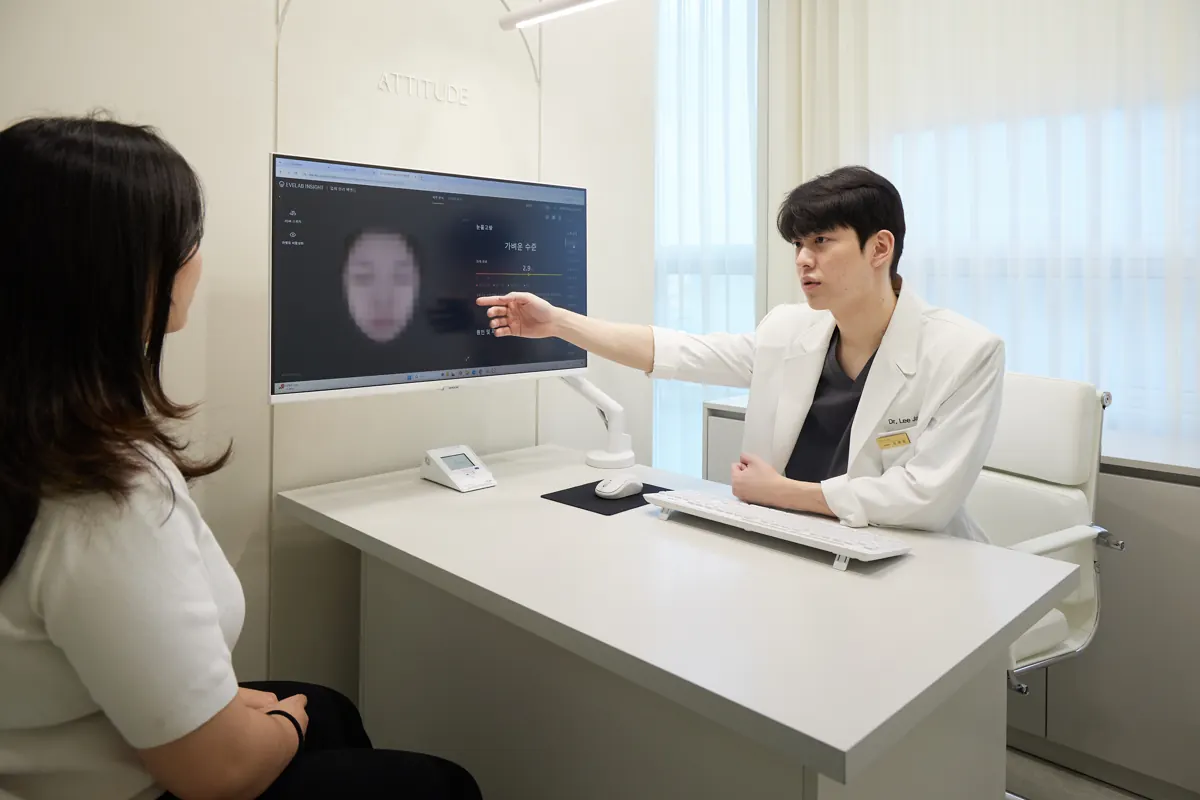
In a private diagnosis room the whole face is photographed, recording even skin conditions that are hard to see with the eye.
02
Skin analysis
The doctor goes through your pore, pigmentation, wrinkle and firmness results with you on screen and explains what comes first.
03
One-to-one design
With your skin, the balance of your face, the change you want and your schedule in view, you decide the treatment and its extent together.
04
Treatment by your doctor
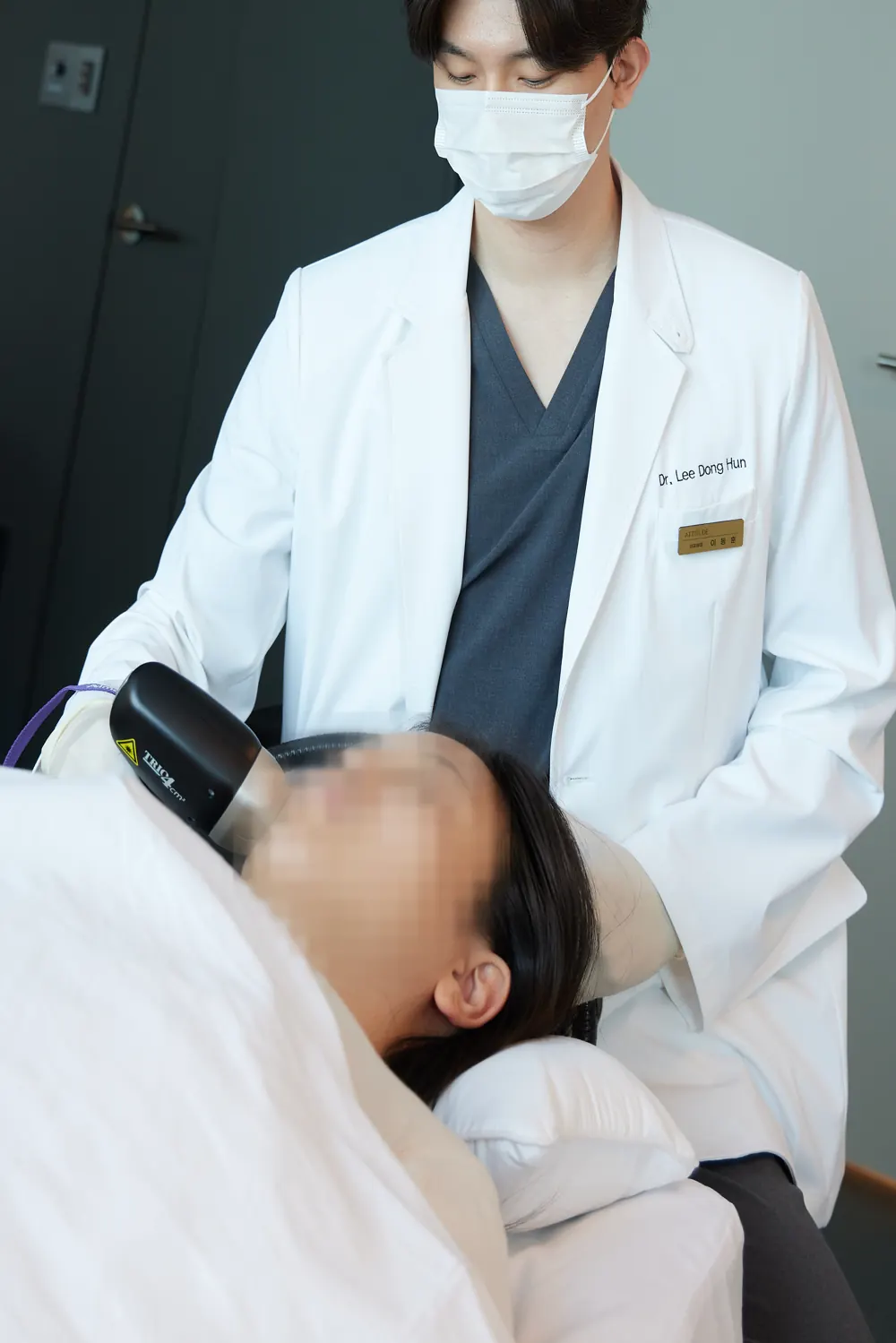
The doctor who consulted you performs the treatment from start to finish in a private treatment room. No one takes over halfway.
“I take injection pain seriously.”
Co-Director Dr. Lee Dong Hun
Many people hesitate over injection treatments because they hurt. So we went back over everything, from the anesthetic to the products used.
Careful numbing, unhurried timingWe allow plenty of time for a special numbing cream to take full effect, and add anesthetic injections for the treatments and areas that need them.
Fine needles, finished quicklyInjection treatments use fine needles, and the doctor finishes them personally in a short time, adjusting along the way by watching how you are doing.
Even the product formulation countsThe same treatment can feel more or less demanding depending on the product, so we take that into account too.
The anesthetic method and whether it is used are decided after an examination, according to the treatment, the area and your condition. How much it hurts varies from person to person.
Mole removal is guided by size, divided into 5mm or less and over 5mm, and prices are listed in the treatment and price guide excluding VAT (ATTITUDE Clinic treatment and price guide). Freckles or red marks around the mole may be treated with pico lasers or 532nm vascular lasers, and pores and scar areas with erbium fractional laser.
Aftercare and side effects
Soothing Minimize irritation on the day of the procedure. Avoid hot water, saunas, and intense exercise, and wash gently with lukewarm water.
Moisturizing and wound protection Do not touch the scab and let it fall off on its own. Do not scratch or rub while the wound heals.
Sun protection Even after the scab falls off, apply SPF 50+ sunscreen for at least 2 weeks and reapply every 2 hours outdoors.
Follow-up Take photos from the same angle, and contact us if redness and stinging persist for more than 3 days or worsen.
Common reactions include redness, swelling, scabs, a few days of stinging, and temporary darkening of pigment. If vascular laser is used together, bruising may occur and take 1–2 weeks to fade. Rarely, hypopigmented spots, blisters, or scars occur. Recurrence of the mole is also possible, and this is considered a diagnostic issue, not a cosmetic one (AAD).
There are times to contact us without waiting for the next appointment: when redness and stinging persist beyond 3 days or worsen, when blisters form or redness spreads beyond the site, or when a mole regrows at the removal site. The speed of recovery and the extent of marking vary depending on the mole's depth and location, skin reaction, and aftercare.
Frequently asked questions
Can mole removal side effects include scarring?
Since it's a procedure that touches the skin, it's hard to say no mark will remain at all. The common outcome is a red mark after the scab falls off, which fades over time. Problems arise when you pick the scab or scratch the wound, damaging new skin, which can lead to dark spots or scars. The American Academy of Dermatology also warns that removing moles at home increases the risk of scarring and infection (AAD). The extent of marking varies with the mole's depth and location, so when removing several on the same day, a consultation to prioritize by location helps.
What should I do if a mole regrows at the removal site?
Don't wait—make an appointment. According to the American Academy of Dermatology, if a removed mole regrows, you should promptly schedule a visit, as recurrence can be a sign of melanoma (AAD). The regrown mole's color, border, and depth are re-evaluated, and a biopsy is done if needed. Previous procedure records and photos help. Treating the deep part of the mole reduces recurrence but may increase the mark, so both are weighed at consultation.
Which moles require a biopsy before laser removal?
Moles whose color or shape has changed recently, asymmetric moles or those with irregular borders, and moles that itch, bleed, or ooze. The National Cancer Institute advises telling your doctor about such changes (NCI). These moles undergo excision and microscopic examination (AAD). Some are hard to distinguish from common moles visually, so magnified observation and photo records are used at consultation. Needing a biopsy does not mean it is cancer.
How long do red marks and dark spots last after the procedure?
Redness remains for a while after the scab falls off. Pigment often darkens temporarily and then fades gradually; rarely, light spots may remain. The rate depends on skin thickness, pigment response, and sun protection. After the scab falls off, apply sunscreen for at least 2 weeks and reduce saunas and intense exercise for 1–2 weeks. If the site gets darker or bulges, don't watch it—schedule a consultation.
What should I check when choosing a mole removal clinic?
First, see if they have a process for evaluating moles. The first criterion is whether consultation includes magnified observation, photo records, and assessment of biopsy need (Cleveland Clinic). Also check who performs the procedure and how far aftercare and follow-up are guided. Costs vary by size, number, and method, so checking the criteria before consultation makes it easier to compare quotes (ATTITUDE Clinic treatment and price guide). If side effects occur, where to contact and when you can be seen again—especially if you have a return flight—are also items to confirm.
At a glance
Table 2 At a glance
Item
Key point
Common reactions
Redness, swelling, scabs, a few days of stinging
Scab
Falls off on its own around 7–10 days; do not pick
Dark spots
Determined by sun protection; SPF 50+ for at least 2 weeks
When to contact
Redness and stinging for more than 3 days or worsening
This article offers general health information. It is not a substitute for diagnosis or treatment based on your own condition, so please talk through your situation with a doctor.