How Long Until Pico Laser Results? Pico Toning Benefits and How Long They Last
What determines when you see pico laser (pico toning) results, common session counts and intervals, and how long improvement lasts — organized by pigment type and aftercare habits.
Written by ATTITUDE Clinic Editorial Team
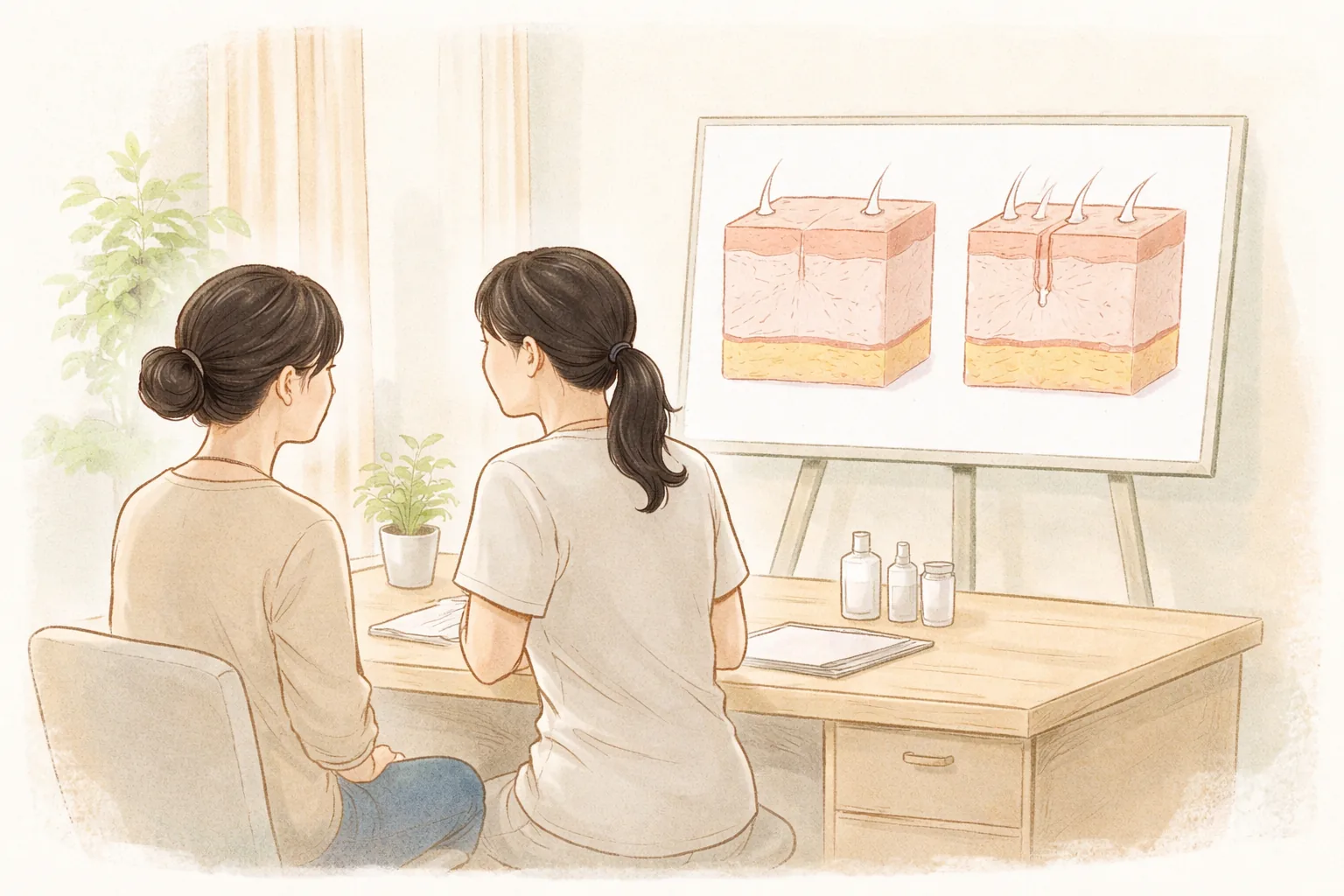
Search for pico toning and the same questions follow every time: "When will I see a change?", "How many sessions do I need?", "How long do the results last?" Some people look in the mirror the day after a single session, see no change, and feel disappointed, while others notice their tone gradually evening out over several sessions. In this article, we'll start with how pico laser handles pigment, then go through what determines when results appear, session counts and intervals, and how long improved tone is maintained.
The short answer first
When you see pico laser results depends on the type and depth of pigment, the wavelength and energy used, and the intervals between sessions. Common examples from the ATTITUDE Clinic column: spot-type pigment responds to pico laser in 1–3 sessions at 4–8 week intervals, while melasma or broad pigment is approached with low-power toning in 8–12 or more sessions spaced at least 1 week apart (laser responses and sessions). Once pigment particles are broken into smaller pieces, the body needs time to clear them — so it isn't an overnight disappearance, and improvement doesn't stay fixed permanently either. In the end, which pigment you're treating, at what intensity, and at what intervals matters more than "how many sessions until it's done."
How does pico laser handle pigment?
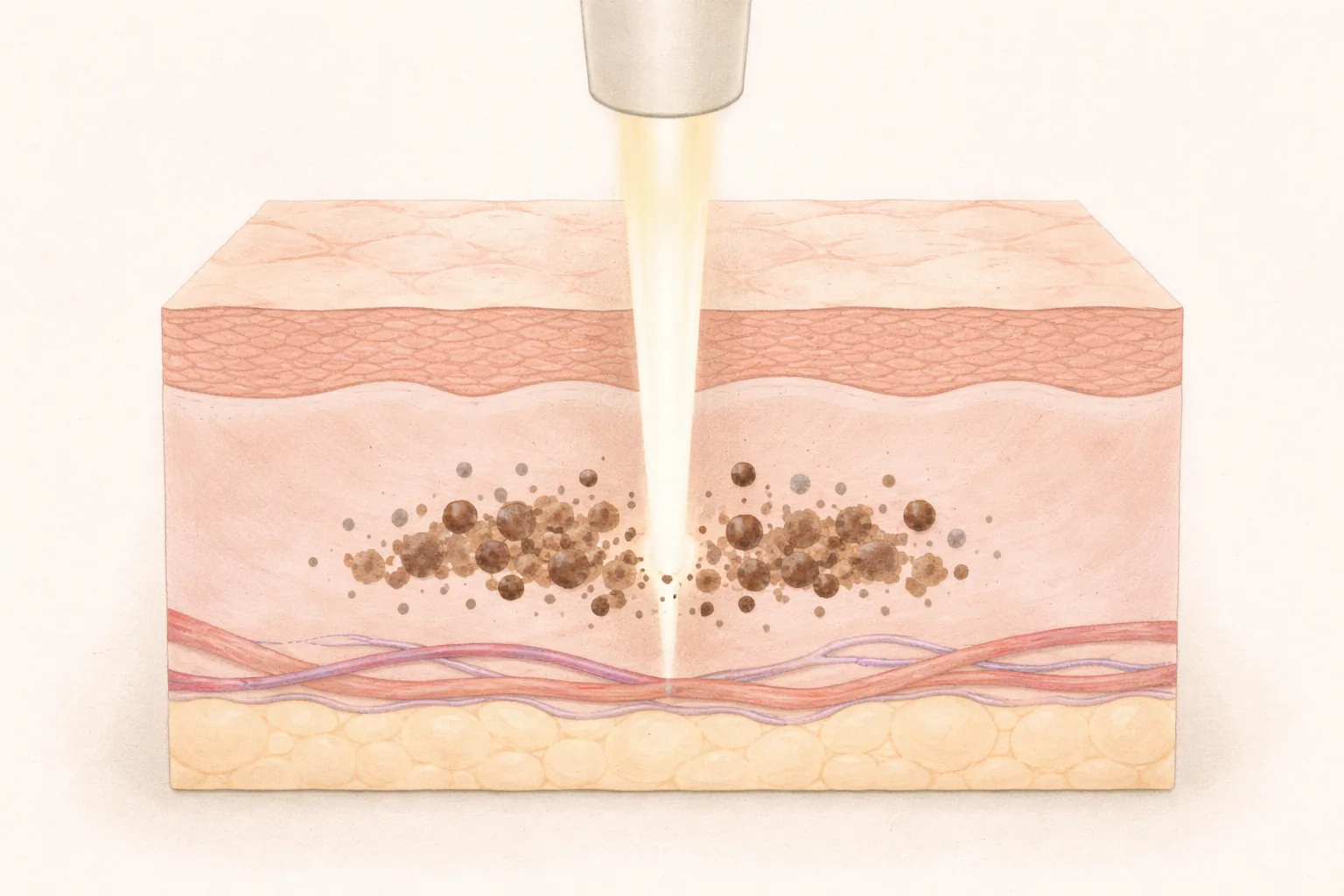
A laser is light energy concentrated at a single wavelength (a property similar to the color of light). When this light reaches the skin, it's absorbed only by targets that respond to that wavelength — a principle called selective photothermolysis (concentrating energy on the target while leaving surrounding normal skin relatively untouched) (how lasers work and settings). Lasers that target pigment choose a wavelength melanin absorbs well, so they differ from devices that address red blood vessels right from the wavelength.
"Pico" means the light turns on and off in a time frame around 1 trillionth of a second (laser responses and sessions). Delivering strong energy in such a short burst relatively reduces how far heat spreads to surrounding tissue, and pigment particles break into small fragments. The body then gradually clears those fragments. That's where the time gap appears — between the moment the laser hits and the moment pigment becomes less visible.
So why does melasma take longer? Melasma is pigment influenced by hormones, and using strong power all at once can actually make it darker, so the approach is lower power spread across multiple sessions (laser responses and sessions). Even on the same face, spots are pigment, redness is blood vessels, and rough texture comes from the skin surface — so the approach differs.
What determines when results start to show
The first factor is pigment type and depth. Spots concentrated near the epidermis respond relatively quickly, while melasma spread deep in the dermis and widely across the face needs more sessions. Even if they look similar on the surface, pigment with blurred borders spreading symmetrically across both cheeks is more likely melasma and hard to treat at the same intensity (laser responses and sessions).
The second factor is wavelength, pulse duration, and energy level. Even with the same laser, wavelength and pulse duration are key to results, and the experience differs depending on whether settings are matched to your skin condition (how lasers work and settings). Raising intensity may seem to speed up the response, but if it's too strong for your skin condition, the risk of side effects like pigmentation increases.
The third factor is interval. Scheduling the next session after giving skin time to recover helps reduce the rebound where pigment comes back. The fourth factor is UV exposure after treatment. Even well-broken pigment becomes prominent again if UV and heat stimulation repeat.
How many sessions, and at what intervals?
Lasers usually don't achieve results in a single session. Pigment is approached by breaking it down gradually and giving the body time to clear it, rather than removing it all at once, and treatments that address skin structure need time for new collagen to settle in (laser responses and sessions). Common examples from the ATTITUDE Clinic treatment guide and column (treatments and pricing):
Table 1 How many sessions, and at what intervals?
Laser
Target
Best for
Sessions & intervals (common examples)
PicoPlus pico toning (1064nm)
Pigment
Spots, melasma and other pigment and tone concerns
Spots 1–3 sessions at 4–8 weeks; melasma/broad pigment toning 8–12 or more sessions at minimum 1 week apart
Pico spot (532nm)
Shallow pigment
Removing locally clustered spots
Decided in consultation based on pigment size and number
Vbeam (532nm)
Shallow blood vessels
Redness, facial flushing
3–5 sessions at 4–6 weeks
Erbium YAG laser (fractional)
Skin surface
Texture refinement, around pores, shallow scar texture
3–5 sessions at 4–6 weeks (varies with intensity and area)
Genesis toning (1064nm)
Pigment & tone
Tone maintenance
Decided in consultation
Swipe sideways to see the whole table.
In short Spots and melasma on the same face respond at different speeds. Spots may resolve in a short course, while melasma is safer with a longer session plan and consistent intervals. Which laser and how many sessions should come after identifying the pigment type first.
How long does improvement last?
This isn't a treatment that locks in improved pigment permanently. The ATTITUDE Clinic column also notes that pigment can reappear over time (how lasers work and settings). It's hard to pin down a number of months because the conditions that reactivate pigment cells differ from person to person.
The biggest variable is UV. Right after treatment, the skin's barrier is temporarily weakened, so if you don't block UV properly during this window, pigmentation can develop in the newly formed skin and undo the treatment's effect (laser responses and sessions). That's why for at least 2 weeks after treatment, apply SPF 50+ sunscreen and reapply about every 2 hours when outdoors.
Heat stimulation and friction are variables too. It's better to avoid saunas, jjimjilbangs, and intense exercise — anything that raises skin temperature — for 1–2 weeks. When skin temperature rises, blood vessels dilate and pigment cells can reactivate (laser responses and sessions). Hormone-influenced pigment like melasma fluctuates with daily rhythm and UV exposure, so maintaining tone between sessions matters as much as the treatment itself.
If this applies to you
If your wedding or a shoot is a few months away
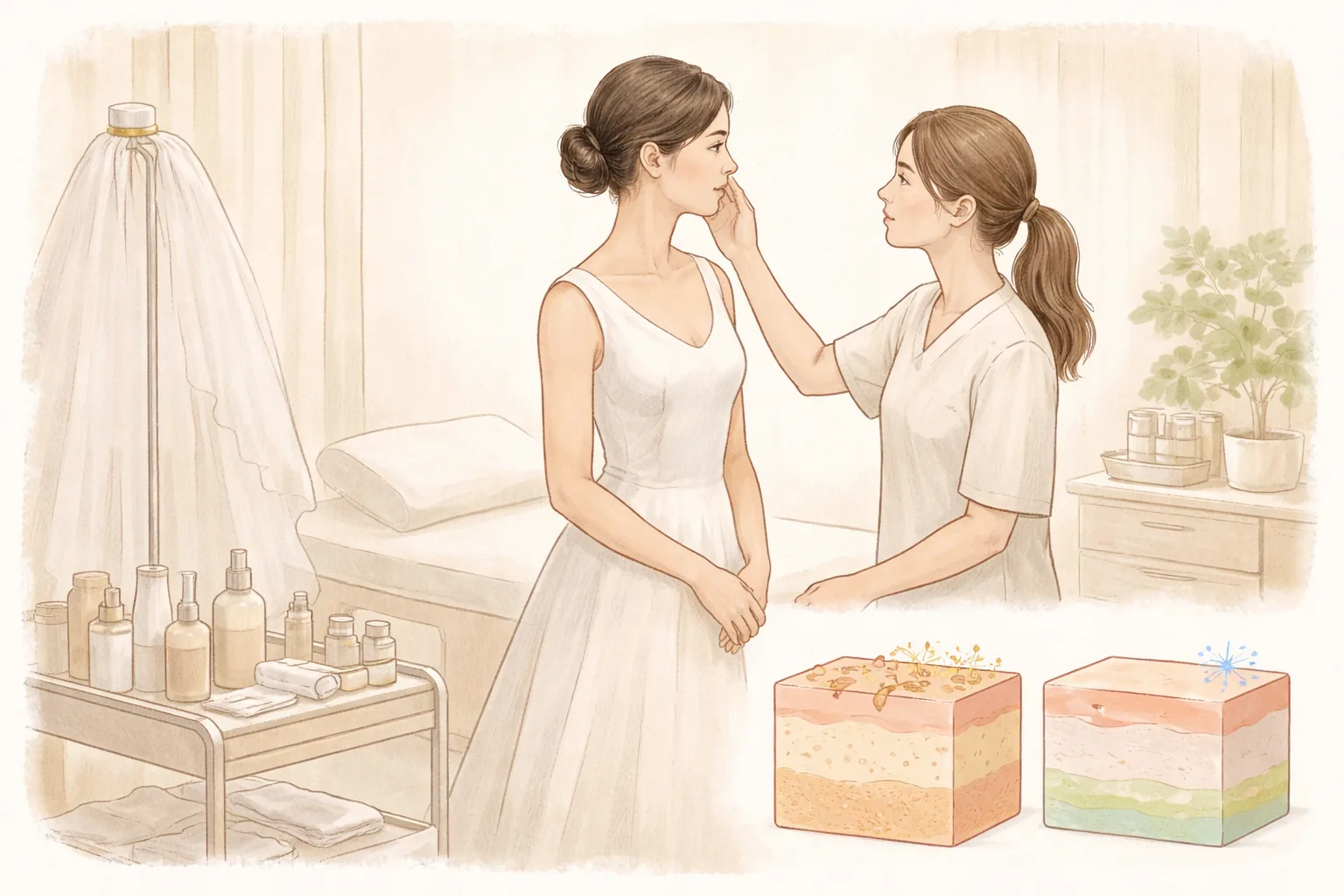
Getting a first-time treatment right before an event can overlap with redness or sensitized skin on your schedule. Working backward from your date to decide treatment type, intensity, and start timing opens up more options (how lasers work and settings). Pigment treatments need multiple sessions, so starting with at least a few months of buffer makes planning much easier.
If you want to maintain your tone steadily
Rather than going strong all at once, respecting recovery intervals and treating periodically puts less burden on your skin (how lasers work and settings). Setting a target date and a maintenance plan together reduces the reason to raise intensity.
If your skin is sensitive or prone to redness
If cosmetics sting or your skin feels more sensitive than usual, it's best to mention it before treatment. Toning is usually spaced at least 1 week apart, and very frequent toning has been reported in connection with mottled hypopigmentation (how lasers work and settings).
If you're an international visitor on a short stay
If your stay is fixed, redness and dryness after treatment can affect your plans. Let us know your return date and upcoming schedule in advance, and we'll discuss intensity and treatment type to match (how lasers work and settings).
Before your consultation, let us know Recent periods of heavy UV exposure, medications and cosmetics you're taking or applying, past experiences of skin sensitivity after treatment, and fixed dates like weddings, shoots, or travel — sharing these in advance lets us adjust settings and timing together (how lasers work and settings).
How ATTITUDE Clinic proceeds
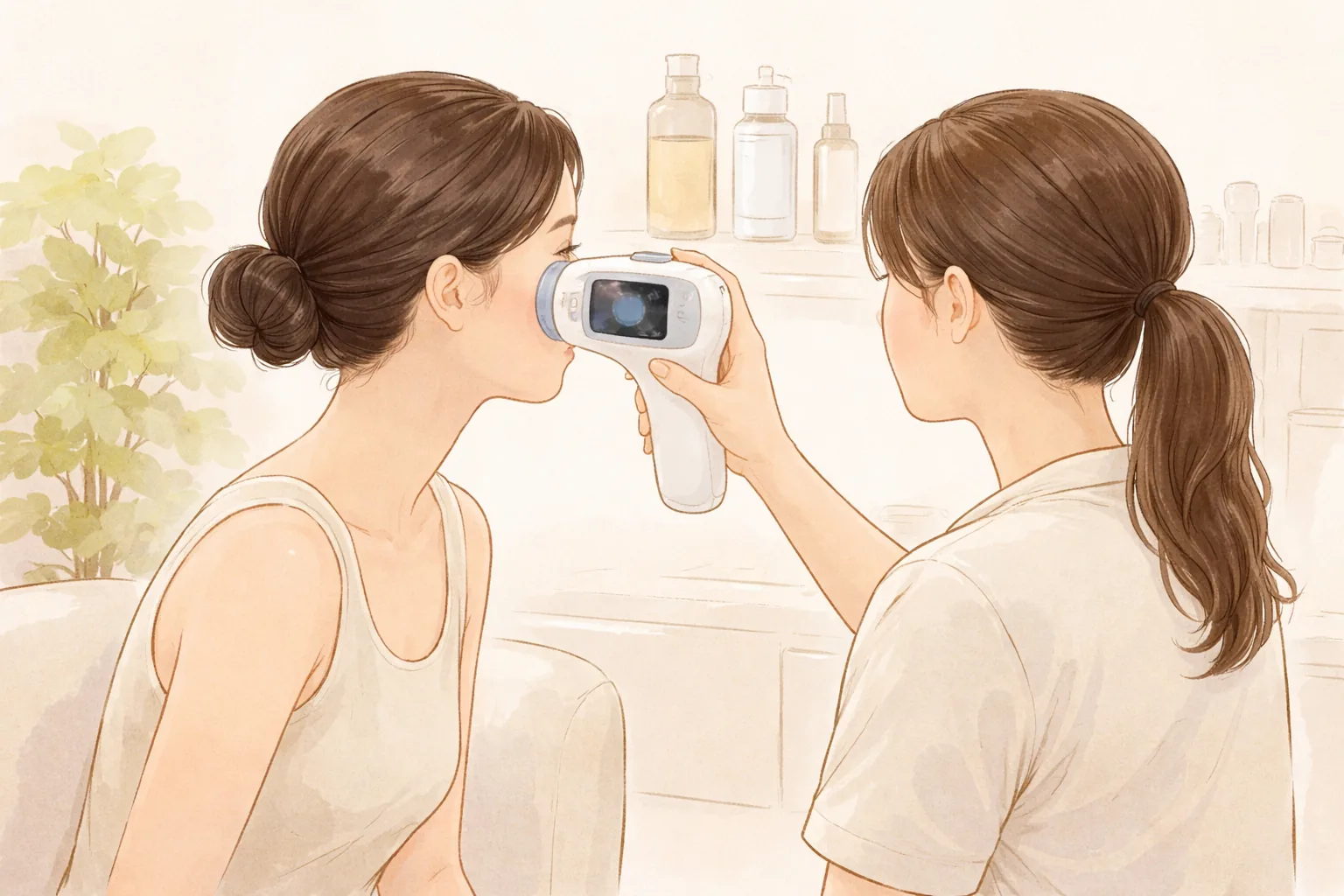
AI skin analysis record — Current skin condition including pigment, redness, texture, and pores is recorded with AI skin analysis.
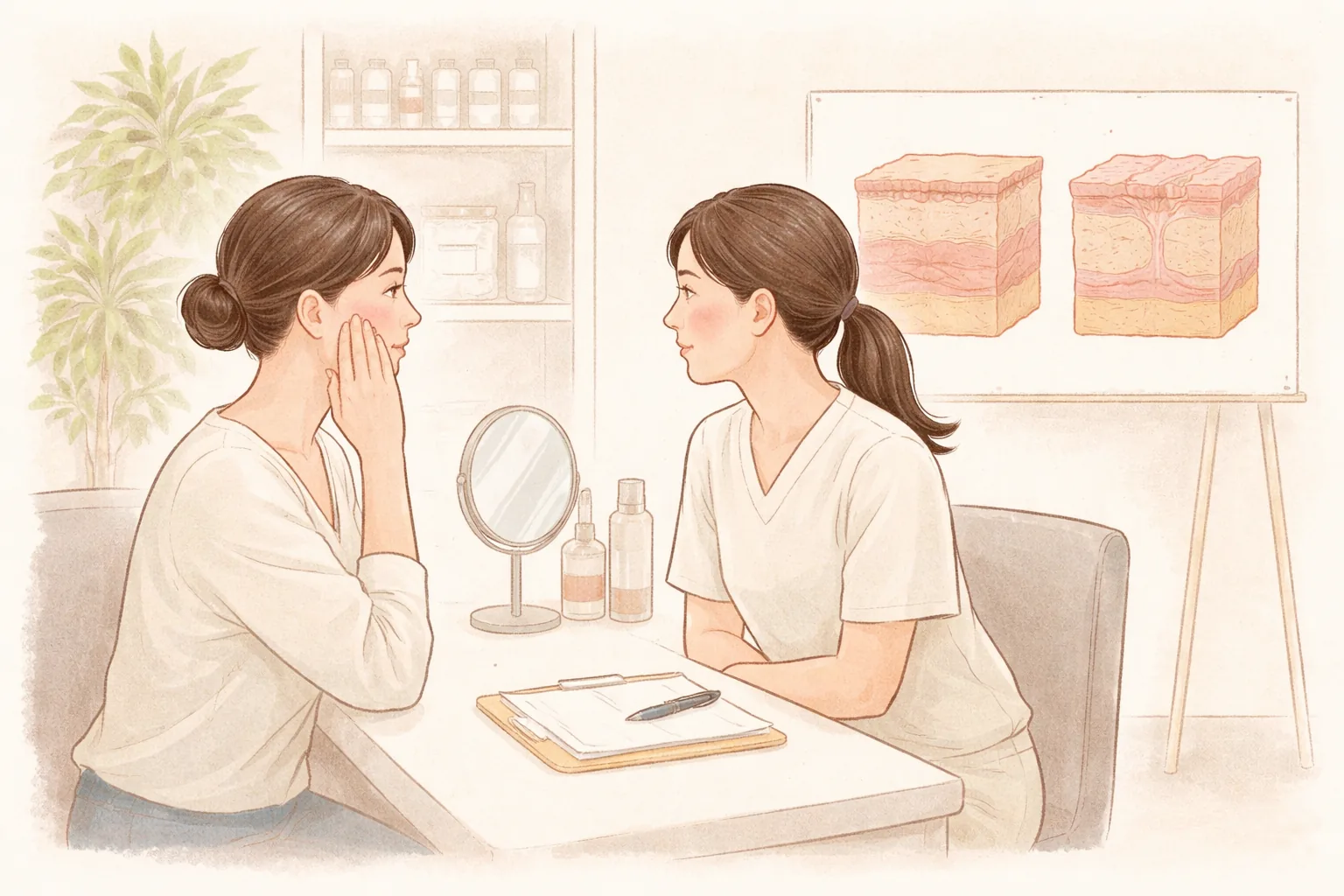
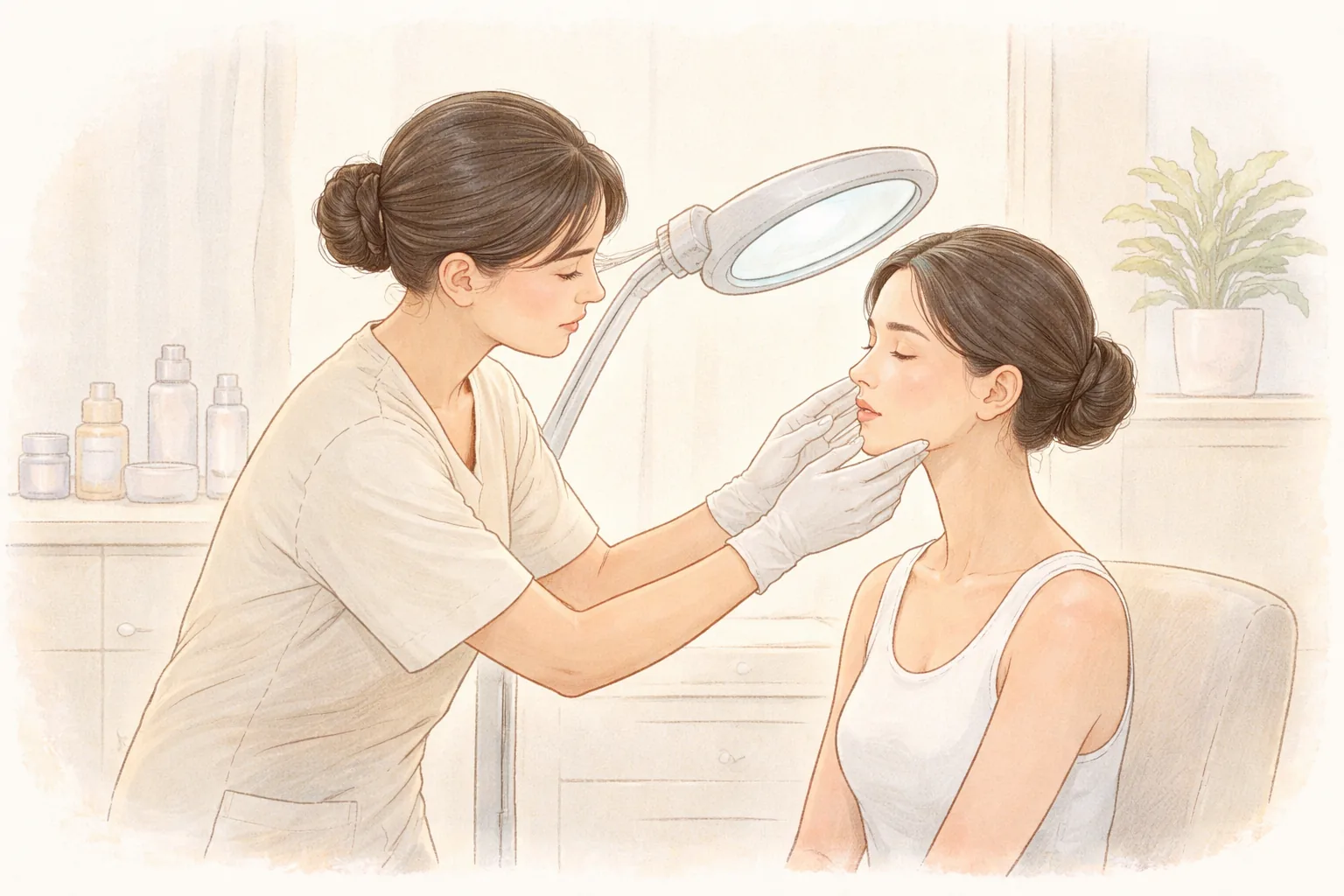
Doctor consultation to design direction — Your schedule, pain sensitivity, and skin history are added to the analysis record to decide treatment type, intensity, and timing together (how lasers work and settings).
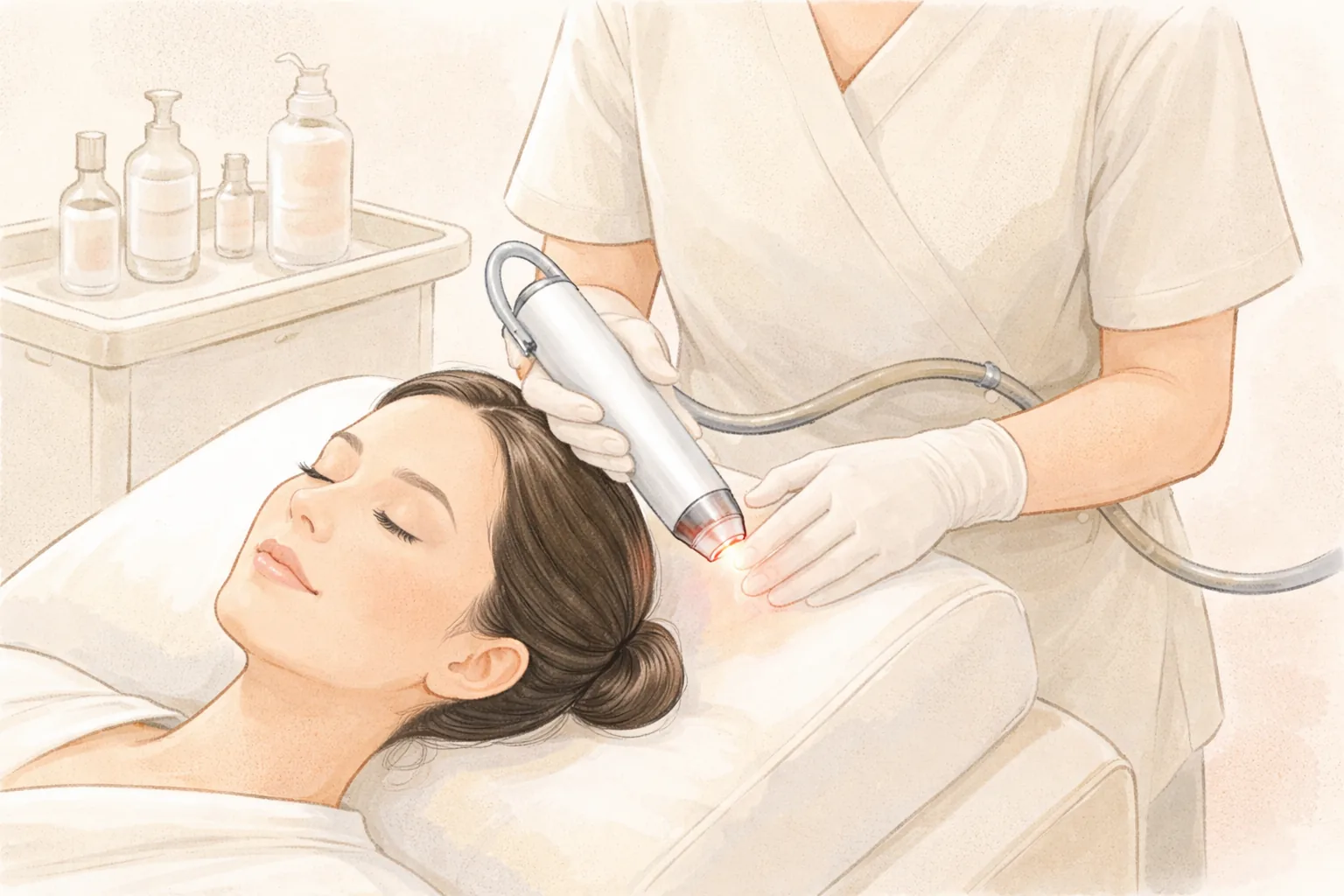
Treatment — Topical anesthesia is used to reduce discomfort when needed. We don't recommend treatment beyond what's necessary (how lasers work and settings).
Follow-up and interval adjustment — We check your response after treatment and adjust the next session interval to match your skin condition. With the principle that lasers aren't better when stronger or more frequent, we follow authentic products, proper dosing, and fair pricing (how lasers work and settings).
Aftercare and side effects
Soothing — On the day of treatment, avoid heat-raising stimulation like saunas, jjimjilbangs, and hot showers. Low-power toning aims for redness and stinging to subside within a few hours to the same day (laser responses and sessions).
Moisturizing — The skin barrier is temporarily sensitized and tightness can occur, so reduce dryness with a low-irritation moisturizer (how lasers work and settings).
Sun protection — For at least 2 weeks after treatment, apply SPF 50+ sunscreen and reapply about every 2 hours when outdoors (laser responses and sessions).
Follow-up — If redness or heat lasts longer than expected or pain worsens, don't push through it — come in to have it checked (how lasers work and settings).
Side effects can occur even with proper settings. Redness, heat, swelling, and stinging are common, and high-power pigment treatments or ablative lasers like erbium YAG can form crusts. Temporary pigmentation can occur, and Vbeam can cause bruising. Rarely, blisters, hypopigmentation, infection, or scarring can occur, or pigment can rebound (how lasers work and settings). It's safer to let crusts fall off on their own — picking at them can damage the new skin rising underneath and leave pigmentation or scarring (laser responses and sessions). If redness and stinging last more than 3 days or suddenly worsen, or if blisters or oozing appear, come in to have it checked rather than waiting for your next appointment.
Frequently asked questions
How many sessions of pico toning benefits show up in?
It depends on the type and depth of pigment. Common examples from the ATTITUDE Clinic column are 1–3 sessions for spots and 8–12 or more for melasma or broad pigment (laser responses and sessions). Sometimes tone looks more even after 1 session, but rather than judging from that one, it's more accurate to observe the response each session and plan next steps. On how results appear gradually as skin regenerates, the AAD explains in its microneedling material that results appear gradually with collagen production and full results take several months (AAD microneedling guide). Pigment toning works differently, but the same principle applies — pigment needs time to be broken down and cleared by the body — so judging results after a single day is difficult.
How long does improvement last?
This isn't a treatment that stays fixed permanently. Pigment can reappear over time, and if you don't block UV properly right after treatment, pigmentation can develop in newly formed skin and undo the effect (how lasers work and settings). That's why for at least 2 weeks after treatment, we recommend applying SPF 50+ sunscreen and reapplying about every 2 hours outdoors (laser responses and sessions). It's also better to avoid activities that raise skin temperature, like saunas or intense exercise, for 1–2 weeks. How long it lasts varies by person depending on UV exposure, lifestyle habits, and pigment type.
How important is sun protection?
Insufficient protection can let pigment darken again or cause pigmentation at the treated area, making it the biggest variable in preserving results. Right after treatment, the skin's barrier is temporarily weakened, so UV during this window is especially burdensome (laser responses and sessions). For at least 2 weeks, we recommend applying SPF 50+ and reapplying about every 2 hours outdoors. It's good to keep the same standard even on days you sit by a window for a long time. If your schedule makes it hard to apply sunscreen, adjust by reducing outdoor time instead.
When can I exercise or use saunas again?
It's better to avoid saunas, jjimjilbangs, and intense exercise for 1–2 weeks. When skin temperature rises, blood vessels dilate and pigment cells can reactivate, so reducing heat stimulation during recovery is safer (laser responses and sessions). Low-power toning aims for redness and stinging to subside within a few hours to the same day, but if spots were treated at high power, crusts can form for about 7–10 days (laser responses and sessions). Sweat and friction while crusts remain can slow recovery, so it's better to increase exercise gradually after crusts fall off. Shower with lukewarm water rather than hot, and wash gently without rubbing.
What should I check when choosing a clinic?
Rather than the device name, here are a few things worth checking. Does the clinic first confirm whether your concern comes from pigment, blood vessels, or the skin surface before treatment? Does it recommend only necessary treatments without rigidly fixing session counts? Does the consultation sufficiently explain pain, recovery schedule, and aftercare precautions? And can you get concerns checked if something feels off? (how lasers work and settings). Since the approach differs by pigment type, it's worth seeing whether the consultation includes a step to distinguish pigment types. A clinic that builds a session plan with you rather than pushing a strong treatment at the first consultation gives you time to decide.
At a glance
Table 2 At a glance
Item
Key point
What determines when results show
Pigment type and depth, wavelength and energy, session intervals
Spots (common example)
1–3 pico laser sessions at 4–8 week intervals
Melasma/broad pigment (common example)
Low-power toning 8–12 or more sessions at minimum 1 week apart
Maintenance
Not permanent; pigment can become prominent again with repeated UV and heat stimulation
After treatment
SPF 50+ sun protection for at least 2 weeks, moisturizing, avoiding heat stimulation
Order of steps
AI skin analysis record → doctor consultation → treatment → follow-up
This article offers general health information. It is not a substitute for diagnosis or treatment based on your own condition, so please talk through your situation with a doctor.