Pico Toning and Other Lasers Together: Order and Spacing Rules
Combining pico toning with Genesis toning and other lasers: which treatments can be done on the same day, which need separate dates, and how to set the order and interval.
Written by ATTITUDE Clinic Editorial Team
People who have had laser toning a few times often pause at the next step. The questions are whether pico toning and Genesis toning can be done on the same day, and whether a skin booster or lifting can be layered on the same day as toning. This article covers what sets the order when toning is combined with other treatments, and how much spacing to allow.
The short answer first
Combining toning with other treatments is possible depending on the pairing, and the deciding factor is not 'whether it can be done' but 'in what order, and with how much spacing.' Treatments that target different things are often done back to back on the same day, while combinations that both act on the skin surface are spaced out across separate dates. What sets the standard is the time it takes for the skin barrier to recover, and toning treatments are usually spaced at least 1 week apart. The exact schedule is set by looking at your skin condition, pain sensitivity, and upcoming calendar together.
What toning does in the skin
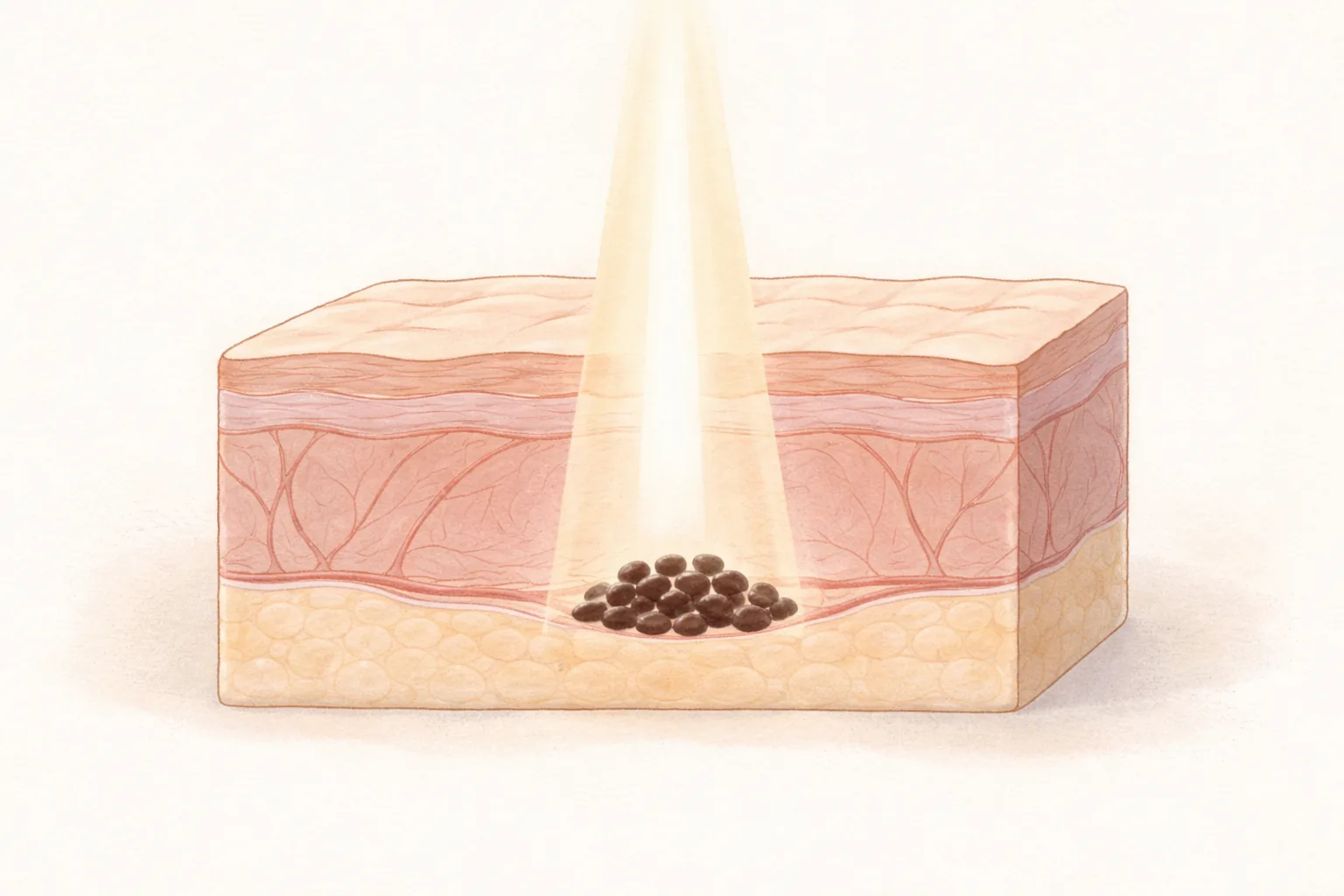
A laser is light energy gathered into a single wavelength (the property that corresponds to the color of light). When it reaches the skin, it is absorbed only by specific substances that respond to that wavelength, and converted into heat or impact. This is why there is a separate wavelength for targeting pigment and one for targeting red blood vessels. The ATTITUDE Clinic column explains this principle as selective photothermolysis (a method that gathers energy only on the target while touching surrounding normal skin less). Does frequent laser treatment really thin the skin?
Toning, among these, is a method that slowly calms the overactivity of pigment cells by repeating low energy over a wide area. According to the ATTITUDE Clinic treatment guide, pico toning based on the Picoplus uses a 1064nm pico laser for pigment and brightening, while Genesis toning uses a 1064nm laser to target anti-aging. Even with the same wavelength, if the on-and-off time of the light and the delivery method differ, the nature of the stimulation the skin receives also changes.
Redness and a stinging feeling right after the procedure are heat reactions. Even when energy is gathered only on the target, some heat is transferred to the surroundings. If this reaction stays within the range that subsides within a few days, it is within the intended treatment range; if it spreads widely and lasts long, it is seen as a sign that the setting was too strong for your skin.
What changes when toning treatments are combined
The reason the saying 'it's better to do them together' circulates is that if the targets are different, they do not interfere with each other. Toning that targets pigment and a laser that targets blood vessels absorb different things, so one does not erase the action of the other. The ATTITUDE Clinic column also separates these: for facial redness and red blood vessels, vascular laser family treatments are used, and for pigment, picosecond family treatments are used. Pigmentation, redness, scars—can lasers do it all?
A common misunderstanding arises here. Saying that combining is possible does not mean any combination can be layered on the same day. If energy is layered twice on the same area in the same way, the burden the skin must handle grows accordingly. A high-power spot laser that burns away surface pigment and a fractional laser that grinds the surface both leave marks on the epidermis, so it is better to separate them by date.
Combinations with a clear target can actually get closer to the desired result in fewer sessions than doing one thing at a time. The American Academy of Dermatology notes that microneedling combined with PRP may be particularly helpful in fading acne scars, and can be used on people with darker skin tones as well. AAD: Uses of microneedling However, this guidance is for that combination and does not transfer directly to other devices or other targets.
Standards for setting order and interval
When setting the schedule, there are three axes to look at. Whether the two treatments target the same thing or different things, how long the recovery period each treatment leaves is, and your upcoming UV exposure and important events.
Combinations often done back to back on the same day are those with short recovery and different targets. If a treatment that strips the surface is involved, the next treatment is postponed until that recovery finishes. The order is usually set based on the treatment with the longer recovery, and treatments with shorter recovery are placed before and after it. Even with the same device, recovery differs by several days depending on output and range, so the standard is not the treatment name but how strong this session's setting is.
Table 1 Standards for setting order and interval
Treatment family
Target
Standard when combining
Recovery (common example)
Picosecond low-power toning (Picoplus 1064nm)
Pigment · brightening
Same-day combination with lasers that target different things; toning with toning at least 1 week apart
Several hours to same day
Vascular laser (Vbeam, Genesis toning)
Facial redness · red blood vessels
Consider combining since target differs from pigment toning
Redness · swelling for a few days, 1–2 weeks if bruising occurs
Fractional laser (erbium fractional)
Skin surface · pores · scars
Epidermal burden overlaps, so separate dates from toning
Low power 3–5 days, high power 7–14 days
Picosecond high power (spot removal)
Epidermal pigment spots
Scabs form and UV care is needed; separate from other epidermal treatments
About 7–10 days
Swipe sideways to see the whole table.
In summary Whether treatments can be combined depends on whether their targets overlap. If the targets differ, do them back to back on the same day; if they both act on the epidermis, space them across separate dates. The minimum interval is the time it takes for the skin barrier to recover, and toning is usually set at 1 week.
Combining with injections, boosters, and lifting
Injectable treatments leave needle marks, so if done on the same day as toning, it is better to decide which one goes first. Injections that act on muscles, such as botulinum toxin, target a different layer from toning, so combining itself is rarely a problem, but if needle marks and laser heat overlap in the same area, recovery can become uncomfortable.
Treatments that place substances inside the skin, such as skin boosters or dermal fillers, make scheduling trickier. Depending on which product is placed at which depth, the laser's effect on that area differs, so mentioning the product name and laser type together during consultation is the starting point for setting the order. Whether to do them on the same day or leave a few days is decided by looking at the speed at which swelling and marks at the injection site subside.
Lifting delivers heat deep, so it targets a different layer from toning, which deals with surface pigment. Still, if layered on the same day, heat accumulates and swelling and redness can last longer than usual, so how many days of leeway you have after the procedure becomes a factor in setting the schedule. If you have an event where your facial condition matters, such as a photo shoot or presentation, it is safer to calculate backward from that date.
How many sessions, at what interval?
Pigmentation concerns are approached by slowly breaking down particles while giving the skin time to process them, rather than removing them all at once. Looking at common examples organized in the ATTITUDE Clinic column, spots are treated with the picosecond family for 1–3 sessions at 4–8 week intervals, and melasma and widespread pigmentation with low-power toning for 8–12 or more sessions at minimum 1 week or more intervals. Pores and skin texture with fractional laser for 3–5 sessions at 4–6 week intervals, acne scars for 4–6 sessions at 4–8 week intervals, and facial redness and blood vessels with vascular laser for 3–5 sessions at 4–6 week intervals. Pigmentation, redness, scars—can lasers do it all? These figures are common examples and vary with pigment depth, skin type, and UV exposure habits.
It is also worth noting why the minimum interval exists. The ATTITUDE Clinic column advises that very frequent toning has been reported in connection with mottled hypopigmented spots, so toning is usually spaced at least 1 week apart. Does frequent laser treatment really thin the skin? If treatments are repeated before recovery finishes, the skin barrier can weaken, becoming sensitive or leaving redness for a long time. Rather than raising intensity to reduce session count, keeping the interval and doing as much as needed is less burdensome.
When multiple concerns overlap, proceed by dividing priorities rather than doing everything at once. By clearing pigment first and adding skin texture and pores later, dividing the order lets you check each treatment's reaction separately.
In these situations
If you have a fixed date like a wedding or photo shoot
A treatment you are receiving for the first time right before a ceremony can overlap with your schedule as redness or sensitized skin. Calculate backward from the date, place short-recovery toning first, and place epidermal treatments earlier to leave room for adjustment. If you mention the date during consultation, the order can be reworked around it.
If you want to manage consistently and address multiple concerns together
Rather than going strong all at once, keeping recovery intervals and scheduling periodically is less burdensome. By clearing skin tone with toning while layering surface treatments at intervals of a few weeks, setting a schedule several months ahead reduces the reason to push intensity unreasonably high.
If you are an overseas visitor on a short stay
If your stay is short, it is better to postpone long-recovery treatments so they do not fall on your last date. Short-recovery toning is easy to place in the middle of your schedule, and if you want epidermal treatments together, set the date by calculating through the period when scabs fall off. Also confirm during consultation whether follow-up after returning home can be continued.
If your skin is sensitive or tends to redden easily
If cosmetics feel stinging or your skin has become unusually sensitive, telling the clinic before treatment comes first. In this case, it is better to proceed one at a time while watching reactions rather than combining, and adjust by lowering intensity and lengthening intervals. If you are someone whose redness lasts a long time, also check whether a vascular cause is mixed in.
Please tell us before consultation Mention your UV exposure and outdoor activities within the last 2 weeks, medications you are taking and active ingredients you apply to the skin (retinol, acids, etc.), any experience of redness or pigmentation lasting long after a previous procedure, and unavoidable dates such as weddings, photo shoots, or business trips. Pregnancy or breastfeeding status and a history of skin disease treatment are also needed to set the schedule.
How ATTITUDE Clinic proceeds
AI skin analysis record — Records and organizes your skin condition to support consultation. The analysis tool does not make a medical diagnosis, and which pigment sits in which layer is judged by the doctor through examination.
Order designed through doctor consultation — Adds your schedule, pain sensitivity, and skin history to the analysis record to set treatment type, intensity, and timing together. Which treatment to do first and what is not needed now are also organized at this stage.
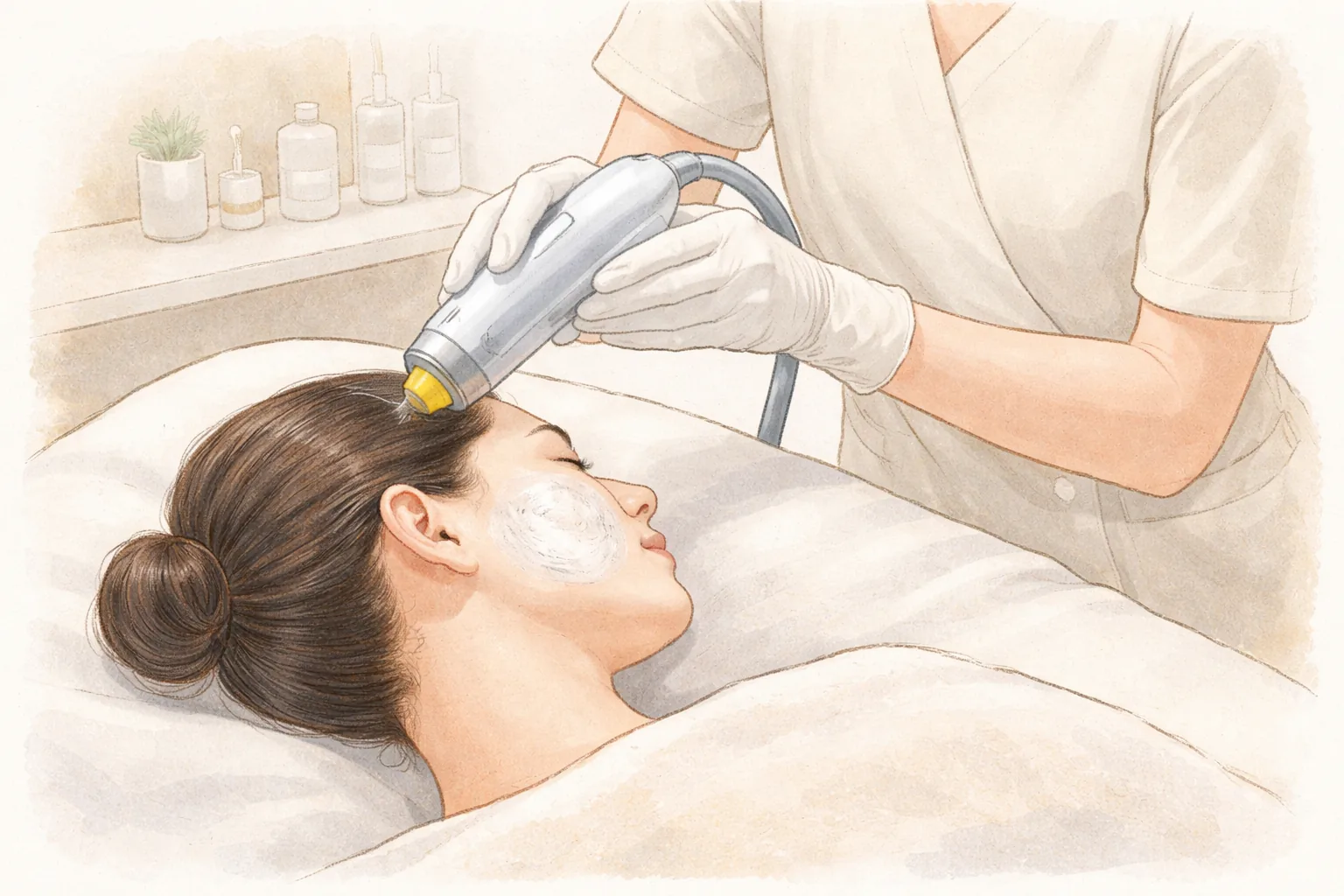
Treatment performed directly by the doctor — Topical anesthesia is used as needed to reduce discomfort, and the doctor directly adjusts strength and combination. Treatments beyond what is needed are not recommended.
Recovery and aftercare guidance — Guides downtime, sun protection, and activities to avoid, and follows your progress so you can check in if discomfort arises.
The devices used for this topic include Picoplus for pico toning, the Vbeam family for Genesis toning, Vbeam, and erbium fractional. As organized in the treatment and pricing guide, the principle is genuine products, accurate dosing, and fair pricing, and listed amounts exclude VAT.
Aftercare and side effects
After the procedure, manage in this order.
Soothing — Heat and redness remain on the day of the procedure. Wash by gently pressing with lukewarm water rather than rubbing, and do the soothing care you were guided on.
Moisturizing — During recovery, the skin tends to dry out, so keep moisturizing steadily. Avoid exfoliation or scrubs for the period you were guided on.
Sun protection — Right after the procedure, the skin's defensive barrier is weakened, so UV can lead to pigmentation. The ATTITUDE Clinic column advises applying SPF 50+ sunscreen for at least 2 weeks after the procedure, reapplying about every 2 hours outdoors, and refraining from saunas, jjimjilbangs, and intense exercise for 1–2 weeks. Pigmentation, redness, scars—can lasers do it all?
Progress check — Watch the speed at which redness and swelling decrease, and if scabs form, when they fall off. Do not pick scabs off; let them fall off on their own so the skin growing underneath is not damaged.
Common reactions are redness, swelling, stinging, thin scabs, and temporary darkening of the treated area. Rarely, hypopigmented spots, blisters, or scars can occur, and pigment may reappear over time. If redness and stinging last more than 3 days or suddenly worsen, it is better to contact the clinic for a check rather than wait.
Frequently asked questions
Can pico toning and Genesis toning be done on the same day?
Since the two treatments target different things, they are sometimes done back to back on the same day. This is because roles are divided, with the picosecond family handling pigment and the vascular laser family handling facial redness and red blood vessels. However, if heat is layered twice on the same area, redness can last longer than usual, so strength and order are adjusted after looking at your skin condition. If it is a combination that repeats the same target with toning, spacing at least 1 week apart is safer.
Can I get a skin booster or Botox on the same day as toning?
Injectable treatments leave needle marks, so it is better to decide the order with toning. Botulinum toxin, which acts on muscles, targets a different layer, so combining is rarely a problem, but if marks and heat overlap in the same area, recovery can become uncomfortable. Skin boosters or dermal fillers that place substances inside the skin change the schedule depending on the product and injection depth, so mentioning the product name and laser type together during consultation comes first.
How often should toning be received?
Usually, the standard is at least 1 week apart. Because very frequent toning has been reported in connection with mottled hypopigmented spots, we choose to keep recovery rather than narrowing the interval. The actual interval varies with the type and depth of pigment and your skin's reaction, so how many sessions at what spacing is adjusted while watching progress. When setting the actual schedule, first check the time it takes for the skin barrier to recover before the procedure, and if you have had redness or pigmentation lasting long after a previous procedure, it is safer to allow a more generous interval. Upcoming outdoor activities and important events must also be considered, so mention your dates during consultation and calculate backward to set the interval.
Can toning and lifting be received around the same time?
Since the target layers differ, they are often scheduled around the same time, but if layered on one day, heat accumulates and swelling can last long. Setting the date based on the longer-recovery treatment and placing toning before and after it is less burdensome. If you have an important event, it is better to mention that date first and calculate backward. If doing them on the same day, adjust by placing the longer-recovery lifting first and toning after, or conversely doing the shorter-recovery toning first, leaving a few days, then lifting. Set the date based on how many days of leeway you have after the procedure and whether an event where your facial condition matters, such as a photo shoot or presentation, is coming up.
What criteria should I use to choose a clinic for toning?
It is better to look at the flow of consultation rather than the device list. The criteria are whether they first check before the procedure whether your concern comes from pigment, blood vessels, or the surface, and whether they set together what is needed, what is not needed, and the order. The American Academy of Dermatology advises that cosmetic procedures carry risks like other medical procedures, so checking indications, risks, benefits, alternatives, the number of sessions needed, and recovery period during consultation is a way to reduce risk. AAD: Questions to ask during a cosmetic procedure consultation It is also good to check whether it is a place where you can get a check if discomfort arises after the procedure.
At a glance
Table 2 At a glance
Item
Key point
Standard for combining
Whether targets overlap and how much recovery is involved, rather than whether it is possible
Combinations possible on the same day
Pigment toning and vascular laser, which target different things
Combinations to separate by date
High-power spot laser and fractional, which both act on the epidermis
Toning interval
Usually at least 1 week; common session examples are spots 4–8 weeks, melasma 8–12 or more sessions
Downtime
Picosecond low power several hours to same day, high power about 7–10 days
Key aftercare
Do not pick scabs; SPF 50+ for at least 2 weeks and avoid heat stimulation
This article offers general health information. It is not a substitute for diagnosis or treatment based on your own condition, so please talk through your situation with a doctor.