Potenza Microneedling vs Fractional Laser: What Sets RF Microneedling Apart
How fractional lasers and Potenza microneedling deliver energy, the conditions that decide downtime and pigment risk, and what to check in a consultation at a Sinsa Station clinic in Gangnam, Seoul.
Written by ATTITUDE Clinic Editorial Team
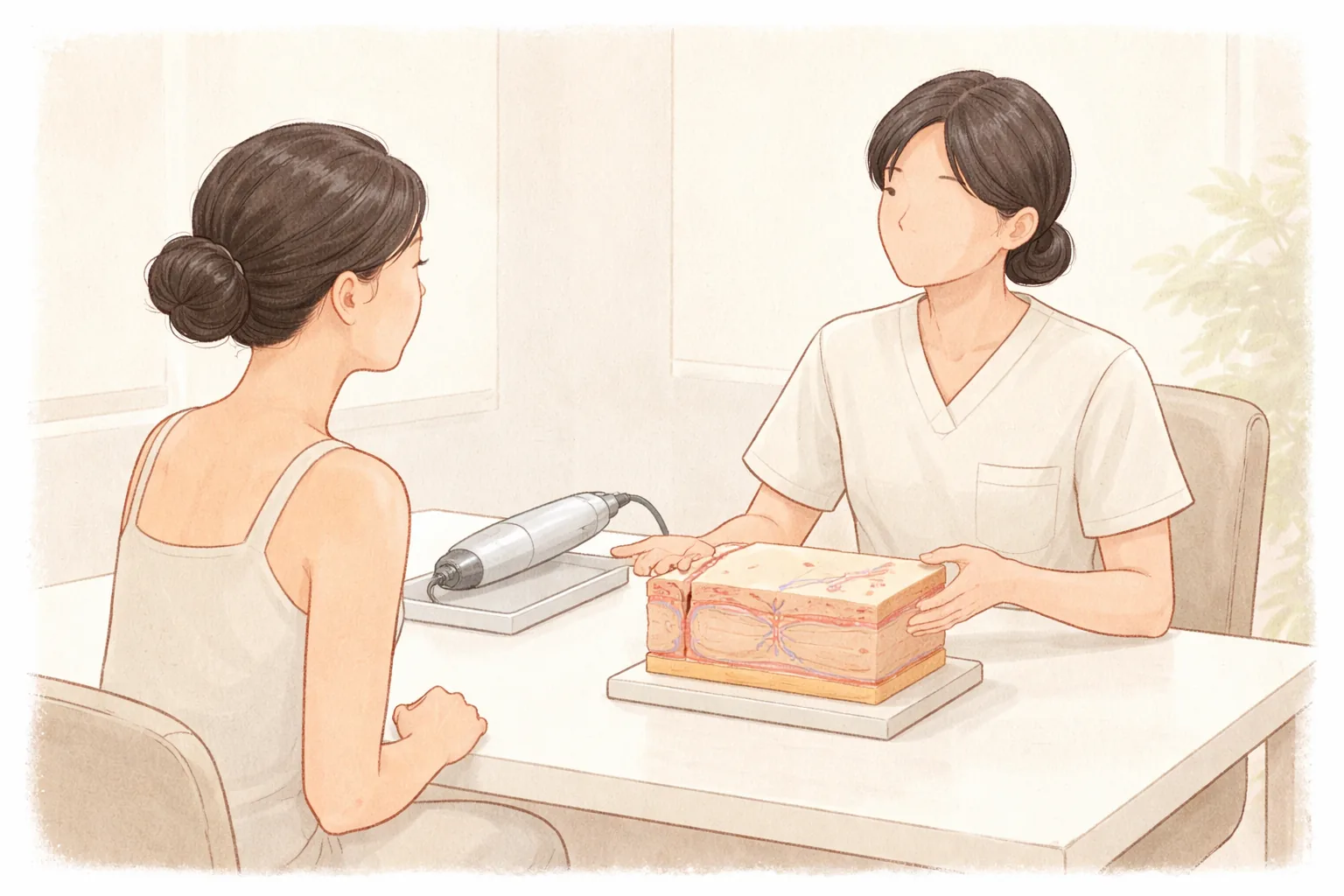
Search for fractional laser treatment and device names flood the results. Fraxel, erbium fractional, CO2, Potenza (RF microneedling) — the names differ but the descriptions sound alike, leaving you unsure which approach you would actually receive. This article sorts the options by where the energy goes and how it is set, not by name, and covers what to ask in a consultation so you can see what is really on offer.
First, the bottom line
'Fraxel' is really a general term for fractional lasers, and that category holds devices that handle heat quite differently. Erbium leaves less heat in surrounding tissue, so healing is relatively fast, while CO2 goes deeper for a stronger heat effect at the cost of longer recovery and higher pigmentation risk. Potenza works by a different route, pushing RF energy directly into the dermis through fine needles. So the choice is not about which device is better but about your skin, your concern, and the downtime you can accept.
Is 'Fraxel' a device name or a method name?
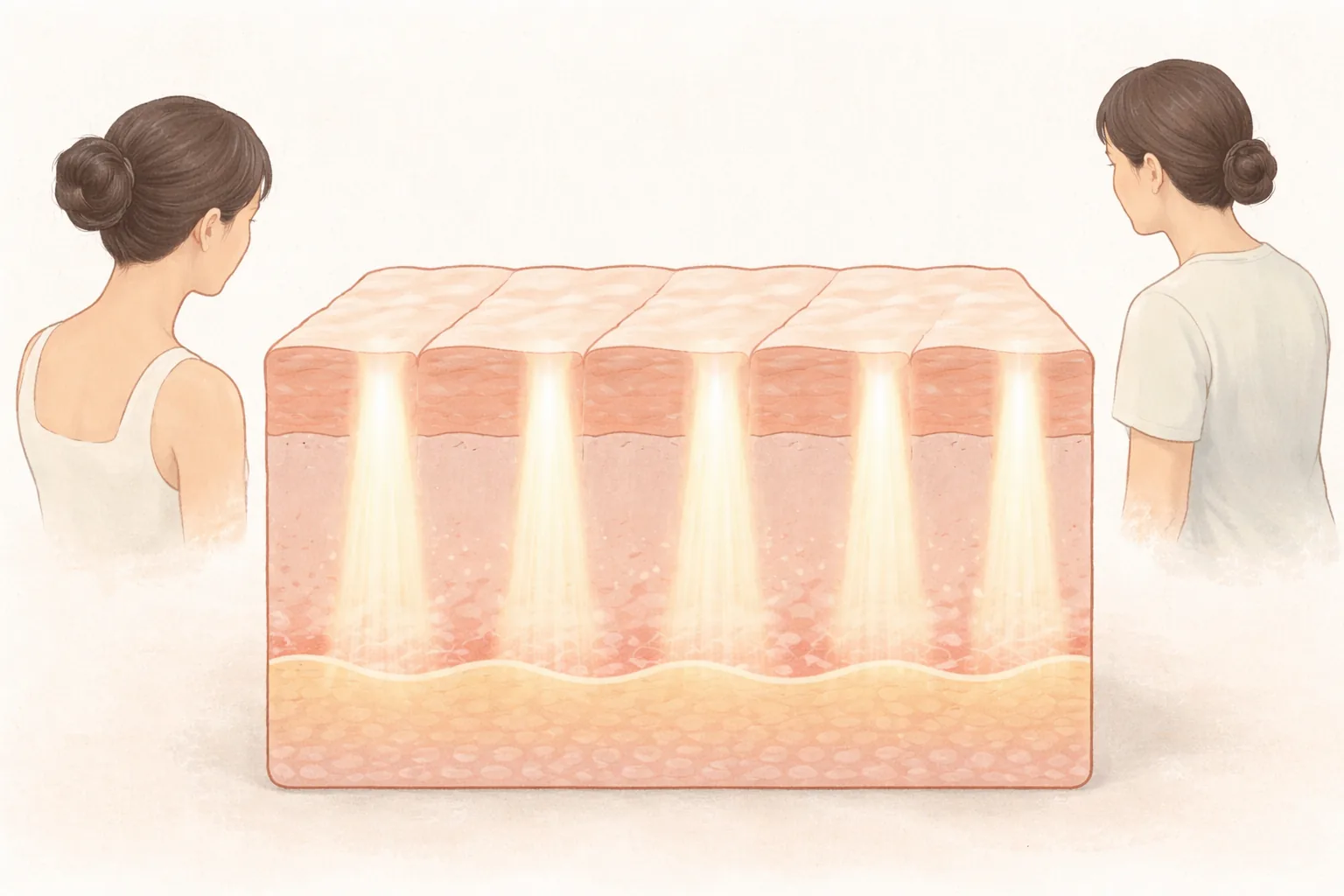
A fractional laser splits its beam into thousands of tiny treatment zones, so only part of the skin is treated at one time. Like retouching a photo pixel by pixel, the skin has treated zones mixed with untouched ones(DermNet). Because the spared normal tissue helps the healing, recovery is faster than treating the whole skin at once.
This approach originally filled the gap between ablative and non-ablative lasers. DermNet explains that fractional lasers act on both the epidermis and dermis, with erbium types used for superficial treatment and CO2 types for deeper resurfacing. The same fractional method is simply built into different devices.
Seoul Asan Medical Center describes fractional lasers as creating tiny holes in the skin so new tissue can fill in, used for acne scars, enlarged pores, wrinkles and skin texture(Seoul Asan Medical Center). What matters here is that the name 'Fraxel' alone tells you nothing about the actual device, wavelength or whether it is ablative. Clinics can use the same name for different machines, so asking for the real device name and wavelength is the starting point.
How much heat is left behind separates CO2 from erbium
The two devices differ in how much heat they use. Cleveland Clinic notes that CO2 laser resurfacing has been used for many skin concerns over a long period, precisely removing a thin layer of skin with short pulses. Erbium laser resurfacing is designed for shallow to medium-depth wrinkles on the face, causing less damage to surrounding tissue so side effects such as swelling, bruising and redness are less common than with CO2. The same source notes that erbium can be a good option if your skin tone is darker(Cleveland Clinic).
Fractional CO2 makes many narrow, deep column-shaped holes and leaves the skin between them alone. As the collagen between the holes contracts, the skin tightens, but because the laser reaches deeper, healing can become more complicated or the risk of scarring increases. Recovery guidance differs too. Cleveland Clinic gives about 1 week of recovery for erbium and fractional laser resurfacing, and up to 2 weeks for CO2 resurfacing.
One common misunderstanding here: heat is not the enemy. That heat is exactly the signal that contracts collagen in the dermis and triggers new collagen production. The problem is when the amount of heat, and how long it stays, does not match your skin. A column from ATTITUDE Clinic makes the same point: the same heat becomes treatment when it is focused on the target, and a burn when it spreads wide(ATTITUDE Clinic column).
What changes results even with the same fractional method
Even with the same device, settings and intervals change the outcome. DermNet notes that fractional laser technique varies with age, skin type, sun exposure and the treatment area. Treatment time also varies by area, with the same source noting around 30 minutes for a full-face session.
Number of sessions and intervals are given differently depending on the condition. Seoul Asan Medical Center describes fractional laser as usually done every 3 weeks for 2–3 sessions, with a cooled tip to reduce pain, and explains that the even distribution of micro-holes means less damage, so washing and makeup are possible on the same day. The ATTITUDE Clinic column notes that for pores and skin texture, 3–5 sessions at 4–6 week intervals are common, while acne scars often take 4–6 sessions at 4–8 week intervals(ATTITUDE Clinic column). The same column notes that even with the same fractional method, downtime can range from 3–5 days to 7–14 days depending on output.
Pigment needs separate handling. Fractional lasers are sometimes used for pigment conditions like melasma, but DermNet notes that the treatment itself can cause post-inflammatory hyperpigmentation. This is why lumping melasma and spots together as one pigment problem and pushing hard can actually darken the color.
How is Potenza RF microneedling different from a fractional laser?
The type of energy and the route into the skin are different. A laser uses light that passes through the skin, is absorbed by a specific target and turns into heat, while Potenza RF microneedling uses needles that enter the dermis and deliver electrical energy directly. In the ATTITUDE Clinic treatment guide, Potenza is introduced as a treatment that delivers RF through fine needles to the dermis to help with pores and scars(ATTITUDE Clinic treatments). Because the path the heat takes is different, the points where strain shows up are different too.
The depth the needles reach is not a measure of better or worse but a value set for the purpose and the area. Using deep settings on a thin area increases the burden, and even at the same depth, the approach differs depending on whether pores stand out from sebum or from lost elasticity and sagging.
Table 1 How is Potenza RF microneedling different from a fractional laser?
Method
Where the energy goes
Concerns it suits
Recovery described in sources
Erbium fractional
Surface and shallow layers
Skin texture, shallow scars, fine lines
Less damage to surrounding tissue, fewer side effects, about 1 week of recovery
Fractional CO2
Deeper layers, as narrow columns
Deep wrinkles and scars
Recovery up to 2 weeks, higher pigmentation risk
Potenza RF microneedling
Directly to the dermis via needles
Pores, scars, skin texture
Redness, swelling and dot marks for a few days to 1 week
Swipe sideways to see the whole table.
In short
These three are not ranked better or worse; they differ in where the energy goes and how much heat is left behind. How much downtime and pigment risk you can accept is the practical basis for choosing, and that judgment is made after looking at your skin.
If this sounds like your situation
If a ceremony or shoot is coming up
If you have a fixed date, it helps to count backward from your schedule rather than start with the treatment type. Even with the same fractional method, downtime ranges from 3–5 days to 7–14 days, so settings with longer recovery should not overlap with your plans. Tell us your dates first at the consultation and we can adjust the type and intensity around them.
If you want to manage pores and scars steadily
Instead of one strong session, splitting it across several sessions while keeping recovery intervals is less of a strain. Pores are approached differently depending on whether they are sebum-type or sagging-type, and scars depending on whether the issue is sunken tissue or leftover color, so the first consultation should separate the causes.
If your skin is sensitive or flushes easily
Repeating treatment before recovery is complete, or using settings stronger than your skin can handle, can weaken the barrier and leave redness for longer. If cosmetics sting during this period, it is better to postpone treatment and look at your skin condition first.
If you are a short-stay visitor
With a short stay, redness or dryness right after treatment can affect your next plans. Tell us your departure date and what follows, and we can adjust the combination toward shorter recovery.
Please tell us before your consultation
Your recent sun exposure, any medications you take and cosmetics you use (especially retinol and exfoliating ingredients), past experiences of sensitivity after treatment, and important dates such as ceremonies or shoots all help us set the settings and timing.
How ATTITUDE Clinic proceeds
AI skin analysis record — We record your current skin condition, including pigment, redness, texture and pores, using an analysis tool. This record organizes information to support the consultation and is not a medical diagnosis.
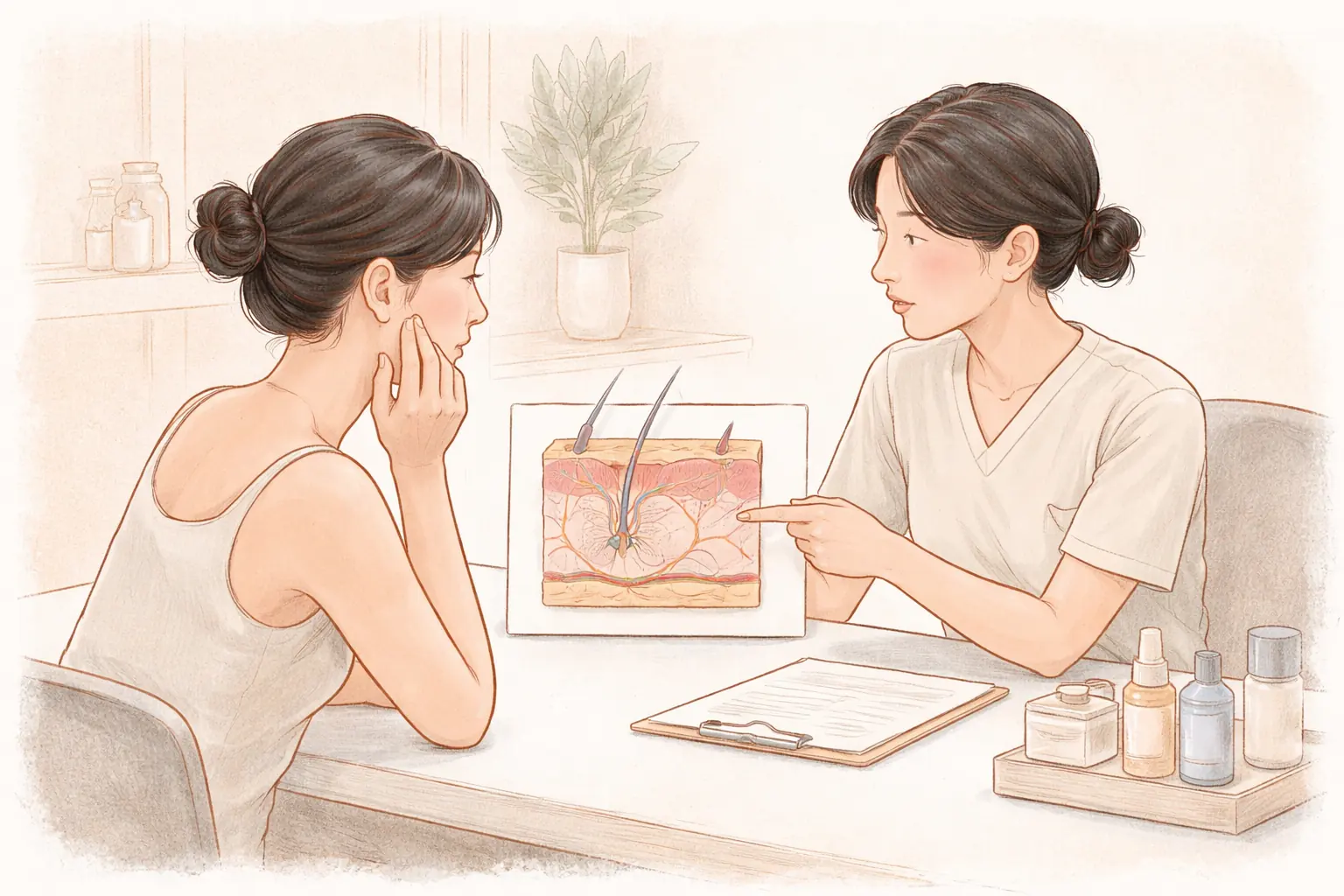
Direction set in a doctor consultation — The analysis record is combined with your schedule, pain sensitivity and skin history to decide the treatment type, intensity and timing. This is also where we decide how to place treatments with different goals, such as erbium fractional and Potenza.
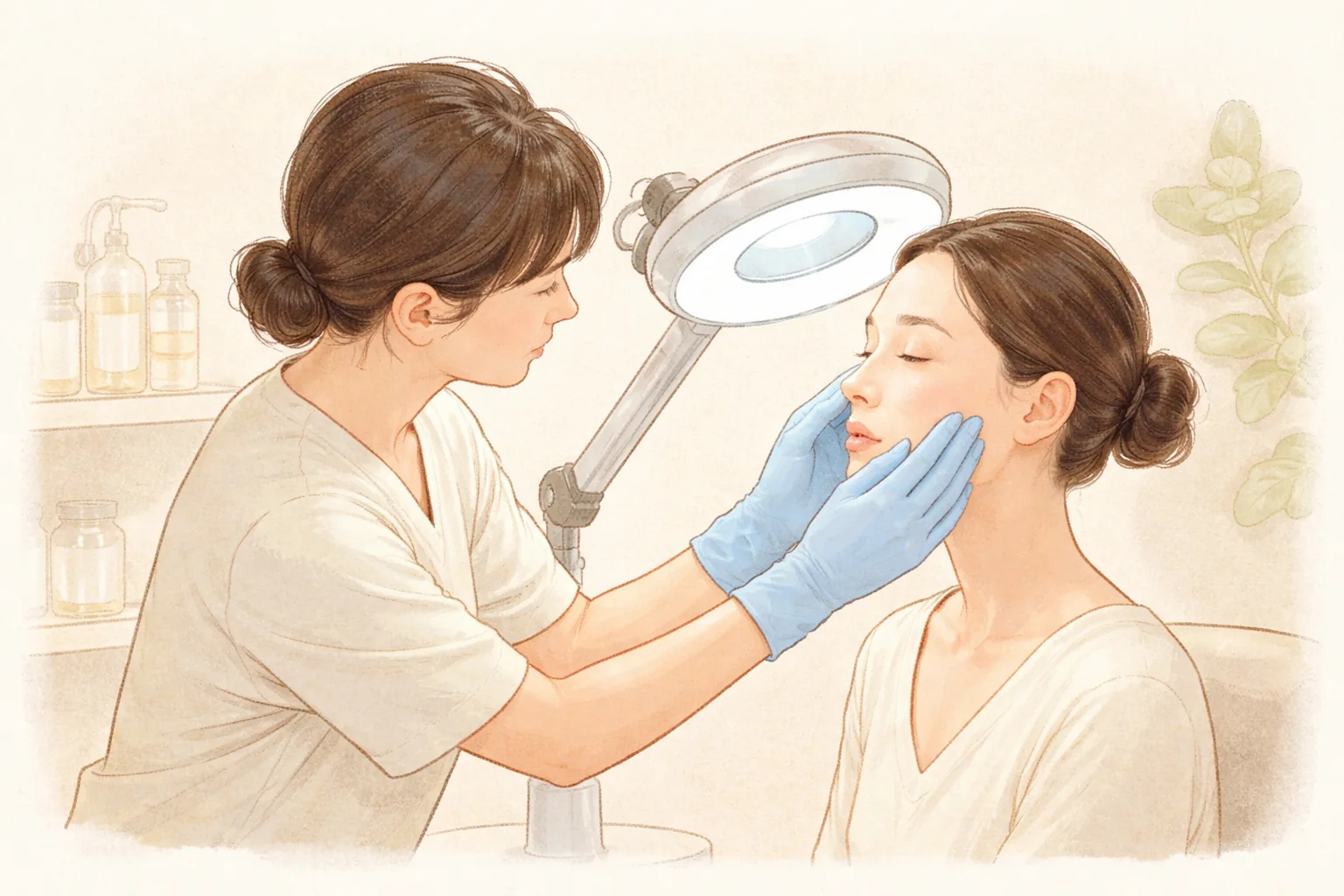
Treatment performed by the doctor — Topical anesthesia is used when needed to reduce discomfort, and the doctor performs the treatment. We follow authentic products, accurate dosing and fair pricing, treat only as much as your skin needs, and do not recommend more sessions than necessary.
Aftercare and side effects
Calming — Skin temperature is elevated right after treatment. It is best to avoid saunas, hot baths and intense exercise that add heat for the period you are advised.
Moisturizing — Newly forming skin needs hydration. Apply a gentle moisturizer often to reduce dryness and flaking.
Sun protection — During recovery, new skin is sensitive to UV. Apply sunscreen carefully and reapply every 3–4 hours outdoors.
Leave scabs and flakes alone — Scabs after ablative treatment are the skin covering its own wound. Picking or rubbing them can damage the new tissue underneath and leave pigmentation or scars.
Common reactions are redness, a warm sensation, swelling and stinging. Ablative lasers can leave thin scabs. Seoul Asan Medical Center notes that after treatment, acute complications such as redness, swelling, scabs, bruising, micro-bleeding, burns and blisters can occur, along with pigmentation, keloids or hypertrophic scars, secondary infection and scarring. Cleveland Clinic also notes that pigmentation risk is relatively higher for darker skin tones.
It helps to decide in advance when to come in rather than wait. If redness or a warm sensation lasts longer than expected, if pain gets worse, or if oozing or bleeding continues, do not rub the area and have it checked.
Frequently asked questions
Are Fraxel and erbium fractional the same?
'Fraxel' is used as a general term for fractional lasers, while erbium fractional refers to a treatment within that method that uses an erbium laser. It is a parent category and one branch within it. Even within the same fractional method, there are separate devices like CO2 that go deeper, so the name alone does not tell you which device it is. In a consultation, it is more accurate to check the actual device name, wavelength and whether it is ablative. Once the device is set, recovery time and pigment risk are explained on that basis.
Is CO2 or erbium better?
This is not a question of ranking. CO2 leaves more heat and is stronger for deep wrinkles and scars, but recovery is longer and pigmentation risk is higher. Erbium causes less damage to surrounding tissue, heals faster and has fewer side effects, but its effect is relatively milder. The decision is made by weighing skin tone, scar depth and the downtime you can accept. Even for the same wrinkle, the favorable device changes with depth.
How does erbium fractional work on pores?
It works by creating fine stimulation in the epidermis and dermis so new collagen fills in. Pores may be widened by sebum, sagged from lost elasticity, or have walls damaged by scarring, so the approach differs even for the same pores. This is why checking which type it is before treatment matters. That type judgment decides the laser type, output and whether to combine other treatments.
How many days is the downtime, and can I wear makeup the next day?
It depends on the device and output. Low-output fractional treatment leaves redness and a sandpaper-like texture for about 3–5 days, while high output brings swelling, oozing and scabs that can last up to 7–14 days. Seoul Asan Medical Center explains that with a cooled tip and even distribution of micro-holes, washing and makeup are possible on the same day. The actual call is based on the settings you received and your skin's reaction that day.
What should I look at in a consultation when choosing a clinic?
Look at the order of the consultation rather than the device names. Check whether they explain the cause of your concern first, disclose the actual device and whether it is ablative, and give specific guidance on recovery time and side effects. It also helps to see whether they can tell you what you do not need. A clinic that sets the next evaluation point and the conditions for additional treatment before deciding the number of sessions is easier to judge.
At a glance
Table 2 At a glance
Item
Key point
What Fraxel is
A general term for fractional lasers, not a specific device name
How the method works
Splits light into thousands of micro-zones, treats only part, and surrounding tissue helps healing
CO2 vs erbium
Different amounts and depth of heat, with different recovery and pigment risk
RF microneedling
Delivers electrical energy directly to the dermis via needles, a different route from lasers
Recovery burden
Low output 3–5 days, high output up to 7–14 days
What to check in consultation
Actual device and wavelength, whether ablative, recovery time, side-effect guidance
This article offers general health information. It is not a substitute for diagnosis or treatment based on your own condition, so please talk through your situation with a doctor.