Radiesse vs. Filler: the Real Difference Is Whether It Can Be Undone
Filler is a product family, not an ingredient. Here's where HA filler, Radiesse and other injectables part ways, judged by reversibility and how long results last.
Written by ATTITUDE Clinic Editorial Team
Some people get filler and then hear "Radiesse isn't filler — it's a treatment that builds collagen" and feel confused. Others push back and ask whether Radiesse isn't just filler after all. Whether two products sit in the same basket decides whether they can be reversed, how long they last, and where they may be placed — so confusion is only natural. This article starts with what the word "filler" actually points to, then works through the items to check when choosing Radiesse.
The short version first
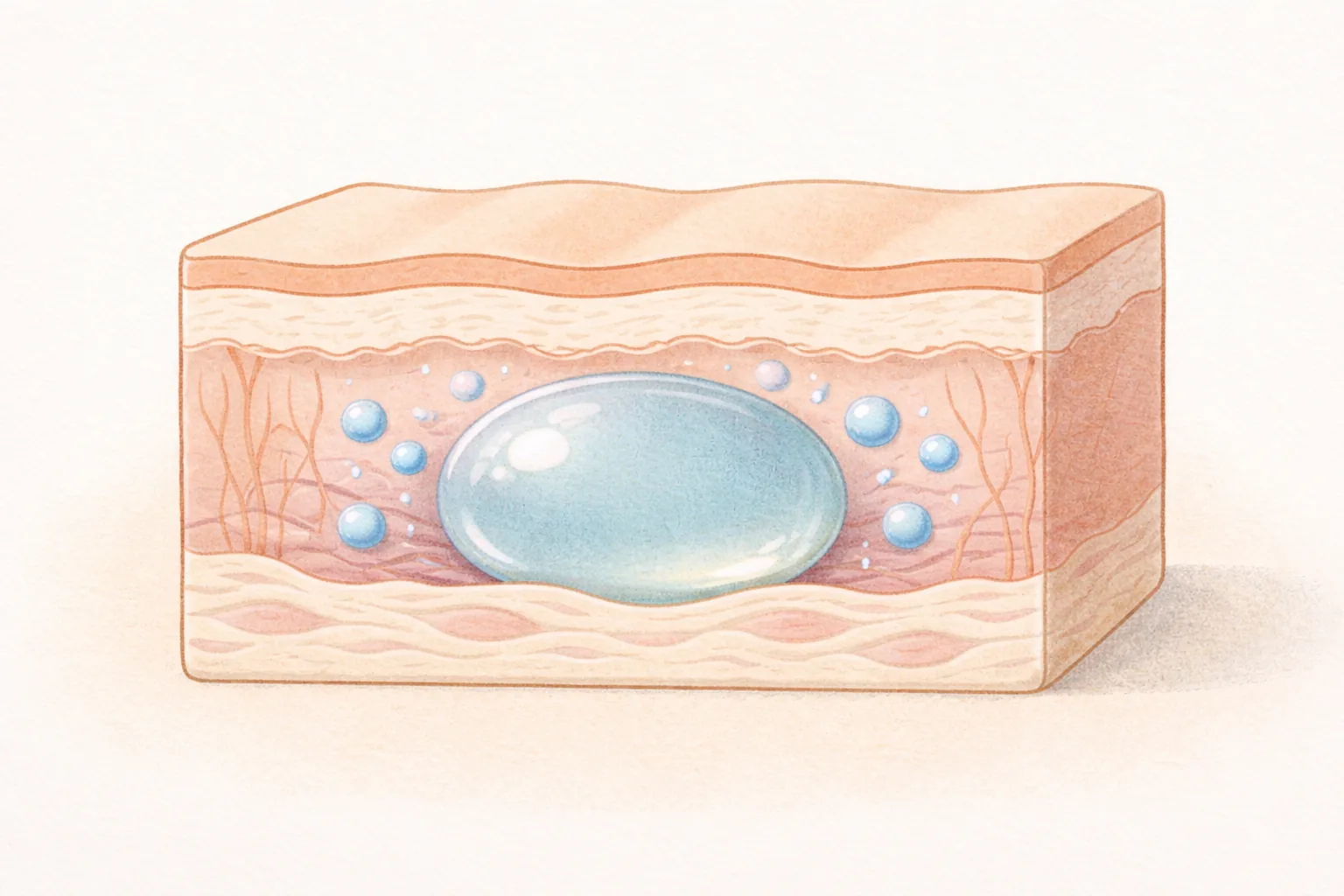
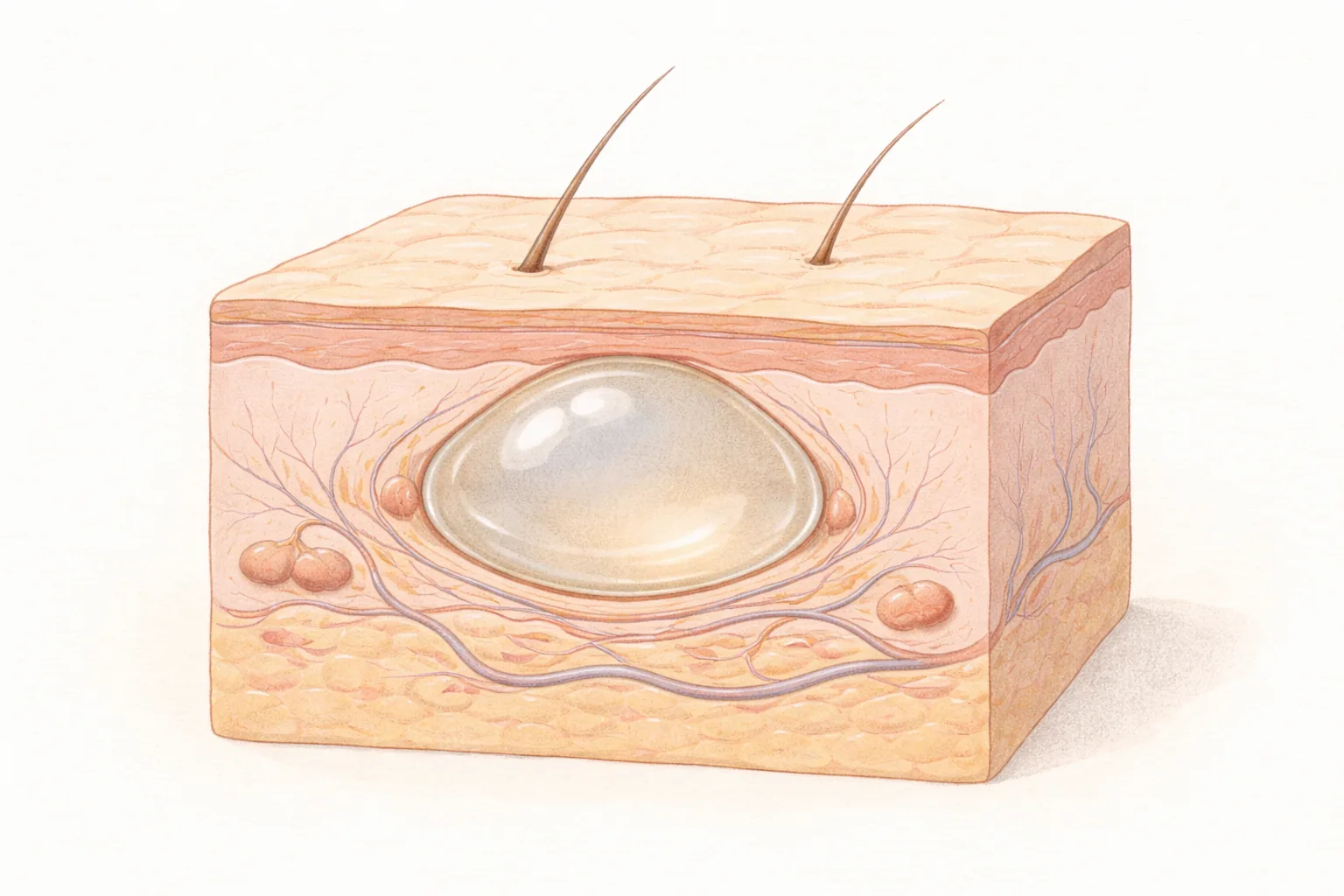
"Filler" is not an ingredient name — it is an umbrella term for products injected into the face to change volume and texture. The US FDA classifies these as injectable implants and separates them into absorbable (temporary) and non-absorbable (permanent), each with its own approved uses (FDA guidance). So it is more practical to swap "is Radiesse a filler?" for "what is Radiesse made of?" If the ingredient is hyaluronic acid (HA), it can be dissolved with hyaluronidase (ASPS guidance); if not, reversal works differently and can be harder (FDA guidance). Radiesse's composition, mechanism and duration are confirmed at consultation with the product documentation.
Is "filler" an ingredient name or a product family name?
Let's sort out the terms. Hyaluronic acid (HA) is a substance naturally present in skin that attracts water to create volume and hydration; hyaluronidase is the enzyme your body uses to break HA down, and it is also manufactured as a medicine.
The FDA approves injectable fillers for adults 22 and older by indication: absorbable fillers are approved for moderate-to-severe wrinkles such as nasolabial folds and perioral lines, and for volume increase in the lips, cheeks, chin and backs of the hands (FDA guidance). Non-absorbable (permanent) fillers are approved only for nasolabial folds and acne scars on the cheeks. Conversely, body contouring to enlarge the breasts or buttocks, and placement in the glabella, nose, around the eyes, forehead or neck, are not approved uses and the FDA advises against them. Even on the same face, approval splits by area.
On the ATTITUDE Clinic treatment guide, domestic HA fillers and imported fillers (Juvéderm, Belotero, Restylane), Radiesse, Juvelook and Sculptra each appear as separate items, with hyalase listed on its own (treatments and pricing guide). Even when they share the word "filler," clinics manage them as separate items by ingredient and purpose.
Why does "Radiesse isn't filler" circulate?
Because the word "filler" points to how something is used, not to an ingredient. Anything that fills a hollow gets grouped as filler, while products described as helping skin build its own collagen rather than filling volume tend to be named separately. The classification criterion differs from person to person, but a product does not move between the two categories.
So why does the distinction matter in practice? Because reversibility and duration split right here. If the injected ingredient is something your body already contains, the method to break it down comes with it; if not, the options narrow sharply (FDA guidance). Raising this question before treatment changes what is possible if you later change your mind.
What determines results and duration?
Injectable fillers are naturally absorbed by the body over time, so maintaining the desired effect may require another treatment after a certain period. Results are influenced by the tissue structure beneath the skin, the volume used and the product type, while how long the effect lasts depends on the filler material and the injection site (FDA guidance). Even with the same product, a thin, firm area like the forehead and a padded area like the cheek call for different plans.
Hyaluronic acid fillers are naturally broken down by your body's hyaluronidase enzyme, and the American Society of Plastic Surgeons states this usually takes 8–18 months depending on the product (ASPS guidance). The hyaluronidase used to dissolve filler is simply that enzyme made at high concentration.
Individual variation has its own drivers. The rate at which collagen is built and broken down differs from person to person, and changes tend to fade faster with older age and with skin aging advanced by UV exposure or smoking (skin booster column). That is why planning is built around a recommended interval for the next visit rather than a single session.
Why does reversibility make a practical difference?
Hyaluronic acid fillers are broken down by hyaluronidase injections. Once injected, dissolution starts almost immediately and the body absorbs it, but because the enzyme spreads into surrounding tissue, dissolving only the desired area little by little is difficult. In the ASPS material, clinicians describe this as "close to all or nothing" (ASPS guidance). Results appear quickly, but complete clearance can take days.
Dissolving carries its own burden. A needle goes in, so pain, bruising, bleeding, swelling and redness at the injection site can occur, and allergic reactions are possible. The same material advises gently massaging the injection site for about 5 days and using cold compresses during the first 1–2 days to reduce swelling.
Conversely, reducing or removing a non-HA filler may require other interventions such as injections or surgery, and permanent or non-HA fillers in particular may be difficult or impossible to remove (FDA guidance). The same guidance notes that allergy testing before treatment may be needed for sensitive skin or products containing animal-derived ingredients.
Table 1 Why does reversibility make a practical difference?
Category
What is injected
How to reverse it
What to look at when planning
Hyaluronic acid (HA) filler
A gel that attracts water
Dissolved with hyaluronidase injections
Duration differs by material and area (commonly reported at 8–18 months)
Non-HA filler
Different ingredient and mechanism
May require other interventions such as injections or surgery, and can be difficult
Ingredient, approved areas, reversibility
Skin booster
Hydration and skin texture rather than volume
Not applicable
Not immediate volume; gradual, multiple sessions 2–4 weeks apart
Swipe sideways to see the whole table.
In short filler and Radiesse are not two different worlds — they are two branches that split by ingredient within the same category of injectable treatment. The criterion for choosing is not "which is better" but "do you want volume or skin texture, and do you want to keep the option of reversal?"
If this sounds like you
A ceremony or photo shoot is 2–4 weeks away
Build the time for swelling and bruising to settle into your schedule. To reduce bruising, it is better to avoid aspirin and NSAID painkillers 5–7 days before and 24–48 hours after, and to avoid alcohol and excessive heat such as saunas for 24–48 hours (ASPS guidance). Vigorous massage can also cause filler to shift, so avoid it during the same window.
You want it to last a long time after a single session
Consider alongside this that longer-lasting ingredients can be harder to reverse. Duration is a value set by the material, the area and your individual skin metabolism together, so no single number can be promised.
You bruise easily or have sensitive skin
How much you bruise depends on blood vessel distribution and skin thickness. Telling us about all medications and supplements you take before treatment lets us plan in a way that reduces bleeding risk (skin booster column).
You are an international visitor on a short stay
If your schedule makes it hard to return for follow-up, it is safer to leave the country after being briefed in advance on the signals to watch on the day of treatment and the next day. If the skin at the injection site turns white or mottled, or your vision changes, do not wait — seek care (collagen column).
Please tell us before your consultation your recent UV exposure and outdoor schedule, medications you take (including aspirin, NSAIDs and blood-thinning drugs) and supplements, active ingredients in your skincare, whether you have had bruising, swelling or allergic reactions with previous injections, and any fixed dates such as ceremonies, photo shoots or travel.
How ATTITUDE Clinic proceeds
History and skin assessment — We first look at which areas are hollow, whether the skin has thinned, and whether elasticity has declined. We also review previous treatments, current medications and any allergic reactions.
Confirming the treatment and product — We check the ingredient, which areas the product is approved for, and whether a reversal method exists, alongside the product documentation. This is also why the clinic's treatment guide lists HA fillers, Radiesse and hyalase as separate items.
The medical team plans and performs — Individual diagnosis and treatment plans are decided directly by the medical team during consultation (treatments and pricing guide). Even for the same area, injection volume and depth differ with skin thickness and movement.
Follow-up and next visit timing — We advise on the next visit according to the recommended interval and check how swelling or bruising is progressing (skin booster column).
Aftercare and side effects
Soothing — Cold compresses during the first 24 hours after treatment help reduce swelling (ASPS guidance). Because filler attracts water, swelling can look more pronounced after salty food or a long flight.
Avoid pressure and massage — Do not press or rub the face hard for 24–48 hours. Vigorous massage can cause filler to shift. It is better to move schedules involving facial pressure, such as massages or meridian treatments, to before the procedure.
Avoid heat, alcohol and smoking — Avoid excessive heat such as saunas and alcohol for 24–48 hours, and smoking also burdens recovery. Dental visits can usually proceed normally after a few days.
Sun protection and monitoring — Apply sunscreen carefully when going out and watch how swelling and bruising subside. Most people look like themselves again by 3 days, but filler can take up to 3 weeks to fully settle (ASPS guidance).
The most common reaction is bruising, and swelling, redness and pain at the injection site are also common. These reactions usually appear right after injection and settle within days to weeks (FDA guidance). However, some side effects appear weeks, months or even years later.
Less common ones include lumps or granulomas under the skin, infection, severe allergic reaction, migration of filler beyond the injection site, and leakage or rupture at the injection site. The most concerning is filler entering a blood vessel; though unlikely, this can block the vessel and lead to tissue death, vision changes or stroke (FDA guidance).
There are signals that mean you should seek care rather than wait. These are when the skin at the injection site turns white, mottled, bluish-grey or black; when your vision changes; or when there is unusual or worsening pain (skin booster column). It is also safer to get in touch if swelling and warmth persist.
Frequently asked questions
Is Radiesse a filler or a collagen stimulator?
Because "filler" refers to use rather than an ingredient name, the two expressions overlap. Classification depends on where you draw the line, so in practice what matters more is whether the ingredient is hyaluronic acid — and therefore whether it can be reversed. On the clinic's treatment guide, Radiesse is listed separately from HA fillers, with hyalase as its own item (treatments and pricing guide). What the ingredient is and which areas the product is approved for can be confirmed at consultation with the product documentation.
For hollow cheeks, is filler or Radiesse the right choice?
The answer differs depending on what has become hollow. If the concern is that volume itself looks reduced, an injection aimed at filling volume is a candidate; if thinning skin and a collapsed texture are the bigger issue, an option targeting skin texture and elasticity is a candidate. Whether you want to keep the option of reversal and how long you want it to last also come into it. Approved uses differ by area, so for unapproved areas such as the nose or around the eyes, other approaches need to be explored at consultation (FDA guidance).
How long do results last?
The injected ingredient and the area decide together. Even with the same product, nasolabial folds and lips call for different plans, and areas with lots of expression movement are seen more often. Hyaluronic acid fillers are reported to break down naturally over usually 8–18 months depending on the product (ASPS guidance). Age, UV exposure and smoking habits also affect how quickly changes fade.
What are the side effects, and when should I go to the clinic?
The common ones are bruising, swelling, redness and tenderness, settling within days to weeks. Less commonly, lumps, granulomas or infection can occur. If the skin at the injection site turns white or bluish-grey, your vision changes, or pain progressively worsens, seek care immediately without delay (FDA guidance).
What should I check when choosing a clinic?
The FDA recommends treatment by a licensed clinician with experience in dermatology or plastic surgery (FDA guidance). At consultation, you can check the ingredient of the product to be used, its approved areas, whether a reversal method exists, and how side effects would be handled. If the ingredient is hard to reverse, whether that was explained first is another item to look at.
At a glance
Table 2 At a glance
Item
Key point
What "filler" means
Not an ingredient name but an umbrella term for injectable products
Approved areas
Nasolabial folds, perioral lines, lips, cheeks, chin, backs of hands. Nose, glabella, around the eyes, forehead and neck are not approved uses
Duration
Differs by material and area. HA reported at 8–18 months
Reversal
HA is dissolved with hyaluronidase; others may be difficult or impossible
Common reactions
Bruising, swelling, redness, pain — resolving within days to weeks
This article offers general health information. It is not a substitute for diagnosis or treatment based on your own condition, so please talk through your situation with a doctor.