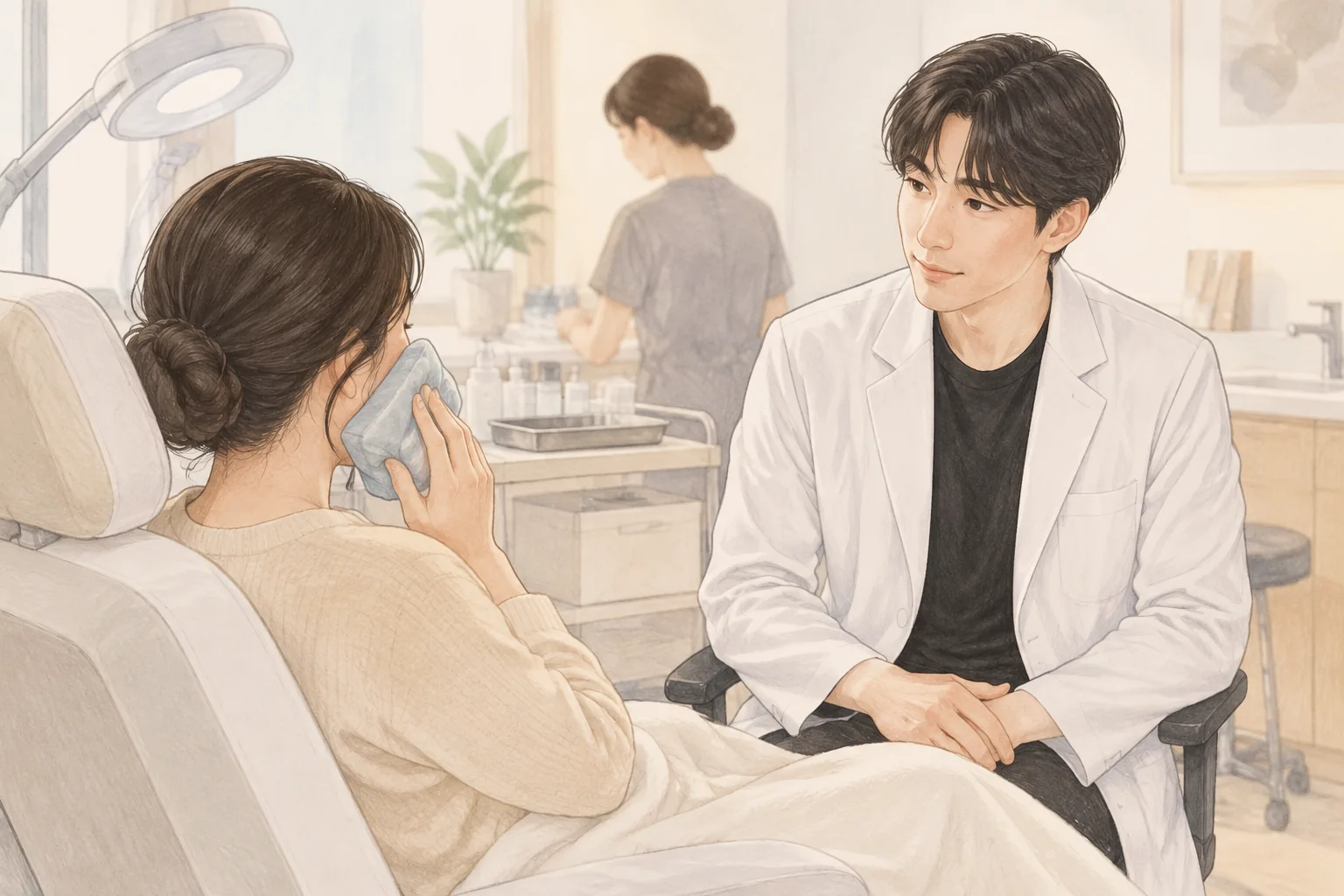
Rejuran Skin Booster Downtime: How Swelling and Bruising Fade
Rejuran Healer aftercare, explained: how swelling, bruising and bumpy injection marks settle, and when makeup, exercise and saunas fit back into your day.
Written by ATTITUDE Clinic Editorial Team
After Rejuran, the first question is usually about swelling or bruising on the face: when can you go back to your normal routine? If a wedding, a photo shoot or a work schedule is already set, it's natural to wonder whether 1 day is enough to look presentable. Rejuran is an injectable skin booster, and how recovery feels depends on how much is injected, which areas are treated and how prone you are to bruising. That's why it's more realistic to plan your return to daily life during a consultation before treatment.
The short answer first
Rejuran is a skin booster that injects PDRN derived from salmon DNA into the dermis, and swelling, small bumpy marks and redness can appear right after. With injectable skin boosters, bumps and swelling usually settle within 1 to a few days, while bruising can remain for a week or longer. Makeup is often possible from the next day once the injection marks have closed, but skip saunas, strenuous exercise and alcohol on the day of treatment. If you have an important date, allow at least a week of buffer and tell your clinician during the consultation whether you bruise easily and what medications you are taking.
What does Rejuran do inside the skin?
The key ingredient in Rejuran is PDRN (polydeoxyribonucleotide, a substance derived from salmon DNA and used to carry tissue-repair signals). Once injected into the dermis (the layer where skin collagen is produced), it is described as supporting the skin's own repair response and stimulating the cells that make collagen. Its starting point differs from an injection that directly adds moisture.
People often group Rejuran and skin booster ("water glow") injections together as the same type of skin booster. Skin booster injections aim for hydration based on hyaluronic acid (HA, an ingredient that attracts water), Rejuran is a PN (polynucleotide) product, and Rejuran is a PDRN product. The names may sound alike, but the injected ingredients and products are different, so it's worth confirming which product is being used during your consultation.
What shapes the result isn't the ingredient name alone. Injection depth and volume, how many sessions you have and at what intervals, skin thickness, sun exposure and smoking all play a part. Collagen is built and broken down at different rates in different people, so even with the same product, when changes appear and how long they last vary.
It helps to think of the Rejuran skin booster not as an injection that directly adds moisture, but as one that supports the skin's repair response.
Why does downtime differ from person to person?
Downtime refers to how much swelling and bruising you have after injection. Because the Rejuran skin booster is injected with a needle at multiple points, small bumps can form along the injection sites, and if the area is large or the volume is high, swelling tends to feel longer. Thin, sensitive areas such as the forehead, eye area and around the lips may feel more painful.
Bruising is influenced by blood vessel distribution and medications. If you take blood thinners such as aspirin or anticoagulants, bruising can be larger or last longer, so you must tell your clinician before treatment. Drinking alcohol or doing intense exercise on the same day can make swelling and bruising worse.
The American Academy of Dermatology notes that recovery time differs by procedure and advises asking your doctor when you can return to exercise, work and social activities (AAD). With the Rejuran skin booster too, it's safer to set your return timing based on the treated area and the extent of bruising.
Swelling and bumps: 1 to a few days; bruising: a week or longer.
Avoid saunas, strenuous exercise and alcohol on the day of treatment.
Returning to daily life: what can you do first?
First comes washing your face and makeup. If the injection marks have closed, light makeup is often possible from the next day. Wash with lukewarm water gently, and avoid rubbing the injection sites hard or using exfoliating care.
Exercise and saunas may take more than just 1 day of restraint. If swelling remains, strenuous exercise and hot saunas can increase it, so it's better to hold off until recovery is complete. Avoid alcohol on the day as well.
Sun protection matters throughout recovery. For 2–3 days after treatment, apply sunscreen more carefully than usual, and if you spend a lot of time outdoors, wear a hat and use a parasol. As the AAD advises, when you return to daily life depends on the type of procedure and your recovery, so coordinate work, exercise and important dates in advance during your consultation (AAD).
Table 1 Returning to daily life: what can you do first?
Category
Rejuran (PDRN)
Rejuran (PN)
Skin booster (HA)
Main ingredient
PDRN derived from salmon DNA
PN derived from salmon DNA
Hyaluronic acid
What it targets in the skin
Helps collagen production through cell-repair signals
Same family of repair-signal approach, differs by product
Attracts water to add hydration
Example plan
Several sessions at 2–4 week intervals, then maintenance
Several sessions at 2–4 week intervals, then maintenance
Several sessions at 2–4 week intervals
What to watch in recovery
Injection marks, swelling, bruising
Injection marks, swelling, bruising
Bumps, swelling, bruising
Swipe sideways to see the whole table.
In short Rejuran and Rejuran are often discussed as part of the same salmon DNA–derived family, but they are different ingredients and products, while skin booster injections target hydration with hyaluronic acid. Recovery depends on injection volume, area and bruising tendency with any product, so allow plenty of time when scheduling before treatment.
Swelling and bruising: how much is normal?
The most common reactions after injection are swelling, redness, small bumpy papules, tenderness when pressed and bruising. Bumps are a natural reaction as the ingredient is absorbed and usually settle within 1 to a few days, while bruising can last a week or longer.
Less commonly, infection, an allergic reaction or a small lump can occur, and very rarely the injected ingredient can block or damage a blood vessel. If swelling or pain gets worse, or the injection site turns white, mottled, bluish or black, don't wait — seek medical care right away. The same applies if your vision changes.
According to AAD guidance, redness, swelling and bruising after filler injection usually settle within 7–14 days (AAD). The Rejuran skin booster contains different ingredients, so this timeframe can't be applied as-is, but it can serve as a reference for when to check if swelling lasts long after injection.
If the skin turns white or bluish, seek medical care right away.
If this sounds like you
When a wedding or shoot is a week away
Bruising can last a week or longer, so if your schedule is tight, it's better to avoid areas that are hard to cover with makeup. Makeup is often possible from the next day once the injection marks have closed, but lingering swelling can change how your facial contours look. Tell your clinician the date first during the consultation and adjust the treated area and intensity.
When you want ongoing maintenance
PDRN and PN skin boosters usually involve several sessions at 2–4 week intervals, followed by maintenance treatments. Rather than stopping after 1 session, set the next interval based on your skin's response, and habits such as sun protection and not smoking also affect how long results last.
If your skin is sensitive or easily flushed
Injection volume, anesthesia method and how much redness remains afterward are decided during the consultation. If you've recently used exfoliants or retinoids, the schedule may need adjusting, so mention it in advance. If redness lasts longer than usual, your skin is reassessed before the next session.
If you're an overseas visitor on a short stay
Rather than cramming treatment in right before your flight, also book a day to check your progress. It helps to have a way to get in touch if swelling or bruising lasts longer after you return home, along with aftercare guidance. Recording the product name, treatment date and treated areas helps if you see another clinic later.
Tell us before your consultation Please let us know about recent sun exposure, use of exfoliants or retinoids, medications you take (including blood thinners), reactions after past injections, fillers or lasers, any reaction to salmon DNA–derived ingredients, and important dates such as weddings or photo shoots.
How ATTITUDE Clinic handles it
Consultation and skin check We review your skin condition and concerns, reactions after past treatments, medications and any history of allergies. We organize records during this process, but the records themselves do not replace a diagnosis.
Deciding the product and plan The doctor examines your skin and sets the areas, injection volume, number of sessions and intervals, and anesthesia method. The Rejuran skin booster (PDRN) and Rejuran (PN) are different products, so we explain which ingredient is used during the consultation.
Treatment and same-day care We advise against rubbing or massaging the injection sites hard, and tell you when to use cold compresses and when to wash and apply makeup. We ask you to avoid saunas, strenuous exercise and alcohol on the day.
Progress check and next visit We check how swelling, bruising and bumps are settling and advise when to come back according to the recommended schedule. If pain worsens or skin color changes, we see you sooner than planned.
Four steps your doctor sees to in person
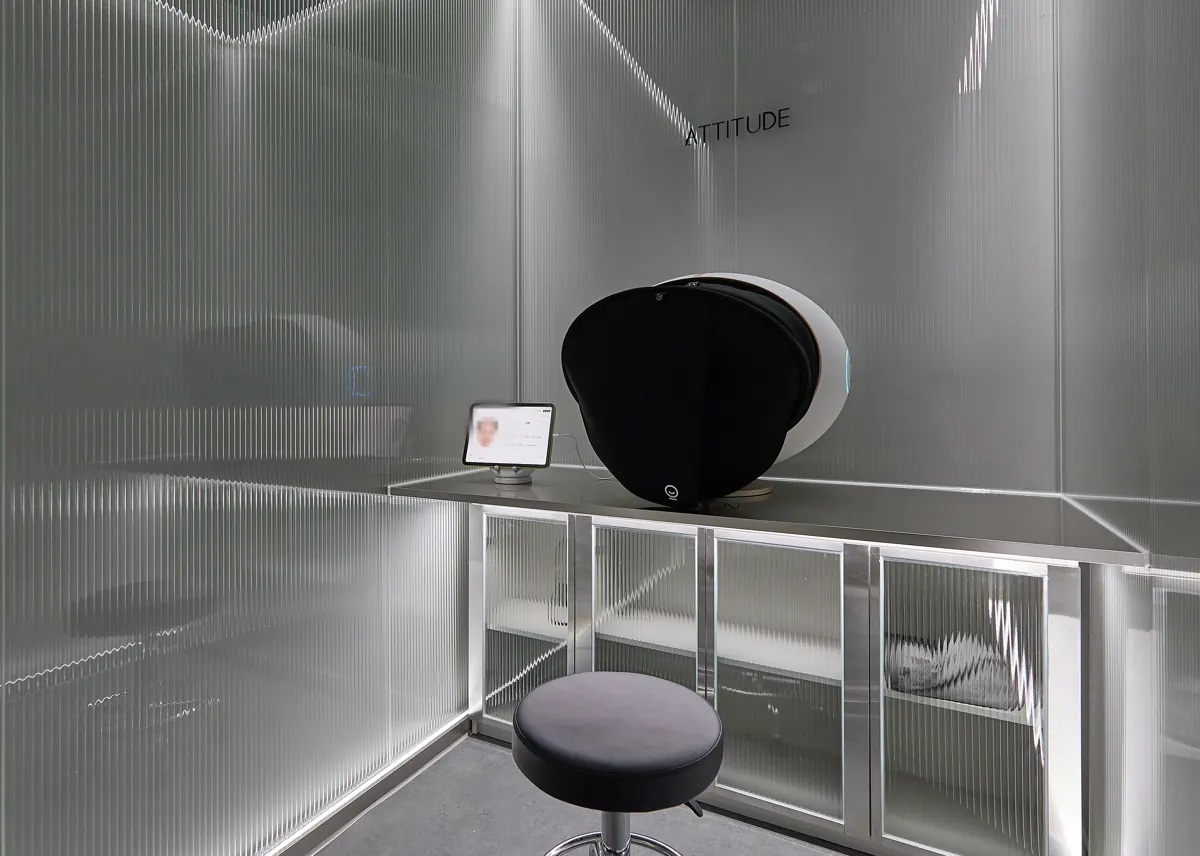
From the diagnostic device to the treatment bed, the doctor you first consult takes care of everything.
01
Precision diagnosis
In a private diagnosis room the whole face is photographed, recording even skin conditions that are hard to see with the eye.
02
Skin analysis
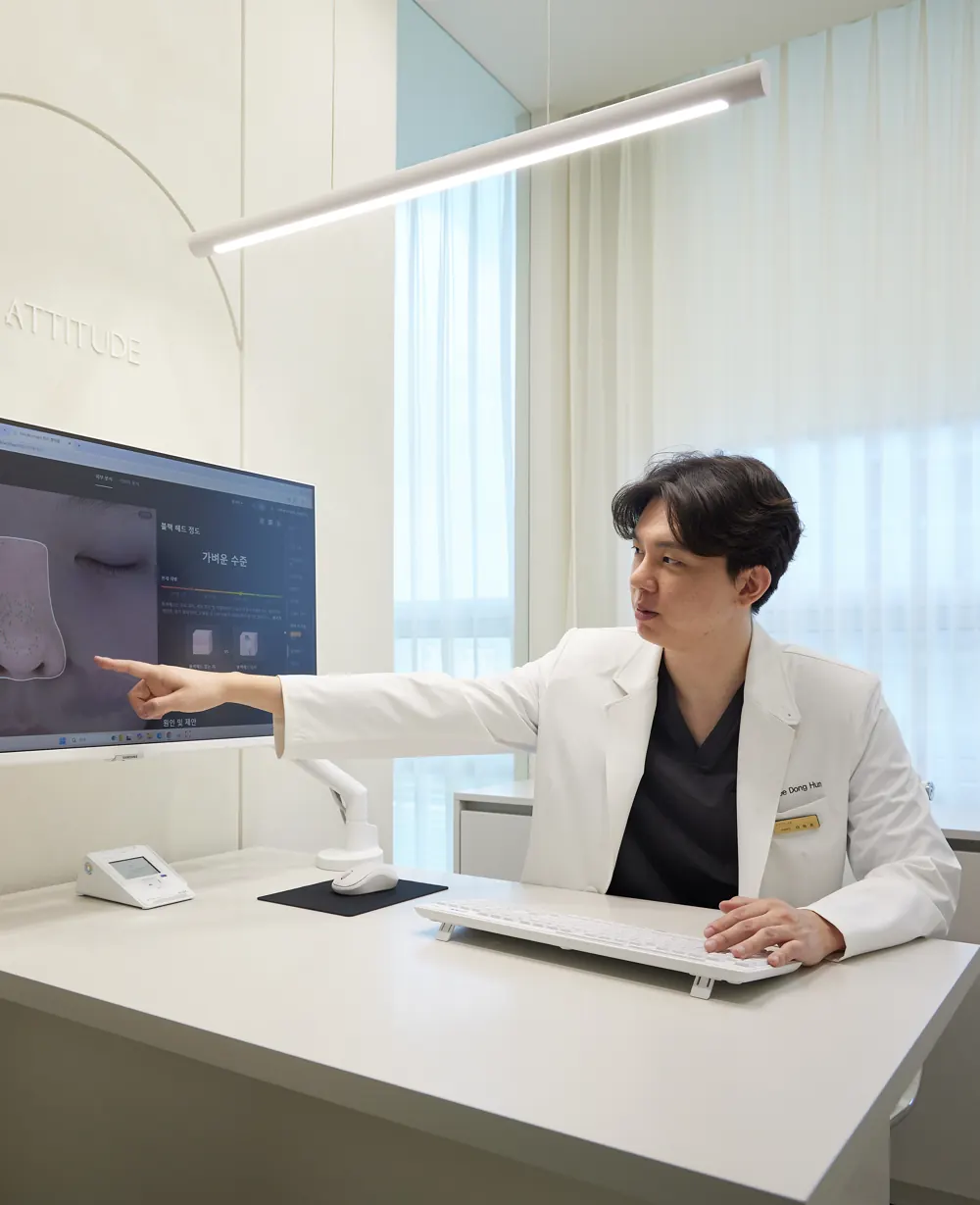
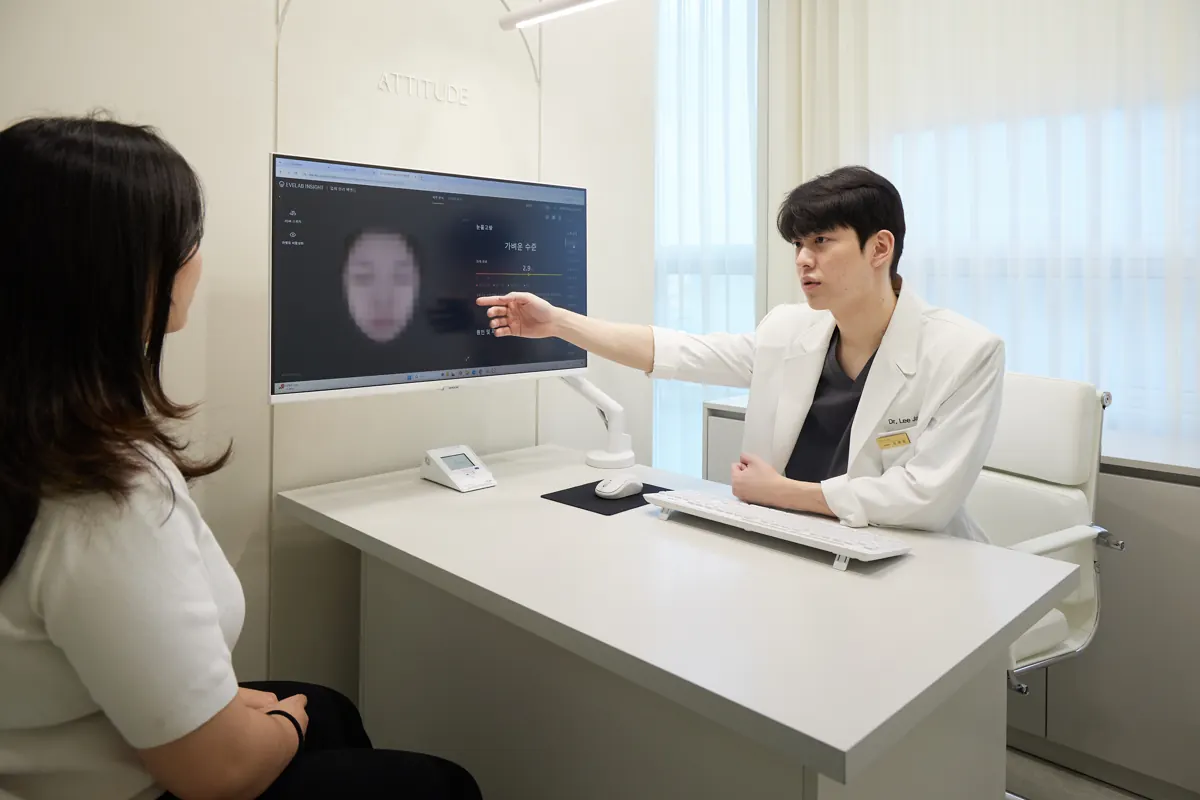
The doctor goes through your pore, pigmentation, wrinkle and firmness results with you on screen and explains what comes first.
03
One-to-one design
With your skin, the balance of your face, the change you want and your schedule in view, you decide the treatment and its extent together.
04
Treatment by your doctor
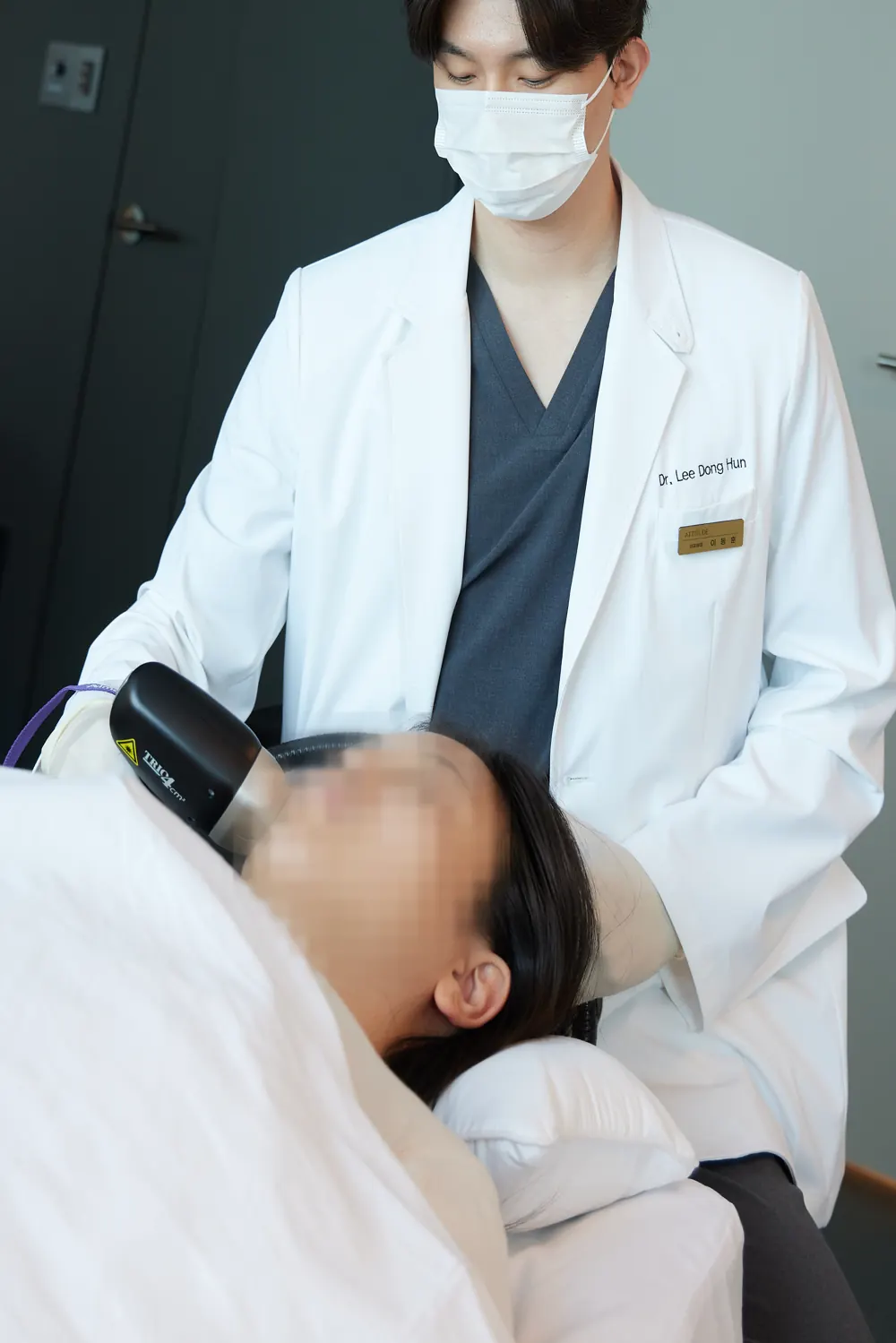
The doctor who consulted you performs the treatment from start to finish in a private treatment room. No one takes over halfway.
“I take injection pain seriously.”
Co-Director Dr. Lee Dong Hun
Many people hesitate over injection treatments because they hurt. So we went back over everything, from the anesthetic to the products used.
Careful numbing, unhurried timingWe allow plenty of time for a special numbing cream to take full effect, and add anesthetic injections for the treatments and areas that need them.
Fine needles, finished quicklyInjection treatments use fine needles, and the doctor finishes them personally in a short time, adjusting along the way by watching how you are doing.
Even the product formulation countsThe same treatment can feel more or less demanding depending on the product, so we take that into account too.
The anesthetic method and whether it is used are decided after an examination, according to the treatment, the area and your condition. How much it hurts varies from person to person.
Aftercare and side effects
Soothing On the day of treatment, don't press or rub the injection sites, and if there is swelling, use cold compresses as directed by the medical team.
Moisturizing Once the injection marks have closed, wash gently with lukewarm water, and if skin feels dry, apply a mild moisturizer thinly. Postpone exfoliation and retinoids until recovery is complete.
Sun protection For 2–3 days after treatment, apply sunscreen more carefully than usual and limit outings at midday.
Progress check Watch for changes in swelling, bruising and bumps, and book your next visit according to the recommended schedule. If you have unusual pain or a change in skin color, contact us without waiting.
Common reactions are swelling, redness, bumps, tenderness when pressed and bruising. Less commonly, infection, an allergic reaction or a small lump can occur, and very rarely the injected ingredient can block or damage a blood vessel. If swelling, pain or fever continues, or the skin turns white, mottled, bluish or black, seek medical care right away.
If you are pregnant or breastfeeding or taking blood thinners, please tell us before treatment.
Frequently asked questions
How long does Rejuran last, and how much downtime should I expect?
With injectable skin boosters, swelling and bumps usually settle within 1 to a few days, and bruising can last a week or longer. Makeup is often possible from the next day once the injection marks have closed, and skip saunas, strenuous exercise and alcohol on the day. How it feels varies with injection volume, area and bruising tendency, so if you have an important date, allow at least a week of buffer and mention the date during your consultation. The AAD also advises asking your doctor when to return to daily life, since recovery time differs by procedure (AAD).
Can 1 session be enough? What is the re-treatment interval?
PDRN and PN skin boosters usually involve several sessions at 2–4 week intervals, followed by maintenance treatments. With 1 session, changes may be limited and temporary, so the number of sessions and intervals are set based on your skin condition and response. Decisions to shorten or lengthen intervals are made by the doctor after reviewing recovery from swelling and bruising and your skin's response. Plans vary with the product and injection volume, so confirm a schedule that fits your own timeline during the consultation.
How is the Rejuran skin booster different from Rejuran?
The Rejuran skin booster is a PDRN product and Rejuran is a PN product, so the ingredients and products differ. Both are described as injecting salmon DNA–derived ingredients into the dermis to support cell-repair signals, but they are not the same product. Which product is used and how injection volume and intervals are set shape the results and how recovery feels. Other skin boosters have different ingredients and purposes, so whether they can be combined and in what order is decided during the consultation after reviewing your skin.
What are the side effects of the Rejuran skin booster, and when should I see a doctor?
Common reactions are swelling, redness, small bumpy papules, tenderness when pressed and bruising. Bumps usually settle within 1 to a few days and bruising can last a week or longer. Less commonly, infection, an allergic reaction or a small lump can occur, and very rarely a blood vessel can become blocked. If pain worsens, or the skin turns white, mottled, bluish or black, don't wait — seek medical care. Contact the clinic if swelling or fever continues.
How should I choose a clinic for the Rejuran skin booster?
Look at whether injections are performed in a medical setting, which product is used, and how thoroughly your skin condition and medical history are checked before treatment. According to AAD guidance, it helps to ask the doctor about their experience with the procedure and with patients of your skin tone and age group, the recovery period, and preparation and aftercare (AAD). The AAD also advises against getting injectable treatments in non-medical settings (AAD). Rather than comparing price alone, confirm the product, the regular price and how to reach the clinic afterward during your consultation.
At a glance
Table 2 At a glance
Item
Key point
Rejuran skin booster ingredient
A skin booster that injects PDRN derived from salmon DNA into the dermis
Common reactions
Swelling, redness, small bumpy papules, bruising
Recovery timeline
Bumps and swelling within 1 to a few days; bruising can last a week or longer
Returning to daily life
Makeup often possible from the next day once injection marks have closed; skip saunas, exercise and alcohol on the day
Plan
Several sessions at 2–4 week intervals, then maintenance
Choosing a clinic
Check the product, the medical setting, and medical history, experience and aftercare during consultation
This article offers general health information. It is not a substitute for diagnosis or treatment based on your own condition, so please talk through your situation with a doctor.