Rosacea Laser Side Effects: When Redness and Bruising Fade, and When to Call the Clinic
What to expect after Vbeam (pulsed dye laser) for rosacea and dark spots: how long redness, bruising and stinging last, what sets the strength of the reaction, and when to seek care if redness lasts beyond 3 days or blisters and oozing appear.
Written by ATTITUDE Clinic Editorial Team
The day after a laser session, seeing your face redder than yesterday usually comes as a shock. The same goes for a bruise mark, or a stinging sensation that is still there on the third day: it's hard to tell whether this is an expected reaction or a signal to call the clinic. Sorting common reactions from uncommon ones after a vessel-targeting laser like Vbeam makes that judgment faster.
The short answer first
Redness, warmth, swelling and stinging after Vbeam are common reactions, and settings target a level that settles within a few days. Vascular lasers can cause bruising, and bruising takes 1–2 weeks to clear. If redness or stinging lasts beyond 3 days or suddenly worsens, don't tough it out — come in to have it checked. Rare signals such as blisters, oozing or severe pain are reasons to get in touch right away.
What does Vbeam do in the skin?
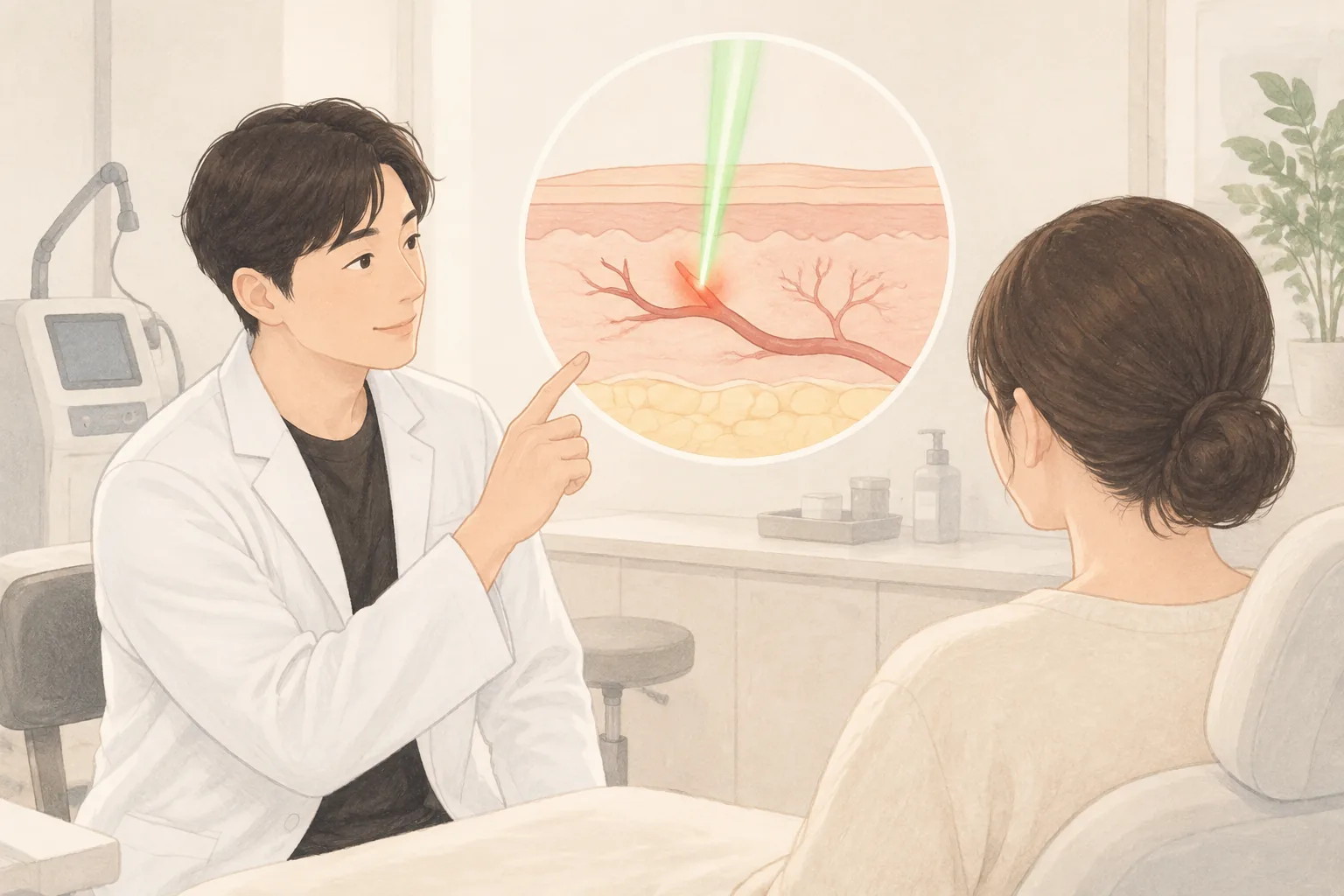
Vascular lasers rest on the principle of selective photothermolysis (concentrating energy on the target while sparing the surrounding normal skin). The ATTITUDE Clinic column also describes lasers as light concentrated at a single wavelength. That light is absorbed only by substances that respond to that wavelength and is converted into heat or impact; change the wavelength and the target changes too.
Vbeam uses a 532nm wavelength to target facial redness and superficial vascular lesions (treatment guide). Oxygen-carrying hemoglobin absorbs this wavelength well, so energy concentrates relatively on the tiny vessels that show through as red.
So why does the face often look redder right after treatment? When a targeted vessel takes up heat, the area around it reacts briefly too. Redness, warmth, swelling and stinging fall into this category, and settings are chosen so this reaction settles within a few days.
Bruising arises by a slightly different route. As energy gathers on the target vessel, the vessel wall reacts, and the mark can show through the skin as a purplish tint. More power is not better — the energy is set to match the thickness and depth of your vessels.
Why do some days leave bruising and others only redness?
Even with the same Vbeam, several values decide the outcome. Wavelength and energy, how long the light stays on (pulse duration), and the area covered in one pass all play a part. The ATTITUDE Clinic column also notes that with the same laser, results differ by wavelength, energy and interval.
Skin conditions matter just as much. The strength of the reaction depends on how thick and deep the vessels to be targeted are, how thin the skin is, and whether the area is one with dense vessels such as the cheeks or around the nose. Whether the skin was already sensitive before treatment is another variable. If your skin stings with cosmetics or has become unusually sensitive, say so in advance — the settings will differ.
Skin tone can't be ignored either. If your skin is darker or tanned, temporary pigmentation can occur. For this reason, consultations also check recent sun exposure, medications you take and skincare products you use.
The saying that "bruising means it worked better" circulates, but bruising is one of the reactions that appears when strength is increased. Bruising alone is a poor predictor of results; which setting is right is decided by looking at the vessel condition and skin thickness.
Redness and bruising: how far is expected?
Table 1 Redness and bruising: how far is expected?
Treatment
Common reactions
Recovery course
Vascular laser (Vbeam)
Redness, swelling, possible bruising
Redness and swelling for a few days, bruising clears over 1–2 weeks
Picosecond low-power toning
Temporary redness, stinging
From a few hours to the same day
Picosecond high-power (spot removal)
Crusting and shedding
About 7–10 days
Fractional high-power
Swelling, exudation, crusting
7–14 days
Swipe sideways to see the whole table.
The numbers in the table are common examples, and actual recovery varies with intensity, area and skin condition. With treatments that leave crusts, picking them off by hand slows recovery and makes pigment marks more likely.
In short With Vbeam, reactions within the expected range change direction within a few days — redness eases or bruising fades. If redness deepens and pain grows instead, treat it as a signal that needs checking regardless of the settings.
What to tell the clinic beforehand
The American Academy of Dermatology advises checking indications, risks, benefits and alternatives during a cosmetic consultation, and asking about recovery time (AAD consultation guide). Starting with the risks in mind makes it much easier to gauge which way your own reaction is going afterward.
It's better to mention your schedule in advance too. If you share a wedding, a shoot, a business trip or your return date, we work backward from that date to adjust intensity and timing. When redness and bruising could collide with an important date, there is less room to maneuver.
If you've had an experience where your skin became unusually sensitive after a previous laser session, that's valuable information as well. Even with the same device and wavelength, that one piece of history changes the plan.
If this sounds like you
A wedding or shoot is a few weeks away
Booking a first-time treatment right before a wedding raises the risk that redness and bruising overlap with your schedule. It's safer to give the date first and work backward to the right intensity and timing. If time is short, lowering the settings is an option rather than adding sessions.
You're on a short trip or business stay
With a fixed length of stay, redness or dryness right after treatment can affect your plans. Tell us your return date and next commitments, and we'll choose the type and intensity so recovery finishes within that window. If you'll be in dry environments such as on a plane, apply moisturizer more often.
You want steady, ongoing care
Rather than pushing hard in one session, continuing at intervals that let the skin recover is less burdensome. For redness and vascular treatment, 3–5 sessions at 4–6 week intervals are commonly given as an example. The number of sessions is adjusted after setting a goal and reviewing progress.
Your skin is sensitive or flushes easily
Since this is a heat-based treatment, on days when your skin is highly reactive we lower the settings or postpone. Taking a few days off exfoliation and scrubs before treatment and avoiding hot saunas and alcohol shifts your starting point a little.
Tell us before your consultation Sharing how much sun you've had recently, which medications and skincare products you use, whether your skin was sensitive after previous treatments, and any fixed dates such as a wedding, business trip or return flight helps us set the intensity and timing.
How ATTITUDE Clinic proceeds
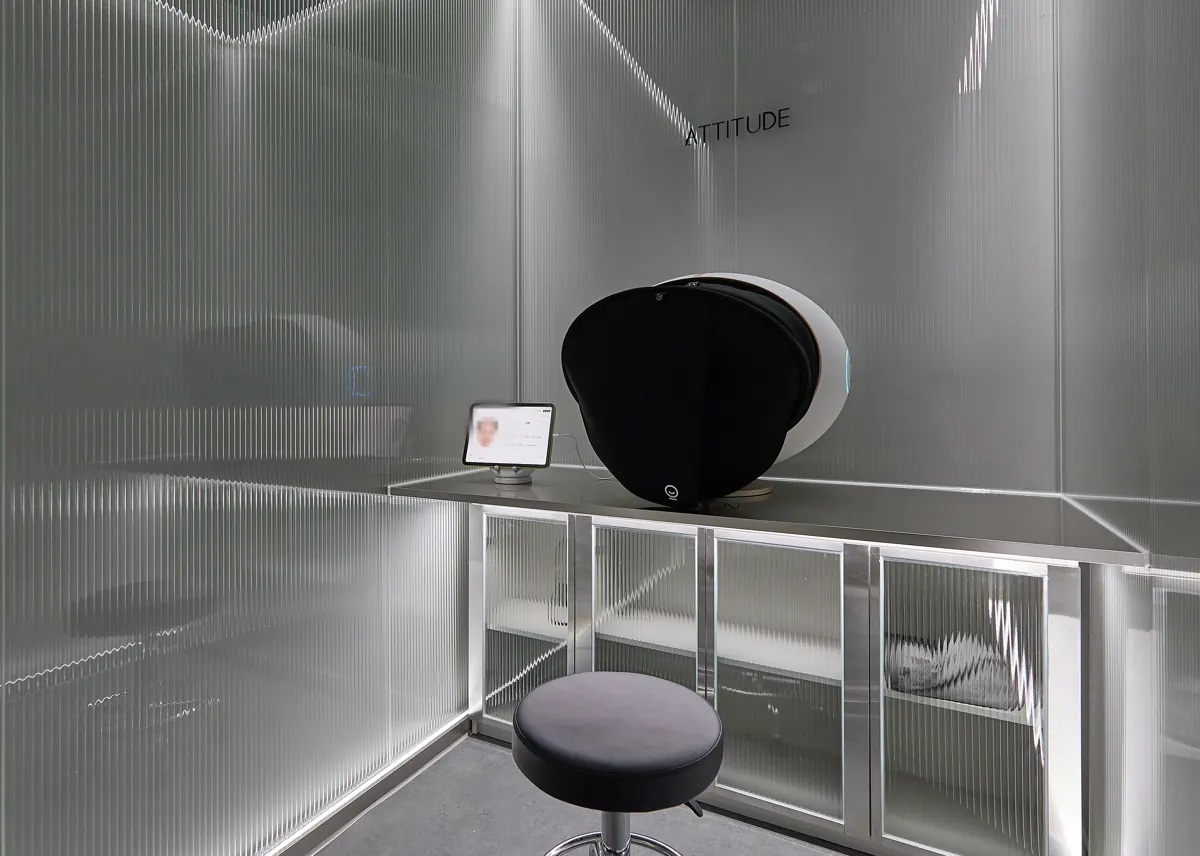
AI skin analysis record Current skin conditions such as pigment, redness, texture and pores are recorded with a device. This record organizes information to support the consultation and is not a medical diagnosis.
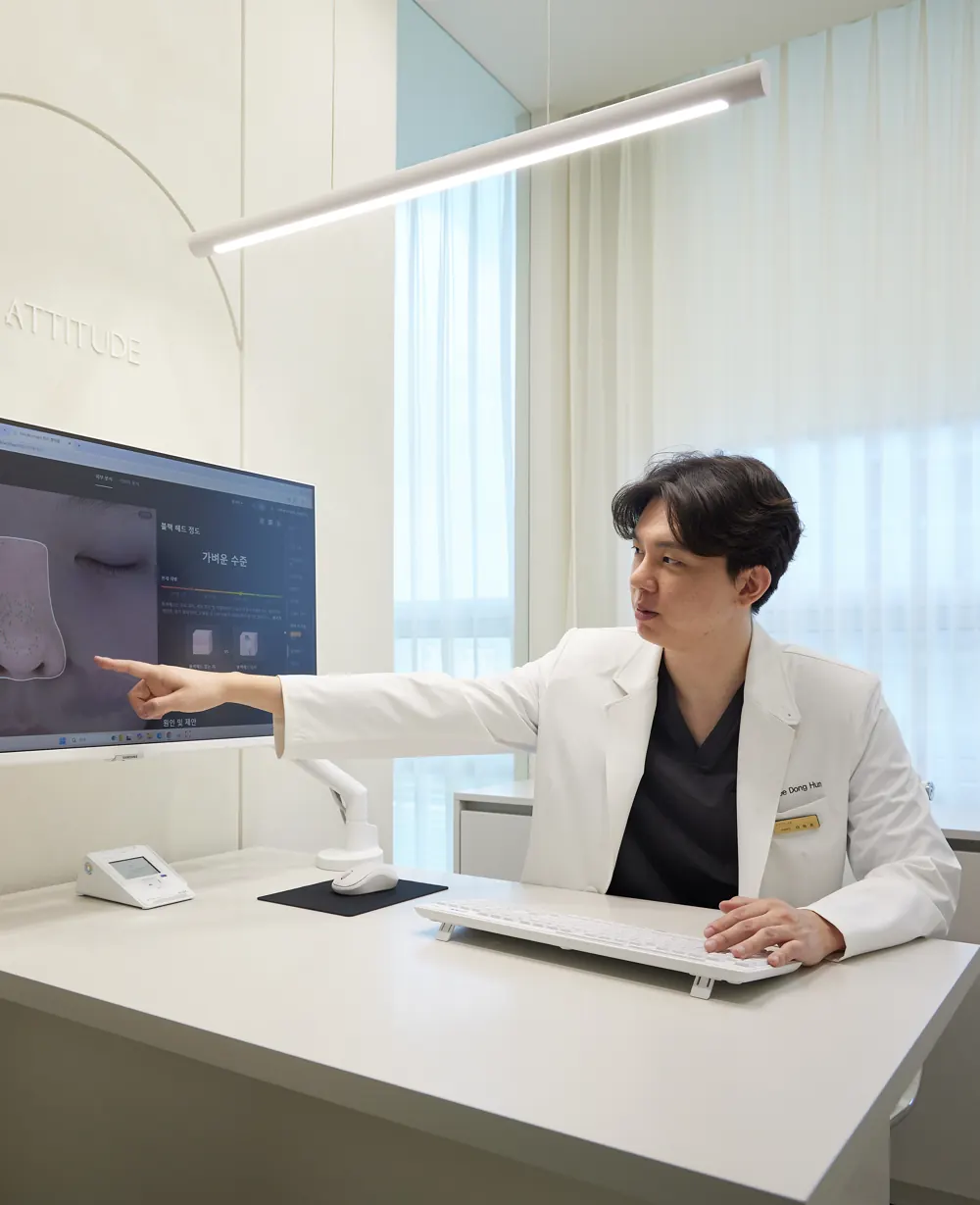
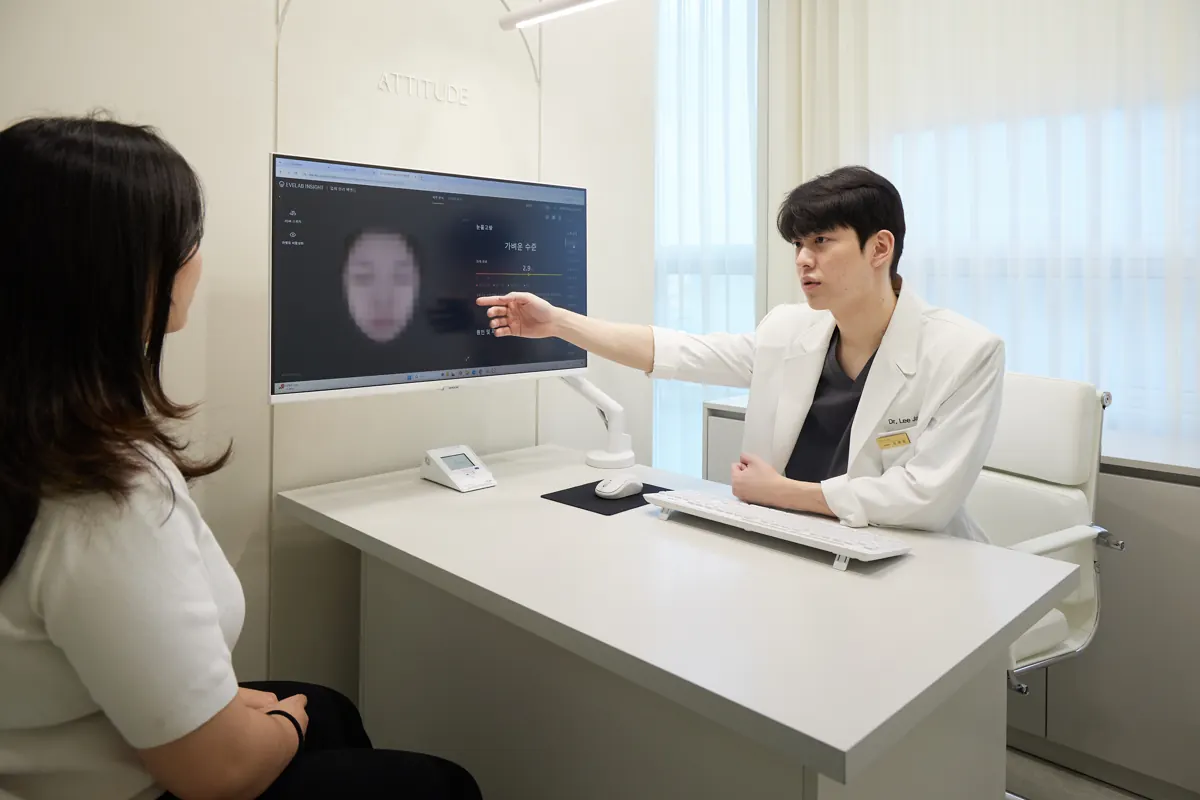
Direction set in a doctor consultation The analysis record is combined with your schedule, pain sensitivity and skin history to decide the treatment type, intensity and timing together.
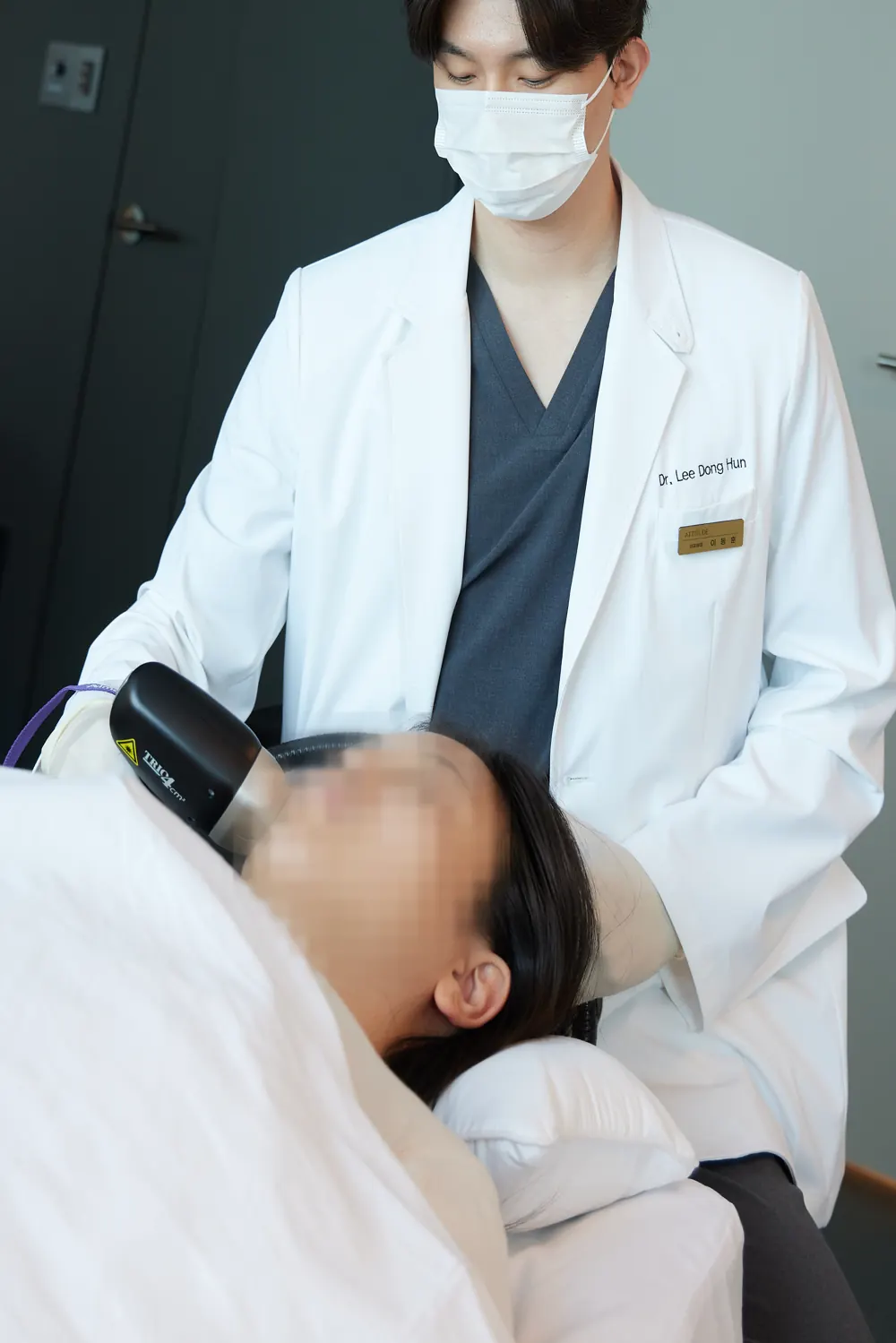
Treatment performed by the doctor Topical anesthesia is used where needed to reduce discomfort, and the doctor performs the treatment directly. We do not recommend more sessions than necessary.
Four steps your doctor sees to in person
From the diagnostic device to the treatment bed, the doctor you first consult takes care of everything.
01
Precision diagnosis
In a private diagnosis room the whole face is photographed, recording even skin conditions that are hard to see with the eye.
02
Skin analysis
The doctor goes through your pore, pigmentation, wrinkle and firmness results with you on screen and explains what comes first.
03
One-to-one design
With your skin, the balance of your face, the change you want and your schedule in view, you decide the treatment and its extent together.
04
Treatment by your doctor
The doctor who consulted you performs the treatment from start to finish in a private treatment room. No one takes over halfway.
“I take injection pain seriously.”
Co-Director Dr. Lee Dong Hun
Many people hesitate over injection treatments because they hurt. So we went back over everything, from the anesthetic to the products used.
Careful numbing, unhurried timingWe allow plenty of time for a special numbing cream to take full effect, and add anesthetic injections for the treatments and areas that need them.
Fine needles, finished quicklyInjection treatments use fine needles, and the doctor finishes them personally in a short time, adjusting along the way by watching how you are doing.
Even the product formulation countsThe same treatment can feel more or less demanding depending on the product, so we take that into account too.
The anesthetic method and whether it is used are decided after an examination, according to the treatment, the area and your condition. How much it hurts varies from person to person.
The devices used for this topic are Vbeam, which targets vessels, and Genesis toning; when pigment and surface concerns overlap, PicoPlus or an erbium:YAG laser is combined (treatment guide). We don't decide in advance that several devices must be stacked in one session.
Aftercare and side effects
Soothing Skin temperature is elevated right after treatment. Wash with lukewarm water, pressing gently rather than rubbing, and avoid saunas, jjimjilbangs and intense exercise for 1–2 weeks.
Moisturizing Heated areas tend to dry out. Apply a gentle moisturizer in several thin layers.
Sun protection For at least 2 weeks after treatment, apply SPF 50+ sunscreen and reapply about every 2 hours outdoors.
Checking progress Check day by day whether redness is easing and bruising is fading. If things move the other way, contact the clinic the next day.
Common reactions are redness, warmth, swelling and stinging. Vascular lasers can leave bruising, and lasers combined with resurfacing leave thin crusts. If your skin is darker or tanned, temporary pigmentation may appear. Rarely, blisters, hypopigmented patches, infection or scarring can occur, or pigment can return later.
The American Academy of Dermatology advises that following aftercare instructions helps reduce the risk of side effects (AAD). The signals that shouldn't wait are clear: redness or stinging lasting beyond 3 days or suddenly worsening, blisters or oozing, or pain that doesn't ease even with pain relief — don't wait for your next appointment, come in to have it checked.
Frequently asked questions
Can I get an anti-inflammatory injection or other injections after Vbeam?
This depends on the substance, the injection site and how your skin is progressing after treatment, so it's something to confirm in consultation. Adding needle trauma to an area targeted for vessels can overlap redness and bruising and blur the recovery picture. If warmth or swelling is still present, checking your progress comes before any injection. If you have an injection scheduled, mention it beforehand so the order can be adjusted.
The redness looks worse than before — is that normal?
Redness often looks deeper right after treatment and into the next day. It's the result of targeted vessels and surrounding tissue reacting to heat. If it is still only deepening on the third day and pain or warmth is increasing along with it, treat that as a signal outside the expected range. Taking one photo a day under the same lighting makes it easier to judge the direction of change.
I have a bruise — when will it fade?
Bruising is a possible reaction with vascular lasers and takes 1–2 weeks to clear. When the color shifts from purple toward yellow, that's the fading process. If you have an important date, you can ask in consultation for settings that avoid bruising. If a bruise spreads or deepens in color, that's the opposite of fading — in that case, don't wait for your next appointment and contact the clinic.
How is Vbeam different from Vbeam?
Even vascular lasers with similar names differ in wavelength and pulse duration, and that difference determines which depth of vessel is targeted and how much bruising or redness occurs. More than the device name, what matters for your actual reaction is whether that wavelength matches the cause of your redness and which settings are used. Checking the wavelength and settings along with the device name during consultation gives you a basis for comparison.
How should I choose a clinic?
Start with whether they first confirm whether your concern is pigment, vessels or surface. Then look at whether they explain risks, recovery time and alternatives, whether they recommend only what's needed, and whether there is a channel to get things checked if you're uncomfortable after treatment (AAD consultation guide). The list price for 1 session of Vbeam is KRW 250,000, VAT separate; detailed pricing is available in the treatments and pricing guide (treatment guide).
At a glance
Table 2 At a glance
Item
Key points
Common reactions
Redness, warmth, swelling, stinging; the goal is settling within a few days
Bruising
Possible with vascular lasers; takes 1–2 weeks to clear
When to contact
Redness or stinging for 3 days or more or suddenly worsening, blisters, oozing, severe pain
Recovery care
SPF 50+ for 2 weeks, reapplied every 2 hours outdoors; avoid saunas and intense exercise for 1–2 weeks
What shapes the reaction
Wavelength, energy, pulse duration, vessel thickness and depth, skin tone
Decided in consultation
Intensity and timing, spacing from your schedule, reflecting previous treatment history
This article offers general health information. It is not a substitute for diagnosis or treatment based on your own condition, so please talk through your situation with a doctor.