Rosacea Laser Treatment: When Results Show and What Maintains Them
Learn when rosacea laser treatment starts working, how long results last, and the key factors—vascular response, session spacing, lifestyle triggers, and sun protection—that influence your outcome.
Written by ATTITUDE Clinic Editorial Team
After a Vbeam treatment, you may wonder when the redness will fade, how many sessions you'll need, and how long the improvement will last. Seeing a flushed face on treatment day can make you question if it worked, and if it improves after a few days only to flare again, you might worry about needing more. With rosacea laser therapy, the timeline for results varies with how quickly vessels respond and how fast your skin recovers, and maintenance duration isn't determined by the number of sessions alone.
The Bottom Line First
Immediately after Vbeam, redness and swelling are most noticeable, and the first change appears within days as these reactions settle. Improvement in the vessels themselves isn't complete after one session but emerges as sessions accumulate. ATTITUDE Clinic's materials also cite 3–5 sessions of vascular laser for redness and vessel concerns, spaced 4–6 weeks apart. How long improvement lasts depends on how quickly vessels re-dilate and how much exposure to lifestyle triggers you have. That's why the next session is timed based on progress rather than a preset date.
Why Redness Doesn't Disappear at Once
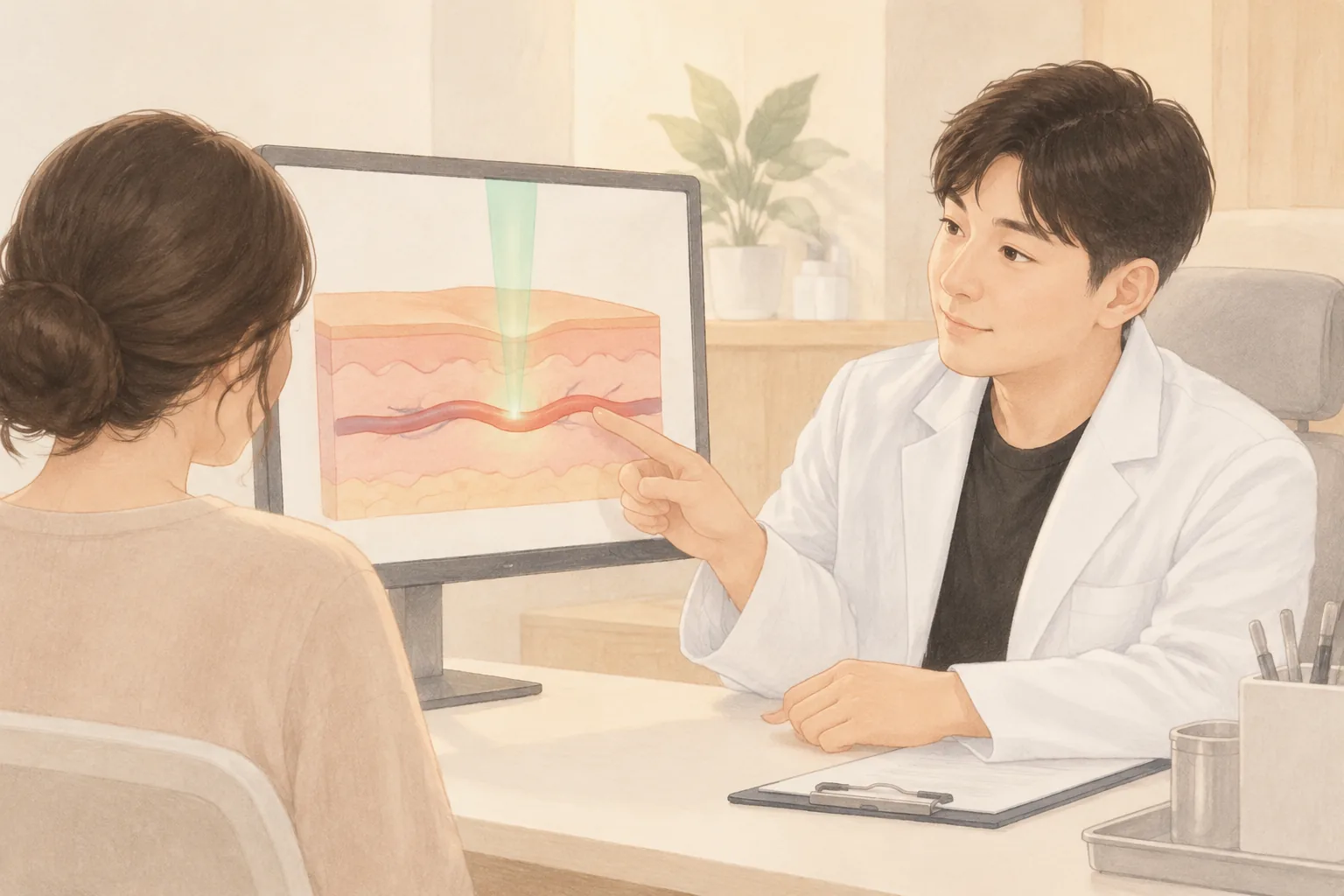
Vbeam targets blood vessels in the superficial layers, not the skin surface. A laser is light concentrated at a single wavelength, and that light is absorbed only by specific substances that respond to that wavelength. In red vessels, oxygen-carrying hemoglobin (the pigment in red blood cells that transports oxygen) absorbs this light well. Vbeam, which uses a 532nm wavelength, focuses energy on this hemoglobin to heat the vessel walls, and the body then clears the heated vessels.
This principle is called selective photothermolysis (focusing energy on the target while sparing surrounding tissue). ATTITUDE Clinic's column also explains that wavelength, pulse duration, energy, and treatment intervals influence results. One point follows: blood vessels aren't structures that disappear immediately; after heating, they are gradually cleared over days to weeks.
So the redness right after treatment is usually part of the healing process. Vbeam can cause bruising, which is also a sign that vessels have responded. While you can't conclude that more bruising means greater effect, it's clear that the time for bruising to fade is part of recovery. While bruising remains, avoid saunas and intense exercise.
When Will You See Results?
Breaking down the timeline makes it easier to judge. From treatment day to two days, redness, swelling, and stinging are expected. During this time, focus on soothing rather than measuring improvement. If bruising occurs, it takes 1–2 weeks to fade, and changes in redness itself become gradually visible after this reaction subsides.
Skin tissue takes time to remodel and recover, as with other treatments. The American Academy of Dermatology notes that when microneedling is used for scars, 3–5 sessions are done 2–4 weeks apart, and results appear gradually as collagen is produced—improvement begins within a few weeks, with full results taking months (AAD guide). Vbeam targets vessels rather than collagen, but the principle that heated tissue needs time to clear overlaps.
So rather than judging from the mirror right after the first session, use your face between sessions as the benchmark. Vessels need time for the body to clear them after heating.
What Determines Maintenance Duration
First is the cause of your redness. If it's superficial vessel dilation with visible capillaries near the skin surface, vascular laser can reduce it, but redness from sensitive skin or high reactivity (like after injections) may have limited laser response. Even with the same redness, different causes mean different maintenance patterns.
Trigger exposure also plays a big role. Alcohol, spicy food, hot drinks, saunas, and rapid temperature changes can re-dilate vessels. If vessels that were reduced by treatment respond again to the same triggers, redness returns sooner. Maintenance duration is determined more by lifestyle conditions afterward than by the number of sessions.
UV exposure and skin barrier also matter. Right after treatment, the skin's barrier is temporarily weakened; if sun protection is neglected during this time, pigmentation can occur and undo the changes you worked for. The same column recommends applying SPF 50+ sunscreen for at least 2 weeks after treatment and reapplying about every 2 hours outdoors. If skin remains dry and sensitive, redness also persists longer.
Finally, spacing and settings. Even with the same device, energy, range, and frequency influence results. Repeating before recovery is complete can burden the skin barrier, leading to sensitivity or prolonged redness.
How Many Sessions and What Spacing?
Table 1 How Many Sessions and What Spacing?
Category
Typical Example
What Determines It
What to Confirm in Consultation
Immediate reaction
Redness/swelling; bruising takes 1–2 weeks
Energy level, skin thickness at site
Next day and subsequent schedule
Sessions
3–5
Vessel depth and extent, cause of redness
Desired change
Interval
4–6 weeks
Recovery speed, lifestyle triggers
Work patterns and outdoor activities
Maintenance
Adjusted based on progress
Rate of vessel re-dilation
Timing for readjustment
Swipe sideways to see the whole table.
The numbers in the table are typical examples. The number of sessions and intervals vary with vessel depth and extent, cause of redness, and recovery speed, and are determined after evaluating your skin in the first consultation.
In Summary The first change from Vbeam starts within days as redness and swelling subside, and vessel improvement emerges as sessions accumulate at 4–6 week intervals. How long improvement lasts is determined by the cause of redness, lifestyle triggers, and sun protection, so the next session is adjusted based on progress.
If This Applies to You
If you have a ceremony or photo shoot coming up
If you have a fixed date, work backward from it to plan your start. Starting treatment right before an event can overlap redness or bruising with your schedule, which is stressful. Starting with more lead time gives you more room to adjust intensity and intervals, so tell us your dates during consultation.
If you want consistent maintenance
Rather than going strong all at once, spacing sessions to respect skin recovery is less burdensome. Setting a goal and scheduling only necessary treatments at the right times also helps maintenance. Observing when redness flares up on your own can help determine the next interval.
If your skin is sensitive or flushes easily
Even with the same redness, if skin reactivity is high, the extent of laser reduction may be limited. If cosmetics stung or your skin was unusually sensitive before treatment, be sure to tell us. This is where decisions are made to start with lower intensity or delay treatment.
If you're a short-term visitor
If you have a return date, schedule treatments so redness and bruising don't overlap with your plans. Bruising takes 1–2 weeks to fade, so tell us your departure date and any important commitments. We plan by reducing sessions and adjusting intensity to fit your stay.
Tell us before your consultation Please inform us in advance about recent periods of high UV exposure, medications you're taking, cosmetics you're using (including exfoliants and retinoids), any experiences of skin sensitivity from previous treatments, and important dates like ceremonies, photo shoots, or business trips, so we can adjust settings and timing.
How ATTITUDE Clinic Proceeds
AI skin analysis record We record your current skin condition—redness, pigmentation, texture, pores—with a device. The analysis tool only records and organizes information to assist consultation; it is not a medical diagnosis. Based on the record, the doctor determines the cause of your concern.
Consultation with the doctor to design the approach Adding your schedule, pain sensitivity, and skin history to the analysis record, we decide on treatment type, intensity, and timing together. The choice of device depends on whether redness comes from vessels or includes pigment or surface issues.
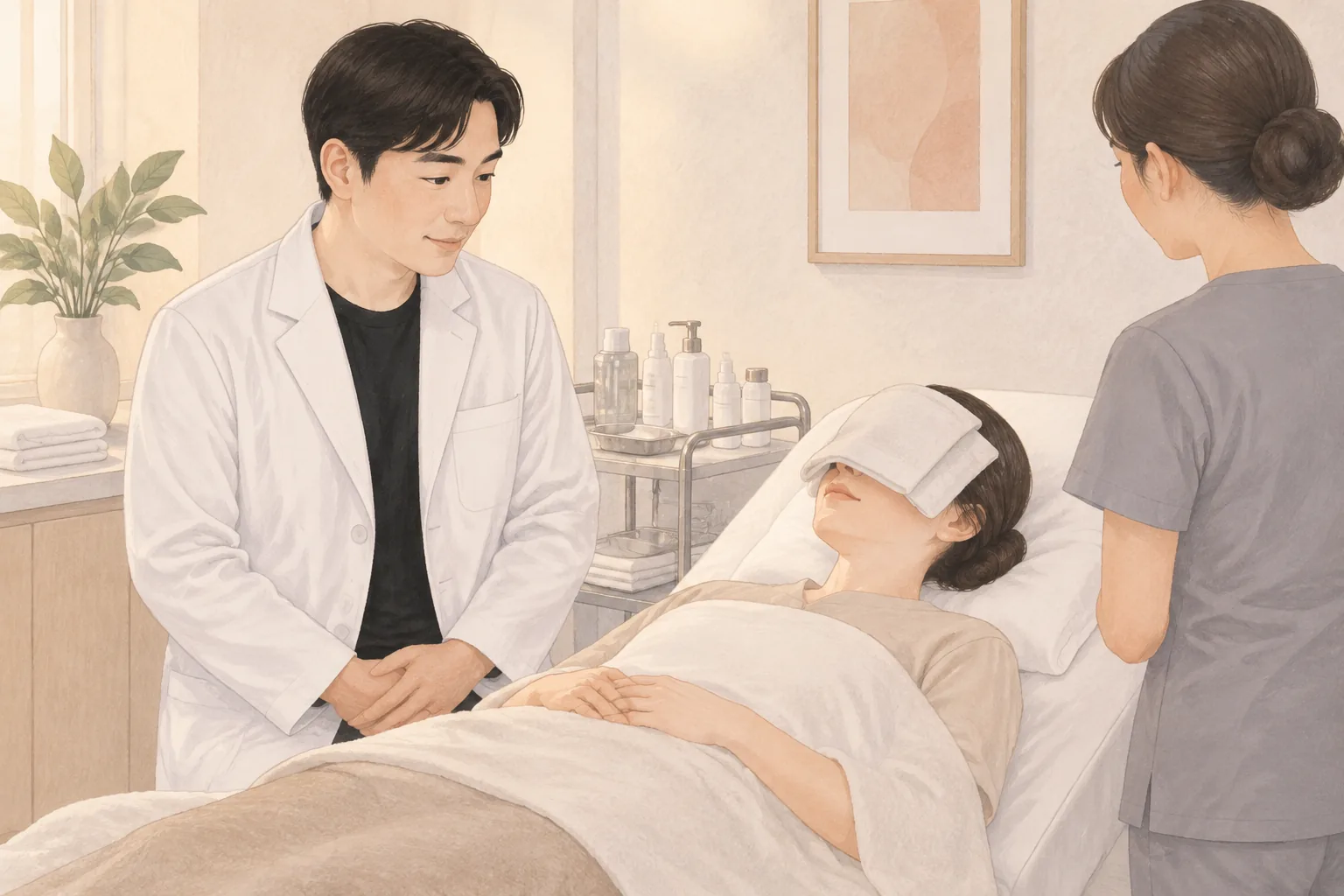
Treatment performed by the doctor Topical anesthesia may be used to reduce discomfort, and the doctor performs the treatment. If you feel discomfort, tell us during the procedure so we can adjust intensity.
Progress check and interval adjustment After recovery, we check how quickly redness and bruising fade and how much redness remains to set the next interval. Our principle is not to recommend more sessions than necessary.
Four steps your doctor sees to in person
From the diagnostic device to the treatment bed, the doctor you first consult takes care of everything.
01
Precision diagnosis
In a private diagnosis room the whole face is photographed, recording even skin conditions that are hard to see with the eye.
02
Skin analysis
The doctor goes through your pore, pigmentation, wrinkle and firmness results with you on screen and explains what comes first.
03
One-to-one design
With your skin, the balance of your face, the change you want and your schedule in view, you decide the treatment and its extent together.
04
Treatment by your doctor
The doctor who consulted you performs the treatment from start to finish in a private treatment room. No one takes over halfway.
“I take injection pain seriously.”
Co-Director Dr. Lee Dong Hun
Many people hesitate over injection treatments because they hurt. So we went back over everything, from the anesthetic to the products used.
Careful numbing, unhurried timingWe allow plenty of time for a special numbing cream to take full effect, and add anesthetic injections for the treatments and areas that need them.
Fine needles, finished quicklyInjection treatments use fine needles, and the doctor finishes them personally in a short time, adjusting along the way by watching how you are doing.
Even the product formulation countsThe same treatment can feel more or less demanding depending on the product, so we take that into account too.
The anesthetic method and whether it is used are decided after an examination, according to the treatment, the area and your condition. How much it hurts varies from person to person.
The device used for this topic is Vbeam (532nm vascular laser), and if pigmentation is also a concern, PicoPlus may be considered; if skin texture and surface are concerns, erbium YAG laser may be reviewed in consultation. Prices follow a policy of authentic products, exact quantities, and fixed prices; the standard price for one Vbeam session is KRW 250,000, with VAT separate (Treatment and Price Information).
Aftercare and Side Effects
Soothing On treatment day, skin temperature is elevated, so wash gently with lukewarm water and avoid heat stimulation. Avoid saunas, jjimjilbangs, and intense exercise for the advised period.
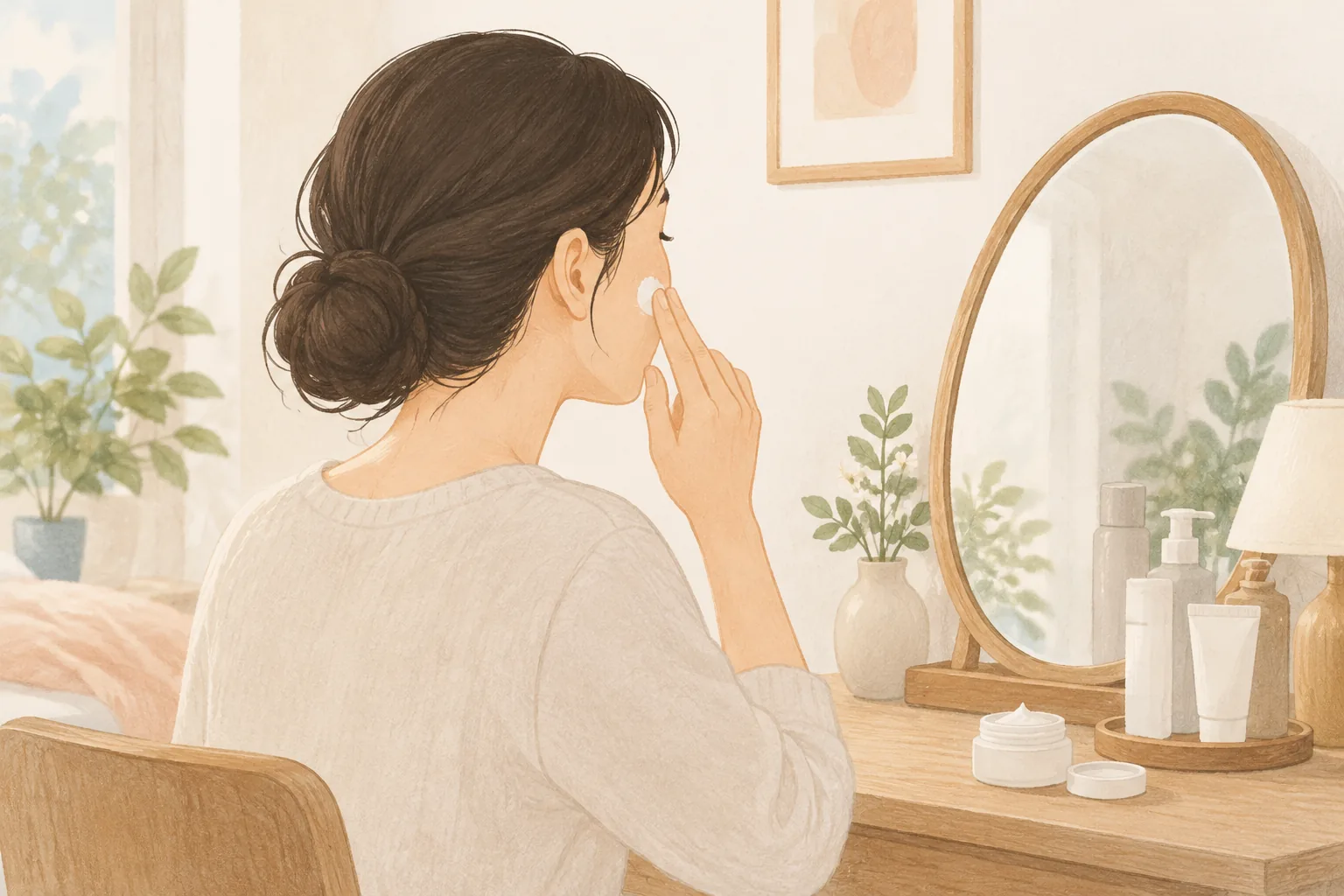
Moisturizing Recovering skin tends to dry out, so apply a gentle moisturizer thinly and often. Avoid exfoliation or scrubs for the advised period.
Sun protection Apply SPF 50+ sunscreen for at least 2 weeks after treatment and reapply about every 2 hours outdoors. Pigmentation on newly emerging skin can undo the changes you worked for.
Progress check Observe how quickly bruising and redness fade to set the next interval. If redness or heat lasts longer than expected or pain worsens, don't endure it—visit the clinic for a check.
Common reactions include redness, heat, swelling, and stinging; Vbeam can cause bruising. Rarely, blisters, hypopigmentation, infection, or scarring may occur, or pigmentation may return over time. Side effects can occur even with appropriate settings, so before treatment the doctor explains the side effects of the planned laser and settings.
Frequently Asked Questions
When do rosacea laser treatment results usually start to show?
Right after treatment, redness, swelling, and stinging come first. Within two days to a few days as these reactions settle, skin becomes more comfortable, and if bruising occurs, it fades over 1–2 weeks. Changes in redness emerge gradually as sessions accumulate after that, so it's too early to judge after one session. This is also why vascular laser for redness and vessel concerns is exemplified as 3–5 sessions at 4–6 week intervals. After the first session, it's better to check whether recovery is progressing normally rather than the degree of improvement.
Vbeam and V-Beam are different names—what's the difference?
Different names may mean slightly different wavelengths, cooling methods, or output ranges. However, it's hard to say which is better based on name alone; even with the same device, how energy and range are set determines results. In consultation, we check which vessel depth your redness comes from, your skin thickness and sensitivity, and which settings are appropriate. It's more practical to see whether that verification process exists rather than focusing on device names.
How many weeks apart and how many sessions?
ATTITUDE Clinic's materials cite 3–5 sessions of vascular laser for redness and vessel concerns, spaced 4–6 weeks apart. These numbers are typical examples and vary with vessel depth and extent, cause of redness, and recovery speed. Shortening intervals may seem faster, but repeating before recovery is complete burdens the skin barrier. The next session is adjusted based on how quickly redness and bruising fade.
How much does Vbeam cost?
ATTITUDE Clinic's price list shows the standard price for one Vbeam session is KRW 250,000, with VAT separate (Price Information). Actual cost varies with treatment area and number of sessions, so confirm with your plan during consultation. When considering cost, look not just at the per-session price but also at how many sessions at what intervals and how aftercare fits in.
How should I choose a clinic for rosacea laser treatment?
The American Academy of Dermatology advises asking about the number of sessions needed, recovery time, risks, preparation, and aftercare during a cosmetic consultation (AAD guide). Also check whether the clinic first confirms whether your concern comes from vessels and whether you can return for a check if you're uncomfortable after treatment. Since settings and intervals determine results even with the same device, whether the clinic explains these points in consultation is a key criterion.
At a Glance
Table 2 At a Glance
Item
Key Point
Onset of effect
Starts within days as redness/swelling subside; vessel changes accumulate with sessions
Typical sessions and intervals
3–5 sessions, 4–6 weeks (typical examples)
Downtime
Redness/swelling for a few days; bruising takes 1–2 weeks
Factors affecting maintenance
Cause of redness, triggers like alcohol and saunas, sun protection
Aftercare
Soothing, moisturizing, sun protection, progress check
Cost
Standard price per session KRW 250,000, VAT separate
This article offers general health information. It is not a substitute for diagnosis or treatment based on your own condition, so please talk through your situation with a doctor.