Sculptra Pain and Anesthesia: What Changes Your Experience
Why Sculptra injections can hurt, how lidocaine mixing, numbing cream, and nerve blocks reduce discomfort, what to expect from swelling and bruising, and what to tell your clinic before treatment.
Written by ATTITUDE Clinic Editorial Team
Search for Sculptra and you may notice pain stories appear before the effect explanations. Questions like "Does it hurt a lot?", "How do they numb it?", and "I heard there is a version with lidocaine — what is the difference?" come up often in consultations too. This article explains, in order, where the pain in Sculptra injections comes from, how far anesthesia can reduce it, what you should tell the clinic before treatment, and what the first few days afterward are usually like.
The short answer first
Sculptra is injected with a needle under the skin, so it is not a completely painless treatment. However, lidocaine solution can be mixed into the product immediately before use to reduce injection pain (FDA Sculptra approval information), and ice, numbing cream, or in some areas a nerve block injection may also be used (AAD filler FAQ). The degree of discomfort is not decided by the anesthesia method alone; the injection area and depth, the volume injected at once, and your individual pain sensitivity all play a part. Redness, swelling, tenderness, and bruising right after treatment are common and usually settle within 7–14 days.
Why does Sculptra hurt, and where is it uncomfortable?
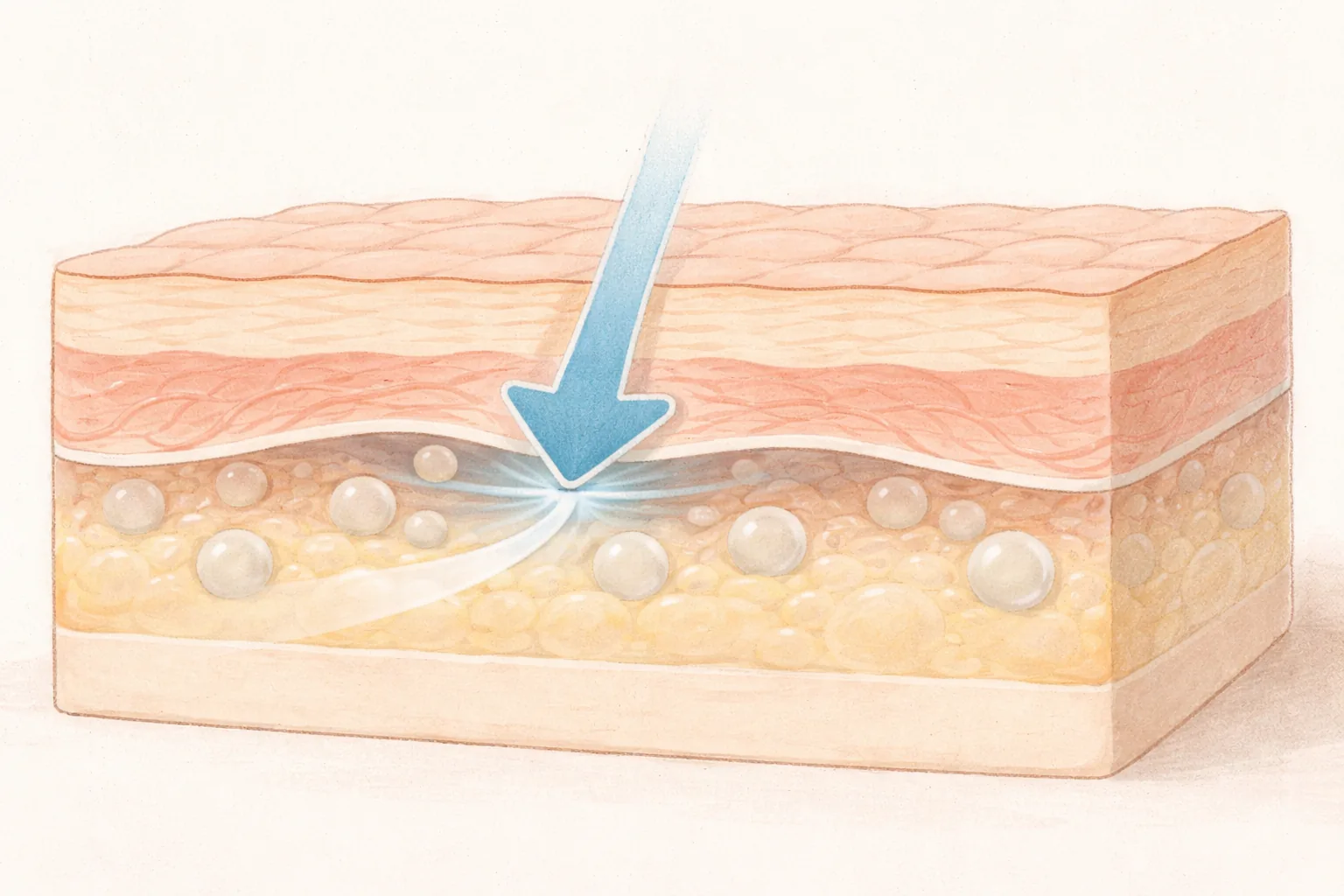
Sculptra's body is made of poly-L-lactic acid (PLLA, a synthetic polymer that gradually breaks down in the body), carboxymethylcellulose, and mannitol; before use, sterile water is added to make a suspension, which is then injected under the skin (FDA Sculptra approval information). In other words, there is first the physical stimulus of a needle piercing the epidermis and reaching the layer beneath the skin, and then the pressure stimulus of liquid pushing tissue aside to make room.
During injection, you may feel a stinging or burning sensation. This is a sensation reported across filler injections in general, not unique to Sculptra (AAD filler FAQ). There is one difference that is easy to miss. Hyaluronic acid fillers fill volume with the gel itself, while Sculptra is a treatment where particles settle into place and you wait for collagen to be produced around them. So for the first few days after treatment, the injected fluid can make the area look fuller, then it settles down, and the actual change appears gradually over several weeks. Readers should know this time gap in advance. Without knowing it, people sometimes misunderstand and think, "After treatment, it actually looks more hollow."
What anesthesia methods are used, and how do they differ?
Before filler injection, ice, a topical anesthetic applied to the skin, or a nerve block injection may be used, and which method is chosen depends on the product and the treatment area. According to AAD guidance, the hands usually do not need anesthesia, while sensitive areas like the lips often use a nerve block (AAD filler FAQ).
The most direct method is mixing a local anesthetic into the product itself. Sculptra is approved so that lidocaine solution can be added immediately before use to reduce injection pain (FDA Sculptra approval information). Topical anesthesia dulls the surface sensation of the skin, but it does not remove stimulation in the deeper layers the needle passes through. So on days when several areas are treated or a larger volume is injected, surface anesthesia and lidocaine mixing may be combined.
There is one condition that must be emphasized here. People with an allergy to lidocaine or other amide-type local anesthetics cannot use Sculptra mixed with lidocaine (FDA Sculptra approval information). For the same reason, a request to "make the anesthesia stronger" is not always possible. Which method is possible is decided by looking at allergy history and the injection area together.
What determines the degree of pain?
First is the area. Thicker tissue areas like the cheeks or nasolabial folds and thin, sensitive areas like around the eyes feel different even with the same injection volume. Second is the volume injected at once and the number of injection points. Sculptra is a treatment that builds results through multiple injections, so dividing the plan rather than putting everything into one session is easier on both pain and recovery. FDA approval documents state that in clinical studies, the best results were obtained with up to 4 injection sessions (FDA Sculptra approval information).
Third is pain sensitivity and tension. Even with the same settings, needle stimulation can feel stronger on a tense day. Fourth is whether lidocaine is mixed and which anesthesia method is used. Your treatment experience changes depending on how these four factors overlap. So rather than a one-line verdict that "Sculptra hurts," what is actually helpful is knowing what anesthesia can be added for your area.
What reactions appear right after treatment, and how long do they last?
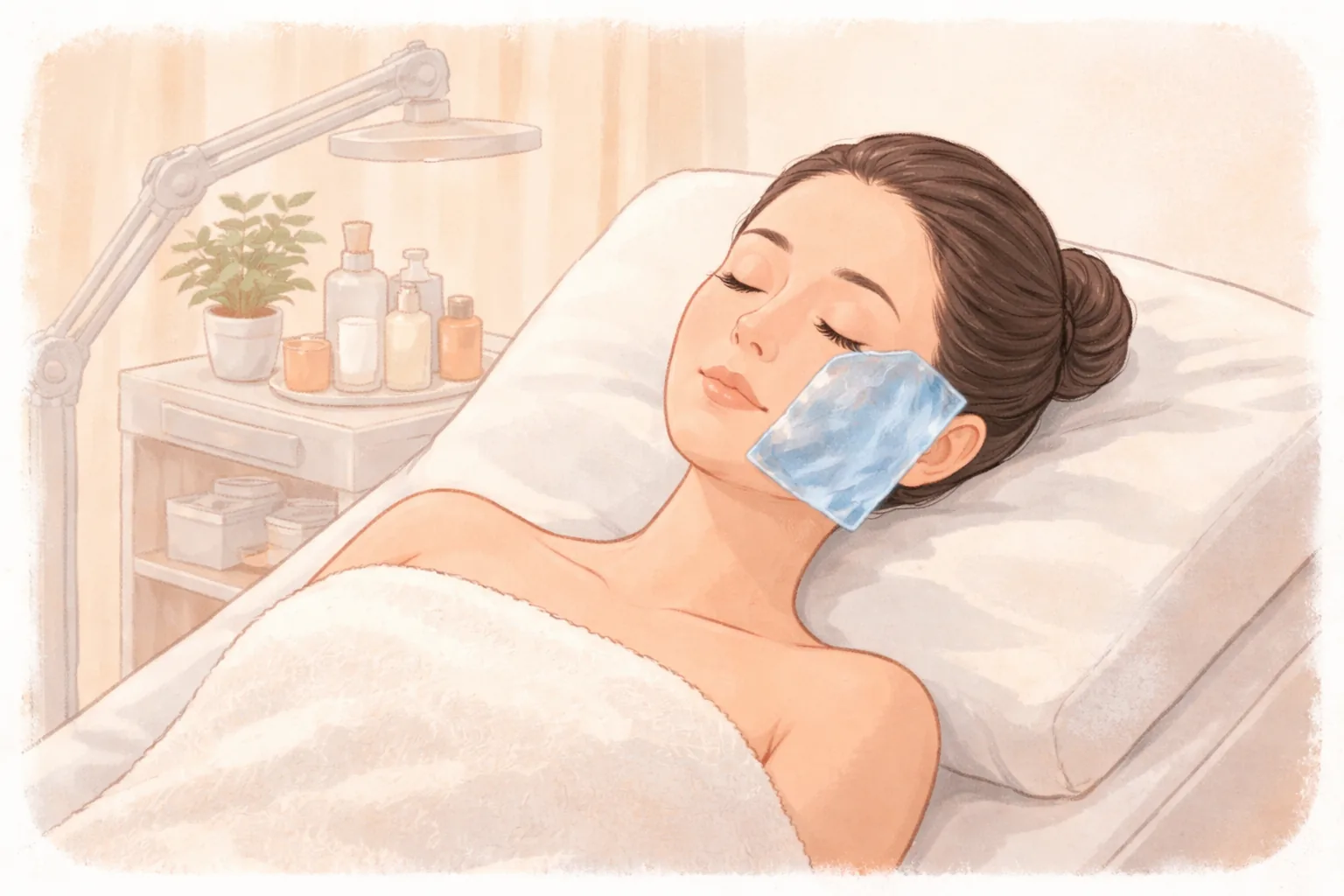
After injection, redness at the injection site, swelling, tenderness when pressed, and sometimes bruising can occur. These mild reactions usually disappear within 7–14 days (AAD filler FAQ). While swelling remains, cold compresses for about 15–20 minutes may be used.
Sculptra has one aftercare step that other fillers do not have. If instructed, gently massage the treated area several times a day for about 5 minutes at a time, continuing for 1–2 weeks. In contrast, if there are no massage instructions, do not touch the treated area for 3 days (AAD filler FAQ). Even within the same filler guidance, these two instructions differ because the injected material settles into place differently depending on the product. It does not mean massaging hard; it helps to remember that this is time to help it spread evenly.
Table 1 What reactions appear right after treatment, and how long do they last?
Anesthesia and pain management
How it is done
When it is mainly used
Cooling (ice)
Briefly applied before and after treatment to dull surface sensation
When there are few injection areas or sensitivity is low
Topical numbing cream
Applied and left for a period to numb the skin surface
When needle stimulation itself feels burdensome
Local anesthetic mixing
Lidocaine solution is mixed into the product immediately before use
When there are many deep-layer injections or several areas
Nerve block injection
Directly blocks the nerves that carry sensation
When treating sensitive areas like the lips
Swipe sideways to see the whole table.
In summary Sculptra pain comes from needle stimulation and injection pressure, and it can be reduced by combining lidocaine mixing, topical anesthesia, and cooling. However, if you have an allergy history, the options change, so anesthesia should be decided not as "stronger" but as "what is possible for me."
If this sounds like you
If you have an event or shoot coming up
Bruising and swelling at the injection site usually settle within 7–14 days, but a first treatment right before an event risks overlapping with swelling. Sculptra is a treatment where changes appear over several weeks, so there is little reason to rush it to match a ceremony date either. If you tell us your date first, the plan can be adjusted by modifying the injection area and volume.
If you are especially sensitive to pain
If you had a difficult experience with a previous treatment, that fact itself is important information. Even for the same area, adjustments can be made by allowing enough time for topical anesthesia or considering lidocaine mixing. During the procedure too, if something feels hard to endure, tell us right away and the pace and volume can be divided.
If you have an allergy to lidocaine or local anesthetics
This history must be reported before treatment. Since lidocaine-mixed product cannot be used, the anesthesia method and injection plan must be designed differently from the start (FDA Sculptra approval information). A tendency to develop keloids or hypertrophic scars, and a history of anaphylaxis, are also checked at the same time.
If you are a short-stay visitor
If your stay is fixed, the timing and intensity of treatment are decided based on your return date. It is better to schedule with a few days of buffer so that your flight schedule does not overlap with the period when swelling and bruising remain. Calculating the interval until your next visit as well makes it easier to divide the plan.
Please tell us before consultation Tell us about your recent UV exposure and the skin condition of the treatment area, medications you are taking (including blood thinners), skincare ingredients you are using, any past reactions to local anesthetics or medications, and important dates such as ceremonies, shoots, or business trips. Even for the same treatment, the anesthesia method and timing change based on this information.
How ATTITUDE Clinic proceeds
AI skin analysis record — Current condition such as pigment, redness, texture, and pores is recorded with an analysis tool. This tool records and organizes information to support consultation and is not a medical diagnosis; based on the record, the doctor judges the cause of your concern (ATTITUDE Clinic laser column).
Treatment direction designed in doctor consultation — Pain sensitivity, allergies and medications, previous treatment experience, and schedule are added to the analysis record to decide the injection area and volume and the anesthesia method together.
Treatment performed directly by the doctor — Discomfort is reduced with topical anesthesia or other methods as needed, and the doctor performs the treatment directly. We do not push the volume unreasonably because of pain, nor proceed in a way that asks you to just endure it.
Recovery and follow-up check — We explain whether and how to massage, the expected course of swelling and bruising, and look at the next planned timing together. ATTITUDE Clinic follows the principles of authentic product, accurate dosage, and fair pricing (ATTITUDE Clinic laser column).
Sculptra is included in ATTITUDE Clinic's injection treatment menu, and treatment composition including lifting and skin boosters can be checked in the clinic treatment guide (ATTITUDE Clinic treatment guide). The principles and course of injection treatments in general are also covered in the collagen injection column (ATTITUDE Clinic collagen injection column).
Aftercare and side effects
Soothing — If swelling remains, apply a cold compress for about 15–20 minutes. On the day of treatment, it is better to avoid strenuous exercise, drinking, and saunas.
Massage — Only if instructed, gently massage several times a day for 5 minutes at a time. If there are no instructions, do not touch the treated area for 3 days (AAD filler FAQ).
Sun protection — Until the next day, postpone strenuous activity and avoid sunlight and tanning. Sun protection and moisturizing are basics throughout the recovery period.
Follow-up check — Watch over several days whether bruising and swelling are decreasing. Common reactions are redness, swelling, tenderness, and occasional bruising, and they usually settle within 7–14 days.
More rarely, allergic reactions can occur, and people with a tendency to develop keloids or hypertrophic scars or with a history of severe allergy are excluded from treatment (FDA Sculptra approval information). The US FDA operates a system that receives and publishes post-market medical device adverse event reports, so rare reactions are also collected through this route (FDA MAUDE adverse event report).
There are also signals that require a check rather than waiting. These include pain that is unusual or gradually worsening, and skin color at the injection site turning white or mottled (ATTITUDE Clinic collagen injection column). Swelling and warmth that continue beyond several days are judged in the same way.
Frequently asked questions
How painful is Sculptra?
Because a needle goes under the skin and liquid pushes tissue aside, it is not a treatment with no sensation at all. Stinging or burning during injection is commonly reported, and this is a reaction seen across filler injections in general (AAD filler FAQ). The most direct way to lower pain is mixing lidocaine solution into the product immediately before use, with cooling or topical anesthesia added on top. The degree varies with the injection area and depth, the volume injected at once, and individual sensitivity. If you have a lidocaine allergy, this method cannot be used, so you must tell the clinic before treatment.
How long do bruising and swelling last?
Redness, swelling, tenderness, and occasional bruising right after treatment usually disappear within 7–14 days (AAD filler FAQ). Cold compresses for 15–20 minutes may be used when there is swelling, and it is better to postpone strenuous exercise until the next day. Bruising can take more than 1 week to fade, so if you have an event, it is safer to tell us your date first. If swelling does not decrease and warmth increases, please come in for a follow-up check.
How many sessions, and at what intervals?
Sculptra is not a one-time treatment but a method of building results through multiple injections, and FDA approval documents state that in clinical studies, the best results were obtained with up to 4 injection sessions (FDA Sculptra approval information). The AAD table suggests PLLA results may last 1–3 years, while FDA documents mention up to 24 months, so the range differs by source. The number of sessions needed and the intervals are decided by looking at the degree of hollowness, the injection area, and recovery course; because individual variation is large, the plan is set after checking skin condition in consultation.
I am worried about nodules (lumps). What should I check?
If the injected material collects in one place, palpable lumps can remain, which is the item people considering Sculptra ask about most. Sculptra is made into a suspension with sterile water before use, and aftercare includes gently massaging the treated area as instructed (FDA Sculptra approval information, AAD filler FAQ). In consultation, you can check the injection layer, volume by area, whether massage is instructed, and when the follow-up check will be. If you feel a lump, do not massage it harder yourself; tell the clinic at your follow-up check.
When choosing Sculptra, what should I look for in a clinic?
There are a few items to check rather than a list of devices. First, whether the consultation first clarifies whether your concern is volume or skin texture, and which layer and area will be injected. Second, whether they explain authentic product use, dosage, massage instructions, and follow-up schedule in words. Third, whether they ask about pain sensitivity, allergies, and medications and decide the anesthesia method together. Fourth, whether it is a place where you can get a check if discomfort occurs after treatment. The AAD advises that injection treatments are medical procedures and results depend greatly on the practitioner's experience (AAD filler FAQ). Results and recovery differ from person to person, so what you can expect is decided in the setting where your skin is examined and the explanation is heard.
At a glance
Table 2 At a glance
Item
Key point
What the pain is
Needle stimulation and injection pressure, decided together by area, depth, and volume
Anesthesia options
Lidocaine mixing, topical anesthesia, cooling, nerve block depending on area
When it cannot be used
Lidocaine/amide anesthetic allergy, keloid tendency, history of severe allergy
Immediate course
Redness, swelling, tenderness, bruising; usually improves within 7–14 days
Massage
Only if instructed: 5 minutes several times a day for 1–2 weeks; if not instructed, do not touch for 3 days
Duration
1–3 years or up to 24 months depending on the source; large individual variation
This article offers general health information. It is not a substitute for diagnosis or treatment based on your own condition, so please talk through your situation with a doctor.