SKINVIVE vs Rejuran: The Difference Comes Down to Ingredients and Duration
Compare SKINVIVE and Rejuran by ingredients, how they work, duration, and allergy precautions. Understand the difference between these skin boosters before your visit.
Written by ATTITUDE Clinic Editorial Team
Search for Rejuran and SKINVIVE side by side and two questions usually follow. One is how their ingredients differ, and the other is which one you should worry about more when it comes to duration and allergy risk. The two products look like the same kind of injection, but the ingredients they put into the skin and the changes they aim for are different, so it is hard to rank them by product name alone.
The bottom line first
SKINVIVE is a gel-type dermal filler made of hyaluronic acid plus BDDE and 0.3% lidocaine, and FDA approval materials describe it as an intradermal injection to smooth the skin texture of the cheeks in adults aged 21 and over (FDA). In a clinical study of 209 people, the improvement in cheek skin texture lasted at least 6 months. Rejuran is described as injecting salmon-derived PN (polynucleotide, an ingredient that gives cells recovery signals) into the dermis to support the skin's recovery response and collagen production. SKINVIVE aims at hydration and skin texture, while Rejuran targets recovery and elasticity; the actual choice depends on your skin condition, the change you want, and your allergy history.
What does SKINVIVE do inside the skin?
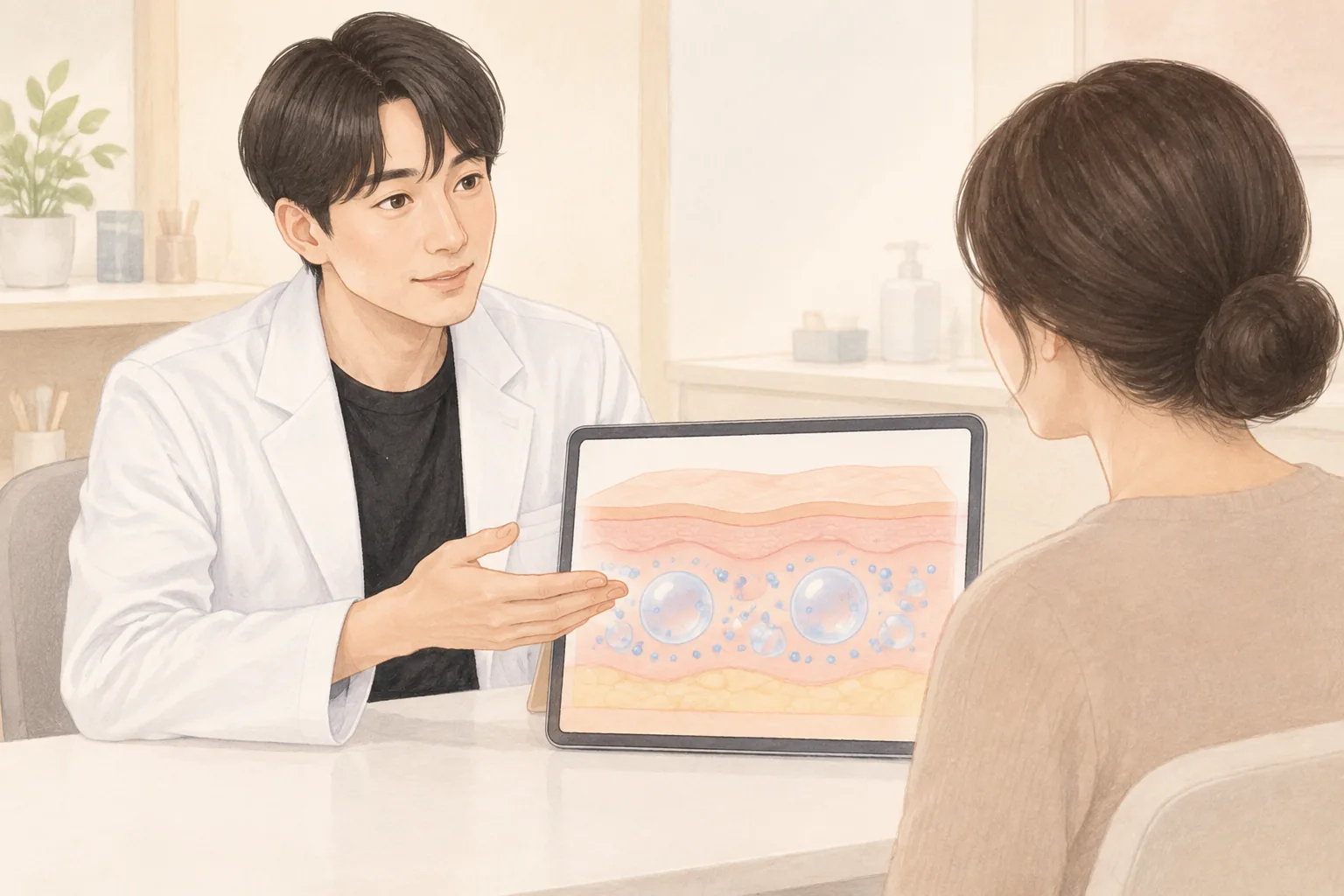
SKINVIVE is an intradermal injection placed into the dermis, the layer that creates texture beneath the skin surface. According to FDA approval materials, the product consists of hyaluronic acid, BDDE, and 0.3% lidocaine. Hyaluronic acid is an ingredient that attracts water, BDDE is a cross-linking agent that links hyaluronic acid molecules to form the formulation, and lidocaine is used to reduce pain during injection.
The approved indication is clear. It is for smoothing the skin texture of the cheeks in adults aged 21 and over. SKINVIVE's approved indication is improving cheek skin texture. It is not a treatment to erase wrinkles across the entire face or to restore volume. This distinction matters because even when products are grouped under the same name of skin booster, each product has its own approved area and purpose.
The American Academy of Dermatology also provides guidance on what to check when deciding on filler treatments and to receive them safely (AAD). Which product, how much, and at what depth all affect the result and recovery, so it is better to confirm both the product name and its approved indication during consultation. If SKINVIVE targets hydration and texture, Rejuran aims for a different response with different ingredients.
How does Rejuran's PN work?
At the center of Rejuran is PN. The ATTITUDE Clinic column describes PN as an ingredient extracted and purified from salmon and notes that when injected into the dermis, it is known to support the response to repair damaged tissue and to stimulate cells that produce collagen. It is a flow in which the skin receives a signal to recover on its own and begins producing collagen.
The same column explains that PN is also known to act in the direction of calming redness. However, this is a response that varies in degree depending on the product and skin condition, so you cannot expect the same result in every case just because redness is your concern. Rejuran is a PN product and differs from hyaluronic acid-based skin boosters from the ingredient level.
PN and hyaluronic acid are sometimes blended in ratios adjusted to the goal. If regeneration and elasticity are the priority, the PN proportion is increased; if immediate hydration and glow are the priority, the hyaluronic acid proportion is increased. So when considering Rejuran, you start by sorting out whether hydration or recovery support is more urgent for you.
Rejuran is usually done several times at 2–4 week intervals, with maintenance treatments planned afterward. The number of sessions and the interval are decided by the doctor based on your skin condition and response. Rather than thinking of it as a one-time treatment, it is more realistic to schedule with the assumption that changes appear gradually.
How do duration and recovery differ when ingredients differ?
The 6 months for SKINVIVE is a result from a clinical study looking at cheek skin texture improvement. For Rejuran, the maintenance period varies depending on the product, skin condition, and number of sessions, and maintenance treatments are planned alongside. Rather than comparing duration by product name alone, it is more accurate to check what change the number is based on.
Table 1 How do duration and recovery differ when ingredients differ?
Category
SKINVIVE
Rejuran
Main ingredient
Hyaluronic acid, BDDE, 0.3% lidocaine
Salmon-derived PN
What it does in the skin
Injected into the dermis to smooth cheek skin texture
Described as supporting the skin's recovery response and stimulating collagen-producing cells
Duration
At least 6 months in clinical studies
Varies by product, skin condition, and number of sessions; maintenance treatments planned alongside
Precautions
Not used in people with a history of severe allergy, lidocaine allergy, etc.
Allergy history, pregnancy/breastfeeding, and medications checked during consultation
Swipe sideways to see the whole table.
In summary SKINVIVE places hyaluronic acid into the dermis to smooth cheek skin texture, while Rejuran uses PN to support the recovery response. The choice depends on whether the change you want is hydration and texture or regeneration and elasticity, and allergy history is checked differently for each product.
Even for the same product, results vary with injection depth, volume, and treatment interval. Whether the area has thin skin, whether dryness is severe, and whether you have recently had laser or other injection treatments also affect recovery speed. Sun exposure, smoking, and age also influence how quickly collagen is produced and broken down.
How much pain and swelling should I expect?
Pain varies greatly depending on the treatment area and individual pain threshold. Repeated needle entry causes repeated stinging, and areas with thin tissue such as the forehead, eye area, and around the lips may feel more sensitive. Areas with thicker tissue such as the cheeks or jawline are often felt as relatively less painful.
SKINVIVE contains 0.3% lidocaine, which is used to reduce injection pain. Rejuran is a PN product and may sting during injection; the anesthesia method is explained during consultation. Even in the same area, the sensation differs depending on the injection method and needle type, so it is hard to choose a product based on pain alone.
Right after the procedure, small bumps may remain along the injection points. Bumps and swelling usually subside within a day to a few days, and bruising may take more than a week to fade. Makeup is often possible from the next day after the injection sites have closed, so confirm the timing with your doctor.
Can the two treatments be planned together?
Whether SKINVIVE and Rejuran can be injected together on the same day is decided by considering the products' approved indications, volumes, skin response, and recovery plan together. Both are injectable treatments, so bruising and swelling can overlap, and if the areas overlap it becomes difficult to read the course. It is safer to decide whether to proceed on the same day and in what order during consultation.
Blending PN and hyaluronic acid according to purpose is common in skin boosters. However, this is about combining ingredients and should be distinguished from a plan to inject two different products at once. Each product has different approved indications and precautions.
For short-stay visitors, recovery time and the timing of your next visit become more important. Swelling and bumps may remain for a few days after the procedure, so leave a gap before your departure date, and decide in advance whether you can have a follow-up check during the same trip. If your schedule is tight, you need a consultation to reduce the treatment scope or adjust the timing of your visit.
If this applies to you
When an important event is a few weeks away
Right after the procedure, it is hard to feel a big change because of swelling and bumps, and changes appear gradually. Leave a recovery period between the treatment date and your important event, and keep in mind that bruising may last longer. Rather than rush to combine multiple products to fit your schedule, it is better to plan one first.
When dryness and fine wrinkles are both concerns
Hyaluronic acid attracts water to provide moisture, while PN is described as stimulating collagen-producing cells. If dryness is the main concern, a product targeting hydration is the starting point for consultation; if loss of elasticity feels greater, a product targeting recovery is. Which one fits is decided by looking at skin thickness and the location of fine wrinkles.
When your skin is sensitive or prone to redness
For skin that reddens easily, you need to look at irritation reactions after the procedure first. Tell your consultant whether your skin has reddened recently, whether you have an allergy history, and which products caused reactions. Start with a plan that minimizes irritation, and do not rush the next treatment if redness persists during recovery.
If you are an international visitor on a short stay
What matters is whether you can fit recovery and follow-up checks within your stay. Swelling and bumps may remain for a few days after the procedure, so leave a gap before your departure date; if scheduling another visit is difficult, plan the recovery schedule together during the pre-treatment consultation. It also helps to bring consultation materials so you can confirm product names and approved indications without an interpreter.
Please tell us before your consultation Tell us about recent sun exposure, medications you are taking and active ingredients you apply to your skin, reactions after past treatments, important events, pregnancy/breastfeeding status, autoimmune disease, and any allergy history including lidocaine.
How ATTITUDE Clinic proceeds
History and skin condition check We first listen to your allergy history, medications you are taking, pregnancy/breastfeeding status, recent treatments, and skin reactions. We also look at skin thickness, dryness, redness, and the location of fine wrinkles.
Product selection to match your goal During consultation, we decide whether to choose SKINVIVE or Rejuran based on whether hydration and skin texture are the priority or recovery and elasticity are the priority. We explain the product's ingredients and approved indication.
Design of volume, depth, and interval PN·HA skin boosters are usually done several times at 2–4 week intervals, with maintenance treatments planned afterward. The number of sessions and interval are adjusted based on skin condition and response.
Recovery and follow-up We explain the course of swelling, bumps, and bruising after the procedure and set the next visit. We also explain care that affects recovery, such as sun protection and moisturizing.
Four steps your doctor sees to in person
From the diagnostic device to the treatment bed, the doctor you first consult takes care of everything.
01
Precision diagnosis
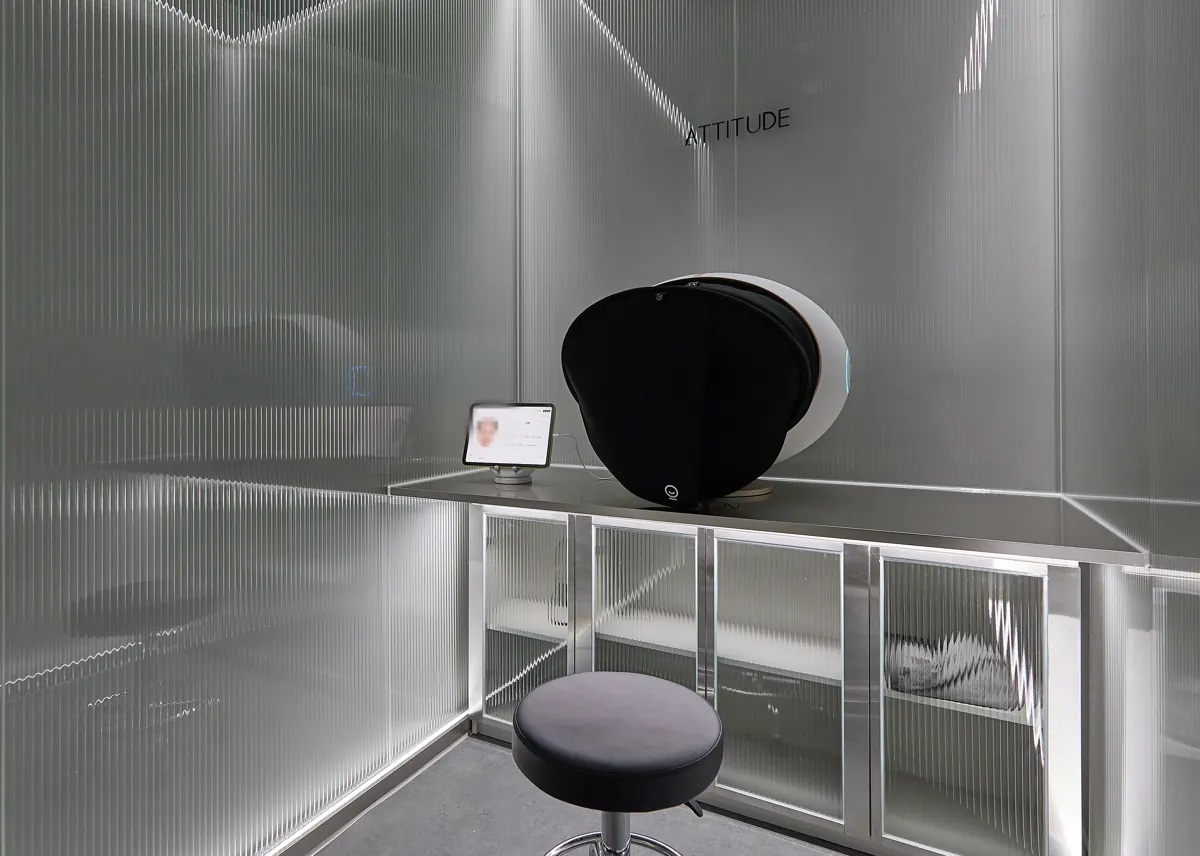
In a private diagnosis room the whole face is photographed, recording even skin conditions that are hard to see with the eye.
02
Skin analysis
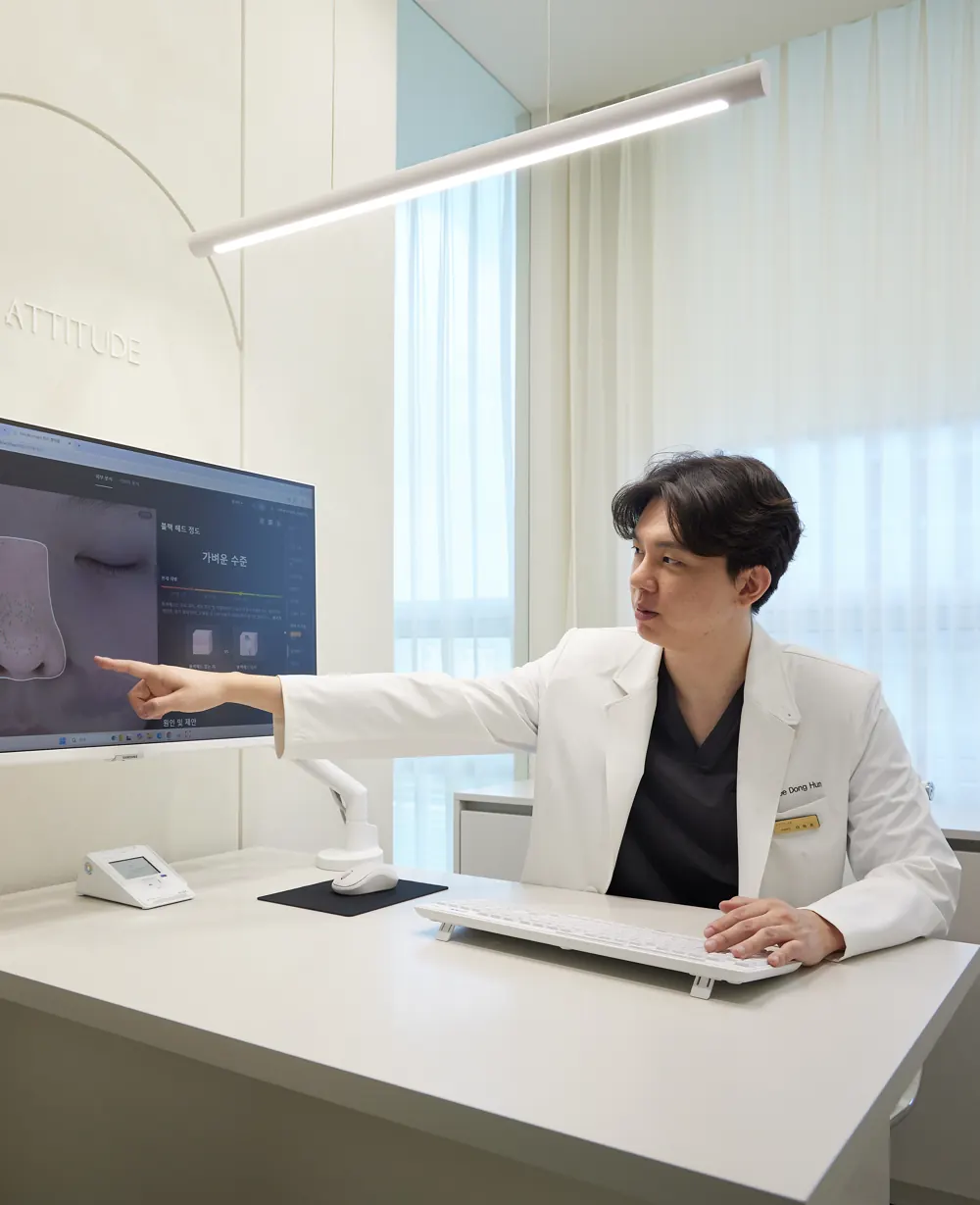
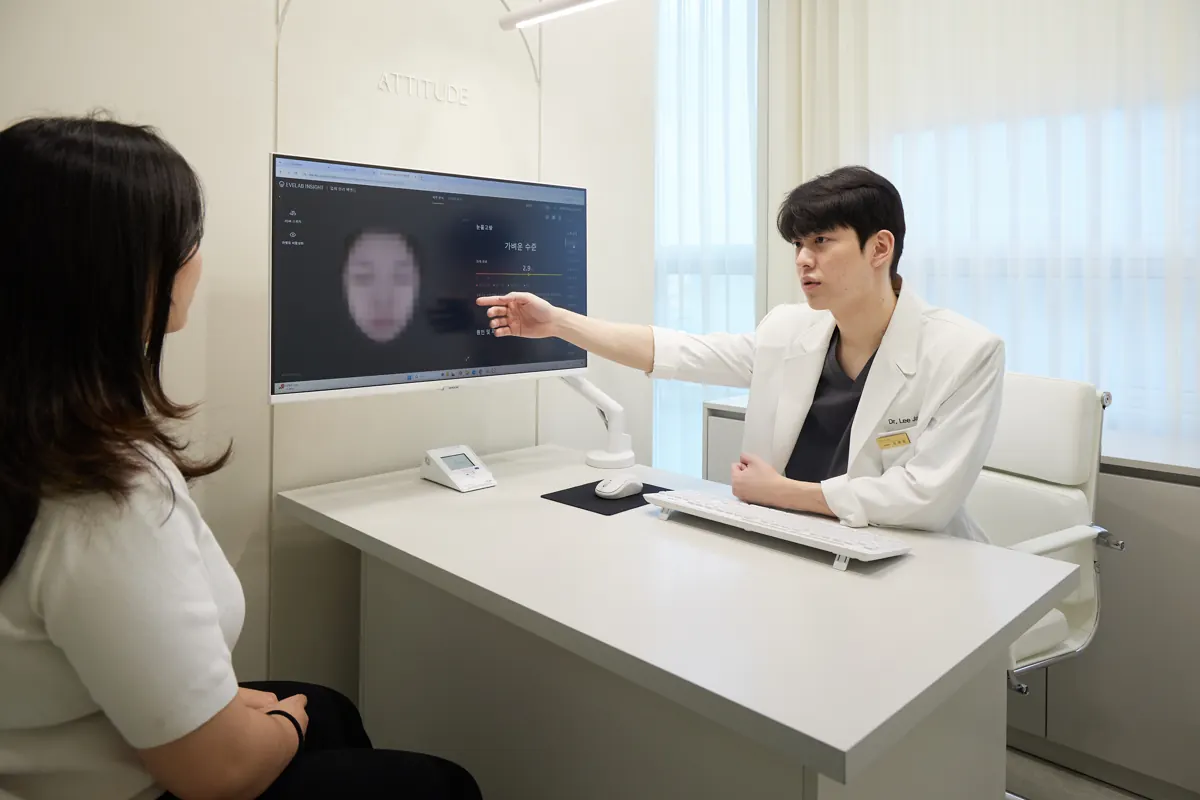
The doctor goes through your pore, pigmentation, wrinkle and firmness results with you on screen and explains what comes first.
03
One-to-one design
With your skin, the balance of your face, the change you want and your schedule in view, you decide the treatment and its extent together.
04
Treatment by your doctor
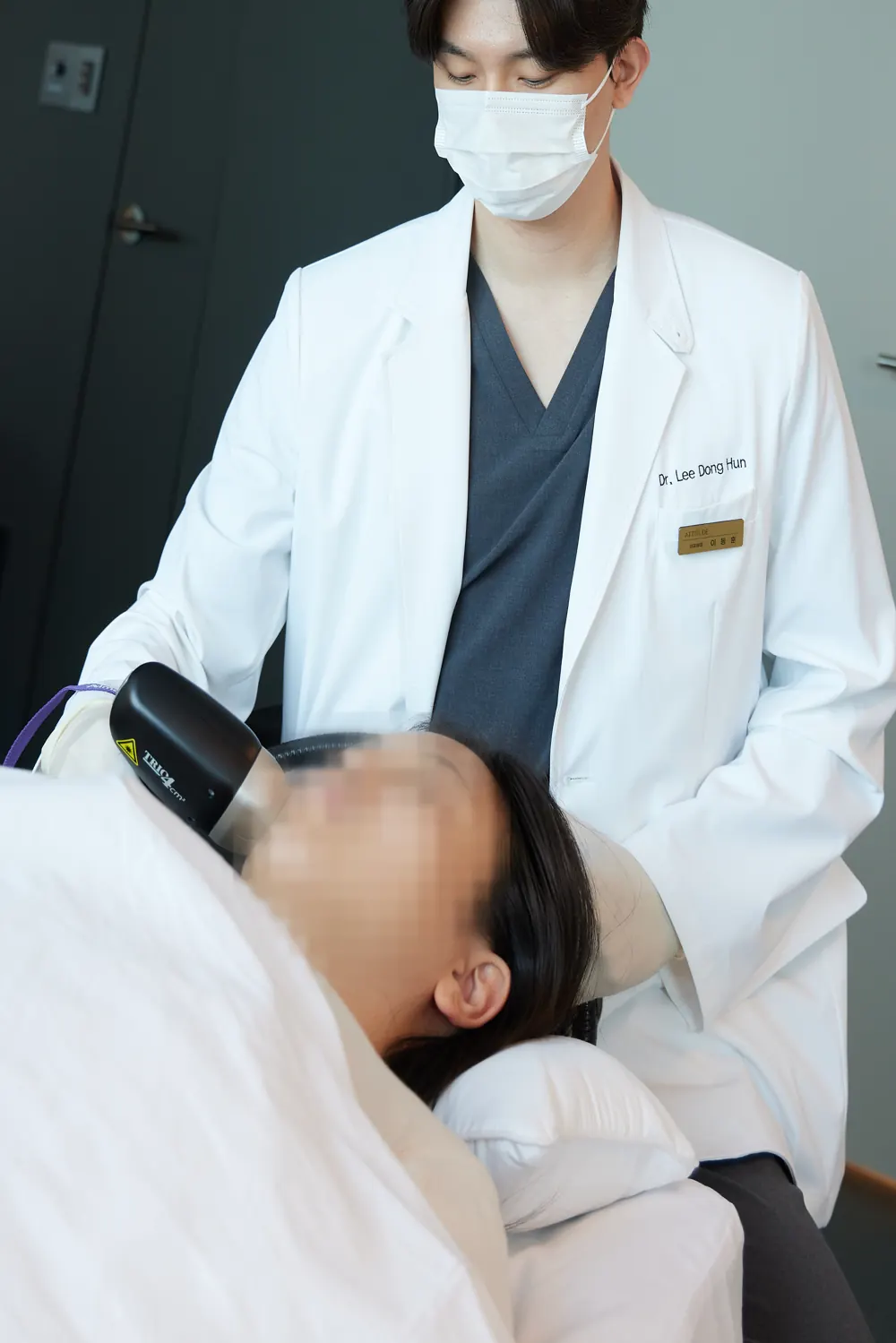
The doctor who consulted you performs the treatment from start to finish in a private treatment room. No one takes over halfway.
“I take injection pain seriously.”
Co-Director Dr. Lee Dong Hun
Many people hesitate over Rejuran in particular because it hurts. So we went back over everything, from the anesthetic to the products used, and the result is the ATTITUDE Signature Rejuran.
Careful numbing, unhurried timingWe allow plenty of time for a special numbing cream to take full effect, and add anesthetic injections for the treatments and areas that need them.
Fine needles, finished quicklyInjection treatments use fine needles, and the doctor finishes them personally in a short time, adjusting along the way by watching how you are doing.
Even the product formulation countsThe same treatment can feel more or less demanding depending on the product, so we take that into account too.
The anesthetic method and whether it is used are decided after an examination, according to the treatment, the area and your condition. How much it hurts varies from person to person.
On this topic, the ATTITUDE Clinic price list includes Rejuran Healer, Rejuran HB, and SKINVIVE (ATTITUDE Clinic treatments and pricing). Prices vary by product and volume, and all amounts exclude VAT. You can check the list price and what is included on the price list.
Aftercare and side effects
Soothing On the day of the procedure, check swelling and redness, and apply cold compresses as directed by the medical staff. Avoid saunas, strenuous exercise, and alcohol on the same day.
Moisturizing The skin barrier is temporarily weakened, so moisturize consistently. Makeup is often possible from the next day after the injection sites have closed, so confirm with your doctor.
Sun protection During recovery, apply sunscreen more carefully than usual. This helps reduce pigmentation.
Follow-up Bumps and swelling usually last from a day to a few days, and bruising may last more than a week. We check the course at your next visit.
Common reactions are small bumps at the injection site, redness, swelling, tenderness when pressed, and bruising. Bumps usually subside within a day to a few days, and bruising may take more than a week to fade. Rarely, infection, allergic reactions, or small lumps may occur, and very rarely the injected material can block or damage blood vessels.
If you have pain that is unusual or worsening, or if the skin at the injection site turns white, mottled, bluish, or black, or if you notice changes in vision, do not wait—seek medical care immediately. These changes are signals you must not miss in post-treatment care. Also contact the clinic if swelling, pain, or fever persists.
Frequently asked questions
How do SKINVIVE and Rejuran differ from the ingredients?
SKINVIVE is a dermal filler composed of hyaluronic acid, BDDE, and 0.3% lidocaine. Under FDA approval, it is used to smooth cheek skin texture in adults aged 21 and over. Rejuran is described as a product that injects salmon-derived PN into the dermis to support the skin's recovery response. One fills with a water-attracting ingredient, while the other sends recovery signals. So rather than grouping them as the same injection, start by checking what change each aims for.
How long does SKINVIVE last?
In the clinical study in the FDA approval materials, the improvement in cheek skin texture lasted at least 6 months in 209 people. This number is based on the study participants and the cheek area. Actual duration varies with skin condition, lifestyle, and treatment volume and depth. When to have maintenance treatment is decided by looking at your course.
How many sessions of Rejuran are typical, and at what interval?
The ATTITUDE Clinic column explains that PN·HA skin boosters are usually done several times at 2–4 week intervals, with maintenance treatments planned afterward. The number of sessions and interval vary with skin condition and response and are decided by the doctor. Schedule with the assumption that changes appear gradually rather than as a one-time treatment. Also consider the period of swelling and bumps after the procedure in your schedule.
Are there allergy risks with SKINVIVE and Rejuran?
SKINVIVE is not used in people with severe allergy with a history of anaphylaxis, a history of multiple severe allergies, sensitivity or allergy to gram-positive bacterial proteins, or lidocaine allergy. For Rejuran, allergy history, pregnancy/breastfeeding, autoimmune disease, and medications you are taking are checked during consultation. No product can completely eliminate the possibility of reaction, so a pre-treatment history is important.
What should I check when choosing a skin booster clinic?
Check the product name and approved indication, who injects it and at what depth and volume, whether allergy history is taken, and where to contact if abnormal signals occur during recovery. Also check whether the price list shows list prices and whether VAT is included. How and when the clinic checks your follow-up after the procedure is also a criterion for choosing a clinic. The American Academy of Dermatology also provides guidance on pre-filler consultation and safety checks.
At a glance
Table 2 At a glance
Item
Key point
SKINVIVE
Hyaluronic acid, BDDE, 0.3% lidocaine formulation used to improve cheek skin texture
Rejuran
Salmon-derived PN helps support the skin's recovery response and stimulate collagen-producing cells
Duration
SKINVIVE at least 6 months in clinical studies; Rejuran maintenance planned based on skin condition and number of sessions
Recovery
Bumps and swelling usually a day to a few days; bruising may last more than a week
Before consultation
Allergies, lidocaine sensitivity, pregnancy/breastfeeding, medications, important events
Choosing a clinic
Confirm products and approved indications, how injection depth and volume are decided, and follow-up guidance
This article offers general health information. It is not a substitute for diagnosis or treatment based on your own condition, so please talk through your situation with a doctor.