Thermage FLX consultation guide: what to ask about tips, shot counts, energy settings, pricing, when to expect results and when to contact the clinic during recovery.
Written by ATTITUDE Clinic Editorial Team
Search for Thermage FLX and the first things you see are tip types, shot counts and price lists. But once you're actually sitting in the consultation chair, it's hard to know where to start. This article walks through how tips and shot counts are decided, when and how results are assessed, and what conditions to align on for cost and recovery.
The Bottom Line First
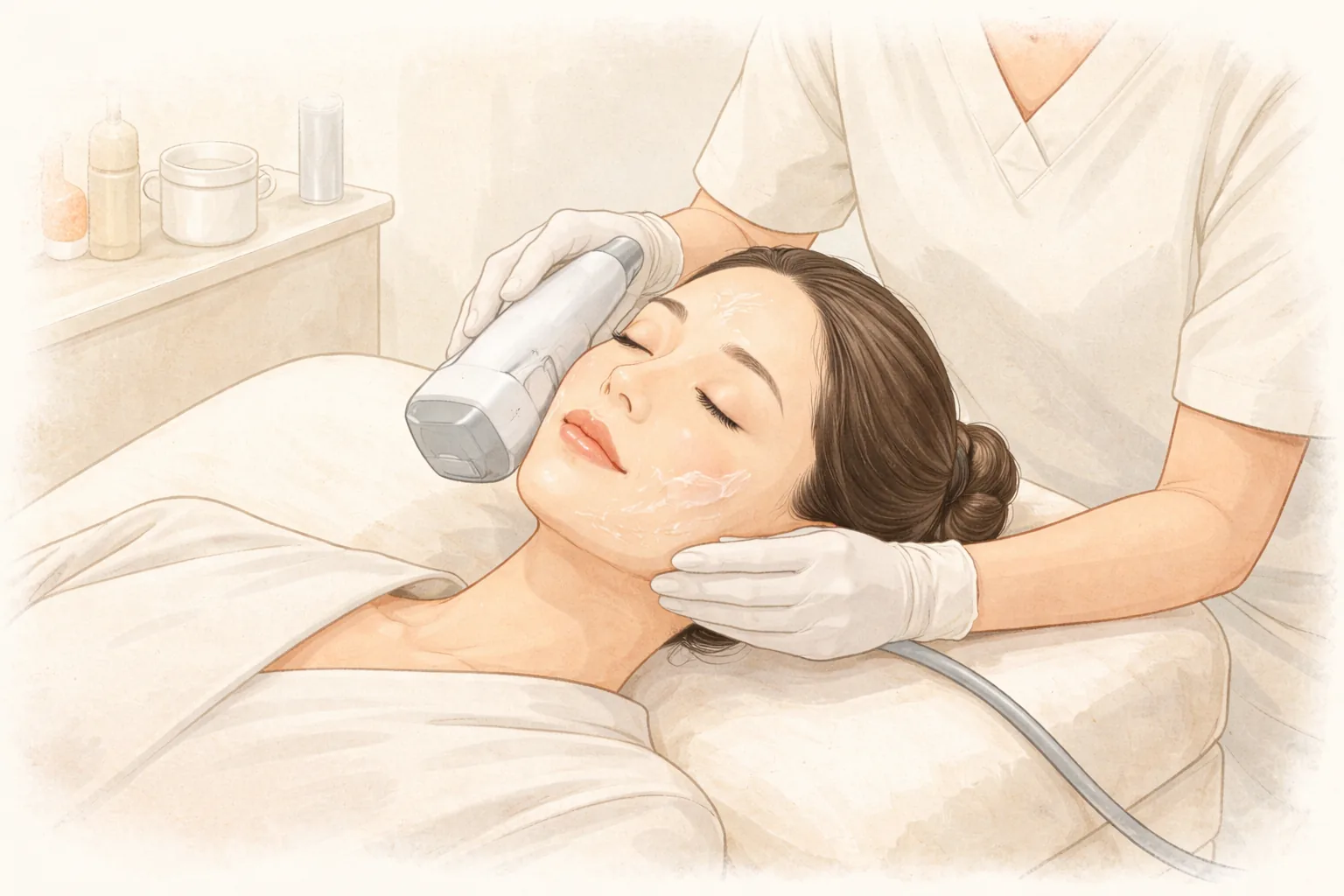
The question that's actually useful isn't "how many shots?" but "why this shot count and this tip for my face?" Thermage uses radiofrequency (RF, where electrical energy passes through tissue and turns into heat) to heat broadly from the dermis down to the subcutaneous fat layer — a different depth of heat delivery from point-focused ultrasound like Ultherapy or Shurink Universe (ATTITUDE Clinic column). Results don't appear right after treatment; they emerge gradually over the months while collagen rebuilds, so deciding on a review point in advance keeps your judgment steadier. Compare costs on the same basis: the unit shown (shots, area), VAT inclusion, and whether anesthesia and aftercare are covered. Pain and recovery vary with energy level and area, so decide on the anesthesia approach during the consultation.
How Thermage, Ultherapy and Shurink Universe Differ Under the Skin
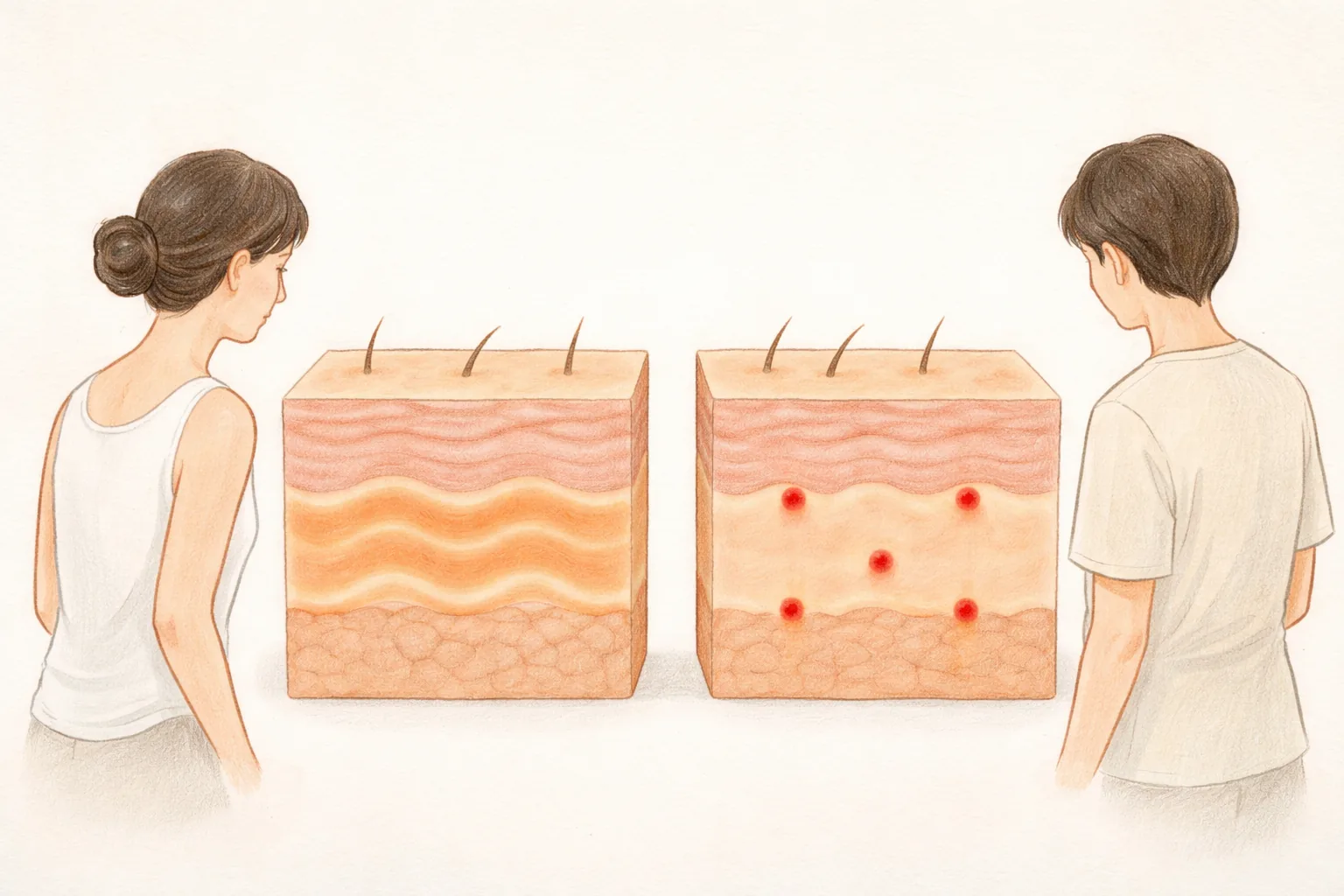
They're often lumped together as "lifting," but each device generates heat differently. Thermage heats a broad area from the dermis down to the subcutaneous fat layer at once, while Ultherapy and Shurink Universe focus ultrasound energy onto a single point beneath the skin, the way a lens concentrates light, creating a tiny hot spot. Think of the difference between focusing sunlight through a magnifying glass and warming a wide plate. The ATTITUDE Clinic column describes this as small points focused at a set depth versus broader heating of a relatively shallow layer.
Heated collagen contracts, and a remodeling process follows that gradually firms the skin. So when deep-layer sagging is prominent, ultrasound-based options tend to come first; when loss of elasticity spreads broadly across the cheeks and neck, radiofrequency-based options tend to come first. Whether to do both on the same day or space them out depends on how your skin responds — better to set the overall sequence during the consultation first.
What Determines the Tip and Shot Count?
Tips are consumables, and the choice depends on the treatment area and skin thickness. You can't use the same size and output on thin areas like around the eyes and thicker areas like the cheeks. So asking which tip is used on which area, and why that tip, means verifying half of the treatment plan. Tips are distributed as single-use items — one per person, then discarded — so it's worth covering at the consultation whether the tip is opened in front of you and how to verify it's genuine.
Shot count is also the unit on the price list. The ATTITUDE Clinic price list breaks items down by area and shot count, and all amounts are shown excluding VAT (treatments and pricing). One thing to keep in mind: the shot-count unit on a price list is just the name of that package item — not the dose recommended for you. The actual shot count and energy level are adjusted based on face area, location of sagging, and pain response during treatment. Even the same 600 shots feel different depending on how they're distributed.
Table 1 What Determines the Tip and Shot Count?
Category
How heat is generated
Concerns it mainly addresses
What to confirm in consultation
Thermage FLX
Monopolar RF current heats broadly from dermis to subcutaneous fat
Broad loss of elasticity across cheeks and neck, skin texture
Basis for tip type, shot count and energy settings
XERF
Same monopolar RF family
Elasticity management over larger areas
Settings by area and repeat intervals
Ultherapy
HIFU ultrasound focused point by point from dermis to SMAS
Localized deep sagging along jawline and around eyes
Cartridge depth and shot count
Shurink Universe
HIFU ultrasound family
Relatively lighter elasticity management
Energy level and treatment range
Swipe sideways to see the whole table.
Device categories describe general characteristics of each family; which one suits you is decided by looking at your skin.
In short What to verify in a consultation isn't the device name but why that tip and that shot count are being used on your skin. Even within the same family, sensation and recovery differ by area, depth and energy setting — so check that the units on the quote and the actual treatment plan rest on the same basis.
When Do Results Show, and What Do You Measure Them Against?
The American Academy of Dermatology's consultation guidance includes items to check: expected results and risks, alternatives, the number of sessions and time needed, recovery period, pre-treatment preparation and aftercare, and cost (AAD questions to ask). The same academy's material on firming treatments explains that non-invasive treatment results usually appear gradually and look natural, with relatively little downtime (AAD firming treatments). This is a general description of firming treatments overall — not a source that sets the required number of sessions or review timing for any specific device.
The firm feeling right after treatment is partly swelling, and it settles somewhat as the swelling subsides. Additional changes usually emerge gradually over 2–6 months, so taking photos under the same lighting and angle and comparing at an agreed point beats relying on memory. How long results last varies from person to person. The rate at which collagen is synthesized and broken down differs with age, UV exposure and lifestyle, and how the treatment intensity was set also plays a role. The ATTITUDE Clinic column notes that repeat timing is roughly around 1 year as a starting point, with the doctor deciding after reviewing progress. Here, 1 year is less a promised interval than a starting point for judgment.
Why Do Pain and Recovery Differ From Person to Person?
Lifting treatments tend to have wide variation in pain during the procedure. The biggest variables are energy level and nerve density by area. Higher energy and more shots in one area mean more stimulation. Areas close to bone with dense nerves — jawline, cheekbones, forehead, around the eyes — feel more sensitive, while thicker areas like the cheeks hurt less even at the same intensity. RF-based treatments heat broadly near the surface, often described as a lingering warm sensation, while ultrasound-based treatments are often described as a momentary deep penetrating feeling.
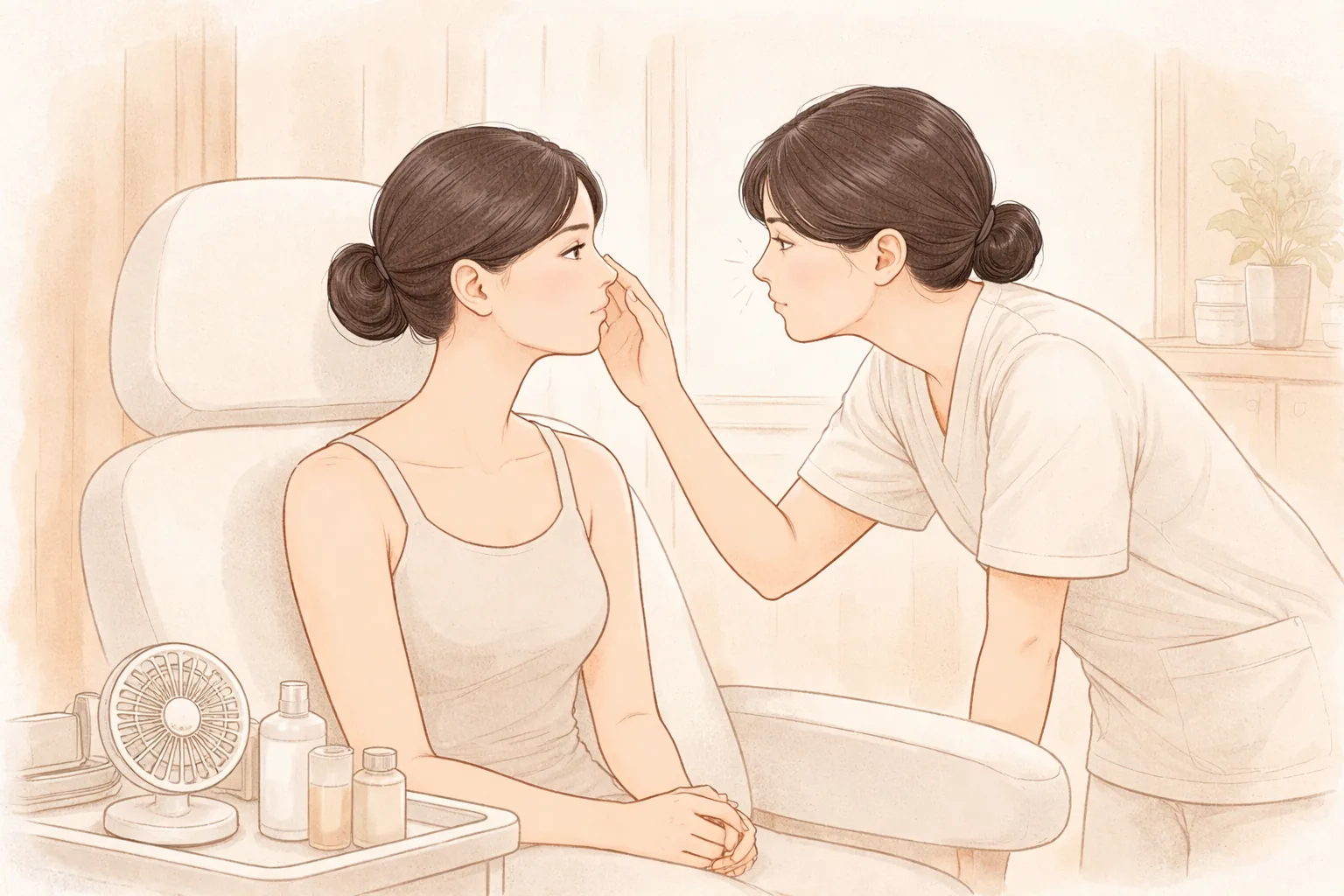
For 1–2 days after treatment, redness and mild heat may remain from the thermal stimulation, usually settling naturally. During this period the skin's barrier is temporarily weakened, so sun protection needs more attention than usual to recover without pigmentation. If you're sensitive to pain, it's better to decide on the anesthesia approach during the consultation rather than toughing it out.
Why Do Results Differ Even With the Same Treatment?
Skin has different starting points. Skin type and thickness, the ability to produce collagen on its own, and regeneration speed vary by person, so response and recovery speed diverge even with the same intensity (Same treatment, why do results differ?). Even when analysis results look similar, which device to use first, how strong to set the intensity, and when to add other treatments depend on your concerns, your available recovery time, and your skin's sensitivity.
How the treatment is performed is also a variable. Even with the same plan, results diverge in the details — fine-tuning intensity by area and changing intensity based on skin response during the procedure. This is why it matters that the plan set in consultation and the actual treatment don't drift apart.
If This Applies to You
When a wedding or shoot date is fixed
If a date is fixed, count backward from that day to schedule treatment. How long redness and mild heat remain depends on the energy level, so leave buffer time and fit the recovery period to your schedule. Setting the review point a few months after the shoot date makes changes easier to see.
If you want consistent management
Rather than a one-off, the usual flow is to review progress and decide on repeat timing. Recording the energy level and shot count from your first session, and how your skin responded then, gives you a baseline for adjusting intensity at the next visit. Bring your previous treatment records — device name, shot count, date, response — and the consultation gets shorter.
Sensitive or easily flushed skin
If your skin reacts strongly to thermal stimulation, a plan that lowers energy levels and splits the treatment may be considered. If your redness usually lingers, mention that first. The anesthesia approach and treatment range are adjusted together.
Short-stay international visitors
If your stay is short, the recovery period and review timing need to be recalculated against your schedule. In many cases you can return to daily life right after treatment, but how much redness remains varies by person — tell us your departure date and we can avoid overloading the plan.
Please tell us before your consultation
Strong UV exposure or outdoor activity in recent weeks, or recent tanning
Medications you're taking and active ingredients you apply to your skin (retinol, exfoliating products, etc.)
Previous lifting, filler or skin booster treatments and how you responded
Allergies or past experiences where results differed from expectations
Fixed dates such as a wedding, shoot or departure
How ATTITUDE Clinic Proceeds
AI skin analysis record — Skin condition is documented with photos and records so you and the doctor look at the same information. The analysis tool only records and organizes information and does not make medical diagnoses; judgment rests with the director.
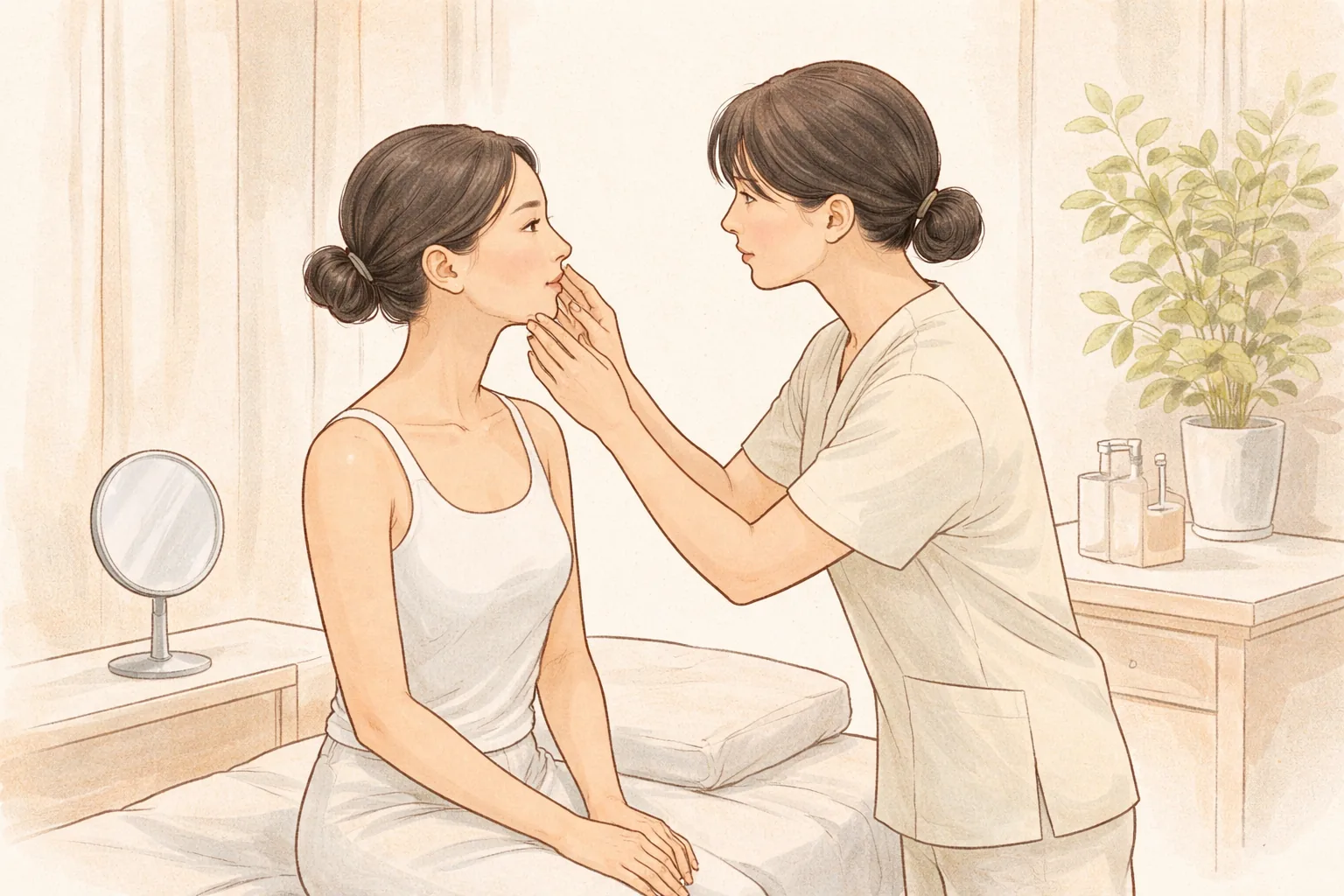
Director consultation — Your concerns, lifestyle and previous treatment experience are added to the analysis record to decide together what's needed and what isn't, which combination and sequence, and how far to go with intensity. The reasoning behind the tip and shot count is explained here too.
Treatment performed directly by the director — The director performs the treatment according to the plan set in consultation, adjusting energy levels based on skin response during the procedure. This keeps planning and execution aligned.
Recovery and progress check — Post-treatment response and review timing are explained, and the next visit is set after reviewing progress. Appointment requests are confirmed after the clinic's confirmation contact; same-day requests are accepted for slots starting 1 hour from the current time, with the last intake at 17:30 (consultation and booking).
For this topic, the devices ATTITUDE Clinic operates are the RF-based Thermage FLX and XERF, the ultrasound-based Ultherapy and Shurink Universe, and the microwave-based Onda. Prices are disclosed by treatment, area and unit, and all amounts are shown excluding VAT.
Aftercare and Side Effects
Soothing — On the day of treatment, cooling compresses can help settle the heat. It's best to avoid saunas, strenuous exercise and alcohol that day.
Moisturizing — Skin can dry out after thermal stimulation, so moisturize more than usual. Hold off on exfoliating care until the skin calms down.
Sun protection — During recovery the skin barrier is weakened, so apply sunscreen more carefully than usual. This step does the most to help you recover without pigmentation.
Progress check — Check when redness and swelling subside and what changes appear at the agreed review point. Makeup is usually possible from the next day.
Common reactions include redness, swelling, tenderness when pressing along the jawline, small bruises, and temporary numbness or reduced sensation. They usually settle within a few days but can last longer. Rarely, burns or blisters, small scars, temporary facial muscle weakness, or unwanted loss of fat-layer volume can occur. If you notice blisters or pain that keeps worsening — anything different from what you expected — it's safer not to wait and to seek medical care.
Frequently Asked Questions
What's the difference between Thermage and Ultherapy? Can I have both?
Thermage heats broadly with RF, while Ultherapy focuses ultrasound onto a single point to create hot spots in deeper layers. Because the depth and range of heat delivery differ, which one suits you better depends on the depth and extent of sagging. Deep layers may be treated with ultrasound and shallow layers or broad areas with RF, sometimes in combination. Whether to do them the same day or spaced apart depends on skin response and recovery room, so it's better to set the overall sequence during consultation first.
When do results appear, and how long do they last?
The firm feeling right after treatment is partly swelling, and it settles somewhat as the swelling subsides. Additional changes usually emerge gradually over 2–6 months. How long results last depends on the rate of collagen synthesis and breakdown, UV exposure and treatment intensity, and repeat timing is set after reviewing progress, with around 1 year as a starting point. The reason perceived timing differs even with the same treatment is that skin type, thickness and regeneration speed vary by person.
Is 900 shots better than 600 shots?
There's no basis for concluding that more shots means better results. Shot count is the unit that distinguishes items on a price list, and the amount needed for an individual depends on face area, location of sagging and skin thickness. Even with the same shot count, how they're distributed across areas and how energy levels are set determine the outcome. So rather than the number itself, it's better to ask what reasoning behind that number applies to your face.
Prices differ between clinics — how should I compare?
If the basis for the displayed amounts differs, comparing numbers alone means little. Ask on the same basis: the unit (shot count, area), VAT inclusion, and whether consultation, anesthesia and aftercare are included. The ATTITUDE Clinic price list also breaks items down by treatment, area and unit, and all amounts are shown excluding VAT. Checking the conditions and costs for any additional treatments in advance keeps your plan steady later.
What should I look at when choosing where to consult?
The American Academy of Dermatology's consultation guidance includes checking the qualifications and experience of the person performing the treatment, whether they have experience with your skin tone and age group, whether you can see actual case photos, and whether risks and alternatives were explained. It's also worth adding whether they explain the reasoning behind tips, shot counts and energy settings. Ask who performs the actual treatment relative to the plan set in consultation. No single clinic can be declared best — judge based on how specific the explanations are and whether the reasoning is tailored to your skin.
At a Glance
Table 2 At a Glance
Item
Key point
How it works
RF heats broadly from dermis to subcutaneous fat, inducing collagen contraction and remodeling
Tip
Selection depends on area and skin thickness; which tip and why is the checkpoint
Shot count
A price-list unit, not an individual recommendation; adjusted during treatment
Result timing
Immediate firmness is partly swelling; additional changes usually over 2–6 months
Pain and recovery
Varies with energy level and nerve density by area; redness and mild heat usually ease within a few days
Cost check
Compare on the same basis: displayed unit, VAT, anesthesia and aftercare inclusion
This article offers general health information. It is not a substitute for diagnosis or treatment based on your own condition, so please talk through your situation with a doctor.