Thermage Korea Before and After: Swelling, Recovery, and Whether You Can Go to Work the Next Day
How long Thermage FLX swelling and redness last, what decides your recovery speed, and when you can return to normal life the next day in Gangnam, Seoul.
Written by ATTITUDE Clinic Editorial Team
You book your Thermage appointment, and only then do you start searching: "Will I be okay to go to work the next day?" "Will the swelling stick around?" It matters even more when a wedding, a shoot, or another fixed date is coming up. This article covers why swelling and redness happen after Thermage, what conditions decide how fast you recover, and how to judge when you can get back to your normal routine.
The short answer first
Swelling and redness after Thermage usually settle within a few hours on the day of treatment, or at most a few days. For most people, washing your face, wearing makeup, and going to work the next day are all manageable. How long it lingers depends on the energy level and number of shots, the thickness of the treated area, and your skin's own recovery capacity. As the swelling goes down, the initial firm feeling eases with it, and firmness changes appear gradually over the following 2–6 months.
What Thermage does inside the skin
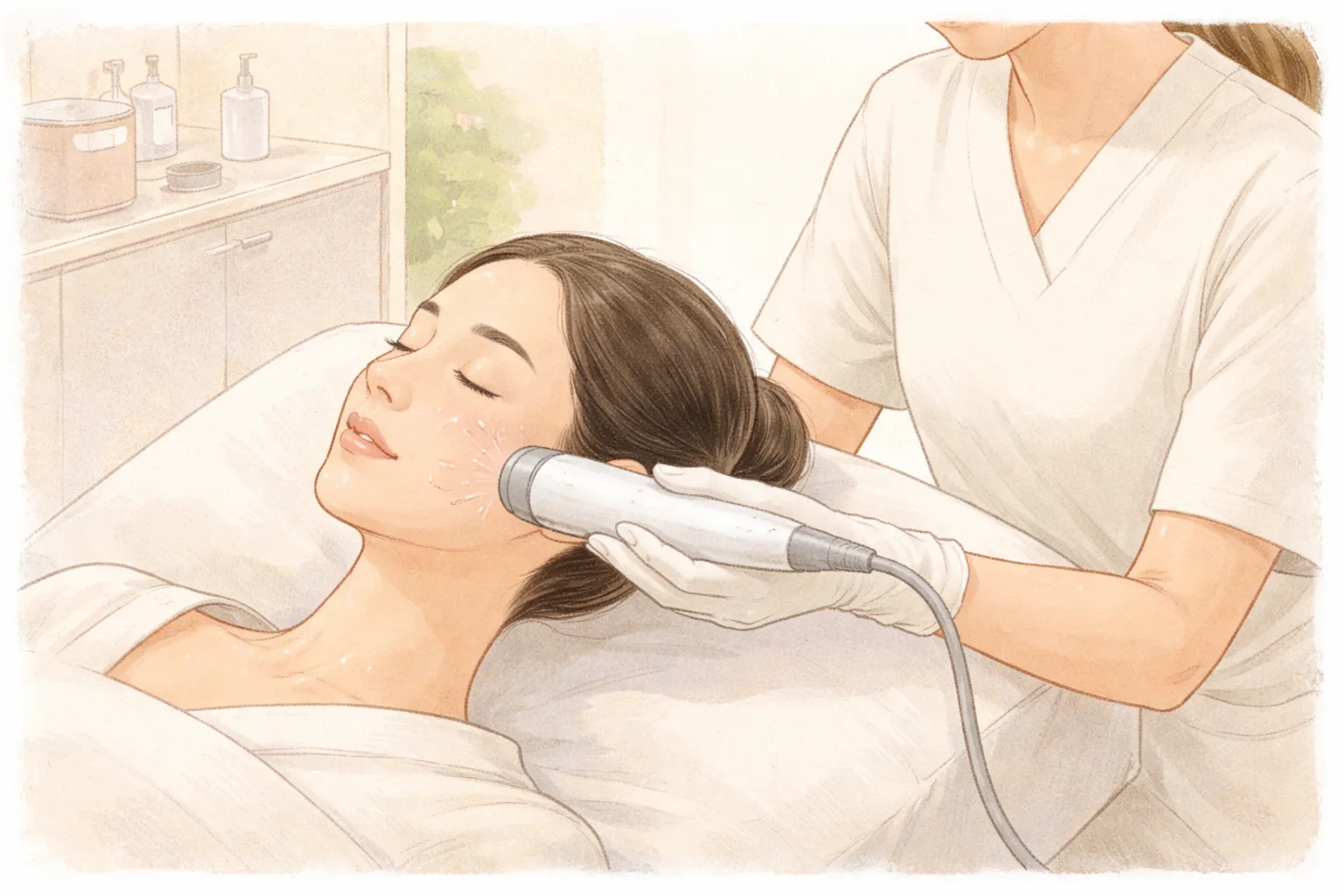
Thermage uses radiofrequency (RF), where electrical energy passes through skin tissue and converts into heat. The epidermis is protected with cooling while the dermis through to the subcutaneous fat layer is heated over a broad area at once, so the shape of the heat delivery differs from Ultherapy or Shurink Universe, which concentrate ultrasound at a single point (ATTITUDE Clinic column). This heat does two things: existing collagen fibers contract, and controlled heat stimulation triggers new collagen production (DermNet NZ's guide to Thermage).
So why does swelling appear? Heated tissue temporarily dilates blood vessels and draws fluid to the area, making it red and puffy. Part of the firm feeling right after treatment comes from this swelling, and it can ease somewhat as the swelling subsides. The real firmness changes settle in gradually after this early reaction passes.
Why swelling and redness happen, and when they fade
According to DermNet NZ, redness and swelling can appear after Thermage and usually settle within 1–2 hours, or at most a few days, and redness can be covered with makeup. The ATTITUDE Clinic column also notes that for about a day or two after treatment, mild redness and a warm sensation from heat stimulation may remain, and in most cases they fade on their own.
There is a common misunderstanding here. Some people think "if the swelling is severe, the treatment went wrong," or the opposite: "the more swelling, the better the result." The degree of swelling varies with energy level, area, and individual skin response, and the size of the swelling does not show the size of the result. Some of the initial firm feeling is due to swelling, so it is too early to judge results from the state right after treatment.
Three conditions that decide recovery speed
The biggest variable is the energy level and number of shots. The higher the energy, and the more shots delivered to one area, the stronger the heat stimulation reaching the tissue, and the greater the pain and recovery response (ATTITUDE Clinic column). DermNet NZ notes that treatment time varies with the treated area and the number of passes with the tip, and a single Thermage session can take 1–2 hours.
The area also shapes how recovery feels. Areas close to bone with dense nerves, such as the jawline, cheekbones, forehead, and eye area, feel more sensitive at the same energy, while thicker areas like the cheeks feel relatively less so. Add to that your skin type and thickness, your capacity to build new collagen, and your treatment history. This is why, even with the same energy, some people settle within a day while others stay red for a few days longer (Why do results differ even with the same treatment?).
Table 1 Three conditions that decide recovery speed
Type
How heat is delivered
Concerns it mainly addresses
Recovery pattern
Thermage (RF)
Broad heating from dermis to subcutaneous fat
Loss of firmness over a wide area, skin texture
Initial firm feeling (partly swelling), then further changes over 2–6 months
Eye Thermage
Dedicated configuration for the eye area
Firmness care around the eyes
Same principle, but stimulation tends to feel stronger due to the area's characteristics
Ultherapy · Shurink Universe (HIFU)
Small heat points at a set depth
Deep sagging, jawline
No major change right away; if there is change, it appears at 2–3 months
Swipe sideways to see the whole table.
In short, the broad recovery picture is similar across devices. A heated area settles its swelling and redness within a few days, and the actual firmness changes appear over the following months. If you have an important date, it is better to leave a few days between treatment and that date.
If this sounds like your situation
When a wedding or shoot is 1–2 weeks away
Swelling and redness usually settle within a few days, but photos taken while they are still present can change how you look. If you have a fixed date, it is better to mention your schedule during consultation and set the treatment timing from there. When a shoot is close, booking with recovery time factored in is the way to avoid rushing the result.
When you have work or class the very next day
For most people, makeup is possible the next day, so going to work itself is not a major problem. On the day of treatment, avoid saunas, intense exercise, and alcohol, and be more thorough than usual with sun protection. However, if the energy was set high, redness can last a day or two longer, so it is safer to leave a gap before a day with an important presentation.
When your eye area is thin and sensitive
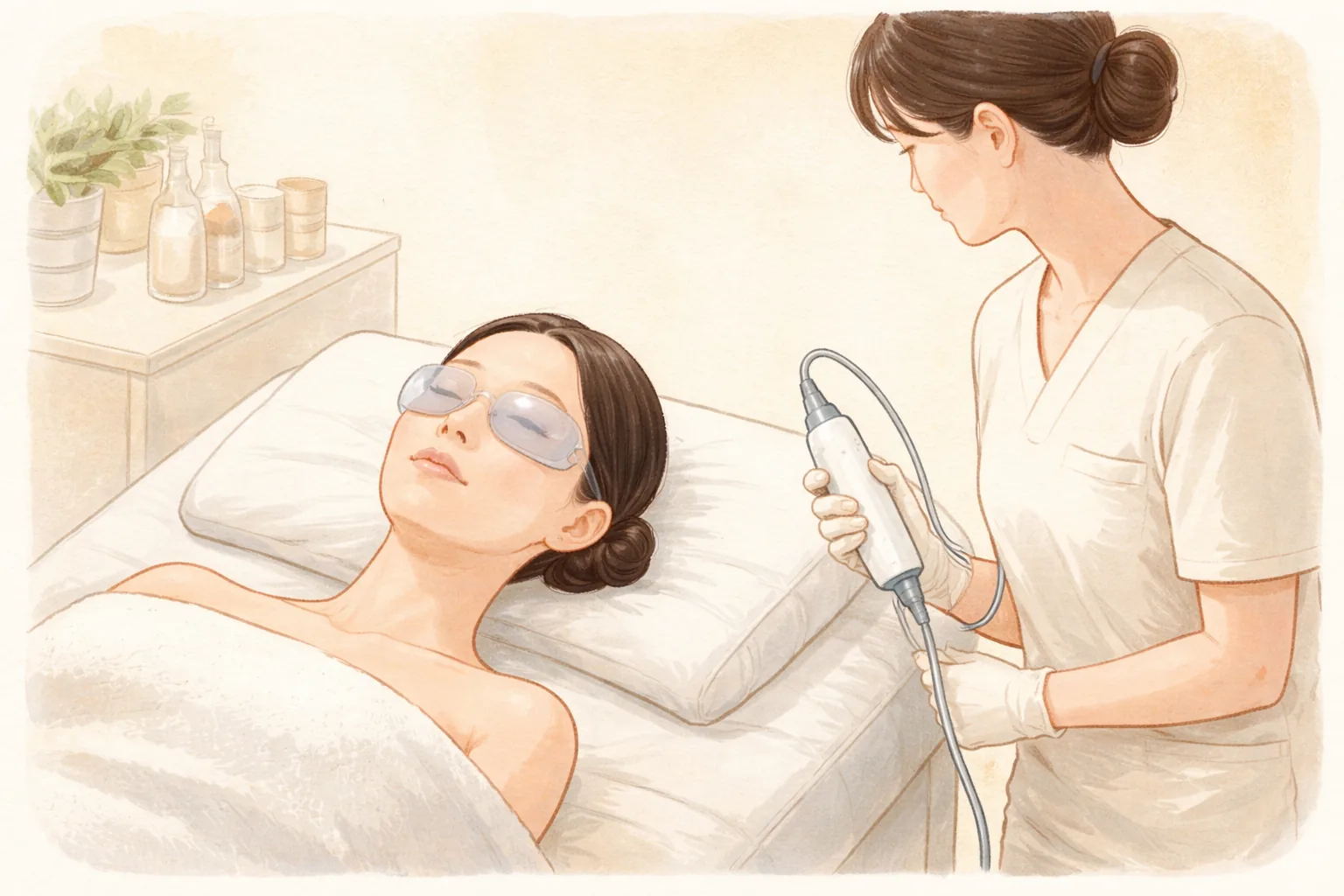
Because the eye area is close to bone with dense nerves, it can feel sensitive even at the same energy. Eye treatments use a plastic eye shield that meets specifications because of the risk of corneal damage, and metal shields are not used since they can actually deliver RF heat to the eye (FDA MAUDE report). It is better to mention lens use and any eye history during consultation.
When you are on a short stay and getting treatment
If the treatment day and the next day are packed with plans, it is better to first calculate how much time you can give to recovery. The degree of redness and swelling differs from person to person, and if your flight is soon, it helps to build a cooling and moisturizing plan together during consultation.
Tell us before your consultation
Recent sun exposure and travel schedule
Medications you take and active ingredients in your skincare
Your treatment history (device, number of shots, how you responded)
Your sensitivity to pain
Fixed dates such as weddings, shoots, and business trips
If an eye treatment is coming up, whether you wear lenses and any eye history
How ATTITUDE Clinic proceeds
AI skin analysis record — Your skin condition is recorded and organized so you and the doctor look at the same information together. The analysis tool only organizes information to support consultation and does not make a medical diagnosis; judgment rests with the doctor.
Doctor consultation — Your concerns, lifestyle habits, previous treatment experience, and the time you can give to recovery are added to the analysis record to decide together whether to treat, at what intensity, and in what order.
Treatment performed by the doctor — The doctor performs the treatment directly according to the plan set in consultation, adjusting intensity while watching your skin's response during the session.
Recovery and aftercare — The progress of redness and swelling is checked, and guidance is given on sun protection, moisturizing, and when to return.
The devices used for this topic are Thermage FLX by Solta and Eye Thermage (Treatments and pricing). The reason the doctor handles everything from consultation to treatment is to keep the plan set in consultation and the actual treatment from drifting apart.
Aftercare and side effects
Soothing — On the day of treatment, cold compresses may help settle heat and swelling. The method is decided together with the medical team.
Moisturizing — Skin that has received heat stimulation tends to dry out, so be more attentive to moisturizing than usual.
Sun protection — During this period your skin's barrier is temporarily weaker, so applying sunscreen carefully is the way to reduce pigmentation.
Checking progress — For a few days, watch whether redness and swelling are decreasing and whether tenderness remains when pressed.
Common reactions are redness, swelling, tenderness when pressing along the jawline, small bruises, and temporary numbness or reduced sensation. They usually settle within a few days but can last longer. According to DermNet NZ, reported side effect rates for Thermage are under 1%, with swelling, redness, risk of burns, blisters, and scars, and tingling and burning lasting a few days reported (ATTITUDE Clinic column). Rarely, burns, blisters, small scars, temporary facial muscle weakness, and unwanted loss of fat layer volume can occur.
The FDA has a reported case of eye burn after Eye Thermage. In that case, the eye was red and swollen for two days after treatment, then crusted with pain, and cold compresses and ointment were used for treatment. The same report states that blisters and redness are known side effects of Thermage, and because the procedure creates heat in the upper layers of the skin, burns and the blisters and crusting that follow can occur (FDA MAUDE report).
If blisters form, if pain keeps worsening, or if you notice changes different from what was explained before treatment, it is safer not to wait and to seek medical care.
FAQ
Can I return to normal life the day after Thermage treatment?
For most people, yes. For a day or two right after treatment, mild redness and a warm sensation may remain, but they tend to fade on their own, and from the next day we advise that washing your face, wearing makeup, and going to work are manageable. However, redness can last longer depending on energy level, number of shots, and area, so if you have an important date, it is better to mention it during consultation. Avoiding saunas, intense exercise, and alcohol on the day of treatment helps recovery.
How long do swelling and redness usually last?
According to DermNet NZ, redness and swelling settle within 1–2 hours, or at most a few days. The ATTITUDE Clinic column also notes that redness and a warm sensation for about a day or two mostly fade on their own. The degree of swelling varies with energy level, area, and individual skin response, and more swelling does not mean a better result.
How are pain and anesthesia managed during treatment?
According to DermNet NZ, most cases do not require local anesthesia, sedation, or painkillers, and during treatment the energy level is raised or lowered based on feedback about heat and discomfort. Pain varies widely with energy level and nerve density by area, so the feel differs between cases needing strong energy for significant sagging and cases using low energy for prevention. If you are sensitive to pain, it is better to discuss anesthesia options and energy adjustment during consultation.
Does Eye Thermage feel different to recover from because it is the eye area?
The principle is the same, but the eye area has thin tissue and dense nerves, so it can feel more sensitive at the same energy. Eye treatments use a configuration for the eye area along with a plastic eye shield that meets specifications to reduce the risk of corneal damage. According to the FDA report, metal shields can deliver RF heat to the eye and are not suitable for Thermage. If you wear lenses or have an eye history, it is safer to mention it during consultation.
What should I check when choosing a clinic for Thermage?
Your criteria should include who performs the consultation and treatment, whether the devices and tips used are genuine, and how they contact you and follow up if an adverse reaction occurs. ATTITUDE Clinic decides what is needed and what is not together with the doctor based on the analysis record and examination, and the doctor handles everything from consultation to treatment. Treatment items and unit prices are also disclosed. Rather than recommending a particular clinic, the starting point for judgment is whether it is a place where you can explain your skin condition and recovery time and build a plan that fits them together.
At a glance
Table 2 At a glance
Item
Key point
Swelling · redness
Usually settles within 1–2 hours, or at most a few days
Back to daily life
For most people, washing face, makeup, and work possible the next day
What decides recovery
Energy level, number of shots, area, skin thickness and recovery capacity
When results are felt
Initial firm feeling, then further changes over 2–6 months
What to avoid
Saunas, intense exercise, alcohol on the day of treatment
Signs you need care
Blisters, worsening pain, changes different from expected
This article offers general health information. It is not a substitute for diagnosis or treatment based on your own condition, so please talk through your situation with a doctor.