Thermage Results: When They Show and How Long They Last
How Thermage radiofrequency works in the dermis, when results appear and what sets how long they last, plus pain, recovery, aftercare and eye-area cautions.
Written by ATTITUDE Clinic Editorial Team
The question that comes up most before Thermage is this: "If I get this, when will I see a difference, and how long will that change last?" It's easy to get confused when the tight feeling in your face settles within a few days—was there no effect, or is it just not time yet? This article walks through what Thermage does inside the skin, when changes appear, and the factors that determine how long those changes last.
The Bottom Line First
Thermage uses radiofrequency (RF, where electrical energy passes through skin tissue and turns into heat) to warm the dermis, first contracting collagen (the protein that keeps skin firm and supported) and then starting the process that creates new collagen in response to that heat stimulus (Ultherapy, Shurink and Thermage: Same Lifting Category, Different Mechanisms?). So the tightness right after treatment is only partly real change—the rest may be swelling—and the point when new collagen becomes noticeable is usually between 2–6 months. How long it lasts isn't determined by a single number; the speed at which collagen is built and broken down, treatment intensity and coverage, and UV exposure all factor in together.
What Does Thermage Do Inside the Skin?
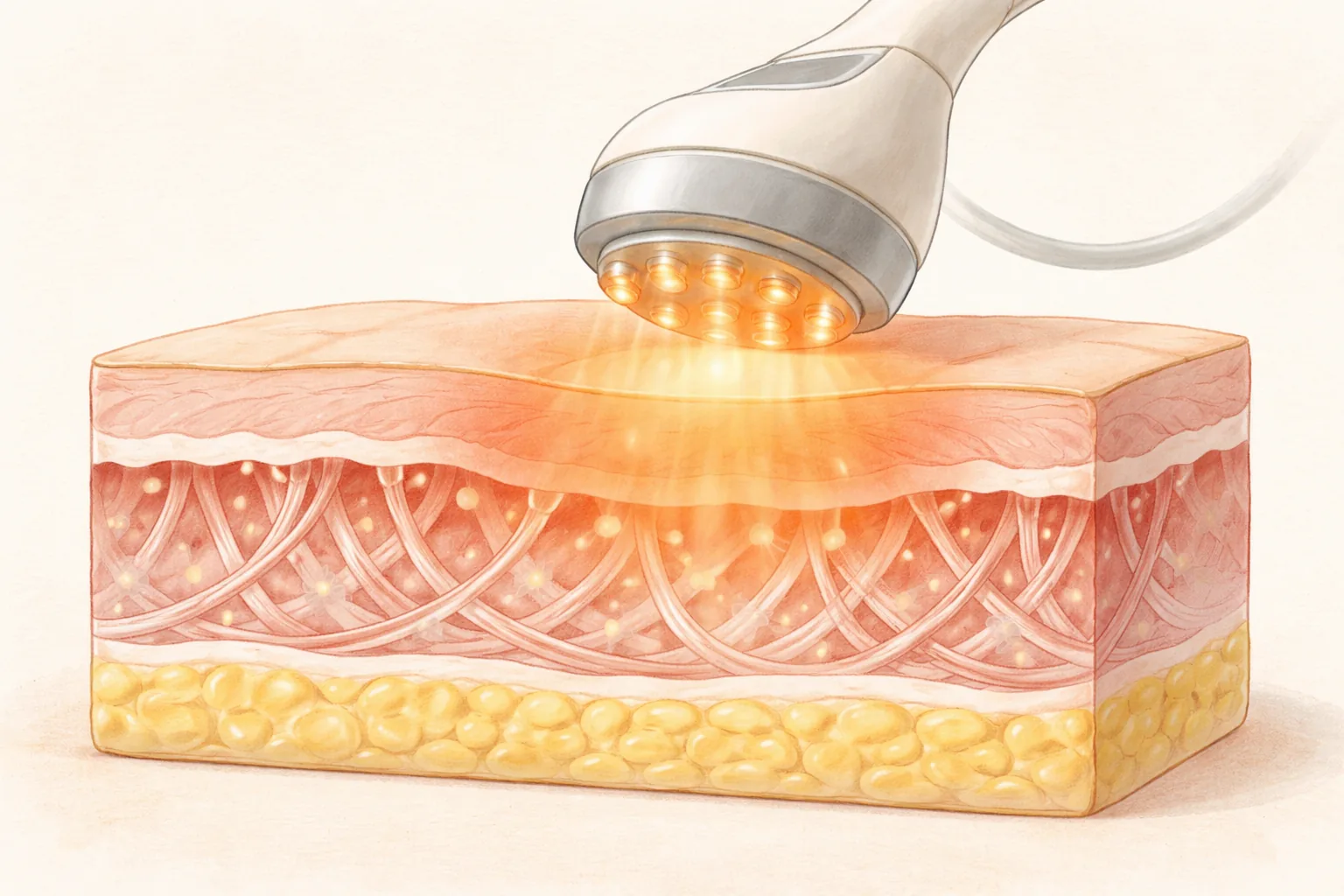
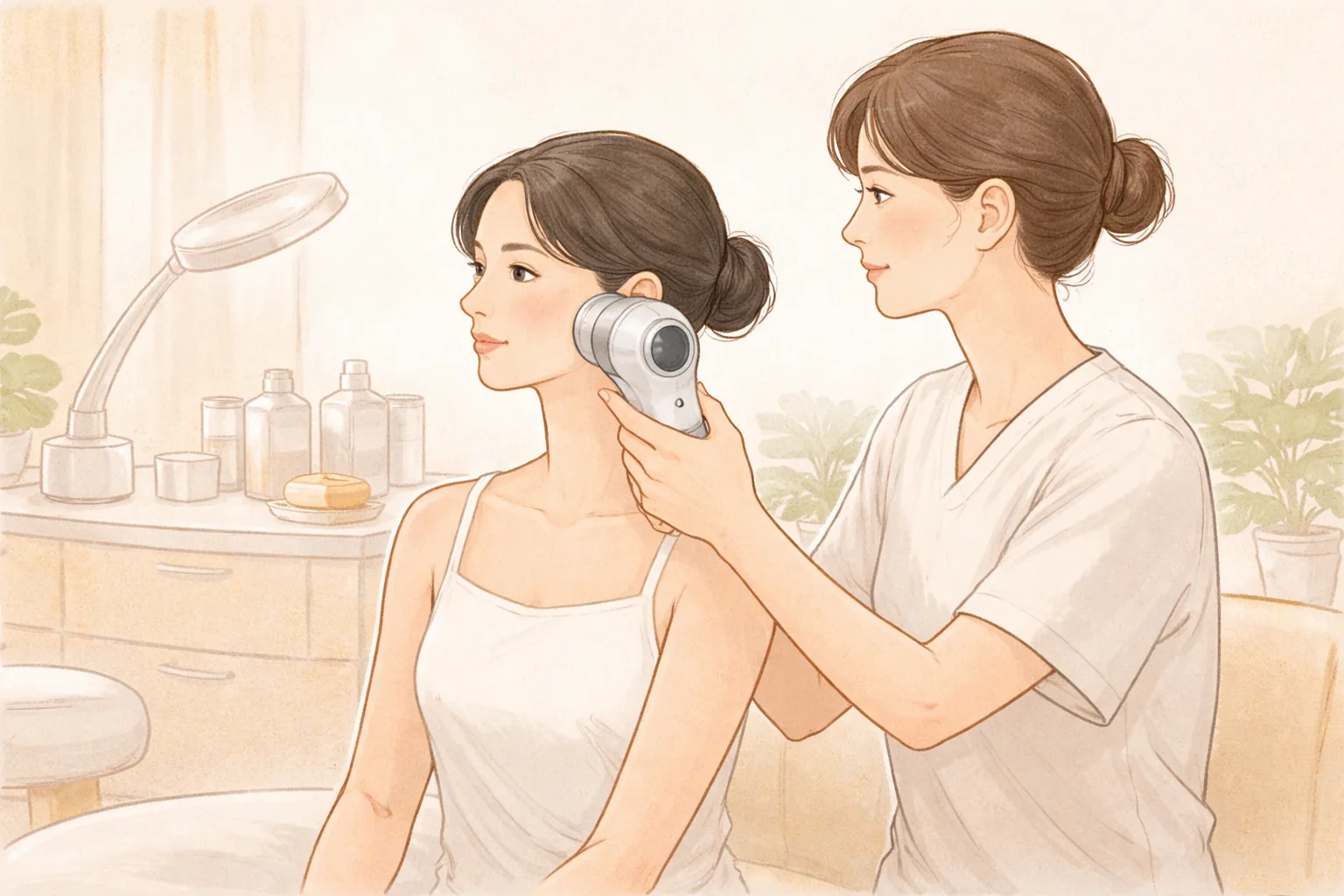
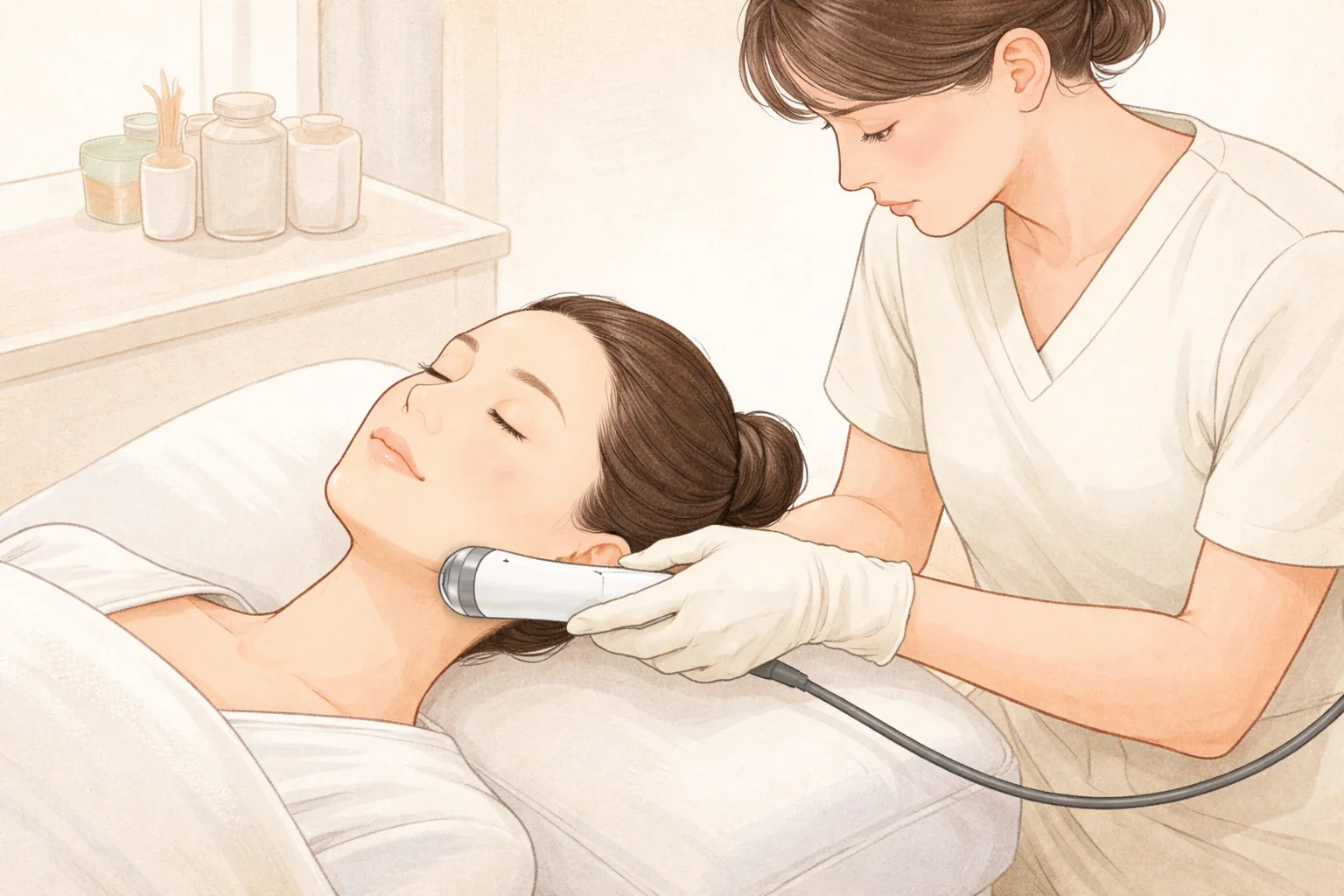
The energy Thermage uses is medically called RF (radiofrequency). When electrical energy passes through skin tissue, it converts to heat in the tissue—not by focusing energy into a single point like a drill, but by heating a broad area from the dermis down to the subcutaneous fat layer all at once (Ultherapy, Shurink and Thermage: Same Lifting Category, Different Mechanisms?). This heat does two things. It contracts existing collagen fibers to tighten the tissue, and it sends a signal for new collagen to be produced in response to the controlled heat stimulus (DermNet).
This is where misunderstanding often arises. If your face feels firm and tight right after treatment, it's easy to think "the effect came immediately," but part of that early firmness may be swelling, and it can subside somewhat as the swelling goes down. The real result comes from the second thing—the process of collagen filling in over several months.
When Do Results Appear?
Here's the timeline in order. Right after treatment, you may feel firmness, and between 1–2 weeks, swelling and mild heat sensation subside. After that, additional change often appears gradually over 2–6 months (Ultherapy, Shurink and Thermage: Same Lifting Category, Different Mechanisms?). DermNet's guidance also notes that new collagen grows for about 6 months after treatment, so improvement may continue until then.
When improvement becomes visible varies from person to person. Some feel it right after treatment or within a few weeks, while others only notice after 2–3 months. The same source also clearly states that results are hard to predict and that some people see no clear improvement (DermNet). That's why judging results by the mirror one week after treatment is too early.
How Long Do Results Last?
DermNet suggests benefits of Thermage may last up to 5–10 years, but also notes this is an estimate that can only be confirmed over time (DermNet). ATTITUDE Clinic, on the other hand, advises setting repeat timing around roughly 1 year based on how things progress (Ultherapy, Shurink and Thermage: Same Lifting Category, Different Mechanisms?). The reason these two numbers seem to conflict is that they measure different things. What actually determines the next session is the current state of the tissue, and how long that change continues is determined by collagen synthesis and breakdown rates, age, UV exposure and lifestyle habits, and treatment intensity (energy level and shot count).
This is also why results differ even with the same-named treatment. Skin thickness, the ability to produce collagen on its own, and regeneration speed vary from person to person (Why Do Results Differ Even With the Same Treatment?), and even with the same analysis results, which device to use in what order and at what intensity is decided differently during consultation. It's better to approach this as a concept of individualized planning rather than a one-time treatment.
What's the Difference Between 600 Shots and 900 Shots, and Eye Thermage?
On ATTITUDE Clinic's price list, Thermage FLX 600 shots and 900 shots, and Thermage Eye 225 shots and 450 shots are listed as separate items (Treatments and Pricing). Shot count is determined together with treatment coverage, so how far to treat across the whole face and whether to address thin areas like the eye area separately are decided during consultation.
Since Eye Thermage is an item that treats the eye area, eye protection is important. The FDA medical device adverse event reports include cases of eye burns after Thermage treatment, and the manufacturer emphasizes that a correctly sized plastic eye shield must always be used when treating the eyelid, and that metal eye shields can transmit RF heat to the eye and cause damage (FDA MAUDE).
Table 1 What's the Difference Between 600 Shots and 900 Shots, and Eye Thermage?
Item
Energy Used
Main Concern Targeted
Expected Course
Thermage FLX
Radiofrequency (RF), broadly heats dermis to subcutaneous
Skin texture and elasticity loss over a broad area
Early firmness, then additional change over 2–6 months
Thermage Eye
Radiofrequency, eye area
Thin areas like the eye area
Coverage and intensity set during consultation
XERF
Radiofrequency (monopolar RF) lifting category
Suitability judged during consultation
Application scope and intensity set during consultation
Ultherapy and Shurink
Ultrasound (HIFU), focused into a single point in deeper layers
Localized deep sagging like the jawline
If there's change, it's gradual over 2–3 months
Swipe sideways to see the whole table.
In Summary Thermage results show not immediately after treatment but through the process of collagen filling in over 2–6 months, and how long that change lasts is determined by factors like skin thickness and regeneration speed, treatment intensity, and UV exposure. Repeat timing is generally set around roughly 1 year based on how things progress.
If This Applies to You
If You Have an Important Shoot or Event in a Few Months
It's best to put the 2–6 month result timeline on your calendar first. If you get it one or two months before an event, that's when the early firmness is settling, so it's easy to judge that "it doesn't seem to be working." Redness and swelling usually clear within a few days, so the gap from your pre-event schedule is coordinated during consultation.
If You Want to Maintain Consistently
Collagen continues to be synthesized and broken down even after it's made. UV exposure and lifestyle habits affect this rate, so care between sessions matters more for longevity than the treatment itself. The next timing is set based on progress, so taking photos under the same lighting and angle in between helps with that judgment.
If Your Skin Is Sensitive or Prone to Redness
How energy levels and per-area intensity are divided is key. Even with the same energy, areas closer to bone like the jawline, cheekbones, forehead, and eye area feel more sensitive, while thicker areas like the cheeks feel less so (Ultherapy, Shurink and Thermage: Same Lifting Category, Different Mechanisms?). Letting us know about medications you're taking and recent treatment history before the procedure helps determine intensity.
If You're an International Visitor on a Short Stay
First check whether recovery time fits your schedule. Most people can return to daily activities the next day and redness can be covered with makeup, but it may linger a few extra days for some. It's best to leave a buffer between your return flight and the treatment date, and to decide during consultation when to check progress.
Please Tell Us Before Consultation
Recent UV exposure and outdoor activity level
Medications you're taking (including anticoagulants) and skincare ingredients you're using
Device, shot count, product, dosage, and date of previous treatments, and how you responded then
Fixed-date events like weddings or shoots
Whether you're sensitive to pain and whether you need calming or anesthesia options
How ATTITUDE Clinic Proceeds
AI Skin Analysis Record — Skin condition is recorded and organized so you and the doctor look at the same information together. The analysis tool only records and organizes information and does not make medical diagnoses; judgment is made by the doctor.
Doctor Consultation — Your concerns, lifestyle habits, and previous treatment experience are added to the analysis record to decide together whether Thermage is right, how to set coverage and intensity, and how to divide it with other categories that address deeper layers.
Doctor-Performed Treatment — The doctor performs the treatment directly according to the plan set in consultation, adjusting intensity while observing skin response during the procedure.
Recovery and Care — The next visit timing is set based on progress, and sun protection and moisturizing in between are advised.
The devices ATTITUDE Clinic handles for this topic are Thermage FLX and Thermage Eye, XERF, and Ultherapy and Shurink for deeper layers (Treatments and Pricing). Which device to use in what order is decided by looking at skin condition and how much recovery time you have (Why Do Results Differ Even With the Same Treatment?).
Aftercare and Side Effects
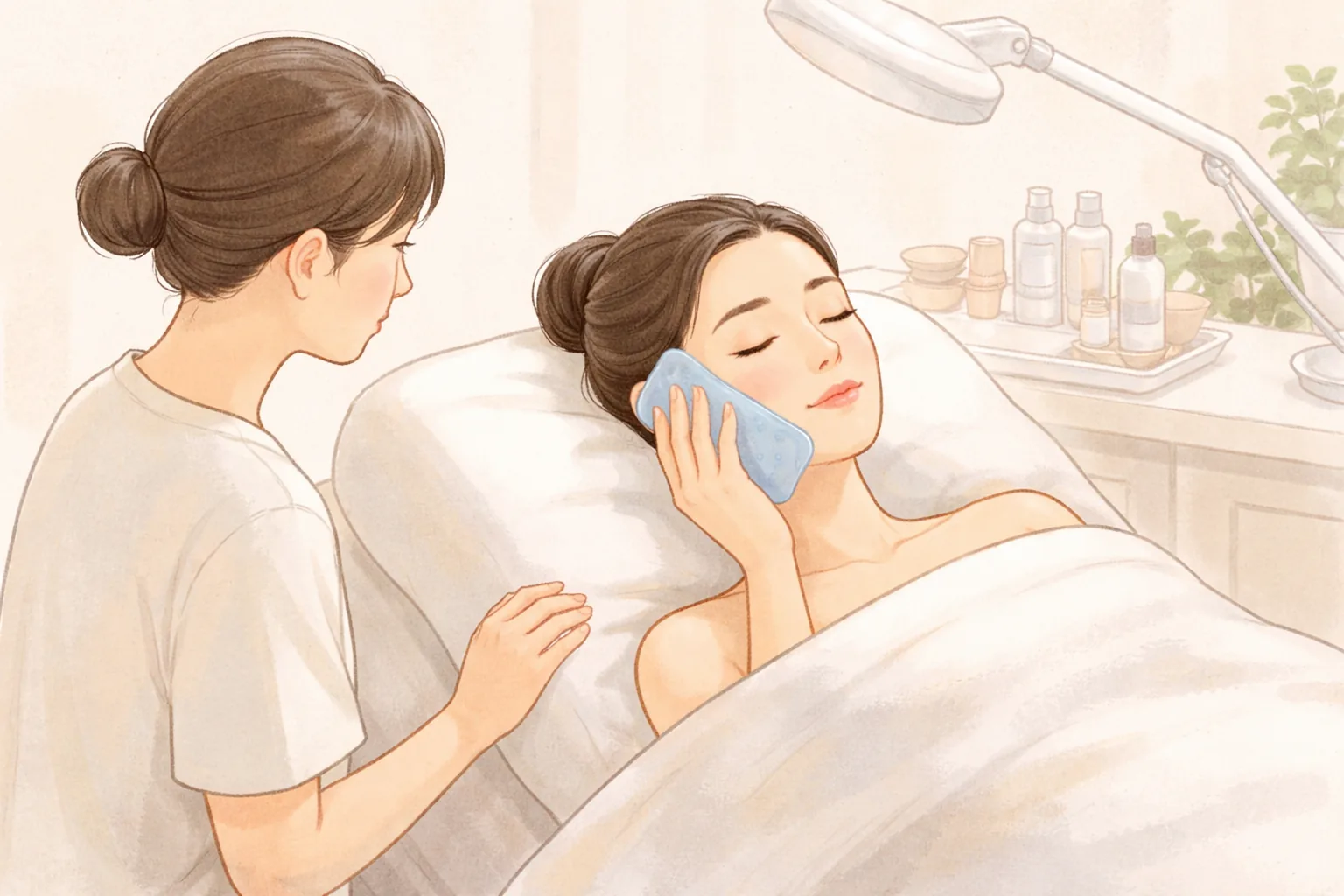
Calming — Heat sensation remains right after treatment. Cold compresses can help with swelling, and avoid saunas, intense exercise, and alcohol on the same day.
Moisturizing — The skin barrier is temporarily weakened, so moisturize more than usual.
Sun Protection — UV exposure during this period makes it hard to recover without pigmentation. Apply more carefully than usual for a few days.
Progress Check — Redness and swelling usually subside within a few days, and makeup is possible from the next day. Changes appear over 2–6 months, so take photos again at that point to compare.
Common side effects include temporary swelling, redness, mild heat sensation, small bruises, and temporary numbness or reduced sensation, which usually subside within a few days. Rarely, burns, blisters, small scars, temporary facial muscle weakness, and unwanted fat-layer volume loss can occur (Ultherapy, Shurink and Thermage: Same Lifting Category, Different Mechanisms?). DermNet notes the reported side effect rate for Thermage is under 1%, while also mentioning swelling and redness and the risk of burns, blisters, and scars (DermNet). When treating the eye area, corneal damage is treated as a known risk, and eye burn cases have been reported (FDA MAUDE). If blisters form, pain progressively worsens, or unexpected changes last more than a few days, it's safer to seek medical attention rather than wait.
Frequently Asked Questions
When do Thermage results appear?
The tightness right after treatment is a mix of collagen contraction and swelling, and the change from new collagen filling in usually appears over 2–6 months. When improvement becomes visible varies from person to person—some feel it within a few weeks, others after 2–3 months. It's also worth remembering that results are hard to predict and some people see no clear improvement.
How long do results last?
It's not set by a single value. Collagen synthesis and breakdown rates, age, UV exposure and lifestyle habits, and treatment intensity all work together. At ATTITUDE Clinic, repeat timing is set around roughly 1 year based on how things progress. It's a flow of gradually fading rather than disappearing at once, so comparing photos taken under the same conditions is more accurate than how it feels.
The tightness disappeared within a few days after treatment—does that mean it didn't work?
It's too early to judge at that stage. Part of the early firmness may be swelling, and it's natural for it to subside as the swelling goes down. Real change comes later from the collagen-building process, so the evaluation point should be between 2–6 months. Until then, taking photos under the same lighting and angle helps you avoid confusion about whether there's change, and you can evaluate by looking again within 2–6 months. Even if there are tightness changes in between, it may be the swelling pattern, so comparing with records is better.
Is Eye Thermage safe for the eye area?
The eye area has thin skin and the eye structure is close by, so protection comes first in this area. The manufacturer emphasizes that a correctly sized plastic eye shield must always be used when treating the eyelid, and that metal eye shields can transmit RF heat to the eye and cause damage. Since eye burn cases have been reported, who performs the procedure and how eye protection is handled are especially important for eye-area treatments.
What should I look for when choosing where to get Thermage?
Look at how treatment coverage and intensity are decided, who performs the procedure, and whether previous treatment records are reviewed during consultation. Even with the same-named device, the feel and recovery differ depending on energy level and shot count settings, and the process of adjusting while observing response during treatment can't be filled by a manual alone. ATTITUDE Clinic decides together what's needed and what isn't based on analysis records and examination, and the doctor handles everything from consultation to treatment.
At a Glance
Table 2 At a Glance
Item
Key Point
Mechanism
Radiofrequency broadly heats dermis to subcutaneous, contracting collagen and starting new collagen production
Onset
Early firmness (partly swelling) followed by additional change usually over 2–6 months
Longevity
Individual variation is large; repeat is decided around roughly 1 year based on progress
Pain & Recovery
Varies by energy level and nerve density per area; redness and swelling usually within a few days
Eye Area
Eye protection is priority for Eye Thermage; plastic eye shield use is the rule
Determining Factors
Skin thickness and regeneration speed, treatment intensity and coverage, UV exposure and lifestyle habits
This article offers general health information. It is not a substitute for diagnosis or treatment based on your own condition, so please talk through your situation with a doctor.