Titanium Lifting Consultation: What to Check for Face and Body First
Titanium lifting explained for visitors to Sinsa Station, Gangnam: how the 3-wavelength laser works, face vs body planning, when results appear, pain and recovery, and how to check cost by kJ plus VAT.
Written by ATTITUDE Clinic Editorial Team
Search for Titanium lifting and you get a flood of information about face and body, price, pain, and how long it lasts — so it is hard to know what to ask first when you are actually sitting in the consultation chair. Even with the same device name, the experience changes depending on which area is treated, at what intensity, and over how many sessions. This article walks through what Titanium does in the skin, the difference between face and body, when to check results, and how to confirm pain and cost at consultation, in order.
The short answer first
Titanium is a treatment that delivers heat to the skin using a laser that fires three wavelengths together to support lifting and tightening, and the ATTITUDE Clinic price list also classifies it as ‘lifting using a 3-wavelength laser.’ What you decide first at consultation is the area (face or body), total kJ, whether numbing is used, how you will judge results in a few weeks, and the standard for contacting the clinic if discomfort appears after treatment. Results are usually gradual over weeks to months rather than immediately after the session, so it is better not to judge by a day or two of change. Face and body have different skin thickness, so even a treatment with the same name is planned differently. Below, we unpack these five points one by one.
What does Titanium do in the skin?
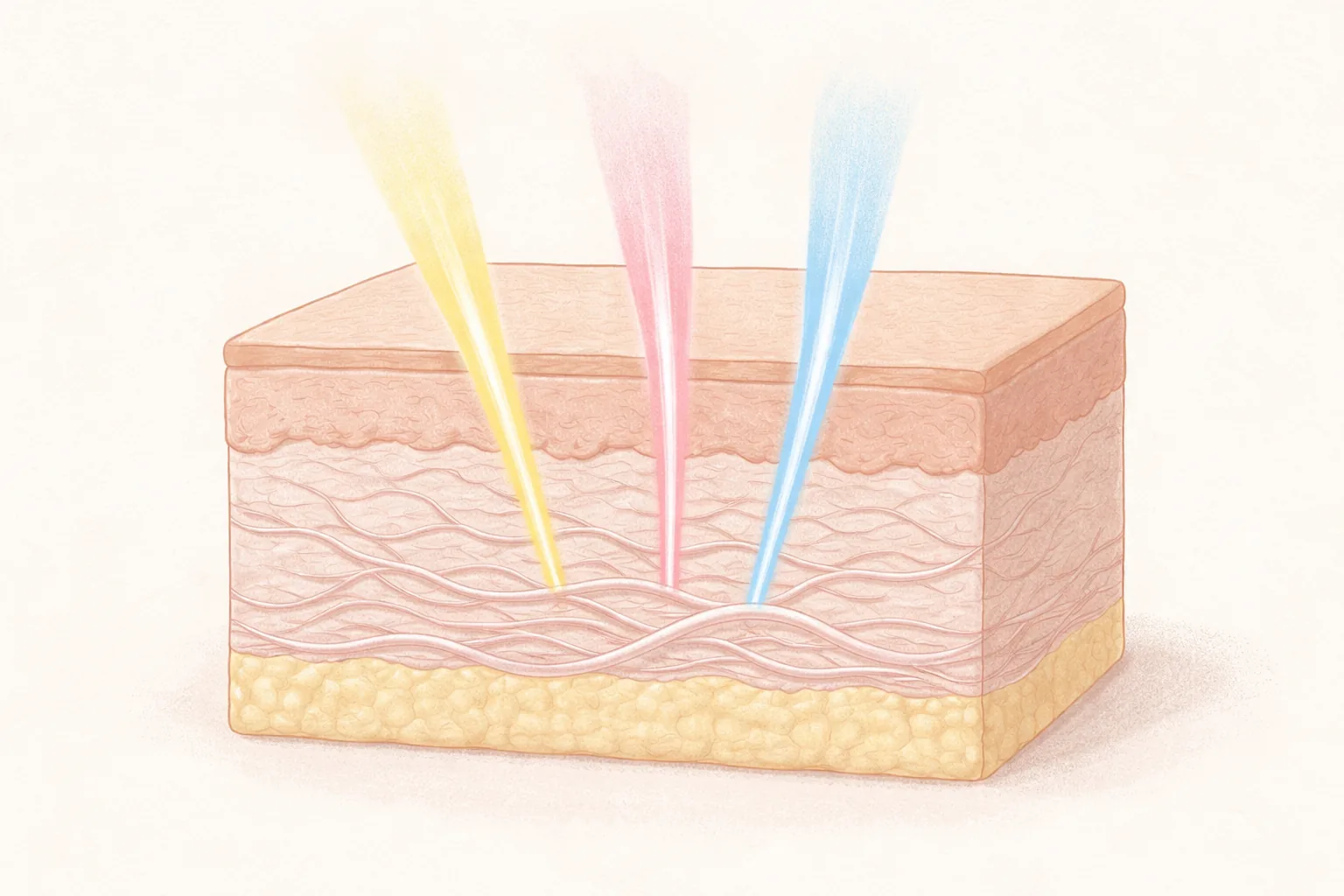
A laser is light energy gathered at one wavelength (a property like the color of light). When it reaches the skin, it is absorbed only by targets that respond to that wavelength and converted into heat or impact — this principle is called selective photothermolysis (the principle of concentrating energy on the target while touching surrounding normal skin less). The ATTITUDE Clinic column also explains lasers through this principle.(ATTITUDE Clinic column)
Titanium does not use one wavelength strongly; instead, it delivers three wavelengths at the same time. Why overlap multiple wavelengths? Skin differs in thickness and composition from the surface to the dermis and deeper layers, and each wavelength is absorbed well at a different depth. Overlapping wavelengths lets energy be delivered across several depths instead of concentrating on one layer. However, how far and how much each wavelength acts depends on the device and settings, so this is something to confirm at consultation.
Heat-based lifting is not just one method. According to American Academy of Dermatology material, ultrasound sends heat deep into the skin, while radiofrequency places a device on the skin and warms tissue beneath it.(American Academy of Dermatology material) Laser lifting is also one heat-based approach, using a method that delivers heat deeply without removing the surface. Heat itself is not the goal; the process in which collagen is rebuilt in response to heat is what leads to results. That is why the skin a few weeks later matters more than immediately after treatment.
But why does the phrase ‘it burns the skin’ follow it around? Right after treatment, the skin actually becomes red and stings, and lasers that treat the surface may leave a thin crust. Visible change can feel like a burn. The difference lies in how much heat is used and where. Even with the same heat, if it is concentrated on the target it becomes treatment, and if it spreads widely and excessively it becomes a burn.(ATTITUDE Clinic column) So settings and intervals suited to your skin, more than the type of laser, determine the result.
Same device for face and body — can you assess them the same way?
Face and body differ in skin thickness and fat layer thickness. Even with the same energy, thin areas may feel stronger and thick areas weaker, and the depth the energy reaches also differs. That is why the ATTITUDE Clinic price list separates Titanium face, Titanium Hyper face, Titanium body, and Titanium Hyper body into different items.(ATTITUDE Clinic price list) This is why it is hard to copy the same treatment name directly from face to body.
Even within the same face, areas differ. The forehead, cheeks, and jawline have different skin thickness and underlying structure, so rather than covering everything with one setting, it is more natural to divide intensity by area. The difference between Titanium and Titanium Hyper cannot be known just from the price list item names, so it is more accurate to confirm at consultation what setting difference it refers to.
Table 1 Same device for face and body — can you assess them the same way?
Category
Energy method
Generally known action
What to confirm at consultation
HIFU ultrasound (Ultherapy)
Lifting using ultrasound
Heat is delivered deep into the skin to encourage collagen production — the American Academy of Dermatology explains that with 1 treatment, gradual lifting and tightening often appears over 2–6 months
Total shot count, area, pain control method
Monopolar radiofrequency (Thermage)
Lifting using radiofrequency current
A method that warms tissue beneath the skin — it generally advises 1 treatment, with the best results around 6 months, and results may last 2–3 years when combined with skin care
Shot count, area, timing to check results
Titanium
Lifting using a 3-wavelength laser
A laser method that delivers heat deeply without removing the surface — laser tightening usually requires 3–5 sessions and appears gradually between 2–6 months after the last treatment
Total kJ, face vs body distinction, numbing
Titanium Hyper
Lifting using a 3-wavelength laser
The same laser heat delivery method as above
Setting difference from Titanium, total kJ, cost
Swipe sideways to see the whole table.
To sum up lifting is easier to understand when you divide it by ‘at what depth, and by what method, heat is delivered’ rather than by device name. Ultrasound, radiofrequency, and laser have different delivery methods, so the items to confirm also differ. Even for a treatment with the same name, face and body need separate plans.
When do results begin, and how do you check them?
The American Academy of Dermatology explains that results of non-invasive skin tightening treatments tend to appear gradually and look natural, and that while recovery burden is low, results are not dramatic.(American Academy of Dermatology material) The same material advises that radiofrequency is generally done once, some feel tightening right away, but collagen takes time to be made, so the best results appear around 6 months, and results may last 2–3 years with good skin care. It explains that ultrasound provides gradual change over 2–6 months with 1 treatment, while laser tightening may require 3–5 sessions and results appear between 2–6 months after the last treatment.
These figures are general guidance for lifting methods overall. They do not directly mean the timing for Titanium, so it is more accurate to ask at consultation what you will use as the standard a few weeks later. Deciding in advance whether you will look with photos, by touch, or by your own impression keeps your judgment steady. If you look at before-and-after photos, check whether the cases have a skin tone and skin type similar to yours.(American Academy of Dermatology guidance)
Pain, recovery, and cost: what should you confirm at consultation?
Pain varies with intensity, treatment area, individual sensitivity, and whether numbing is used. Even for the same treatment, some areas sting more, and if you are usually sensitive to pain or had a difficult experience with a previous treatment, it is better to say so in advance. Topical numbing can reduce discomfort when needed, and if you feel something unbearable during the treatment, you can tell the clinician right away so intensity can be adjusted.(ATTITUDE Clinic column)
Recovery differs by method. The American Academy of Dermatology explains that non-invasive treatments usually have almost no downtime, temporary redness and swelling are common reactions, and makeup is often possible right after treatment.(American Academy of Dermatology material) On the other hand, because these are heat-based treatments, if settings do not match your skin condition or you repeat treatment before recovery, the burden can increase.
Cost is checked on the price list in kJ units. The ATTITUDE Clinic price list separates Titanium and Titanium Hyper, face and body, shows the amount per 10kJ and amounts by 40–360kJ range, and notes that all amounts are VAT excluded.(ATTITUDE Clinic price list) The kJ shown is not a recommended treatment amount for an individual but a unit that separates items, so how many kJ suit your face or body is decided at consultation. Consultation fees, numbing fees, and whether aftercare is included are not shown in the amount, so ask separately. The American Academy of Dermatology also advises confirming the necessary number of sessions and duration, recovery, preparation and aftercare, and cost at consultation.(American Academy of Dermatology guidance)
If this sounds like your situation
If you have a ceremony or photo shoot coming up
Right after treatment, redness and swelling may overlap, so the closer the date, the narrower the range of options. If you tell us the ceremony date first, we can count backward from that date to set timing and intensity. If it is your first time receiving the treatment, it is especially better to start with some buffer.
If you want to manage it consistently
Rather than going strong all at once, dividing sessions while keeping the interval for skin recovery puts less burden on the skin. It is better to set one goal and schedule only the treatments needed for that goal at the right times. Treatment intervals vary with method, purpose, and skin condition, so they are adjusted while watching progress.(ATTITUDE Clinic column)
If your skin is sensitive or tends to redden
When the skin is in a sensitized state, the same settings can feel different. If cosmetics sting or you have recently had unusually sensitive skin after a treatment, please tell us at consultation. Medications you are taking and cosmetics you are using also affect intensity and timing.
If you are an overseas visitor on a short stay
If your stay is fixed, redness or dryness right after treatment may overlap with your schedule. If you tell us your return date and next commitments, intensity and type can be adjusted accordingly. Also decide in advance how you will contact the clinic if discomfort occurs after returning home.(ATTITUDE Clinic column)
Please tell us before consultation whether you have had a lot of recent UV exposure, whether there are medications or cosmetics you are taking or applying, whether your skin has ever been sensitive after a previous treatment, and whether you have unavoidable commitments such as a ceremony, photo shoot, or business trip. Even for the same treatment, timing and settings differ according to these four points.
How ATTITUDE Clinic proceeds
AI skin analysis record — current skin condition such as pigment, redness, texture, and pores is recorded with an analysis tool. Based on this record, the doctor judges the cause of your concern. The analysis tool records and organizes information to support consultation; it does not make a medical diagnosis.(ATTITUDE Clinic column)
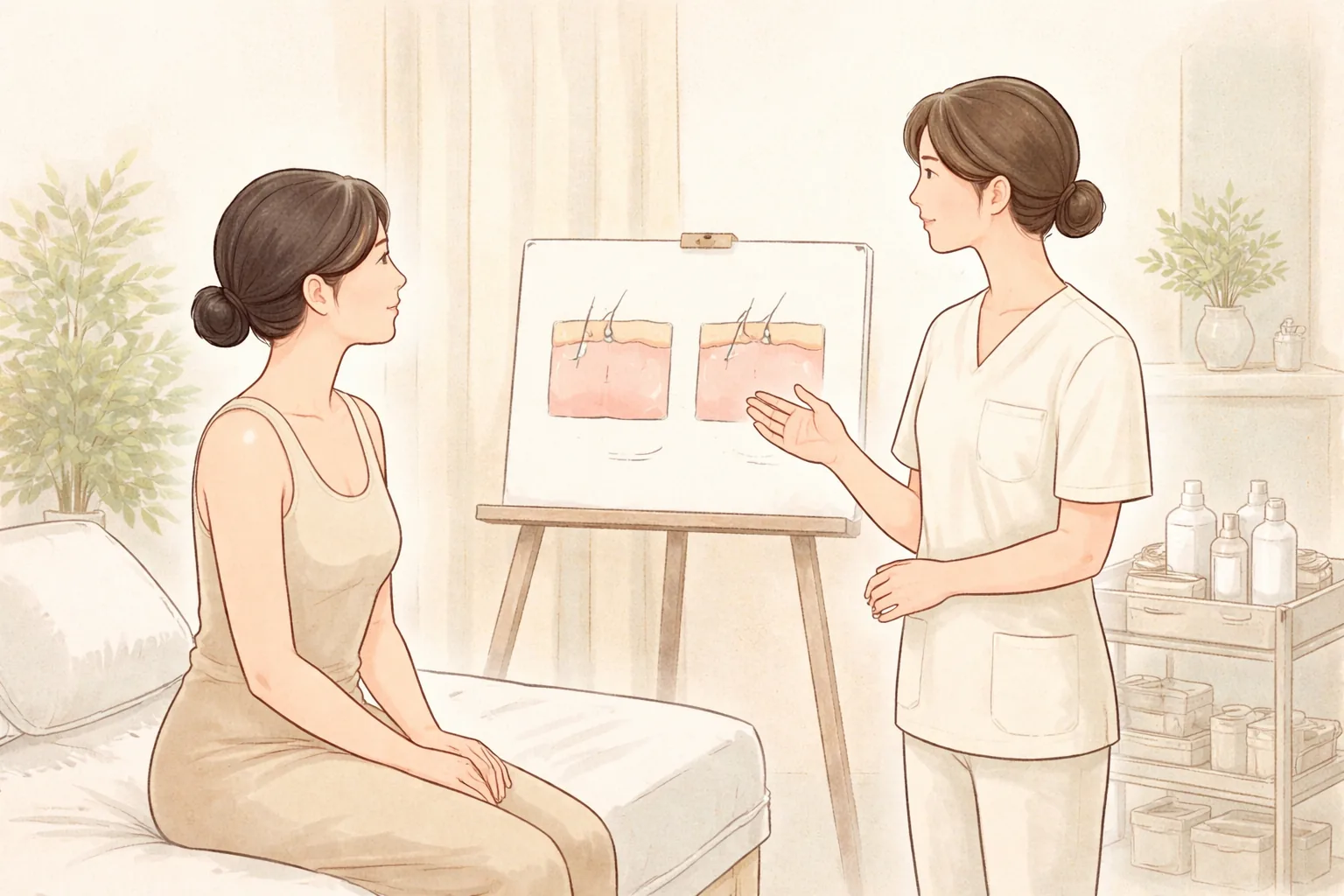
Direction designed through doctor consultation — schedule, pain sensitivity, and skin history are added to the analysis record to decide treatment type, intensity, and timing together. Whether it is face or body, total kJ, and numbing are also finalized at this stage.
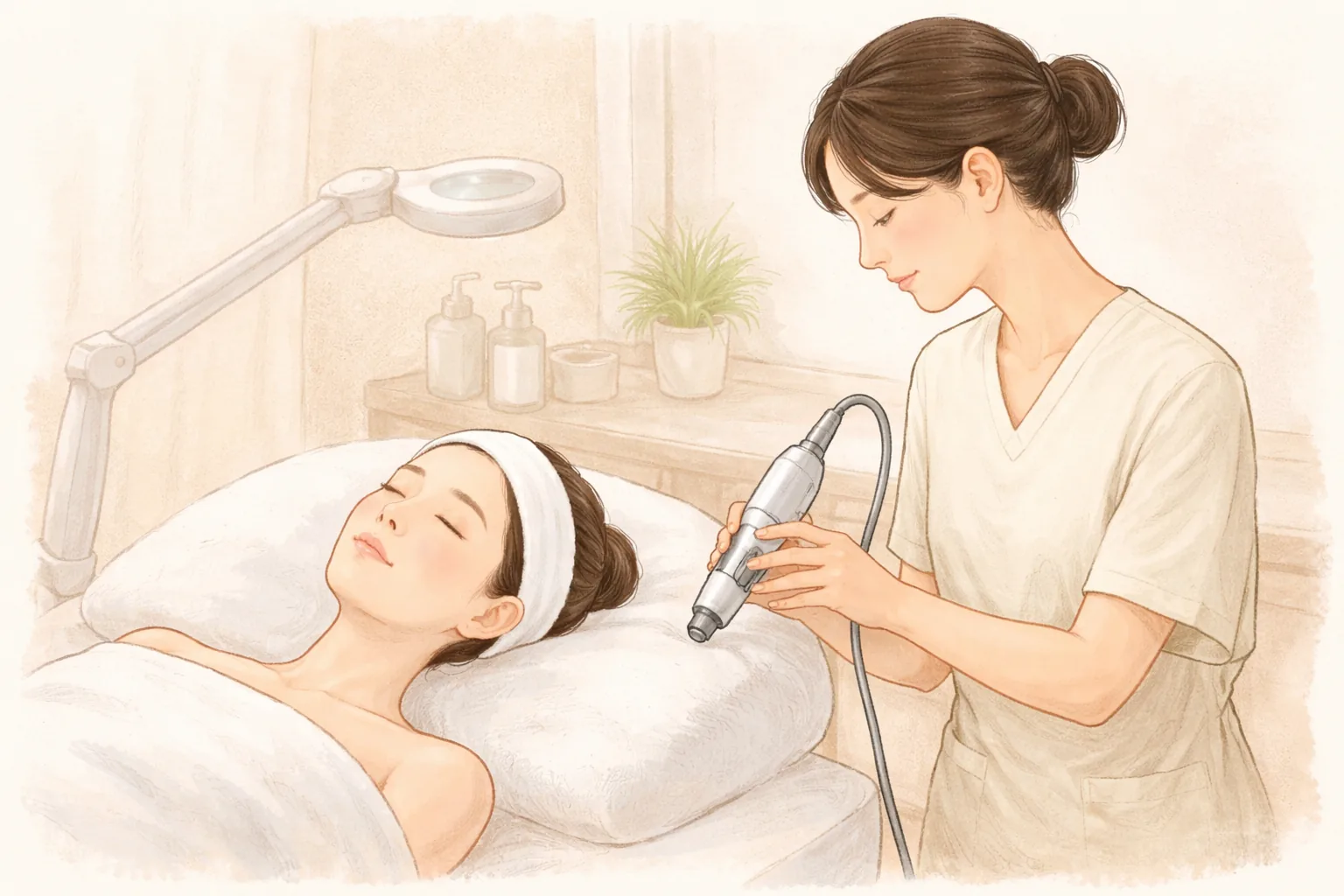
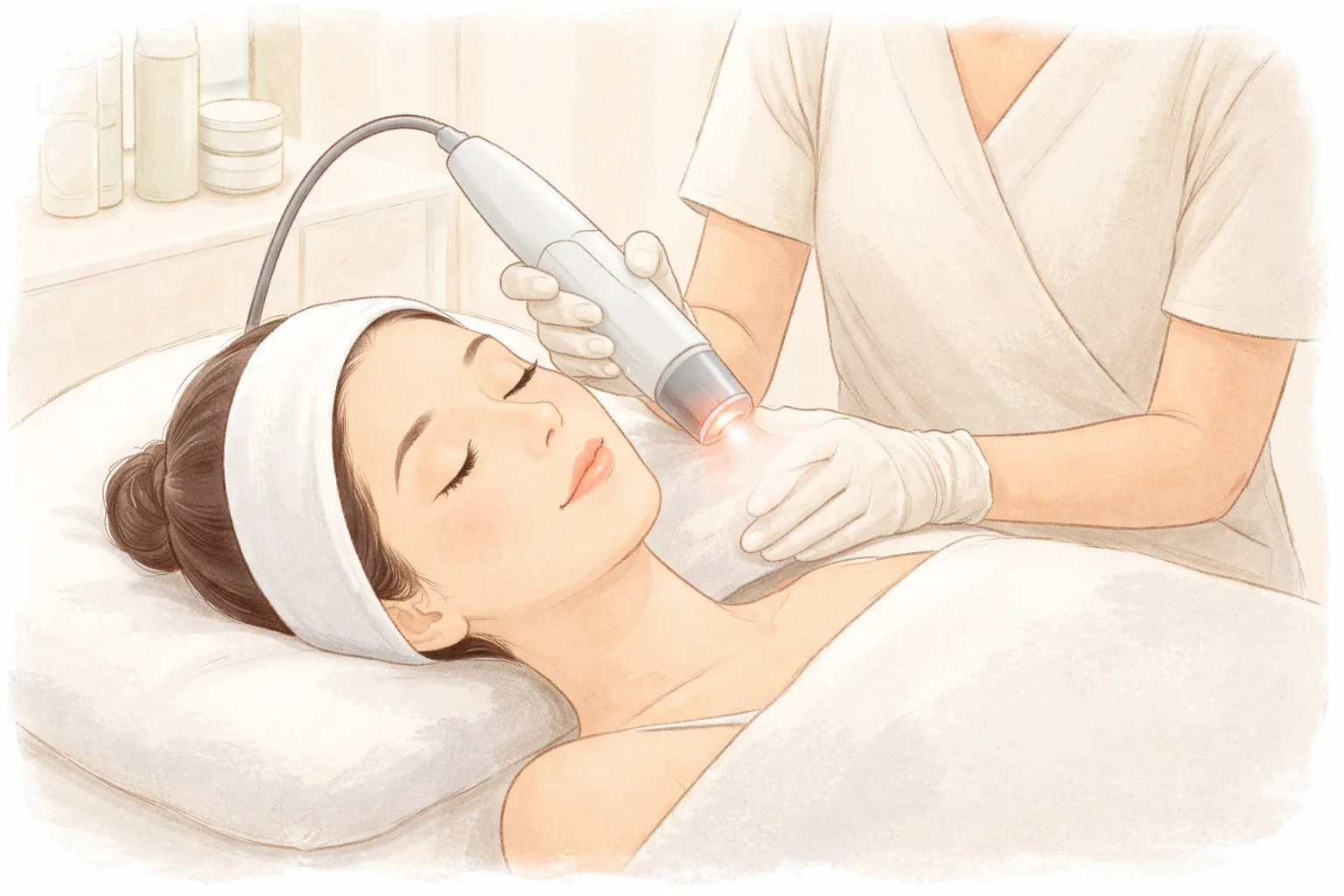
Treatment performed directly by the doctor — topical numbing is used when needed to reduce discomfort, and the doctor performs the treatment directly. The principle is not to recommend treatment beyond what is needed.(ATTITUDE Clinic column)
Recovery and care check — after treatment, precautions and how to have any discomfort checked are explained. The principle of authentic products, proper dosage, and fair pricing applies to lifting as well.
The devices for this topic are listed on the price list as Titanium face, Titanium Hyper face, Titanium body, and Titanium Hyper body.(ATTITUDE Clinic price list) The same price list also includes ultrasound lifting (Ultherapy), radiofrequency lifting (Thermage), and microwave lifting (Onda), so the approach can differ depending on your concern. Booking an appointment and confirming it are different. A request alone does not confirm it; it is confirmed only after you receive a confirmation contact from the clinic.(ATTITUDE Clinic booking guidance)
Aftercare and side effects
After treatment, manage it in the following order.
Soothing — right after treatment, the skin is temporarily sensitive. Avoid saunas, strong exfoliation, and irritating scrubs for the period you are advised.(ATTITUDE Clinic column)
Moisturizing — dryness can occur, so combine it with hydration care.
UV protection — apply sunscreen carefully throughout the recovery period. UV protection and moisturizing are the basics of recovery.
Progress check — if redness or heat lasts longer than expected or pain worsens, do not endure it; visit the clinic to have it checked.
Side effects can appear from common to rare as follows. Side effects can occur even with appropriate settings. Redness, heat, swelling, and stinging are common, and lasers that treat the surface may leave a thin crust. Temporary pigmentation or bruising may also occur. Rarely, blisters, hypopigmented spots, infection, scarring, or pigment rebound may occur.(ATTITUDE Clinic column)
Times to visit without waiting are these: when redness or heat continues beyond the advised period or pain gradually worsens, when blisters or oozing occur, or when pigment appears darker or scarring seems to have formed. Before treatment, the doctor explains the planned settings and the side effects that may follow.
Frequently asked questions
How does Titanium lifting work?
It delivers laser energy from three wavelengths to the skin, converts it into heat, and encourages the process in which collagen is rebuilt in response to that heat. Lasers are designed so energy is absorbed only by targets that respond to the wavelength, touching surrounding normal skin less; this principle is called selective photothermolysis.(ATTITUDE Clinic column) However, each wavelength reaches a different depth and results vary with settings, so how strongly it will act on your skin should be confirmed at consultation.
When do results appear, and what should you use as the standard?
The American Academy of Dermatology explains that non-invasive lifting results tend to appear gradually, with a gap of several months depending on the method.(American Academy of Dermatology material) So it is better to judge by your skin a few weeks later rather than the change the next day. If you decide at consultation whether you will look by photo or by touch a few weeks later, your judgment will not waver. If you look at before-and-after photos, check whether the cases have a similar skin tone.(American Academy of Dermatology guidance)
How much pain is there during the treatment?
It varies with intensity, area, and individual sensitivity. Even for the same treatment, the feeling differs by area, and topical numbing can reduce discomfort. If you are sensitive to pain or had a difficult experience with a previous treatment, please tell us at consultation. If you feel something unbearable during the treatment, tell us right away so intensity can be adjusted.(ATTITUDE Clinic column)
How are maintenance period and next treatment interval decided?
As general guidance for lifting methods overall, radiofrequency may last up to 2–3 years when combined with skin care, and ultrasound provides change over 2–6 months with 1 treatment.(American Academy of Dermatology material) This is guidance for methods overall, so it cannot be directly transferred as Titanium’s maintenance period. Next treatment timing is decided at consultation by looking at recovery, goals, and the UV environment you are exposed to.
When choosing a clinic, how should I check cost?
Look at the attitude of checking rather than the list. Does the clinic first check which layer your concern comes from, does it explain pain, recovery schedule, and aftercare precautions enough, and can you have discomfort checked afterward?(ATTITUDE Clinic column) For cost, check the item name, total kJ, and whether VAT is included on the price list, and ask separately whether consultation fees, numbing fees, and aftercare are included.(ATTITUDE Clinic price list) It is also good to check the necessary number of sessions and duration, recovery, and preparation and aftercare.(American Academy of Dermatology guidance)
At a glance
Table 2 At a glance
Item
Key point
How it works
Converts laser energy from three wavelengths into heat to encourage collagen remodeling
Face and body
Skin thickness differs, so plans and items are separate — the price list separates them too
When to check results
Differs by method and is gradual — set the standard a few weeks later in advance
Pain
Affected by intensity, area, sensitivity, and numbing; adjustable during treatment
Cost
In kJ units, VAT excluded — confirm separately whether consultation and numbing fees are included
When to contact
If redness or heat lasts long or pain worsens, visit the clinic
This article offers general health information. It is not a substitute for diagnosis or treatment based on your own condition, so please talk through your situation with a doctor.