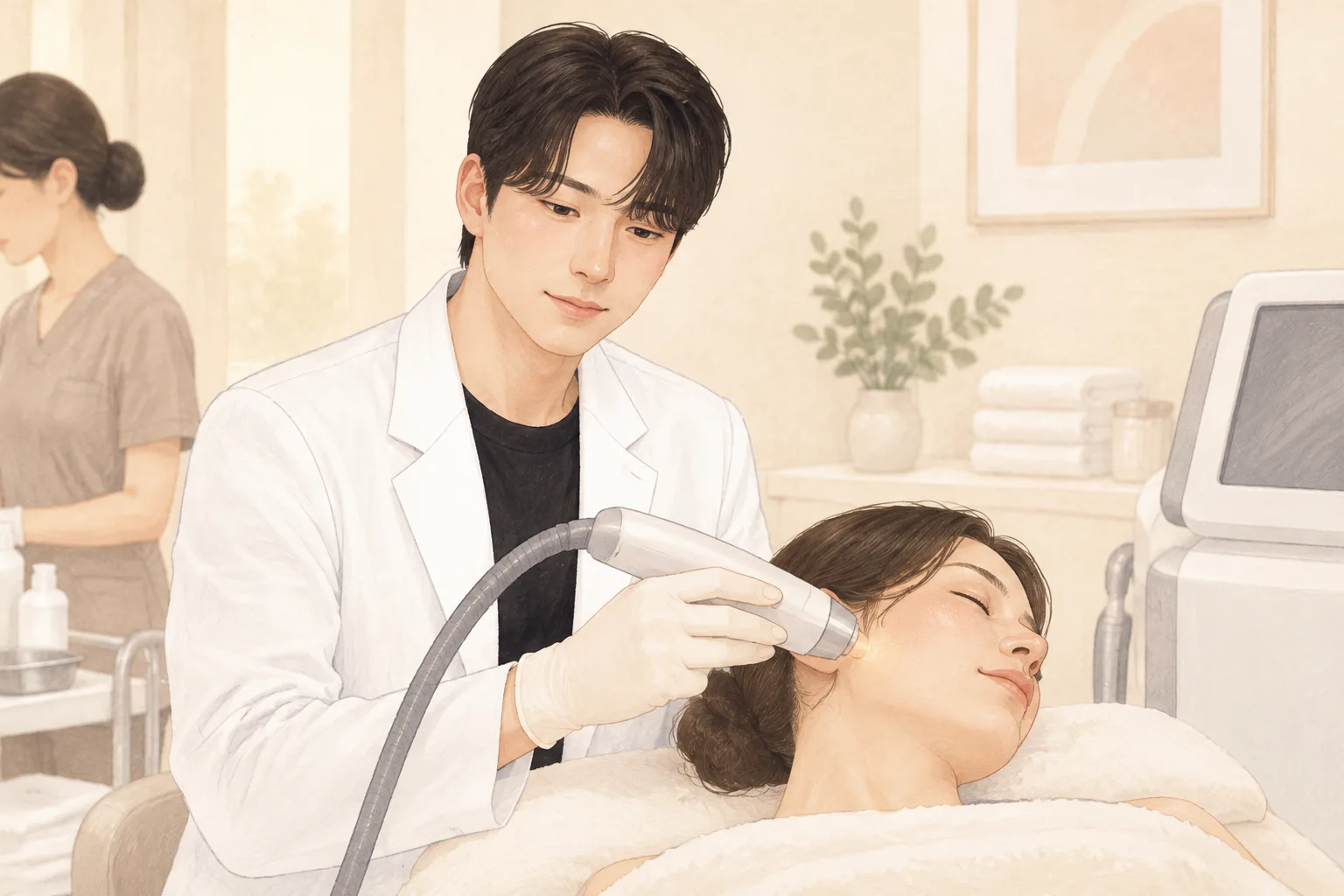
Titanium Lifting vs Ultherapy: Lasers and Ultrasound Work at Different Depths
How Titanium lifting and Ultherapy differ in energy type, target depth and areas, and what pain and recovery feel like. Plus what to weigh first based on your schedule and how long you're staying in Seoul.
Written by ATTITUDE Clinic Editorial Team
Search "Titanium lifting vs Ultherapy" side by side and you usually stop at "laser or ultrasound?" If a wedding or a shoot is already on the calendar, days of swelling are hard to manage, and a short stay in Korea leaves little room to recover. The two treatments use different heat sources, and that heat settles in different layers and areas, so it's hard to lump them together under the same word, "lifting."
The short answer
Ultherapy is a treatment that concentrates focused ultrasound into dots in the deep layer beneath the dermis so the skin rebuilds collagen, and it targets areas like the face, neck and under the chin where sagging starts deep. Titanium lifting uses a 3-wavelength laser to sweep broadly across several skin layers and works on firmness and skin texture together, and ATTITUDE Clinic offers this treatment for both face and body. So the choice isn't about "which is stronger" but about which layer the sagging started in, whether it's face or body, and how many days you have for recovery. Those same 3 things also decide whether to stack the two on the same day or space them apart.
Ultrasound dots, laser sweeps
Ultherapy uses HIFU (high-intensity focused ultrasound). It gathers ultrasound energy inside the skin the way a lens focuses light, creating small thermal points at a depth set per cartridge, from the dermis up to the SMAS layer. The SMAS is a thin sheet deeper than the dermis that supports the facial muscles and skin, and its loosening with age is counted among the major causes of sagging. An ATTITUDE Clinic column compares this to focusing sunlight into one point with a magnifying glass.
According to Cleveland Clinic's overview, Ultherapy is described as a procedure that stimulates collagen in a very deep layer of the facial muscles to tighten and firm the skin. When focused ultrasound heats the target tissue, the body mounts its own healing response, and new collagen forms in the process, gradually firming the skin. The device includes an ultrasound viewer, so the practitioner can watch the layers and adjust energy delivery. Confirming an invisible layer while delivering energy is a hallmark of HIFU.
Titanium lifting uses a different material. The treatments and pricing page lists it as lifting with a 3-wavelength laser, split into face, body and hyper line, with energy given in kJ. Different wavelengths are absorbed at different depths, so a single pass divides heat across several layers. Unlike HIFU, which strongly coagulates a single point, it sweeps broadly as it goes, so changes in firmness tend to show together with skin texture and tone. Which wavelength is used in which order depends on device settings and tip configuration, so it's hard to compare the two devices side by side on kJ numbers alone.
Why "Titanium doesn't hurt" is only half true
One line that always comes up on pain is the review saying "Titanium barely hurts." A laser generates heat as it passes over the skin surface, so at lower intensity and shorter exposure, the surface feels less hot. But with the same laser, raising the energy level changes the story. The ATTITUDE Clinic column names energy level as the first reason for pain variation and nerve density by area as the second. The higher the intensity and the more passes on one area, the stronger the heat stimulus, and pain grows with it.
Area matters a lot too. Spots close to bone with dense nerves, like the jawline, cheekbones, forehead and eye area, feel sensitive even at the same intensity, while thicker areas like the cheeks feel less. Ultherapy drives into deep layers in an instant, so it's often described as "deep and hot," while a laser passes broadly through layers near the surface, so it's often described as "heat that lingers." The Cleveland Clinic overview also notes you may feel prickling or warmth during the procedure, and discomfort usually arises and fades at the moment energy is delivered. Local anesthesia is usually not needed, though some patients use numbing cream.
Pain is set by intensity and area rather than the device name, and the anesthesia approach is decided in consultation. Whether numbing cream alone is enough depends on that day's intensity, the treatment area and skin thickness, so it's hard to say in advance. If you're sensitive to pain, say so first in consultation. The decision to lower intensity or adjust anesthesia comes out of that conversation.
Depth, intensity and spacing decide the result
Why results differ with the same device is summarized in an ATTITUDE Clinic column. How thick the skin is, how much collagen-making capacity remains, and what the regeneration speed is differ from person to person. Add to that which device is used first, what intensity is set, and whether other treatments are combined. This is where plans diverge even for the same "loss of firmness."
After 1 Ultherapy session, you review progress; if there's change, it usually appears gradually over about 2–3 months, and the doctor sets the repeat timing around roughly 1 year. Titanium lifting sets energy in kJ and divides sessions, so how many sessions you stack at what interval shapes the result. That interval is set in consultation alongside skin response, your schedule and prior treatment history. Individual recovery speed and skin thickness come into play, so copying the session counts in someone else's review isn't much help.
Table 1 Depth, intensity and spacing decide the result
Treatment
Energy type
Target areas and concerns
Sensation and recovery
Ultherapy
HIFU focused ultrasound, small thermal points from dermis to SMAS
Face, neck, under the chin; deep sagging and jawline
Prickling and warmth during treatment, possible tenderness and bruising near bone, usually no downtime
Titanium — face
3-wavelength laser, broad across several layers
Overall facial firmness, skin texture and tone
Surface may feel hot, redness tends to last a few days
Titanium — body
3-wavelength laser, energy delivered in kJ
Firmness management on broad areas like arms and abdomen
Same method as face, takes longer over a wider area
Thermage
Radiofrequency (RF), broad from dermis to subcutaneous fat
Broad loss of firmness from cheeks to neck, skin texture
A firm feeling at first, then gradual over 2–6 months
Swipe sideways to see the whole table.
In short deep sagging and the jawline are where Ultherapy aims, while broad firmness, texture and tone, and the body are where Titanium aims. If your schedule is tight, start with the option with shorter recovery, and decide in consultation whether to combine them on the same day or space them out.
If this sounds like you
When a wedding or shoot is weeks away
If the date is fixed, recovery comes before results. Ultherapy usually has no downtime, but bruising and tenderness can remain near bone, so it's better to schedule with some buffer rather than the day before the ceremony. Titanium leaves redness for a few days, so it's lighter to schedule close to the date, but stacking both on one day means recovery overlaps. Tell the clinic your important date first in consultation and they'll work backward to set the order.
Visitors with a short stay in Korea
With a short stay, the variables are your skin's reaction on the treatment day and the next, your departure date and outdoor plans. Right after treatment the skin's barrier is temporarily weaker, so sun protection matters more than usual, which means you should also check whether your sightseeing is packed with outdoor time. Working out whether you have time to check progress once before departure keeps the schedule from tangling.
When your face is lean and sagging is also a concern
A lean face responds differently to heat stimulation, and after a treatment that strongly pulls deep layers, a rare change of looking less full can occur. That's not a reason to avoid Ultherapy outright, but it is why fat layer thickness should be considered when setting intensity and range. In consultation, it's better to say plainly that facial contour and volume are concerns.
When you prefer steady upkeep
If you'd rather build results gently over several sessions than get one long-lasting result, a broad-sweeping treatment like Titanium fits. Conversely, if sagging is clear and you want to stimulate deep layers in one go, Ultherapy is the first thing to review. Whichever you choose, repeat timing is set after reviewing progress.
Tell us before your consultation Recent outdoor activity and sun exposure, medications you're taking and topical ingredients (retinoids, acids, etc.), the device, shots and kJ of previous lifting, the date and how you responded, conditions that affect whether treatment is possible such as pregnancy or breastfeeding, and your ceremony, shoot or departure dates — sharing these in advance makes the plan far more precise.
How ATTITUDE Clinic proceeds
Precise diagnosis and skin analysis Skin condition is recorded and organized with a device so you and the medical team look at the same information. The analysis tool only records and organizes information and does not make a medical diagnosis; the doctor makes the judgment.
Doctor consultation Your records are combined with your concerns, lifestyle habits and prior treatment experience to decide together whether to look at Ultherapy or Titanium first, plus intensity, range and interval. What's needed and what isn't gets sorted out here.
Treatment by the doctor The doctor performs the treatment as planned in consultation and adjusts intensity while watching skin response during the procedure. This order keeps plan and execution aligned.
Recovery and progress check We check how redness, swelling and tenderness settle after treatment and set the next session or repeat timing.
Four steps your doctor sees to in person
From the diagnostic device to the treatment bed, the doctor you first consult takes care of everything.
01
Precision diagnosis
In a private diagnosis room the whole face is photographed, recording even skin conditions that are hard to see with the eye.
02
Skin analysis
The doctor goes through your pore, pigmentation, wrinkle and firmness results with you on screen and explains what comes first.
03
One-to-one design
With your skin, the balance of your face, the change you want and your schedule in view, you decide the treatment and its extent together.
04
Treatment by your doctor
The doctor who consulted you performs the treatment from start to finish in a private treatment room. No one takes over halfway.
“I take injection pain seriously.”
Co-Director Dr. Lee Dong Hun
Many people hesitate over injection treatments because they hurt. So we went back over everything, from the anesthetic to the products used.
Careful numbing, unhurried timingWe allow plenty of time for a special numbing cream to take full effect, and add anesthetic injections for the treatments and areas that need them.
Fine needles, finished quicklyInjection treatments use fine needles, and the doctor finishes them personally in a short time, adjusting along the way by watching how you are doing.
Even the product formulation countsThe same treatment can feel more or less demanding depending on the product, so we take that into account too.
The anesthetic method and whether it is used are decided after an examination, according to the treatment, the area and your condition. How much it hurts varies from person to person.
The devices used for this topic are Ultherapy (Merz), Titanium (3-wavelength laser, face, body and hyper line), Thermage and Onda. Because which layer receives what intensity decides the result more than the device name, settings differ from person to person even on the same device.
Aftercare and side effects
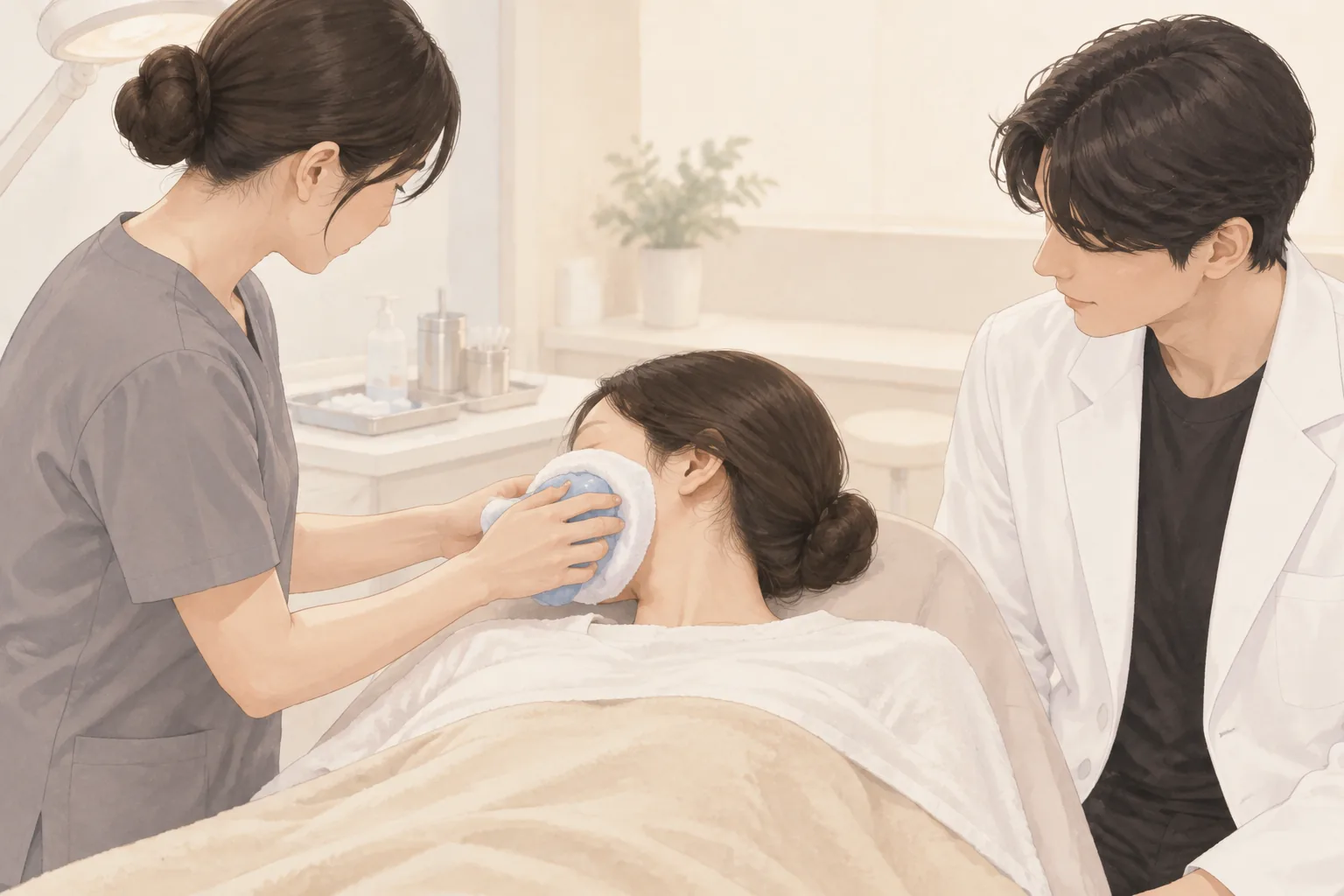
Soothing Heat lingers right after treatment. Cool compresses help settle swelling, but confirm the method with the medical team, and avoid saunas, strenuous exercise and alcohol that day.
Moisturizing Skin that has received heat tends to dry out, so apply a gentle moisturizer generously.
Sun protection For a few days after treatment the skin barrier is weaker, so applying sunscreen more carefully than usual is the way to reduce pigmentation.
Progress check Watch how redness and tenderness decrease, and set when to plan the next step.
Common reactions are redness, swelling, small bruises and temporary numbness or reduced sensation. They usually settle within a few days but can last longer. If blisters appear or pain gets worse, contact us right away. Rarely, burns, blisters, small scars, temporary facial muscle weakness or unwanted loss of fat-layer volume can occur, which is why setting intensity and depth accurately matters. Signs that mean you shouldn't wait are pain that doesn't improve with time, growing blisters, numbness that lingers, or new pigment changes.
FAQ
Titanium lifting vs Ultherapy: what's the biggest difference?
The heat source and where that heat settles differ. Ultherapy uses focused ultrasound to create small thermal points at a set depth from the dermis to the SMAS layer, while Titanium uses a 3-wavelength laser to sweep broadly across several layers. So Ultherapy has its place in deep sagging and the jawline, and Titanium in broad firmness, texture and tone, and the body. Rather than which is superior, the standard is which layer your skin's problem started in.
Which hurts more? Is numbing cream enough?
Intensity sets the pain more than the device. Ultherapy stimulates deep layers in an instant, giving a deep, hot sensation, while a laser passes the surface and feels hot. The jawline, cheekbones and forehead, close to bone and dense with nerves, feel more sensitive even at the same intensity. Local anesthesia is usually not needed, but some patients use numbing cream, so it's more practical to mention your sensitivity and treatment area in consultation and decide the anesthesia approach together.
I had Ultherapy first — can I follow with Titanium lifting?
Following one with the other is possible, but the interval is key. The two stimulate different layers, so they can be split so their roles don't overlap, and in practice deep layers and broad areas are divided between them. Whether to do them on the same day or leave a few days to a few weeks depends on how fast swelling and tenderness settle and on skin thickness. Recording the device, shots and kJ of your previous treatment, the date and your response and having it reviewed in consultation makes setting the interval much easier.
My face is lean — could Ultherapy be a concern?
It's possible, but it isn't a reason to avoid it. After a treatment that strongly stimulates deep layers, unwanted loss of fat-layer volume can rarely occur, so a lean face calls for a conservative approach to intensity and range. In consultation we look at fat-layer thickness, the degree of sagging and concerns about hollow cheeks together and adjust. If your face is fuller, on the other hand, we first check which layer the sagging comes from.
What should I check when choosing a clinic?
Look at the diagnosis and planning process more than device names. The key points are whether skin condition is recorded and reviewed together, whether the same person handles both consultation and treatment, and whether prior treatment history is reviewed. For pricing, also check whether units like shot count and kJ are shown and whether VAT is included. Clinics that publish by unit, like the treatments and pricing page, make quotes easier to compare. The American Academy of Dermatology also explains that there are many ways to firm the skin, so it matters that an expert familiar with each treatment looks at your skin and decides the right approach.
At a glance
Table 2 At a glance
Item
Key point
Ultherapy method
Focused ultrasound creates small thermal points in deep layers from dermis to SMAS
Titanium method
3-wavelength laser sweeps several layers broadly, face and body
Pain
Intensity and nerve density by area decide more than the device
When change appears
Ultherapy usually gradual over 2–3 months, repeat around 1 year
Common reactions
Redness, swelling, small bruises, temporary numbness
Decided in consultation
Combination and order, intensity, interval, working back from your schedule
This article offers general health information. It is not a substitute for diagnosis or treatment based on your own condition, so please talk through your situation with a doctor.