Ultherapy on the Cheeks: What to Check So Your Face Won't Look Hollow
A ATTITUDE Clinic column on what decides the result of Ultherapy on the cheeks: fat thickness, cartridge depth, shot distribution, pain and numbing, and aftercare to avoid hollowing.
Written by ATTITUDE Clinic Editorial Team
"I want to tidy up my jawline, but I'm worried my cheeks will look hollow" is something people considering Ultherapy on the cheeks say often. The cheek is an area where fat sits thickly, and at the same time it's a spot where even a small loss of volume changes how the face reads. This article covers what decides the result of Ultherapy on the cheeks and what to check during consultation to avoid hollowing.
The short answer first
Ultherapy is a treatment that uses focused ultrasound to create thermal points in the deeper layers of the skin and induce collagen remodeling (Cleveland Clinic guide). The cheeks are a thick area, so they tend to feel less painful than the jawline or the eye area, but for the same reason the energy reaches deeper, and on cheeks with thin fat the settings need to be different (ATTITUDE Clinic column). Cheek hollowing depends less on the name of the treatment than on how many shots are placed at which depth and how they are distributed, and on how much fat remains in that cheek. That is why the consultation should start by looking at the face layer by layer and setting cartridge depth and shot distribution first. It also helps to go in knowing that non-surgical lifting does not replace the results of surgical lifting (American Academy of Dermatology guide).
Where does ultrasound leave heat in the cheek?
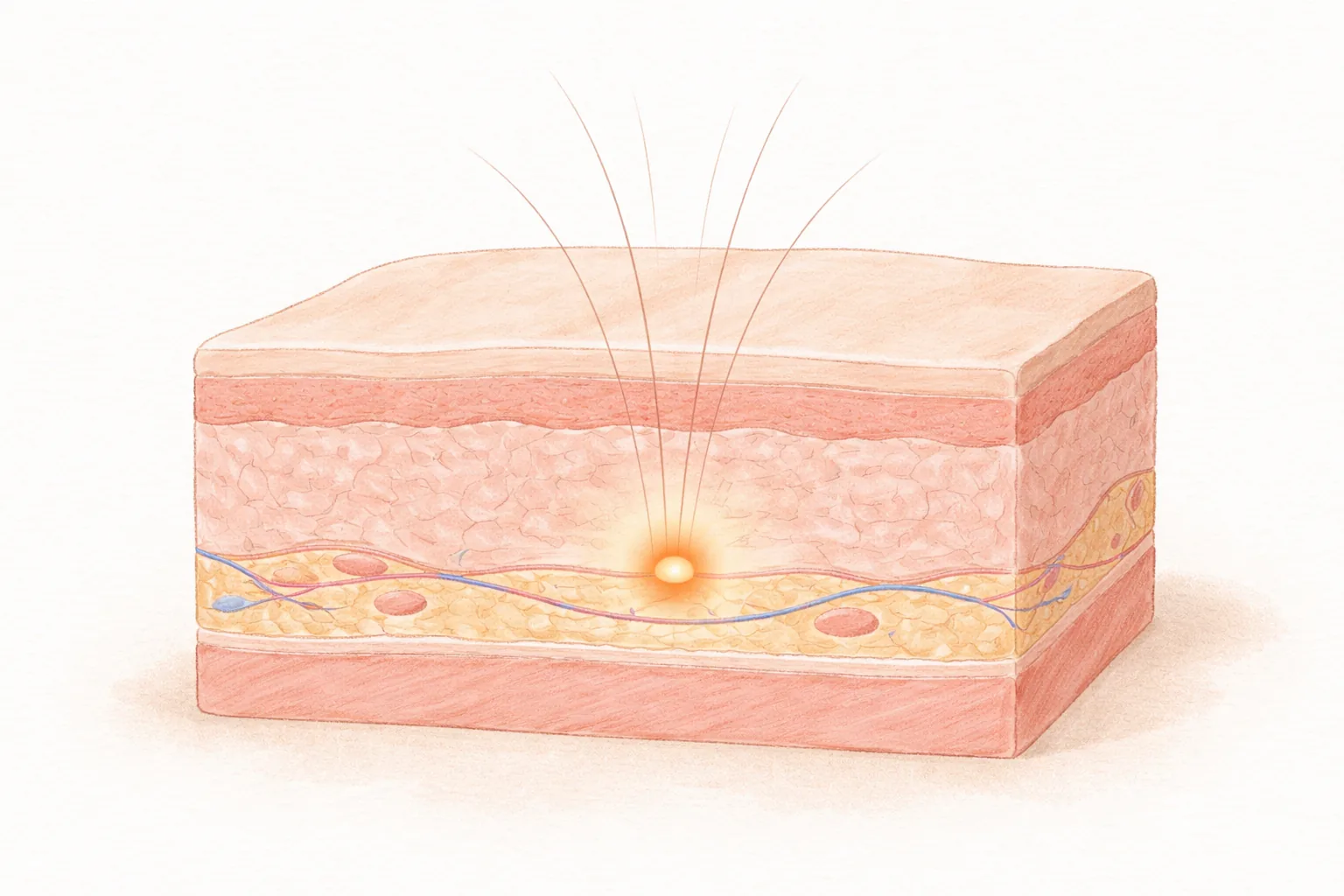
The method Ultherapy uses is HIFU (high-intensity focused ultrasound). Like concentrating sunlight through a magnifying glass onto one point, it gathers ultrasound energy at a single spot inside the skin to create a small thermal point, and each cartridge targets a different depth, stimulating from the dermis up to the SMAS layer in stages. The SMAS layer is a thin sheet deeper than the dermis that covers the facial muscles, a structure that supports skin and muscle like a garment lining (ATTITUDE Clinic column).
Where heat lands, the body's natural healing response wakes up, new collagen is produced, and the skin gradually tightens and lifts (Cleveland Clinic guide). Collagen is the protein that gives skin its firm support, and when it receives heat, part of it contracts and remodeling follows. That is why the face a few months later is more interesting than the face right after treatment.
So why are the cheeks a concern? The cheek has a thick fat layer beneath the skin, and ultrasound that reaches deep layers can also affect that fat layer. This is the same context in which the ATTITUDE Clinic column lists unwanted reduction of fat layer volume among the reactions that can rarely occur (column). The reason cheeks feel less painful also comes down to tissue thickness. Areas close to bone and dense with nerves, such as the jawline, cheekbones, and forehead, are sensitive, while the thick cheek transmits stimulation more gently at the same energy.
What decides cheek hollowing?
Cheek hollowing usually progresses naturally with age as cheek fat decreases and the structures supporting the skin loosen. Hollowing that is noticeable after a treatment may be the result of this natural course overlapping with the treatment, and it can stand out more on a face that had little volume to begin with. There is no basis for asserting that a treatment necessarily causes hollowing itself, but it is better to avoid settings that pile a lot of deep-layer energy onto cheeks with little fat.
So at the consultation, the first things examined are the fat thickness and skin thickness of the cheek, and which layer the sagging is coming from. Even with the same cheek sagging, the case where fat remains and has slid downward and the case where fat has been lost and the cheek is sunken call for different directions. Skin type, thickness, and the capacity to produce collagen differ from person to person, so a treatment with the same name also produces different results (Why results differ even with the same treatment).
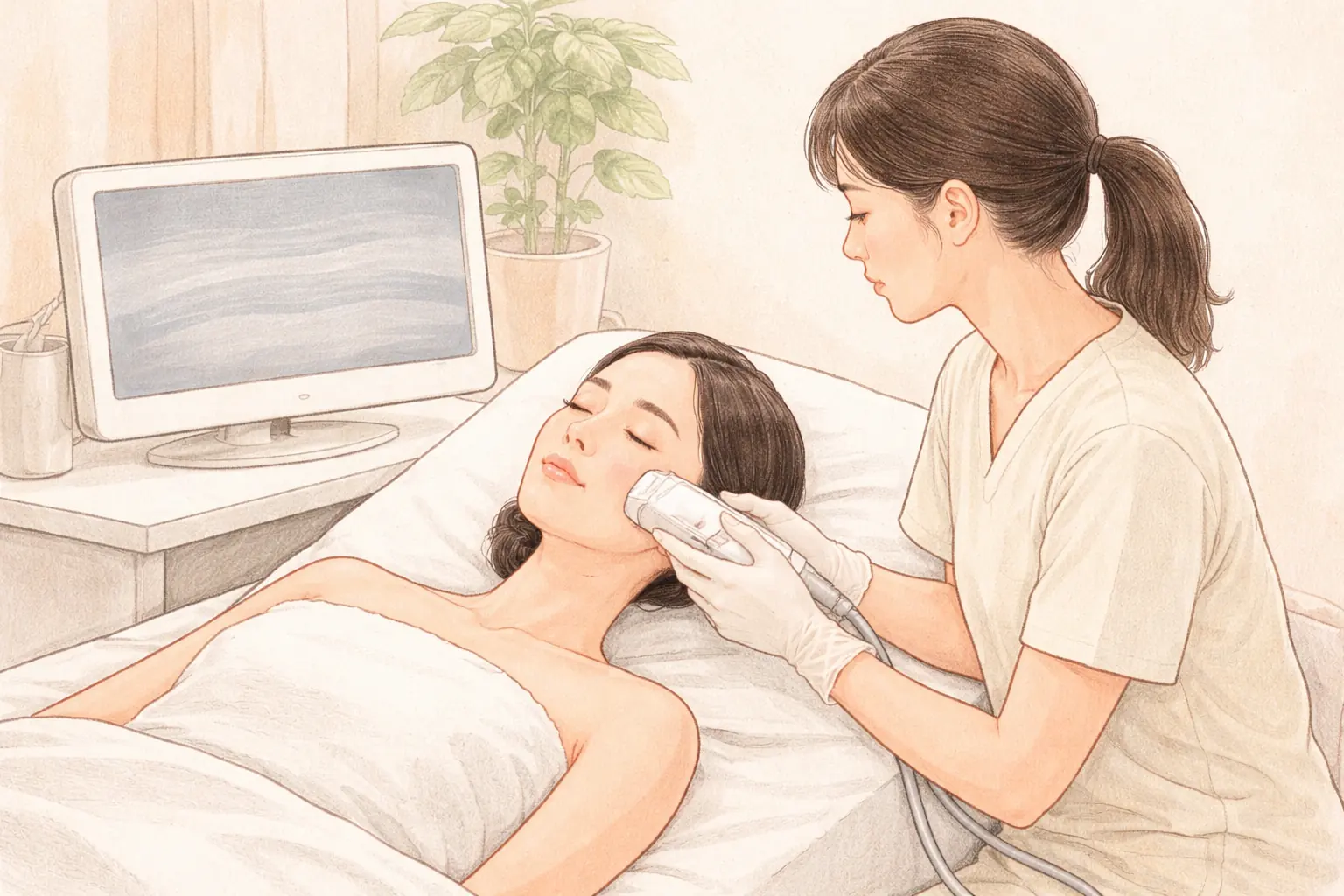
During the treatment, the ultrasound screen on the device is used to confirm the targeted tissue layer and adjust energy delivery (Cleveland Clinic guide). Marking the treatment area with a grid or pen to position the device follows the same logic. In a thick area like the cheek, the finesse of deciding which depth to place energy at and which spots already have little volume shapes the result.
How are pain and numbing different on the cheeks?
Pain depends on the energy level and the number of shots going into one area. A case that needs strong settings because sagging is pronounced and a case using low settings preventively feel very different even though it is the same treatment (ATTITUDE Clinic column). The cheek is relatively less painful because the tissue is thick, but raising the energy also reduces that comfort.
The stinging or warm sensation during treatment appears briefly while the energy is being delivered and then passes (Cleveland Clinic guide). This sensation is sometimes described as a sign that the collagen-producing process has begun. Anesthesia is generally not needed, but some patients are guided to proceed after applying a topical numbing cream.
If you are sensitive to pain, talking about the numbing method and energy level adjustment at the consultation reduces tension on the day. Pain varies widely by area and settings, so even on the same cheek the sensation differs depending on which spot receives how many shots.
Cheek lifting: how do the devices divide up?
Even under the single name "lifting," each device delivers heat differently and targets different layers. When sagging is deep and pronounced, the HIFU family, which gathers heat like dots at a set depth, is discussed first; when the concern is skin texture or loss of elasticity over a broad area, the radiofrequency (RF) family, which heats broadly from the dermis to the subcutaneous fat, comes up first (ATTITUDE Clinic column). If you want to address the cheeks and jawline together, you also need to decide in what order to place the two methods.
Table 1 Cheek lifting: how do the devices divide up?
Category
Energy method
What it does inside the skin
Concerns usually discussed together
Ultherapy
Focused ultrasound (HIFU)
Small thermal points from dermis to SMAS layer by cartridge depth
Deep sagging of the cheeks and jawline
Shurink
Focused ultrasound (HIFU)
Same HIFU family, differences in reach depth and delivery method
Deep-layer elasticity care
Thermage FLX
Radiofrequency (RF)
Broad heating from dermis to subcutaneous fat
Elasticity and skin texture over a wide area
Potenza
Microneedle radiofrequency
Delivers radiofrequency directly into the dermis
Pores and scars
Swipe sideways to see the whole table.
Looking at the ATTITUDE Clinic treatment guide, cheek and jawline lifting includes devices such as Ultherapy, eye Ultherapy, Shurink, Thermage FLX, XERF, Onda, and Titanium, while Potenza is listed for pores and scars and skin boosters such as Rejuran and Juvelook for skin quality (ATTITUDE Clinic treatment guide).
In short Ultherapy on the cheeks concentrates heat in deep layers, so it is strong for tidying the jawline, but on cheeks with little fat it also calls for the judgment to set depth and shot distribution conservatively. Before choosing a device name, the consultation that confirms which layer your cheek has collapsed at comes first.
When do results appear, and how is the next interval set?
With Ultherapy it is hard to feel a big change right after the treatment, and if there is a change it usually appears gradually over 2–3 months (ATTITUDE Clinic column). Collagen remodeling is a process that begins after heat is delivered, so it takes time. Which of the cheeks and jawline looks different first also varies from person to person.
How long results last depends on the degree of elasticity loss in the SMAS layer, age, and usual sun exposure and lifestyle habits. The rate at which collagen is synthesized and broken down differs from person to person, and how the treatment intensity was set also plays a role. The repeat interval is roughly around 1 year, decided by the doctor after reviewing progress (ATTITUDE Clinic column).
Downtime is usually not long and does not get in the way of returning to daily life, but bruising and tenderness can appear along areas close to bone (Cleveland Clinic guide). If you have a fixed date such as a wedding or a photo shoot, it is safer to mention it at the consultation and adjust the timing of the treatment.
If this sounds like your situation
When a wedding or photo shoot is two to three months away
Ultherapy changes appear gradually over 2–3 months, so planning with a cushion of two to three months before the date is more natural. Factoring in the period when swelling or bruising may remain also makes it easier to predict how you will look on the day.
When the cheeks are sunken and you only want to tidy the jawline
On a face with little volume, the key is how much energy to place in the deep layers. Energy is distributed to avoid the sunken parts of the cheek, and if needed, an approach to restore volume is considered separately.
When the skin is sensitive or flushes easily
Some skin retains redness and heat for a long time even at the same energy. In this case, starting at a lower energy and adjusting while watching the response suits better.
If you are an overseas visitor on a short stay
Redness and swelling right after treatment generally subside within a few days, but flight schedules and plans for the next treatment should be considered together. If your stay is short, it is better to set the follow-up schedule before departure.
Please tell us before your consultation
Let us know about recent sun exposure and outdoor plans, medications you are taking and active ingredients you apply to your skin, your history of previous lifting and dermal filler or skin booster treatments and how you responded then, and any fixed dates such as a wedding or photo shoot. Telling us whether you are sensitive to pain also helps in deciding the numbing method and energy level.
How ATTITUDE Clinic proceeds
AI skin analysis record — Your skin condition is recorded and organized so you and the director look at the same information. The analysis tool only records and organizes information and does not make a medical diagnosis; interpretation and judgment are made by the director (column).
Consultation with the director — Your concerns, lifestyle habits, and previous treatment experience are added to the record, and you decide together which layer of the cheeks and jawline to address first, along with cartridge depth and shot distribution. This is where what is needed and what is not is sorted out.
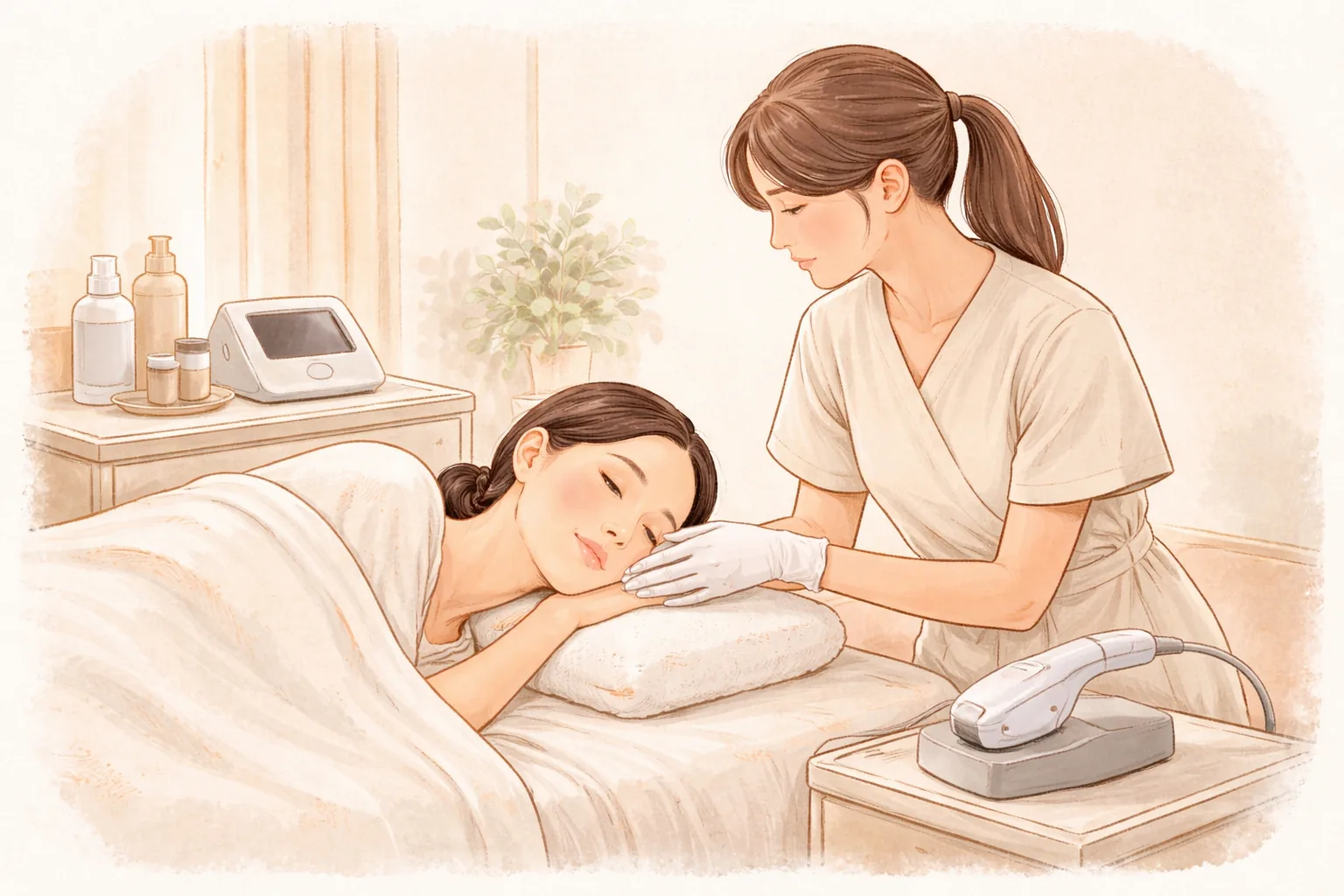
Treatment performed by the director — The director performs the treatment according to the plan set at the consultation and adjusts while watching the skin's response. The device's ultrasound screen is used to confirm tissue layers and adjust energy delivery (Cleveland Clinic guide).
Recovery and follow-up — After the treatment, recovery and changes are checked and the next visit is scheduled. The repeat interval is set based on roughly around 1 year, after reviewing progress (column).
Lifting devices listed include Ultherapy, eye Ultherapy, Shurink, Thermage FLX, XERF, Onda, and Titanium, while Potenza is listed for pores and scars and skin boosters such as Rejuran and Juvelook for skin quality (ATTITUDE Clinic treatment guide). Prices are disclosed by unit, such as device and number of shots, are the same amount on every language page, and VAT is charged separately (column).
Aftercare and side effects
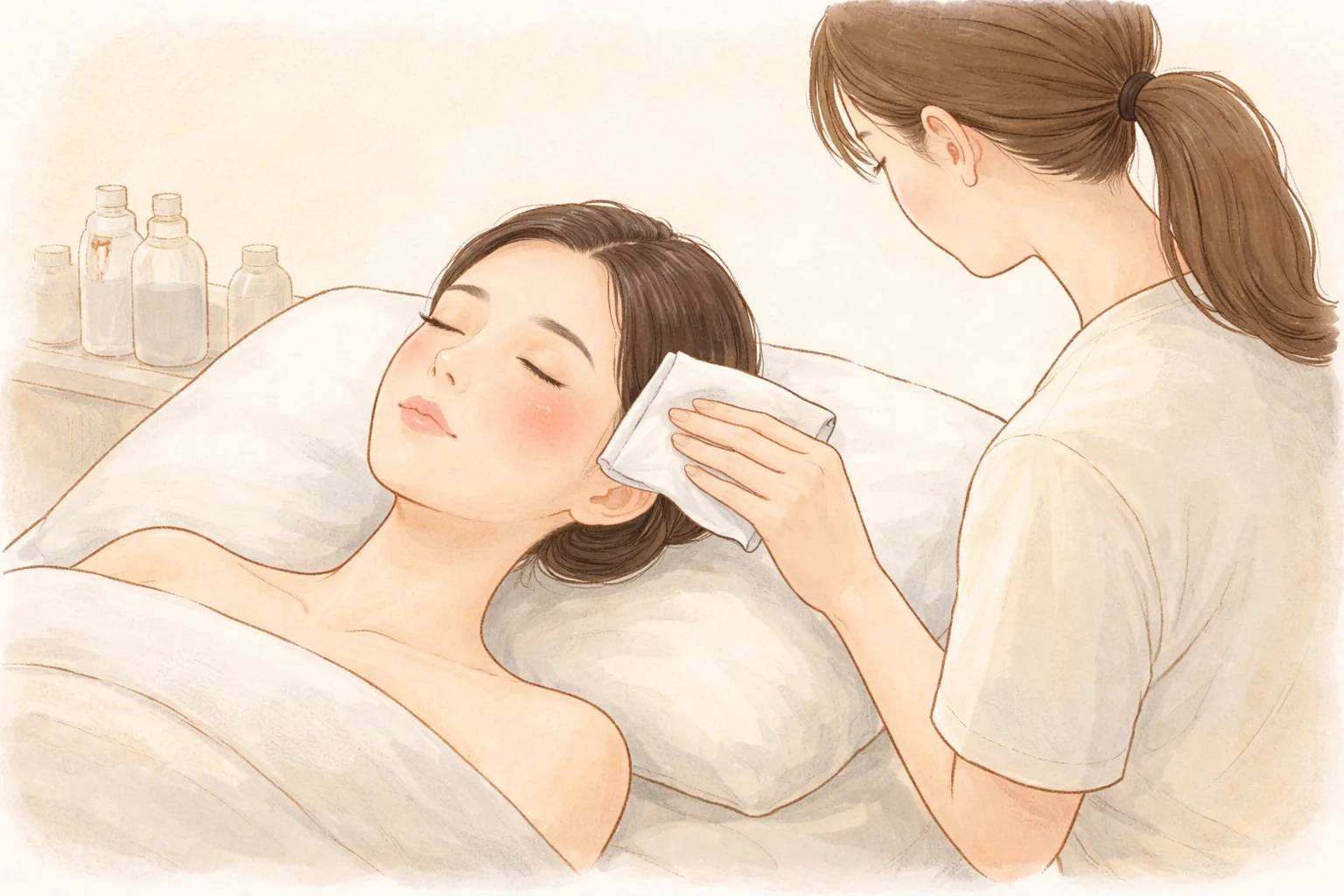
Soothing — Right after treatment, cold compresses may help with swelling. Discuss the method with the medical team before doing it.
Avoid on the day — Avoid saunas, strenuous exercise, and alcohol on the day of treatment. Activities that raise body heat can increase swelling and redness.
Moisturizing and sun protection — For a few days after treatment, apply sunscreen more carefully than usual. During this period the skin's barrier is temporarily weakened, and blocking UV helps reduce pigmentation.
Follow-up — Most people can return to daily life including makeup from the next day. Changes usually appear gradually over 2–3 months, so keeping a record of your progress in between makes the next plan easier to set.
Common reactions include redness, swelling, tenderness when pressed, small bruises, and temporary numbness or reduced sensation. They usually subside within a few days but can last longer (ATTITUDE Clinic column). The description that bruising and tenderness can occur along areas close to bone follows the same pattern (Cleveland Clinic guide).
Rarely, burns and blisters, small scars, temporary facial muscle weakness, and unwanted reduction of fat layer volume can occur (ATTITUDE Clinic column). These reactions are linked to how the energy level and treatment depth were set, so examining cheek thickness and fat status first and setting accordingly is the starting point for reducing risk.
If blisters form, if pain keeps getting worse, or if unexpected changes continue beyond a few days, it is safer to seek medical care rather than wait.
Frequently asked questions
How painful is Ultherapy on the cheeks?
The cheek is a thick area, so at the same energy it tends to feel less painful than places close to bone such as the jawline or eye area (ATTITUDE Clinic column). Pain does increase with the energy level and the number of shots going into one area, so the sensation differs greatly between a case needing strong settings and one using low settings. The stinging or warm sensation during treatment is described as a signal that appears briefly while energy is being delivered (Cleveland Clinic guide). Anesthesia is generally not needed, but some patients are guided to use a topical numbing cream. If you are sensitive, talking about the numbing method and energy level adjustment at the consultation reduces tension on the day.
When do Ultherapy results show on the cheeks?
It is hard to feel a big change right after the treatment, and if there is a change it usually appears gradually over 2–3 months (ATTITUDE Clinic column). New collagen is produced after heat is delivered, tightening and lifting the skin, so time is needed (Cleveland Clinic guide). Which of the cheeks and jawline looks different first varies from person to person, and on cheeks with little fat the change can feel slower. Swelling and heat settling within 1–2 weeks is the course of recovery, not the result.
How common are side effects like cheek hollowing?
Common reactions are redness, swelling, tenderness when pressed, small bruises, and temporary numbness or reduced sensation, and they usually subside within a few days (ATTITUDE Clinic column). There is also a description that bruising and tenderness can occur along areas close to bone (Cleveland Clinic guide). Burns, blisters, small scars, temporary facial muscle weakness, and unwanted reduction of fat layer volume are classified as rare reactions. Cheek hollowing falls under reduction of fat layer volume among these, which is why settings are set more conservatively at the consultation the less volume a face has.
My cheeks are already somewhat sunken — can I still have it?
Whether to proceed is decided by examination. On cheeks with little fat, the consultation sets how much energy to place in the deep layers and how to avoid the sunken areas, and if needed, an approach to restore volume is considered separately. The direction differs depending on whether cheek sagging comes from fat loss or from fat sliding downward. Results cannot be promised in advance, so it is safer to build a plan at the consultation together with your previous treatment history.
What should I ask at an Ultherapy consultation?
Asking about the device name and whether it is genuine, the cartridge depth used, the number of shots and their distribution, and the numbing method makes the plan concrete. Whether the same doctor handles both the consultation and the treatment is also a criterion. At ATTITUDE Clinic, your skin condition is recorded and reviewed together, what is needed and what is not is sorted out, and then the director performs the treatment (column). Prices are disclosed by unit, the same amount on every language page, with VAT charged separately (ATTITUDE Clinic treatment guide). Bringing records of previous treatments (device, number of shots, product and dosage, dates, and how you responded then) helps the review.
At a glance
Table 2 At a glance
Item
Key point
How it works
Focused ultrasound creates thermal points from the dermis to the SMAS layer and induces collagen remodeling
Nature of the cheek
Thick tissue makes it less painful, but energy reaches deep layers
What decides hollowing
Cheek fat thickness, energy depth and shot distribution, volume status before treatment
When results appear
Gradually over 2–3 months rather than right after treatment
Next interval
Roughly around 1 year, decided after reviewing progress
Common reactions
Redness, swelling, tenderness, small bruises, temporary numbness
This article offers general health information. It is not a substitute for diagnosis or treatment based on your own condition, so please talk through your situation with a doctor.