Ultherapy vs XERF: How They Differ for Facial Lifting in Seoul
How Ultherapy (focused ultrasound) and XERF (monopolar radiofrequency) work on different skin layers, what shapes your results, and when to schedule treatment on a short stay in Gangnam, Seoul.
Written by ATTITUDE Clinic Editorial Team
The question "which is better, Ultherapy or XERF?" comes up often in consultations. Both names get lumped under "lifting," so they can feel like devices that do the same job — but the way they deliver heat inside the skin is different. This article walks through which layers each treatment acts on, what shapes your results, and when it realistically fits a short stay in Korea.
The short answer
Ultherapy focuses ultrasound onto a single point to stimulate deeper layers, while XERF uses radiofrequency to heat a broader area. So rather than "which device is better," the better fit depends on whether your sagging is deep and localized or whether your concern is firmness and skin texture over a wider area. With both, changes tend to appear gradually over a few months rather than right after treatment, and energy level, shot count and your starting skin condition all influence the outcome. Whether to do both on the same day or leave a gap between them is decided by looking at your skin's response together with your schedule.
How do Ultherapy and XERF differ inside the skin?
The goal of a lifting treatment is to deliver heat precisely to the deep layer that anchors sagging. That deep layer is called the SMAS — a thin sheet below the dermis that supports the facial muscles and skin. As we age, this sheet stretching out is considered one of the main causes of sagging. The problem is that this layer sits quite far from the surface. That is why devices differ in where they concentrate energy and how widely they spread it.
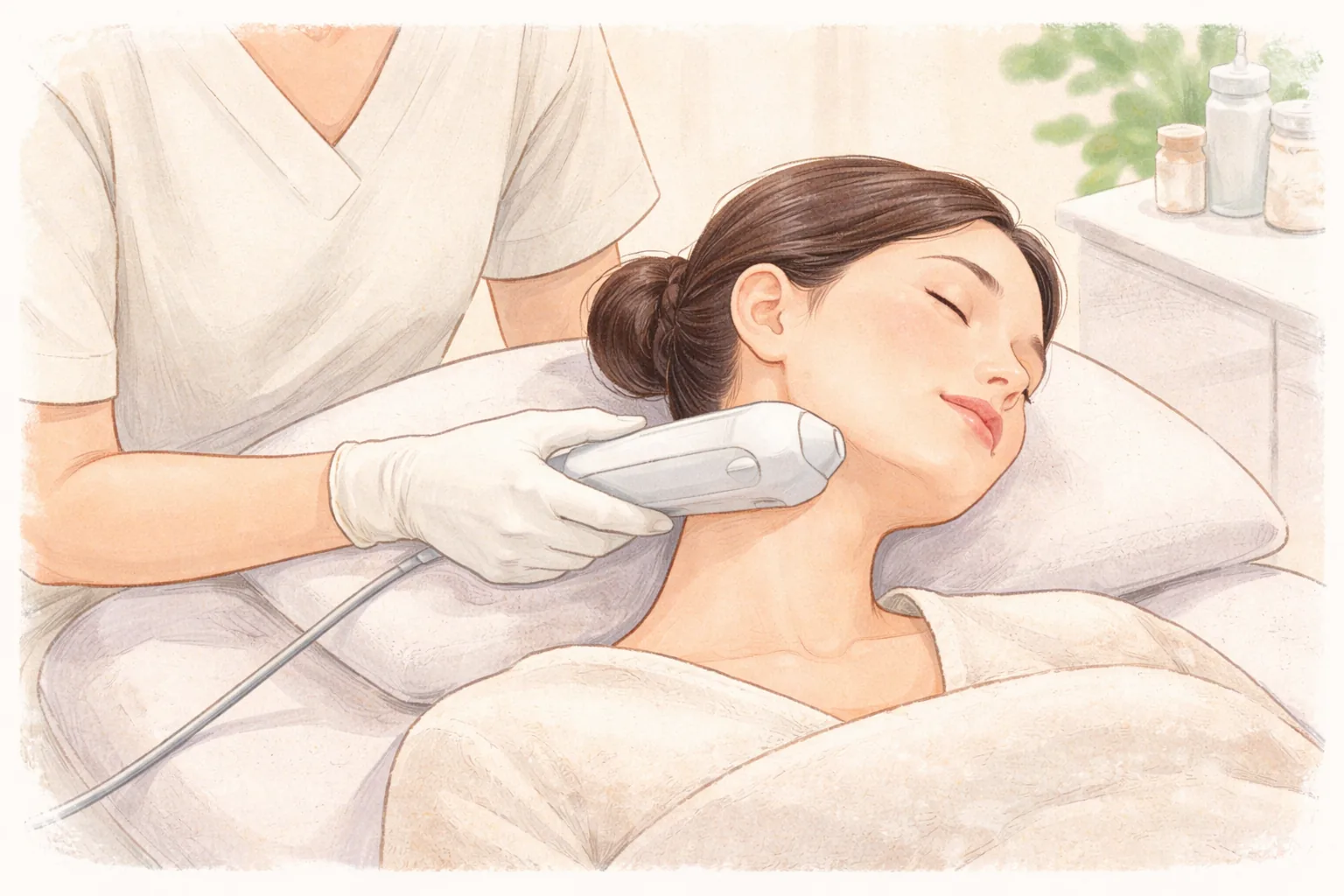
Ultherapy uses high-intensity focused ultrasound, or HIFU (a method that concentrates ultrasound waves onto a single point, like a magnifying glass). According to Cleveland Clinic, Ultherapy is described as using focused ultrasound to stimulate collagen in the very deep layers of the facial muscles, lifting and tightening loose skin. The ATTITUDE Clinic column also explains that HIFU-type devices create small thermal points at a set depth between the dermis and the SMAS layer, depending on the cartridge. The heated area is narrow and deep, but the structure allows for precise targeting of chosen points.
XERF, by contrast, is a device that uses monopolar radiofrequency, or RF (a method where electrical energy passes through tissue and converts to heat). On the ATTITUDE Clinic treatment guide, XERF is also listed under lifting treatments that use radiofrequency current, as a Lutronic device. The characteristic of RF-type devices is that instead of concentrating heat into a point, they warm a relatively broad area from the dermis into the subcutaneous fat layer in one pass. Thermage, another RF device, is grouped under the same category. So XERF is best understood as suited to broadly spread loss of firmness, fine lines and skin texture, rather than targeting one deep layer precisely.
There is a common misunderstanding here. Statements like "ultrasound is stronger, so it's always better" or "radiofrequency is too shallow for lifting" are both inaccurate. These two methods differ not in strength but in the shape of the heat they concentrate and the range they reach — and which one is advantageous depends on what your concern is.
Why do results differ even with the same treatment?
The factor that most influences your results is your starting skin condition, more than the device name. In an ATTITUDE Clinic column, it is explained that because skin type, skin thickness and structure, and the rate of new collagen production vary from person to person, responses to the same stimulation and recovery speeds differ too. Whether your skin is dry or oily, thin or thick, and how dense the tissue is all affect how the same settings feel.
How the plan is put together also affects results. Even with the same analysis, which device to use first, how far to raise the energy level, and whether to combine other treatments all depend on the individual's concerns, their recovery time allowance, and how sensitive their skin is. Fine adjustments to intensity at the treatment site, or changing settings while watching the skin's response during treatment, are parts that can't be covered by a manual alone.
The timing of results also differs by method. With Ultherapy, it's hard to feel a big change right after treatment, and any change usually appears gradually over 2–3 months. Maintenance varies widely, because the rate at which collagen is synthesized and broken down depends on the degree of SMAS laxity, age, sun exposure and lifestyle habits. Repeat sessions are generally planned around 1 year as a baseline, decided by looking at your progress.
When should you schedule treatment to fit a trip?
Start by checking how long the treatment takes. Cleveland Clinic notes that an Ultherapy session takes about 30 to 90 minutes depending on the area. Radiofrequency lifting including XERF also benefits from allowing generous time — including consultation and preparation — when treating the whole face.
Downtime itself isn't long. Cleveland Clinic explains that after Ultherapy there is usually no downtime, but bruising and tenderness can occur along areas where bone is prominent. The ATTITUDE Clinic column also notes that for 1–2 days after treatment, redness and a mild warm sensation may remain from the heat stimulation, and mostly fade on their own. If you have an event where your face will be seen, such as a ceremony or photo shoot, leaving about 2 days of buffer makes things more comfortable.
If your stay is short, it's best to set aside the expectation of seeing results immediately after treatment. Because changes appear gradually, it's hard to feel a big difference during a short stay. Instead, taking before photos and comparing them from the same angle 2–3 months after returning home is far more accurate. Deciding in consultation how to get in touch for progress checks, and your plan for the next visit, keeps your schedule on track.
Table 1 When should you schedule treatment to fit a trip?
Category
Energy method
Main layer treated
Concerns it suits
Ultherapy
High-intensity focused ultrasound (HIFU)
Small thermal points at set depths from dermis to SMAS
Deep, localized sagging such as along the jawline and around the eyes
Shurink Universe
High-intensity focused ultrasound (HIFU)
Small thermal points at set depths
Firmness care starting lightly on localized areas
XERF
Monopolar radiofrequency (RF)
Broad heating from dermis to subcutaneous fat
Loss of firmness, fine lines and skin texture over a wide area
Thermage FLX
Monopolar radiofrequency (RF)
Broad heating from dermis to subcutaneous fat
Loss of firmness spread widely from cheeks to neck
Swipe sideways to see the whole table.
The device names and manufacturers in the table are exactly as listed on the ATTITUDE Clinic treatment guide, and the layer and concern categories follow the general principles of each energy method. Which row fits you is decided by looking at your skin thickness and degree of sagging.
In summary Ultherapy places points in deep layers, while XERF evenly heats a broad area. The two are less competitors than methods that treat different layers, so the choice depends on whether your concern is localized or widely spread. With either, the benchmark is the change 2–3 months later rather than right after treatment.
If this sounds like you
If a ceremony or photo shoot is a few weeks away
Redness and swelling can take 1–2 days to settle. If you have an event, it's better to finish treatment at least 2 weeks beforehand. That said, lifting changes appear gradually over 2–3 months. Rather than expecting a finished look on the day of the event, it's more realistic to approach it as tidying up skin texture and glow — and if your schedule is tight, you can compare a plan that combines other treatments instead of lowering the energy level during consultation.
If you want ongoing maintenance
A plan with intervals and repeats suits better than a one-time treatment. Repeat sessions are generally planned around 1 year as a baseline, decided by looking at your progress, and how well you maintain sun protection and moisturizing in between also affects the settings for your next session. Recording the device, shot count, date and your response from the previous treatment lets you talk far more specifically when planning the next one.
If your skin is sensitive or flushes easily
Redness and a mild warm sensation may linger longer even with the same energy. In consultation, it's good to mention first whether you tend to flush easily and whether you've had laser or peeling treatments recently. You can consider a plan that lowers the energy level and splits sessions, or combines other devices.
If you're an international visitor on a short stay
It's best to calculate treatment time and recovery time first, then fit them into your schedule. On the day of treatment, avoid saunas, intense exercise and alcohol, and pay attention to sun protection — most people can handle their regular schedule the next day. If you need interpretation, just let us know when booking your consultation, and prices are quoted per item.
Please tell us before your consultation Your recent sun exposure and travel schedule, any medications you're taking (including anticoagulants) and topical skin medications or ingredients, the device, shot count, date and your response from previous treatments, any fixed-date events such as ceremonies or photo shoots, whether you are pregnant or breastfeeding, and any inflammation or wounds at the treatment site.
How ATTITUDE Clinic proceeds
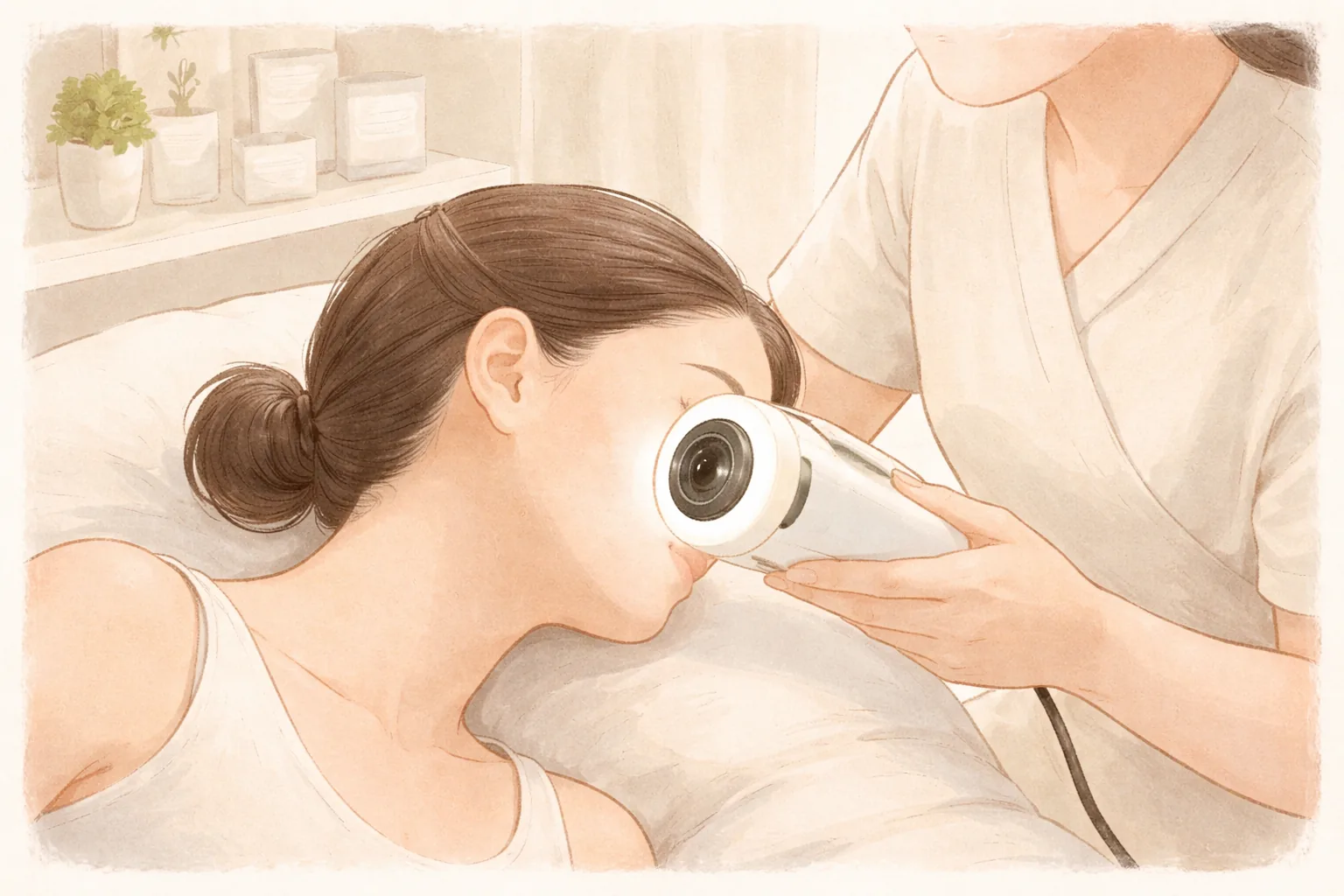
AI skin analysis record — We photograph and record your skin condition. This record is reference material for viewing your current state together with the same information, and the analysis tool does not make a medical diagnosis. The doctor makes the judgment.
Doctor consultation — Adding your concerns, lifestyle habits and previous treatment experience to the analysis record, we decide together what is needed and what isn't, and which device to use in what order and at what energy level. Whether to look at XERF or Ultherapy first is also decided here.
Treatment performed directly by the doctor — The doctor personally carries out the plan set in consultation, adjusting settings while watching your skin's response during treatment. This flow keeps the plan and the actual treatment aligned.
Recovery and progress check — We go over aftercare instructions and set the timing of your next visit together. Repeat timing is decided by looking at your progress.
The devices ATTITUDE Clinic handles for this topic are Ultherapy (Merz), Shurink Universe (Classys), XERF (Lutronic) and Thermage FLX (Solta), as listed on the treatment guide. Prices are disclosed per item, with VAT separate.
Aftercare and side effects
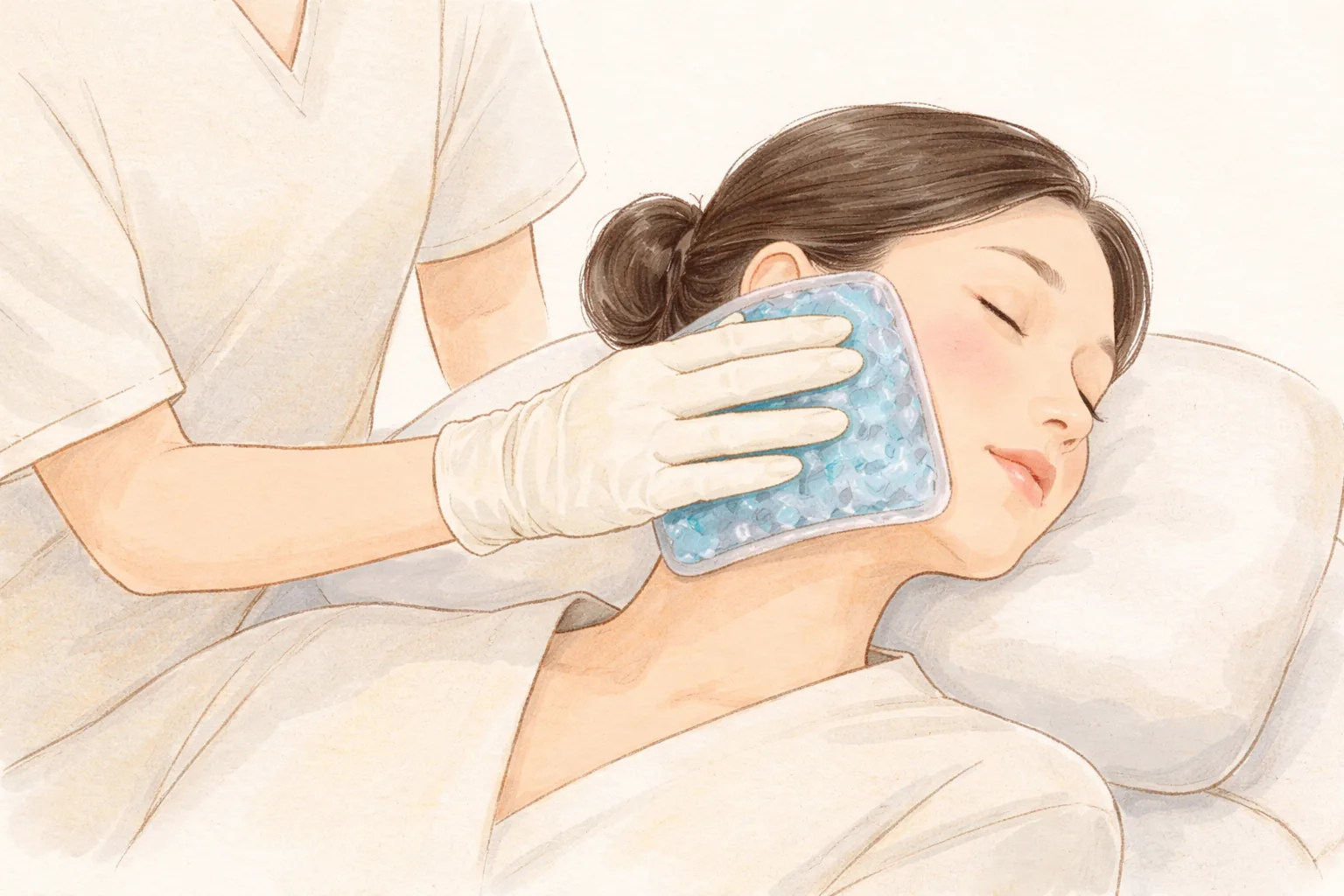
Soothing — Because heat remains right after treatment, cool the skin temperature with cold compresses. It's better to avoid saunas, jjimjilbang, intense exercise and alcohol on the day.
Moisturizing — Since the skin barrier is temporarily weakened, apply plenty of the gentle moisturizer you normally use. It's good to postpone strong exfoliation or peeling for a few days.
Sun protection — Pigmentation is more likely during this period, so apply sunscreen more carefully than usual. If you have a lot of outdoor plans, using a hat or parasol as well is safer.
Progress check — Watch whether redness and swelling settle within a few days, and compare changes by photo at the 2–3 month mark. If changes continue that differ from expectations, contact us right away rather than waiting for your next appointment.
Common reactions are redness, swelling, tenderness when pressed, small bruises, and temporary numbness or reduced sensation. They usually settle within a few days, but can last longer. Cleveland Clinic also notes that bruising and tenderness can occur along areas where bone is prominent. Rarely, burns or blisters, small scars, temporary facial muscle weakness, or unwanted loss of fat-layer volume can occur, so the skill to accurately diagnose and set energy level and treatment depth affects results. If blisters appear, pain gradually worsens, or one side of your face doesn't move well, it's safer to get checked right away rather than waiting for your next appointment.
Frequently asked questions
What is the difference between XERF and Ultherapy?
XERF uses radiofrequency to broadly heat from the dermis into the subcutaneous fat layer, while Ultherapy uses focused ultrasound to create small thermal points at a set depth between the dermis and the SMAS layer. So XERF is relatively suited to firmness, fine lines and skin texture over a wide area, while Ultherapy suits deep, localized sagging such as along the jawline or around the eyes. Rather than one being superior, they treat different layers, and the choice is made by looking at the degree of sagging and your skin thickness. Whether to do both on the same day or leave a gap depends on your skin's response and your recovery time allowance.
Which is better, Ultherapy or XERF?
It's not a matter of choosing the better device but of which layer your concern sits in. If sagging is deep and narrow in range, an ultrasound-type treatment may fit better; if loss of firmness and skin texture across the whole face is your concern, a radiofrequency-type treatment may fit better. If both concerns overlap, a design that divides the layers and uses them together is also possible. In consultation, tell us the degree of sagging, the areas you want treated, and your recovery time allowance, and we'll guide you to a combination that fits.
Which one hurts more?
The experience varies greatly with energy level, shot count and area, even on the same device. Areas close to bone with dense nerves, such as the jawline, cheekbones, forehead and around the eyes, feel more sensitive, while areas with thicker tissue like the cheeks feel less even at the same energy level. Ultrasound-type treatments are often described as a deep, hot sensation, and radiofrequency-type treatments as a warm sensation that lingers. If you're sensitive to pain, let us know in consultation and we'll decide the anesthetic method and energy adjustments together.
When do results appear, and how long do they last?
They tend to appear gradually over 2–3 months rather than right after treatment, and how long they last varies widely between individuals. The rate at which collagen is synthesized and broken down differs with the degree of laxity, age, and your usual sun exposure and lifestyle habits, and the energy level and shot count set during treatment also have an effect. That's why we approach it with an individual plan rather than drawing conclusions from one session, and repeat timing is generally planned around 1 year as a baseline, decided by looking at your progress. It's also worth keeping in mind that this is not a treatment that can guarantee results.
What should I look at when choosing a clinic?
Looking at the flow of consultation and treatment helps more than the device name. Listen to the explanation of why this device is recommended for you, which layer it targets, and at what energy level; check how your skin condition is recorded and reviewed before treatment, and whether previous treatment history is reviewed; and check whether settings are adjusted according to your response during treatment. Whether prices are disclosed per item is also a comparison point. If a fixed package is recommended, it's also good to ask why each item is needed and what could be left out.
At a glance
Table 2 At a glance
Item
Key point
Energy method
Ultherapy is focused ultrasound (HIFU), XERF is monopolar radiofrequency (RF)
Layer treated
Ultherapy creates small thermal points at set depths, XERF broadly heats from dermis to subcutaneous fat
Concerns it suits
Deep, localized sagging suits ultrasound-type; broad loss of firmness and skin texture suit radiofrequency-type
Onset of results
Gradual over 2–3 months rather than right after treatment, with individual variation
Repeat timing
Generally planned around 1 year as a baseline, decided by looking at progress
Recovery
Usually short downtime; redness and tenderness may remain for a few days
This article offers general health information. It is not a substitute for diagnosis or treatment based on your own condition, so please talk through your situation with a doctor.