Wart Removal in Korea: How Many Sessions and How Often for Cryotherapy?
Planning wart removal in Korea or Seoul? Here's how many cryotherapy, electrocautery and laser sessions to expect, the usual intervals between them, healing time, and the risks of recurrence and scarring, with sources.
Written by ATTITUDE Clinic Editorial Team
Many people wonder how many visits a single wart will take and when the next session should be. It seemed like one removal would be the end of it, but a few weeks later the same spot feels raised again, which makes scheduling harder. The number of sessions and the interval between them are set by the condition of the lesion and the treatment method, so knowing those criteria lets you plan a realistic schedule.
The short answer first
Wart removal often takes more than one session. According to American Academy of Dermatology guidance, cryotherapy is usually repeated every 2–4 weeks, and many patients receive more than one treatment. Seoul National University Hospital material sets the next cryotherapy session 1–3 weeks later and notes that most warts improve after an average of 5 sessions, while stubborn warts may be treated more than 20 times. Electrocautery and curettage usually finish in 1 session, and laser may require 1 or more. These numbers vary with the number and size of lesions, their location, immune status and which method is used.
Why one session often isn't enough
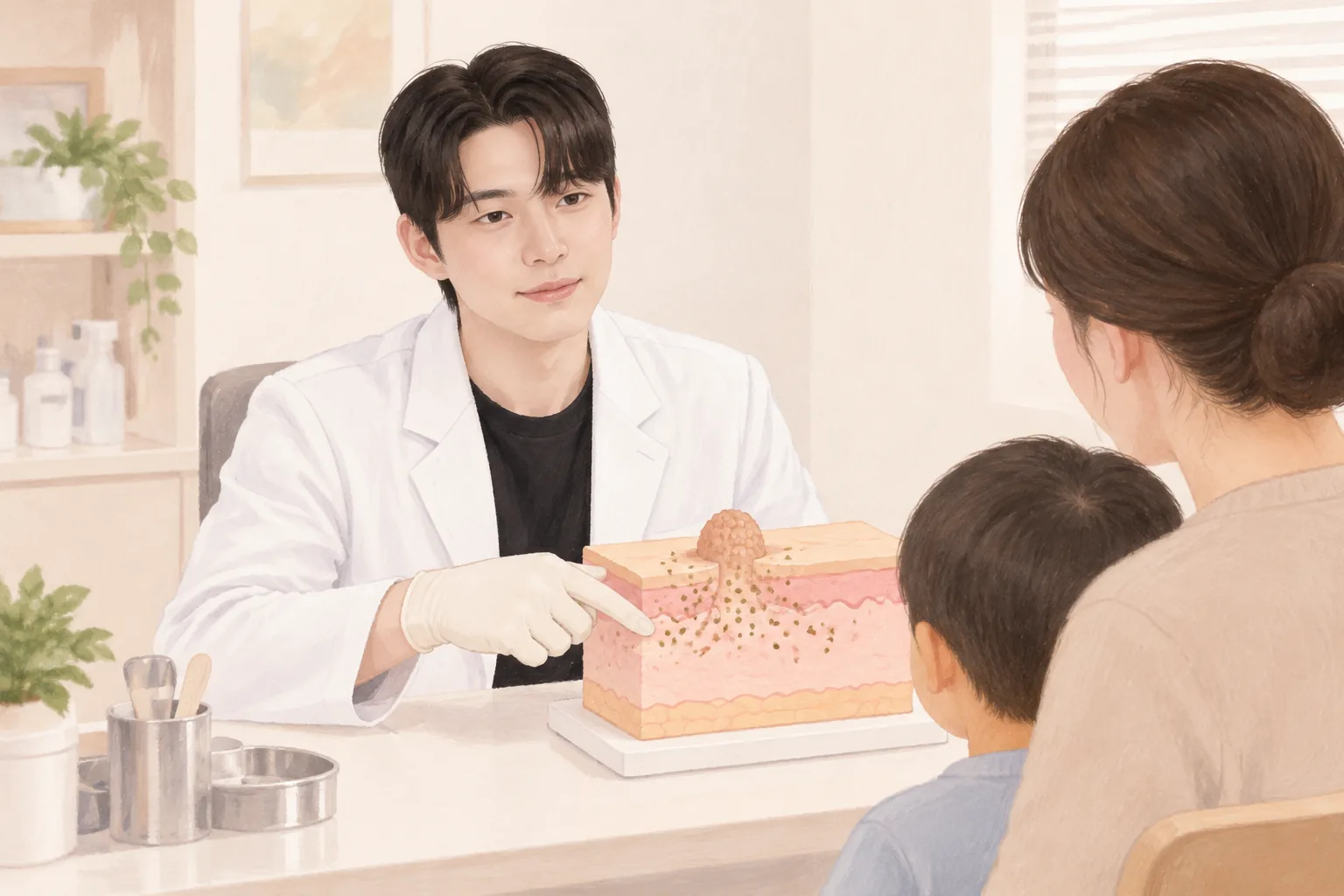
Warts are lesions caused by human papillomavirus (HPV, a virus that infects the skin and makes cells grow faster) (MSD Manual). The virus doesn't stay only in the raised bump; it is also present in the surrounding skin. Clearing only the visible keratin calms the surface, but the remaining virus makes the cells multiply again.
Understanding how cryotherapy works explains why it is split into several sessions. The lesion is frozen with liquid nitrogen and then fully thawed, repeating 2–3 cycles; tissue is destroyed most when the wart area is brought below -50℃ and then slowly thawed (Seoul National University Hospital). One freeze-thaw cycle takes about 3 minutes, and a single treatment repeats this cycle two or three times. The more freeze-thaw cycles you repeat, the more lesion tissue breaks down, and that is why treatment is split across several visits.
Another common idea is that digging deep once will cure it. The deeper the treatment, the more surely the lesion disappears, but the risk of scarring rises. Scarring can occur when the lesion is wide or after repeated cryotherapy (Seoul National University Hospital). Waiting is also an option. Most warts are harmless and many clear on their own, but letting them go untreated takes months to years (American Academy of Dermatology).
What sets the interval between sessions
What sets the interval is not the calendar but how well that area has healed. After cryotherapy a crust forms, and healing usually follows as the crust falls off after 10 days to 2 weeks (Seoul National University Hospital). The American Academy of Dermatology notes that the treated area usually heals within 4–7 days and adds that treatment is generally repeated every 2–4 weeks (AAD). If healing is slower, the interval gets longer.
Shortening the interval too much damages normal skin first. If you move during the procedure because it hurts, the surrounding normal tissue can freeze too, causing blisters and inflammation (Seoul National University Hospital). Trying to erase one lesion quickly can leave a mark on the skin beside it.
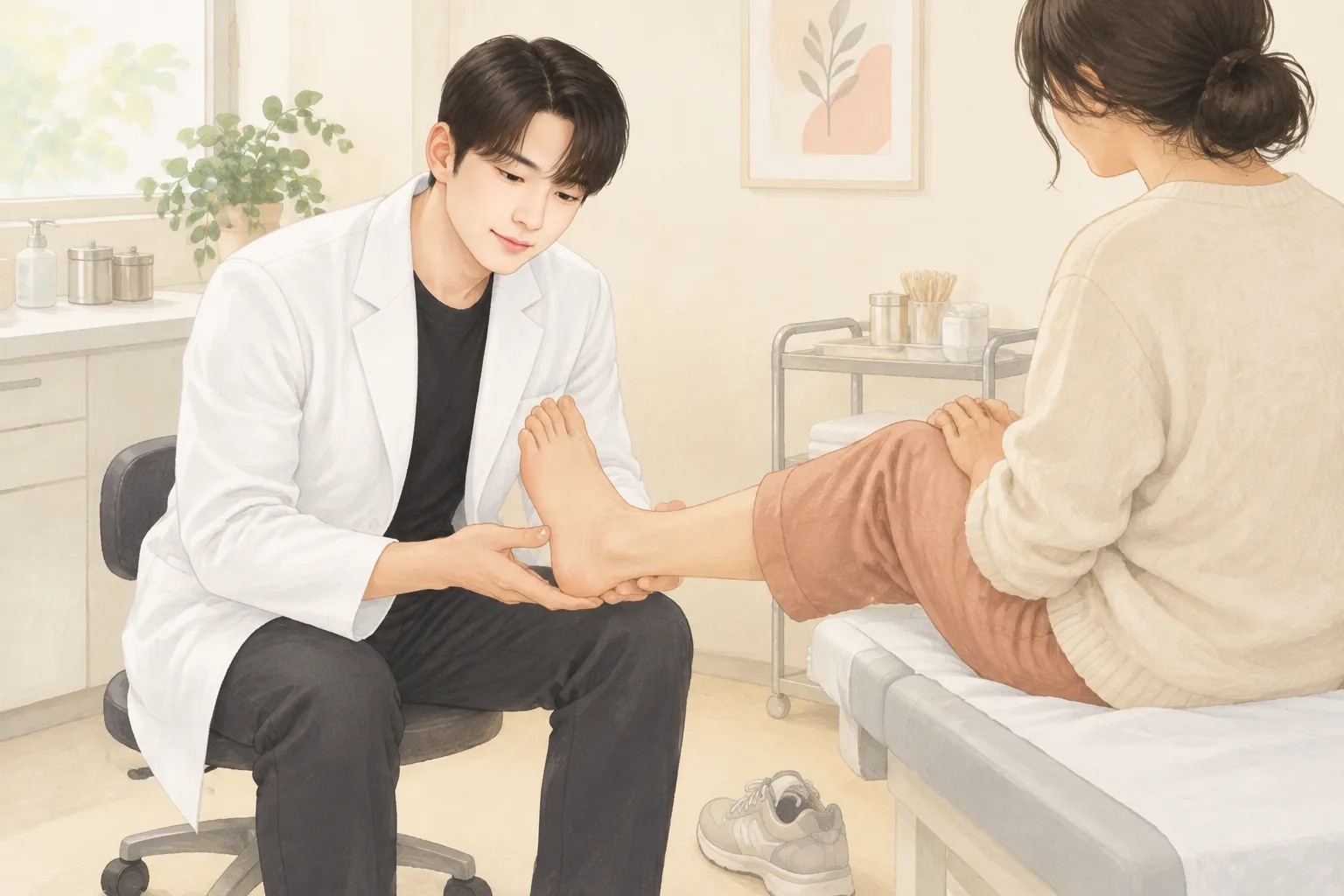
Location changes the picture too. Plantar warts are considered the most difficult type to treat (MSD Manual), and on the sole the keratin is thick, so the surface may be pared with a sterile scalpel before freezing (Seoul National University Hospital). Even in the same person, the number of repeats on the face or back of the hands cannot be the same as on the sole. The interval is set not by the calendar but by whether that area has recovered enough to take another round.
How the method changes the number of repeats
The American Academy of Dermatology lists salicylic acid application, cryotherapy, electrocautery with curettage (scraping the lesion out) and laser as wart treatments (AAD). Seoul National University Hospital explains that laser treatment removes warts quickly but recurrence is common and scarring is likely (SNUH). For the same wart, the number of repeats and the interval differ depending on which method is used.
Table 1 How the method changes the number of repeats
Method
What it does
Number of repeats and interval
Features
Cryotherapy
Freezes with liquid nitrogen, then thaws
Usually several times at 2–4 week intervals; next treatment 1–3 weeks later
Most commonly used; pigment change possible
Electrocautery and curettage
Burns and scrapes out the lesion
Usually 1 session
The site may be sore, swollen, discolored and may bleed
Laser
Removes lesion tissue
May need 1 or more sessions
Quick removal, but recurrence is common and there is a scarring risk
Salicylic acid application
Peels away the keratin layer
Usually once a day; several weeks to results
Done at home; irritation of surrounding skin
Swipe sideways to see the whole table.
Salicylic acid softens the lesion and is applied once a day, and it is noted that results take time (AAD). By contrast, electrocautery and curettage usually resolve in a single session.
In short the number of repeats differs by method, and even with the same method it depends on the state of the lesion. For methods split across several sessions, like cryotherapy, keeping to the interval shapes the result.
How number of lesions, location and immune status change the count
Treatment is easier when there are fewer and smaller lesions (AAD). Warts can range from one or two to hundreds (MSD Manual), so when there are many, both the area treated per visit and the total number of sessions are recalculated. Having fewer, smaller lesions making treatment easier is the most practical condition for reducing the number of repeats.
Immune status is another variable. The American Academy of Dermatology advises seeing a doctor first if your immune function is reduced or you have diabetes (AAD). Don't treat warts on the face or genitals, or lesions that change, hurt or bleed, at home (AAD). If a lesion grows quickly or looks ulcerated, a biopsy may be done to check for another condition.
Recurrence happens independently of the number of sessions. All types of warts can come back after removal (MSD Manual). Treating recurrence only as a sign that 'the treatment went wrong' makes the next plan hard to set. Which method was used before, how many times, at what interval, and how the skin responded then are the raw material for the next plan.
If this sounds like your situation
When a ceremony or photo shoot is a few weeks away
Lesions on the face or neck stay on your mind longer than the event itself if scarring or pigmentation is left behind. After freezing, the crust usually takes 10 days to 2 weeks to fall off (Seoul National University Hospital), so plan with at least 2 weeks of buffer before the important date. Rather than assuming everything will clear at once, it is more realistic to set an order starting with the most visible lesions.
Your elementary-school child's warts
Warts are most common in children (MSD Manual). Because the pain of cryotherapy often makes repeated treatment hard, a topical application may be considered first if the lesion isn't widespread (Seoul National University Hospital). First set the range of irritation the child can tolerate, then align the treatment interval with the school schedule.
When a plantar wart hurts with every step
Plantar warts flatten under walking pressure and are surrounded by thick keratin, which makes them the hardest to treat (MSD Manual). Since paring the surface and freezing is repeated (Seoul National University Hospital), set the interval while reducing the load on the foot during the most painful period.
When several flat warts appear on the face and back of the hands
Flat warts often appear on the face and back of the hands, frequently in clusters (MSD Manual). When there are many, the area treated per visit has to be divided, and because the face is a site where pigment change is noticeable, plan with a generous interval (Seoul National University Hospital).
Tell us before your consultation
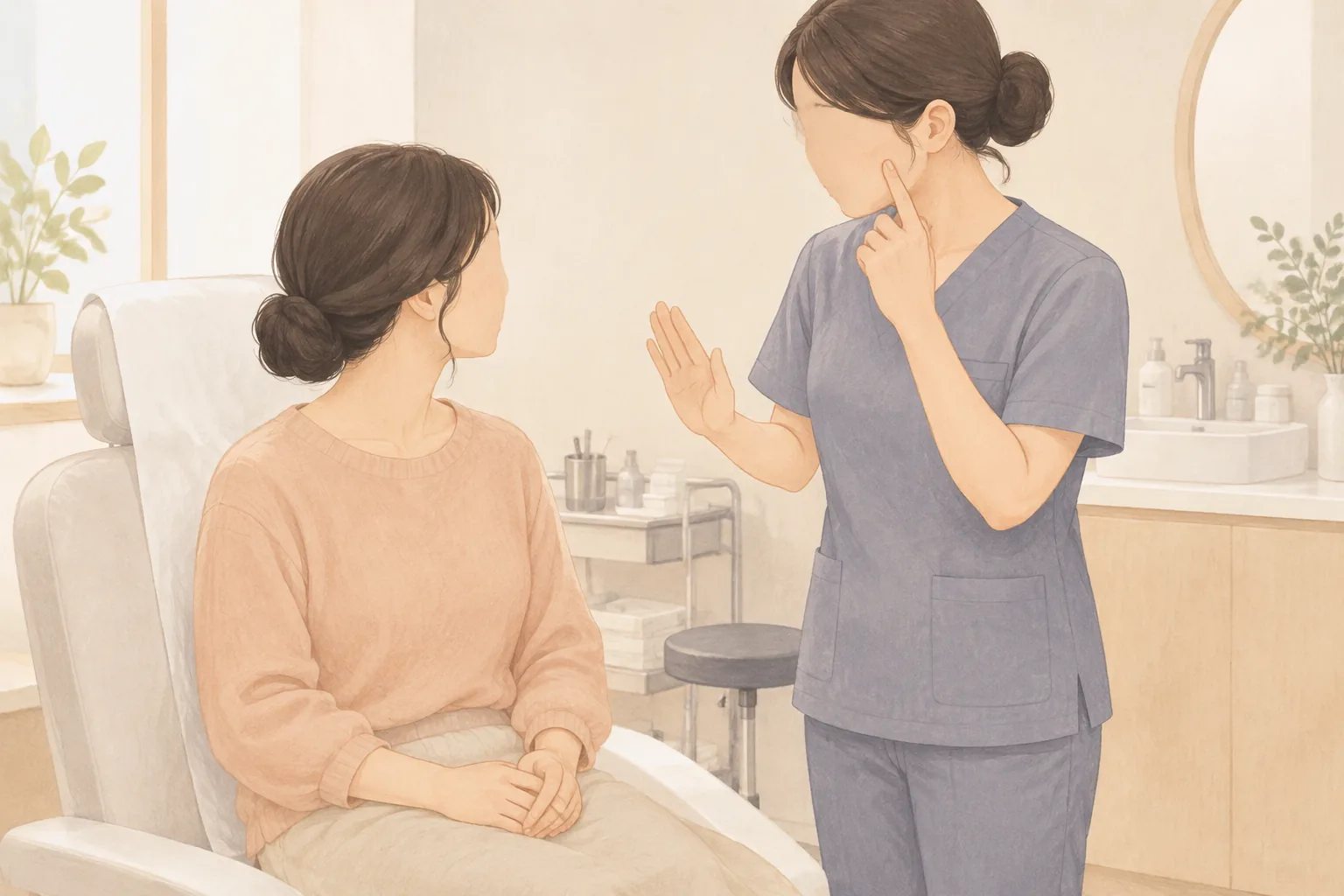
Let us know about recent sun exposure and tanning, any medications you take (including anticoagulants), and the ointments and skincare ingredients you are using, and the plan will be more accurate. Also mention the method, number and interval of any previous wart treatment and how your skin responded then. If you have a fixed date such as a ceremony or photo shoot, or a condition related to diabetes or immunity, it is best to say so in advance.
How ATTITUDE Clinic handles this
Recording skin condition and checking the lesion Skin condition is recorded and organized with a device, and the doctor visually checks whether the lesion is a wart, a mole or another kind of bump. The analysis tool only records and organizes information and does not make a medical diagnosis; the judgment is made by the doctor.
Doctor consultation and treatment plan The number and size of lesions, their location, previous treatment history and the time available for recovery are reviewed together to decide the method and interval. When finishing in one session is unlikely, we tell you in advance how many sessions at what interval to expect.
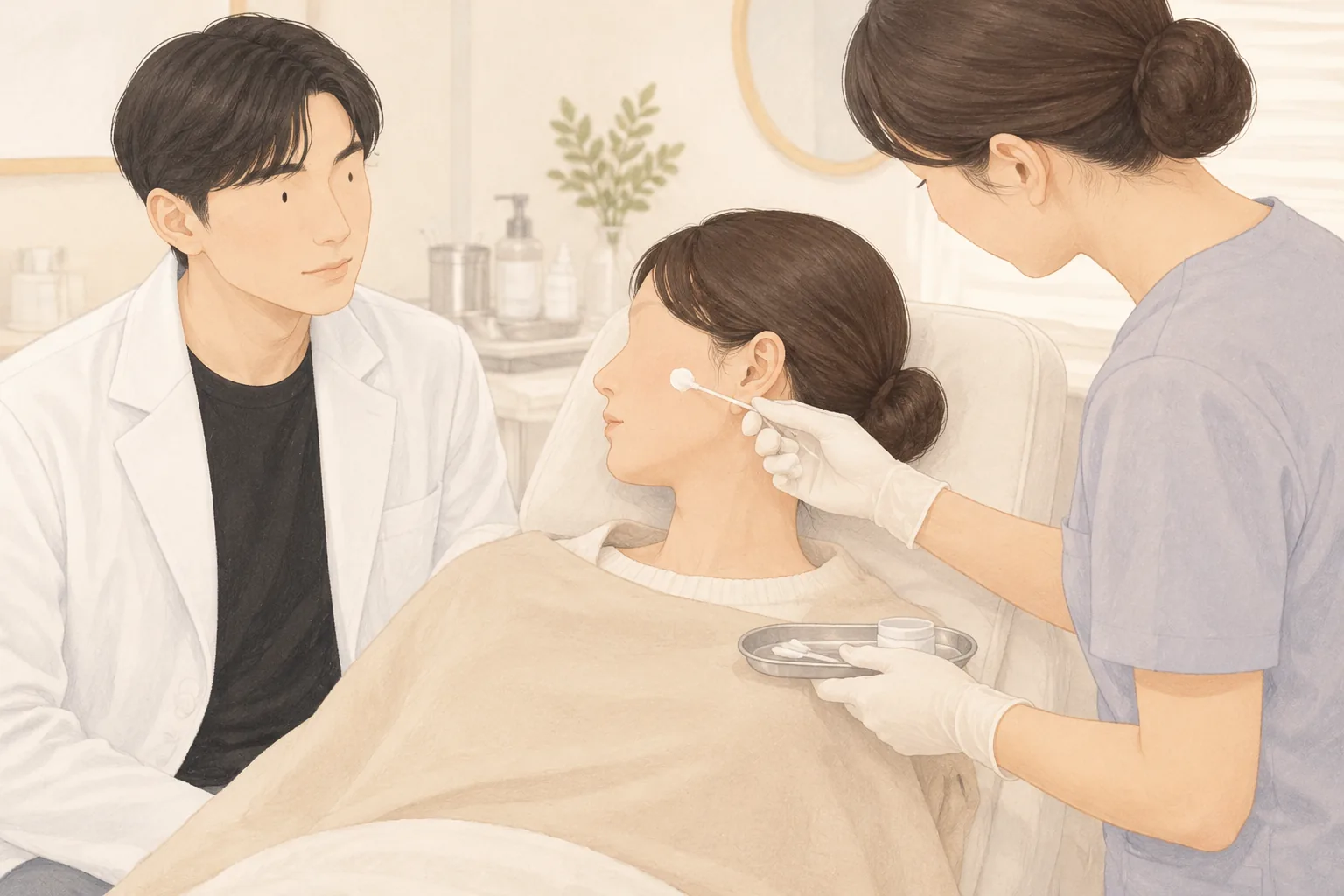
Procedure performed by the doctor The doctor performs the procedure according to the plan set in consultation, adjusting intensity while watching the skin's response during the procedure.
Recovery and follow-up We check when the crust falls off and any pigment change, and set the timing of the next session again.
Four steps your doctor sees to in person
From the diagnostic device to the treatment bed, the doctor you first consult takes care of everything.
01
Precision diagnosis
In a private diagnosis room the whole face is photographed, recording even skin conditions that are hard to see with the eye.
02
Skin analysis
The doctor goes through your pore, pigmentation, wrinkle and firmness results with you on screen and explains what comes first.
03
One-to-one design
With your skin, the balance of your face, the change you want and your schedule in view, you decide the treatment and its extent together.
04
Treatment by your doctor
The doctor who consulted you performs the treatment from start to finish in a private treatment room. No one takes over halfway.
“I take injection pain seriously.”
Co-Director Dr. Lee Dong Hun
Many people hesitate over injection treatments because they hurt. So we went back over everything, from the anesthetic to the products used.
Careful numbing, unhurried timingWe allow plenty of time for a special numbing cream to take full effect, and add anesthetic injections for the treatments and areas that need them.
Fine needles, finished quicklyInjection treatments use fine needles, and the doctor finishes them personally in a short time, adjusting along the way by watching how you are doing.
Even the product formulation countsThe same treatment can feel more or less demanding depending on the product, so we take that into account too.
The anesthetic method and whether it is used are decided after an examination, according to the treatment, the area and your condition. How much it hurts varies from person to person.
For wart removal, the unit price is listed per lesion, and all amounts exclude VAT (Treatments and pricing). The method actually used and the equipment are decided in consultation depending on the state of the lesion.
Aftercare and side effects
Soothing and moisturizing After freezing, applying antibiotic ointment and leaving the treated area open is advised (Seoul National University Hospital). Do not pop blisters; leave them as they are.
Preventing infection If a blister forms, watch for secondary infection and do not scratch or pick at it. Warts are a viral condition, so scratching easily spreads them to nearby normal skin (Seoul National University Hospital).
Sun protection Pigment change is one of the most common side effects after cryotherapy (Seoul National University Hospital). While new skin is coming in, avoid long sun exposure on the treated area.
Follow-up If the area hasn't healed 2 weeks after the crust falls off, or a new lesion appears nearby, the timing of the next session is reviewed again.
Common reactions are redness and swelling, blisters and temporary loss of pigment (Seoul National University Hospital). After electrocautery and curettage, the site may be sore, discolored, swollen and may bleed slightly (AAD). Rarely, keloids can form after treatment on the nose, upper lip or chest, nail shape can change, and toe numbness can occur that recovers over 6–12 months (Seoul National University Hospital).
If a blister grows large or bursts and keeps oozing, if redness and warmth spread, or if pain gets worse, don't wait — see a doctor. If pigment change becomes pronounced or a crust remains beyond 2 weeks, check in the same order.
Frequently asked questions
How many sessions does wart removal in Korea usually take?
Cryotherapy improves most warts after an average of 5 sessions, but stubborn warts may be treated more than 20 times (Seoul National University Hospital). Electrocautery and curettage usually finish in 1 session, and laser may need 1 or more (AAD). Some cases do clear in one go, so it is worth asking at consultation how many sessions are expected. The number and size of lesions and their location change the count a lot.
How many days later is the next session scheduled?
Cryotherapy is usually repeated every 2–4 weeks (AAD), and the next treatment may be set 1–3 weeks later (Seoul National University Hospital). Basing it on the fact that the crust usually takes 10 days to 2 weeks to fall off keeps things manageable. If healing is slow or inflammation lingers, the interval is lengthened. It is fine to watch the crust form and fall off after the procedure and then set the next date. If pain or redness doesn't settle, postpone the appointment and see a doctor first.
Can several warts be removed at the same time?
How much to treat in one visit is decided in consultation by reviewing the number and location of lesions, the scope of anesthesia and the time available for recovery. Guidance says treatment is easier when there are fewer and smaller lesions (AAD), so when there are many, a plan may split the area across visits. For visible areas like the face, the interval is set generously to account for pigment change (Seoul National University Hospital).
If it comes back, do I have to start over?
All types of warts can come back after removal (MSD Manual). A recurrent lesion is planned after reviewing its size and location again, so there is no fixed rule to repeat exactly the same number of sessions as before. Bringing your previous treatment records helps adjust the method and interval. Check whether the recurring spot is the same size as before or has spread sideways, and mention it at consultation. Writing down which method was used before, how many times and at what interval is the starting point for adjustment.
How do I choose a clinic for wart treatment in Seoul?
Look at whether they distinguish a wart from a mole or another bump, and whether they explain confirmatory steps such as a biopsy when a lesion grows quickly or bleeds (AAD). Which methods they can use, how many sessions at what interval they expect, and how they explain the risks of scarring and pigment change are also criteria (Seoul National University Hospital). A place that keeps records before and after the procedure makes the next plan easier to set.
At a glance
Table 2 At a glance
Item
Key point
Number of repeats
Cryotherapy averages around 5 sessions; stubborn warts may need more than 20
Interval
Usually 2–4 weeks; the next treatment may be set 1–3 weeks later
Healing marker
When the crust forms and falls off in 10 days to 2 weeks, judge the next session
Methods that finish in one go
Electrocautery and curettage usually 1 session; laser may need 1 or more
Conditions that reduce the count
Fewer, smaller lesions and stable immune status
Reactions to watch
Blisters and pigment change; rarely scarring and nail deformity
This article offers general health information. It is not a substitute for diagnosis or treatment based on your own condition, so please talk through your situation with a doctor.