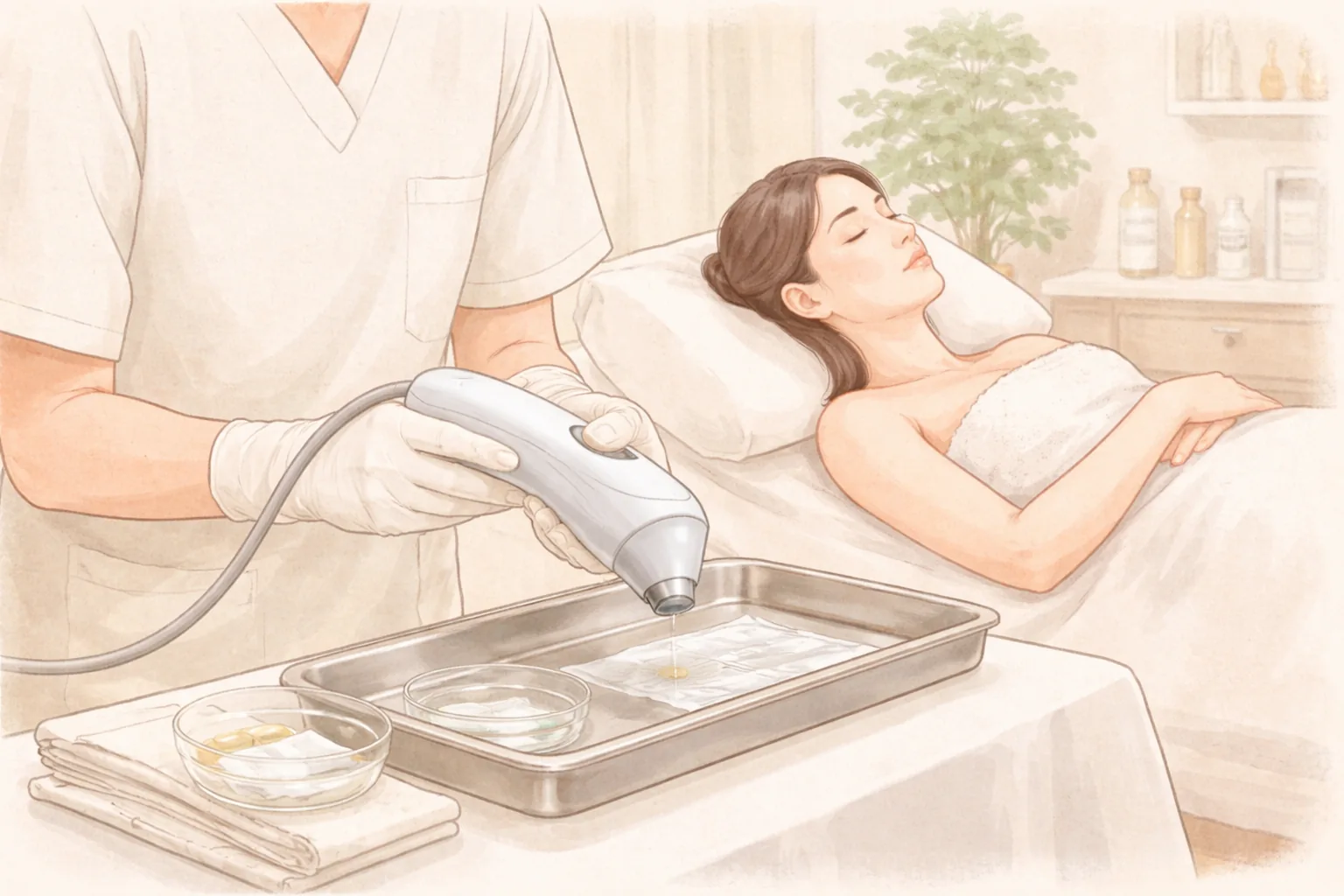
XERF Consultation: What to Check, From the Tip Down
What to confirm in an XERF consultation — tip, shot count, treatment area, cost and sessions, pain and recovery, and when to judge results — based on the ATTITUDE Clinic price list and American Academy of Dermatology guidance.
Written by ATTITUDE Clinic Editorial Team
You've booked an XERF consultation, but it's easy to feel stuck: what exactly does the tip determine, how are 300 shots and 600 shots different, and when do results start to show? There's a lot you want to ask, and consultation time is short — without a prepared list, you can leave with the decision still unmade. This article walks through what to confirm, in order: the tip and shot count, the treatment area, cost and number of sessions, pain and recovery, and when to assess results.
The short answer first
XERF is a lifting treatment that delivers monopolar radiofrequency heat to tissue beneath the skin without cutting it. On the ATTITUDE Clinic price list, it appears under monopolar radiofrequency lifting, divided into 300, 600, and 900 shots (Treatments & Pricing). What you settle in a consultation isn't "how many shots is best" — it's the tip and treatment area you'll receive, the intensity, what the total includes, pain and recovery, and when you'll re-evaluate results. There is no rule that more shots are better; the area, skin thickness, and your goal decide it. So a consultation isn't a place to compare numbers — it's a place to confirm, "For my face, what will be treated, how far, and in what order?"
What does XERF do beneath the skin?
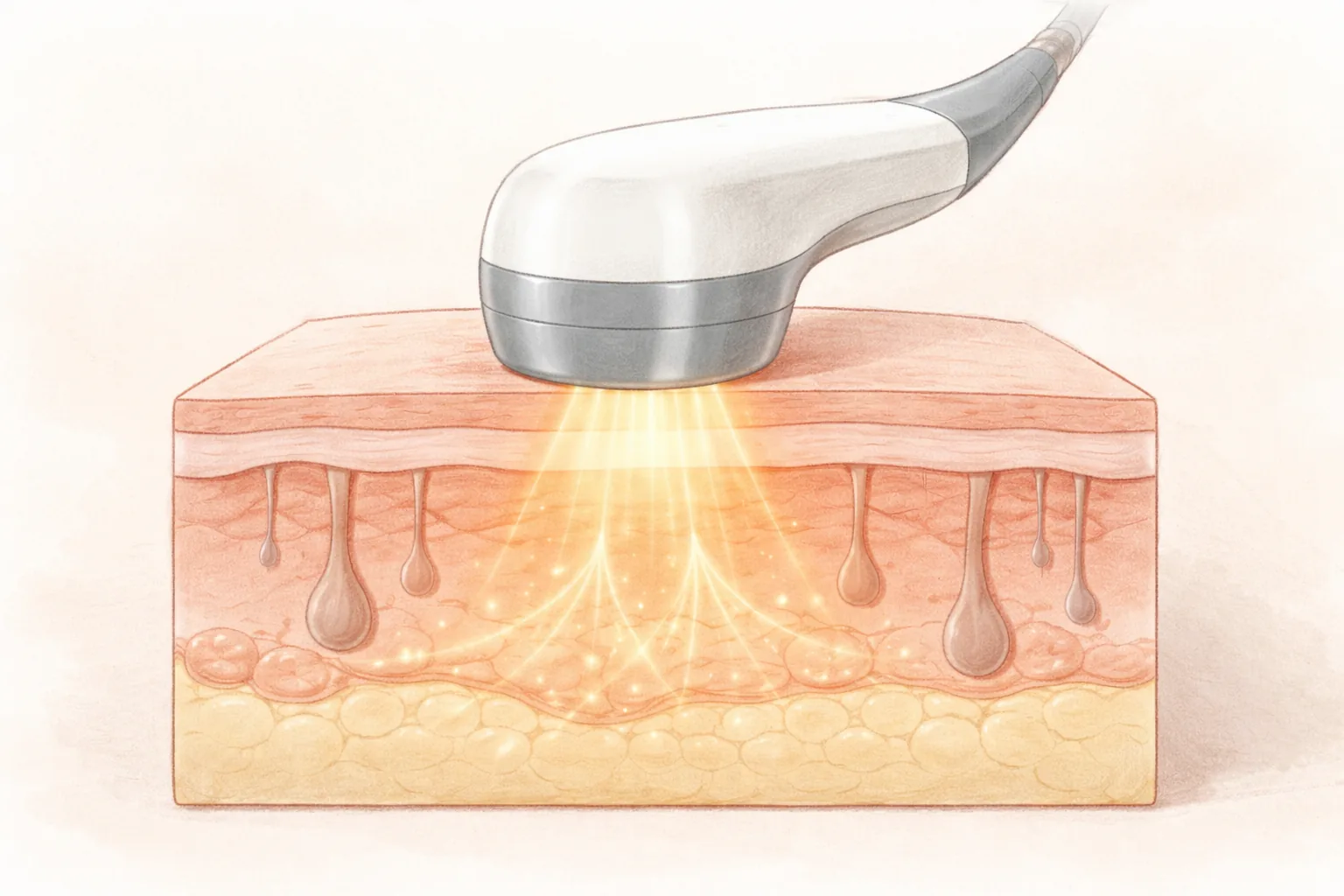
Radiofrequency lifting places a device on the skin and heats the tissue below it. According to the American Academy of Dermatology, radiofrequency treatments heat tissue beneath the skin, while ultrasound delivers heat to deeper layers (AAD: Firming sagging skin). Heated tissue enters a process of rebuilding collagen over time, which is why results appear gradually.
That the surface isn't cut or punctured says a lot about the nature of this treatment. According to AAD guidance, this approach is called non-invasive: no wounds or needle marks remain after treatment, and changes appear gradually for a natural look. Visible traces are usually just temporary redness and swelling; treatment time typically stays under an hour, and makeup can often be applied right away.
"Doesn't radiofrequency burn the skin?" is a common question. It's true that heat is used, but what determines the outcome isn't the type of heat — it's how much, where, and how it's applied. A column from ATTITUDE Clinic makes the same point: the same heat becomes treatment when it's concentrated in the targeted area and injury when it spreads widely (Lasers and skin, ATTITUDE Clinic column). That's why consultations also discuss how to divide intensity and treatment area.
How are XERF, Thermage, and Ultherapy different?
All three are called lifting, but the energy delivered to the skin differs. The ATTITUDE Clinic price list separates lifting items by energy method: Ultherapy is HIFU ultrasound, Thermage and XERF are monopolar radiofrequency, Onda is microwave, and Titanium is a 3-wavelength laser (Treatments & Pricing). Even the units differ: facial lifting items are counted in shots, while Onda and Titanium are counted in kJ.
Table 1 How are XERF, Thermage, and Ultherapy different?
Treatment
Energy method
Unit on the price list
What to check in consultation
Ultherapy
HIFU ultrasound
Shots (100, 300, 600, 900; eye area separate)
Number of sessions and intervals, whether the eye area is treated separately
Thermage FLX
Monopolar radiofrequency
Shots
Full-face area, pain and intensity
XERF
Monopolar radiofrequency
Shots (300, 600, 900; eye area 225, 450)
Tip and treatment area, total and VAT
Onda
Microwave
kJ
Face and body areas, number of sessions
Titanium
3-wavelength laser
kJ
Area, sessions, maintenance plan
Swipe sideways to see the whole table.
In short Even among lifting treatments, the unit differs — shots or kJ — and even with the same unit, the actual experience varies with the tip and treatment area. In consultation, it's best to first match the name, unit, area, and total of the treatment you'll receive, then leave the number of sessions and intervals to be decided after examining your skin.
300 shots or 600 shots — what decides it?
Shot count is a unit for counting passes. It's true that 600 shots is twice 300 shots, but that number doesn't mean twice the heat or twice the area. Even at the same 600 shots, the area actually covered and the heat accumulated in tissue differ with tip size and intensity settings.
Which tip treats how far is part of the treatment plan, so it's something to confirm in consultation. It's also worth asking whether a thin area like the eye area is treated separately. The ATTITUDE Clinic price list also lists eye XERF separately from facial items at 225 and 450 shots (Treatments & Pricing).
There is no numerical right answer for sessions and intervals. According to AAD guidance, you should confirm in consultation how many sessions are needed, whether anesthesia is used during treatment, and how long the procedure takes (AAD: Questions to ask). A plan that treats a wide area at once and a plan that divides areas across several visits produce different pain and recovery burdens, so you decide with your schedule and skin condition in view.
Cost is viewed as a total. Price list amounts are shown excluding VAT, so matching upfront whether tax, anesthesia, aftercare, and retreatment costs are included or separate keeps the math from going off later. Even at the same 600 shots, the plan differs depending on which area is included.
When do results appear, and how are they assessed?
According to AAD guidance, with non-invasive radiofrequency treatment you usually feel some immediate tightening after 1 session, and because the body takes time to make collagen, you see the best results at around 6 months. More than 1 session can help in some cases, and results may last 2–3 years with good skin care (AAD: Firming sagging skin). The same source explains that with ultrasound treatment, gradual changes often appear 2–6 months after 1 session. This is general information about the treatment category, not a prediction of your individual result.
So setting assessment points in advance helps. Divide them into right after treatment, 1 month, 3 months, and 6 months, and take photos under the same lighting and angle to see both how it feels and how it actually changes. Deciding in consultation when you'll return to review progress keeps your judgment steady.
The immediate feel and later changes are different phases. A column from ATTITUDE Clinic explains that understanding the plump feel right after treatment and the changes that gradually appear over the following weeks in chronological order is how to set realistic expectations (Collagen injections: do they build up in the skin right away?). Life factors like weight change, sun exposure, sleep, and smoking also affect how you feel, so a single photo at one point isn't enough to judge.
Pain and recovery: what should be decided in consultation?
Pain is felt differently depending on intensity, the thickness of the area, and individual sensitivity. According to AAD guidance, you should ask in consultation whether anesthesia is used during treatment, how long recovery takes, and when you can return to exercise, work, and social activities (AAD: Questions to ask). Non-invasive treatments have little or no downtime, and makeup can often be applied right after (AAD: Firming sagging skin).
How long redness and swelling last, however, varies from person to person. If you have plans that irritate the skin — a sauna, strong exfoliation, or intense exercise — on the day of treatment or the next day, telling the clinic in advance lets them factor it into the plan. AAD notes that firming treatments may not be suitable if you are pregnant, have a skin infection, or take certain medications. This information needs to be shared before treatment so intensity and timing can be adjusted.
If this applies to you
If you have a fixed date like a wedding or a shoot
It's safer to work backward from the date to set your start time. Cramming the first session right before an event can overlap redness or swelling with your photos. Telling the clinic your ceremony and shoot dates at consultation lets them adjust intensity and timing accordingly.
If you want steady management rather than a one-off
Lifting isn't a treatment that ends with one session — it's more natural to view it cumulatively, and AAD also explains that for some non-invasive treatments, more than 1 session can help. Rather than fixing the number of sessions from the start, reviewing progress after 1 session and then setting the next interval is easier to sustain. When planning, writing down your budget ceiling and available visit dates together makes it easier to put a combination together.
If your skin is sensitive or prone to redness
Dividing intensity and area and keeping recovery intervals is how to reduce the burden. Skin is temporarily sensitive after treatment, so sun protection and moisturizing are especially needed, and you should avoid exfoliation or harsh scrubs during the period you're advised (Lasers and skin, ATTITUDE Clinic column). If there was a period when your usual cosmetics stung, share that too.
If you're visiting on a short stay
If your stay is fixed, redness or dryness right after treatment can affect your schedule. Telling the clinic your return date and next commitments lets them discuss intensity and order accordingly. If it's hard to complete a progress check within the same visit, you can take photos under the same lighting at set points and compare them as a record.
Please share before your consultation
Tell us whether you've had a period of heavy recent sun exposure, medications you're taking and your health status, exfoliating ingredients in your current cosmetics (retinol, acids, etc.), any experience of sensitive skin after previous treatments, whether you're pregnant or breastfeeding, and fixed dates like weddings or shoots. Even for the same treatment, intensity and timing change with this information.
How ATTITUDE Clinic proceeds
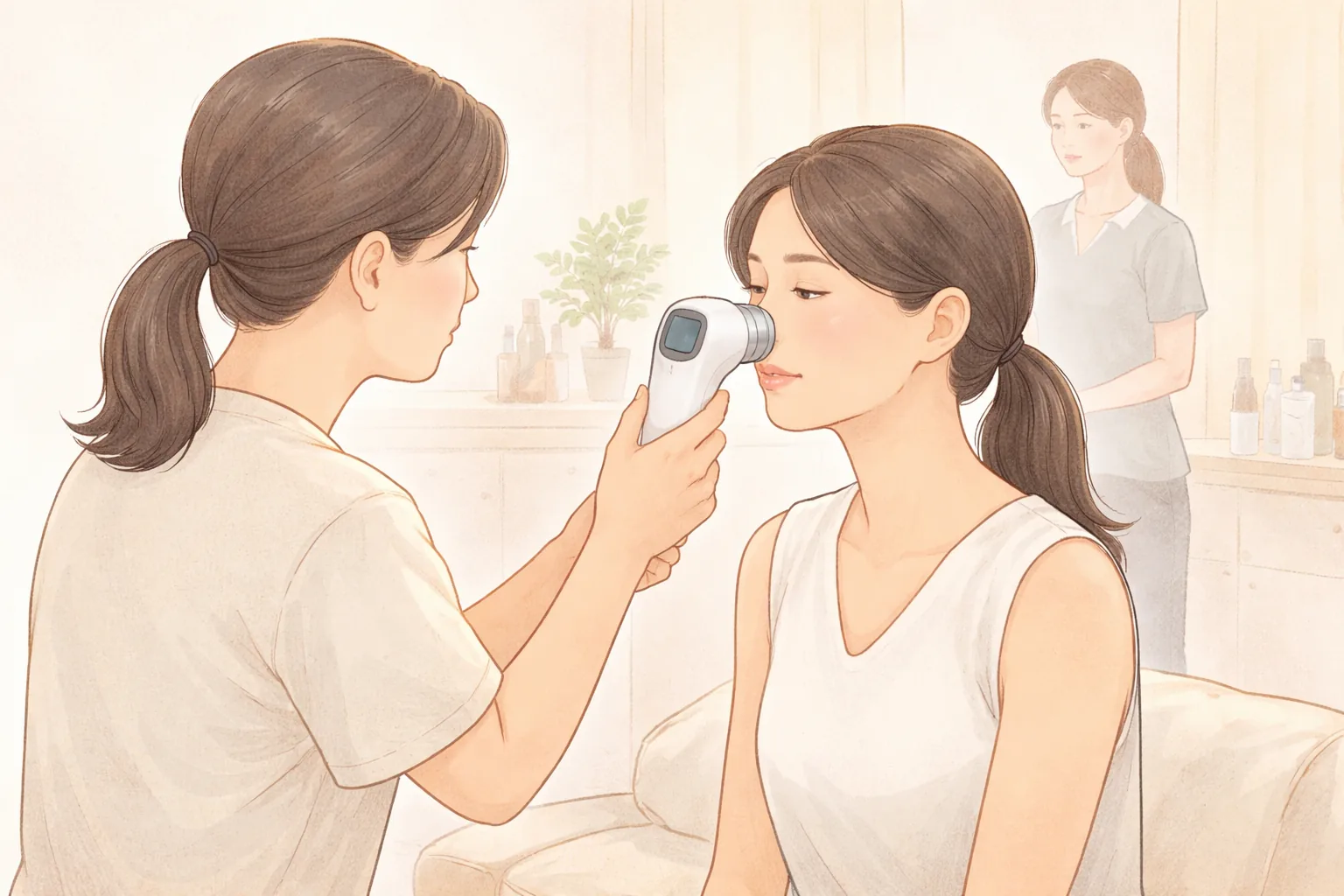
AI skin analysis record Current skin condition — pigment, redness, texture, pores — is recorded with an analysis tool. This record is a tool for organizing information to support the consultation, not a medical diagnosis, and the doctor judges the cause of your concern based on that record (Lasers and skin, ATTITUDE Clinic column).
Treatment direction set through doctor consultation Your schedule, pain sensitivity, and treatment history are added to the analysis record to decide the treatment type, intensity, and timing together. At this stage, you match the tip, treatment area, shot count, and what the cost includes.
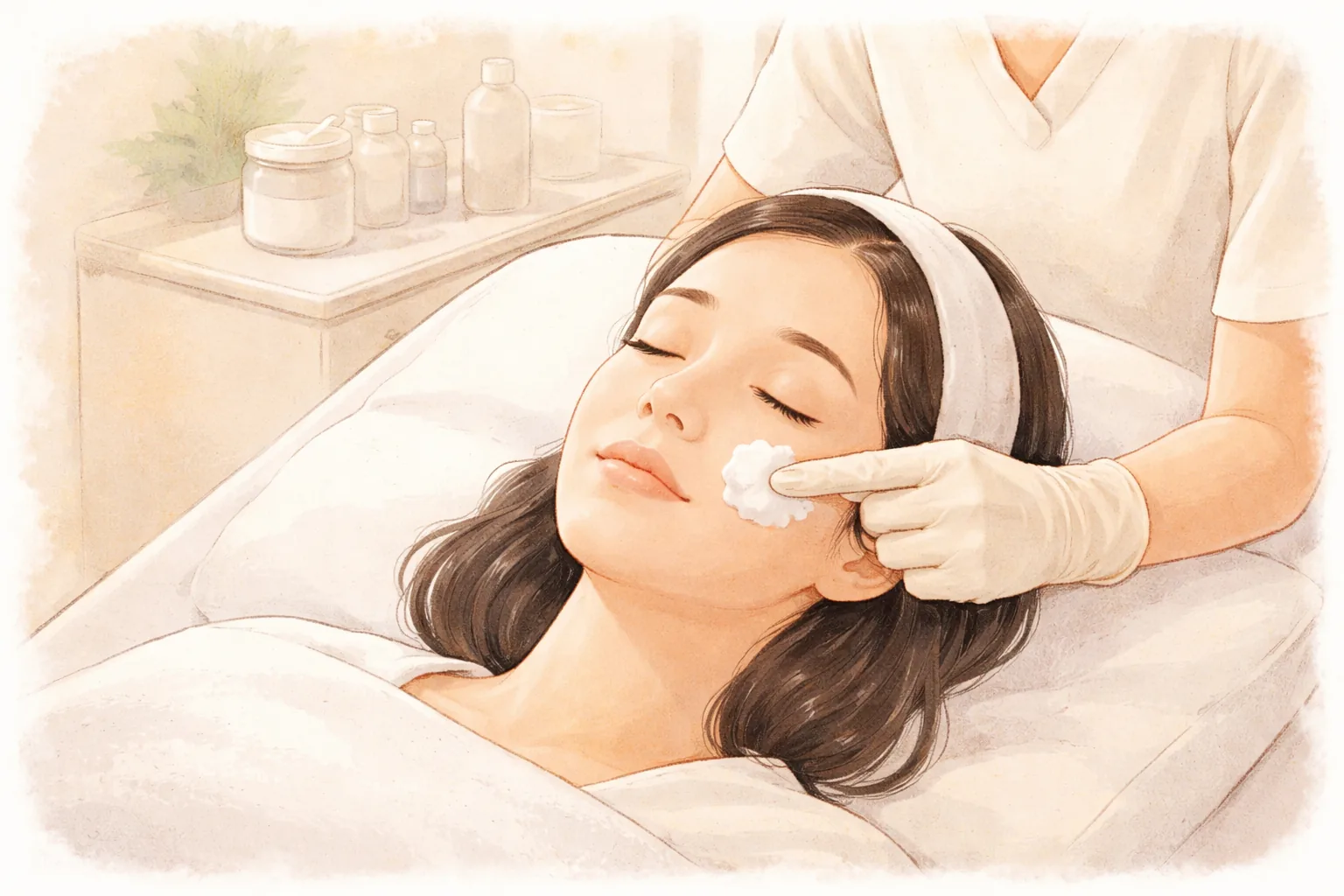
Treatment performed by the doctor Topical anesthesia is used as needed to reduce discomfort, and the doctor performs the treatment. The principle is not to recommend treatment beyond what's needed.
Authentic products, exact amounts, listed prices, and progress checks The equipment and products used, amounts, and sessions proceed as agreed, and after treatment, progress is checked at the points set in consultation.
The lifting devices listed on the ATTITUDE Clinic price list related to this topic are XERF, Thermage FLX, Ultherapy, Onda, and Titanium (Treatments & Pricing).
Aftercare and side effects
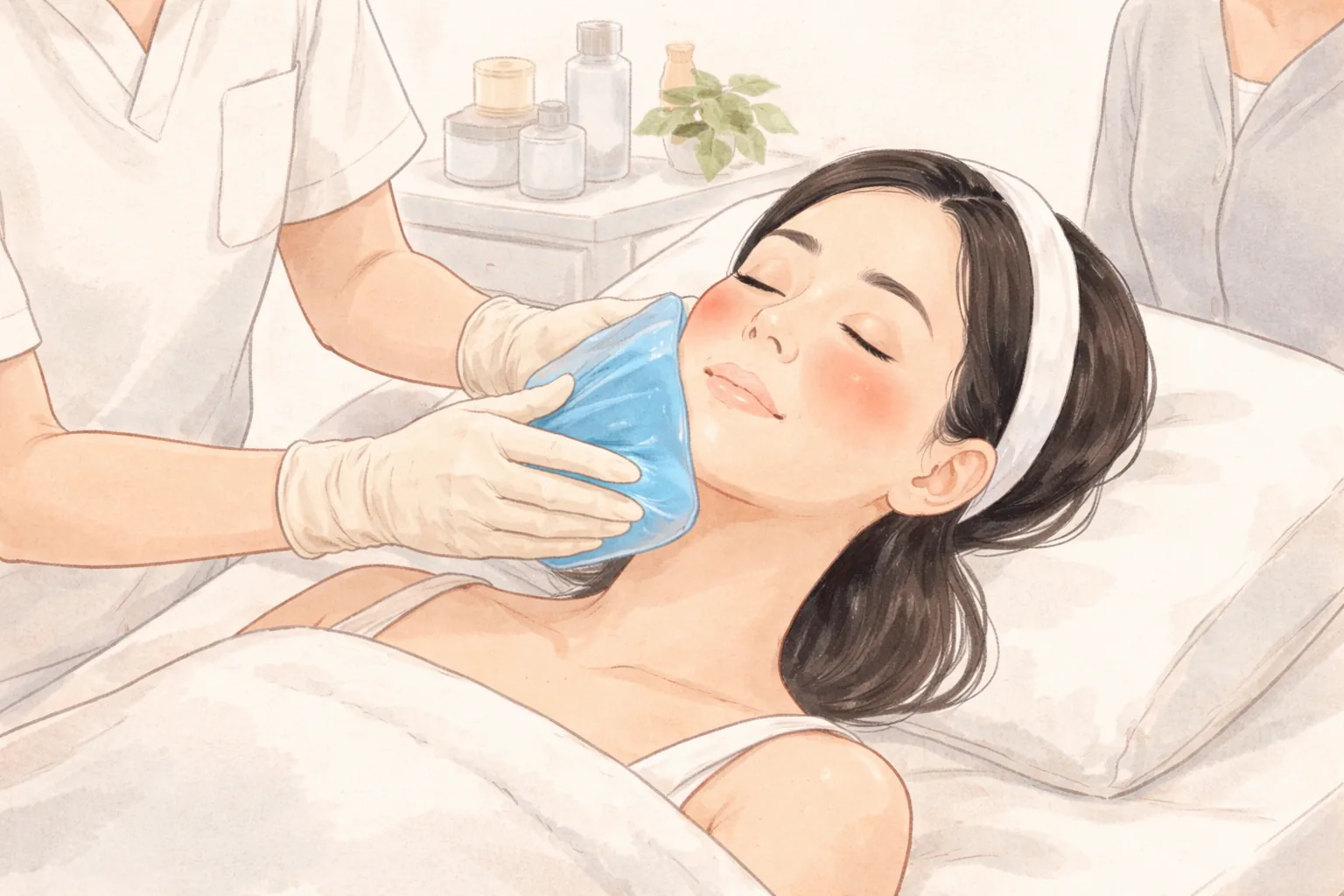
Soothing On the day of treatment, avoid anything that irritates the skin, such as saunas, hot baths, or strong exfoliation. Wash your face more gently than usual.
Moisturizing Skin can become temporarily dry after treatment, so apply a mild moisturizer as usual. Don't start new irritating products for the first time during this period.
Sun protection During recovery, apply sunscreen carefully. When skin is sensitized, pigment is more likely to rise, so reapplying before and after going out helps.
Progress check Review progress with photos at the points set in consultation. If redness or warmth lasts longer than expected or pain worsens, visit to have it checked rather than waiting for your next appointment (Lasers and skin, ATTITUDE Clinic column).
The most common reactions are redness and swelling right after treatment and warmth that lingers. According to AAD guidance, with non-invasive treatments these reactions are usually the only traces, and the risk of other side effects is generally low (AAD: Firming sagging skin). Since heat is used, proceeding at an intensity that doesn't suit your skin condition or repeating before recovery is complete can increase the burden, so keeping intervals is part of the result. The doctor explains the reactions and risks possible with the planned settings before treatment.
Frequently asked questions
Is 300 shots or 600 shots better?
There's no number that ranks them. 300 and 600 shots are units for counting passes, and the actual result is shaped by tip size, treatment area, intensity setting, and skin thickness together. A plan treating thick areas like the cheeks and jaw widely and a plan treating a thin area like the eye area precisely call for different shot counts. The price list also separates facial items and eye XERF items, so it's natural to first match which areas yours includes. In consultation, deciding "which tip treats this area, and how far" before shot count makes results easier to gauge.
When do results appear, and how long do they last?
You may feel some immediate tightening, but the body needs time to make collagen, and according to AAD guidance, with non-invasive radiofrequency treatment you see the best results at around 6 months. The same source notes that with ultrasound treatment, gradual changes often appear 2–6 months after 1 session (AAD: Firming sagging skin). Maintenance is sometimes discussed as lasting 2–3 years depending on skin care habits, but individual variation is large. Assessment is realistically done by taking photos under the same lighting and angle and dividing the points into 1 month, 3 months, and 6 months; weight change and sun exposure also shift how you feel.
Can I return to daily life right after treatment? What about swelling?
Non-invasive treatments have little or no downtime, so you can usually return to daily life right away, and makeup can often be applied immediately (AAD: Firming sagging skin). Redness and swelling are common reactions right after treatment, and their degree and duration depend on intensity, area, and skin condition. Postponing anything that irritates the skin — saunas, strong exfoliation, intense exercise — during the advised period reduces the burden. If swelling lasts longer than expected or redness deepens, don't leave it — have it checked.
How much does it hurt, and is anesthesia used?
Pain varies with intensity, the thickness of the area, and sensitivity, so it's hard to put one number on it. According to AAD guidance, you should confirm in consultation whether anesthesia is used during treatment and how long recovery takes (AAD: Questions to ask). Whether anesthesia is used and how, and whether intensity can be lowered if pain is severe during treatment, are also items you can coordinate in consultation and during the procedure. Telling us in advance about painful experiences with previous treatments or that you're generally sensitive to pain lets us factor it into settings.
How do I choose a clinic that does XERF well?
It's better to look at what a clinic confirms in consultation than at its equipment list. Look at whether they first check which layer of skin your concern comes from, whether they recommend only necessary treatments and don't set session counts or intensity excessively, and whether they explain the tip, treatment area, shot count, and total in plain terms. AAD recommends similar items. What to check: the practitioner's experience with this treatment, how much they've handled skin types and age groups similar to yours, whether you can see before-and-after photos of similar skin, and whether they explain risks and alternatives (AAD: Questions to ask). Since requests and confirmations are handled separately, it's best to request early if you have a specific date in mind (Consultation & Booking).
At a glance
Table 2 At a glance
Item
Key point
How XERF works
Lifting that delivers radiofrequency heat to tissue beneath the skin without cutting it; on the price list, a monopolar radiofrequency item
Tip and area
Tip type and treatment area are decided in consultation; shot count alone doesn't determine them
300, 600, 900 shots
Units on the price list; all amounts are shown excluding VAT
Assessing results
Results are gradual; general non-invasive radiofrequency guidance points to best results at around 6 months
Recovery
Little or no downtime; makeup can often be applied after treatment
When to contact
If redness or warmth lasts longer than expected or pain worsens, visit the clinic
This article offers general health information. It is not a substitute for diagnosis or treatment based on your own condition, so please talk through your situation with a doctor.