Interpreter Consultations in English, Chinese & Japanese: What to Tell Us First and What to Confirm
Planning an interpreter consultation at a skin clinic in Seoul? Here’s what to tell us in your first inquiry and what to confirm in your language.
Written by ATTITUDE Clinic Editorial Team
Even if you hear an explanation in English, can you follow the conversation about your own skin all the way through? And if you need an interpreter, what should you say first? For visitors who are not comfortable in Korean, these two worries tend to come up outside the consultation room. The answer starts with stating your preferred language in your first inquiry and bringing a list of points to confirm in your own language during the consultation.
The short answer first
ATTITUDE Clinic can consult with interpretation in English, Chinese (China and Taiwan), and Japanese. If you tell us your preferred language when you inquire, we will arrange an interpreter (Directions). The consultation follows the sequence of precise diagnosis and skin analysis, 1:1 design, and treatment performed directly by the doctor, and the treatment plan and scope are decided during the consultation (Process). Consultation requests are confirmed after you receive the clinic’s confirmation contact (Consultation).
How does an interpreter consultation proceed?
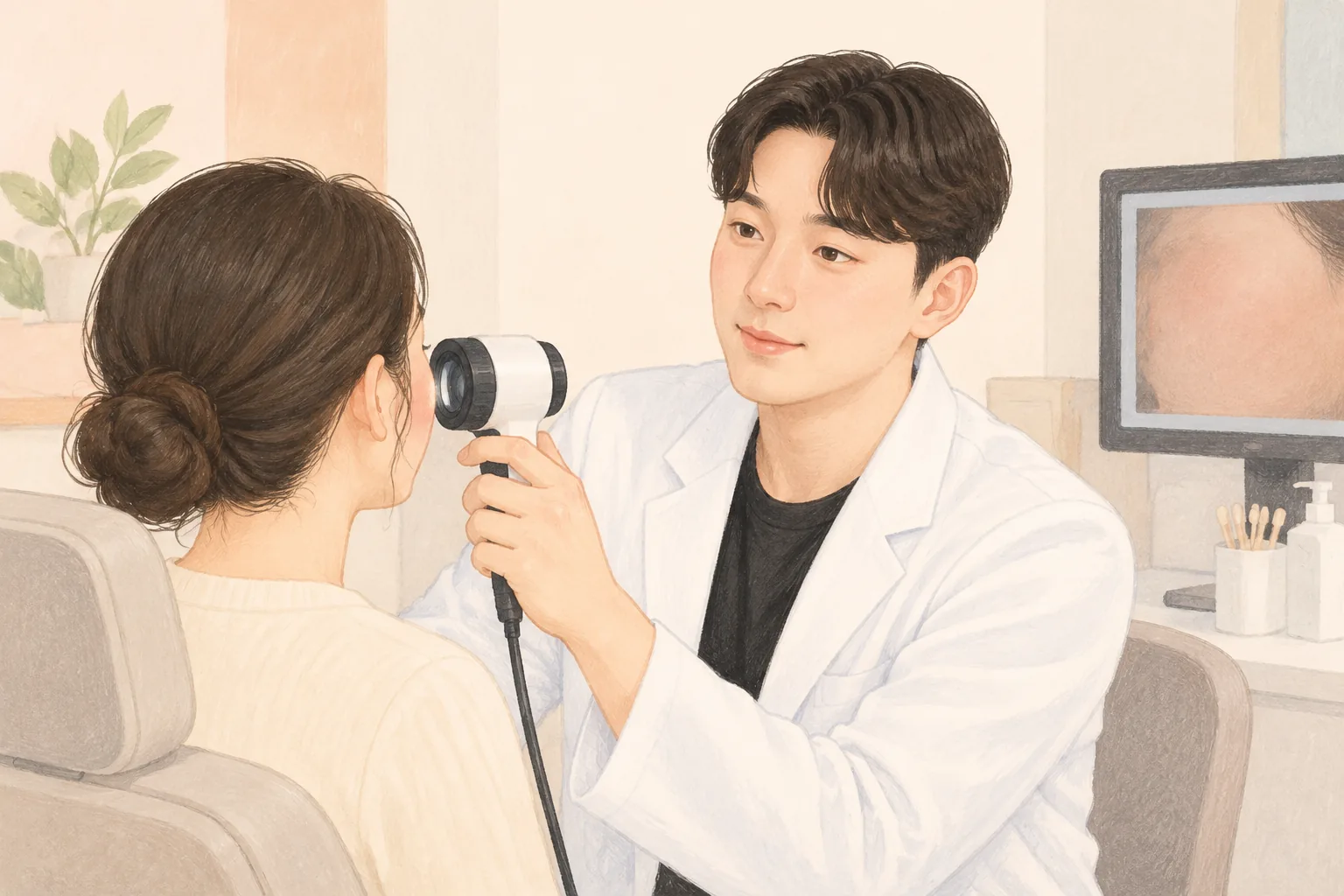
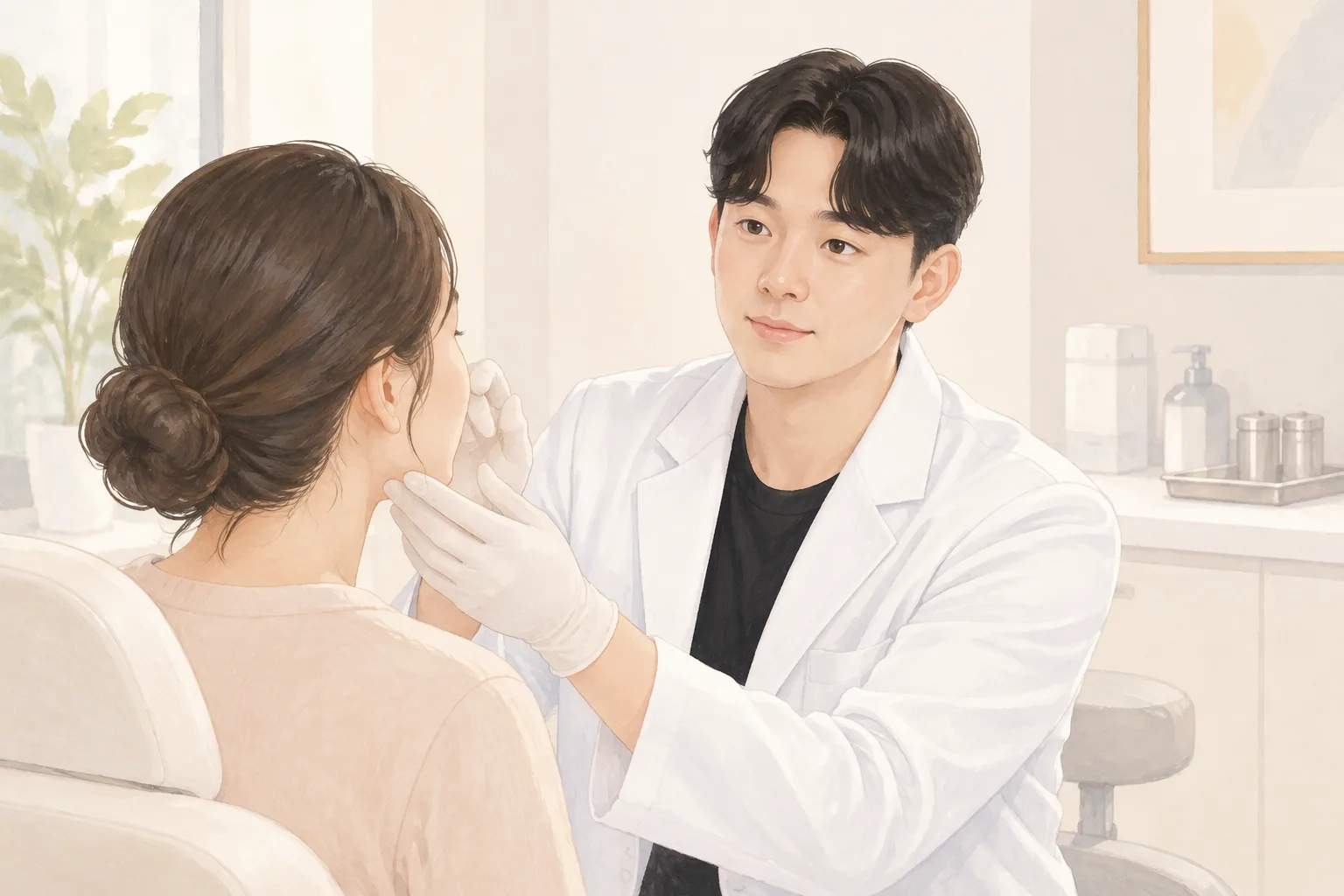
When you include your preferred language in your first inquiry, the clinic arranges an interpreter in that language. When you visit, we photograph your entire face in a private diagnostic room to record skin conditions that are hard to see with the naked eye (Process). The doctor then reviews the results for pores, pigmentation, wrinkles, and elasticity with you on screen and explains what should be addressed first.
After hearing the explanation, you continue asking questions through the interpreter. Skin conditions and concerns differ from person to person, so even the same treatment name starts from a different point. Going through the two steps of precise diagnosis and skin analysis creates a shared basis for the conversation about what is happening in your skin.
It is easy to assume that having an interpreter automatically makes explanations simple. Skin treatment terminology contains many unfamiliar words, so it is more accurate to ask about unknown terms on the spot. If you stop to ask a question while hearing the explanation through the interpreter, the consultation flow does not break.
Analysis tools record and organize information and are not a medical diagnosis (English guide). That is why the doctor also examines your skin directly while looking at the imaging results. The same order applies in an interpreter consultation.
Why should you tell us your language in the first inquiry?
Interpretation is arranged when you tell us your preferred language in your inquiry. There are three options: English, Chinese (China and Taiwan), and Japanese (Directions). Telling us your preferred language in the first inquiry starts the interpreter arrangements. The content of the consultation depends on your skin condition and concerns, so hearing the explanation in the same language helps understanding.
Stating your language is not just a step for calling an interpreter. It is the starting point for deciding in which language you will hear about risks and recovery during the consultation. Chinese interpretation is for visitors from China and Taiwan, and Japanese and English are requested in the same way.
Hearing an explanation and understanding it are different things. Even when the interpreter conveys the sentences, you should confirm separately the numbers and timeframes that apply to your skin. Important periods or reactions should be reviewed once more through the interpreter.
What questions should you confirm in your own language during the consultation?
The American Academy of Dermatology advises that patients ask about expected results, risks, alternatives, recovery time, preparation, and aftercare during cosmetic procedure consultations (AAD guide). If you write your questions down in your own language, you will not miss them even through an interpreter. In particular, ask whether this treatment is the right choice for you, whether there are other options, how long recovery takes, and whether anesthesia is needed during the procedure.
The number of sessions and the time required are also items to confirm during the consultation. Even treatments with the same name are planned differently depending on skin condition and goals. Asking about expected results and alternatives together keeps the explanation from being one-sided.
After hearing the explanation, try asking the interpreter to restate the key points in your own words. This helps reduce signing a consent form without understanding it. Risks and recovery time vary by treatment type and skin condition, so ask specifically about the reactions that apply to you.
The heart of the consultation is confirming the expected results and risks for your skin in your own language. It is fine to have many questions. A consultation is a place to hear explanations and make decisions, so it is better not to leave unknown points unresolved.
What should you note down before the consultation to make the explanation more specific?
The ATTITUDE Clinic column advises telling the clinic about recent UV exposure, medications or cosmetics you are taking or using, and any experience of sensitive skin after previous treatments. This information affects the timing and settings. Even if you write down only what you remember, the explanation becomes more specific.
Also tell us your departure schedule in advance. If your stay is fixed, redness or dryness right after the procedure may overlap with your schedule, so the intensity and type can be discussed accordingly. If you have had previous treatments, note what they were and how your skin responded at the time.
Table 1 What should you note down before the consultation to make the explanation more specific?
Preparation item
What to note before inquiry/consultation
What to confirm in the consultation
Preferred language
The language you need among English, Chinese (China and Taiwan), and Japanese
Interpreter arrangements and how the consultation proceeds
Skin concerns and desired changes
What is uncomfortable now, what changes you want
Expected results and other options
Medications and cosmetics
Medications you are taking, cosmetics you are using
Skin condition and whether treatment is possible
Previous treatment record
Treatment names and product names, dates, and skin reactions at the time
Interval between the current plan and previous treatments
Departure schedule
Return date and next schedule
Recovery period, treatment intensity, and type
Swipe sideways to see the whole table.
In summary The starting point is telling us your preferred language in the first inquiry. In the consultation, confirm expected results, risks, alternatives, recovery, and aftercare in your own language, and decide the treatment scope together with your departure schedule and skin history.
If this applies to you
If you have a short visit
If your stay is fixed, tell us your departure date and next schedule first. Redness or dryness right after the procedure may overlap with your schedule, so the intensity and type can be discussed accordingly.
If your skin is sensitive or prone to redness
Tell us about medications you are taking, cosmetics you are using, and reactions after previous treatments. When hearing the explanation, ask how much redness, heat sensation, or crusting is expected. Even the same treatment uses different settings depending on skin condition.
If you do not have previous treatment records
Tell us the treatment history you remember and how your skin responded at the time. Not having records does not make consultation impossible; the doctor judges based on your current skin (Process). You can organize your memories one by one through the interpreter.
If you need contact after returning home
Before returning home, ask how to contact the clinic if discomfort arises and when to check your progress. The American Academy of Dermatology also recommends confirming aftercare methods during the consultation (AAD guide). It helps to note the treatment name, area, and date so you can show them to a local doctor.
Please tell us before the consultation
Your preferred language
Treatments you are interested in or your concerns
Medications you are taking and cosmetics you are using
Recent UV exposure and skin reactions after previous treatments
Departure schedule and how to contact you after returning home
How ATTITUDE Clinic proceeds
The consultation follows these four steps. The doctor you first consult with is responsible from the diagnostic equipment to the treatment table, and the analysis tools help record information.
Precise diagnosis In a private diagnostic room, we photograph your entire face to record skin conditions that are hard to see with the naked eye. The images are used as reference for the consultation.
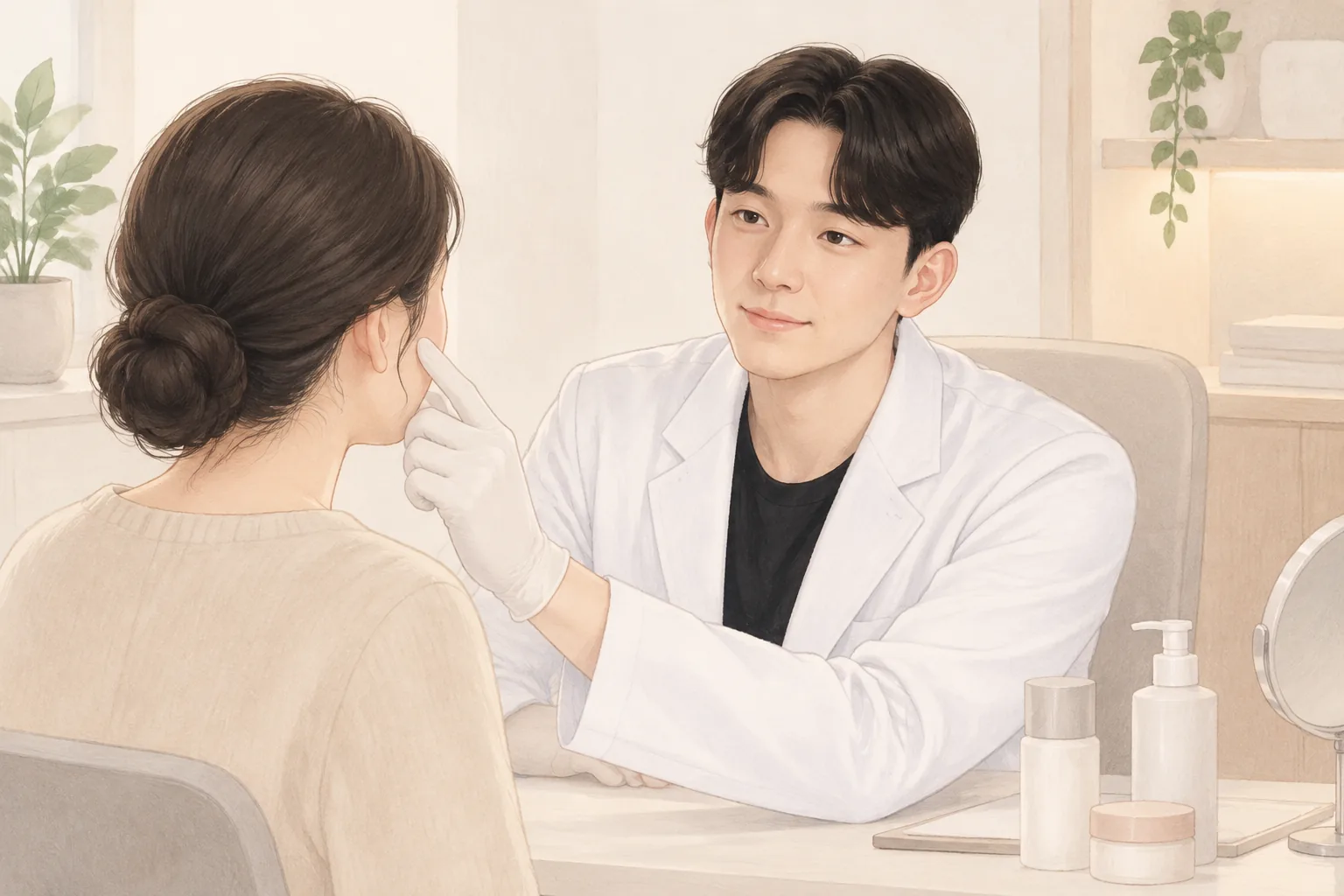
Skin analysis The doctor reviews the results for pores, pigmentation, wrinkles, and elasticity with you on screen and explains what should be addressed first. You can ask questions on the spot through the interpreter.
1:1 design Considering skin and facial balance, the changes you want, and your schedule, you decide on the treatment and scope together.
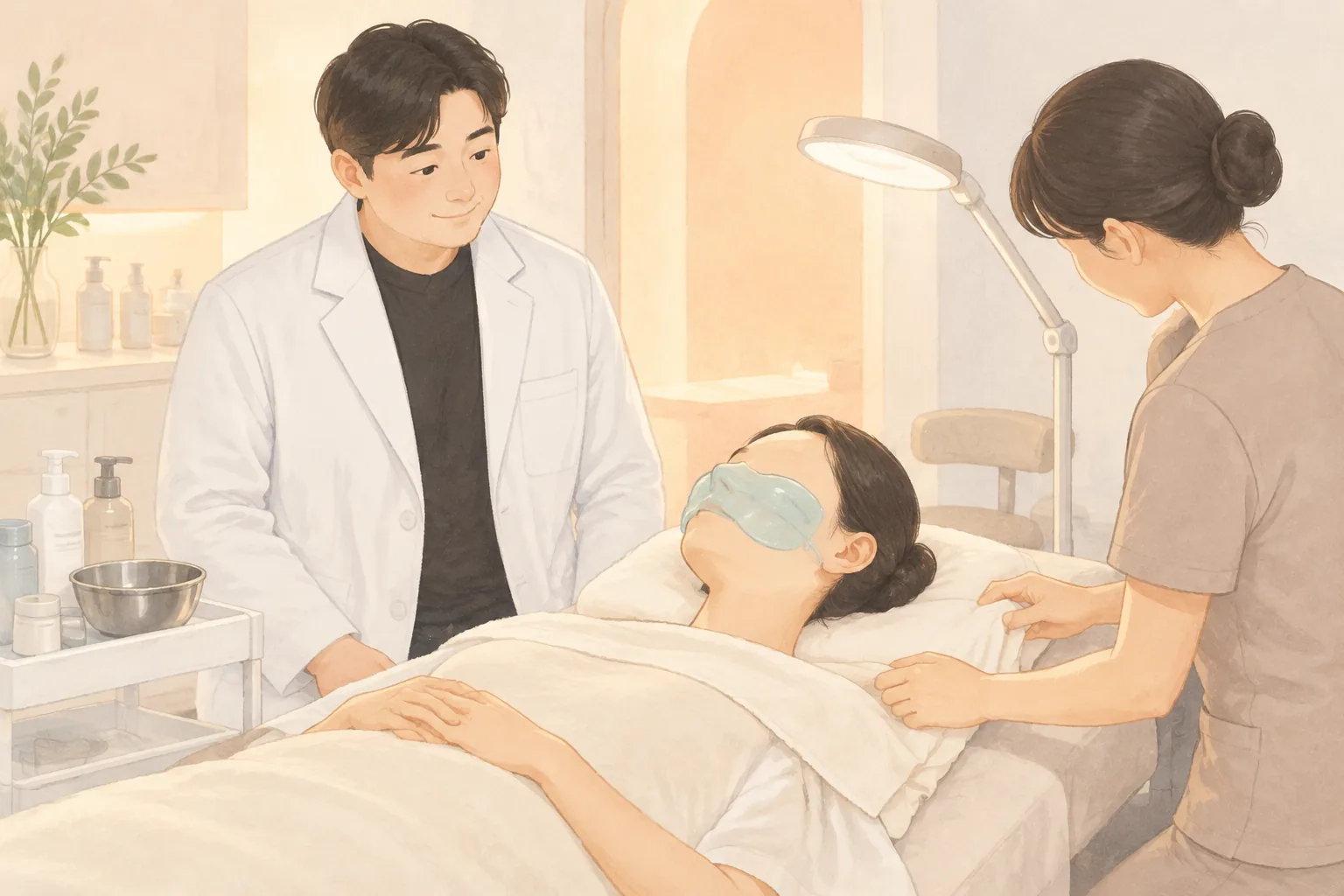
Direct treatment The doctor who consulted with you performs the treatment from start to finish in a single treatment room. The person does not change midway.
Four steps your doctor sees to in person
From the diagnostic device to the treatment bed, the doctor you first consult takes care of everything.
01
Precision diagnosis
In a private diagnosis room the whole face is photographed, recording even skin conditions that are hard to see with the eye.
02
Skin analysis
The doctor goes through your pore, pigmentation, wrinkle and firmness results with you on screen and explains what comes first.
03
One-to-one design
With your skin, the balance of your face, the change you want and your schedule in view, you decide the treatment and its extent together.
04
Treatment by your doctor
The doctor who consulted you performs the treatment from start to finish in a private treatment room. No one takes over halfway.
“I take injection pain seriously.”
Co-Director Dr. Lee Dong Hun
Many people hesitate over injection treatments because they hurt. So we went back over everything, from the anesthetic to the products used.
Careful numbing, unhurried timingWe allow plenty of time for a special numbing cream to take full effect, and add anesthetic injections for the treatments and areas that need them.
Fine needles, finished quicklyInjection treatments use fine needles, and the doctor finishes them personally in a short time, adjusting along the way by watching how you are doing.
Even the product formulation countsThe same treatment can feel more or less demanding depending on the product, so we take that into account too.
The anesthetic method and whether it is used are decided after an examination, according to the treatment, the area and your condition. How much it hurts varies from person to person.
Analysis tools only record and organize information and are not a medical diagnosis (English guide). This applies equally in interpreter consultations.
Aftercare and side effects
Soothing If there is redness or heat sensation right after the procedure, soothe the skin using the method you were instructed on. Avoid saunas and strong exfoliation during the instructed period.
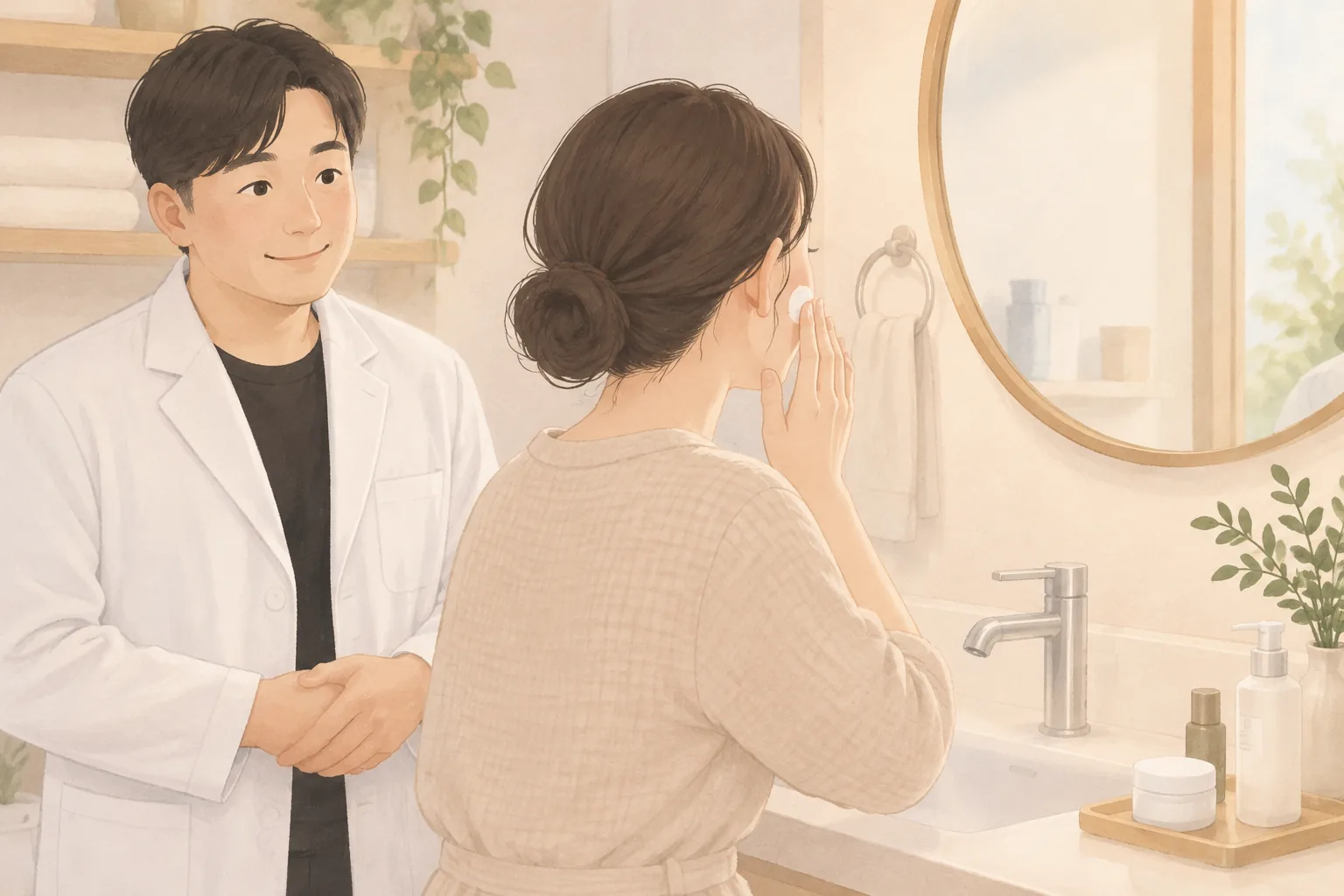
Moisturizing Continue moisturizing to prevent dryness. When the skin is sensitive, temporarily reduce the irritating products you normally use.
Sun protection During the recovery period, protect your skin carefully from UV rays. If you have many outdoor activities, tell us in advance during the consultation.
Checking progress If redness or heat sensation lasts longer than expected or pain worsens, do not endure it—visit the clinic for a check. If you are before returning home, ask in advance how to contact the clinic.
After laser treatments, redness, heat sensation, swelling, and stinging are common, and dryness, thin crusting, and temporary pigmentation may also occur. Rarely, blisters, hypopigmented patches, infection, scarring, or pigment recurrence may occur.
During the recovery period, continue sun protection and moisturizing. If symptoms last longer than expected or pain worsens, do not wait—contact the clinic for a check.
Frequently asked questions
How do I start an interpreter consultation in English, Chinese, or Japanese?
Tell us your preferred language when you inquire, and we will arrange an interpreter (Directions). Consultation requests are confirmed after you receive the clinic’s confirmation contact (Consultation). Including your concerns along with your language makes consultation preparations more specific. During the consultation, the doctor explains while reviewing your imaging records with you (Process). If an unfamiliar term comes up during the explanation, ask right away through the interpreter.
What should I note down before the consultation?
Note medications you are taking, cosmetics you are using, recent UV exposure, and any experience of sensitive skin after previous treatments. Including your departure schedule allows the recovery period and treatment intensity to be adjusted during the consultation. Summarize the treatments or concerns you are interested in on one line. If you make a question list covering expected results, risks, alternatives, recovery, and aftercare as the American Academy of Dermatology advises, you will not miss them in an interpreter consultation (AAD guide).
How can I check that I understood the explanation before consenting?
After hearing the explanation, ask the interpreter to restate the key points in your own words. Ask separately about expected results, risks, alternatives, and recovery time, and compare the answers. If an unfamiliar word comes up, stop and ask on the spot. Also confirm the number of sessions, the time required, and whether anesthesia is needed during the procedure (AAD guide). The standard is not to sign a consent form without understanding it.
What should I do if a problem arises after returning home?
Before returning home, ask how to contact the clinic if discomfort arises and when to check your progress. Note the treatment name, area, and date so it is easier to explain locally. If redness or heat sensation lasts longer than expected or pain worsens, do not wait—contact the clinic. The American Academy of Dermatology also recommends confirming aftercare methods during the consultation (AAD guide).
What should I check when choosing a clinic?
Look at who plans and performs the treatment. Check whether interpretation is available in your preferred language and whether the clinic explains expected results, risks, alternatives, recovery, and aftercare (AAD guide). Also see whether they clarify that analysis tools are not a medical diagnosis (English guide). It also helps to see whether they tell you what treatments are unnecessary and how to contact them after the procedure. Look at the structure of the explanation and the attitude toward answering questions rather than the equipment list.
At a glance
Table 2 At a glance
Item
Key point
Interpretation languages
English, Chinese (China and Taiwan), Japanese; tell us your preferred language when you inquire
Before the consultation
Desired changes, medications and cosmetics, recent UV exposure, reactions after previous treatments, departure schedule
에티튜드의원 레이저 칼럼https://theattitudeclinic.com/column/doctor-column/does-laser-thin-skin/
This article offers general health information. It is not a substitute for diagnosis or treatment based on your own condition, so please talk through your situation with a doctor.