Do Double Chin Injections Hurt? Pain, Numbing, and Fat Dissolving Injections
Where the pain of fat dissolving injections for double chin comes from, what numbing cream reduces, what to check before pain, and aftercare warning signs — explained for visitors.
Written by ATTITUDE Clinic Editorial Team
People looking into fat dissolving injections or contouring injections usually bring up pain first in consultation. Questions like "I heard the needle goes in many times — can I handle it?" and "If I get numbing, will it not hurt at all?" In this article we'll go through where the pain comes from, what numbing reduces, and what to look at before pain.
The Bottom Line First
The pain of fat dissolving injections isn't set by a single number. How many times the needle goes in, how much goes in each time, which area, and how sensitive your skin is that day all work together. According to the US Food and Drug Administration (FDA) guidance, the deoxycholic acid injection approved for submental fat reduction is given as up to 50 subcutaneous injections per session. Because injectable treatments involve many needle pricks, numbing and injection speed substantially change how it feels. The ATTITUDE Clinic column also notes that topical numbing may be used to reduce discomfort, and that the doctor performs the procedure directly.
Where Does the Needle Pain Come From?
Pain usually comes from three points: the moment the needle passes through the skin, the pressure as liquid is pushed into the tissue, and the irritation when the ingredient touches surrounding tissue. These three mix into a single memory.
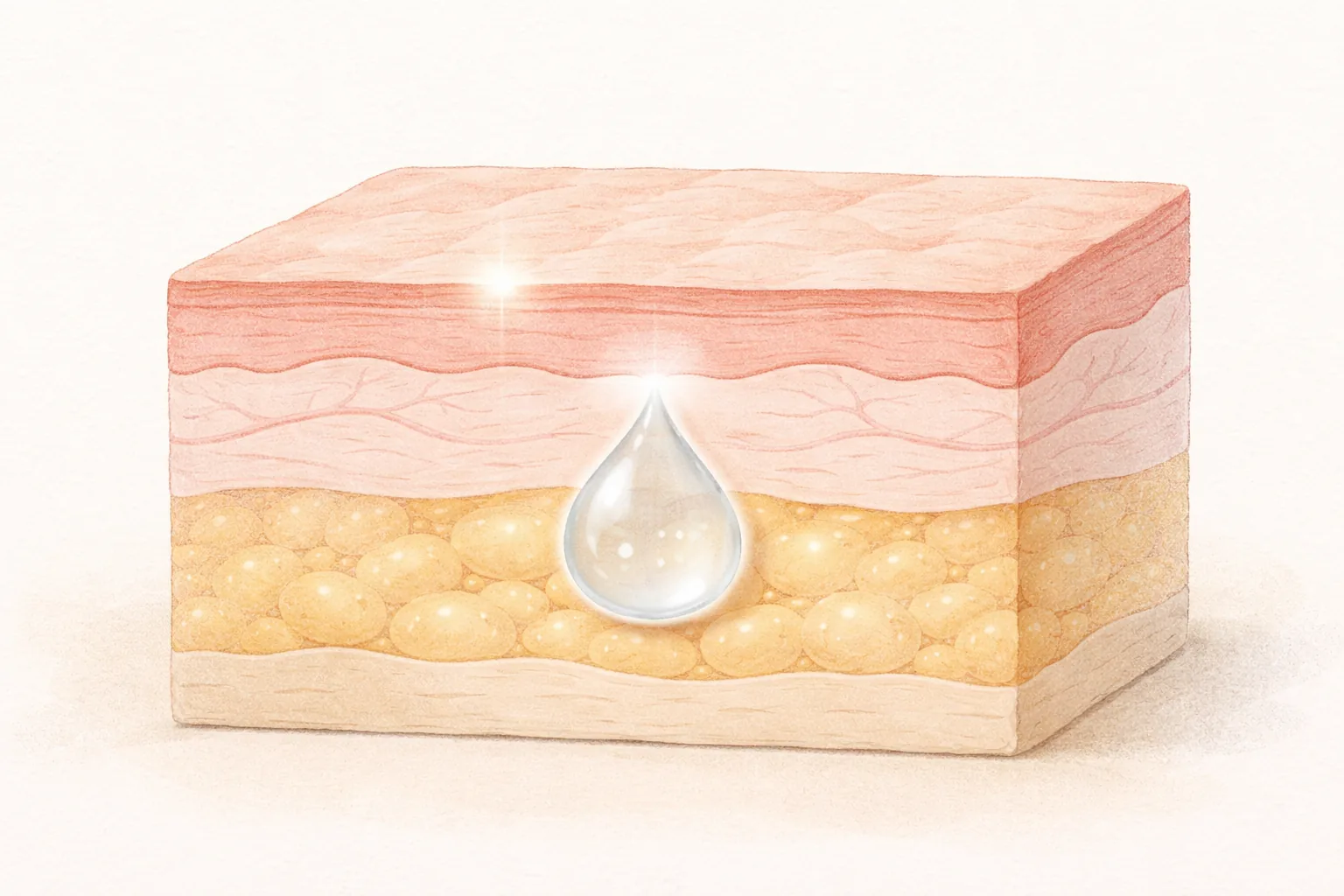
According to the FDA, the deoxycholic acid injection works by breaking down fat cells under the skin, and is injected in multiple divided doses into one submental area. That means it isn't a one-syringe treatment. So even with the same drug, how it's divided and how much goes in at once changes how it feels.
The ATTITUDE Clinic treatments and pricing page lists fat dissolving injections by face 3cc/6cc and body 100cc/200cc/300cc, contouring injection as face-only 1cc, and DCA as 1 vial. Different volume configurations also mean different injection counts and treatment times. Rather than simply splitting it as "face hurts less, body hurts more," how many divided injections you receive over the same time is what shapes the experience.
Why Do Some People Say "It Was Nothing" and Others "It Was Tough"?
The difference comes down to four things: skin thickness and sensory nerve distribution at the treatment area, the volume injected at one time, the duration of the procedure, and individual pain sensitivity. The ATTITUDE Clinic column also notes that pain varies greatly with treatment type and intensity, treatment area, and individual sensitivity.
There's a common misconception here: the idea that "if it hurts a lot, it worked that much better." But pain and results are decided on different axes. Results depend on what ingredient goes in, where, and how much; pain depends on numbing, injection method, and treatment time. It's hard to gauge results by how much it hurt.
If you're tense and your body stiffens, the same stimulus can feel stronger. During the procedure, relaxing your shoulders and jaw and breathing comfortably helps, and if a moment becomes hard to bear, speaking up right away rather than enduring it allows faster adjustment.
How Is Numbing Prepared?
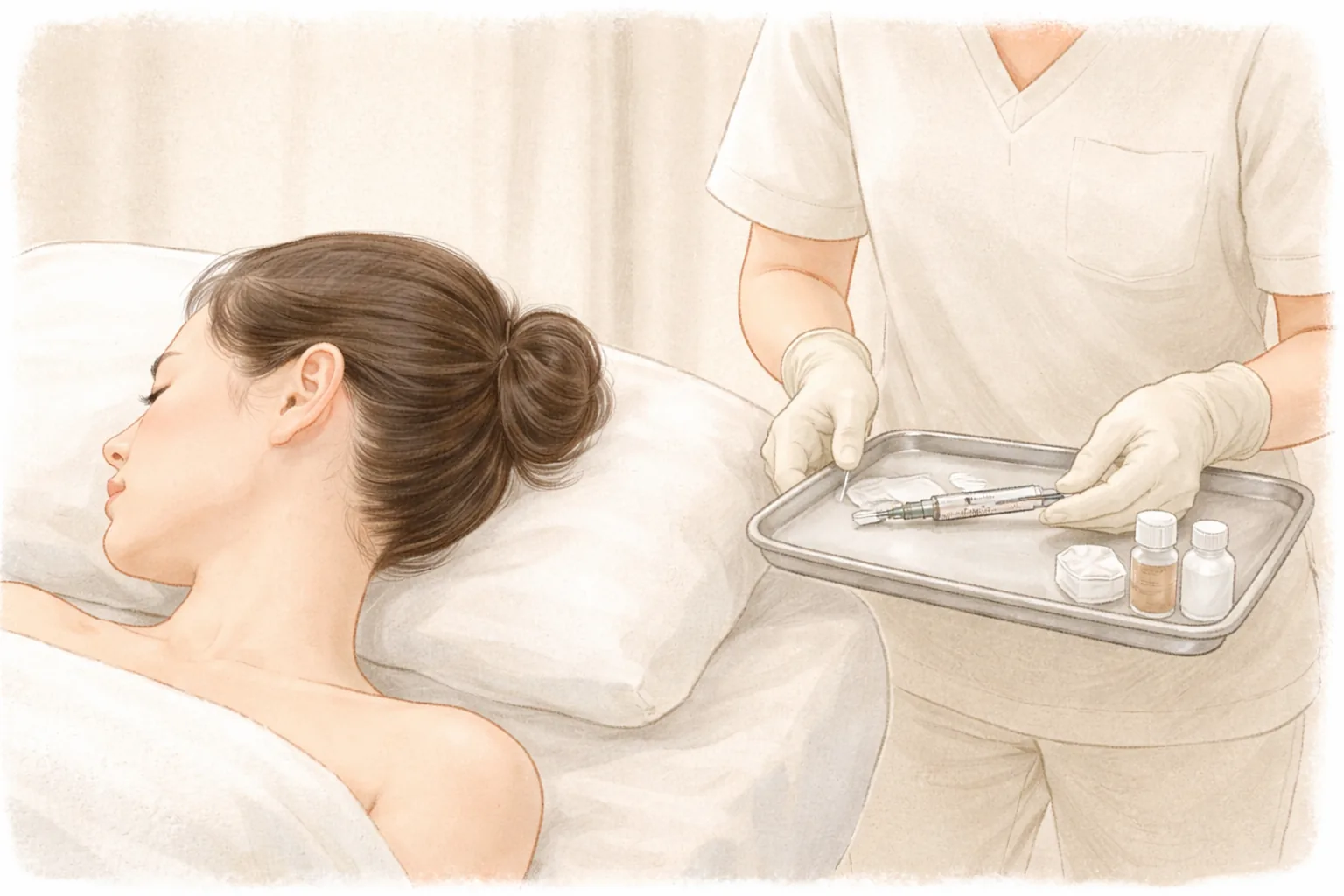
Topical numbing (applying a numbing cream on the skin surface to dull pain) is considered first. The ATTITUDE Clinic column also explains that topical numbing may be used to reduce discomfort, with the doctor performing the procedure. The type and scope of numbing, and how long the cream stays on, are decided in consultation based on the treatment area, volume, and pain sensitivity.
It helps to separate what topical numbing reduces from what it doesn't. The sharp sensation as the needle touches is considerably eased by numbing, but the heavy pressure as the drug spreads is controlled by injection speed and order. That's why telling the doctor about discomfort during the procedure is the starting point for adjustment.
Fat dissolving injections are described as treatments that only medical professionals should administer. The FDA also states that buying unapproved products and injecting yourself is dangerous, and advises looking at both who administers the injection and the environment (FDA guidance). Since numbing is involved, who does what and in what order is also something to look at in consultation.
Before Pain — What Goes In and Where
The FDA approved the deoxycholic acid injection only for improvement of submental fat in adults, and does not recommend use in areas other than under the chin (FDA guidance). In cases where it was injected outside the submental area, reports have included blurred or decreased vision, involuntary eye contraction, muscle and nerve damage, sensory loss, and difficulty walking. The fact that it didn't hurt much doesn't mean it was safe.
Unapproved fat dissolving injection products are sold online. The FDA has stated that consumers who received these products reported adverse reactions such as permanent scarring, serious infection, skin deformity, cysts, and deep painful nodules (FDA guidance). It also says that when someone whose license isn't verified performs the procedure or injection technique is inappropriate, the risk of scarring and infection grows. In consultation, checking "what goes in" before "how much it hurts" is the right order.
The ATTITUDE Clinic treatments and pricing page distinguishes fat dissolving injections as steroid-free, and contouring injection as face-only with steroid. Even under the same name "injection," the composition differs, so it's good to confirm the ingredient composition of the treatment you'll receive in consultation.
How Many Sessions and What Intervals?
FDA guidance describes the deoxycholic acid injection for submental fat reduction as up to 6 sessions, with each session at least 1 month apart (FDA guidance). When treatment continues over multiple sessions, pain becomes a cumulative process rather than a single experience. If the first session was hard, the next session can be adjusted by extending numbing time or slowing injection speed.
The number and interval of contouring injections and body fat dissolving injections vary with the area and volume configuration, and are decided in consultation. The ATTITUDE Clinic treatments and pricing page also divides face and body into different volume configurations, so planning by area reduces the burden.
Table 1 How Many Sessions and What Intervals?
Treatment
Main Areas
Factors Affecting Pain
Decided in Consultation
Fat dissolving injection (face)
Face 3cc/6cc configuration, steroid-free
Needle passes and volume per injection, facial skin thickness
Numbing method and treatment time
Fat dissolving injection (body)
Body 100cc/200cc/300cc configuration
Larger volumes mean longer treatment time
Area volume and session plan
Contouring injection
Face-only 1cc, with steroid
Divided injection into delicate areas of facial lines
Ingredient composition and suitability
DCA
1 vial, inquire separately for body use
Treatment area and volume
Body use and combination plan
Swipe sideways to see the whole table.
In short the degree of pain is set by needle passes, injection volume, area, and numbing — not by how strong the ingredient is. And what matters more than pain is what goes in and where. Going over these two in consultation makes the burden on treatment day much more concrete.
If This Applies to You
If You're Especially Sensitive to Pain
It's better to start with sufficient topical numbing time, and telling the doctor in consultation that you want to speak up right away during the procedure makes adjustment easier. If you've had an especially hard time in a previous treatment, share that too. Even the same treatment can be made easier by dividing the order.
If a Ceremony or Shoot Is Coming Up Soon
Swelling or bruising overlapping your schedule is a problem, so it's better to mention the date first. The ATTITUDE Clinic column also notes that treatment type, intensity, and start timing can be adjusted by calculating backward from your schedule. If it's your first time, starting with extra buffer puts your mind at ease.
If You're Planning Body Areas
Body treatments can have larger volume configurations than face, so treatment time can be longer. Planning by dividing areas into sessions, rather than doing it all at once, reduces the burden. Which area to start with is decided in consultation.
If You're a Visitor on a Short Stay
If your stay is fixed, swelling or sensitivity right after treatment can affect your schedule, so tell the clinic your return date and next commitments in advance. The ATTITUDE Clinic column also says intensity and type are discussed in line with your stay schedule. The shorter your remaining days, the safer it is to keep the plan simple.
AI skin analysis record — Records current condition such as pigment, redness, texture, and pores as consultation material. This tool only records and organizes information and is not a medical diagnosis; the doctor makes the judgment.
Doctor consultation — Adds treatment areas, pain sensitivity, current medications and skin history, and schedule to the analysis record to design the direction. Numbing method and treatment order are also set at this stage.
Doctor-performed treatment — Topical numbing may be used as needed to reduce discomfort, the doctor performs the treatment directly, and no more treatment than necessary is recommended.
Recovery and aftercare — Guides sunscreen, moisturizing, and follow-up checks. The principle of genuine products, correct dosage, and fair pricing follows the same flow.
Related to this topic, the treatments listed on the ATTITUDE Clinic treatments and pricing page are fat dissolving injections (face and body), contouring injection (face-only), and DCA. Which configuration in what order is decided in consultation.
Aftercare and Side Effects
Soothing — On treatment day, avoid rubbing or strongly stimulating the treated area, and it's better to avoid intense exercise, saunas, and alcohol (ATTITUDE Clinic column).
Moisturizing — Skin becomes temporarily sensitive after treatment, so moisturizing makes recovery easier.
Sun protection — Apply sunscreen carefully during the recovery period (ATTITUDE Clinic column).
Follow-up — If changes such as swelling, bruising, or nodules appear, tell the clinic rather than waiting for time to pass.
The FDA mentions, among adverse reactions already in the label for the approved submental injection, nerve injury around the lower lip, tongue, and chin, difficulty swallowing, bruising, tissue damage, blood vessel damage, hair loss at the injection site, ulceration, necrosis, and infection. Newly added is the risk of injection-site nodules and masses, with nodules classified as 3cm or less and masses as over 3cm, which may not resolve over time and may require medical intervention. Unresolved nodules and masses lasted an average of 143 days as of the reporting time (FDA guidance).
With unapproved products, permanent scarring, serious infection, skin deformity, cysts, and deep painful nodules have been reported (FDA guidance). If a few days after treatment the injection site swells, hurts, and a lump can be felt, it may be an injection-site reaction rather than simple pain.
There are also defined signs that mean you should get medical attention rather than wait: one corner of the mouth not lifting so the smile becomes asymmetric or facial muscles weakening, difficulty swallowing, blurred vision or involuntary eye twitching, or severe injection-site reactions. The FDA says to seek medical help if these adverse reactions occur (FDA guidance).
Frequently Asked Questions
Do contouring injections or fat dissolving injections hurt a lot?
The experience varies with area, volume, needle passes, treatment time, and individual sensitivity. Face 3cc and body 100–300cc configurations differ in injection count and duration, so they're hard to compare at the same intensity (ATTITUDE Clinic treatments and pricing page). Topical numbing reduces discomfort at the moment the needle touches. Rather than putting it off because pain is scary, it's more realistic to tell us your sensitivity and schedule in consultation and set a numbing plan together.
Does applying numbing cream make the pain go away?
Topical numbing is applied on the skin surface to dull pain, and its scope is limited. The sharp sensation as the needle enters is considerably eased, but the pressure as the drug spreads is in the realm of injection speed and order. The type and scope of numbing are decided in consultation based on area, volume, and sensitivity. Telling us during the procedure when something is hard is the most reliable way to adjust, and the ATTITUDE Clinic column explains it that way.
Is it true that more pain means better results?
Results are decided by what ingredient goes in, where, and how much; pain by numbing and injection method. They're different axes, so it's hard to gauge results by how much it hurt. Even the FDA-approved injection for submental fat has its own set number of session and interval, and doesn't use pain intensity as a criterion (FDA guidance). Rather, pain that lingers or worsens is not a result but a sign that needs checking.
How long do bruising, swelling, and nodules last?
Mild swelling or bruising often subsides within a few days, but nodules or masses can remain over time and may require medical intervention. In the FDA review, unresolved nodules and masses lasted an average of 143 days as of the reporting time (FDA guidance). If the injection site swells, hurts, and a lump is felt or grows larger, it's better to tell the clinic rather than just watching it.
For fat dissolving injections, how should I choose a clinic?
Start by seeing whether they explain what goes in and whether the area is an approved use. The FDA advises that fat dissolving injections should only be administered by medical professionals, and states that buying unapproved products and injecting yourself is dangerous (FDA guidance). Whether they explain the numbing method and whether adjustments are possible during the procedure, and whether there's a route to check if side effects occur, are also criteria. Whether they review precautions and the label before treatment is another point to check.
At a Glance
Table 2 At a Glance
Item
Key Points
What sets pain
Needle passes, volume per injection, area, treatment time, individual sensitivity
Numbing
Topical numbing may reduce discomfort as needed; method and scope decided in consultation
Check first
What goes in and where, whether it's an approved use
FDA-approved use
Adult submental fat reduction, up to 6 sessions at least 1 month apart
This article offers general health information. It is not a substitute for diagnosis or treatment based on your own condition, so please talk through your situation with a doctor.