Laser Genesis Side Effects: What's Normal and When to Call the Clinic
Laser Genesis side effects explained: the usual redness and heat, how long recovery takes, warning signs to report, treatment spacing and aftercare, from ATTITUDE Clinic in Gangnam, Seoul.
Written by ATTITUDE Clinic Editorial Team
After Laser Genesis, when your face feels hot and flushed, the first question is usually "is this much okay?" If you have a flight the next day, you also want to know whether traveling with a red face is fine, and what to do if the redness is still there on day three. Here is a step-by-step look at the reactions that are common, which of them belong to the normal recovery process, and which signals mean you should contact the clinic.
The short answer
With Laser Genesis (a treatment that delivers warmth into the dermis with a 1064nm laser), the most common reactions are redness and heat right after treatment, mild swelling and a tingling sensation. Because the surface of the skin is not peeled away, most people can return to their daily routine the next day without much trouble. The signals to report to the clinic are blisters or oozing, pain that does not ease with time, redness and stinging that continue beyond 3 days, and areas that turn white or dark. If your schedule is tight, it is safer to tell the clinic your treatment date and departure date first at the consultation.
What Laser Genesis does in the skin
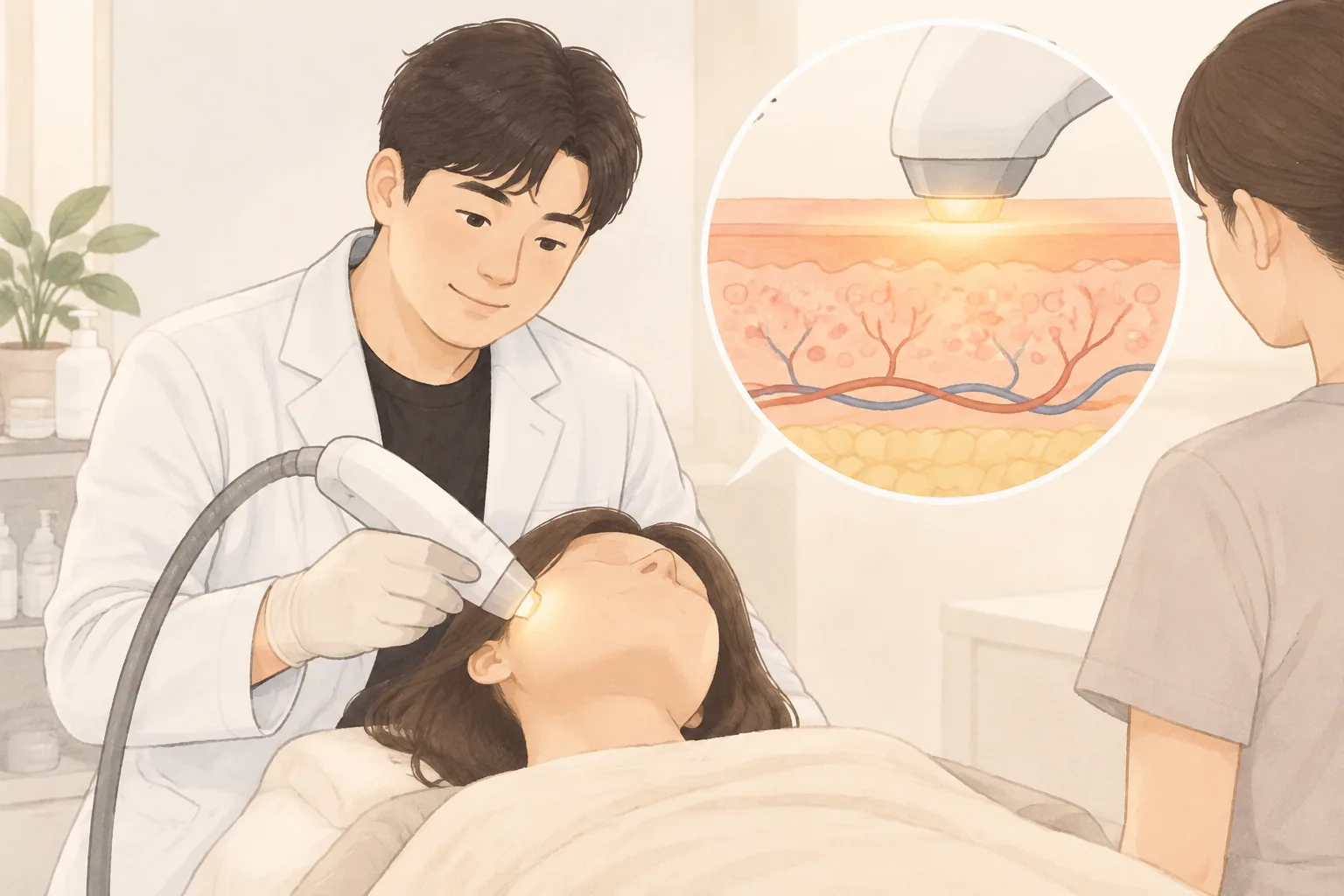
The name says toning, but what it actually does is layer warmth repeatedly into the upper dermis. The 1064nm wavelength is not strongly absorbed by melanin, so it passes through without disturbing the surface much, and instead delivers heat stimulation to the red blood vessels beneath the skin and to the cells that produce collagen. The ATTITUDE Clinic treatment guide lists Laser Genesis as a 1064nm laser treatment that helps with anti-aging, using the V-Laser Genesis device from Wontech (treatment guide).
Even within the same 1064nm range, how the energy is divided and delivered changes how much heat the skin receives. The principle by which a laser heats only a specific target is called selective photothermolysis. Because different wavelengths are absorbed by different substances, a laser aimed at pigment and a laser aimed at red blood vessels end up using different devices.
When treating blood vessels, the 532nm Vbeam may be used alongside it. Even within the same clinic, facial redness and vascular lesions are handled with 532nm, while anti-aging and broad flushing are handled with 1064nm (treatment guide). Which wavelength goes where, and how much of it, is what separates a mild reaction from a strong one.
Why it turns red and stings
The redness right after treatment is the result of blood vessels temporarily expanding from the heat. On top of that, the skin surface becomes dry and sensitive, which adds a stinging sensation. Redness, heat, mild swelling and tingling are common with non-ablative lasers like this, and they usually settle within a few days.
So why is one person fine the next day while another is still red on day three? Skin thickness, the state of the skin barrier before treatment, recent UV exposure and the energy settings all play a part. Even on the same face, the area around the nose or the mouth may stay redder than the cheeks.
Redness that belongs to the recovery process fades over time and does not spread. On the other hand, if a deep redness that does not fade when pressed spreads, or the treated area turns white or blisters form, that is not something to dismiss as a recovery reaction. Blisters, oozing, or white patches should be reported right away rather than waiting until the next day. The column also notes that blisters, hypopigmentation, infection and scarring can occur, though rarely.
What determines how severe side effects are
The biggest factor is energy intensity and spacing. If the intensity is too strong for your skin condition, or treatments are repeated without a recovery period, the risk of side effects such as burns or pigmentation increases. Side effects can occur even with appropriate settings, so stronger and more frequent is not always better.
Spacing also affects the outcome. Very frequent toning has been reported in connection with mottled hypopigmentation, so toning is usually spaced at least 1 week apart. The actual interval depends on the type of laser, the goal and your skin condition, so rather than repeating a fixed cycle, it is adjusted based on how your skin is responding.
UV exposure matters especially for skin in recovery. Right after treatment, the skin's protective barrier is temporarily weakened, and if sun protection breaks down during this period, pigmentation can develop on the newly formed skin and undo the original effect. The column advises applying SPF 50+ sunscreen for at least 2 weeks after treatment and reapplying about every 2 hours outdoors.
Medications you take or apply, recent UV exposure, and past experiences of sensitive skin after treatment are also conditions that change the settings. If your skin has become sensitive enough that skincare products sting, it is best to mention this before treatment. Having the same area treated repeatedly before recovery is complete is best avoided.
How Laser Genesis compares with other lasers
When the target is different, the reactions your skin shows are different too. Here is a comparison based on the lasers used at ATTITUDE Clinic.
Table 1 How Laser Genesis compares with other lasers
Treatment
Target
Concerns it suits
Common reactions
Laser Genesis (1064nm)
Blood vessels and collagen in the dermis
Redness, fine lines, skin texture
Redness, heat, mild swelling, settling within a few days
Vbeam (532nm)
Superficial blood vessels
Facial redness, red blood vessels
Redness and swelling for a few days, bruising for 1–2 weeks
PicoPlus (low-power toning)
Pigment
Freckles, melasma
Redness and tingling, from a few hours to the same day
Erbium fractional (low-power)
Skin surface
Pores, skin texture, shallow scars
Redness, sandpaper-like texture for 3–5 days
Swipe sideways to see the whole table.
Recovery times in the table vary greatly with power even on the same device. With pico lasers too, raising the power to remove spots directly leaves scabs that take about 7–10 days to fall off, and high-power fractional treatment brings swelling, oozing and scabs lasting 7–14 days. Treatments that only address redness are relatively gentle, but Vbeam can cause bruising, so if your schedule is packed, check this first.
In short Laser Genesis does not peel the skin surface, so it belongs to the lighter-recovery group, but because it uses heat, side effects depend on the settings and spacing. If your dates are fixed, it is more practical to work backward from the date and set the intensity and timing accordingly, rather than choosing based on treatment type alone.
If this sounds like you
An international visitor on a short stay
A first treatment the day before your flight means traveling with redness still on your face. Leaving at least a day between the treatment date and the departure date makes it easier to check your reaction and take any needed measures. Prices are listed on the treatment guide page, and the regular price for one Laser Genesis session is KRW 200,000 plus VAT (treatment guide). Cabins are dry, so bring a moisturizer, and if redness continues after you return home, it is a good idea to let the clinic where you were treated know how your skin is doing.
A wedding or photo shoot a few weeks away
A first treatment right before an event can mean redness or sensitive skin overlapping with your schedule. The earlier you start relative to the date, the more options you have for adjusting intensity and timing. If photos are the goal, allow for the time it takes for redness to fade when setting the interval.
If you have facial redness and sensitive skin
Facial redness responds differently depending on the cause. If it comes from dilated superficial blood vessels, you can expect vascular lasers to reduce it, but redness caused by high skin reactivity, such as sensitive skin or rosacea, has limited response to lasers. Right after treatment, existing redness may look temporarily more intense, so avoid scheduling it close to an important date.
If you want ongoing maintenance
Rather than one strong session, regular maintenance at intervals that allow recovery puts less strain on the skin. Toning is spaced at least 1 week apart, and after that the next session is set based on how your skin responds. Rather than planning a large number of sessions in advance, it is better to set a goal and schedule only as many as you need.
Tell us before your consultation
Your recent UV exposure and how much time you spend outdoors
Medications you take or apply, and ingredients in your skincare such as retinoids or exfoliants
Whether you have had redness, bruising or pigment changes after previous laser or other treatments
Fixed dates such as a wedding, photo shoot or flight
Whether you are pregnant or breastfeeding, and whether you are currently being treated for a skin condition
How ATTITUDE Clinic handles it
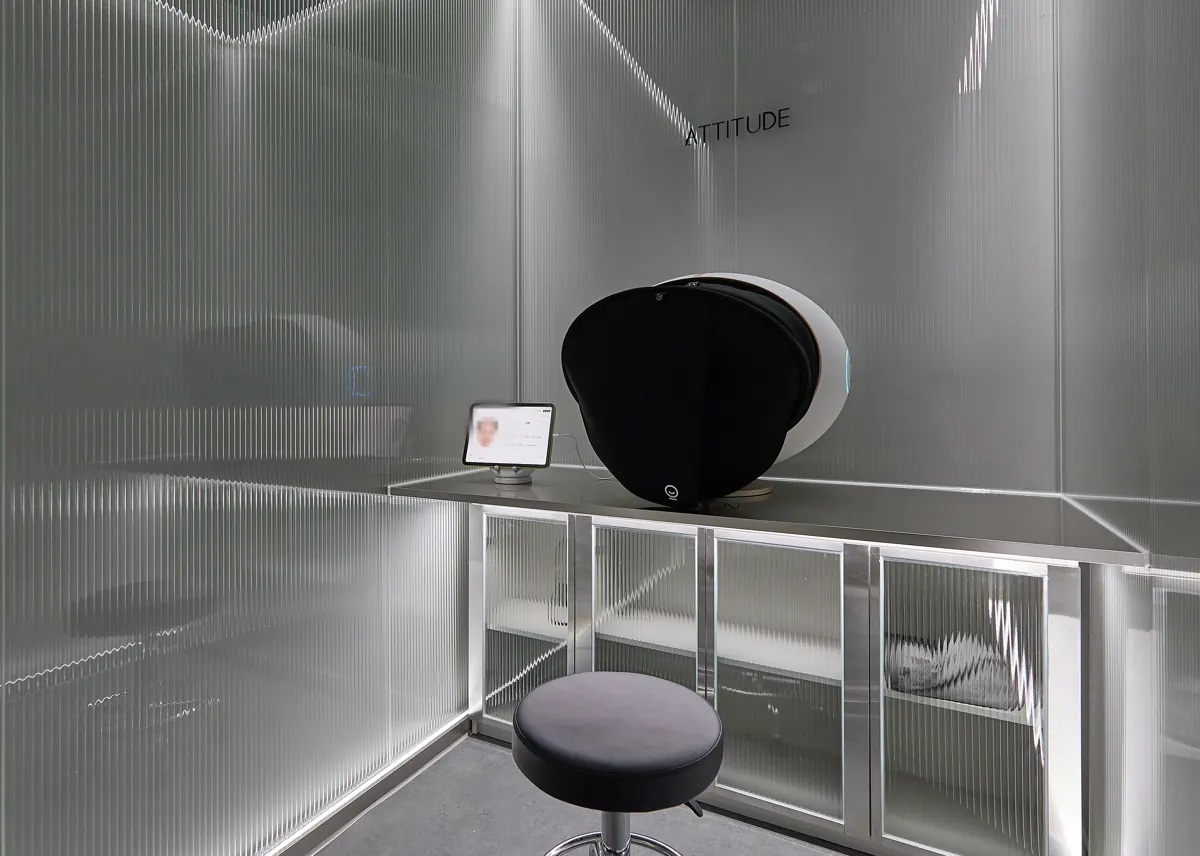
AI skin analysis record Devices record your pigment, redness, texture and pore condition. The analysis tool records and organizes information to support the consultation; it is not a medical diagnosis.
Treatment planning with the doctor The analysis record, combined with your schedule, pain sensitivity and skin history, is used to decide the treatment type, intensity and timing together. This is where the choice of wavelength depends on whether the concern is redness or pigment.
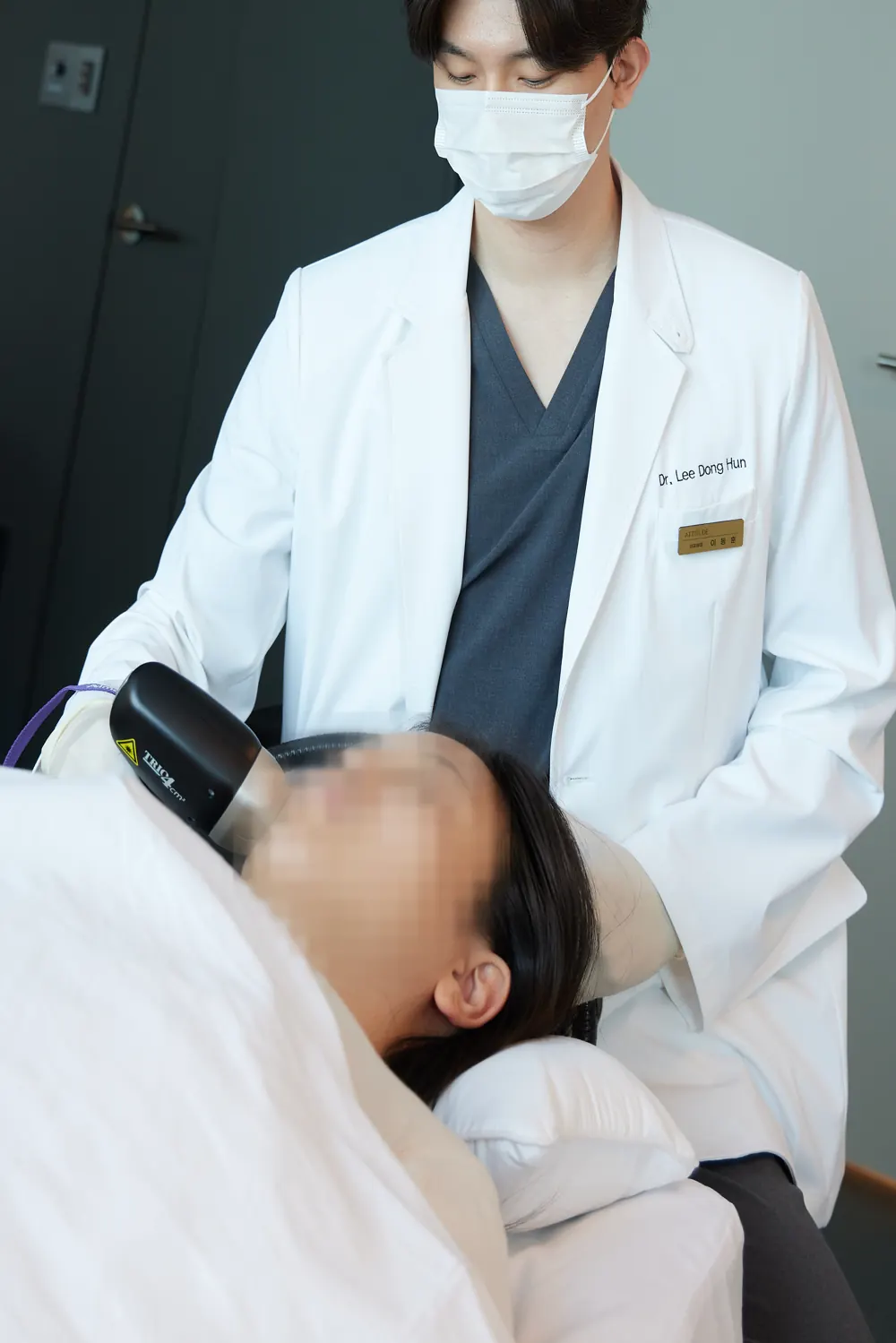
Treatment performed by the doctor Topical anesthesia is used to reduce discomfort when needed, and the doctor performs the treatment. Laser Genesis is performed with the Wontech V-Laser Genesis, and redness and blood vessels with the 532nm Vbeam, and more sessions than necessary are not recommended (treatment guide). The principle of genuine products, correct dosage and fair pricing applies to lasers as well.
Follow-up check If redness and heat last longer than expected or pain worsens after treatment, come in for a check. Showing us the condition rather than enduring it helps speed recovery.
Four steps your doctor sees to in person
From the diagnostic device to the treatment bed, the doctor you first consult takes care of everything.
01
Precision diagnosis
In a private diagnosis room the whole face is photographed, recording even skin conditions that are hard to see with the eye.
02
Skin analysis
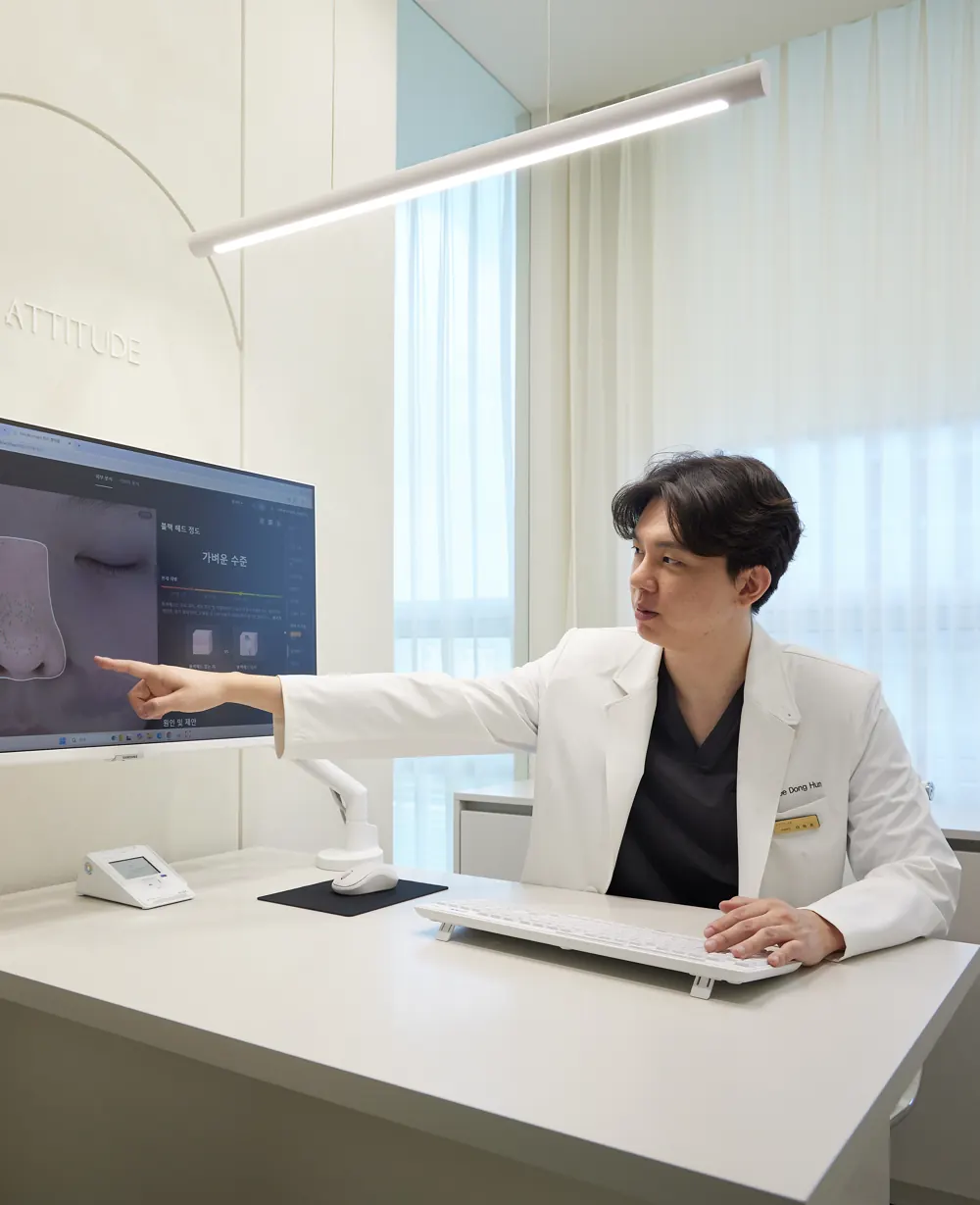
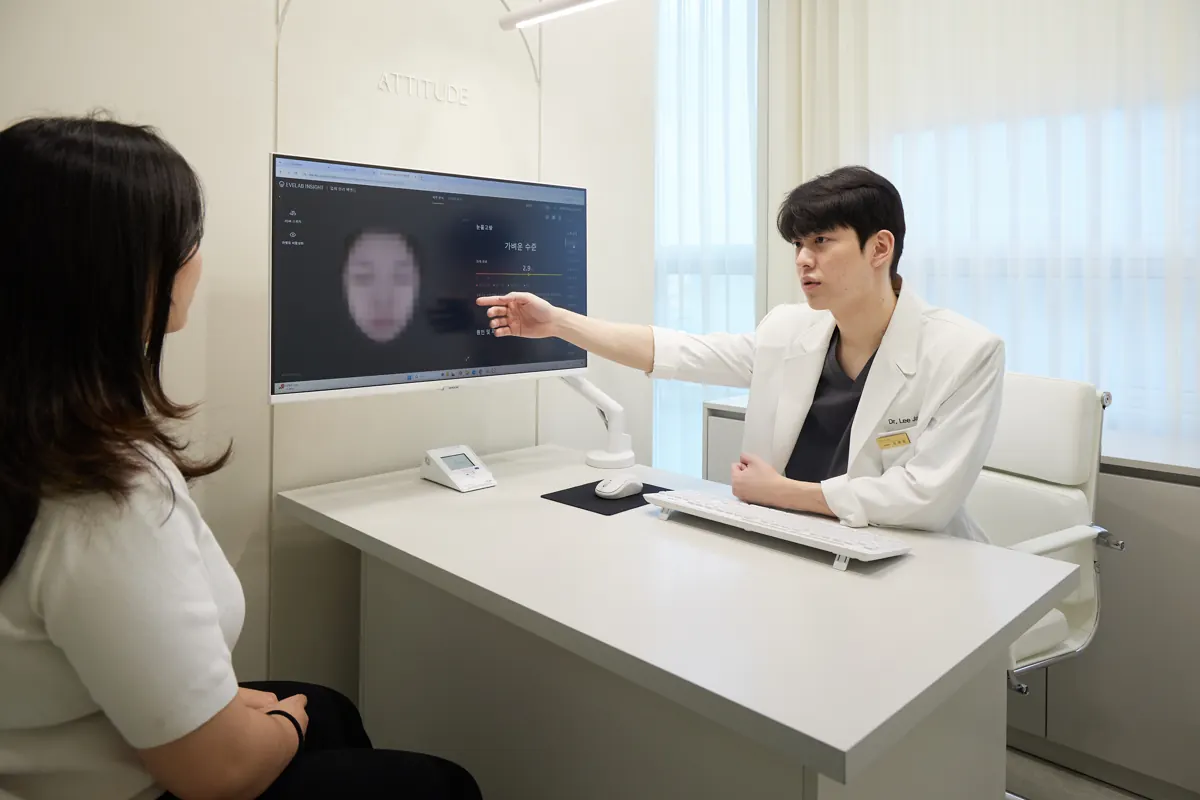
The doctor goes through your pore, pigmentation, wrinkle and firmness results with you on screen and explains what comes first.
03
One-to-one design
With your skin, the balance of your face, the change you want and your schedule in view, you decide the treatment and its extent together.
04
Treatment by your doctor
The doctor who consulted you performs the treatment from start to finish in a private treatment room. No one takes over halfway.
“I take injection pain seriously.”
Co-Director Dr. Lee Dong Hun
Many people hesitate over injection treatments because they hurt. So we went back over everything, from the anesthetic to the products used.
Careful numbing, unhurried timingWe allow plenty of time for a special numbing cream to take full effect, and add anesthetic injections for the treatments and areas that need them.
Fine needles, finished quicklyInjection treatments use fine needles, and the doctor finishes them personally in a short time, adjusting along the way by watching how you are doing.
Even the product formulation countsThe same treatment can feel more or less demanding depending on the product, so we take that into account too.
The anesthetic method and whether it is used are decided after an examination, according to the treatment, the area and your condition. How much it hurts varies from person to person.
Aftercare and side effects
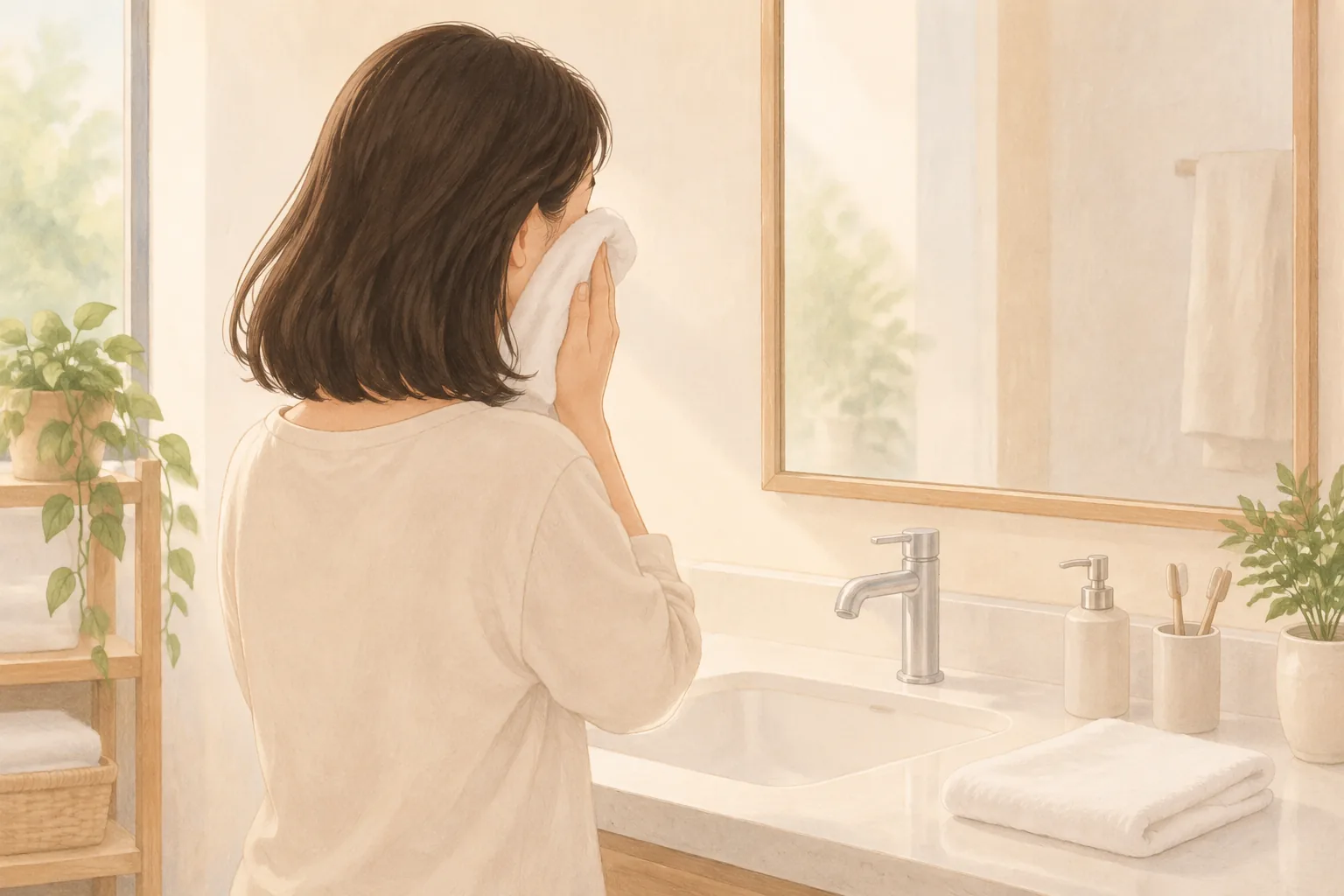
Soothing On the day of treatment, wash gently with lukewarm water, patting rather than rubbing. It is best to avoid saunas, jjimjilbangs and intense exercise for 1–2 weeks.
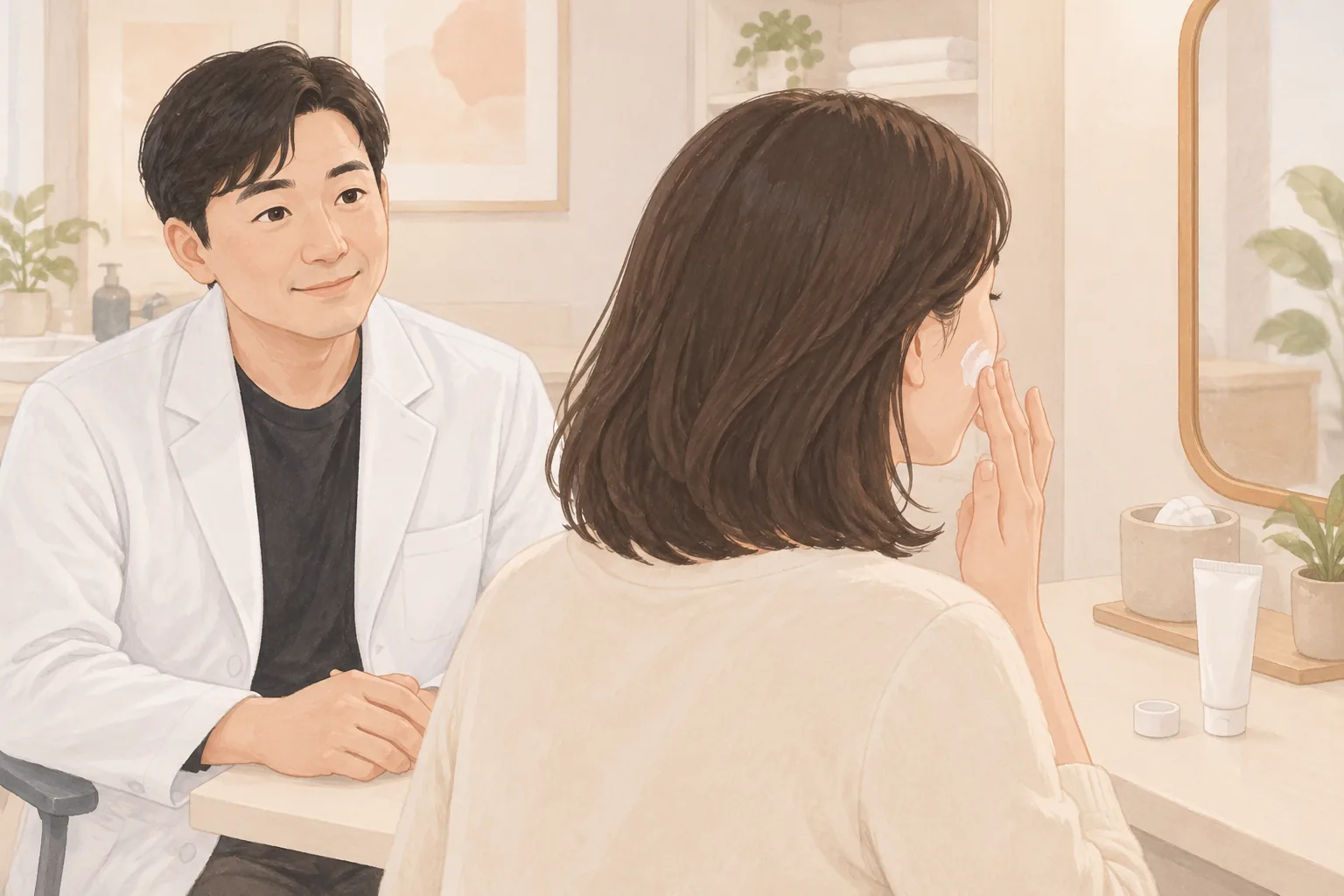
Moisturizing Skin that has received heat tends to dry out, so apply moisturizer in thin layers often. Hold off on exfoliation and harsh scrubs for the period you are advised.
Sun protection Apply an SPF 50+ product for at least 2 weeks, reapplying every 2 hours outdoors. If scabs have formed, do not pick them; let them fall off on their own.
Follow-up check If redness and stinging last beyond 3 days or suddenly worsen, contact the clinic right away.
Common reactions are redness, heat, swelling, tingling and dryness. If your skin is darker or tanned, temporary pigmentation can occur; Vbeam can cause bruising; and ablative treatments leave scabs. Rarely, blisters, hypopigmentation, infection or scarring can occur, or pigment can return over time.
The signals to contact the clinic without waiting are clear. When blisters or oozing appear, when pain keeps getting worse, when the treated area turns white or dark, or when redness spreads along with rising heat. In these cases, it is better to have the condition checked that day rather than waiting until your next appointment.
Frequently asked questions
How often should I get Laser Genesis?
Toning is usually spaced at least 1 week apart. Very frequent toning has been reported in connection with mottled hypopigmentation, so shortening the interval is not always beneficial. Once the first interval is set, the next session is adjusted based on how quickly redness fades and how your skin is doing. Rather than mechanically repeating the same cycle, the approach is to check your progress each time. The number of sessions depends on the change you are aiming for and your skin condition, so it is decided together at the consultation.
How is Laser Genesis different from pico laser treatment?
The target is different. Laser Genesis uses 1064nm to deliver warmth into the dermis and works on blood vessels and collagen, while pico laser uses pulses as short as one trillionth of a second to break pigment particles into fine pieces. So for redness, the vascular approach is considered first; for freckles and melasma, the pigment approach is. The same column also notes that pico laser is unlikely to improve vascular concerns. Whether to do both treatments on the same day, and in what order, depends on your skin condition, so it is decided at the consultation.
Can I get it if I have facial redness?
The answer depends on the cause of the redness. If the redness comes from fine blood vessels showing near the skin surface, you can expect vascular lasers to reduce it. On the other hand, redness caused by high skin reactivity, such as sensitive skin or rosacea, has limited response to lasers. Right after treatment, redness may look temporarily more intense, so check the gap before an important date first. The clinic advises consulting with medical staff before treatment (treatment guide).
Can I wash my face, wear makeup or fly the same day?
Because the skin surface is not peeled away, washing your face and light makeup are generally fine. On the day itself, though, wash gently with lukewarm water without rubbing, and hold off on exfoliation or scrubs for the period you are advised. For flying, dryness in the cabin is more of an issue than your skin, so bring a moisturizer and plan your schedule allowing for the time redness may remain. For treatment right before departure, first consider that there is no time to check your reaction.
What should I check when choosing a clinic?
The American Academy of Dermatology advises that at a consultation before a cosmetic procedure, you should ask about the risks and benefits, alternatives, recovery time, preparation and aftercare, as well as the practitioner's experience and qualifications (AAD consultation guidance). The same organization explains that the risk of side effects is greatly reduced when the procedure is performed by someone with medical training and aftercare instructions are followed (AAD microneedling guidance). It also helps to check whether the consultation first confirms whether your concern is pigment or vascular, whether more sessions than necessary are recommended, and whether you can come back for a check if something feels off.
At a glance
Table 2 At a glance
Item
Key points
Common reactions
Redness, heat, mild swelling, tingling — usually settling within a few days
When to contact the clinic
Blisters or oozing, worsening pain, redness and stinging beyond 3 days, white or dark changes
Spacing
Toning at least 1 week apart, then adjusted based on your progress
Sun protection
SPF 50+ for at least 2 weeks, reapplying every 2 hours outdoors
What to avoid
Saunas and intense exercise for 1–2 weeks, picking scabs, repeat treatment before recovery
Decide at the consultation
Wavelength and intensity, treatment date vs. departure or event dates, medications and skin history
This article offers general health information. It is not a substitute for diagnosis or treatment based on your own condition, so please talk through your situation with a doctor.