Laser Treatment: How Long Does It Last, When Results Show, and When You Can Wash and Wear Makeup
When laser treatment results appear and how long they last, broken down by vascular, pigment and resurfacing lasers, plus guidance on when you can wash your face and wear makeup and how to plan around travel.
Written by ATTITUDE Clinic Editorial Team
In the clinic, I'm often asked when skin will start to look different after a laser treatment, and whether that change will last months or years. Visitors on a short stay in Seoul also worry about when they can wash their face and wear makeup after treatment, and whether redness will settle before they fly home. The answer depends largely on what the laser is targeting.
The short answer
Vascular lasers usually produce visible change after 1–3 sessions. According to the American Academy of Dermatology, visible vessels often decrease by 50–75% after 1–3 sessions, sessions are spaced 3–4 weeks apart, and results tend to last 3–5 years. With pigment lasers, tone changes from high-power spot treatment are checked around 7–10 days, when crusts fall off, while melasma is treated gradually with 8–12 or more sessions at intervals of at least 1 week. Resurfacing lasers take 1–2 weeks to heal, and redness can linger for 2–3 months, or in some cases 6 months to 1 year, so the time when results appear overlaps with recovery.
Why doesn't one laser session finish the job?
A laser is light concentrated at a single wavelength. When this light reaches the skin, it is absorbed by pigment, blood vessels or water that respond to that wavelength and converted into heat or mechanical impact. The principle of targeting the treatment while sparing surrounding normal skin is called selective photothermolysis, and most dermatology laser devices are based on it. An ATTITUDE Clinic column also explains that wavelength, energy and intervals determine the outcome.
So why isn't one session enough? Pigment isn't cleared all at once, vessels vary in thickness and depth so they don't all close in a single session, and collagen needs time to be produced and settle into place. An article covering picosecond and fractional lasers also notes that pigment breaks down gradually and that skin structure needs time for collagen to settle. Redness and heat right after treatment are a treatment response; the actual change emerges during the recovery that follows. The start of results is best viewed at two points: the immediate post-treatment response and the tissue changes after recovery.
Vascular lasers: when does redness start to fade?
Vascular lasers targeting flushing and visible broken capillaries tend to show clearer change after 2–3 sessions than after the first. According to the American Academy of Dermatology, laser treatment of visible vessels often produces a 50–75% reduction after 1–3 sessions, and some people see a 100% reduction. Sessions are spaced 3–4 weeks apart. Superficial vessels have been reported to decrease by 50–75% after 1–3 sessions, with results tending to last 3–5 years.
How long results last is also relatively well defined for vascular lasers. The same source explains that treated vessels don't reappear, but new vessels can form, so results tend to last 3–5 years. That's why it helps to also manage lifestyle triggers of flushing, such as alcohol, hot food and sun exposure. That said, laser results vary depending on whether the flushing comes from dilated superficial vessels or from highly reactive skin. An ATTITUDE Clinic column also notes that when flushing is caused by sensitive skin or skin reactivity, as with injections, laser results may be limited.
Pigment lasers: can you only judge results after crusts fall off?
Pigment lasers work by breaking melanin particles hit by light into smaller fragments, which the body then clears gradually. Picosecond lasers have pulse durations as short as one trillionth of a second, designed to reduce heat damage to surrounding tissue. According to an ATTITUDE Clinic column, spots are commonly treated with 1–3 picosecond sessions at 4–8 week intervals, and high-power spot removal involves about 7–10 days of recovery while crusts form and fall off. Low-power toning involves much shorter recovery, from a few hours to the same day.
Melasma is a little different. Melasma is a pigment condition that responds to hormones, UV and heat, so hitting it with a strong laser all at once can make the pigment darker. That's why it's treated gradually with low energy over 8–12 or more sessions, spaced at least 1 week apart. Pigment changes are checked around 7–10 days after crusts fall off, while melasma is treated gradually at intervals of at least 1 week. Pigment changes are clearer after recovery than right after treatment, so it's best not to judge results in the first week.
Resurfacing lasers: when do recovery and results overlap?
Erbium YAG lasers and fractional lasers that resurface the skin stimulate tissue in fine columns, and surrounding healthy cells receive regeneration signals and produce new collagen. This process starts right after treatment, but visible new skin takes time to come through. According to Cleveland Clinic, recovery after CO2 laser skin resurfacing takes up to 2 weeks, and about 1 week for erbium and fractional lasers; redness in the treated area usually fades over 2–3 months but can linger for 6 months to 1 year.
An ATTITUDE Clinic column notes that after erbium YAG laser treatment, redness, swelling, dot-like marks, dryness and thin crusts are common and usually settle within a few days to 1 week. Resurfacing laser results appear alongside this recovery period. Even while redness remains, skin texture and tone change gradually, so it's too early to judge results before recovery is complete. While crusts are present, do not pick at them.
Table 1 Resurfacing lasers: when do recovery and results overlap?
Laser type
Target
When results appear
Maintenance and repeat criteria
Vascular laser (Vbeam)
Redness, superficial vessels
50–75% reduction after 1–3 sessions, 3–4 weeks between sessions
Treated vessels tend to last 3–5 years; new vessels can form
Picosecond pigment laser (PicoPlus)
Spots, melasma
Spots 1–3 sessions, high-power crusts 7–10 days, melasma 8–12 or more sessions
Repeat plans vary with pigment depth and UV exposure
Resurfacing laser (erbium YAG, etc.)
Skin texture, around pores, shallow scars
Around 1 week of recovery, redness 2–3 months
New collagen needs time to settle; repeat while monitoring progress
Swipe sideways to see the whole table.
In summary, vascular results are assessed after 1–3 sessions, pigment after 1–3 sessions or 8–12 for melasma, and resurfacing after 1–2 weeks of recovery. How long results last depends on whether the treated target recurs, so the maintenance schedule matters more than a single result.
If this sounds like you
If a wedding or photo shoot is 2 months away
Resurfacing lasers can leave redness for 2–3 months, so treatment too close to an important date can put pressure on your schedule. Tell us the date first, and we'll set the order in consultation, starting with low-power toning or a vascular laser that has a shorter recovery. The earlier you start your first session, the more room you have to adjust.
If you're a traveler staying in Seoul for just 1 week
With a short stay, crusts or redness can overlap with your flight home and your next commitments. We'll start the consultation with low-power toning, which has a short recovery, and decide on high-power fractional treatment by comparing your stay with the recovery period. It's also worth checking in advance whether you can have your progress reviewed after you return home.
If you want regular maintenance
Laser treatment isn't better simply because it's stronger or more frequent. Keep to the intervals your skin needs to recover, decide whether your priority is pigment, vessels or skin texture, and set priorities accordingly. Spacing treatments out rather than bunching several together reduces the burden on your skin.
If your skin is sensitive or redness-prone
Tell us whether cosmetics have stung before and whether redness lingered after previous treatments. If your skin is highly reactive, laser results for flushing may be limited, and repeating treatment before recovery puts stress on the skin barrier. We'll discuss lowering the intensity or lengthening the intervals.
Tell us before your consultation
Please mention recent UV exposure, any medications you're taking (including warfarin, isotretinoin and aspirin), any retinol or acid products you're using, past experiences of sensitivity after laser treatment, wedding and photo shoot dates, and your departure date. Letting us know about a history of cold sores around the lips also helps us plan your settings.
How ATTITUDE Clinic handles your treatment
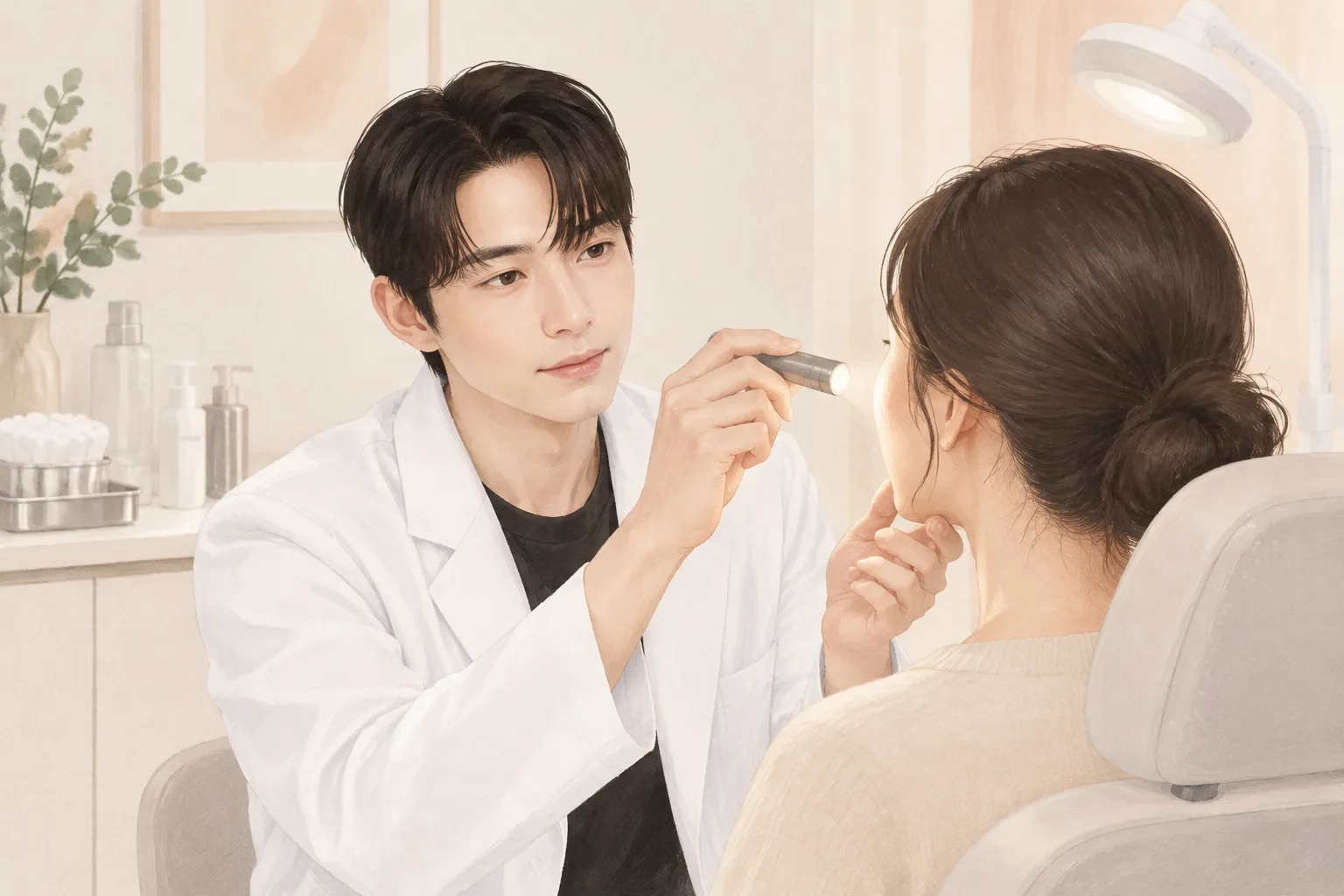
Detailed diagnosis and skin analysis Pigment, redness, texture and pores are recorded with AI skin analysis, and the doctor reviews the cause of your concern based on that record. The analysis tool is used to record and organize your skin condition.
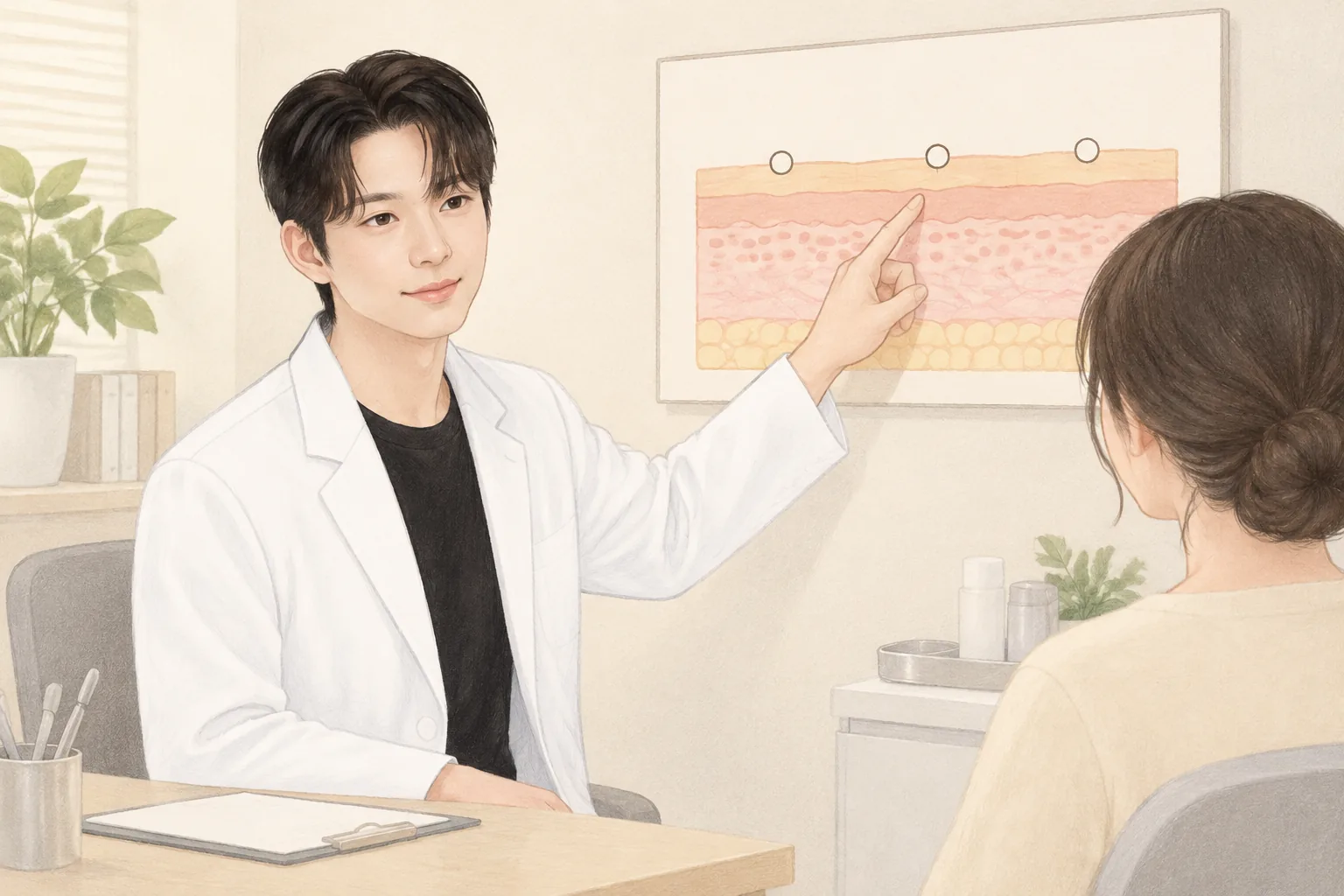
Consultation with the doctor to plan the approach Your schedule, pain sensitivity and skin history are added to the record to decide the laser type, intensity and start date. If you have travel or business plans, we calculate the recovery period around your return date.
Treatment performed by the doctor Topical anesthetic is used where needed to reduce discomfort, and the doctor performs the treatment. We treat only as much as suits your skin condition and don't recommend more sessions than necessary.
Recovery and follow-up After treatment we advise on sun protection and moisturizing, and if redness or heat lasts longer than expected, we ask you to come in for a check. The lasers we use are PicoPlus (pigment), Vbeam (vascular) and erbium YAG (resurfacing).
Four steps your doctor sees to in person
From the diagnostic device to the treatment bed, the doctor you first consult takes care of everything.
01
Precision diagnosis
In a private diagnosis room the whole face is photographed, recording even skin conditions that are hard to see with the eye.
02
Skin analysis
The doctor goes through your pore, pigmentation, wrinkle and firmness results with you on screen and explains what comes first.
03
One-to-one design
With your skin, the balance of your face, the change you want and your schedule in view, you decide the treatment and its extent together.
04
Treatment by your doctor
The doctor who consulted you performs the treatment from start to finish in a private treatment room. No one takes over halfway.
“I take injection pain seriously.”
Co-Director Dr. Lee Dong Hun
Many people hesitate over injection treatments because they hurt. So we went back over everything, from the anesthetic to the products used.
Careful numbing, unhurried timingWe allow plenty of time for a special numbing cream to take full effect, and add anesthetic injections for the treatments and areas that need them.
Fine needles, finished quicklyInjection treatments use fine needles, and the doctor finishes them personally in a short time, adjusting along the way by watching how you are doing.
Even the product formulation countsThe same treatment can feel more or less demanding depending on the product, so we take that into account too.
The anesthetic method and whether it is used are decided after an examination, according to the treatment, the area and your condition. How much it hurts varies from person to person.
ATTITUDE Clinic follows the principles of authentic products, accurate dosing and fair pricing, matching intensity and intervals to your skin condition and treating only as much as needed. Even the same laser feels different depending on settings and intervals, so what's checked in consultation matters more than the device name.
Aftercare and side effects
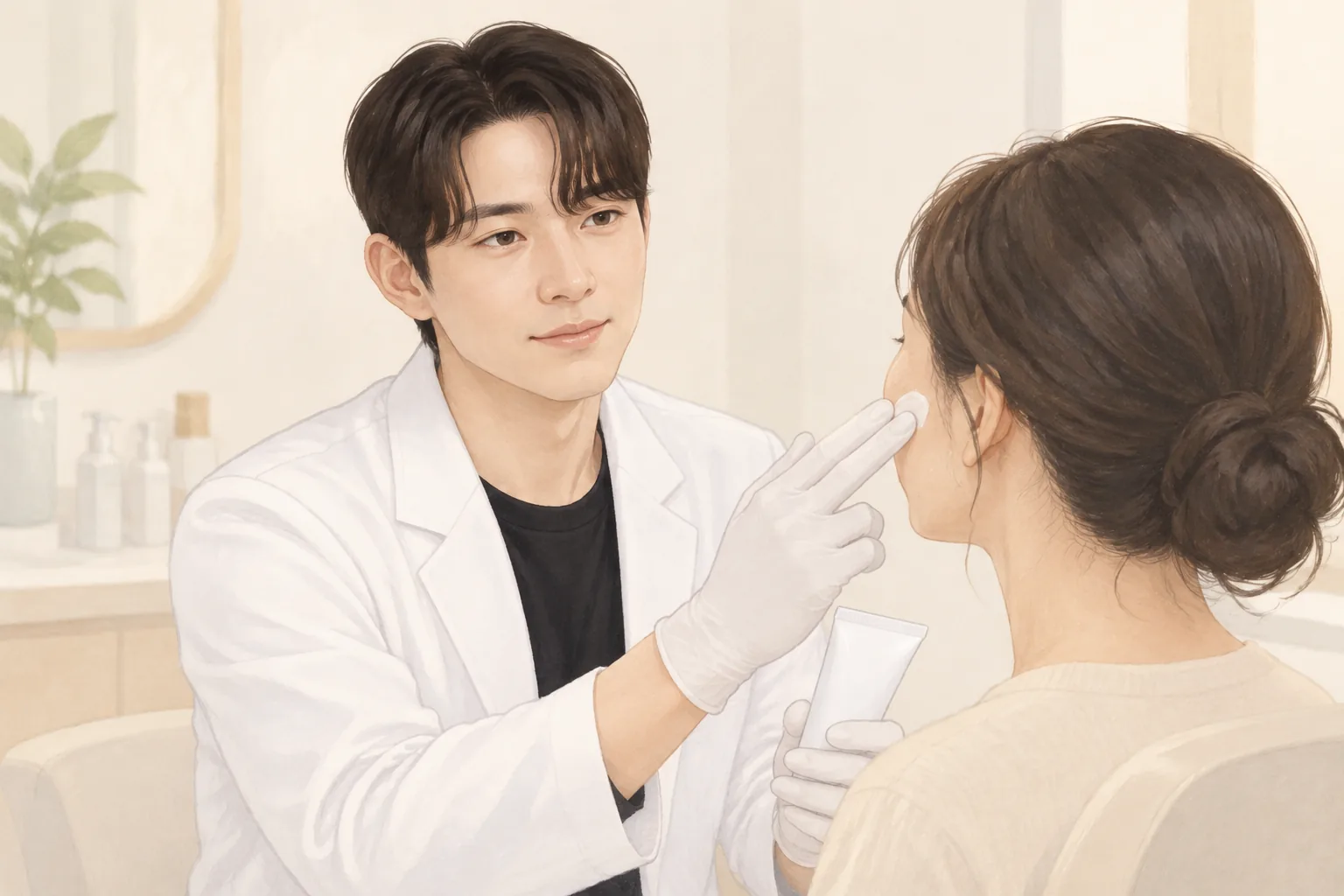
Soothing Right after treatment, gently wipe with lukewarm water and avoid rubbing or hot water. While redness and heat are present, avoid saunas and strenuous exercise.
Moisturizing Apply the recommended moisturizer in thin layers several times. If crusts form, don't pick at them and let them fall off on their own.
Sun protection For at least 2 weeks after treatment, apply SPF 50+ sunscreen and reapply every 2 hours outdoors.
Follow-up If redness or stinging lasts more than 3 days or suddenly worsens, don't tough it out; contact the clinic.
Common reactions include redness, heat, swelling, stinging, thin crusts and temporary pigment changes. The American Academy of Dermatology notes that redness after treatment usually settles within 2 weeks and that purple or red marks tend to fade over 1–2 weeks. In rare cases, blisters, hypopigmentation, infection or scarring can occur, and pigment can return over time. If redness or pain lasts longer than expected, come in rather than waiting for your next appointment.
FAQ
When will I see laser treatment results?
It depends on the target. Vascular lasers are reported to reduce visible vessels by 50–75% after 1–3 sessions, with 3–4 weeks between sessions. High-power pigment lasers show tone changes around 7–10 days, when crusts fall off, while melasma toning is assessed gradually over 8–12 or more sessions. Resurfacing lasers take 1–2 weeks to heal and redness can linger for 2–3 months, so results and recovery overlap.
When can I wash my face and wear makeup after laser treatment?
It depends on the type and intensity. Low-power toning involves recovery of a few hours to the same day, while high-power pigment lasers or fractional lasers involve 7–14 days because of crusts and redness. Wash by gently wiping with lukewarm water rather than rubbing, and decide on makeup before the advised time by watching how your skin is recovering. The doctor will advise the exact restart time after seeing your skin right after treatment.
How many laser sessions will I need, and how far apart?
Common examples include 1–3 picosecond sessions at 4–8 weeks for spots; 8–12 or more sessions at least 1 week apart for melasma; 3–5 fractional sessions at 4–6 weeks for pores and skin texture; and 4–6 sessions at 4–8 weeks for acne scars. Vascular lasers are assessed after 1–3 sessions, with 3–4 weeks between sessions. Numbers vary with your skin condition, pigment depth and UV exposure, so the plan is set after seeing your skin at the first consultation.
How long do laser treatment results last?
Vessels treated with vascular lasers have been reported to last 3–5 years. Treated vessels tend not to reappear, but new vessels can form, so lifestyle triggers of flushing are managed alongside. Pigment can return under the influence of UV and hormones, and after resurfacing recovery, UV and aging continue to have an effect. That's why how long results last depends on your maintenance schedule and sun protection more than on a single session.
What should I check when choosing a clinic for laser treatment?
What's checked in consultation matters more than the device name. Look at whether the clinic first identifies whether your concern comes from pigment, vessels or skin texture and recommends only the treatment you need, and whether it explains pain, recovery time, and when you can wash your face and wear makeup in specific terms. Also consider whether you can have redness or pigment changes reviewed after treatment. If your skin is dark or tanned, the risk of pigment changes is higher, so it's safer to check that the clinician has experience; Mayo Clinic also notes that darker skin has more melanin, making it important to choose a suitable laser and settings.
This article offers general health information. It is not a substitute for diagnosis or treatment based on your own condition, so please talk through your situation with a doctor.