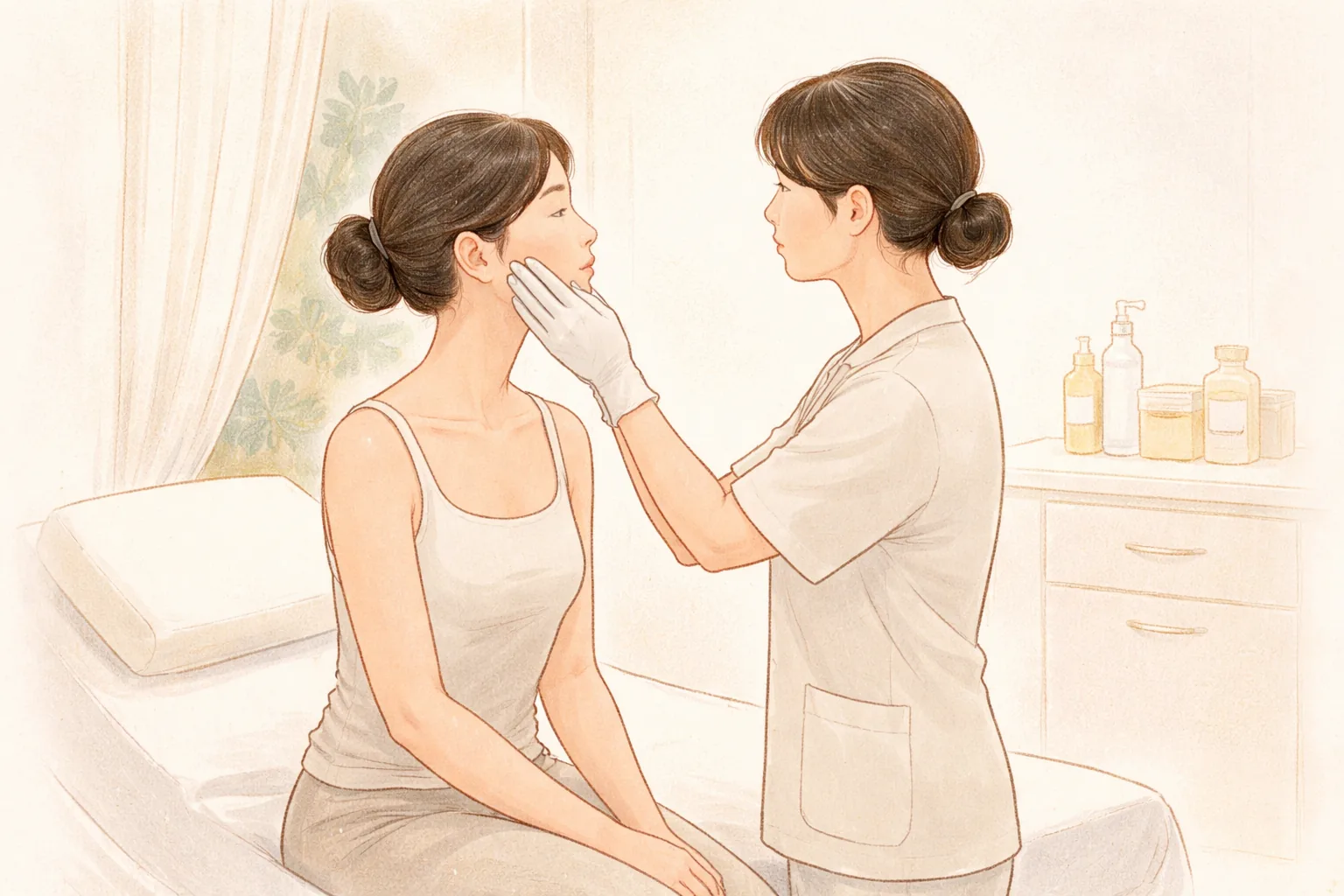
Lifting Consultation Questions: What to Ask About Devices and Treatments
When you're researching lifting devices like Ultherapy or Thermage FLX, here's what to ask at your consultation about device names, treatment areas, evidence, timelines, cost, sessions, dosage, pain and aftercare contact.
Written by ATTITUDE Clinic Editorial Team
People often book a consultation about lifting treatments like Ultherapy, then find themselves unsure what to ask first. Search the same name and every clinic seems to describe slightly different areas and session counts. This article lays out a question order that doesn't stop at confirming the device name, but checks what judgment is being made about your skin.
The short answer first
A brand name is only the starting point. The first things to ask at a consultation are the manufacturer and model name, whether the device is genuine, and which layer of which area the energy will target. Confirm what that explanation is based on, when and by what standard results will be assessed, and what cost, sessions and dosage include. The American Academy of Dermatology advises that at a cosmetic consultation you should confirm expected results and risks, alternatives, the number of sessions needed and how long they take, recovery, preparation and aftercare, and cost (AAD guide to questions for a consultation). Take this list with you on your phone and the conversation shifts from device names to your skin.
Does the same brand name mean the same treatment?
You can't assume the same name means the same treatment. The device generation, the handpiece configuration used together, and the areas and settings where energy is applied can all differ. So the first step in a consultation is checking the manufacturer and model name, whether the device is genuine, and which handpiece covers which area. If the name isn't clear, you can ask for a written explanation of which device is applied where.
Results aren't decided by the device name alone. According to AAD material, the outcome of a cosmetic procedure depends heavily on the skill and experience of the person performing it (AAD guide to questions for a consultation). So it's natural to ask how many times they've performed this treatment, and how much experience they have with your skin tone, skin type and age group.
Even with the same device, how intensity and intervals are set separates one experience from another. If energy is too strong for your skin condition, or sessions are repeated before recovery is complete, it can strain the skin barrier; set the settings too low and the change you expected arrives late (laser principles column). So rather than asking how many shots or sessions, it's better to first hear what settings they'll start with on your skin.
Which layer of the skin does this treatment heat?
Most lifting treatments use heat. The AAD divides non-surgical skin tightening into non-invasive, minimally invasive and surgical by invasiveness, explains that non-invasive treatments leave the skin intact and use heat to support collagen production, and notes that different energies such as ultrasound, radiofrequency and lasers are used (AAD guide to firming sagging skin).
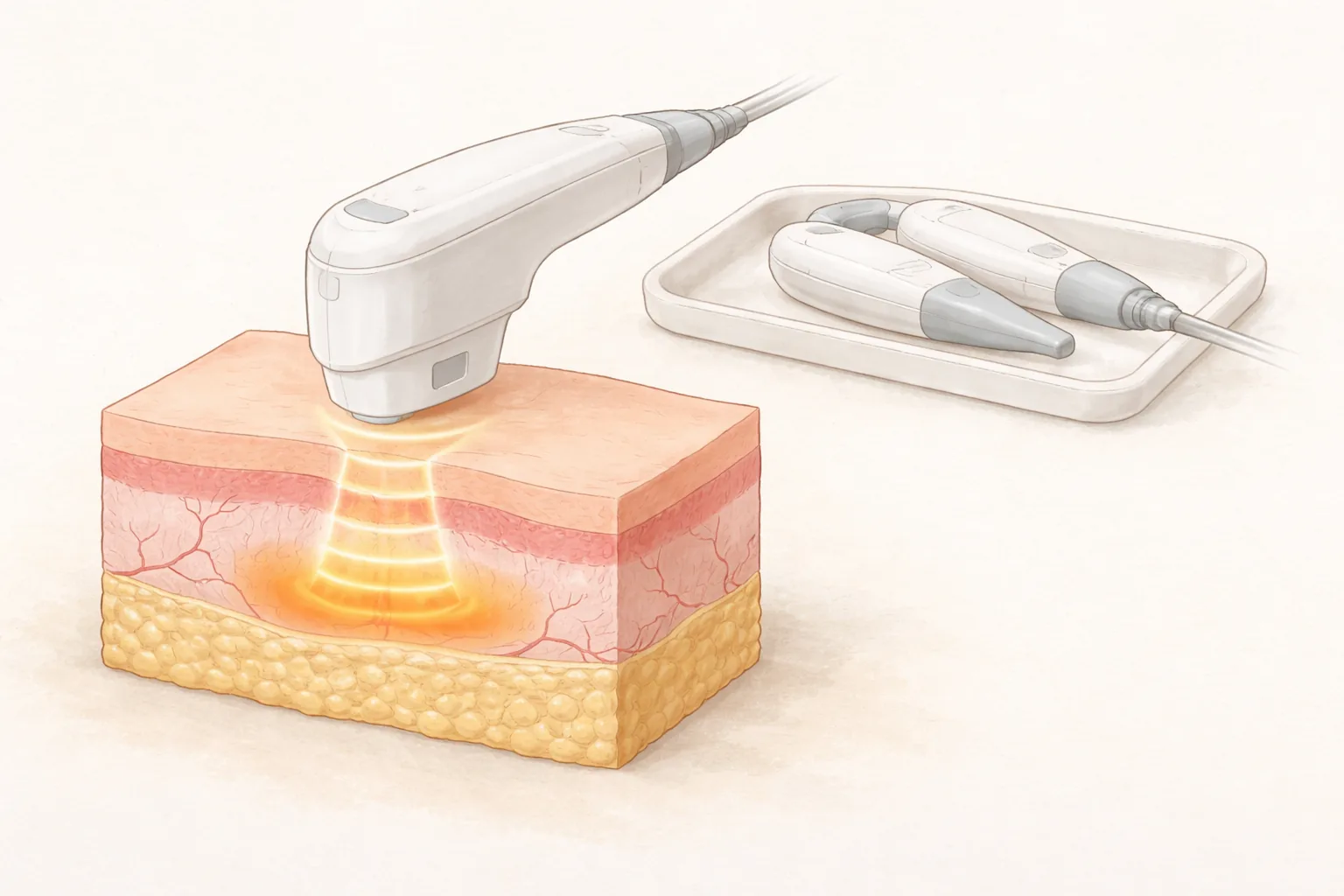
Radiofrequency warms tissue beneath the skin by placing a device against it, while ultrasound sends heat deep into the skin. Minimally invasive radiofrequency inserts a thin tube or needle into the skin to apply heat directly where it's needed. When the depth the energy targets differs, the recovery burden differs too.
Lasers are described in a slightly different language. The target that reacts depends on the wavelength, so light aimed at pigment and light aimed at red blood vessels call for different devices. The principle of leaving surrounding normal skin less disturbed and concentrating energy only on the desired target is called selective photothermolysis (concentrating energy on the target while sparing surroundings) (laser principles column). Radiofrequency or ultrasound used for lifting share the same key point: where the heat is concentrated. So the question to ask at a consultation isn't "what device is it?" but "which layer does it target?"
As invasiveness rises, the size of the result and the recovery burden tend to rise together. Minimally invasive treatments need a few days of recovery and may require you to avoid driving or wear compression garments afterward. Because non-invasive treatments leave the skin intact, temporary redness and swelling are often the only traces (AAD guide to firming sagging skin).
When do results show, and how are they judged?
The timeline for results differs by method. According to AAD guidance, non-invasive ultrasound produces gradual lifting and tightening over mostly 2–6 months from a single treatment, and additional sessions may improve it further. Non-invasive radiofrequency is usually done once, with slight tightening felt right after, and because collagen takes time to form, the best results are seen at about 6 months. With appropriate skin care alongside, results can last 2–3 years (AAD guide to firming sagging skin).
Non-invasive laser tightening may need 3–5 sessions, and results appear gradually between 2–6 months after the last session. Minimally invasive radiofrequency shows results in about 1 month, and in some studies gradual improvement continued for close to 1 year (AAD guide to firming sagging skin).
One distinction is needed here. These figures are general trends by method, not a report card for a specific device. Even with the same radiofrequency, how it feels differs depending on the settings and which layer receives it, and skin thickness, degree of sagging, age and lifestyle also affect results. It's more accurate to confirm the evidence for your specific device and your individual assessment timeline at the consultation.
Table 1 When do results show, and how are they judged?
Method
Where the energy goes
Concerns it suits
Generally expected course
Non-invasive ultrasound
Sends heat to a deep layer of the skin
Sagging and loss of firmness
Gradual change over 2–6 months from 1 session, additional sessions may improve it further
Non-invasive radiofrequency
Device placed on the skin warms tissue beneath
Firmness and facial contour
Slight tightening right after, best results at about 6 months, may last 2–3 years with maintenance
Non-invasive laser
Delivers heat to a deep layer without damaging the skin surface
Loose skin on the body and upper arms
May need 3–5 sessions, gradual results between 2–6 months after the last session
Minimally invasive radiofrequency
Thin tube or needle applies heat directly where needed
Sagging of the neck and upper arms
Results at about 1 month, gradual improvement close to 1 year in some studies
Swipe sideways to see the whole table.
In short the timeline for results and the recovery burden differ by method, so rather than asking what device it is, it's better to decide first which layer, with what settings, and when you'll assess it. The figures in the table above are only general trends by method, so the way to use this table is not to apply them directly as your device's expected results but to confirm your own evidence separately at the consultation.
How do you check cost, sessions and dosage?
When you look at a price list, the composition matters before the numbers. The ATTITUDE Clinic price list states that all amounts exclude VAT, and lists area, dosage and number of sessions separately for each treatment (treatments and pricing). It's worth confirming at the consultation whether anesthesia or aftercare is included in the total.
Dosage units differ by device. Some lifting treatments are measured in shots, others in kJ. When units differ, lining up numbers to compare them is meaningless, and even within the same device, the amount needed varies by area and goal.
Session counts are the same. Intervals between sessions depend on the type of device, the purpose and your skin condition, so rather than fixing the number from the start, adjusting while watching your progress puts less strain on the skin (laser principles column). When budgeting, it's more realistic to calculate the recommended interval and maintenance plan together, not just the price of 1 session.
How do you set pain, recovery and contact criteria?
Pain varies greatly with settings, treatment area and individual sensitivity. Even the same treatment can feel more prickly depending on the area, and topical anesthesia can reduce discomfort (laser principles column). The AAD also advises asking at the consultation whether anesthesia is used during the procedure (AAD guide to questions for a consultation).
How much it hurt isn't a value that tells you how big the result will be. How evenly energy was delivered to which layer determines the result, and pain is better used as a signal to adjust settings. If you feel something unbearable during the treatment, it's good to say so right away, and the intensity can then be adjusted.
Recovery differs by method. Non-invasive treatments usually take under 1 hour, temporary redness and swelling are often the only traces, and you can often wear makeup right away. Minimally invasive treatments need a few days of recovery (AAD guide to firming sagging skin). If you have commitments, it's safer to work backward from the recovery period when choosing your treatment date.
Set contact criteria before the treatment. Heat-based treatments can cause side effects even with appropriate settings, so it's good to hear in advance which reactions are common and which are rare for the planned treatment (laser principles column). If redness or heat lasts longer than expected or pain worsens, the principle is to come in and have it checked rather than wait. If a symptom appears that isn't on the list you were given, that's when to contact the medical team.
If this applies to you
If you have a ceremony or shoot coming up
A first-time treatment the day before a ceremony can mean redness or sensitized skin overlaps with your schedule. If you tell us the date first, we can work backward from that day to adjust the treatment type, intensity and start timing. If you have a big event, telling us at the planning stage gives you more options.
If you want consistent maintenance
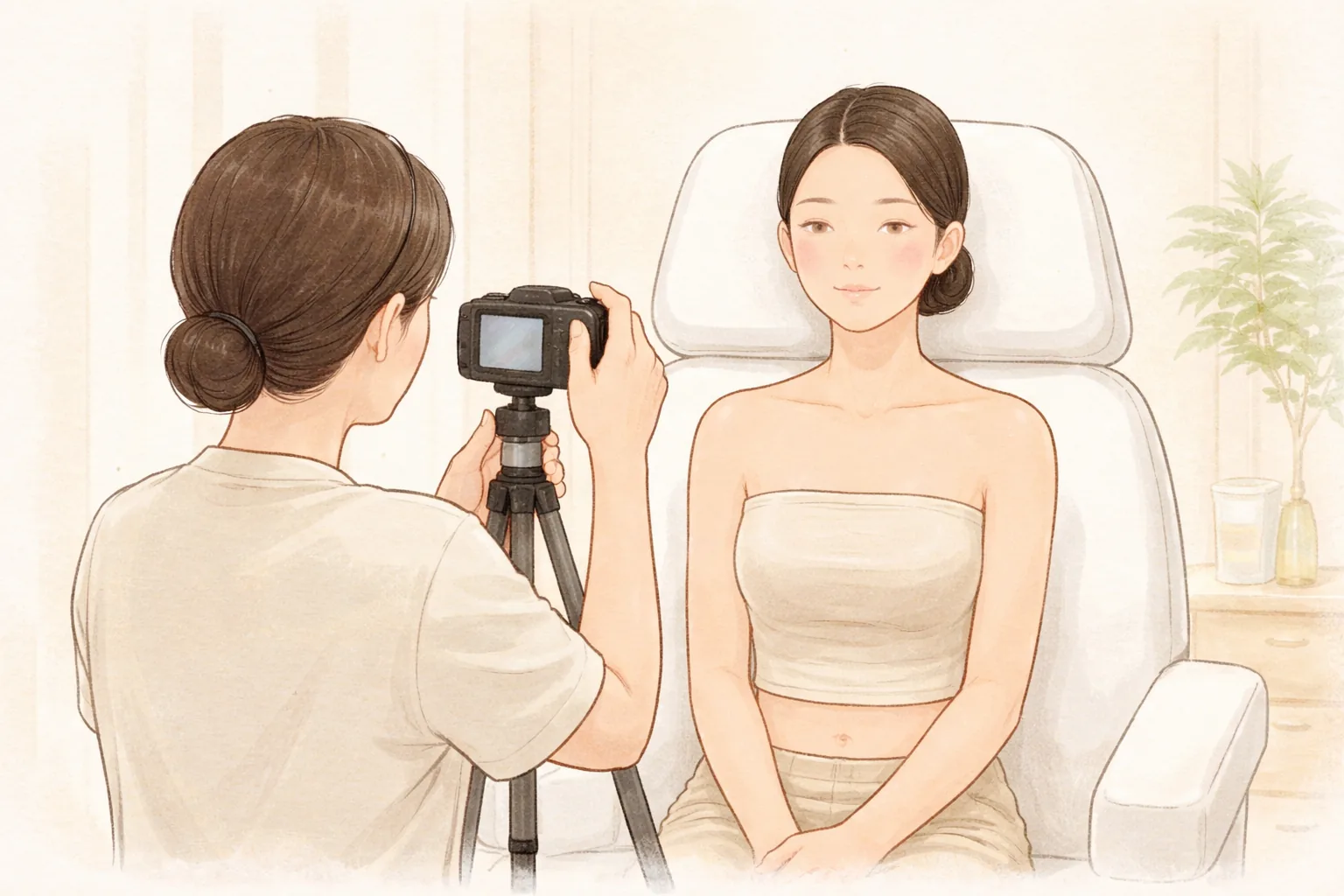
Rather than going strong at once, a routine of regular maintenance while respecting the interval your skin needs to recover is less of a burden. It's important to decide the change you're aiming for and arrange only the treatments you need at the right times. Leaving photos taken under the same lighting and angle gives you a basis for adjusting intervals.
If your skin is sensitive or prone to redness
Non-invasive tightening treatments are introduced as usable regardless of skin color, but temporary redness and swelling after treatment are common. If you're pregnant or breastfeeding, have a skin infection at the treatment area, or are taking certain medications, it may not be suitable, so please tell us first at the consultation (AAD guide to firming sagging skin).
If you're a visitor on a short stay
If your stay is fixed, it's good to first check whether the recovery period overlaps with your schedule. ATTITUDE Clinic bookings: a request and a confirmation are different, and it's confirmed only when you receive a confirmation call from the clinic. Same-day requests are possible for time slots 1 hour or more from the current time, and the last reception is 17:30 (booking information). If you tell us your return date and next commitments in advance, we can discuss intensity and type to fit.
Please tell us before your consultation — whether you're pregnant or breastfeeding, any skin infection at the treatment area, medications you're taking (including blood thinners), recent UV exposure, active ingredients in your current skincare, past experiences of sensitivity after a treatment, and important dates like ceremonies or shoots. Also tell us if you're sensitive to pain, and we'll factor it into the settings.
How ATTITUDE Clinic does it
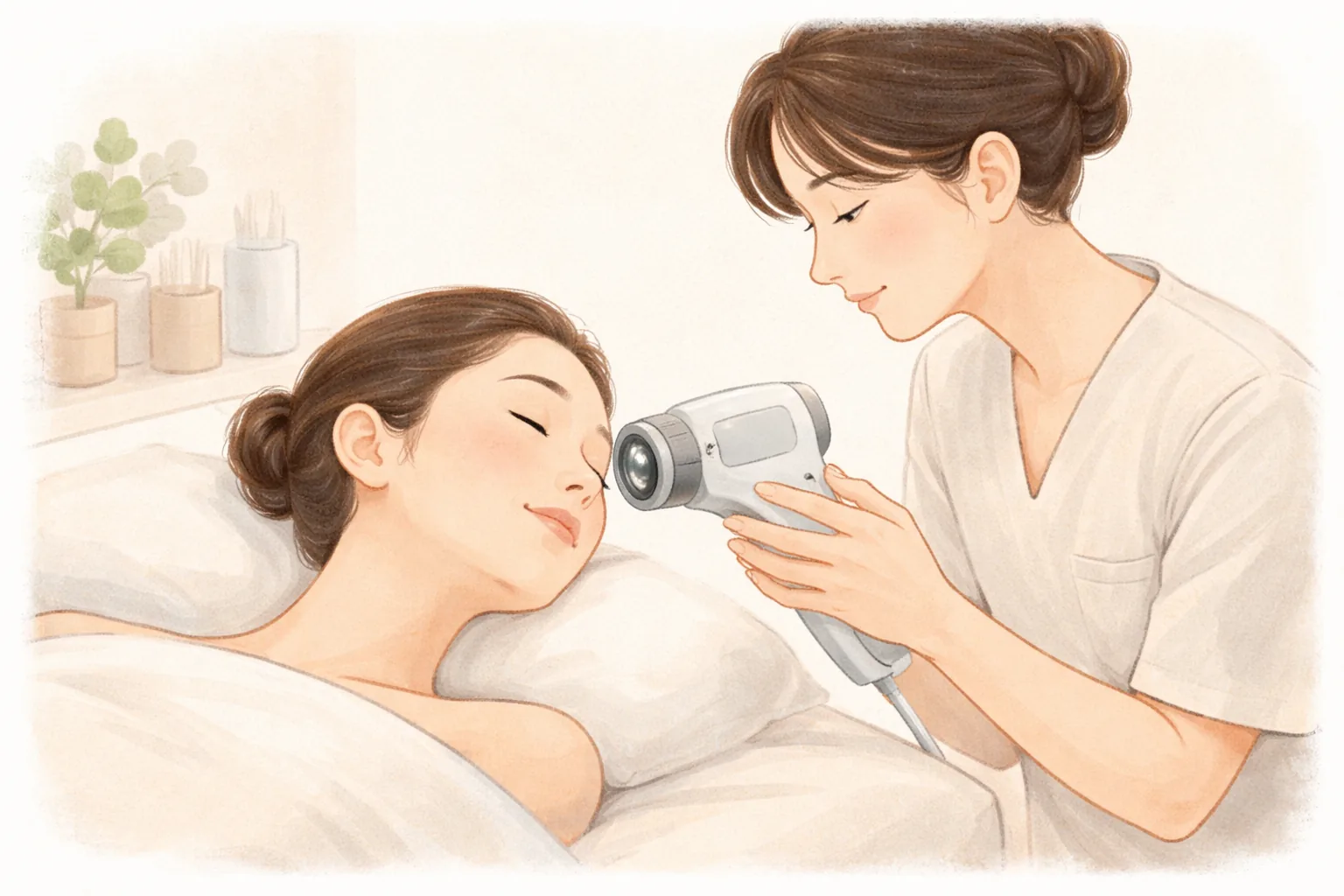
AI skin analysis record — Records your current skin condition, including pigment, redness, texture and pores. This record is a tool for organizing information to support the consultation and is not a medical diagnosis.
Direction set in a consult with the doctor — Adds your schedule, pain sensitivity and skin history to the analysis record to decide the treatment type, intensity and timing together. The lifting menu includes ultrasound (Ultherapy, Shurink Universe), radiofrequency (Thermage FLX, XERF) and microwave (Onda, Titanium) devices, and which device goes on which area is decided here too (treatments and pricing).
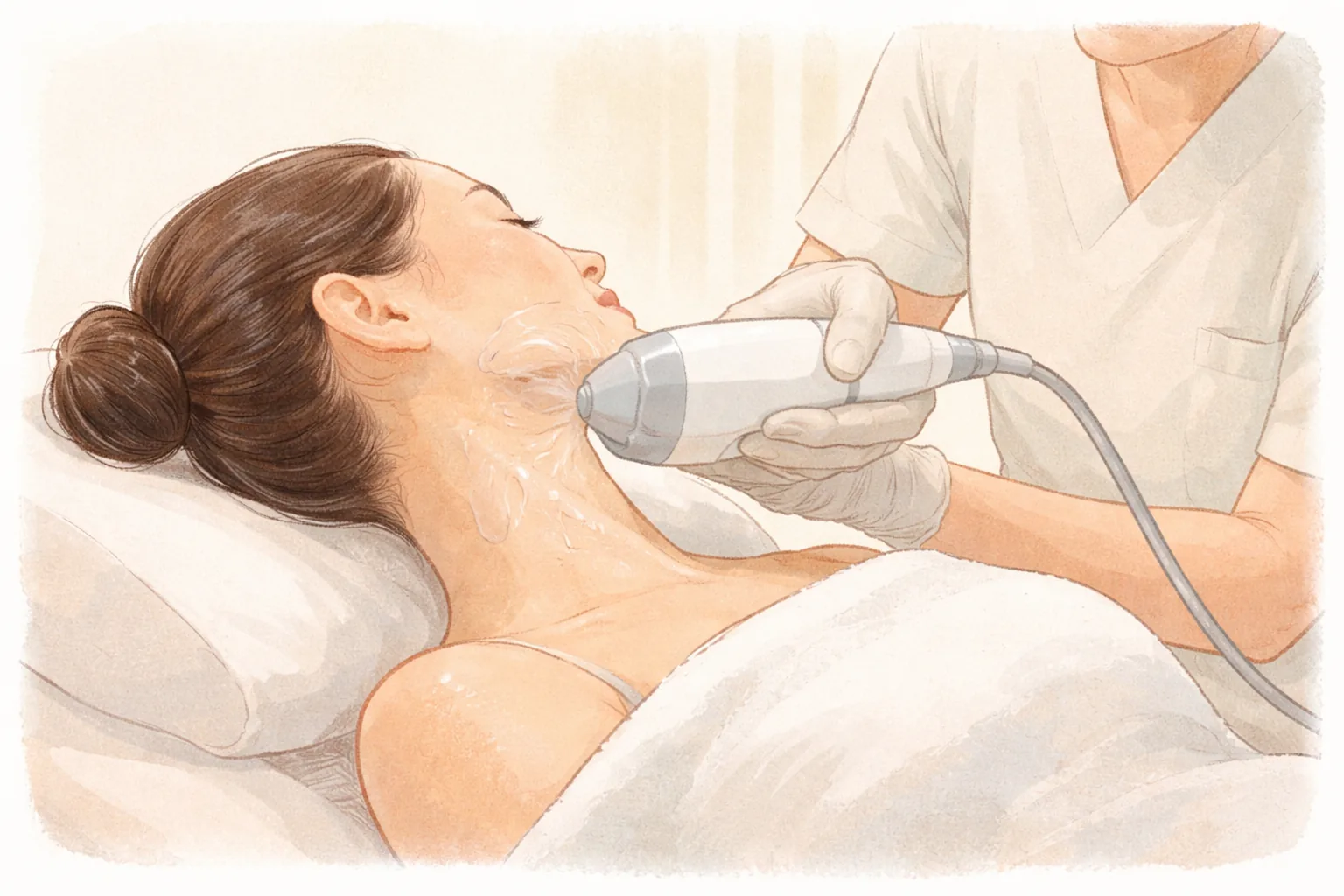
Treatment performed by the doctor — Topical anesthesia reduces discomfort if needed, and the doctor performs the treatment. The principle is genuine products and full dosage, and we don't recommend more treatment than necessary (laser principles column).
Progress check and aftercare — We explain reactions that may appear after treatment, the recovery schedule and precautions, and let you know to come in if anything feels uncomfortable.
Aftercare and side effects
Soothing — Right after treatment the skin is temporarily sensitive. Avoid saunas, strong exfoliation and irritating scrubs for the period you're advised.
Moisturizing — Your skin may feel dry, so moisturize sufficiently. The ATTITUDE Clinic column also emphasizes moisturizing during the recovery period (collagen injection column).
Sun protection — Apply sunscreen carefully when going out. After treatment the skin is temporarily sensitive, so protection and moisturizing are especially important (laser principles column).
Progress check — Watch for a few days for any reaction lasting longer than expected, and tell the medical team if a symptom appears that isn't on the list you were given.
Starting with common reactions: with non-invasive tightening treatments, temporary redness and swelling are usually the only traces. The AAD explains that when performed by an experienced practitioner, the risk of other side effects is low (AAD guide to firming sagging skin). Discomfort can occur during treatment, and heat-based treatments can cause side effects even with appropriate settings. So it's good to hear in advance which reactions are common and which are rare for the planned treatment.
We also set when to come in without waiting. If redness or heat lasts longer than expected or pain worsens, the principle is to come in and have it checked rather than endure it (laser principles column). If recovery goes beyond the range you were told or a symptom appears that wasn't mentioned, it's better not to wait until your next appointment.
FAQ
How many sessions of lifting like Ultherapy do I need?
The number depends on the method and your individual condition, so it isn't fixed by one figure. According to AAD guidance, non-invasive ultrasound can produce gradual change with 1 session and additional sessions may improve it further, while laser-based methods may need 3–5 sessions (AAD guide to firming sagging skin). Even within the same method, the plan differs with the degree of sagging, skin thickness and the change you're aiming for. Rather than fixing the number from the start, it's less of a burden to see your progress after the first session and set the next interval. Hearing the recommended interval and maintenance plan together at the consultation makes budgeting and scheduling easier.
When do results start to show, and how long do they last?
It differs by method. Non-invasive radiofrequency feels slightly tighter right after treatment, shows its best results at about 6 months, and is described as lasting 2–3 years with appropriate skin care. Non-invasive ultrasound shows change over mostly 2–6 months (AAD guide to firming sagging skin). These figures are general trends by method, though. Your perceived timeline and how long results last vary with your skin's firmness, degree of sagging, thickness and lifestyle, so it's more accurate to confirm your device's evidence and assessment timeline at the consultation.
I'm not good with pain — can I still have this? Does more pain mean better results?
Pain varies with settings, area and individual sensitivity, and topical anesthesia can reduce it (laser principles column). If you feel something unbearable during treatment, saying so right away lets the intensity be adjusted, so enduring it isn't a virtue. The intensity of pain isn't a value that tells you the size of the result; how evenly the energy was delivered to which layer determines the result. If you're especially sensitive to pain, please say so at the consultation.
Besides the amount on the price list, what else should I check?
The price list states that all amounts exclude VAT and lists area, dosage and number of sessions separately for each treatment (treatments and pricing). Confirming whether anesthesia or aftercare is included in the total, what the dosage unit means, and what the recommended interval is makes it easier to gauge the real cost. It's also worth remembering that dosage units differ by device, so numbers can't be compared directly.
What should I look at when choosing a lifting clinic?
The first criterion is whether they check before treatment which layer your concern comes from. The second is whether they clearly state the manufacturer, model name and whether the device is genuine; the third is whether they avoid recommending more sessions or intensity than necessary. The fourth is whether they fully explain pain, the recovery schedule and aftercare precautions at the consultation; the fifth is whether it's a place where you can have things checked if something feels off after treatment (AAD guide to questions for a consultation). The AAD also advises that results depend heavily on the skill and experience of the person performing the treatment. Rather than the length of a device list, it's better to see whether these five points are covered.
At a glance
Table 2 At a glance
Item
Key point
Brand name check
Manufacturer and model name, whether genuine, handpiece configuration
Scope of application
Which layer of which area the energy targets
Evidence
General trends by method differ from your device's evidence
Assessment
Photograph under the same lighting and angle, and set the judgment timeline in advance
Cost
VAT-excluded labeling, confirm whether anesthesia and aftercare are included
Contact criteria
Redness and heat lasting longer than expected, or worsening pain, means coming in
This article offers general health information. It is not a substitute for diagnosis or treatment based on your own condition, so please talk through your situation with a doctor.