Which Lifting Treatment Is Right for You? HIFU vs RF vs the Rest
Why Ultherapy, Shurink, Thermage, XERF, Onda and Titanium are all called 'lifting' — and how energy type, reach depth, pain, downtime and when results show up set them apart.
Written by ATTITUDE Clinic Editorial Team
Search for lifting and the sheer number of names stops you cold. Ultherapy, Shurink, Thermage, XERF, Onda, Titanium — all grouped under the same word "lifting," with little to explain how they actually differ. This article first unpacks what device lifting does inside the skin, then walks through the criteria that separate the types and the conditions that decide your results.
The short answer
Device lifting comes down to where and how energy is delivered. One family focuses ultrasound into points at a set depth to create tiny thermal coagulation points; the other uses radiofrequency current to heat a broad area from the dermis down through the subcutaneous layer (ATTITUDE Clinic column). On top of those sit devices that use different energy sources, like Onda (microwave) and Titanium (3-wavelength laser) (treatments and pricing). It isn't about which is better — whether your sagging is deep and localized, or a broader loss of firmness, determines which device you reach for first, and the two approaches are often combined. Results depend less on the device name and more on reach depth, energy level, treatment intervals, and your skin's starting condition.
What actually happens inside the skin?
The target of lifting is a layer below the dermis called the SMAS. The SMAS is a thin sheet that supports your facial muscles and skin — think of it as the lining inside a garment. As this sheet stretches with age, sagging follows, and that's why the core of lifting is how precisely and how deeply you deliver heat energy to this layer.
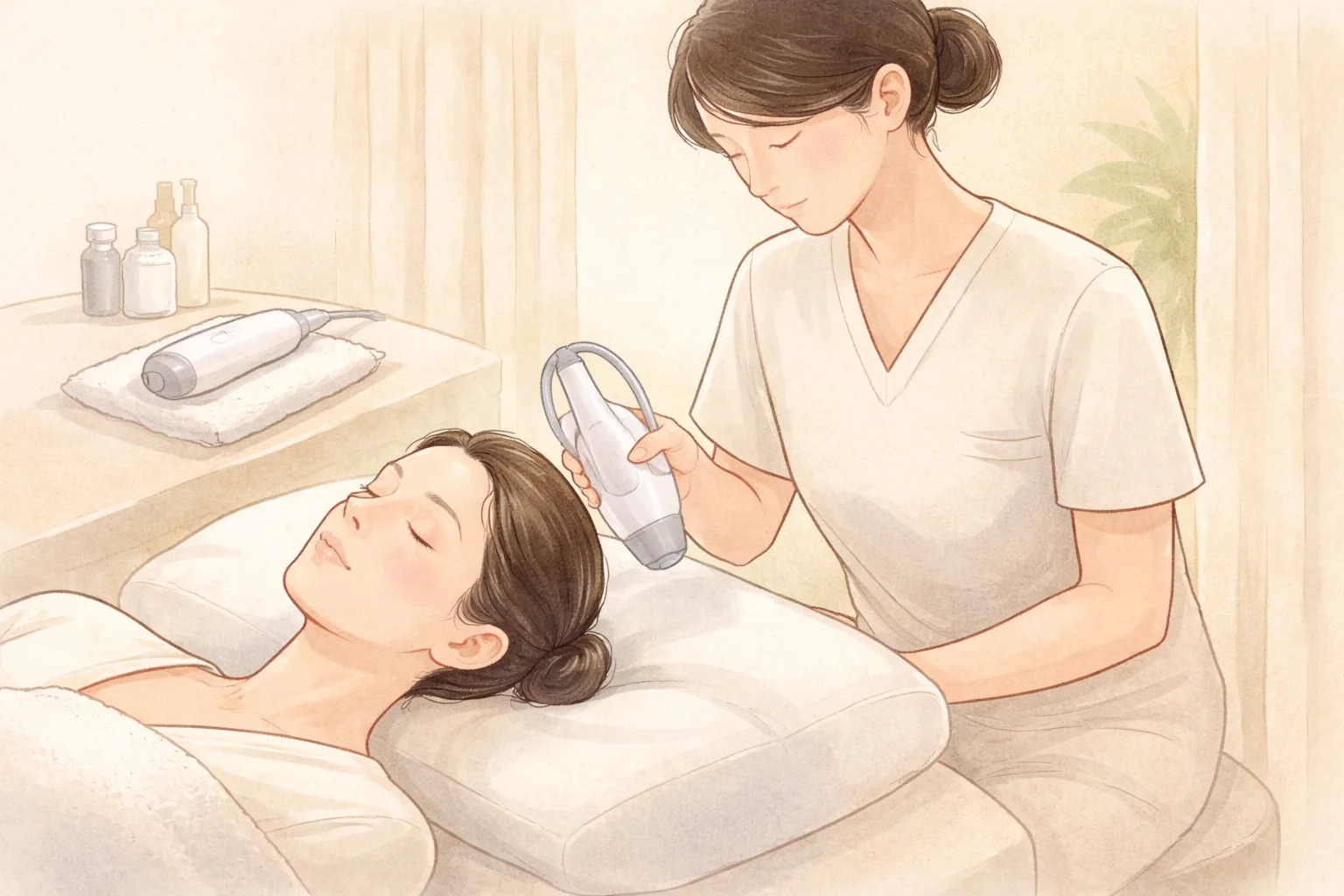
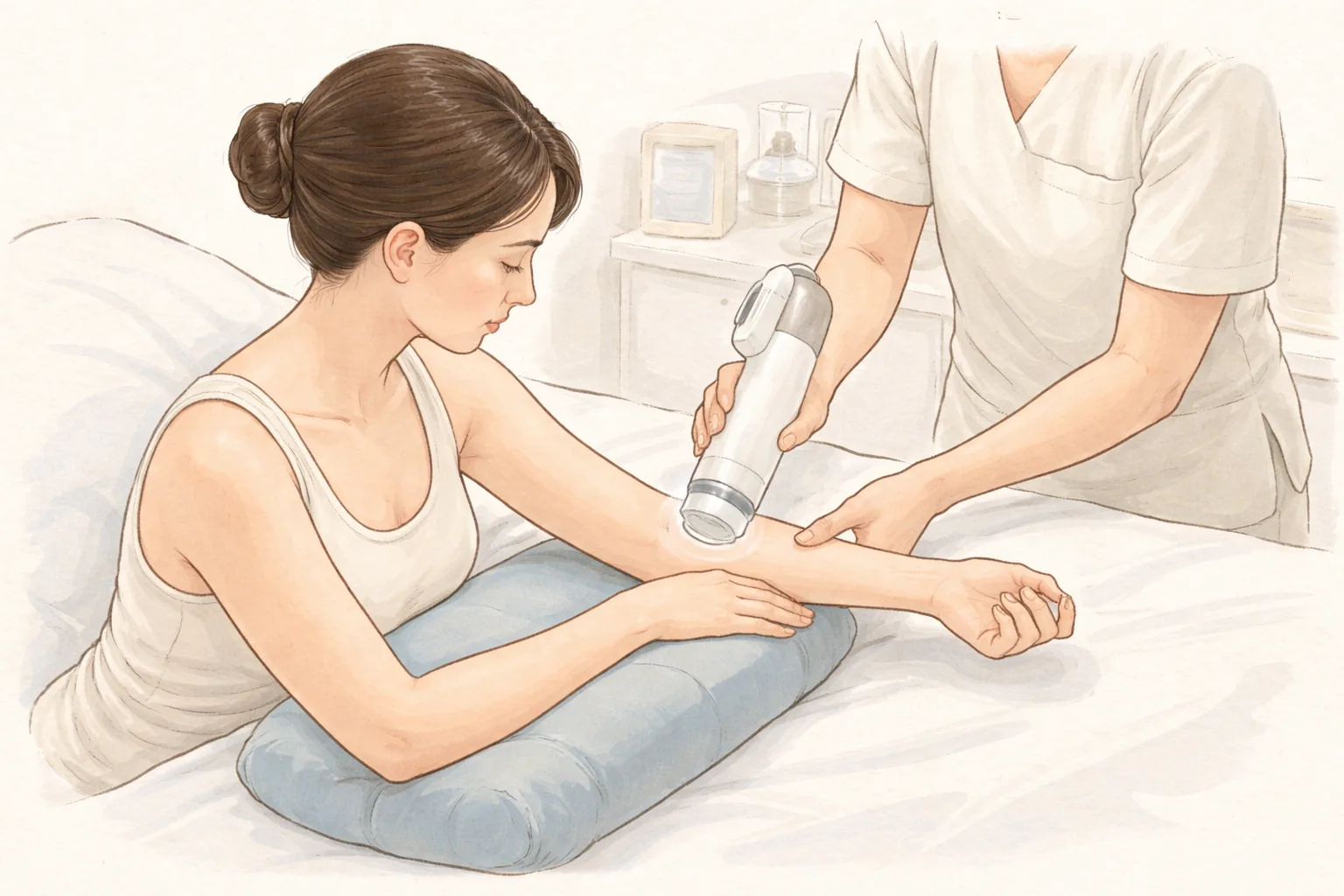
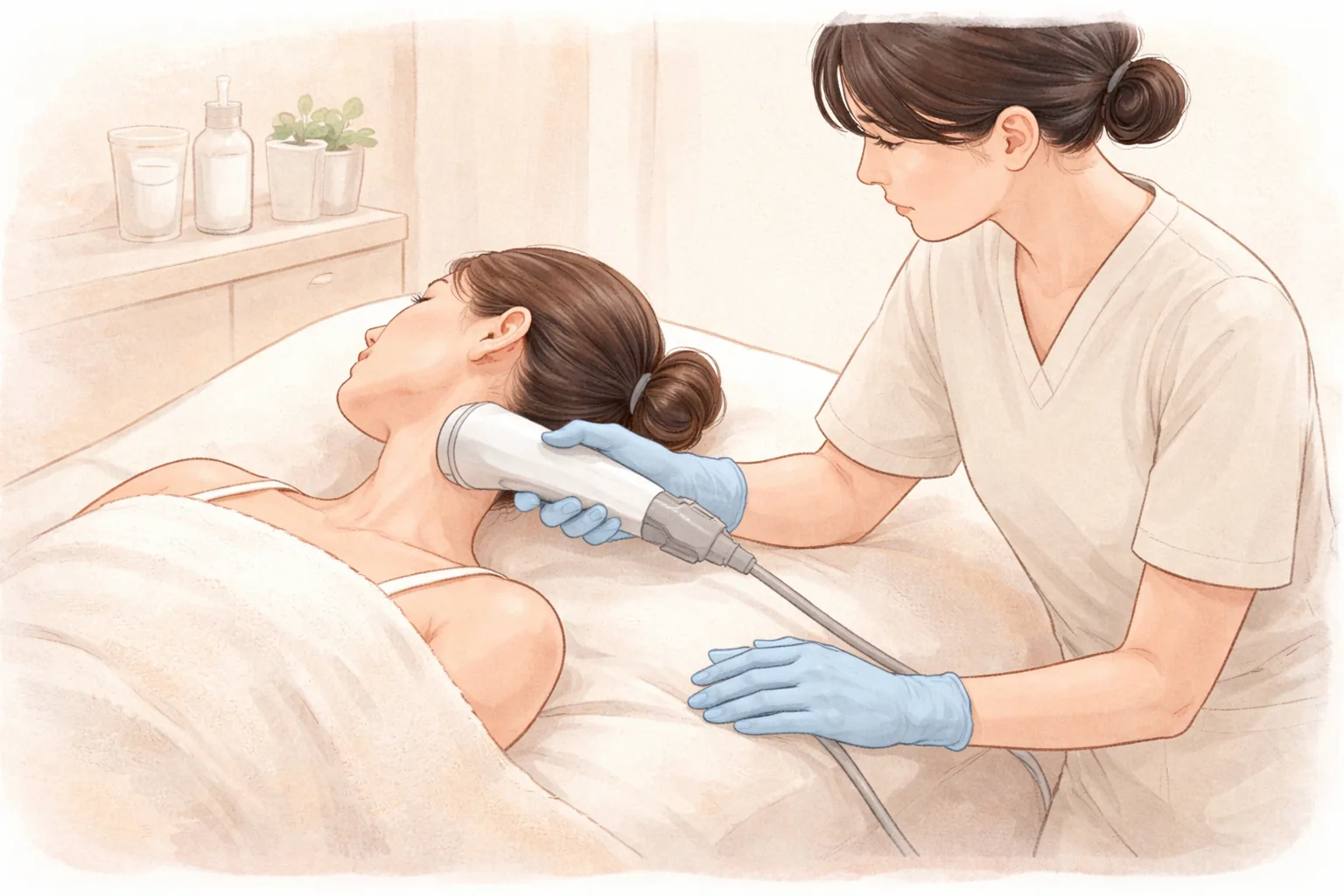
Ultherapy and Shurink use HIFU (high-intensity focused ultrasound). Just as a magnifying glass focuses sunlight onto a single point, ultrasound is focused inside the skin to create small thermal points at depths set per cartridge. Thermage and XERF use RF (radiofrequency). Electrical energy passes through tissue and turns into heat, which warms a broad area from the dermis down to the subcutaneous layer all at once. They share the name "lifting," but the depth and the breadth of the heat are entirely different.
Both approaches ultimately come down to heating collagen. Collagen is the protein that keeps skin firm and supported — when heated, some of it contracts, and remodeling gradually begins. According to the American Academy of Dermatology, when heat reaches deep into the skin, the body produces more collagen (American Academy of Dermatology). That's why you won't feel a dramatic change right after treatment. Building new collagen takes time.
How are Onda and Titanium different?
Even within the same lifting category, a different energy source changes how the skin receives heat. ATTITUDE Clinic's treatment guide lists lifting under four headings: HIFU (ultrasound), MONOPOLAR RF, microwave, and 3-wavelength laser (treatments and pricing). Ultherapy and Shurink fall under the first, Thermage and XERF under the second, Onda under the third, and Titanium under the fourth.
So the question "what makes Onda different from other lifting?" really starts with the energy source and the treatment area. Onda and Titanium offer separate face and body options, so the same device can be configured to reach wider areas like the arms, thighs, or abdomen (treatments and pricing). That's a different starting point from ultrasound, which aims narrowly and deeply from the dermis to the SMAS.
Thread lifting, which pulls tissue using inserted threads, is outside the scope of the energy-based device lifting discussed here. Which approach suits you is determined in consultation based on the location and degree of sagging.
It's hard to predict results from the device name alone. Even with the same machine, how much energy is used and how much is delivered at which depth changes the stimulation your skin receives. This isn't to say set packages are wrong. But if a package is recommended, it's worth asking why each component is needed and what could be left out (why do results differ even with the same treatment?).
Why does pain and recovery feel so different each time?
Lifting has wider variation in pain from person to person and area to area than most treatments. There are two reasons: the energy level and the nerve density of the area. The higher the energy level and the more shots fired at one spot, the stronger the deep heat stimulus — and the more it hurts.
By area, the jawline, cheekbones, forehead, and eye area — close to bone with dense nerves — tend to be more sensitive, while thicker areas like the cheeks feel less painful at the same energy. The quality of the sensation differs too. Ultrasound creates deep, intense heat by warming a point deep in the skin, while RF is described as a hot, lingering sensation because it warms a broad area closer to the surface.
Downtime is generally short. For 1–2 days after treatment, heat stimulation may leave slight redness and warmth, and most of it fades on its own. The American Academy of Dermatology also notes that non-invasive lifting leaves the skin intact — no incisions or wounds — and temporary redness and swelling are usually the only traces afterward (American Academy of Dermatology).
What decides your results?
Same device, same intensity — yet results diverge. The reasons come down to three things. First, your skin's starting condition. Skin type, thickness and structure, and how fast your body regenerates collagen all differ from person to person. Even at the same age with similar concerns, what's happening beneath the surface can differ — and that's hard to read in the mirror alone.
Second, the design. Even with the same analysis, which device comes first, what intensity to use, and whether to add skin boosters or pore and scar treatments — all of that has to be matched to your concerns, your downtime allowance, and your skin's sensitivity.
Third, the execution. Fine-tuned intensity control at each treatment area, anesthesia management, and adjusting mid-treatment based on your skin's response can't be captured in a manual. The key at this stage is keeping the plan from consultation and the actual treatment in alignment (why do results differ even with the same treatment?).
How long results last depends on the same factors. The degree of SMAS laxity, age, everyday UV exposure, and lifestyle all affect how fast collagen is built and broken down, and how treatment intensity was set plays a role too. That's why the approach is a personalized plan rather than a single session, and the timing of repeat visits is set based on how things progress (ATTITUDE Clinic column).
Table 1 What decides your results?
Category
Energy delivery
Primary target areas and concerns
How change unfolds
Ultherapy · Shurink (HIFU)
Ultrasound focused to a point, creating thermal points at set depths from dermis to SMAS
Deeply sagging jawline, localized areas like the eye area
Large change is unlikely; when it occurs, it usually develops gradually over 2–3 months
Thermage · XERF (RF)
RF current broadly heats from dermis to subcutaneous layer
Firmness over a wide area from cheeks to neck, skin texture
An initial firm feeling (sometimes swelling) followed by further change over 2–6 months
Onda (microwave)
Lifting categorized as microwave, with face and body options
Facial lines and broad areas like arms, thighs, abdomen
Varies with intensity and session count, set in consultation
Titanium (3-wavelength laser)
Lifting categorized as 3-wavelength laser, with face and body options
Firmness management for face and body
Varies with intensity and session count, set in consultation
Swipe sideways to see the whole table.
In short — Before the device name, it's about how deep and how wide the heat reaches. Deep, localized sagging suits the ultrasound family; broader loss of firmness suits RF; and Onda and Titanium offer configurations that address face and body together. Ultimately, which to use first is decided by weighing your skin condition, schedule, and downtime allowance together.
If this sounds like you
A wedding or photo shoot is 2–3 months away
For families where change emerges gradually, treatment right before an event may be hard to feel. The American Academy of Dermatology notes that non-invasive lifting results appear gradually, usually over 2–6 months (American Academy of Dermatology). If you have a fixed date, count backward from it and set the timing and type of treatment in consultation.
You're sensitive to pain or have limited downtime
Pain varies widely with energy level and area. If you're sensitive, it's best to discuss anesthesia options and energy level adjustments in advance. Non-invasive approaches leave the skin intact — no incisions or wounds — and temporary redness and swelling are usually the extent of it, making it easy to plan a return to daily life the next day.
You want to address face and body together
Onda and Titanium offer separate face and body options, so the same device can continue on to arms, thighs, or abdomen (treatments and pricing). Since the face calls for localized depth while the body calls for broad area coverage, it's better to set the plan for each area at the same time.
Sensitive or easily flushed skin
Starting at a lower intensity and spacing sessions further apart may be considered. How much redness and warmth remain right after treatment depends on the energy level, so if your skin tends to stay flushed for a while, it's worth mentioning that first in consultation.
Tell us before your consultation — Recent UV exposure (travel or outdoor activity), medications and topical products you're using (retinoids, acids, etc.), your previous treatment history (device, shot count or kJ, product, dosage, date, and how you responded), and any fixed dates like weddings or photo shoots — sharing these in advance helps us build the plan.
How ATTITUDE Clinic handles it
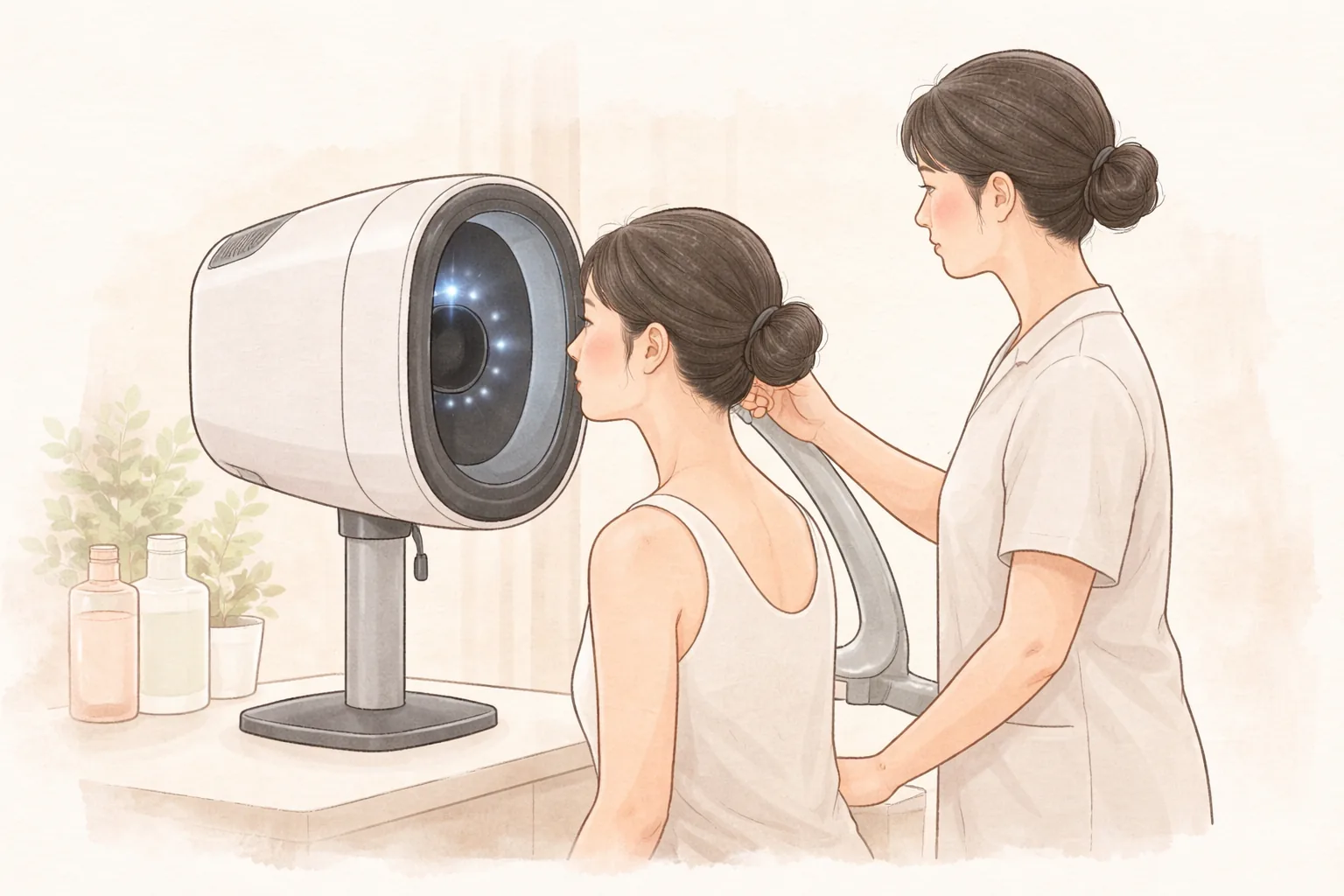
AI skin analysis record — Your skin condition is recorded and organized so you and the doctor look at the same information together. The analysis tool is a record-keeping aid for consultation and does not make medical diagnoses.
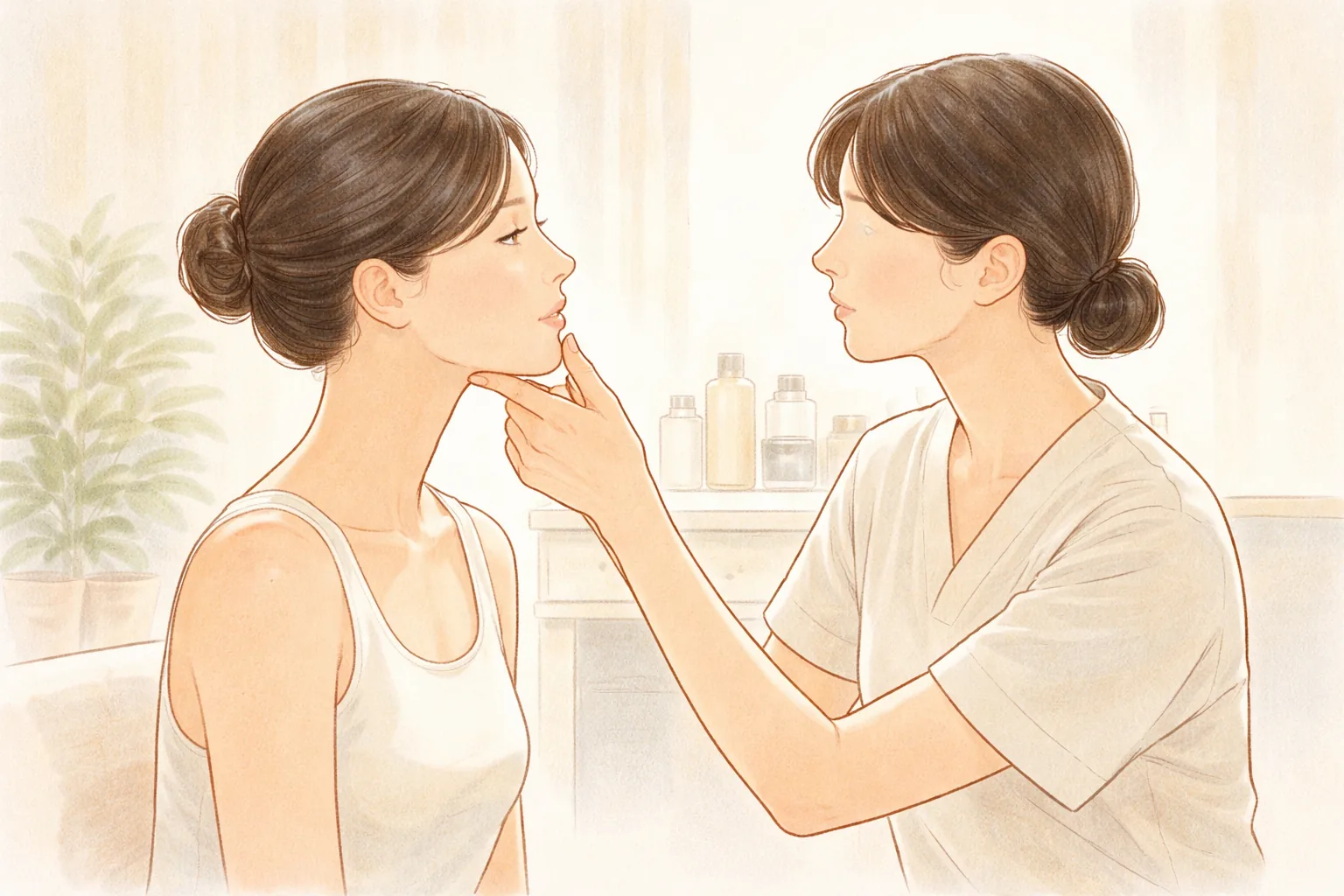
Doctor consultation — Your concerns, lifestyle, and prior treatment history are added to the analysis record, and together you decide which device to use, in what order, and at what intensity. Bringing your previous treatment's device, shot count, kJ, product, dosage, and date helps the review.
Treatment performed by the doctor — The doctor performs the treatment according to the plan set in consultation, adjusting intensity based on your skin's response during the session. This flow is designed to keep the design and the execution aligned (why do results differ even with the same treatment?).
Follow-up and management — For families where change emerges gradually, progress is checked at set points, and the timing of your next visit is guided by those results.
Lifting options include Ultherapy, Shurink, Thermage, XERF, Onda (face and body), and Titanium (face and body) (treatments and pricing). We work with authentic products and verified dosages, and pricing is published per unit so you can check before your consultation.
Aftercare and side effects
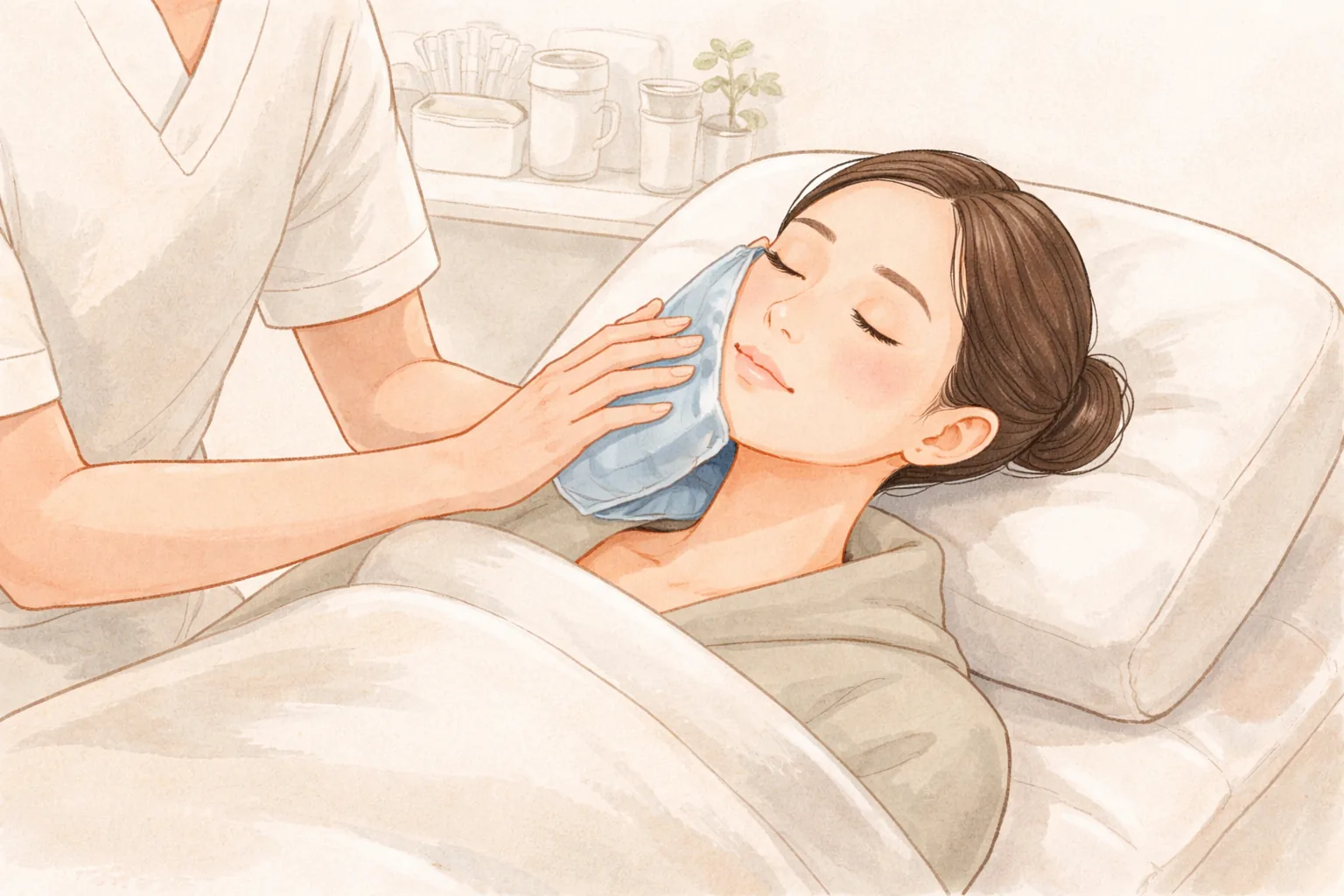
Soothing — On treatment day, heat is still present, so cold compresses may help with swelling. Follow the medical team's instructions for the method.
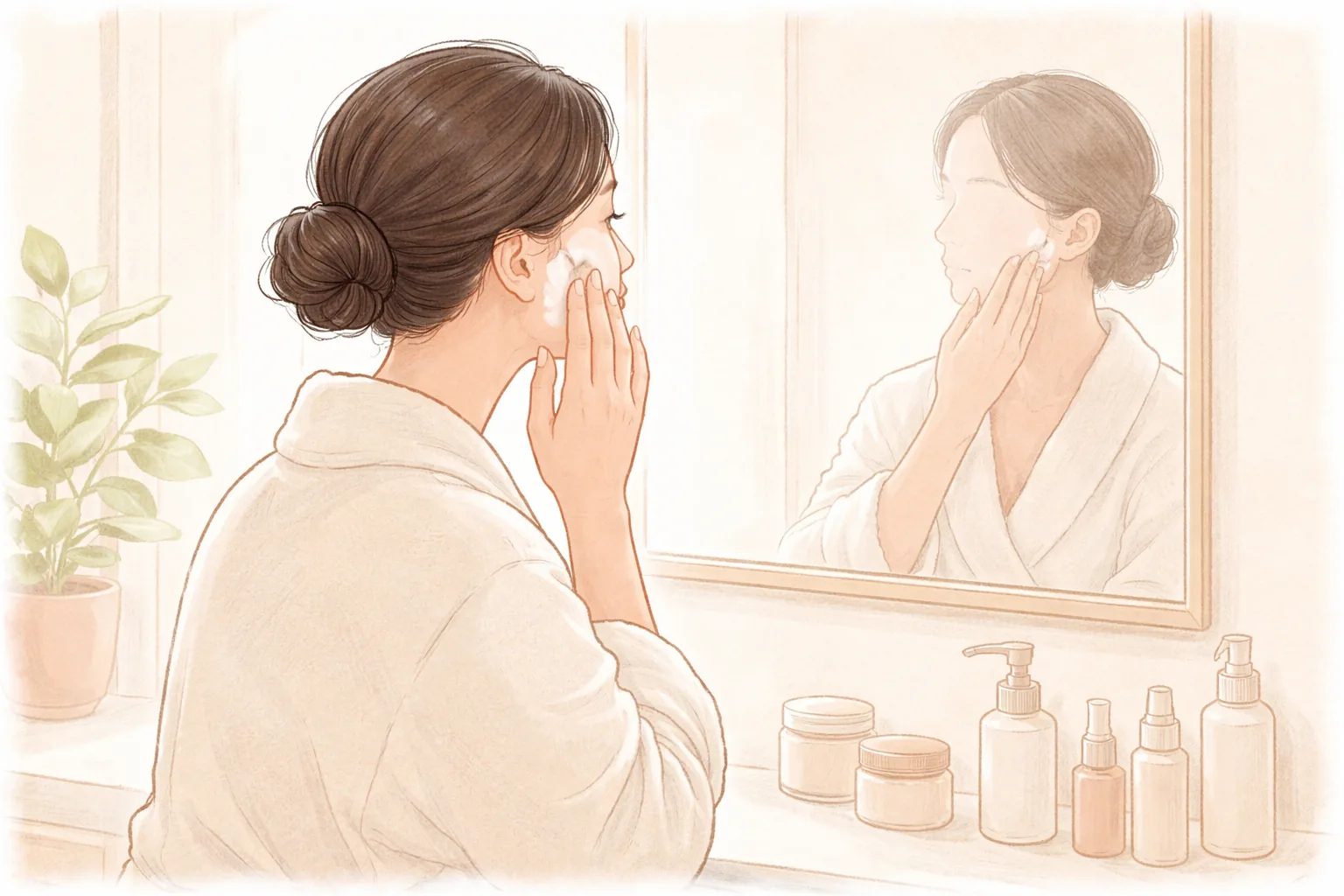
Moisturizing — Heat-stimulated skin tends to dry out, so moisturize more frequently than usual.
Sun protection — For a few days after treatment, the skin's barrier is temporarily weakened. Applying sunscreen more carefully than usual helps you recover without pigmentation.
Follow-up — For families where change emerges gradually, progress is checked over several months. The timing of your next visit is set based on how things progress.
It's best to avoid saunas, strenuous exercise, and alcohol on treatment day, and most people can return to daily life including makeup starting the next day.
Side effects, from common to rare: redness, swelling, tenderness along the jawline when pressed, small bruises, and temporary numbness or reduced sensation — usually settling within a few days. Rarely, burns, blisters, small scars, temporary facial muscle weakness, or unwanted fat volume loss can occur. If you notice something unexpected — blisters, or pain that keeps worsening — don't wait; seek medical care.
Frequently asked questions
When do lifting results start to show?
The timeline differs by energy family. According to the American Academy of Dermatology, non-invasive lifting typically produces gradual lifting and tightening over 2–6 months from a single session, and additional sessions may yield better results. RF lifting often gives an immediate tight feeling after 1 session, with the best results around 6 months (American Academy of Dermatology). Ultrasound, when it produces change, usually develops gradually over 2–3 months, while RF shows an initial firm feeling followed by further change over 2–6 months (ATTITUDE Clinic column). When you actually feel it depends on your regeneration speed and the settings used.
Is thermage flx painful?
It varies widely with energy level and nerve density by area. Even the same treatment feels very different at high energy for significant sagging versus low energy for prevention. By area, the jawline, cheekbones, forehead, and eye area are relatively sensitive, while thicker areas like the cheeks feel less so. If you're sensitive, it's best to discuss anesthesia options and intensity adjustments in advance of your treatment.
Can I get face and body treated?
It depends on the device. Onda and Titanium offer separate face and body options, so the same device can continue to broad areas like the arms, thighs, or abdomen (treatments and pricing). Ultrasound, which targets depth from the dermis to the SMAS, is mainly used for localized deep sagging like the jawline or eye area. Which device fits each area is decided in consultation.
Can I go back to my daily routine the same day?
Non-invasive methods leave the skin intact — no incisions or wounds — and temporary redness and swelling are usually the only traces afterward (American Academy of Dermatology). That said, it's best to avoid saunas, strenuous exercise, and alcohol on treatment day, and most people can return to daily life including makeup starting the next day. How much redness and warmth remain depends on the energy level.
What should I look for when choosing a lifting clinic?
The American Academy of Dermatology advises that consulting a board-certified dermatologist is the safest approach, and since the cost isn't covered by insurance, it recommends asking upfront how much it will be (American Academy of Dermatology). In Korea, it's worth checking whether per-unit pricing is published before treatment, whether the doctor you consult with is the one who performs the treatment, and whether your prior treatment history is reviewed to redesign the combination and sequence. It's hard to rank clinics by device name alone.
At a glance
Table 2 At a glance
Item
Key point
How types are divided
Energy source and reach depth — ultrasound (focused to a point), RF (broad heating), microwave, 3-wavelength laser
Ultherapy · Shurink
Thermal points at set depths from dermis to SMAS; used for deep, localized sagging
Thermage · XERF
Broad heating from dermis to subcutaneous layer; used for broad loss of firmness from cheeks to neck
Onda · Titanium
Categorized as microwave and 3-wavelength laser; face and body options offered together
When change appears
Differs by family; usually gradual over 2–6 months, with wide individual variation
This article offers general health information. It is not a substitute for diagnosis or treatment based on your own condition, so please talk through your situation with a doctor.