Melasma Laser Treatment and Fractional Laser: How to Decide Order and Interval
A guide to combining laser toning and erbium fractional laser: what determines the order and interval, what to watch out for in melasma-prone skin, and how to care for your skin afterward.
Written by ATTITUDE Clinic Editorial Team
A common question in consultations: "Toning is supposed to be gentle, so can I have it on the same day as fractional laser?" and "How does recovery change if I switch the order?" The two treatments do different things in the skin, so the criteria for overlapping days and intervals differ. Here we explain what is within the usual range and what determines the outcome.
The bottom line first
Combining the two treatments is not unusual. Fractional laser is described as a treatment that can be combined with other skin treatments (DermNet's fractional laser guide), and low-fluence toning has also been reported in combination with other treatments (PMC review). However, overlapping both treatments at full intensity on the same day increases the recovery burden. So the order is set by whether pigmentation or texture and pores is the priority, and the interval is spaced according to how fast the skin recovers. Both treatments rarely finish in one session, so planning over several months is realistic.
How do toning and fractional laser differ in what they do in the skin?
Laser toning uses a 1064nm Q-switched Nd:YAG laser at low energy, passed over the skin multiple times. Energy is delivered in very short pulses to break melanin pigment into fine particles, which the body gradually clears. The principle is selective photothermolysis (targeting energy to the target while sparing surrounding tissue). The name "toning" distinguishes it from a single strong strike; it is a low-fluence, multiple-pass approach that avoids overstimulating pigment cells.
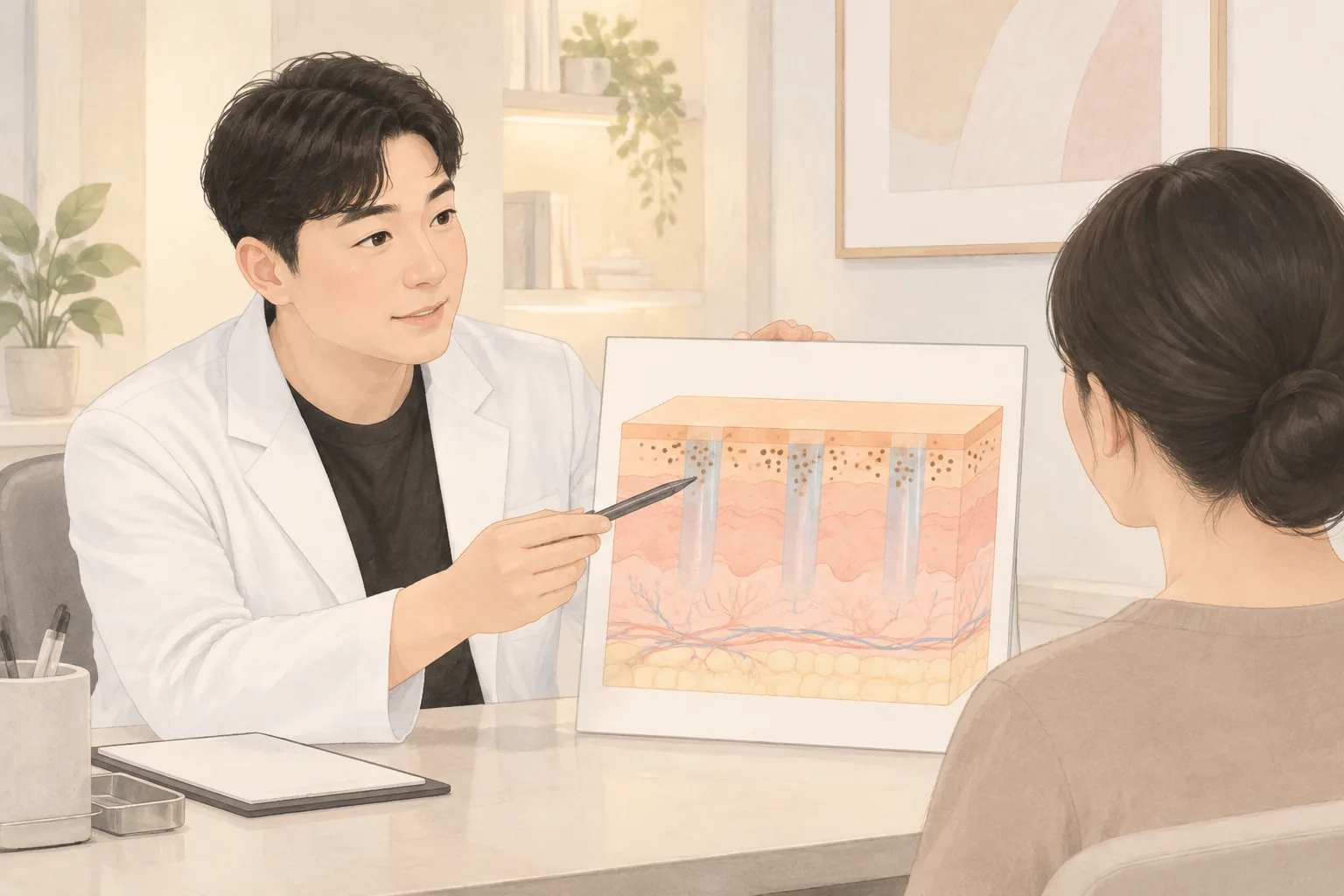
Fractional laser takes a different approach. It splits light into thousands of thin columns, creating microthermal treatment zones (MTZ) in the skin. Within these zones, epidermal pigment is pushed out and dermal collagen is newly produced. The healthy tissue between zones remains to aid recovery, so healing is faster than fully resurfacing the skin at once (DermNet). Even among fractional lasers, erbium:YAG targets shallower layers, while CO2 targets deeper ablation.
So the two treatments target different things. Toning targets pigment; fractional laser targets tissue structure and texture. This is why combining them raises the expectation of addressing two concerns at once.
Is it okay to add fractional laser alongside gentle toning?
Since toning is gentle, it's natural to think it can be combined with fractional laser. But one thing is missing: both treatments leave heat and inflammatory responses in the skin. Toning is low-intensity, so the response is brief; fractional laser creates micro-wounds and fills them with new skin. If the two stimuli overlap before recovery is complete, the skin has double the work.
In pigment-prone skin, the order requires more care. Fractional laser on skin with already sensitized pigment cells, such as melasma, can cause post-inflammatory hyperpigmentation (DermNet). This means a treatment started to lighten pigment can backfire and make it darker. Conversely, repeating toning too frequently has been reported to cause mottled hypopigmentation, so at ATTITUDE Clinic's column, toning is usually performed at intervals of at least 1 week.
What determines the outcome is not whether to combine but which treatment gets time for the skin to respond first.
What determines the order and interval?
The first criterion is what the skin's main issue is right now. If spots and melasma are noticeable, address pigment first; if pores and scars are more concerning, put fractional laser first. ATTITUDE Clinic's column also gives the example of addressing pigment first when spots and pores are both concerns, then adding fractional laser for texture and pores.
The second is the type of pigment. Melasma involves overactive pigment cells, so using strong energy at once can easily cause rebound. Therefore, for melasma, repeated low-energy toning is the baseline, along with addressing underlying causes. Shallow pigment with clear borders, like sun spots, is approached differently.
The third is skin thickness, sensitivity, and the time available for recovery. Even at the same power, thinner or more sensitive skin shows a stronger response. The fourth is energy level; for fractional laser, recovery ranges from a few days to 2 weeks depending on this level.
What interval is typical? Fractional laser is often planned for 3–5 sessions at 4–6 week intervals, and acne scars for 4–6 sessions at 4–8 week intervals. Melasma toning is continued for 8–12 or more sessions at intervals of at least 1 week. These numbers are common examples; actual session counts and intervals are determined after examining the skin. Cost also varies by combination; the list price for one erbium fractional session is KRW 330,000, all amounts exclude VAT, and toning pricing varies by type and number of sessions (Treatments and pricing).
Table 1 What determines the order and interval?
Category
Target
Suitable concerns
Recovery characteristics
Laser toning (pico, Genesis)
Melanin pigment
Melasma, uneven tone
Redness and stinging from a few hours to the same day
Erbium fractional low power
Micro-zones in epidermis and dermis
Pores, texture, shallow scars
Redness and sandpaper-like texture for 3–5 days
Erbium fractional high power
Same zones, deeper and stronger
Acne scars, deep scars
Swelling, oozing, crusts for 7–14 days
Pico spots
Shallow pigment spots
Spots with clear borders
7–10 days if crusts form
Swipe sideways to see the whole table.
In summary When combining toning and fractional laser, the criterion is not the date but the priority. If the skin is pigment-sensitive, address the base with toning first, then add fractional laser; if structure is the main concern, put fractional laser first and use toning for maintenance. Either way, avoid plans that increase the intensity of both treatments on the same day.
If this applies to you
When a wedding or photo shoot is 2–3 months away
Fractional laser takes 3–14 days for recovery, with results building gradually over 3–4 months. Counting backward from the event, schedule the last fractional session about 2 months before, and use toning to refine tone in the remaining time. If you tell us the date first, we adjust intensity and start timing accordingly.
When melasma is also present and pigment is the main concern
Melasma is prone to rebound from strong stimulation, so repeated low-energy toning is the baseline. Overlapping ablative fractional laser at the same time risks darkening the pigment, so the sequence is to add texture treatment after the pigment is stable. Without sun protection, any sequence yields short-lived results.
When pores and scars are the main concern
In this case, put fractional laser first and complete sessions at 4–6 week intervals. Whether to insert toning in between is decided based on how well recovery has progressed. Scars vary in depth and shape, so if fractional laser alone is insufficient, other methods may be combined.
When your schedule is short and you need to fit treatments into a few days
If your stay is short, focus on lower-intensity toning and schedule fractional laser on days when recovery time is available. Returning to daily life immediately after high-power fractional laser is difficult due to redness and crusts. If you tell us your length of stay and return date during consultation, we will determine a feasible combination within that time.
Please tell us before consultation Recent UV exposure (travel, outdoor activities, tanning), medications you are taking and cosmetic ingredients you are using (including retinol, vitamin C, exfoliants), any previous redness or hyperpigmentation after laser or peeling, and unavoidable schedules such as weddings, photo shoots, or business trips. If your skin is stinging or sensitive, please mention it before treatment.
How ATTITUDE Clinic proceeds
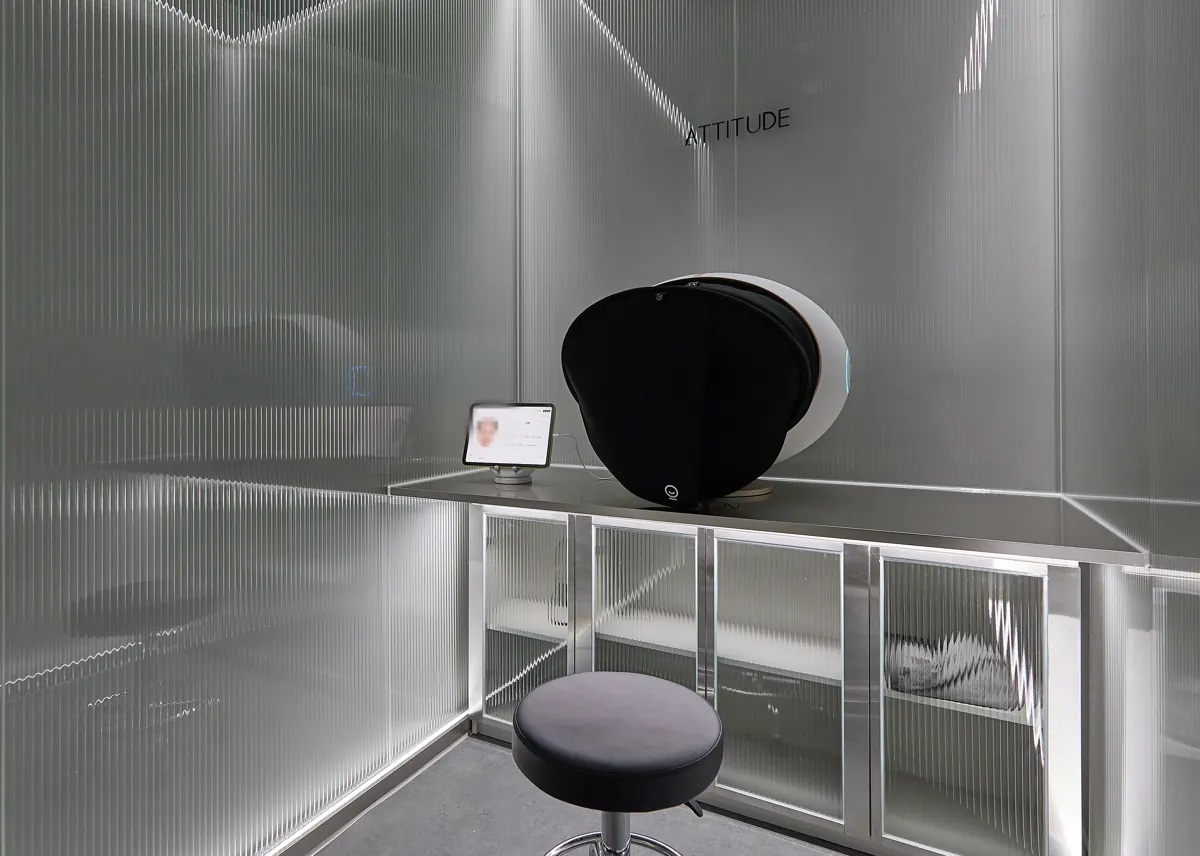
Precision diagnosis and skin analysis We record your skin condition with devices and review pigment distribution, texture, and redness together. The analysis tool records and organizes the condition to support consultation and does not make a medical diagnosis.
Doctor consultation and priority setting Adding lifestyle, schedule, and pain sensitivity to the records, the doctor examines pigment type and determines the necessary treatments and order. We do not pre-set excessive session counts or intensity.
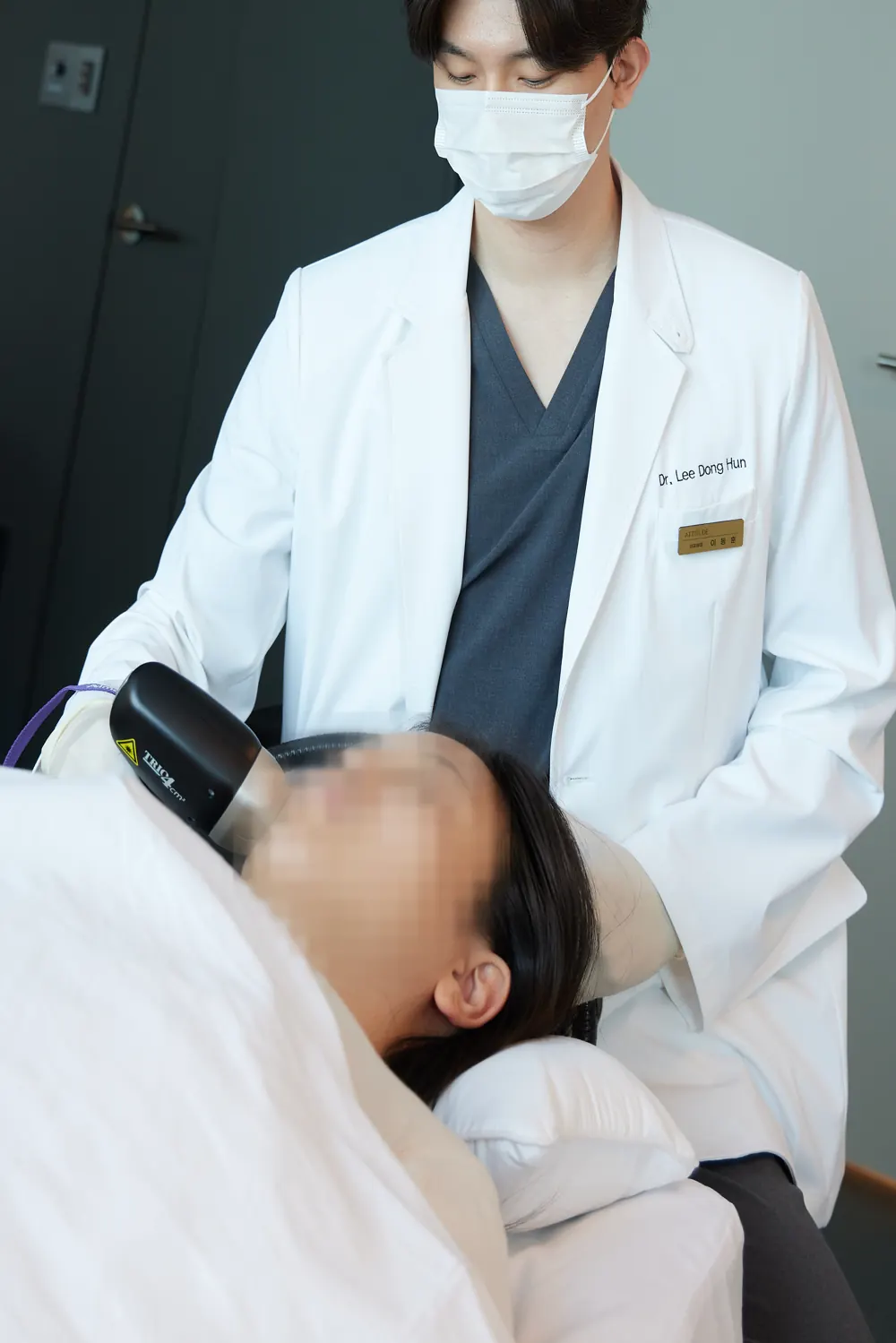
Doctor-performed treatment The doctor selects the appropriate device among PicoPlus, Genesis toning, Vbeam, and erbium:YAG laser, and adjusts intensity and combination. Topical anesthesia may be used to reduce discomfort.
Recovery and care We explain immediate reactions and precautions, and adjust the next interval based on recovery progress. We follow the principles of authentic products, proper dosage, and standard pricing, providing only what is needed.
Four steps your doctor sees to in person
From the diagnostic device to the treatment bed, the doctor you first consult takes care of everything.
01
Precision diagnosis
In a private diagnosis room the whole face is photographed, recording even skin conditions that are hard to see with the eye.
02
Skin analysis
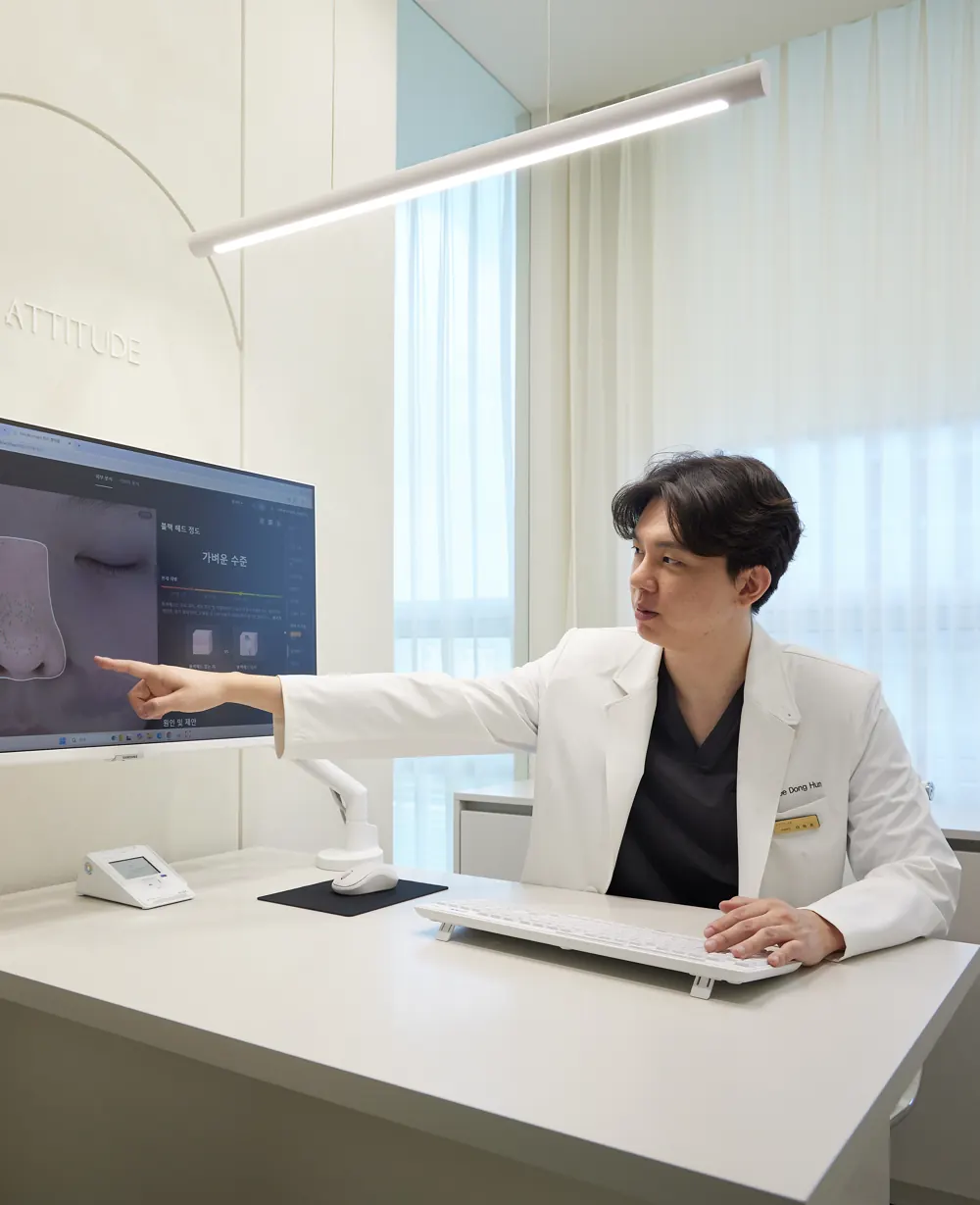
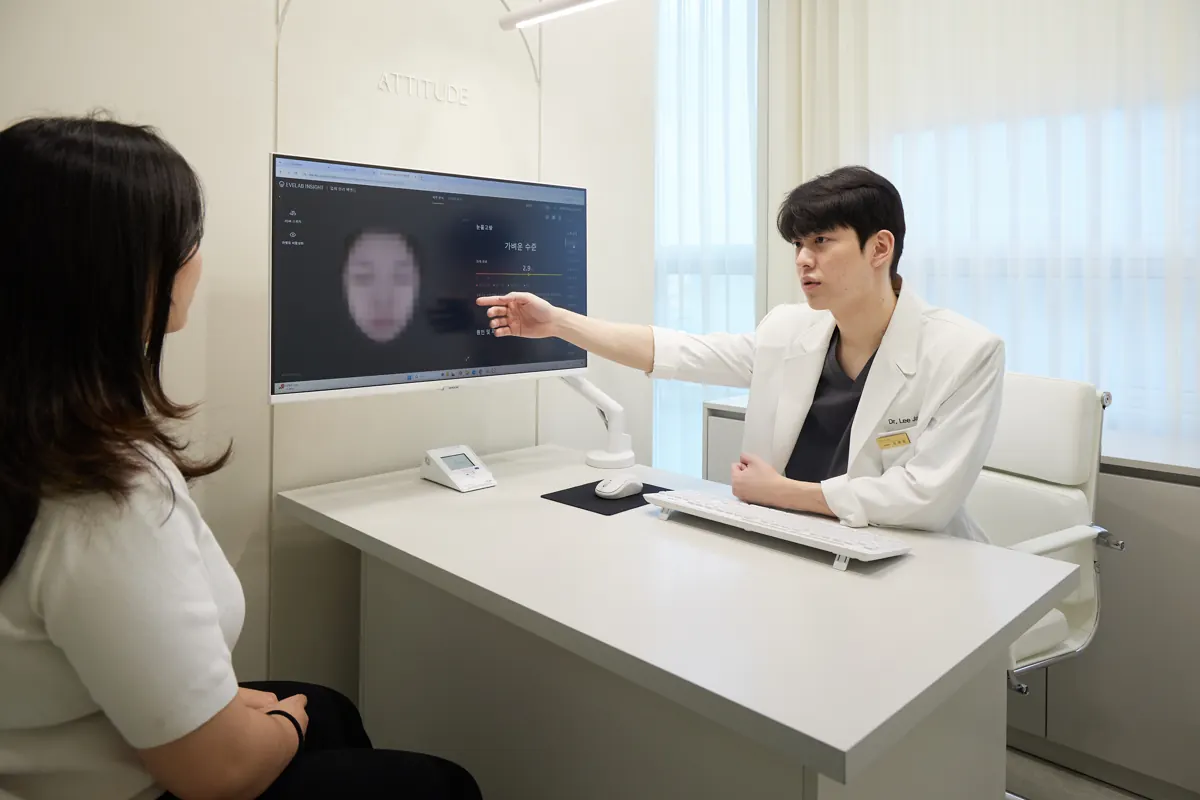
The doctor goes through your pore, pigmentation, wrinkle and firmness results with you on screen and explains what comes first.
03
One-to-one design
With your skin, the balance of your face, the change you want and your schedule in view, you decide the treatment and its extent together.
04
Treatment by your doctor
The doctor who consulted you performs the treatment from start to finish in a private treatment room. No one takes over halfway.
“I take injection pain seriously.”
Co-Director Dr. Lee Dong Hun
Many people hesitate over injection treatments because they hurt. So we went back over everything, from the anesthetic to the products used.
Careful numbing, unhurried timingWe allow plenty of time for a special numbing cream to take full effect, and add anesthetic injections for the treatments and areas that need them.
Fine needles, finished quicklyInjection treatments use fine needles, and the doctor finishes them personally in a short time, adjusting along the way by watching how you are doing.
Even the product formulation countsThe same treatment can feel more or less demanding depending on the product, so we take that into account too.
The anesthetic method and whether it is used are decided after an examination, according to the treatment, the area and your condition. How much it hurts varies from person to person.
Aftercare and side effects
Soothing Heat remains in the skin immediately after treatment. Wash gently with lukewarm water and pat dry with a towel without rubbing.
Moisturizing During recovery, apply moisturizer frequently so the barrier does not dry out. Avoid saunas, jjimjilbangs, and strenuous exercise for 1–2 weeks.
Sun protection For at least 2 weeks after treatment, apply SPF 50+ sunscreen and reapply every 2 hours outdoors. If crusts form, do not pick them off with your hands.
Monitoring For several days, check whether redness and stinging are decreasing and whether any areas of pigment are darkening.
Common reactions include redness, heat sensation, swelling, and stinging. After ablative laser, thin crusts may form and pigment may temporarily appear darker. Rarely, blisters, hypopigmentation (lightening), infection, scarring, or delayed hyperpigmentation may occur. If redness or stinging lasts more than 3 days or suddenly worsens, it is safer to visit for a check rather than endure it.
Frequently asked questions
Can I have toning and fractional laser on the same day?
It is a possible combination, but avoid increasing the intensity of both on the same day. Toning reactions are brief (a few hours to the same day), while fractional laser takes 3–14 days for recovery. If done on the same day, lower the intensity of one and postpone the one requiring recovery. If your skin is sensitive or you have had recent UV exposure, separating the dates is better.
Which should I do first?
It depends on what concerns you most about your skin right now. If pigment is the priority, address the base with toning first, then add fractional laser; if pores and scars are the priority, put fractional laser first. If melasma is present, consider adding ablative treatment after the pigment is stable. Changing the order changes recovery time and pigment response, so decide together in consultation.
How long should the interval be?
Toning is typically at least 1 week apart, and fractional laser 4–6 weeks apart. When increasing intensity for acne scars, intervals may be extended to 4–8 weeks. These numbers are examples based on skin recovery time; when the two treatments overlap on the same area, do not apply the shorter interval as is. Adjust the next date based on progress.
When can I wash my face and apply makeup after fractional laser?
It depends on whether the intensity caused crusts. If crusts are present, avoid rubbing and exfoliating until they fall off, and wash gently with lukewarm water. Makeup should be decided based on recovery, so it is best to follow the instructions given on the day of treatment. During recovery, keeping your routine simple with just a cleanser and moisturizer is less irritating.
What should I look for when choosing a clinic?
Look at the content of the consultation rather than the device list. Criteria include whether they first identify whether your concern is pigment or texture, whether they recommend only necessary treatments without fixing session counts and intensity in advance, and whether they sufficiently explain pain, recovery schedule, and aftercare precautions. It is also good to check whether the clinic can see you if you have discomfort after treatment.
At a glance
Table 2 At a glance
Item
Key point
Role of the two treatments
Toning targets melanin pigment; fractional laser targets epidermal and dermal structure and texture
Possibility of combining
Fractional laser is described as a treatment that can be combined with other skin treatments
Criteria for order
Current main concern, pigment type, skin thickness and sensitivity, time available for recovery
Common intervals
Toning at least 1 week apart; fractional laser 4–6 weeks (acne scars 4–8 weeks)
Combination to avoid
Overlapping ablative fractional laser on melasma-sensitive skin
Key aftercare
Do not pick crusts; SPF 50+ for 2 weeks; avoid heat stimulation
The degree of individual variation is large, depending on how much pigment is spread in which layer and how fast the skin recovers. Therefore, session counts and intervals are determined by examining the skin at the first consultation and adjusted according to progress.
This article offers general health information. It is not a substitute for diagnosis or treatment based on your own condition, so please talk through your situation with a doctor.