Pico Laser for Melasma and Post-Hair-Removal Pigmentation: What to Check First
How pigmentation after laser hair removal happens, how to set the order and spacing when it overlaps with treating facial spots and melasma, and which reactions need a clinic visit.
Written by ATTITUDE Clinic Editorial Team
Some people are startled to find the area where they had underarm or upper-lip hair removal looks darker afterward. If facial spots are also on your mind, it is confusing to know whether hair removal or a pigment laser should come first. The clues lie in what the light targets, how skin tone and hair color divide the outcomes, and which reactions mean you should be seen.
The short answer first
Laser hair removal targets melanin in the follicles that produce hair. But the melanin that gives skin its color absorbs the same light too. According to Mayo Clinic material, darkening or lightening at the treated site is usually temporary but can rarely persist, and risk depends on skin tone, the treatment plan, and how well aftercare instructions are followed (Mayo Clinic). When hair removal and spot treatment are planned for the same area, the order and spacing are decided first. If redness or heat lasts longer than expected or blisters form, it is better to come in rather than wait for the next appointment.
What does the light target?
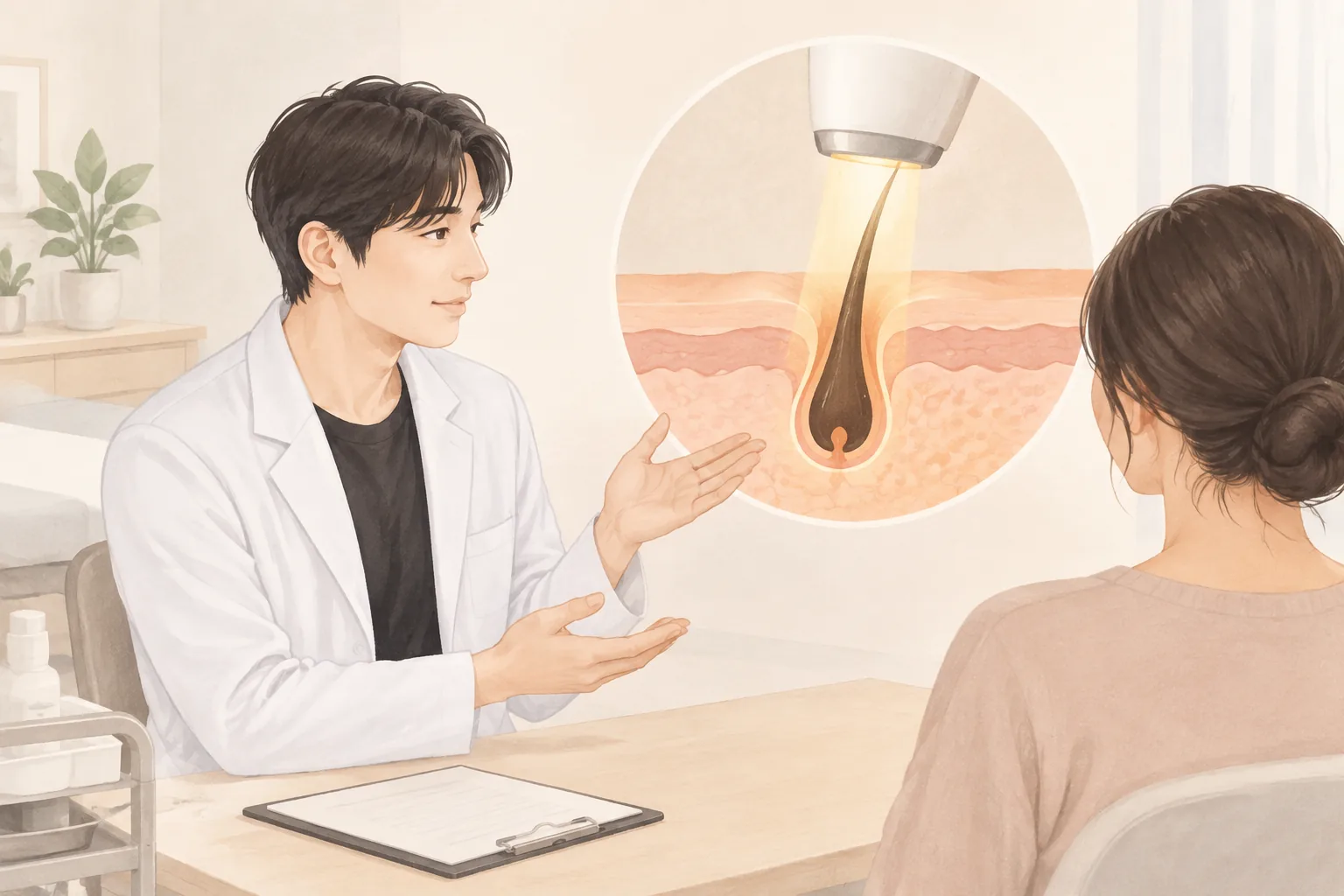
The basic principle of dermatologic lasers is selective photothermolysis (light of a specific wavelength is absorbed only by the target substance and converted into heat). The ATTITUDE Clinic column also explains devices on this principle. In hair removal, that target substance is melanin in the follicle. As light turns into heat, it damages the follicle, and hair growth slows as a result (Mayo Clinic).
The target of a hair removal laser is melanin in hair, but melanin in skin absorbs the same light too. That is why the contrast between hair color and skin color divides outcomes so much. The clearer the contrast, as with dark hair on light skin, the better the response; blond, white, or gray hair has less pigment and responds less. Red hair has a different type of melanin and cannot absorb enough laser energy.
Darker skin contains more melanin. Because skin absorbs that light along with the target even under the same beam, which device is used and at what strength becomes more sensitive. Mayo Clinic notes that people with black or brown skin can also have hair removal when performed by an experienced clinician, and explains that choosing the device type and settings matters to protect the skin while treating hair.
The American Academy of Dermatology describes hair removal lasers as targeting strong light at the follicle, and advises that having a consultation beforehand and following clinician instructions closely help reduce the risk of side effects (AAD). A consultation is not a formality; it is where skin tone and hair color, medications, and recent tanning are checked.
Why does the treated area look darker?
A common face of visible brown change is post-inflammatory hyperpigmentation. It is a state in which melanocytes respond to the heat and inflammatory stimulation from treatment by making more color. The ATTITUDE Clinic column also explains that temporary pigmentation can occur especially when skin is dark or tanned.
Color that darkens after treatment usually fades with time, but rarely it lingers. So why does it develop in some people and not others? Skin that has had a lot of sun recently or has used self-tanning products already has activated melanocytes, so it responds more sensitively to stimulation. This is why the American Academy of Dermatology advises telling your clinician about recent tanning and whether you scar easily before treatment.
Pigment lasers follow the same principle. Using strong energy all at once on spots or melasma can stimulate pigment cells and cause rebound pigmentation that actually gets darker. Melasma in particular is approached with lower energy in multiple divided sessions to reduce stimulation.
What divides the outcome?
More than the device name, settings and spacing divide the outcome. Even with the same hair removal laser, energy must be adjusted to skin tone, and repeating the same area before recovery is complete piles burden on the skin barrier. The ATTITUDE Clinic column notes reported cases linking frequent toning to mottled hypopigmented patches, and explains that toning intervals are usually at least 1 week, adjusted by laser type and skin condition.
UV exposure is another variable. Even if laser reduces pigment, missing UV protection lets pigment rise again in newly made skin. Right after treatment the skin barrier is temporarily weakened, so protection is even more urgent than usual.
Always tell your clinician about recent tanning or self-tanning before treatment. The American Academy of Dermatology advises avoiding tanning both outdoors and indoors and not using self-tanning products as pre-treatment instructions.
Table 1 What divides the outcome?
Treatment
Target
Concern it suits
Common recovery response
Laser hair removal
Melanin in the follicle
Hair density and thickness
Redness, swelling, stinging usually settle within a few hours
PicoPlus
Pigment
Spots, melasma
Low-power toning: redness same day; high-power spot: crust about 7–10 days
Vbeam
Superficial vessels
Redness, flushing
Redness and swelling for a few days; bruising takes 1–2 weeks to fade
Erbium YAG laser
Skin surface
Texture, keratin, shallow scar texture
Redness and dryness, thin crust for a few days
Swipe sideways to see the whole table.
In summary Hair removal aims at melanin in hair, while pigment lasers aim at melanin in skin. Because the targets overlap, when the two treatments overlap on the same area, the first step is to stagger their recovery periods.
When they overlap, how is the order set?
The upper lip and chin are places where hair removal and spot lasers often overlap. Doing both on the same area on the same day stacks redness, crusting, and sensitized skin all at once. The ATTITUDE Clinic column explains that when several causes overlap, dividing priorities rather than doing everything at once reduces skin burden.
Hair removal does not end in one session. Mayo Clinic notes that most people need multiple sessions and occasional additional treatments for maintenance. So rather than setting pigment treatment and hair removal schedules separately, place them on the same calendar and arrange the spacing.
The eyelids, the area around the eyebrows, and skin with tattoos are not hair removal targets. These are the restricted areas Mayo Clinic specifies, so confirm the location precisely in consultation. It also helps to know that when excessive hair is caused by an underlying condition such as a hormonal disorder, hair removal does not treat the cause and new hair may keep growing.
If this sounds like you
When a wedding or shoot is a few weeks away
Booking a first-time treatment right before a wedding lets redness or crusting collide with your schedule. If you give the date first, the treatment type and intensity can be set by counting backward from that day. For high-power treatments with longer recovery, it is more comfortable to push them after the event.
When you want to manage upper-lip and chin hair removal along with spots
The face is a narrow area, so the two treatments easily overlap. Decide in consultation whether to clear pigment first or run the hair removal cycle first, and delay the same area until recovery is complete. If the period when UV protection is needed overlaps with hair removal, talk through outdoor plans as well.
When your skin reddens easily or is sensitive
If cosmetics sting or redness lingers, stronger settings are easy to slip into. Telling your clinician about that state beforehand shifts the plan toward lower intensity or later timing. In sensitive skin or rosacea (a condition with redness and heat), where skin reactivity itself is high, laser effects may be limited.
Visitors on a short stay
If your return date is fixed, adjust intensity so recovery does not run past your schedule. To avoid boarding a flight with redness and dryness still present, it is better to leave a buffer between the treatment day and departure day. Setting the next visit time together keeps your care from breaking off.
Tell us before consultation Tanning and outdoor activity within the last 2 weeks, medications you take and topical medications or exfoliating products, any experience of unusual sensitivity after a previous treatment, a tendency to scar easily, and unavoidable events such as a wedding or shoot.
How ATTITUDE Clinic proceeds
AI skin analysis record Current skin condition such as pigment, redness, texture, and pores is recorded with a device. The analysis tool records and organizes information to support consultation and does not make a medical diagnosis.
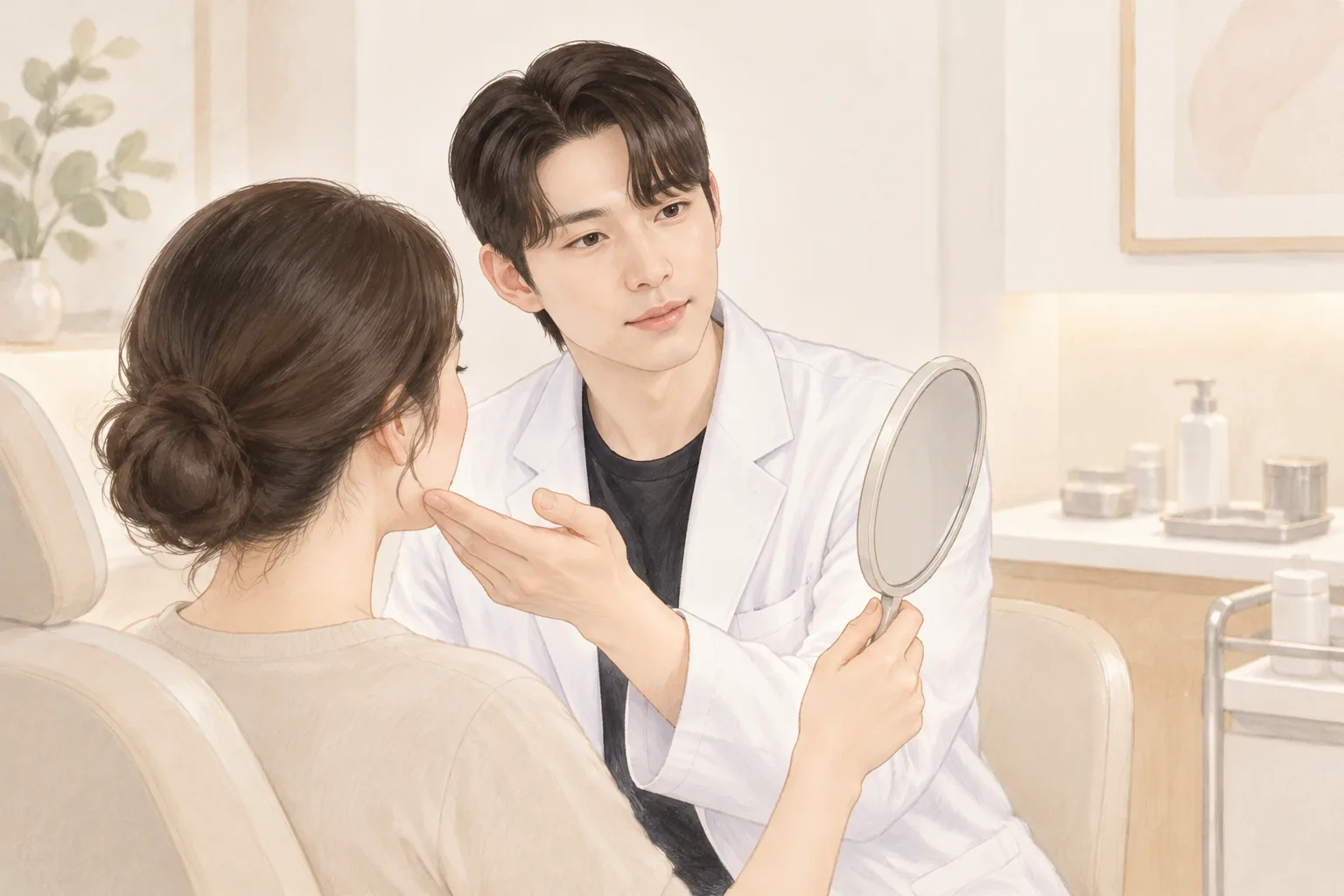
Doctor consultation and type assessment Adding your schedule, pain sensitivity, medications, and past treatment responses to the record, the doctor examines your skin directly and judges the cause of your concern. Whether the hair removal area and pigment area overlap, and which should come first, are also decided here.
Treatment by the doctor The device is chosen to match the concern — for example, PicoPlus for pigment, Vbeam for superficial vessels and redness, and Erbium YAG laser for skin surface and shallow scar texture — and the doctor adjusts intensity. More sessions than necessary are not recommended.
Follow-up and management Response after treatment is checked and the next interval is adjusted. The principle is not to book the same area again before recovery is complete.
Four steps your doctor sees to in person
From the diagnostic device to the treatment bed, the doctor you first consult takes care of everything.
01
Precision diagnosis
In a private diagnosis room the whole face is photographed, recording even skin conditions that are hard to see with the eye.
02
Skin analysis
The doctor goes through your pore, pigmentation, wrinkle and firmness results with you on screen and explains what comes first.
03
One-to-one design
With your skin, the balance of your face, the change you want and your schedule in view, you decide the treatment and its extent together.
04
Treatment by your doctor
The doctor who consulted you performs the treatment from start to finish in a private treatment room. No one takes over halfway.
“I take injection pain seriously.”
Co-Director Dr. Lee Dong Hun
Many people hesitate over injection treatments because they hurt. So we went back over everything, from the anesthetic to the products used.
Careful numbing, unhurried timingWe allow plenty of time for a special numbing cream to take full effect, and add anesthetic injections for the treatments and areas that need them.
Fine needles, finished quicklyInjection treatments use fine needles, and the doctor finishes them personally in a short time, adjusting along the way by watching how you are doing.
Even the product formulation countsThe same treatment can feel more or less demanding depending on the product, so we take that into account too.
The anesthetic method and whether it is used are decided after an examination, according to the treatment, the area and your condition. How much it hurts varies from person to person.
Aftercare and side effects
Soothing On the day of treatment, wash with lukewarm rather than hot water, and pat gently instead of rubbing. Avoid saunas, jjimjilbang, and intense exercise during recovery.
Moisturizing If dryness worsens, skin becomes sensitive, so apply the moisturizer you are given consistently. Delay exfoliation and irritating scrubs during recovery.
UV protection For at least 2 weeks after treatment, apply SPF 50+ sunscreen, and reapply about every 2 hours outdoors.
Checking progress If crusting appears, leave it until it falls off on its own.
For 2 weeks after treatment, UV protection is the window that protects your result. If protection is missed during this period, pigmentation can develop in newly made skin and undo the treatment effect.
Common responses are redness, heat, swelling, and stinging. After hair removal these changes usually settle within a few hours. Surface treatments such as pigment spot lasers or Erbium YAG laser leave thin crusting, and high-power pico spot crust lasts about 7–10 days. Vbeam can cause bruising, which takes 1–2 weeks to fade.
Rarely, hypopigmented patches where skin lightens, blisters, infection, or scarring can occur, or pigment can rise again over time. Do not touch crusting; leave it until it falls off on its own.If redness or pain lasts more than 3 days or suddenly worsens, do not endure it — come in.
Frequently asked questions
How long does pigmentation after laser hair removal last?
According to Mayo Clinic material, darkening or lightening at the treated site is usually temporary but rarely persists. Recovery speed varies with skin tone, treatment intensity, and aftercare, so it is hard to state a uniform period. If redness lasts long or color gradually darkens, it is better to keep a record of progress and check it at a visit.
Can I have upper-lip and chin hair removal and a spot laser on the same day?
Overlapping two treatments on the same area brings redness, crusting, and sensitized skin all at once. If the areas are separate, a combination can be set in consultation, but for overlapping areas it is safer to delay one until the other has recovered. Hair removal assumes multiple repeat sessions, so plan the schedule with a longer view. At consultation, point precisely to the areas where you want both treatments and first check whether they overlap. If they do, deciding on the spot which comes first and how long to leave before the next treatment keeps your schedule from tangling.
How are melasma and spots different?
Melasma tends to have indistinct borders and spread widely, with hormones, UV, and heat stimulation acting together. Spots arise from cumulative UV and aging, often with relatively clear borders and concentrated in the epidermal layer. It is also common for the two to overlap visually, so it is hard to tell at home, and which pigment it is is judged by examination.
How should skin with pigmentation be managed?
According to American Academy of Dermatology material, effective treatment of brown spots and pigmentation starts with understanding why the color appeared (AAD). Keep UV protection as the baseline, and avoiding strong exfoliation and tanning helps recovery. New or growing moles, and moles that change shape or color, should be checked at a visit before cosmetic treatment.
What should I look at when choosing a clinic?
Before the device list, check whether the clinic confirms before treatment whether your concern is pigment, vessels, or skin surface. Also see whether it recommends only needed treatments, does not rigidly pre-set session counts and intensity, and sufficiently explains pain, recovery schedule, and precautions at consultation. Whether you can be checked there if something is uncomfortable after treatment should also be part of your criteria.
At a glance
Table 2 At a glance
Item
Key point
Target of hair removal laser
Melanin in the follicle; skin melanin absorbs the same light
Pigment change
Usually temporary, rarely long-lasting
Conditions that raise risk
Recent tanning, settings not matched to skin tone, repeating before recovery
Areas not treated for hair removal
Eyelids, around the eyebrows, skin with tattoos
Key after treatment
UV protection for 2 weeks, do not touch crusting
Signs that need a visit
Redness or pain for more than 3 days, blisters, spreading crust
This article offers general health information. It is not a substitute for diagnosis or treatment based on your own condition, so please talk through your situation with a doctor.