Pico Laser for Sensitive Skin: Barrier Stability Decides Suitability
How barrier stability, not skin type, decides whether pico laser treatment suits dry, sensitive skin, plus before-and-after barrier care, common reactions and when to check in.
Written by ATTITUDE Clinic Editorial Team
If you have sensitive or dry skin and you are researching pico laser treatment, you have probably run into the warning that 'the stimulation is too strong and the pigment actually gets darker.' That raises the real questions: can my skin handle it right now, and if so, what decides the settings and the interval? This article walks through the criteria that determine whether pico laser treatment suits dry, sensitive skin, and how to protect the skin barrier before and after a session.
The conclusion first
Having sensitive skin does not mean pico laser treatment is off the table entirely. Suitability depends less on the label 'sensitive' and more on whether your skin barrier is currently stable and whether active inflammation or redness has settled (ATTITUDE Clinic column). While dryness and stinging remain, lowering the energy and spacing sessions further apart reduces the burden. Adjusting strength and timing by looking at the type and depth of pigment together with how your skin responds afterward is what shapes the result (pigment column).
What does pico laser treatment do inside the skin?
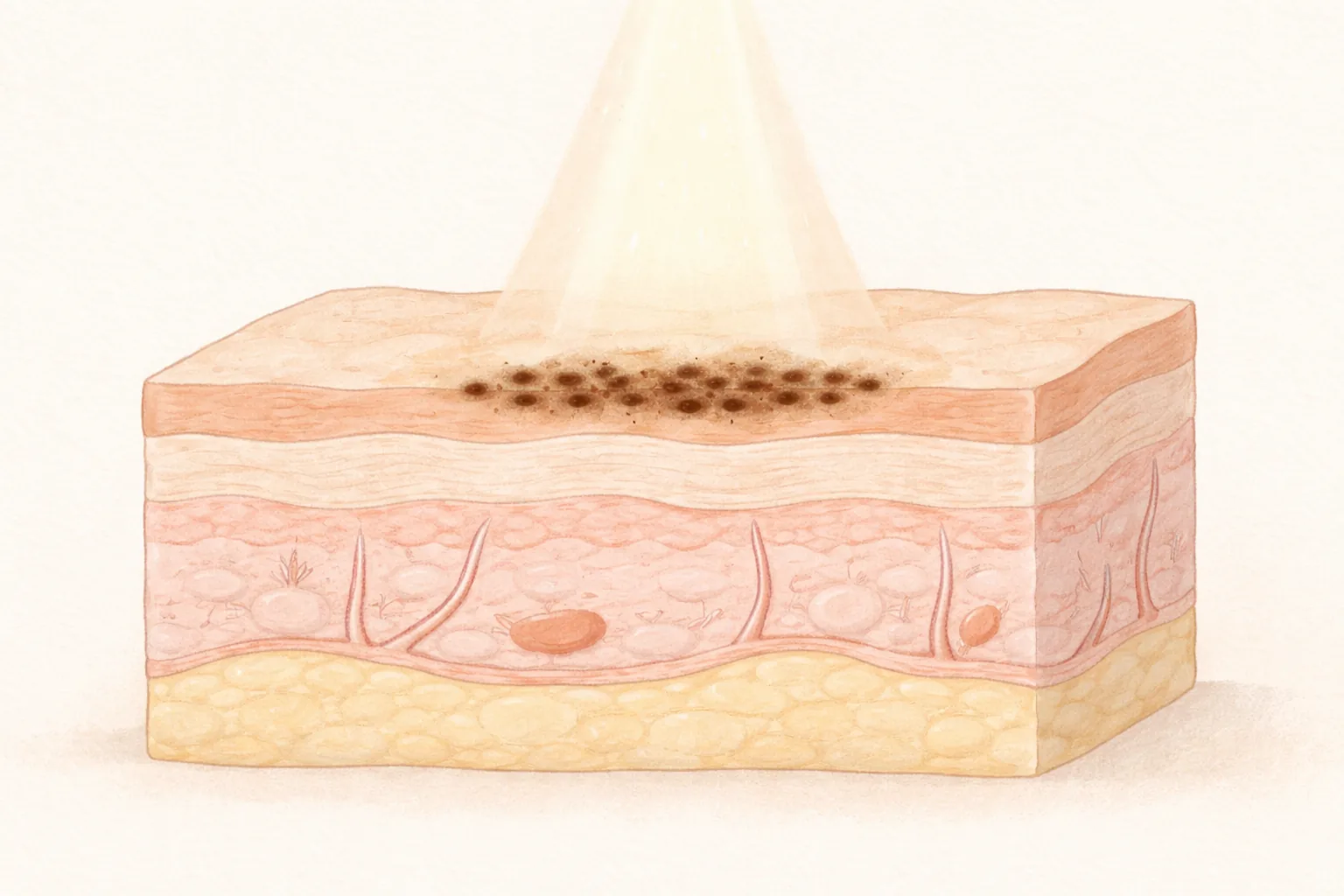
Pico laser treatment uses the fact that melanin pigment selectively absorbs light at a specific wavelength. Put simply, it gathers energy into the pigment while touching surrounding tissue less, and this is called selective photothermolysis (a principle designed so energy is absorbed only by the target pigment while reducing damage to surrounding normal skin). The ATTITUDE Clinic column also explains that picosecond-family lasers, which use this principle, are used for pigment concerns, while fractional-family lasers, which induce regeneration after micro-injury, are used for skin structure concerns (laser column).
'Picosecond' means the time the light is switched on and off is as short as 1 trillionth of a second, far shorter than the nanosecond used in conventional toning. The shorter the pulse, the less heat spreads to the surroundings and the more finely pigment particles can be broken up. But the name 'toning' does not mean there is no stimulation at all. Because it repeats low energy many times, it tends to be less burdensome than a strong pigment laser, but on skin that has become sensitive, even that level of energy can be felt as heat stimulation.
Why look at the barrier first, especially with dry, sensitive skin?
The skin barrier is the outermost layer of the stratum corneum. If you picture a brick wall, the corneocytes are the bricks and the lipids filling the spaces between them are the mortar. According to Cleveland Clinic material, this structure acts as a defense barrier that holds in moisture and blocks chemicals and bacteria (skin barrier). When this barrier breaks down, skin becomes dry and flaky, and stinging and sensitivity develop easily.
Dry skin is medically called xeroderma, meaning skin becomes rough because it lacks moisture (dry skin). As you age, the sebaceous glands that produce oil decline, and dry climates or cold wind also strip moisture. According to Cleveland Clinic guidance, moisture in the skin naturally decreases with age, oil secretion drops significantly around age 40, and by around age 60 most people have dry skin (facial dry skin).
The problem comes when laser heat is added to a weakened barrier. Skin with a damaged barrier keeps an inflammatory response going longer even to the same stimulation, and there is a greater risk of reactive pigmentation, where pigment becomes temporarily darker from stimulation. That is why, in a phase where dryness and sensitivity remain, stabilizing the barrier comes before the procedure itself.
What ultimately decides suitability?
First is whether the barrier is currently stable. If tightness is severe even after washing, flaking is noticeable, and products you normally use sting, it is better to delay. According to Cleveland Clinic guidance, applying moisturizer within 5 minutes of washing is the basic habit that reduces this kind of dryness (facial dry skin).
Second is whether active inflammation and redness have settled. While the face feels hot or redness is flaring, laser heat can make the redness worse, so you calm it first and then set the timing.
Third is the type and depth of the pigment. Melasma and blemishes may look similar on the surface but differ in the layer they sit in and their cause, so the same laser with the same settings can give different results. The ATTITUDE Clinic column also explains that with melasma, using strong energy all at once can stimulate pigment cells and make it darker, so the basic approach is repeated management with low energy (pigment column). For pigment that responds to UV, hormones and heat stimulation, lowering the intensity and combining cause management reduces the burden.
Fourth is recent UV exposure, medications and cosmetics you are taking or using, and past experiences of sensitivity after previous procedures. The ATTITUDE Clinic column notes that based on this information, even the same procedure shifts in timing and settings (laser column).
Age is also a variable. With age, oil and collagen decrease and skin thins, making dryness worse (dry skin). However, rather than age itself deciding suitability, how much the barrier has recovered right now becomes the practical criterion.
Table 1 What ultimately decides suitability?
Device
Target
Concerns it suits
What to watch with dry, sensitive skin
PicoPlus 1064nm toning
Melanin pigment
Melasma, widespread pigment, dullness
Low-energy repetition is the baseline, and the interval is adjusted by recovery speed
Pico spot 532nm
Epidermal pigment
Sharply defined blemishes, freckles
Scabs may form on the surface, so dry skin needs moisturizing care alongside
Vbeam 532nm
Blood vessels
Redness, shallow vessels
If redness is active, delay and approach after calming
Erbium YAG laser
Skin surface
Skin texture, tidying flaking and pores
It has a micro-peeling character, so post-treatment dryness and redness may last several days
Swipe sideways to see the whole table.
In summary
What decides whether pico laser treatment suits dry, sensitive skin is not the skin type label but whether the barrier is stable right now. Distinguishing the type and depth of pigment first, then proceeding with low energy and generous intervals while checking the response, reduces the burden.
Situations like these
When a ceremony or shoot is coming up
If a first-time procedure overlaps with redness or skin that has become sensitive, it becomes a burden on your schedule. The more you count backward from the date and start with leeway, the more options you have for adjusting intensity and type (laser column). If the date is close, it is better to check options with short recovery first during consultation.
In a dry season or indoor environment
Environments with low humidity or strong wind, such as winter, strip moisture from the skin and weaken the barrier (facial dry skin). During this period, keep your moisturizing routine simple even before the procedure and watch whether dryness lasts long afterward.
Skin that flushes easily
If your face turns red and the heat lingers even with slight stimulation, laser heat can worsen the redness. First calm the condition with soothing and moisturizing, then approach with low settings in a phase where redness is stable.
Short-stay international visitors
If your stay is fixed, redness or dryness right after the procedure can affect your travel schedule. Telling the clinic your return date and next plans in advance lets them adjust intensity and timing accordingly (laser column).
Tell us before your consultation
It helps to decide timing and settings together if you tell us in advance about recent UV exposure, medications and cosmetics you take or apply (especially retinol and acidic ingredients), past experiences of skin sensitivity after procedures, and important events such as ceremonies, shoots or travel.
How ATTITUDE Clinic proceeds
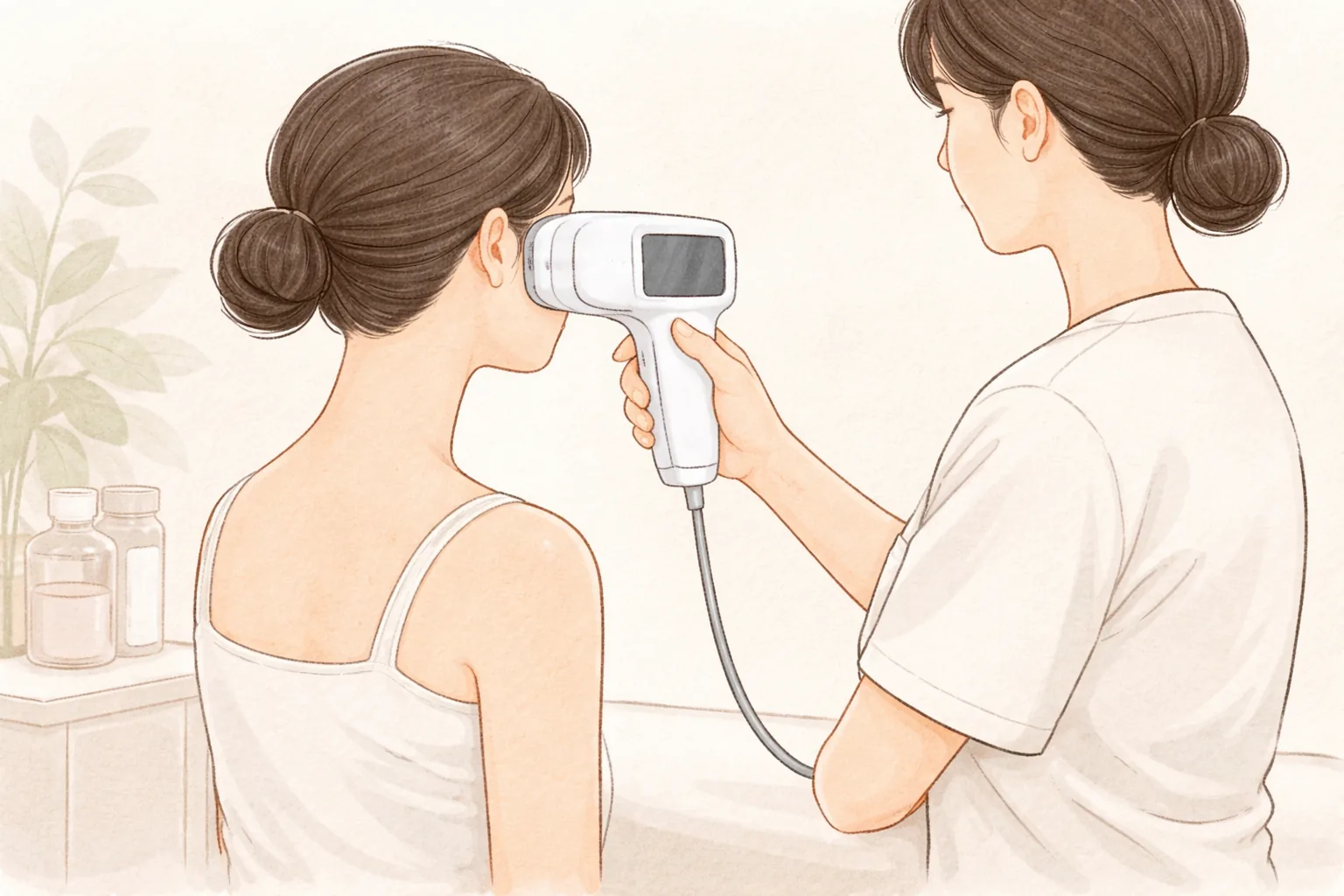
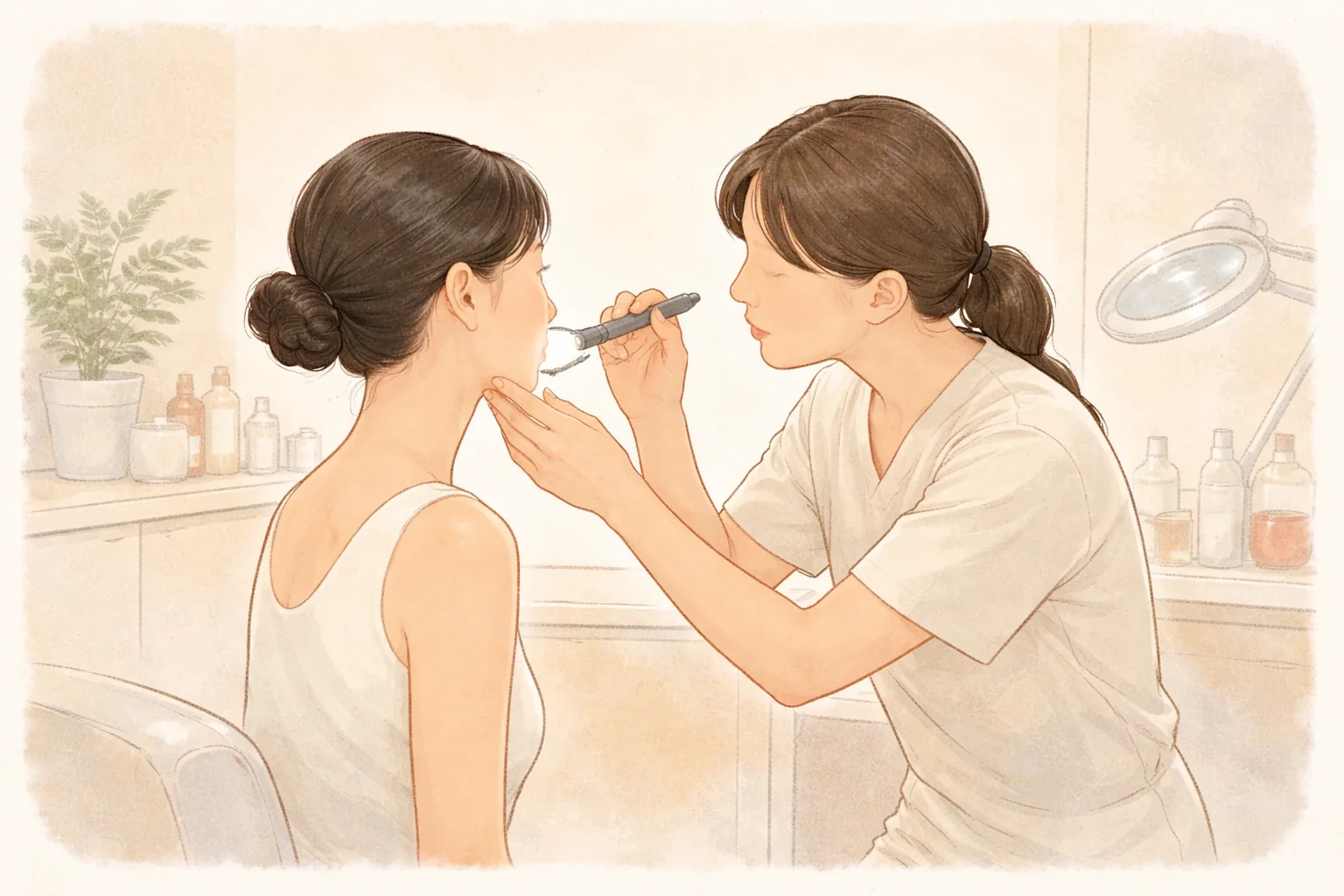
AI skin analysis record — Skin condition is recorded and organized to support consultation. The analysis tool organizes information and does not make a medical diagnosis. Pigment type is judged by the doctor through examination (pigment column).
Direction set in doctor consultation — Lifestyle habits, UV exposure, medications being taken and your concerns are added to the analysis record to determine which pigment it is and in what order to approach it.
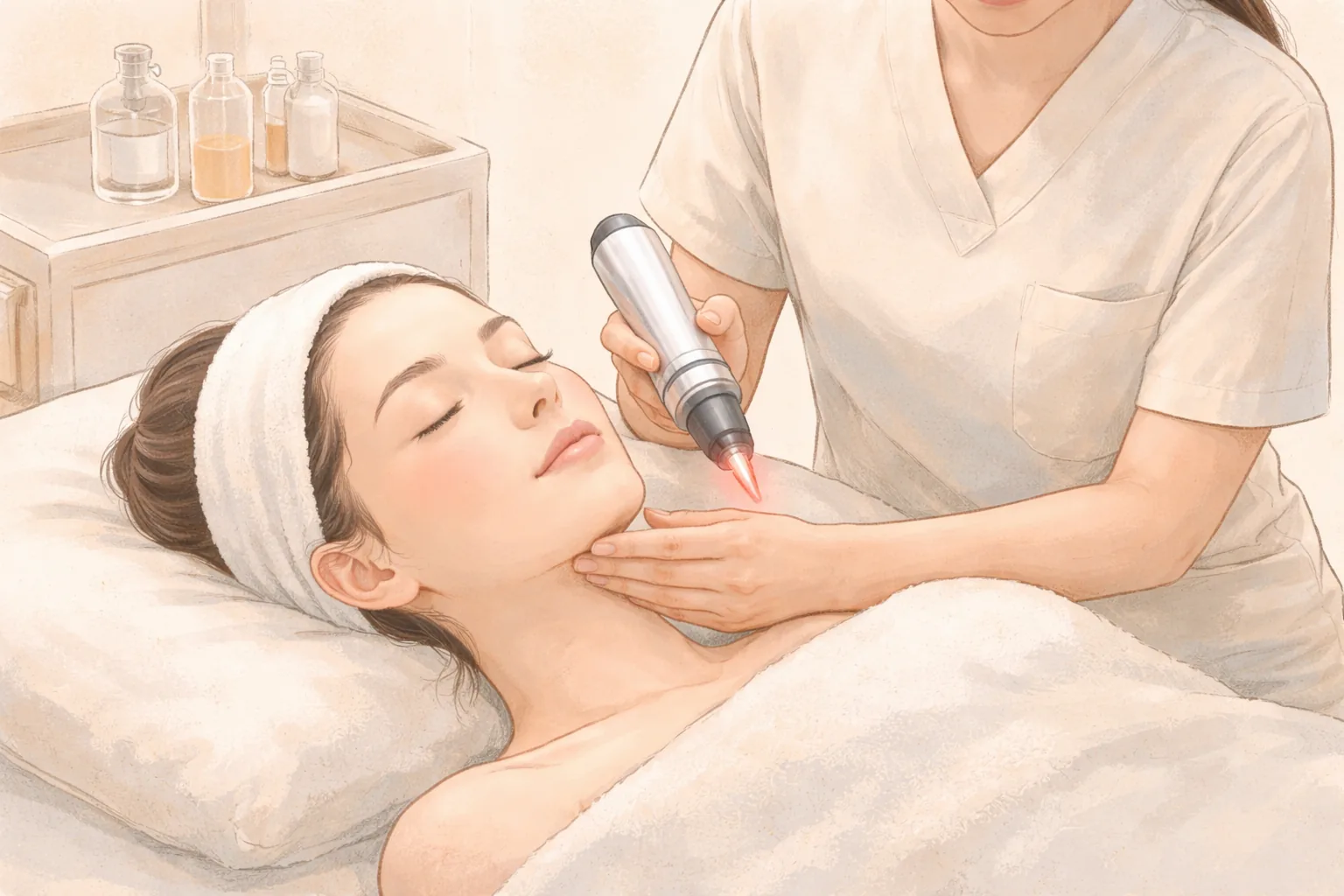
Doctor-performed procedure — Among the devices on hand, the one matching the pigment type and skin condition is chosen, and the doctor personally adjusts the intensity and combination (pigment column).
Recovery and care check — The next session's intensity and interval are adjusted based on post-treatment response. The principle is not to recommend more sessions than necessary (laser column).
For devices handling pigment and redness, the clinic has a picosecond laser (PicoPlus 1064nm), a 532nm vascular laser (Vbeam), an erbium YAG laser and Genesis toning (laser column). For dry skin, care that supports post-treatment moisturizing is also guided, and which device at what intensity is decided in consultation.
Aftercare and side effects
Calming — Right after the procedure, avoid washing with hot water, saunas and hot compresses, and wash gently with lukewarm water.
Moisturizing — Applying a moisturizer containing ceramides or hyaluronic acid within 5 minutes of washing helps the barrier recover (facial dry skin).
UV protection — Right after the procedure, the skin's defense barrier is weak, so UV protection is especially important. The ATTITUDE Clinic column recommends applying SPF 50+ sunscreen for at least 2 weeks and reapplying about every 2 hours outdoors (laser column).
Checking progress — If a scab forms, do not pick at it and let it fall off on its own. If redness or heat lasts longer than expected, do not endure it and come in to be checked.
Common reactions are redness, heat, swelling and stinging, and procedures such as pigment spot lasers or erbium YAG laser can leave thin scabs. Temporary pigmentation may occur or bruising may follow Vbeam, and rarely blisters, hypopigmented spots, infection, scarring or pigment rebound can occur (laser column). Repeating the procedure before recovery is complete, or using intensity too high for the skin condition, can weaken the barrier and leave sensitivity and redness lasting longer, so toning usually keeps an interval of at least 1 week.
Frequently asked questions
Can sensitive skin still get pico laser treatment?
There are cases where it can, but the criterion is not the diagnosis of sensitivity but the current barrier state. In a phase that is stable without dryness or stinging, a low-irritation setting can be used, and if active inflammation or redness is severe, calming comes first. Settings and intervals are usually kept lower and longer than for normal skin to reduce the burden. If redness lasts long after the procedure or pigment darkens, the intensity is adjusted again.
What should dry skin prepare before the procedure?
The most basic thing is to keep your moisturizing habit simple. According to Cleveland Clinic guidance, wash with lukewarm water instead of hot water, use a gentle cleanser rather than an irritating one, and apply moisturizer within 5 minutes of washing (facial dry skin). If you scrub off flaking because you see it, the barrier can become thinner, so caution is needed (skin barrier).
My skin barrier seems weak — when is the right time?
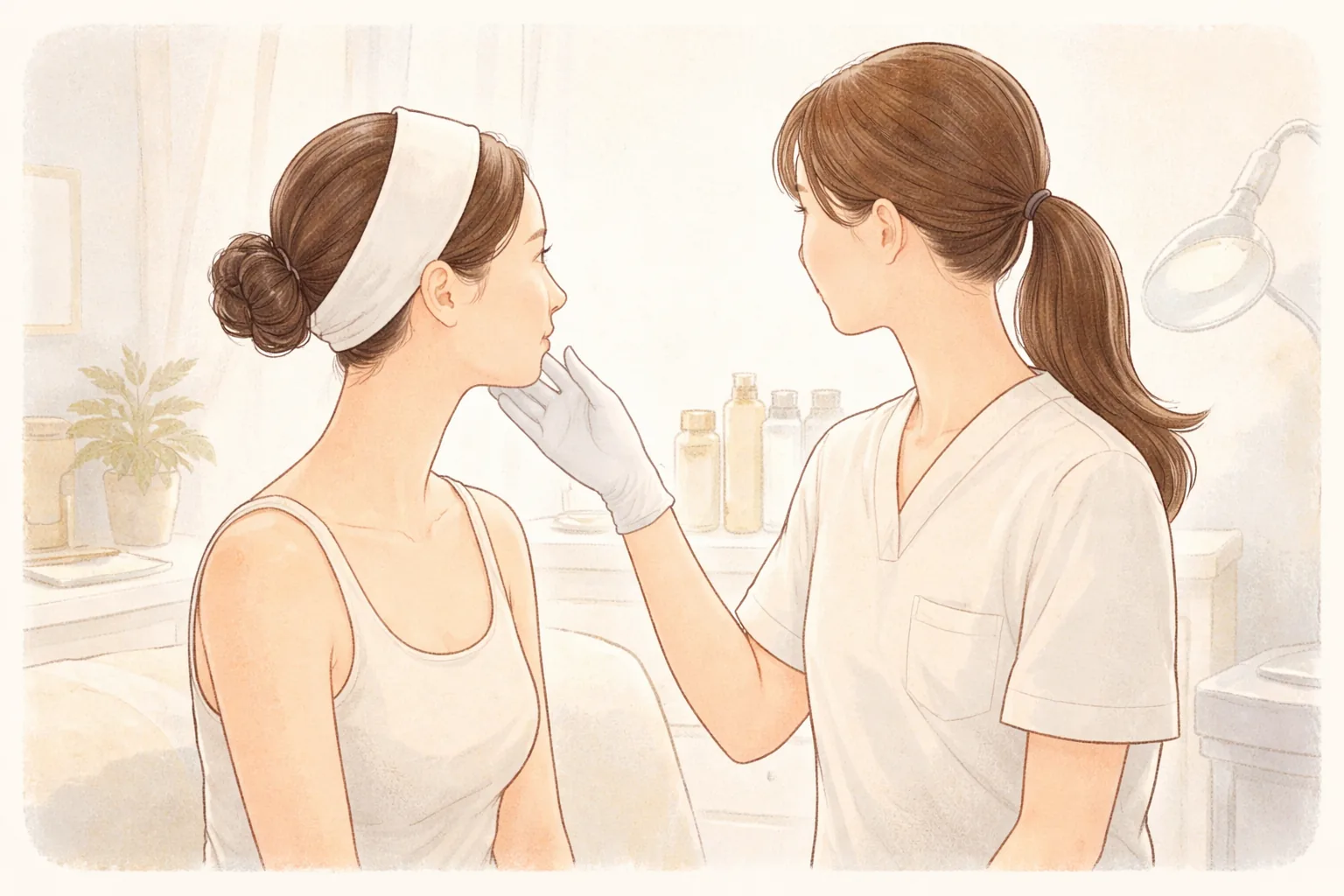
If products you normally use sting or tightness lasts long after washing, it is better to delay. This state is a common sign when the barrier is damaged (skin barrier). Once your skin feels comfortable with moisturizing and soothing, consultation makes it easier to set intensity and intervals. If it is hard to judge, it is safer to have the current barrier state checked first in a pre-procedure consultation. In consultation, talking together about reactions after recent cosmetic use and when your skin became sensitive helps set the timing. Even if your skin feels comfortable, it is good to keep the moisturizing routine until just before the procedure.
How should I handle retinol or exfoliating products before and after the procedure?
Retinol and exfoliating products can make skin dry, so it is common to adjust when you use them before and after the procedure. According to Cleveland Clinic guidance, with retinol there is a way to reduce dryness by using it together with a product that adds moisture, such as hyaluronic acid, and irritating exfoliation can actually create damaged skin (facial dry skin, skin barrier). The pause period and when to restart vary with skin condition and are decided in consultation.
What should I look at when choosing a clinic?
It is better to look at the consultation process than the device list. The criteria are whether they first check whether your concern is pigment, blood vessels or the skin surface, whether they recommend only the procedures needed and do not set an excessive number of sessions, whether they fully explain pain, recovery schedule and post-treatment precautions, and whether it is a place where you can be checked if you are uncomfortable after the procedure (laser column). If your skin is dry, it is also worth checking whether they guide post-treatment moisturizing and UV protection care together.
At a glance
Table 2 At a glance
Item
Key point
Suitability criteria
Whether the barrier is stable right now and inflammation and redness have settled, rather than the skin type label
Procedure principle
Selective photothermolysis, absorbing energy only into pigment, with low-energy repetition
Settings and interval
Lower energy than normal skin, generous intervals, adjusted while checking response
Before the procedure
Simplify moisturizing routine, adjust timing of irritating exfoliation and retinol use
After the procedure
Calming, moisturizing, UV protection, not touching scabs, checking progress
Signs to come in
When redness or heat lasts longer than expected or pain worsens
This article offers general health information. It is not a substitute for diagnosis or treatment based on your own condition, so please talk through your situation with a doctor.