How Many Pico Laser Sessions Do You Need? Timing & Interval Guide
How many laser toning sessions you need — and how far apart — depends on your pigment type and depth, and how fast your skin recovers. Here are common session and interval examples for sun spots and melasma, what to check midway, aftercare and warning signs.
Written by ATTITUDE Clinic Editorial Team
Search for laser toning and most people stop at three questions: how many sessions until spots fade, how long to rest before the next treatment, and whether 1 session shows any change. Pigment varies in both type and depth, so the same device and the same session count can produce different responses. This article covers how pigment type and depth set the number of sessions and the interval, and what to look at before and after treatment.
The short answer first
The number of laser toning sessions and the interval between them are decided less by a number than by pigment type and depth, and by how fast your skin recovers. Shallow spots sitting in the epidermis are commonly cited at 1–3 sessions at 4–8 week intervals, while melasma or widespread pigment is often managed with low-power toning over 8–12 or more sessions, spaced at least 1 week apart. Most lasers don't finish in 1 session, and the body needs time to clear the broken-down pigment while the skin needs time to recover. That's why the first consultation identifies pigment type and depth rather than fixing a session count first.
How does laser toning reduce pigment?
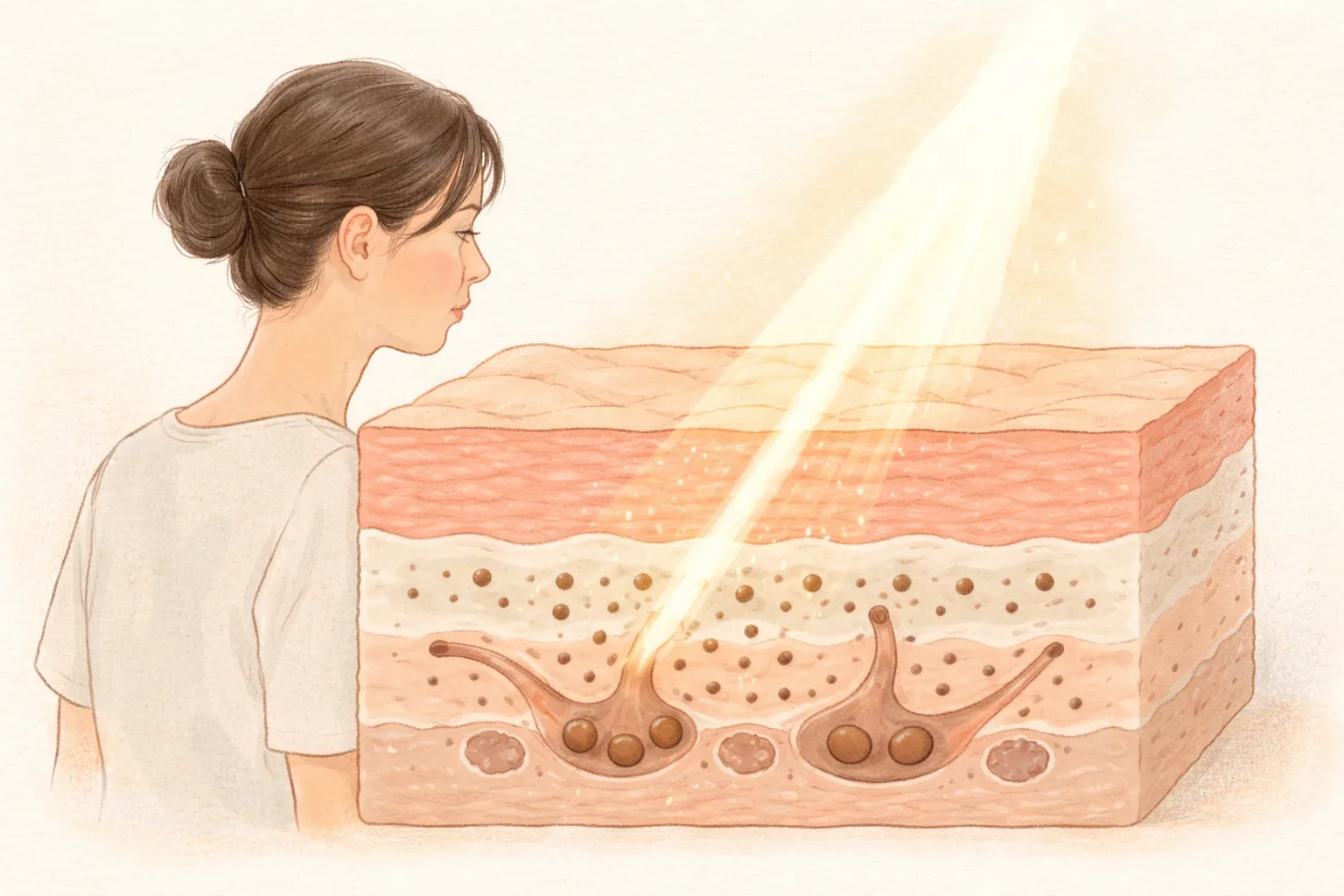
Skin color is driven by how much melanin pigment is present. According to the MSD Manual overview of skin pigmentation, melanin is produced by melanocytes scattered in the basal layer, the deepest layer of the epidermis, and sun exposure, inflammatory conditions and some medications can cause hyperpigmentation. In other words, the spot where pigment starts can sit deeper than the brown patch you see on the surface.
Lasers work by getting melanin to absorb light at a specific wavelength. This is the principle of selective photothermolysis (concentrating energy on a target while leaving surrounding tissue less affected) described in the ATTITUDE Clinic column. The column on lasers and skin thickness explains that each laser has its own target that responds to a given wavelength, so devices are divided between those aimed at pigment and those aimed at red blood vessels — and on the same face, spots come from pigment, redness from vessels, and rough texture from the skin surface.
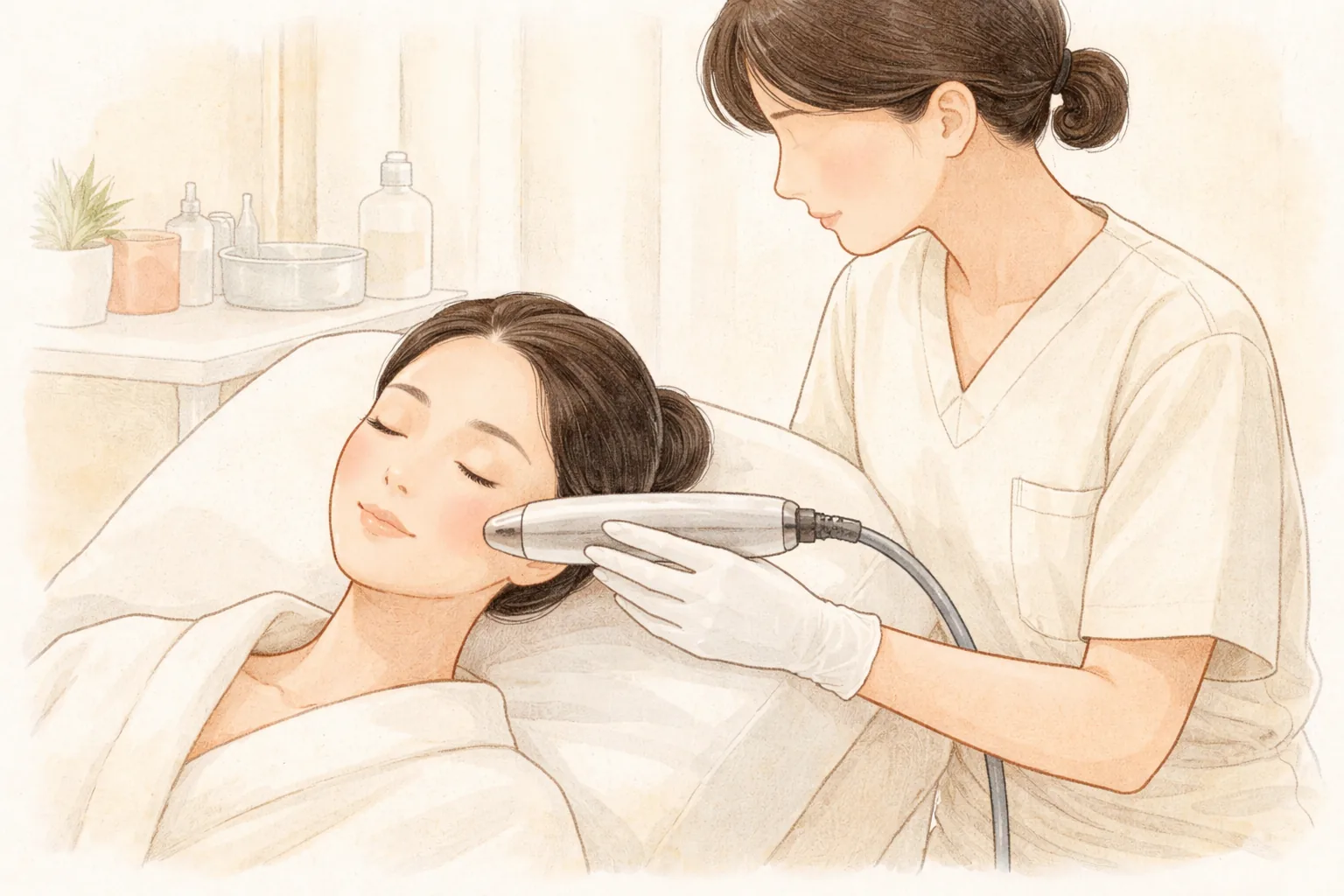
Picosecond lasers are designed so the light pulses on and off in about 1 trillionth of a second, reducing heat spread to surrounding tissue while breaking pigment particles into smaller pieces. The column comparing picosecond and fractional lasers says that for pigment concerns, the approach is to break particles down gradually rather than removing them all at once, giving the body time to clear the fragments. Because each wavelength reaches a different depth in the skin, the settings aimed at epidermal spots and those handling melasma spread into the dermis can't help but differ.
Why are spots and melasma managed with different session counts?
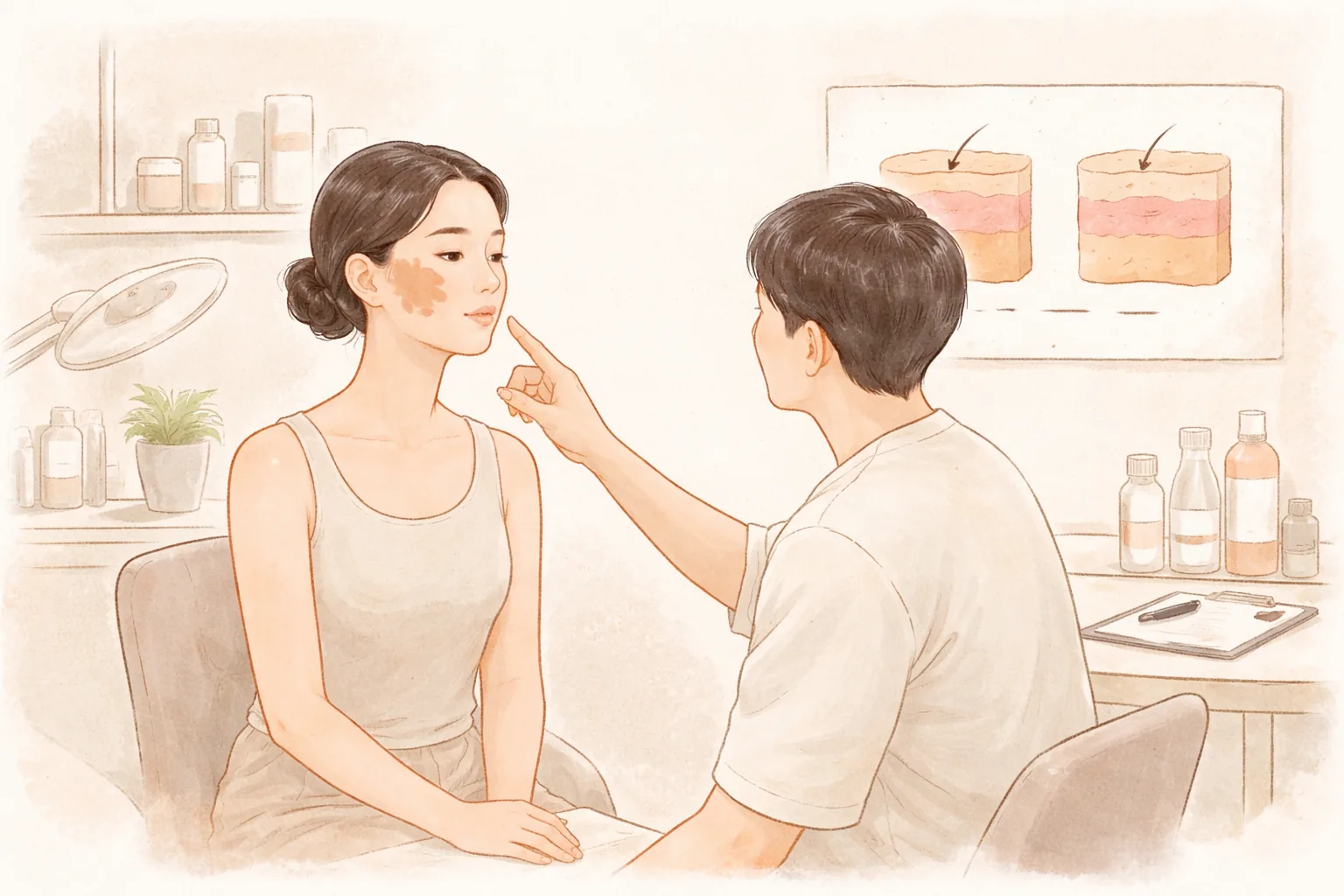
Even brown patches that look similar sit in different layers and have different causes. The column covering melasma, freckles, spots and age spots notes that spots tend to appear relatively distinctly in the epidermal basal layer from accumulated UV exposure and aging, while melasma involves hormones, UV and heat stimuli acting together, leaving pigment cells overactive. Melasma tends to have indistinct borders and spread widely, and is classified as epidermal, dermal or mixed.
This is where the difference in session count comes from. Shallow spots pooled in the epidermis tend to respond relatively quickly, but melasma, where the pigment cells themselves are overactive, can look temporarily lighter after strong energy in one go and then darken as the pigment cells are stimulated into post-inflammatory hyperpigmentation. So melasma is approached by lowering the strength and repeating steadily rather than chasing fast results, alongside sun protection and, when needed, medication.
The American Academy of Dermatology says in its material on age spots and dark marks that understanding why these pigment changes appeared before starting treatment is the starting point for safe treatment. For the same reason, confirming what kind of pigment it is and at what depth comes before any session count.
What decides the number of sessions and the interval
Table 1 What decides the number of sessions and the interval
Pigment / concern
Laser usually used
Common session example
Interval example
Spots
Picosecond type
1–3 sessions
4–8 weeks
Melasma / widespread pigment
Low-power picosecond toning
8–12 or more sessions
At least 1 week
Pores / skin texture
Fractional laser
3–5 sessions
4–6 weeks
Redness / vessels
Vascular laser type
3–5 sessions
4–6 weeks
Swipe sideways to see the whole table.
The sessions and intervals above are common examples presented in the column summarizing laser treatments. Even for the same spot, the number of sessions needed varies with pigment depth, skin type and the degree of UV exposure. In particular, the column on lasers and skin thickness notes that very frequent toning has been reported in connection with mottled hypopigmentation, so toning usually leaves at least 1 week between sessions. Here, 1 week is not a target for finishing fast but a lower limit that secures time for the skin to recover from heat stimulation.
So what decides the interval? There are three reference points: how deep the pigment sits, how many days it takes for redness and heat to settle, and whether the pigment responded after treatment by darkening or lightening. If the skin's response differs from what was expected, the strength and schedule are re-adjusted rather than repeating the same interval.
In short spots sometimes finish in a short number of sessions and melasma often takes many spread out over time, but these are only common examples. The interval is adjusted by watching how fast the skin recovers and how the pigment responds.
Will 1 session show a change?
Most lasers don't finish in 1 session. For pigment concerns, the approach is to break particles down gradually and give the skin time to clear foreign material rather than removing everything at once. Pigment sitting deep, such as melasma, is safer to clear slowly at low power over multiple sessions. 1 session is closer to a step for checking the first response within the overall plan, and that response sets the next strength and interval. Seoul National University Hospital's medical information on fractional laser also describes the laser as improving both surface and depth by targeting epidermal spots and pigment cells as well as stimulating collagen in the dermis. The more a concern involves both structure and pigment together, the less likely it is to be resolved in a single session.
What happens if you keep the interval short
If the energy is too strong for your skin condition, or sessions are repeated without a recovery period, the risk of side effects such as burns or hyperpigmentation rises. Conversely, toning repeated at low energy over a long period often leaves redness and stinging mild, lasting from a few hours to about the same day. Problems arise when both intensity and frequency are raised together, so adjustment is needed — lowering strength rather than shortening the interval. Right after treatment the skin's barrier is temporarily weakened, and UV exposure during this window can lead to hyperpigmentation, another reason not to rush the interval.
If this sounds like you
A ceremony, shoot or trip coming up
Recovery time directly affects your schedule. Low-power picosecond toning leaves redness mild, from a few hours to about the same day, but high-power spot removal can involve crusts for about 7–10 days, and high-power fractional for 7–14 days. If you have an event, tell us the date first so we can arrange treatments with shorter recovery or adjust the timing.
Melasma is widespread and you plan long-term care
Melasma isn't something to erase in one go but something to manage by lowering the activity of pigment cells. Low-energy toning is divided over multiple sessions, with sun protection and, when needed, medication used together. Even if there's a phase where the pigment looks darker in the middle, we continue while watching the response at a lowered strength.
Your skin is sensitive or reddens easily
Even the same laser can leave redness lingering when the skin barrier is weak. If cosmetics sting or your skin has become unusually sensitive, let us know before treatment so strength and interval can be set conservatively. After treatment, avoid exfoliation, saunas and harsh scrubs for the period you're advised.
Visitors on a short stay
If your stay is short, recovery time and a sun protection plan need to be built together. Telling us during consultation whether you can continue sun protection after returning home and when you can have the next session lets us adjust the treatment type and intensity accordingly. For pigment needing long-term care, it's more realistic to split the plan during your visit into response checks and tone refinement.
Tell us before your consultation
Your UV exposure and outdoor activity in the last 2 weeks
Medications you take, and irritating ingredients like retinol or AHA you apply to your skin
Past experiences of redness, hyperpigmentation or bruising after laser or peeling
Events like a wedding, shoot or trip that require recovery time to be kept clear
How ATTITUDE Clinic proceeds
AI skin analysis record — We record and organize your skin condition to support consultation. The analysis tool only records and organizes information and does not make a medical diagnosis; pigment type is judged by the doctor on examination.
Doctor consultation to interpret pigment type — Adding UV exposure, hormonal changes, lifestyle and your concerns to the analysis record, the doctor judges whether it's melasma or spots and at what depth, and designs the treatment combination.
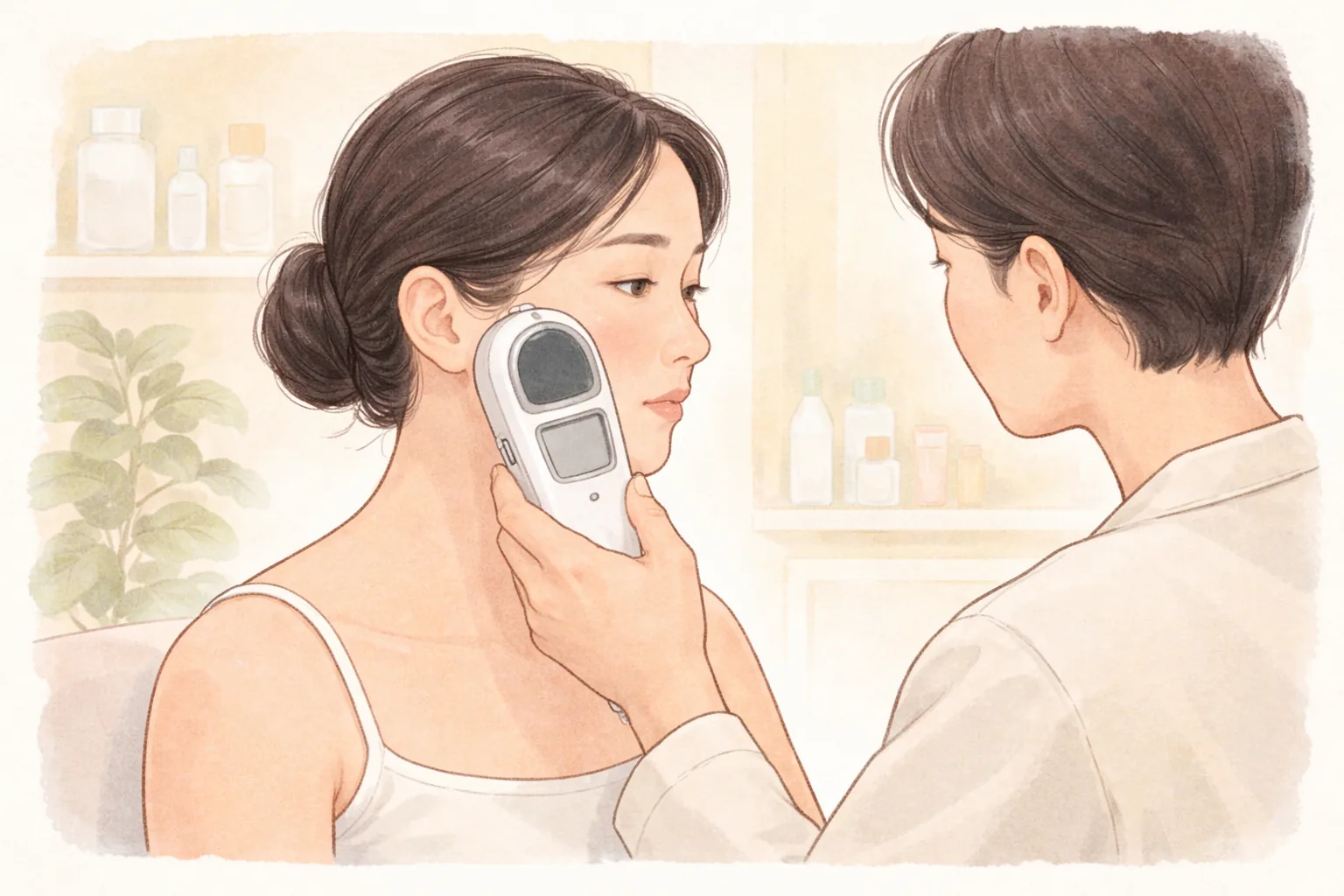
Treatment performed directly by the doctor — From our devices including PicoPlus, Vbeam and erbium YAG laser, the doctor selects the one suited to your pigment type and adjusts strength and combination. If spots, redness and rough texture are present together, we set priorities and proceed.
Progress check and next interval adjustment — We look at recovery response and pigment change to adjust the next treatment interval and strength.
As guided in the pigment column, ATTITUDE Clinic selects from its devices such as PicoPlus, Vbeam and erbium YAG laser according to pigment type, and decides together in consultation what is needed, what isn't, and in what order. As with the principle of genuine devices, proper dosage and fair pricing described in the column on laser principles, the baseline is not stronger or more frequent treatment but proceeding as much as needed, at the strength and interval suited to your skin.
Aftercare and side effects
Soothing — Redness and heat may remain on the day of treatment. Wash lightly with lukewarm rather than hot water, and avoid saunas, jjimjilbangs and intense exercise for the period you're advised.
Moisturizing — Apply a recovery cream and moisturizer generously. Stop exfoliation, scrubs and irritating ingredients for the period you're advised.
Sun protection — For at least 2 weeks after treatment, apply SPF 50+ sunscreen and reapply every 2 hours outdoors. UV is a major trigger for the cells that make pigment, so blocking it reduces recurrence.
Progress check — Don't pick at crusts; let them fall off on their own. If redness or stinging lasts more than 3 days or pain worsens, visit to have it checked rather than waiting for the next appointment.
Common reactions are redness, swelling, crusts and temporary darkening of pigment at the treated area. Rarely, hypopigmentation (lighter skin), blisters or scarring can occur, and pigment may rise again over time. Vascular lasers such as Vbeam can cause bruising. Small crusts after spot laser usually fall off in about 7–10 days.
Some cases should be checked rather than waiting for the next session. If redness or heat lasts longer than expected or pain worsens, if blisters form, or if fluid or odor appears under a crust, it's better to come in rather than endure it. Picking or scratching at a crust can damage the new skin forming underneath, leaving hyperpigmentation or a scar.
FAQ
How are melasma and spots different?
Melasma tends to have indistinct borders and spread widely, with hormones, UV and heat stimuli acting together to leave pigment cells overactive. Spots are often relatively distinct patches in the epidermal basal layer caused by accumulated UV and aging. It's also common for the two to overlap in the same area or take an intermediate form, making it hard to distinguish at home by color or location alone. So which pigment it is gets judged on examination, and the laser type and output are set accordingly. If it's judged to be melasma, repeated low power rather than strong energy is the baseline.
Is there any change after just 1 laser toning session?
Most lasers don't finish in 1 session. Because the approach breaks pigment particles down gradually and gives the skin time to process them rather than removing everything at once, 1 session is closer to a step for checking the first response within the overall plan. Melasma or deep pigment is safer cleared slowly over multiple sessions, and even shallow pigment like spots can reappear with UV exposure. After the first session we look at how many days it takes redness to settle and in which direction the pigment changes, then set the next strength and interval. Rather than judging the whole plan from one result, it's better to keep records of the response and continue.
Can I have Genesis toning and pico toning together?
The two treatments sometimes target the same thing and sometimes not. Pico toning targets pigment, while Genesis toning is classified as a vascular treatment. For skin with both pigment and redness, they may be combined on the same day or split into a sequence. Whether to have them together is decided by looking at skin response and recovery speed. In consultation, after checking the balance of current pigment and redness, the combination and interval are decided, and setting priorities rather than cramming everything at once reduces the burden on your skin.
When do crusts fall off, and what happens if I pick them?
Small crusts after spot laser usually fall off on their own in about 7–10 days. A crust is part of the skin covering a wound itself and building new skin underneath, so picking or scratching it can damage the newly forming tissue and leave hyperpigmentation or a scar. When washing your face, don't rub — pat gently. Even after the crust falls off, the new skin is sensitive to UV, so apply sunscreen carefully and avoid exfoliation and saunas for the period you're advised.
Where and how should I get pigment treatment consulted?
It's better to look at the order of the consultation than the device name. First, does the clinic confirm before treatment whether your pigment is melasma or spots and at what depth. Second, does it recommend only what's needed without rigidly fixing session count and intensity. Third, does it fully explain pain, recovery time and aftercare precautions. Fourth, can you get checked if you're uncomfortable after treatment. Even for the same spot, the laser used differs with pigment depth, so it's better to start somewhere that looks at your skin condition first.
At a glance
Table 2 At a glance
Item
Key point
What sets the session count
Pigment type and depth, and how fast the skin recovers
Common example for spots
Picosecond type, 1–3 sessions, 4–8 week intervals
Common example for melasma
Low-power toning, 8–12 or more sessions, at least 1 week apart
Lower limit of the interval
Toning usually at least 1 week; excessive repetition has been reported in connection with hypopigmentation
Recovery time
High-power picosecond crusts about 7–10 days, high-power fractional 7–14 days
Also important
Sun protection and moisturizing, don't pick crusts
This article offers general health information. It is not a substitute for diagnosis or treatment based on your own condition, so please talk through your situation with a doctor.