Pigmentation vs. Scars: What to Treat First When You Have Both
How pigmentation and scars differ in the skin, what to treat first when you have both, typical session counts and intervals, and post-treatment care, explained by ATTITUDE Clinic.
Written by ATTITUDE Clinic Editorial Team
When a brown mark is left behind after acne, it is hard to tell whether it is pigmentation or a scar. That is why people ask, "If I have both a scar and pigmentation, which do I treat first?" Pigmentation and scars can look like similar spots on the surface, but what has actually changed in the skin is different, and so are the approach and the order. This article covers how to tell the two apart and what to look at first when you have both.
The short answer first
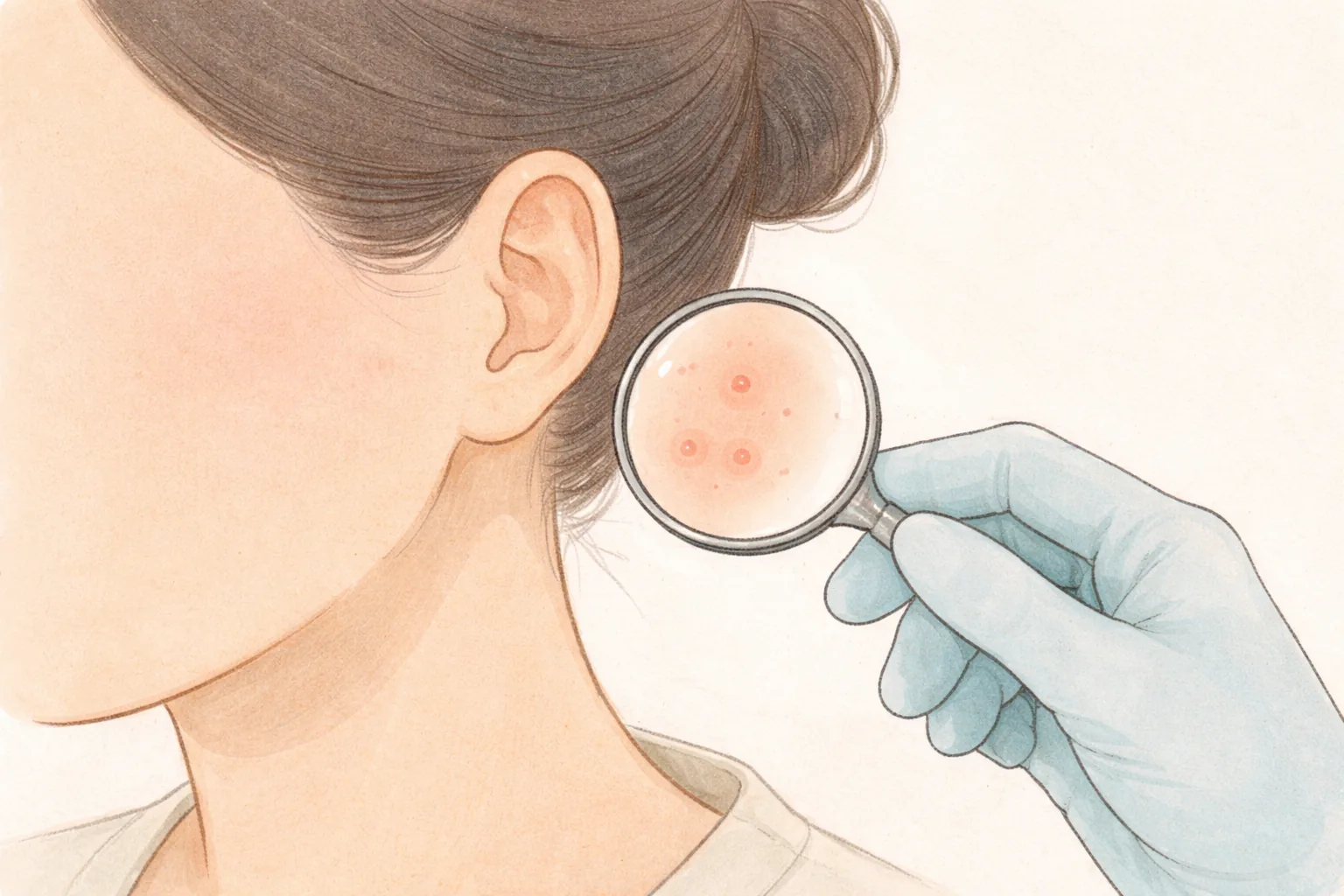
Pigmentation is melanin buildup that only changes color, while a scar is a change in the skin's structure itself. A flat brown spot left after acne is more likely post-inflammatory pigmentation than a scar. According to American Academy of Dermatology guidance, these colored spots usually fade over time, but once a scar forms, the indentation or raised texture remains even as the color fades. So the process always starts with telling apart what is color and what is structure.
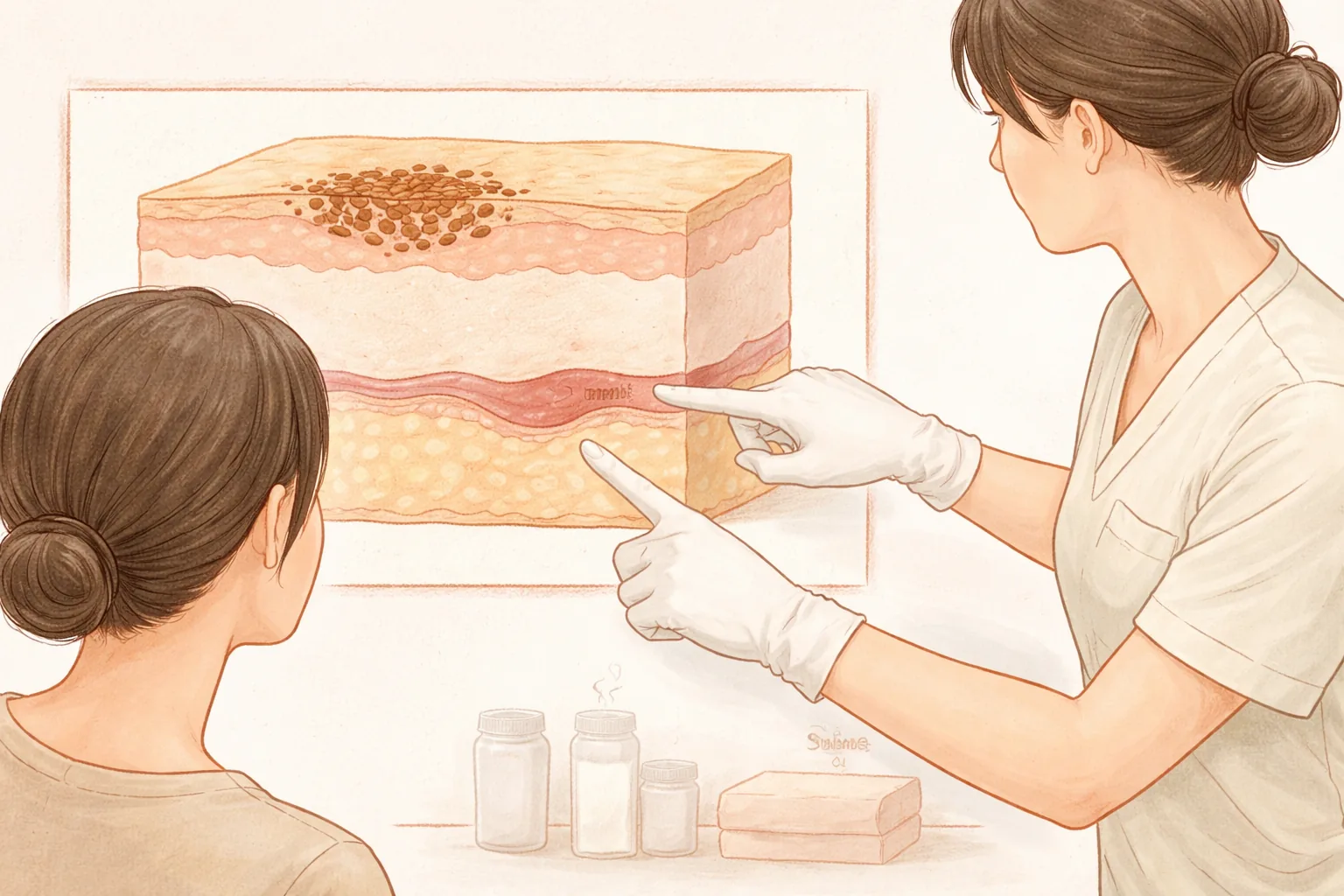
What actually changes in the skin with pigmentation and scars?
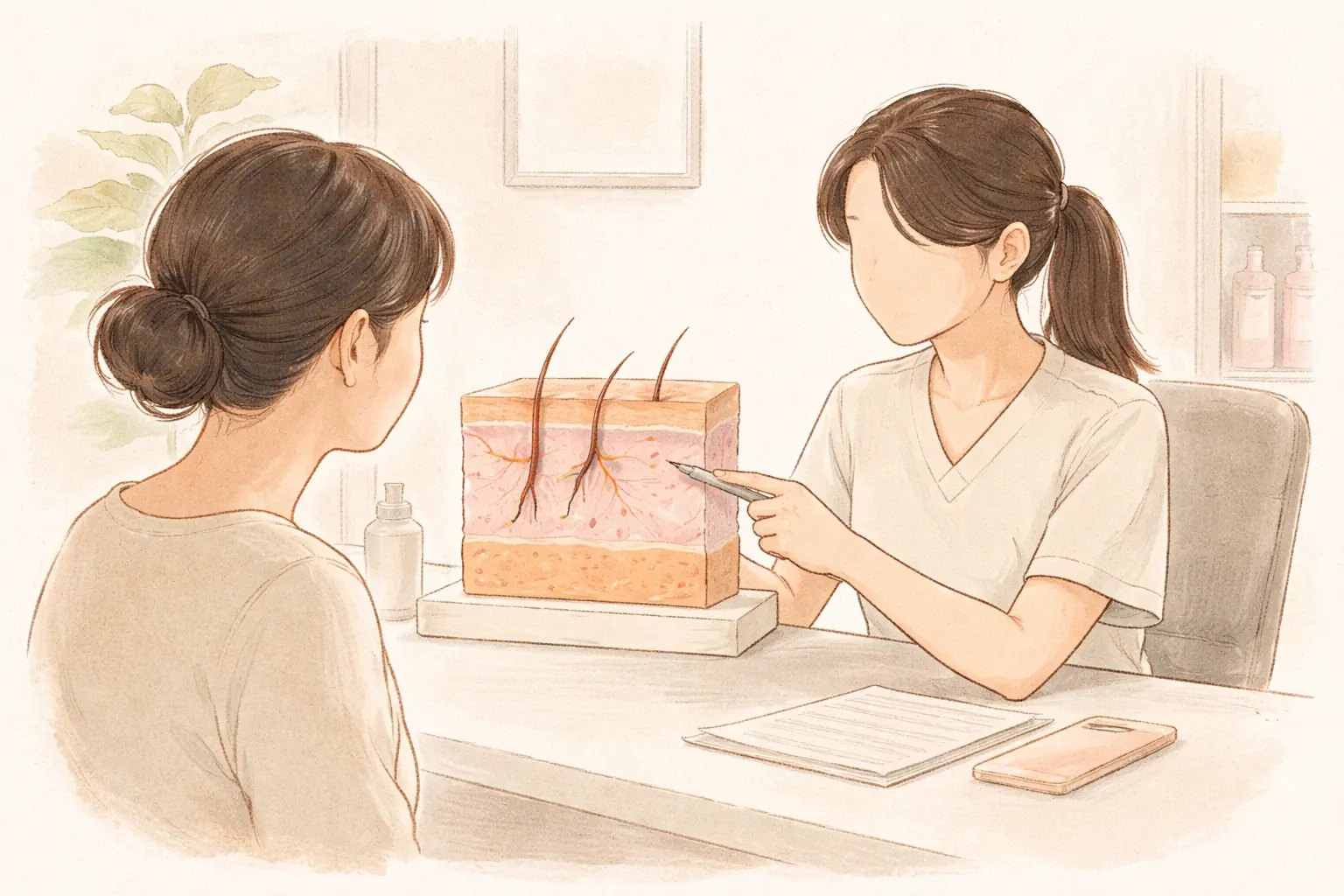
Let's start with pigmentation. Melasma, freckles, and sun spots all begin with melanocytes (cells that produce melanin to protect the skin). When triggers like UV, heat, inflammation, or hormonal changes appear, more melanin is produced, and when it gathers in one place it shows up as a brown spot. Seborrheic keratoses are different in nature. They are not accumulated pigment but a benign thickening of cells in the outer layer of the skin, so the approach itself differs. A comparison guide to pigmentary conditions also points out this difference first.
Scars sit in a different layer. When inflammation is deep and lasts long, the tissue arrangement changes as the skin repairs itself, and the result remains as an indentation or a raised area. The American Academy of Dermatology states that not all acne leaves scars, and that deeper, painful acne carries a higher risk. Picking or squeezing habits and a family history of scarring are also listed as factors that raise the risk.
So why is it that the same spot is sometimes pigmentation and sometimes a scar? The criterion is surface texture. If the skin feels flat when you touch it, it is likely a color issue, and if it is depressed or raised, it is a structural issue.
How do you tell melasma from sun spots, and pigmentation from scars?
Pigmentation itself also differs. Melasma has blurred borders and spreads widely, and is divided into epidermal, dermal, and mixed types. Sun spots have relatively distinct borders and often gather in the basal layer of the epidermis. Freckles are more distinct on fair skin and repeat a pattern of darkening with UV exposure and fading when UV is blocked. In practice, melasma and sun spots overlap in the same area fairly often, so it is hard to tell them apart accurately at home by color and location alone.
Scars are not one type either. Skin that is indented and skin that is raised require different approaches. AAD guidance on scar treatment states that treatment differs by scar type, and that age and how long ago the scar formed also affect which treatment works well. If something looks like a scar but you do not remember an injury, or if the shape changes, skin cancer can look like a scar, so an examination comes first.
Table 1 How do you tell melasma from sun spots, and pigmentation from scars?
Type
What has changed
Approach mainly used
Expectations and limits
Flat brown spot
Melanin pigmentation
UV protection, pigment laser if needed
Usually fades over time, not a scar
Melasma / sun spots
Overactive pigment cells, pigment buildup
Picosecond series, repeated low fluence
Can recur, so managing triggers continues
Indented scar
Dermal structural change
Fractional laser and other regeneration methods
Takes time for collagen to fill in
Raised scar / keloid
Tissue becomes raised
Pressure therapy, silicone gel, steroid injections, etc.
Can recur, repeat treatment may be needed
Red marks / redness
Superficial vessel dilation
Vascular laser series
Response varies widely by cause
Swipe sideways to see the whole table.
In short the key to telling them apart is whether it is color or structure, and whether the structural change is indented or raised. Even for the same spot, the target is different and so are the laser and session count, so identifying which problem it is rather than what name to give it reduces differences in results.
What to treat first when you have both
The principle is one. Calm the condition the skin is currently reacting to first, then address structure. A guide to lasers for spots, redness, and scars also gives the example of clearing pigmentation first when spots and pores are a combined concern, then adding fractional for skin texture and pores.
If acne is still breaking out, treating that comes first. AAD self-care guidance states that new acne can create new scars, so acne treatment should continue. Applying sunscreen every day is also considered part of treatment for the same reason.
If your pigmentation is in a highly reactive state, it is better to avoid giving strong stimulation all at once. When high energy is used on melasma, it may look temporarily lighter and then rebound pigmentation can occur as pigment cells are stimulated and the color deepens.
How many sessions, and at what intervals?
It is rare for a single session to finish things. The American Academy of Dermatology states that scar treatment is almost never finished in one session and that three or more sessions may be needed for good results. Pigmentation is similar: for the picosecond series, a common example is 1–3 sessions at 4–8 week intervals for sun spots, and 8–12 or more sessions for melasma toning at intervals of at least 1 week. Pores and skin texture are often seen over 3–5 sessions, and acne scars over 4–6 sessions at 4–8 week intervals.
These numbers are just common examples, and the actual number and interval depend on pigment depth, skin response, and lifestyle factors such as UV exposure. In particular, repeating toning too often has been reported in connection with mottled hypopigmentation, so leaving at least 1 week between sessions is safer. A guide to lasers and skin burden also lists interval and setting adjustment as factors that determine results.
In these situations
When a wedding or photo shoot is only a few weeks away
High-fluence procedures that leave crusts have a long recovery period and can clash with your schedule. If you share your date first, we can work backward from it to adjust the procedure type, intensity, and start timing. If there is not much time, clearing pigmentation superficially puts less burden on you.
When acne is still breaking out
If new lesions keep appearing, new scars keep forming too. Rather than rushing scar treatment, getting the acne itself under control first works out better. We coordinate the timing of scar treatment while continuing treatment.
When your skin is sensitive or flushes easily
If procedures are repeated before recovery finishes, burden builds on the skin barrier and redness can linger longer. It is better to leave generous intervals and start at low fluence. If cosmetics feel more stinging than usual, tell us at the consultation first.
For international visitors on a short stay
Choosing procedures whose recovery finishes within your stay comes first. Low-fluence toning, where redness settles the same day, and procedures that leave crusts for 7–10 days require a different schedule design. If your plans involve a lot of UV exposure after treatment, it is better to postpone high-fluence procedures.
Tell us before your consultation — recent UV exposure and tanning, medications you are taking and any photosensitivity, exfoliants or ingredients like retinoids used recently, reactions from previous procedures, and fixed dates such as a wedding or photo shoot.
How ATTITUDE Clinic proceeds
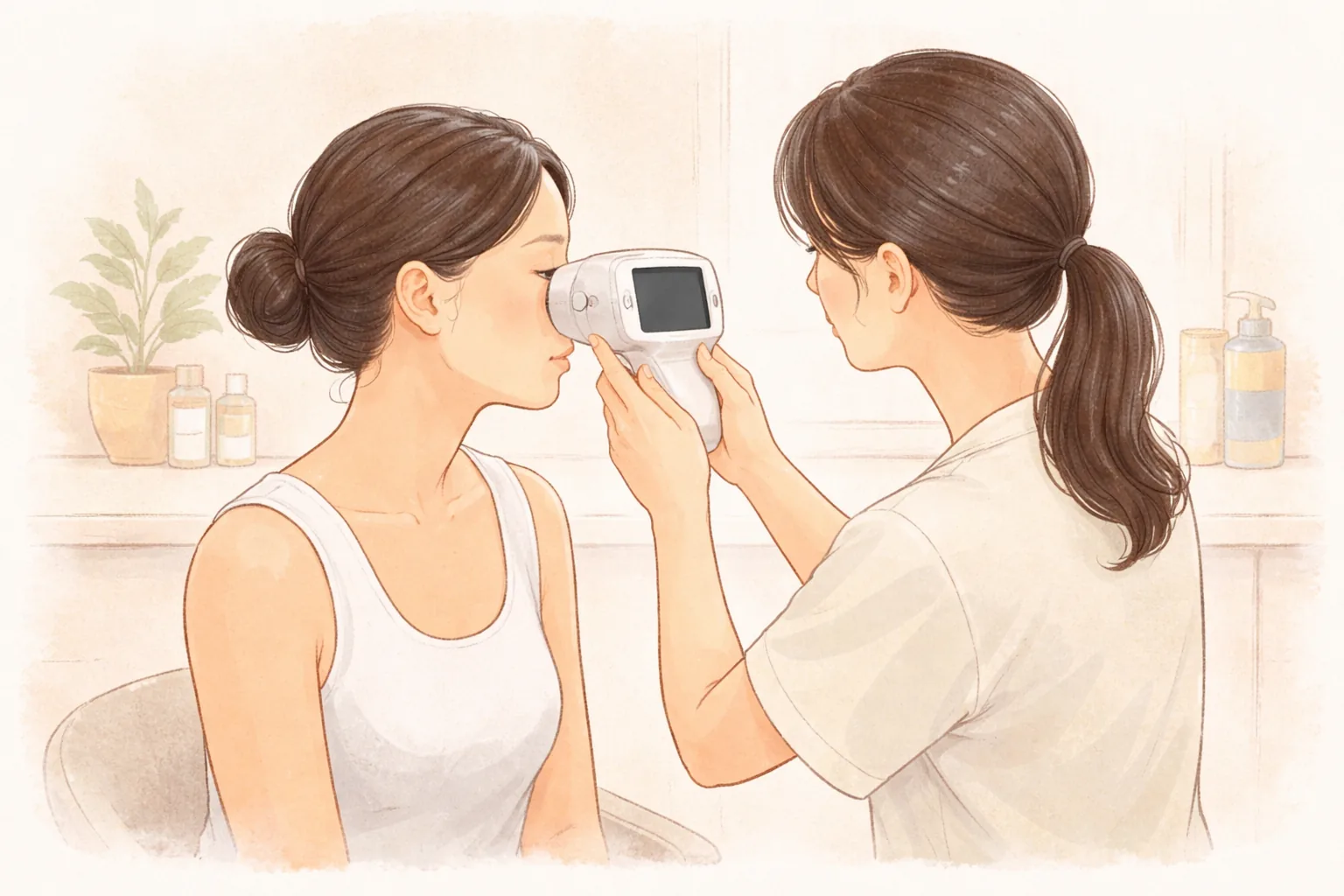
AI skin analysis record — We record and organize the current state of pigmentation, redness, texture, and scar areas. This tool supports the consultation, and does not provide a medical diagnosis.
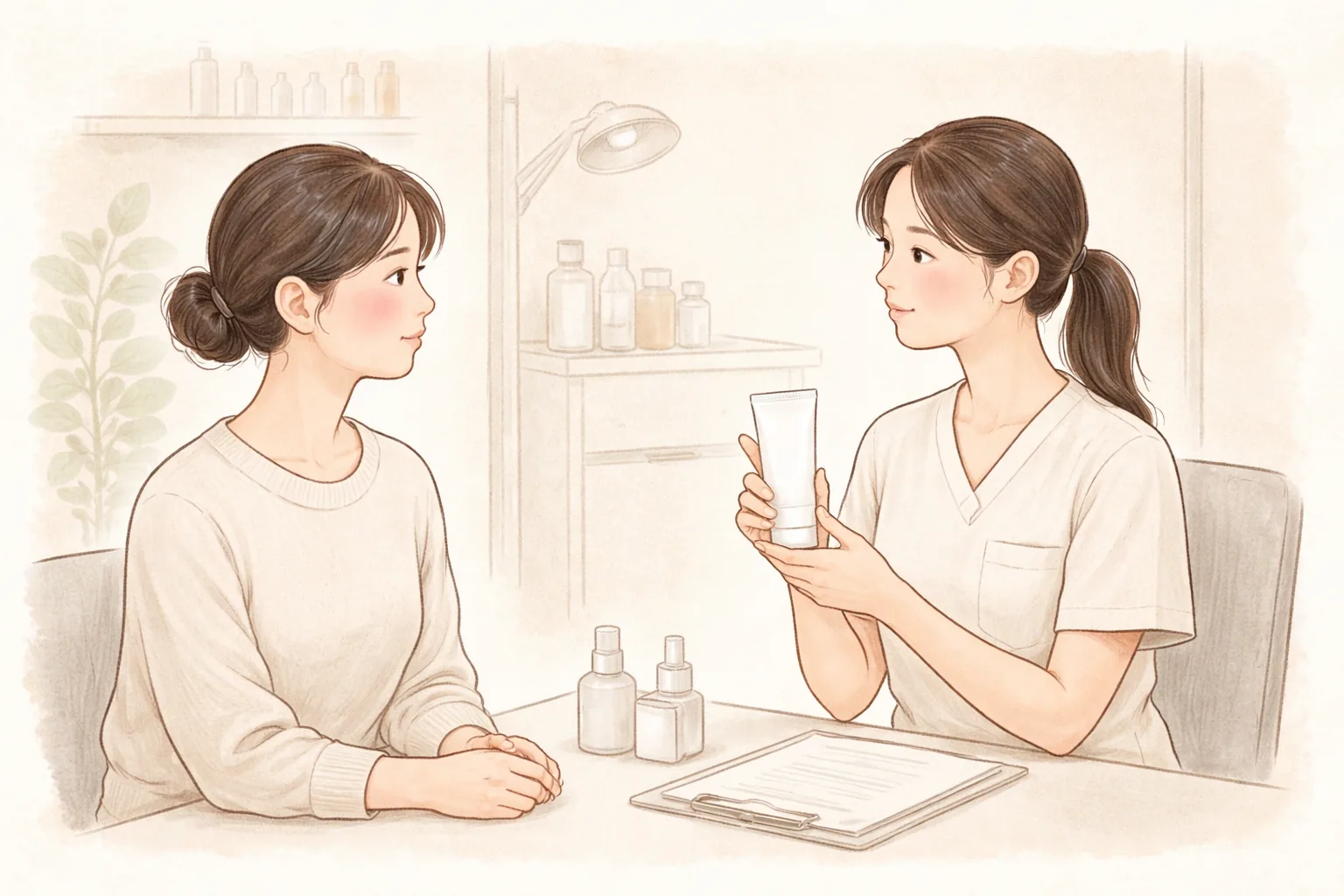
Doctor consultation — Adding lifestyle factors such as UV exposure and hormonal changes, and your own concerns to the record, the doctor examines you and judges the pigment type and scar form. Together we decide what is needed now, what is not, and the order.
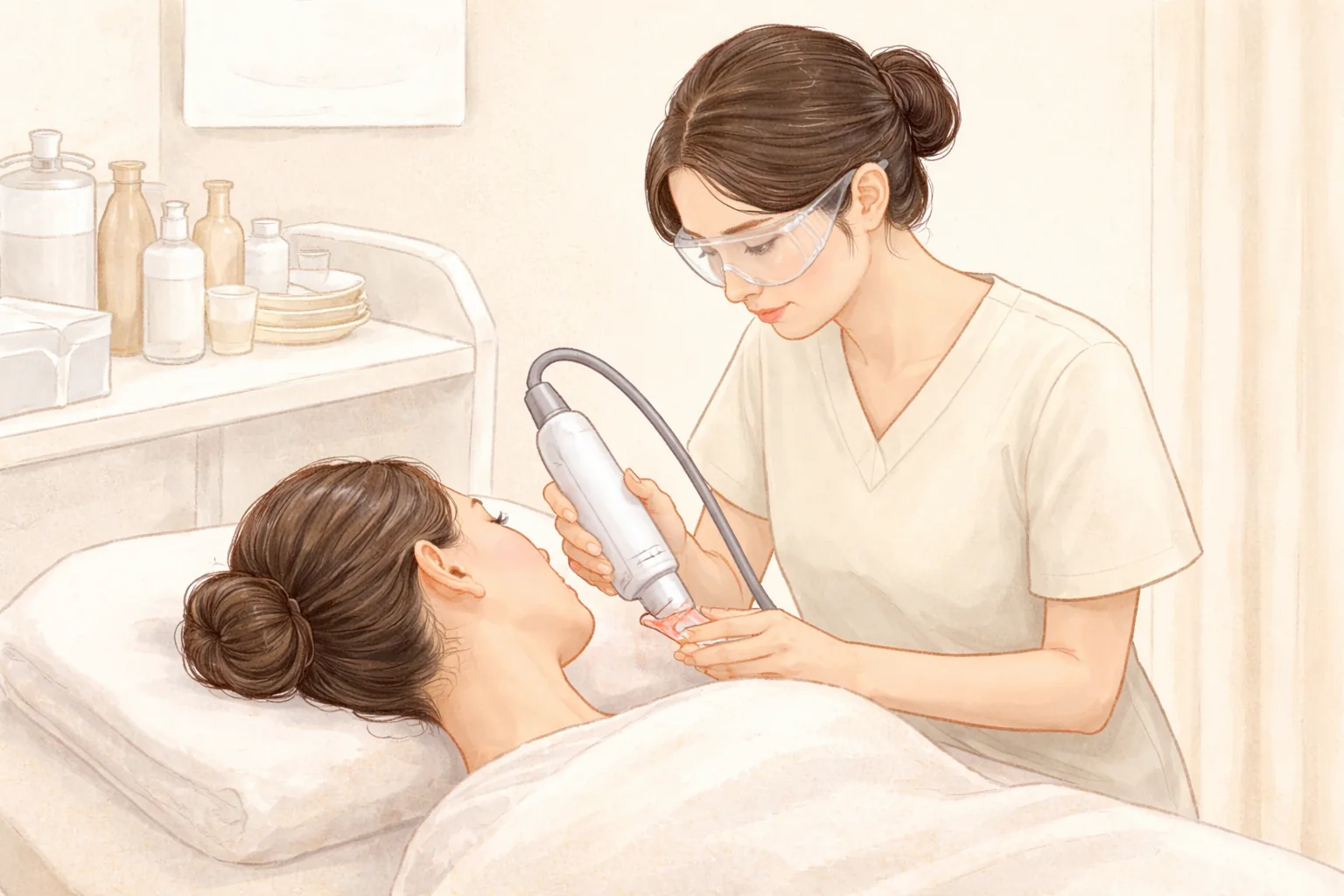
Procedure performed by the doctor — The doctor selects the device suited to the cause among those we have, such as PicoPlus, Vbeam, and erbium YAG laser, and adjusts the fluence and combination directly. Even on the same face, sun spots come from pigment, redness from vessels, and rough texture from the surface, so the devices differ.
Recovery and care — We guide you on UV protection, moisturizing, and avoiding heat stimulation after the procedure, and adjust the next interval and intensity while monitoring progress.
Post-treatment care and side effects
Soothing — Right after the procedure, skin temperature is elevated and the barrier is weakened. It is better to avoid saunas, jjimjilbangs, and intense exercise for 1–2 weeks.
Moisturizing and cleansing — Wash with lukewarm water, pressing lightly without rubbing. The American Academy of Dermatology states that skin can become sensitive after a procedure, so use the products you are advised to use, and delay makeup until you are told it is fine.
UV protection — If you do not block UV properly right after the procedure, pigmentation can form in the newly created skin and undo the effect. Apply SPF 50+ sunscreen for at least 2 weeks and reapply every 2 hours outdoors.
Checking progress — Leave crusts until they fall off on their own, and if redness or stinging lasts more than 3 days or suddenly worsens, do not endure it and get it checked.
Common reactions are redness, heat sensation, swelling, and stinging, and procedures that work on the surface, such as pigment spot lasers or erbium YAG laser, can leave crusts. The American Academy of Dermatology considers post-procedure swelling and color change that last a few days and then subside to be common reactions. Rarely, blisters, hypopigmentation, infection, or scars can occur, or pigment can rise again, and temporary pigmentation occurs more easily if your skin is dark or tanned. If redness or pain lasts longer than expected, it is better not to wait and to come in to get it checked.
FAQ
How do you tell melasma, sun spots, and scars apart?
The three differ in what has changed. Melasma has blurred borders and spreads widely, and has a tendency to rise again in response to UV, hormones, and heat. Sun spots have relatively distinct borders and gather in the epidermal layer, while a scar is a change in the skin's height, not its color. If it feels flat and only the color differs, suspect pigmentation first, and if it is indented or raised, look toward a scar. Since the two often overlap, the final judgment is made by examination.
What do you look at first when pigmentation and scars are both present?
Calm the condition the skin is currently reacting to first, and address structure later. If acne is breaking out, treating that comes first, and when pigmentation and pores are a combined concern, the common order is to clear pigmentation first and then add fractional. Even when done on the same day, intensity and areas are divided and adjusted. Intervals are set by watching skin response.
Are laser toning and spot lasers the same procedure?
Even within the same picosecond series, the way they are used differs. Spot lasers concentrate energy on individual spots to fade them in one or two sessions, while toning applies low fluence broadly across the whole face to break pigment into fine particles and let the body process it gradually. For pigment that is deep and widely spread, such as melasma, repeating low fluence causes less irritation than using strong fluence at once. Which is right for you is decided by looking at pigment depth and distribution.
Is a brown mark after a procedure a scar or pigmentation?
A flat colored spot left after acne is more likely post-inflammatory pigmentation than a scar. The American Academy of Dermatology states that these colored spots usually fade over time. On the other hand, if an indentation or raised texture remains even as the color fades, it is a scar. For newly appearing lesions, ones that change in size, or ones that itch or bleed, an examination to confirm comes before cosmetic procedures.
What should you look at when choosing a clinic?
Look at the flow of the consultation rather than the device list. The criteria are whether they first check before the procedure whether it is pigmentation or a scar and at what depth, whether they recommend only what is needed and do not set the number of sessions unreasonably, and whether they explain recovery time and side effects during the consultation. Also look at whether it is a place where you can get rechecked if you have discomfort after the procedure. A consultation that states limits along with results is more trustworthy than one that guarantees outcomes.
At a glance
Table 2 At a glance
Item
Key point
Biggest difference
Pigmentation where only color changes vs. scar where skin structure changes
Flat brown spot
Usually not a scar but post-inflammatory pigmentation, fades over time
Telling pigmentation apart
Melasma spreads vaguely, sun spots gather distinctly, seborrheic keratosis works differently
Order
Calm the reactive condition first, if acne is breaking out treat acne first
Sessions (common examples)
Sun spots 1–3 sessions, melasma toning 8–12 or more, acne scars 4–6
Post-treatment key points
Do not pick crusts, SPF 50+ protection, avoid heat stimulation
This article offers general health information. It is not a substitute for diagnosis or treatment based on your own condition, so please talk through your situation with a doctor.