Potenza Microneedling in Gangnam: Pore Causes and What Makes Them Worse
What actually makes pores look enlarged, and how sebum, elasticity and inflammation each change the treatment plan — including when Potenza microneedling fits.
Written by ATTITUDE Clinic Editorial Team
Many people say that only the pores on their nose and cheeks look obvious in the mirror, and that pore-minimizing creams and regular exfoliation have changed nothing. This article looks at what pores actually are, why they look larger, what makes that worse, and how the approach splits according to the cause.
The conclusion first
Pores are the openings through which sebum and hair reach the skin surface, and everyone has them. The realistic goal is not removing them but managing the look of enlarged pores. Visibility tends to come from three directions: sebum output increases and physically stretches the pore opening, collagen and elasticity decrease so the surrounding skin sags and casts a shadow, or repeated inflammation such as acne damages the pore wall. When squeezing, sun exposure, smoking and thickened dead skin are added on top, the same skin can look far more enlarged. So the order is not the device name but confirming the cause.
Why do pores look enlarged?
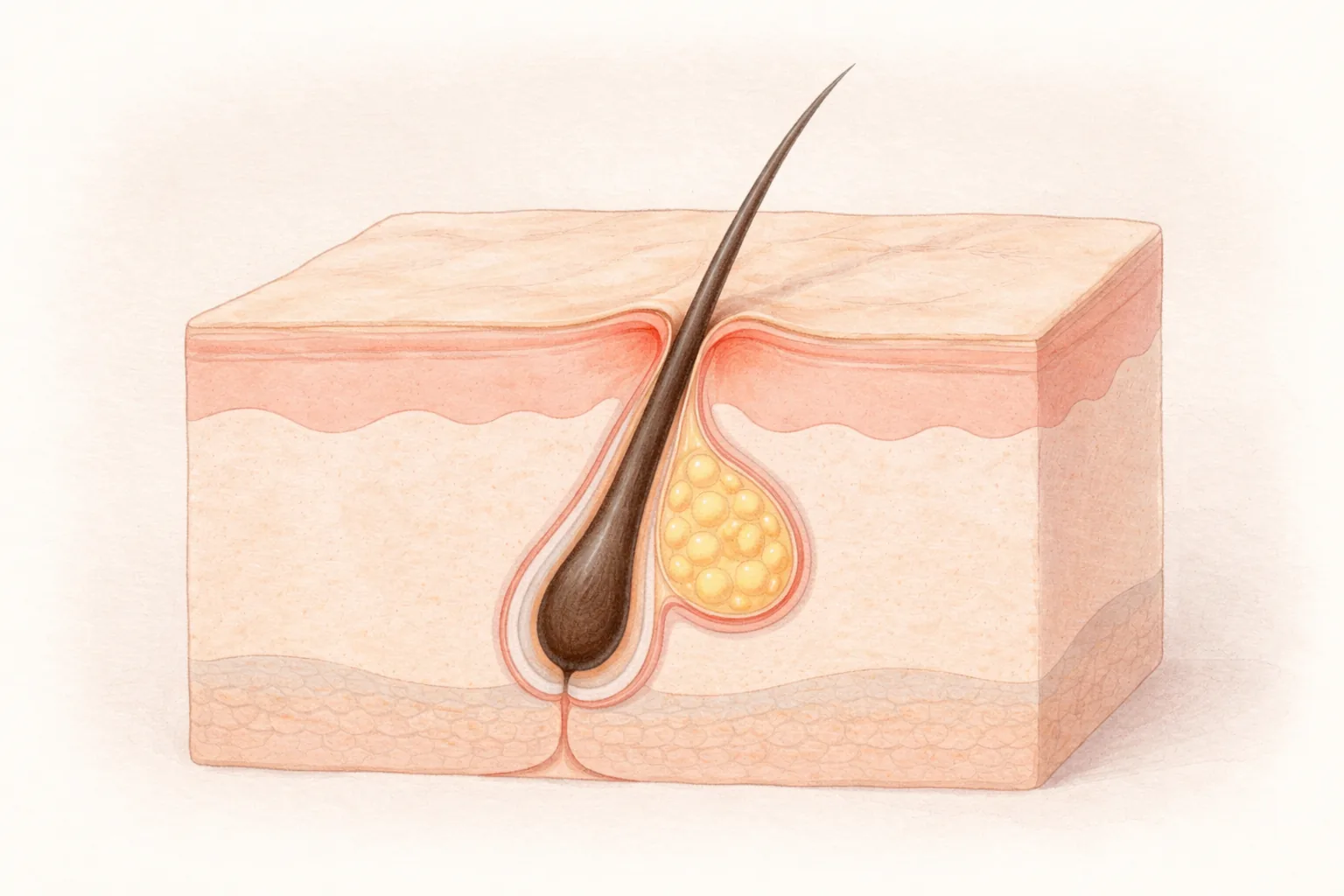
Under the skin there are sebaceous glands that produce sebum, and these glands connect to a canal called the hair follicle that opens onto the skin surface. The pore is the opening of that canal. Normally sebum passes through this channel and forms a protective film over the skin. The problem starts when sebum output increases. The Korea Disease Control and Prevention Agency National Health Information Portal explains that when sebum increases, the follicle lining is irritated, lining cells shed faster than usual, and those cells clump together to block the follicle opening. This blockage is a comedo (sebum trapped and hardened inside the follicle).
Inside a blocked pore the situation moves one step further. Bacteria that live in the follicle release lipase enzymes that break down sebum, and the free fatty acids produced in that process irritate the follicle wall until it eventually ruptures. Sebum, bacteria and shed cells spread into the surrounding area, producing redness, swelling and pus. Where that inflammation has passed is what looks like an enlarged pore.
How inflammation damages the pore wall is also described in Cleveland Clinic material. As an acne lesion grows, the pore wall cracks, and when the contents of the lesion flow into surrounding tissue, a deeper scar forms. The skin fills this damage with collagen, and when too much collagen is produced it becomes a raised scar, while lost tissue leaves a dent. When this texture remains around the pores, the area looks far more enlarged even if the pores themselves have not grown.
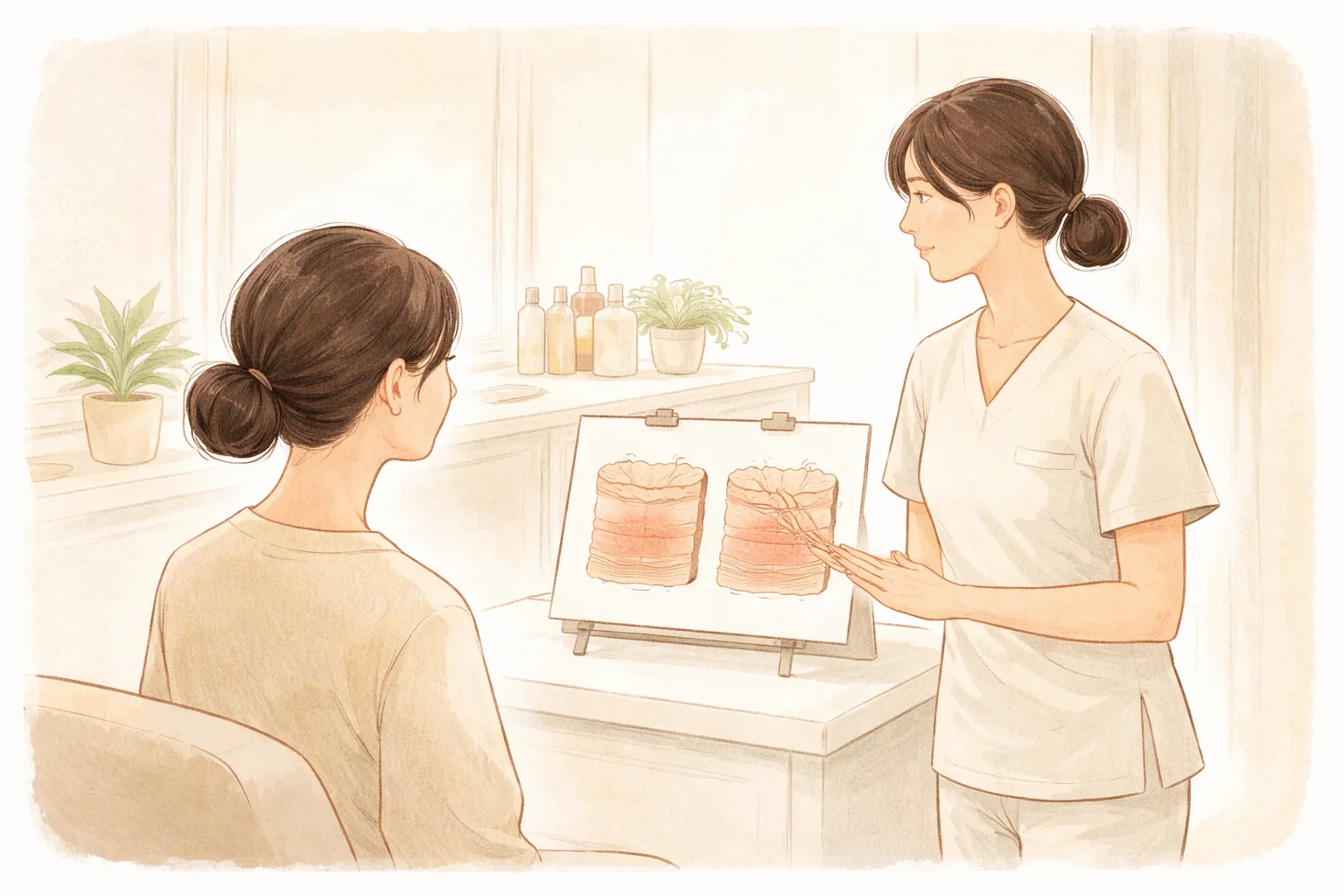
This is why pores look different even on the same face. Areas with heavy sebum tend to show a stretched, round opening, while areas with reduced elasticity such as the cheeks tend to show a downward-sagging shape. As set out in the ATTITUDE Clinic column, the direction of management differs depending on whether the cause is sebum or sagging, so it is difficult to judge the cause from shape alone.
What makes pores worse?
Season and body temperature are also variables. According to the Korea Disease Control and Prevention Agency National Health Information Portal, sebum output rises by about 10% for every 1°C increase in body temperature. In hot summers, sebum and sweat both increase, creating an environment where pores block easily; in winter, metabolism slows so dead skin sheds more slowly and the thickened stratum corneum blocks pores. In other words, the way things worsen differs by season.
The habit of squeezing with your hands is the most direct blow to pores. According to Seoul National University Hospital medical information, forcibly squeezing an oil gland wall weakened by inflammation destroys the wall, leading to larger inflammation and making scarring more likely. The same source adds that extraction performed in a dermatology clinic does not cause these side effects because the pore opening is cleaned through washing, the pore is widened with steam, and special instruments are used. The issue is less the act of squeezing itself than when and in what state you squeeze.
Sun exposure and smoking also act together. Cleveland Clinic states that excess sun makes scars darker, and that scars are more noticeable in darker skin tones. The same material identifies smoking, squeezing and scratching as factors that worsen scars. This is why sun protection is repeatedly mentioned as a basic part of pore care.
Lifestyle factors should not be ignored either. The Seoul National University Hospital material states that the oil-based ingredients in pomade and excessive use of detergents or soap can worsen acne, and that when sleep is insufficient, skin regeneration through growth hormone does not proceed properly, leaving dead skin in place and making inflammation more likely. The same material notes that excessive tanning can thicken the skin and hair follicles and worsen acne. In adult acne, stress, medication, smoking and the menstrual cycle are listed as aggravating factors.
How does the approach change with the cause?
If sebum is the main cause, dealing with sebum and dead skin comes first. According to the Seoul National University Hospital material, retinoids reduce sebum secretion and also act on several pathways including abnormal keratinization (incomplete and immature keratinization), the inflammatory response and bacterial growth. However, because of the risk of fetal malformation during pregnancy, contraception is advised from 1 month before starting treatment until 1 month after stopping, so whether to take them is a decision for a consultation. It is also noted in the Korea Disease Control and Prevention Agency National Health Information Portal that if acne treatment shows no improvement after 6–8 weeks of consistent use, changing the method is recommended.
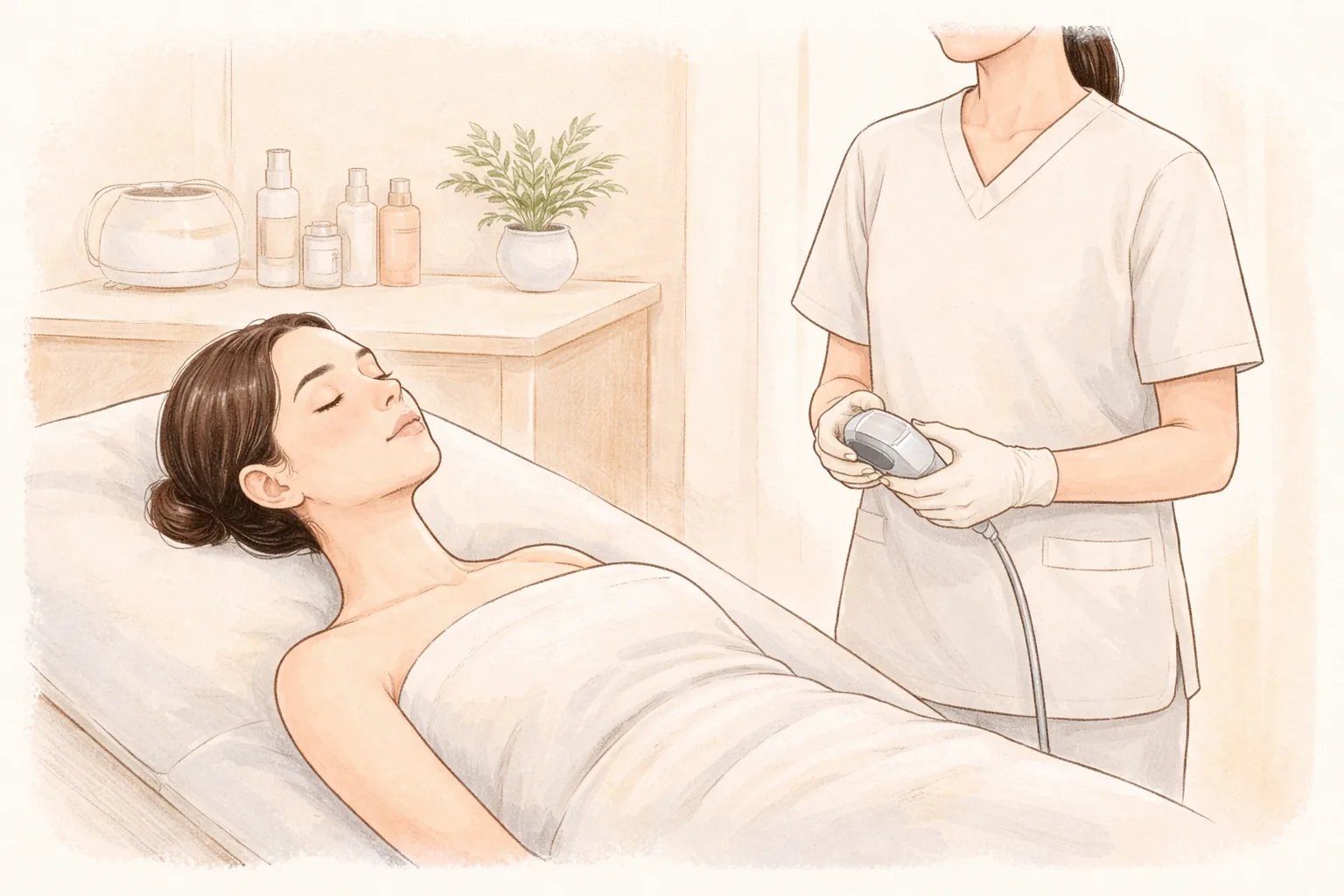
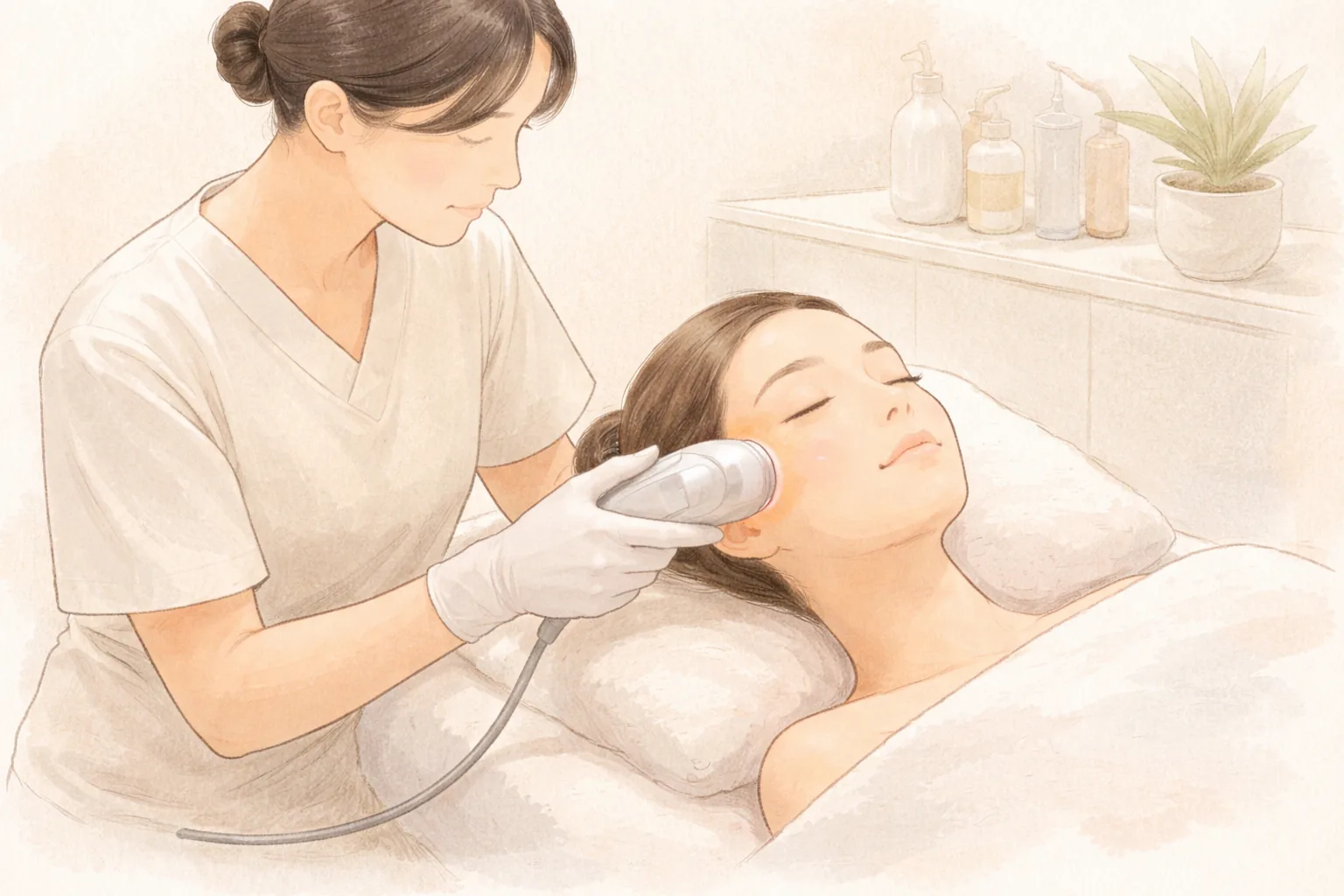
If reduced elasticity is central, approaches that stimulate collagen are considered. In the ATTITUDE Clinic treatment guide, Potenza is introduced as a treatment that delivers radiofrequency directly into the dermis through fine needles to help improve pores and scars. When surface texture is rough and shallow scars are mixed in, combining a series such as erbium fractional that refines the surface through micro-peeling is considered.
Red marks or pigment left behind by inflammation are also common. As set out in the ATTITUDE Clinic column, spots come from pigment, redness from blood vessels, and rough texture from the surface, so the target differs even within the same face. For skin that looks dull because of pigment, toning that targets pigment is considered first; when red marks stand out, a laser that treats shallow vessels is considered first. When several causes overlap, dividing priorities rather than doing everything at once puts less strain on the skin.
How far can cosmetics go?
Cleansing and dead skin care reduce the buildup of sebum and dead skin, making pores temporarily look less obvious. Pore-tightening toners or creams give a temporary feeling of tightness but do not change the structure of the pore itself. Exfoliating ingredients such as retinol help improve dead skin turnover when used consistently, but the effect appears gradually, and during pregnancy you should consult a doctor before use. Ingredients and the range of expectations are set out in the ATTITUDE Clinic column.
The reason you feel no change after applying toner or cream is that the area they can address is different. Sebum and dead skin can be managed to some extent on the surface, but pores that have sagged because collagen has decreased, or pores whose walls were damaged by inflammation, are a structural issue, so visible change is hard to expect from surface care alone. Sun protection is, without exception, an important item here. Just as Cleveland Clinic names sunlight as a factor that makes scars darker, if protection is missed, the results you worked for can blur again.
Table 1 How far can cosmetics go?
Treatment
Target
Concerns it suits
Common reactions after treatment
Potenza (RF microneedling)
Delivers radiofrequency directly into the dermis through fine needles
Pores enlarged by sebum and loss of elasticity, acne scars
Redness and swelling, dot-shaped marks, dryness, thin crusts for several days to 1 week
Erbium fractional
Refines surface texture
Rough texture, dead skin and surface around pores, shallow scars
Redness and dryness, thin crusts
Pico toning
Pigment
Skin that looks dull because of pigment, spots
Temporary redness, pigmentation may develop
Vbeam
Shallow vessels
Red marks left by inflammation, accompanying facial redness
Bruising may occur
Swipe sideways to see the whole table.
In short Even on the same face, the reason pores look enlarged depends on whether it comes from sebum, elasticity, scars, pigment or redness. So rather than which device is best, the first step is dividing where your concern comes from. When causes overlap, dividing priorities puts less strain on the skin.
If this sounds like your situation
If a ceremony or shoot is a few weeks away
A first-time treatment right before a ceremony can overlap with your schedule because of redness or sensitized skin. The earlier you start with room to spare based on the date, the more options you have to adjust intensity and type. If you tell us your schedule at the consultation, we can work backward from that date to build a plan.
If you want consistent management
Rather than going strong all at once, regular management that respects the interval your skin needs to recover puts less strain on it. Repeating before recovery is complete can weaken the skin barrier, making it sensitive or leaving redness for longer. For toning, the standard in the ATTITUDE Clinic column is usually a minimum interval of 1 week.
If your skin reddens or becomes sensitive easily
For skin that flushes red, treating the vessels may come before treatments that target pigment. If cosmetics sting or your skin has become unusually sensitive, you must mention this before treatment so that intensity and timing can be adjusted. If you are generally sensitive to irritation, a plan with a generous recovery period is safer.
If you are an international visitor on a short stay
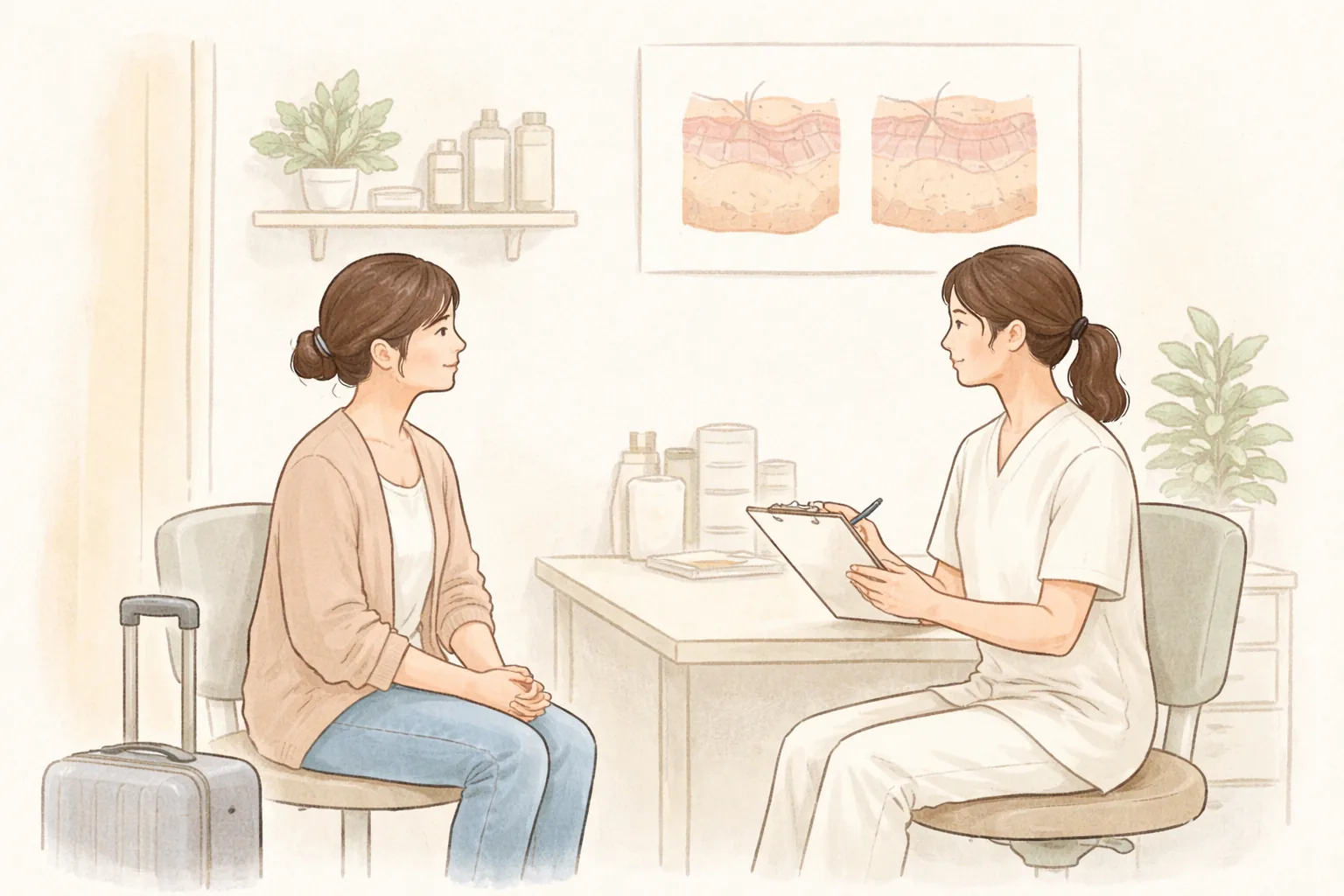
If your stay is fixed, redness or dryness right after treatment can affect the rest of your plans. If you tell us your return date and what is scheduled in between, we can discuss intensity and treatment type accordingly. The shorter the stay, the better it is to narrow priorities rather than stacking several treatments at once.
Please tell us before your consultation It helps us adjust timing and settings if you tell us whether you have had a lot of recent sun exposure, whether you take or apply any medication or exfoliating products (especially retinoids), whether your skin has been sensitive after previous treatments, whether you have a history of squeezing acne with your hands, whether you have important dates such as a wedding, shoot, trip or business travel, and whether pregnancy is possible.
How ATTITUDE Clinic proceeds
AI skin analysis record — Current skin condition, including pigment, redness, texture and pores, is recorded with an analysis tool. This tool records and organizes information to support the consultation and is not a medical diagnosis; interpreting the record is the director's role.
Director consultation to interpret the cause — Lifestyle, schedule and skin history are added to the analysis record to divide whether the main cause of enlarged pores is sebum, elasticity or scarring. Once the cause is set, which treatment to consider in which order is also set.
Treatment performed by the director — The director personally performs the treatment suited to your type and cause, and does not recommend unnecessary treatments. We work on the principle of genuine products, accurate dosing and fair pricing.
Progress check and planning the next interval — We check the reaction after treatment and adjust the interval and intensity of the next session. For pore and scar care, options such as RF microneedling like Potenza, erbium fractional, pico toning and Vbeam are combined according to the cause.
Aftercare and side effects
Soothing — Right after treatment the skin is temporarily sensitive. Avoid saunas, hot showers, strong exfoliation and irritating scrubs for the period you are advised.
Moisturizing — When skin is dry, redness tends to feel like it lingers longer. Applying the moisturizer you are advised to use consistently helps recovery.
Sun protection — During the day, use sunscreen. Sun exposure can make scars darker, so it is especially important for preventing pigmentation.
Progress check — If redness and heat last longer than expected or pain worsens, do not endure it — come in to have it checked.
Starting with the common reactions, redness, heat, swelling and stinging are most frequent, and treatments with a peeling character leave thin crusts. According to the ATTITUDE Clinic column, after Potenza or erbium YAG laser, redness and swelling, dot-shaped marks, dryness and thin crusts are common and usually settle within several days to 1 week. If your skin is dark or tanned, temporary pigmentation can develop, and Vbeam can cause bruising. Injections such as skin boosters commonly cause bruising and swelling, and rarely nodules, infection or allergic reactions. Rarely, blisters, hypopigmented patches, infection or scars can develop, or pigment can return, so before treatment the director explains the side effects of the planned treatment and settings.
Frequently asked questions
Which treatment fits which cause of enlarged pores?
If sebum is central, we first consider the direction of managing sebum and dead skin, and if needed review retinoid medication together. If reduced elasticity is central, RF microneedling that stimulates collagen is considered, and if scars are mixed in, we consider combining a fractional series that refines surface texture. If red marks or pigment left by inflammation are noticeable, a laser targeting vessels or pigment may be placed first. In practice, causes often overlap, so dividing the cause and then matching treatment, rather than deciding on a device name first, is what separates satisfying results. Even with the same diagnosis, the combination differs with skin thickness and recovery speed.
Does squeezing blackheads make pores larger?
It is quite likely. Seoul National University Hospital medical information states that forcible squeezing destroys the oil gland wall weakened by inflammation, leading to larger inflammation and leaving scars. Cleveland Clinic also states that squeezing or scratching increases inflammation and worsens scars. In contrast, extraction at a dermatology clinic widens the pores with steam after cleansing and uses special instruments, reducing these side effects. Simply cutting down the habit of pressing with your hands at home lowers the risk of scarring.
Do pore treatments finish in one session? How many sessions are needed?
Treatments that aim at collagen regeneration need time for the body to make new collagen, so results do not arrive at once but build gradually over several weeks. Repeating before recovery is complete strains the skin barrier, so respecting the recovery interval comes first. The interval differs by treatment type, purpose and skin condition, so adjusting it while watching progress is safer than setting it uniformly. It is worth noting that in acne treatment, if there is no improvement after 6–8 weeks of consistent use, changing the method is recommended. Cost depends on which treatment is performed and over what area, so confirming both the treatment name and the scope at the consultation makes comparison easier.
What is daily life and downtime like after treatment?
Some treatments settle redness and heat relatively quickly, while treatments that refine the skin surface leave redness, dryness and thin crusts for several days. Common reactions after Potenza or erbium YAG laser also fall within a range that settles within several days to 1 week. Recovery speed differs from person to person, so it is best to receive an accurate estimate at the consultation. If you have important plans, telling us the dates in advance lets us work backward from that date to adjust the treatment type, intensity and start timing. During recovery, keep up sun protection and moisturizing, and avoid exfoliation and saunas for a while.
What should I check when choosing a clinic for pore treatment?
The structure of the consultation matters more to results than the device name. Criteria include whether the clinic first confirms whether your concern is pigment, vessels or surface texture, whether it tells you which treatments are unnecessary, whether it explains side effects and recovery time, and whether it is a place where you can be checked if you feel uncomfortable after treatment. For treatments that use devices, such as Potenza or erbium fractional, whether genuine equipment and single-use tips are used is also worth checking. Cost differs by treatment type, scope and number of sessions, so comparing like conditions while checking whether items are disclosed, as in the clinic treatment guide, is more accurate.
At a glance
Table 2 At a glance
Item
Key point
What pores are
Normal structures through which sebum and hair emerge; not a target for removal but for management
Why they look enlarged
Increased sebum output, reduced collagen and elasticity, damage to the pore wall from repeated inflammation
Aggravating factors
Squeezing with hands, sun exposure, smoking, thickened dead skin, excessive detergent and oily cosmetics, lack of sleep
Approach by cause
Sebum: sebum and dead skin care; elasticity: collagen stimulation; scars: surface refinement; redness and pigment: the relevant laser
Aftercare
Soothing, moisturizing, sun protection and progress check, in that order
ATTITUDE Clinic method
AI skin analysis record, director consultation to interpret the cause, treatment performed by the director, genuine products, accurate dosing and fair pricing
This article offers general health information. It is not a substitute for diagnosis or treatment based on your own condition, so please talk through your situation with a doctor.