Potenza Microneedling: Which Skin Types and Ages Is It Right For?
What Potenza microneedling treats, how skin thickness and healing capacity (more than age) decide whether it suits you, and how tip, energy and interval shape your results.
Written by ATTITUDE Clinic Editorial Team
If you have been looking into Potenza, the question you end up with is usually "so is it right for me?" You wonder whether older age and slower recovery make it off-limits, whether thin and sensitive skin can handle it, and whether it is better for pores or for scars. This article walks through what Potenza does in the skin, which skin conditions it suits, and the factors that separate one result from another.
The short answer first
Potenza is a device that delivers radiofrequency energy into the dermis — the layer where the skin's connective tissue sits — through fine needles (ATTITUDE Clinic treatment guide). Whether it suits you is decided less by your age in numbers than by your skin's current thickness, healing capacity and the type of concern you have. It is used for surface-level concerns such as enlarged pores, acne scars and rough texture, while lifting a sagging face is the job of other devices. Even with the same Potenza microneedling machine, how the tip and depth, the energy level and the treatment interval are set changes both the load on your skin and what you feel.
What does Potenza do inside the skin?
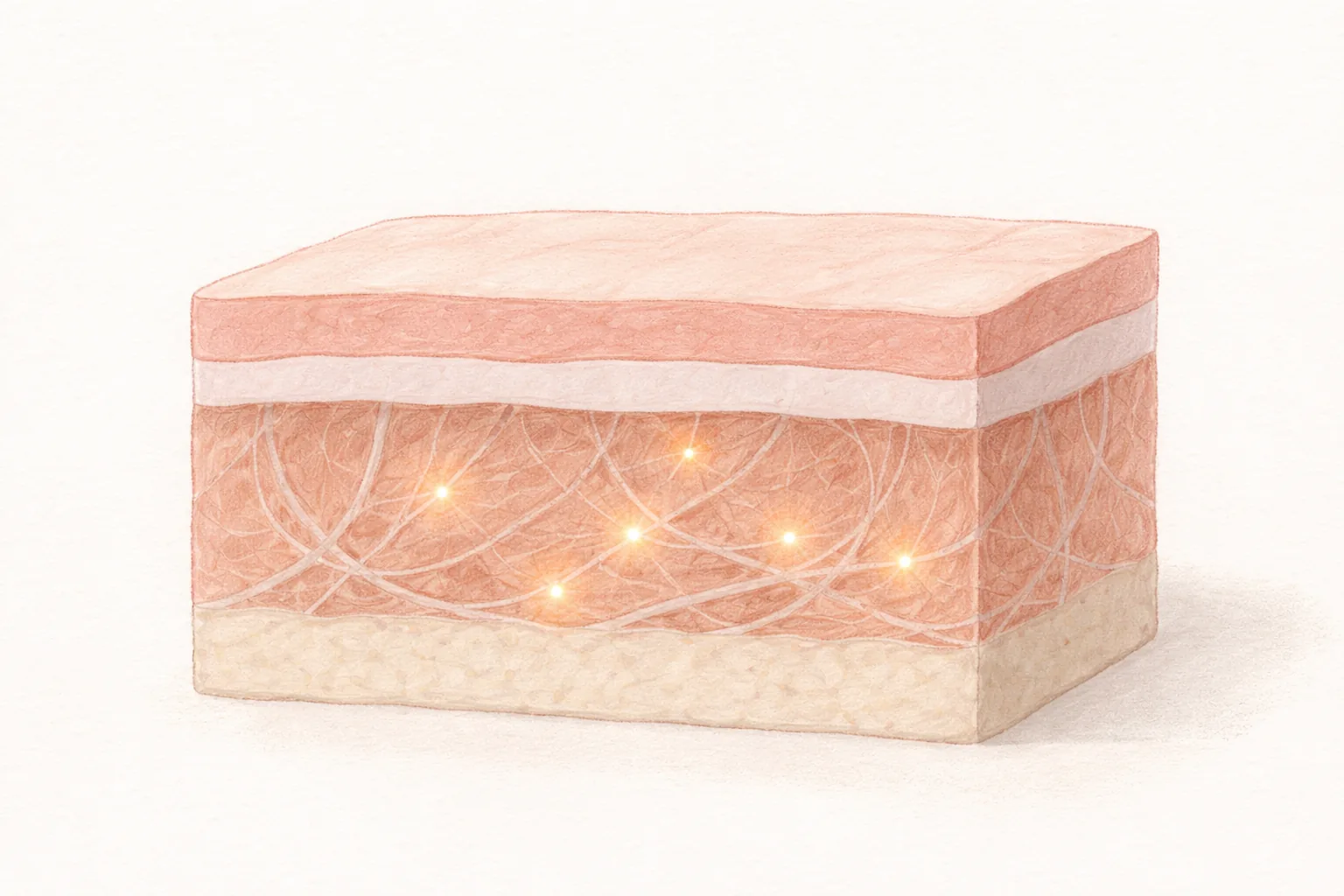
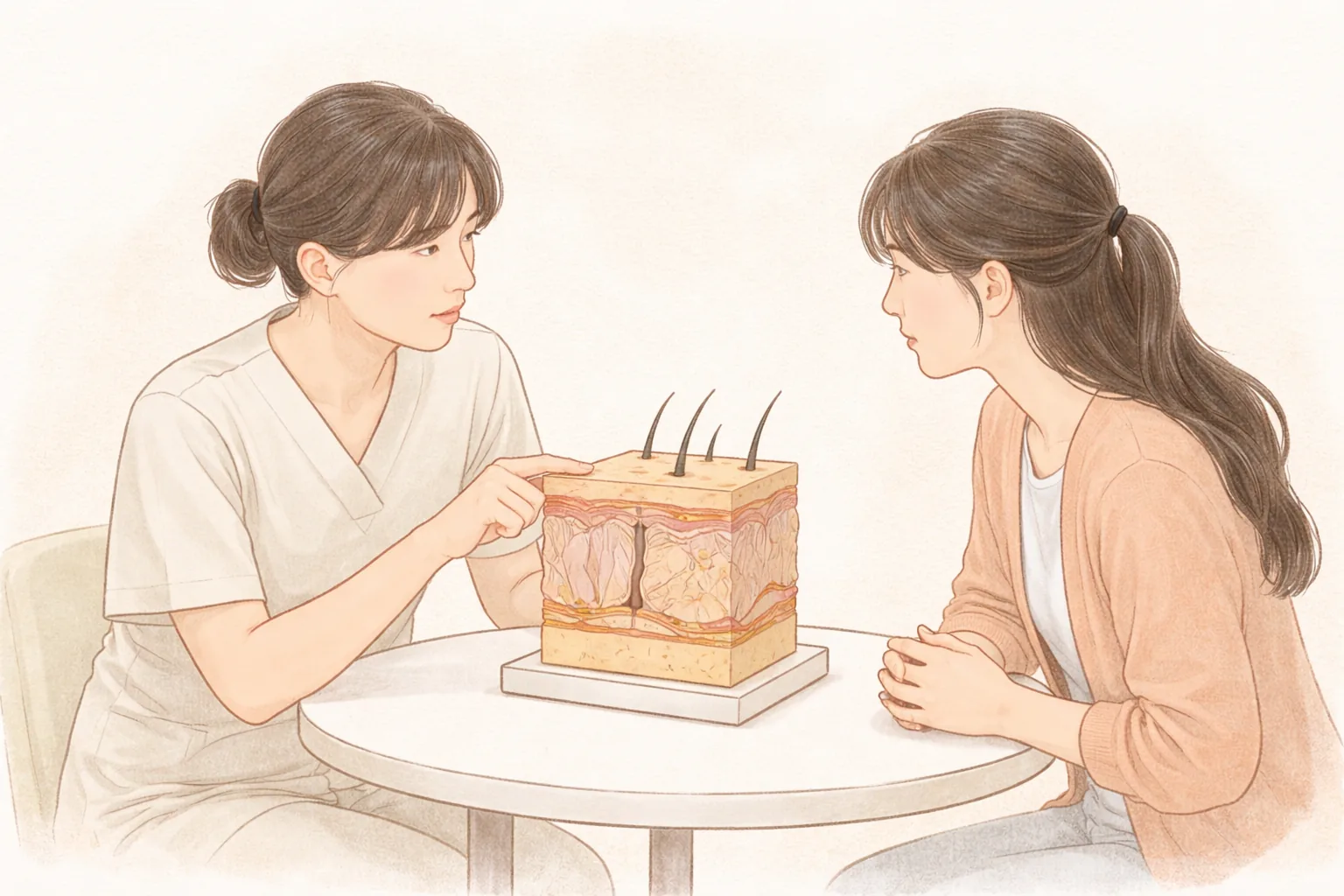
The needles are very fine, passing through the stratum corneum to reach the dermis, and radiofrequency is released briefly at the needle tip. The heated tissue coagulates on the spot, and the skin responds by making new collagen — the protein that keeps skin firm. According to the American Academy of Dermatology, microneedling works by stimulating the body to produce collagen, which is why it is also called collagen induction therapy, and RF microneedling adds heat to this with the aim of enhancing collagen production (AAD microneedling guide).
It works differently from a laser. A laser relies on a target absorbing light of a specific wavelength, a principle called selective photothermolysis — concentrating energy on the target while leaving surrounding tissue less affected (laser column). Potenza sets depth with needles rather than light and passes current at the needle tip. So it is needle length and energy level, not wavelength, that shape the result.
One thing worth flagging here. Even with the same tip and the same device, energy that is too strong puts a burden on the skin. The AAD advises that pressing too hard during microneedling can damage the skin and lead to scarring or changes in color and texture (AAD microneedling guide). That means turning the energy up is not always the better direction, and it also means finding the level that fits your skin is part of the process.
What matters more than age?
Many people worry, "Won't slower recovery with age make this too much for me?" Age is certainly a variable. The criteria that decide suitability, though, are not the age number itself but your capacity to make new collagen and your recovery speed. A column from ATTITUDE Clinic also names skin type, skin thickness and structure, and regeneration speed as the first reasons results differ even after the same treatment (why results differ). Regeneration speed is influenced by age, lifestyle habits and hormonal status. So a summary like "older is always a disadvantage" or "young means it doesn't matter" does not hold up.
There are items checked separately during consultation: how thick your skin is, how sensitive it is right now, whether your concern comes from pores or from scars, and whether acne inflammation is still recurring. Repeated inflammation or a history of squeezing with your hands can make the pore wall irregular and leave scar-type pores, so if inflammation is active it is better to calm it first before starting (pore column). Medications you are taking and whether you are pregnant are also reviewed when setting the timing and settings.
Which concerns bring Potenza to mind first?
Enlarged pores look different depending on the cause: the oily type that opens round from excess sebum, the sagging type that stretches vertically on the cheeks, and the scar type where the pore wall has become irregular like an acne scar (pore column). What Potenza targets is the dermal cause among these — pores that have sagged as collagen and elasticity decline, and scar-type pores. The ATTITUDE Clinic treatment guide also places Potenza under the pore and scar category, describing it as a treatment that delivers radiofrequency directly to the dermis with fine needles to help improve pores and scars (treatment guide).
Indented acne scars follow the same logic. As new collagen builds up in the dermis, the uneven surface gradually softens. That said, the response differs with scar depth and shape, and the surface is not filled in at once — it changes across sessions.
Conversely, if a sagging facial contour or folding wrinkles are your main concern, lifting devices are considered before Potenza. The ATTITUDE Clinic treatment guide likewise lists sagging and elasticity under separate categories such as radiofrequency lifting (Thermage FLX) and ultrasound lifting (Ultherapy). If redness is the main concern, the Vbeam, which targets blood vessels, comes up first (laser column).
Depth, energy and interval separate the results
Start with the tip and depth. The ATTITUDE Clinic treatment guide separates Potenza tips into the N tip and the pumping tip, and the pumping tip is described both as a stand-alone option and in a combination with exosomes (treatment guide). Which tip to use is decided in consultation based on how deep in the dermis your concern originates. Even for the same pores, the oily type looks at a shallower level and the scar type at a deeper one.
Energy is adjusted to skin thickness and sensitivity. Using the same level on thin, sensitive skin as on thick skin leaves redness and heat lasting longer. On the other hand, if your skin recovers well and the scars are old, there is room to raise depth and energy a little further.
Interval is matched to recovery speed. Just as with lasers, repeating while the intensity is excessive or before the skin has recovered burdens the skin barrier and raises the possibility of side effects such as burns or pigmentation (laser column). So it is safer to schedule the next session by seeing that your skin has returned rather than fixing the date in advance.
Plans should differ from person to person. Even with the same analysis record, the sequence, the intensity and what is combined depend on your concerns, the time you have for recovery and your skin sensitivity (why results differ).
Table 1 Depth, energy and interval separate the results
Treatment
What it targets
Concerns it suits
Stated purpose in the guide
Potenza (Jeisys)
Radiofrequency delivered to the dermis
Pores, acne scars
Delivers radiofrequency directly to the dermis with fine needles to help improve pores and scars
Erbium fractional
Skin surface
Shallow scars, rough texture
Micro-peeling to help improve pores and scars
Thermage FLX
Radiofrequency in the skin
Sagging, loss of elasticity
Lifting using radiofrequency current
Ultherapy
Ultrasound
Sagging, contour
Lifting using ultrasound
Pico toning
Pigment
Spots, melasma
1064nm picosecond laser to help with pigment and brightening
Vbeam
Blood vessels
Redness, rosacea
532nm laser to help improve redness and vascular lesions
Swipe sideways to see the whole table.
In short Potenza is a surface-improvement device that puts heat into the dermis to stimulate collagen renewal, while sagging and contour are the domain of other devices. So the order becomes checking "does my concern come from the dermis" before asking "is Potenza right for me." Once the tip, depth, energy and interval are set, the range you can expect narrows along with them.
If this sounds like your situation
If a wedding or a shoot is a few months away
A first-time treatment right before an event can mean redness or sensitized skin overlapping with the day itself. The more room you leave based on the date, the wider your options for adjusting intensity and interval (laser column). If you tell us the date when booking your consultation, the plan can be built around that schedule.
If you want long-term pore and scar care
Rather than pushing hard all at once, proceeding in stages while keeping recovery intervals puts less burden on the skin. Pores are approached differently depending on the cause, so sorting out the type at the first consultation makes it easier to set the tip and depth for later sessions (pore column).
If your skin is sensitive or flushes easily
Sensitive skin reacts strongly even to the same energy level. If you tell us during consultation how often you usually flush, which cosmetics your skin reacts to, and how you responded after previous treatments, energy and treatment area can be set lower. In this case, it is better to add sessions and go slowly.
If your stay in Korea is short
If your travel schedule is fixed, post-treatment redness and dryness can affect what comes next. If you tell us your return date and what follows it, intensity and tip can be discussed around that (laser column).
Before your consultation, please tell us whether you have had a lot of sun exposure recently, which medications you are taking or applying and whether they include exfoliating ingredients, whether you have had severe redness or breakouts after a previous treatment, and when your next important date is — timing and settings are set around your answers.
How ATTITUDE Clinic proceeds
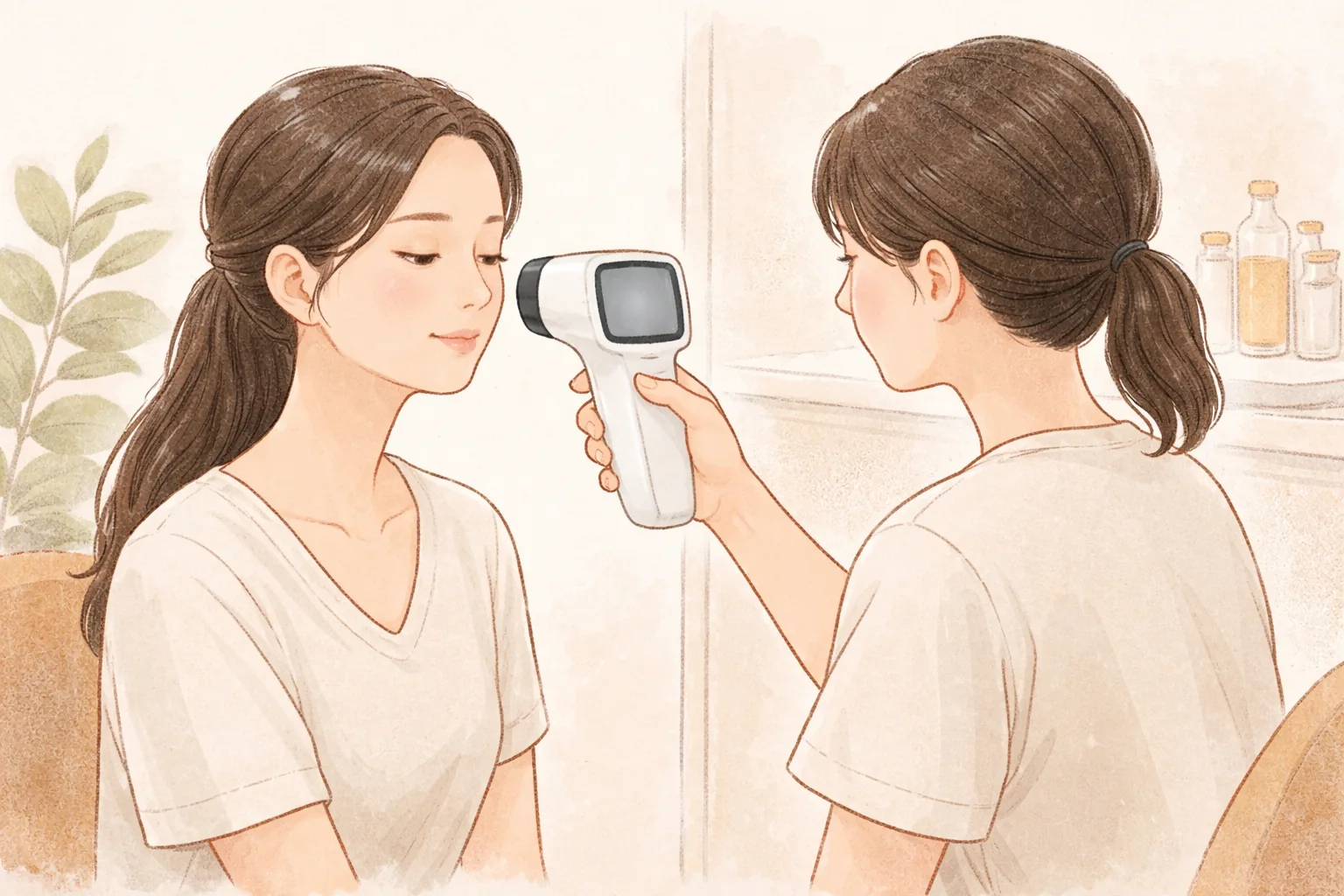
AI skin analysis record — Current skin condition such as pigment, redness, texture and pores is recorded and organized. The analysis tool only records and organizes information to support the consultation and does not make a medical diagnosis (why results differ).
Doctor consultation — Your concerns, lifestyle habits and previous treatment history are added to the record to judge whether the concern comes from the dermis or the surface, and the tip, depth, intensity and sequence are decided together. Treatments you do not need are sorted out at this stage.
Treatment performed by the doctor — The doctor personally carries out the agreed plan, using topical anesthesia or similar to reduce discomfort as needed, and adjusts the energy while watching your skin's response during the treatment.
Recovery and aftercare guidance — Sun protection and moisturizing are explained after the treatment, and the next session is scheduled according to how your skin has recovered.
The device covered for this topic is Potenza (Jeisys), with tips divided into the N tip and the pumping tip, and the pumping tip also available in a combination with exosomes. Erbium fractional is listed for pores and scars, Pico toning for pigment, and Vbeam for redness and blood vessels, each under its own category (treatment guide).
Aftercare and side effects
Soothing — Right after treatment the skin is sensitized. Avoid saunas, hot packs, strong exfoliation and harsh scrubs for the period you are advised (laser column).
Moisturizing — If dryness continues, texture can look rougher, so keep up with moisturizing.
Sun protection — After treatment the skin becomes sensitive to UV, so protection is a part that deserves particular attention (laser column).
Checking progress — If redness and heat last longer than expected or pain worsens, do not endure it — come in and have it checked.
Common reactions are redness, swelling, dot-like marks, dryness and thin crusts, and they usually settle within a few days to 1 week. Temporary pigmentation or breakouts can occur, and rarely burns, infection or scarring can occur (pore column). The times to come in without waiting are when redness or heat lasts beyond a few days, when pain gradually worsens, and when blisters or oozing appear.
Frequently asked questions
When do Potenza microneedling results start to show?
Nothing changes immediately after the treatment; the newly made collagen goes through a process of settling in. The speed of this process differs with skin type and healing capacity, so the same timeline cannot be expected for everyone (why results differ). Raising the intensity or the number of sessions to bring the timing forward only adds burden to the skin, so taking photos under the same lighting and angle each session makes changes easier to compare. You can confirm the specific timing together with the plan set at your consultation.
How many sessions, and at what interval?
There is no fixed number; it is set according to how severe your concern is and how fast your skin recovers. There is one principle: do not repeat before the skin has recovered. Repeating without a recovery period raises the possibility of side effects (laser column), so rather than pinning down dates in advance, the next session is scheduled once your skin has returned. For pores and scars, plans tend to be set toward several sessions spread out rather than 1 or 2.
What is the difference between the N tip and the pumping tip?
In the ATTITUDE Clinic treatment guide, Potenza tips are divided into the N tip and the pumping tip, and the pumping tip is described as stand-alone or in a combination with exosomes (treatment guide). Which one is used is decided in consultation based on how deep in the dermis your concern originates and whether there is anything to manage alongside it. When you consult, asking which tip is being used this session and why, and whether the next session will use the same tip, makes the plan easier to understand.
When can I wash my face and wear makeup after the treatment?
Right after treatment the skin is temporarily sensitized, so sun protection and moisturizing are parts that deserve particular attention (laser column). When to restart washing and makeup depends on the tip used, the intensity and your skin's reaction, so it is safer to go by the timing you are given that day. Avoid harsh cleansers, exfoliants and massage for the period you are advised, and with new cosmetics it is easier to tell what is causing a reaction if you do not change several at once.
How should I choose a clinic?
Look at what the consultation explains rather than at the treatment name. The points to check are whether they explain the cause of your concern first, how they set energy and tip according to your skin thickness and sensitivity, whether they explain side effects and recovery time in advance, and whether they tell you which treatments you do not need (pore column). A clinic that keeps records of the tip used, the intensity and your sessions will also help when planning the next round.
At a glance
Table 2 At a glance
Item
Key point
How Potenza works
Fine needles deliver radiofrequency to the dermis to stimulate collagen renewal
Concerns it suits
Sagging-type and scar-type pores, acne scars, rough skin texture
The role of age
Skin thickness, healing capacity and sensitivity, more than age in numbers, decide suitability
What separates results
Tip and depth, energy level, treatment interval, combination with other treatments
Common reactions after treatment
Redness, swelling, dot-like marks, dryness, thin crusts — usually settle within a few days to 1 week
What to check in consultation
Explanation of the cause, tip and setting plan, side effects and recovery time, timing of the next session
This article offers general health information. It is not a substitute for diagnosis or treatment based on your own condition, so please talk through your situation with a doctor.