Rejuran Skin Booster and Lifting Together: How to Set the Order and Interval
Planning a Rejuran skin booster and lifting together? Here is how to decide whether they can be done on the same day, and what sets the order and interval. Covers the dermis both treatments cross, recovery responses, aftercare and warning signs.
Written by ATTITUDE Clinic Editorial Team
A question comes up often in lifting consultations. Patients want the jawline handled with lifting and dryness and fine lines filled with a Rejuran skin booster, but they are not sure whether it is fine to do it all in one day. Many people look into the two treatments separately and then stop when they hit scheduling and recovery time. The two treatments work in different layers of the skin, so by avoiding the overlapping areas and matching the recovery order, they can fit into a single plan.
The short answer first
Lifting and a Rejuran skin booster are a combination that is planned together. Deep layers receive heat from ultrasound or RF, while dermal hydration and texture are filled by injection, so the roles are divided. Whether to pack them into the same day or leave a gap of a few days to a few weeks is decided by how much the heated area and the injection area overlap, and how quickly the skin settles redness and swelling. There is no formula for order and interval that applies to everyone, so the consultation needs to lay the two treatment areas over each other and build a plan.
Where in the skin do the skin booster and lifting work?
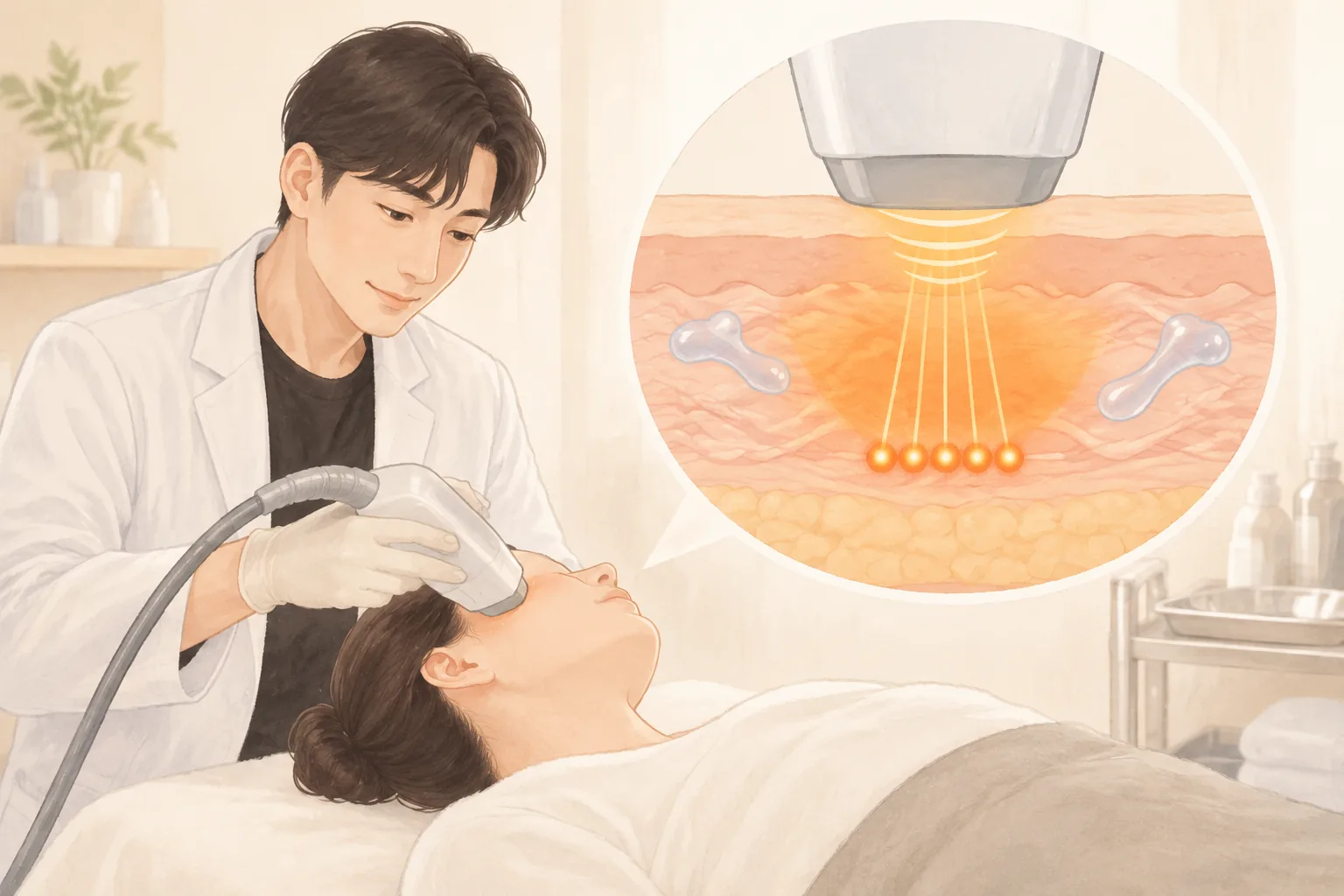
The treatments grouped under the name "lifting" also deliver energy in different ways. Ultherapy and Shurink Universe (HIFU) use high-intensity focused ultrasound (HIFU, focusing ultrasound on a single point to generate heat) to create small thermal points at a set depth from the dermis to the SMAS layer. The SMAS layer is a thin sheet that supports the muscles and skin, and its loosening is considered a major cause of sagging. Thermage FLX, by contrast, uses radiofrequency (RF, electrical energy that turns into heat as it passes through tissue) to warm a broad area from the dermis down to the subcutaneous fat layer. That is why the ATTITUDE Clinic column divides the two approaches into "heat gathered at a point" and "heat spread over a broad area." Non-invasive tightening also includes laser and light-based methods, and a skin tightening review notes that the mechanism differs by method, so the criteria for choosing one differ too.
The skin booster takes a materials-based approach rather than heat. It is an umbrella term for treatments that place biological materials in the dermis to address hydration, texture and fine lines. A review of skin boosters groups these treatments as injecting different materials such as hyaluronic acid, polynucleotides and polylactic acid into the dermis to improve skin quality. Rejuran Healer's PN (polynucleotide) and HA (hyaluronic acid) work by helping cells produce collagen on their own or by holding onto moisture, and are usually given over several sessions at 2–4 week intervals.
The overlap point here is the dermis. HIFU also passes through the dermis, and the skin booster goes into the dermis. If the layers were completely different, same-day treatment would be less of a burden, but both treatments touch the dermis, so stacking them strongly on the same area on the same day concentrates irritation all at once. The fact that the overlapping layer is the dermis is the starting point for setting order and interval.
Why does packing it all into one day become a burden?
A common idea is that "heat goes deep and injections go shallow, so they don't affect each other." The centers of depth differ, but the dermis that both treatments pass through overlaps, and the recovery response happens in the same skin.
Right after lifting, heat stimulation leaves faint redness and mild heat for 1–2 days, and during that time the skin barrier is temporarily weakened. Skin booster injections leave bruising and swelling along the needle tracks, and rarely nodules, infection or allergic reactions. If the two responses overlap on the same day, bruising sits on top of redness, making it hard to read which treatment caused which response, and recovery feels longer. It is also for the same reason that bruising is more noticeable when injection irritation is added to already sensitive skin.
It is safer to avoid layering the two treatments on the same area on the same day.
What sets the interval?
Four things set the interval: the area and intensity of heat delivered, the injection area, the minimum interval the skin booster product requires, and how quickly the skin settles redness and swelling.
With lifting, higher energy levels and more shots mean stronger heat stimulation and more time to recover. Areas close to bone and dense with nerves, like the jawline or around the eyes, feel sensitive even at the same energy. The time it takes for redness and swelling to settle varies from person to person, so the basis for scheduling the next treatment is each person's own course.
On the skin booster side, each product has its own recommended interval. PN and HA types are usually given over several sessions at 2–4 week intervals, with maintenance treatments considered afterward. For lifting, the usual approach is to check the course after 1 session and set the repeat timing at roughly around 1 year. Laying the two schedules over each other naturally determines when the first skin booster goes in after lifting.
Even if you want a short interval, adding the next stimulation before recovery is complete is not advised. Conversely, if recovery is slow, it is better to push the planned date back. Skin condition comes before the date.
Which combination fits my concern?
Table 1 Which combination fits my concern?
Type
What it does in the skin
Concerns it mainly suits
What to check in the plan
HIFU (Ultherapy, Shurink Universe)
Small thermal points at a set depth from dermis to SMAS
Jawline, localized deep sagging
Check redness and swelling recovery, since heat stimulation is strong
RF (Thermage FLX)
Broad heating from dermis to subcutaneous fat
Broad loss of elasticity across cheeks and neck, skin texture
Check whether mild heat persists, since a broad area is warmed
PN·HA skin booster
Places materials in the dermis for hydration and texture
Dryness, fine lines, skin texture
Several sessions at 2–4 week intervals, bruising and swelling
hADM collagen injection
Directly replenishes structural protein in the dermis
Thinned skin, loss of elasticity
Thick feeling at the injection site, no massage
Swipe sideways to see the whole table.
The devices and products in the table are based on the ATTITUDE Clinic treatments and pricing guide. Even within lifting, the depth and area heat reaches differ, and skin boosters also differ in their role in the skin depending on the material.
In summary Deep layers are handled by lifting, and dermal hydration and texture by the skin booster. Rather than layering them on the same day, checking recovery first and then setting the order lets you read each treatment's response separately. How much the heat area and the injection area overlap sets the schedule.
If this sounds like you
If a wedding or shoot is a few weeks away
Redness and swelling right after lifting, and bruising from the skin booster, usually settle within a few days, but if an important date is close, it is better not to schedule both at once. Leave at least 2–3 weeks of buffer before the event, and book early in case recovery runs late.
If dryness and sagging are both concerns
Dermal hydration is the skin booster's job, and deep-layer sagging is lifting's job. Which one is more urgent determines which treatment to start first. In seasons with severe dryness, such as winter, the order is sometimes changed to start with the skin booster and put lifting afterward.
If your skin is sensitive or reddens easily
Skin that holds redness for a long time tends to recover slowly after heat stimulation. In that case, lower the lifting energy level and narrow the area, or leave a generous interval between the two treatments. Telling the clinic in advance whether you often flush and whether you have reacted to cosmetics will be reflected in the plan.
If you are an overseas visitor on a short stay
With a short schedule, avoid combinations whose recovery periods overlap. If injection irritation that tends to leave bruising and heat stimulation go in on the same day, the response is hard to settle before your flight home. It is safer to do just one within a range that allows a follow-up check during your stay, and leave the rest for your next visit.
Tell us before your consultation Recent sun exposure and outdoor activity, medications you are taking (including blood thinners), exfoliating or retinol products you apply to the skin, any past experience of long-lasting bruising or swelling from previous treatments, history of allergic reactions, and events such as weddings, shoots or business trips that require clear dates.
How ATTITUDE Clinic proceeds
Precise diagnosis and skin analysis Skin condition is recorded with a device, and the location of sagging is reviewed together with dermal hydration and texture. The analysis tool only records and organizes information and is not a medical diagnosis; the judgment based on the records is made by the doctor.
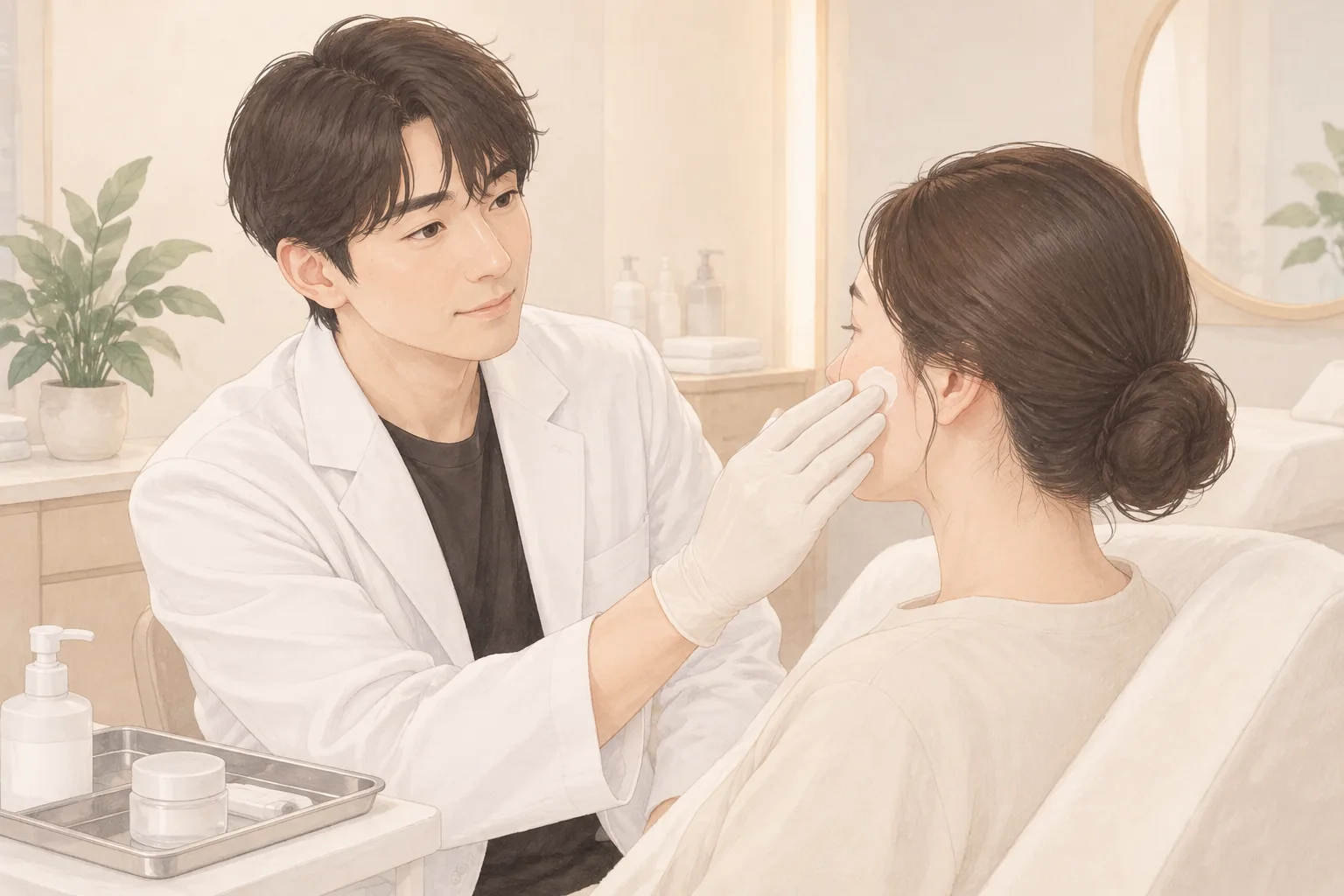
Doctor consultation and plan design Lifestyle habits and the changes you want are added to the analysis records to decide which layer to address first. The areas where the two treatments overlap are identified, and whether to do them on the same day or leave an interval is decided together.
Treatment performed by the doctor The doctor performs the treatment directly according to the plan set in the consultation. Authentic products, full dosing and standard pricing are the baseline, and more sessions or higher intensity than necessary are not recommended.
Recovery and follow-up Post-treatment responses are checked and the timing of the next treatment is adjusted. If redness and swelling last longer than expected, the planned date is postponed.
Four steps your doctor sees to in person
From the diagnostic device to the treatment bed, the doctor you first consult takes care of everything.
01
Precision diagnosis
In a private diagnosis room the whole face is photographed, recording even skin conditions that are hard to see with the eye.
02
Skin analysis
The doctor goes through your pore, pigmentation, wrinkle and firmness results with you on screen and explains what comes first.
03
One-to-one design
With your skin, the balance of your face, the change you want and your schedule in view, you decide the treatment and its extent together.
04
Treatment by your doctor
The doctor who consulted you performs the treatment from start to finish in a private treatment room. No one takes over halfway.
“I take injection pain seriously.”
Co-Director Dr. Lee Dong Hun
Many people hesitate over injection treatments because they hurt. So we went back over everything, from the anesthetic to the products used.
Careful numbing, unhurried timingWe allow plenty of time for a special numbing cream to take full effect, and add anesthetic injections for the treatments and areas that need them.
Fine needles, finished quicklyInjection treatments use fine needles, and the doctor finishes them personally in a short time, adjusting along the way by watching how you are doing.
Even the product formulation countsThe same treatment can feel more or less demanding depending on the product, so we take that into account too.
The anesthetic method and whether it is used are decided after an examination, according to the treatment, the area and your condition. How much it hurts varies from person to person.
Lifting is performed with devices such as Ultherapy, Shurink Universe, Thermage FLX, XERF, Onda and Titanium lifting, and skin boosters with products such as Rejuran Healer, Juvelook, Sculptra, Re2O and SKINVIVE (treatments and pricing guide). Which device and product suit you is decided after seeing your skin, and standard prices are listed in the pricing guide excluding VAT.
Aftercare and side effects
Soothing On the day of treatment, focus on cooling the areas where heat remains. Cold compresses help with swelling, but check the method with the medical staff.
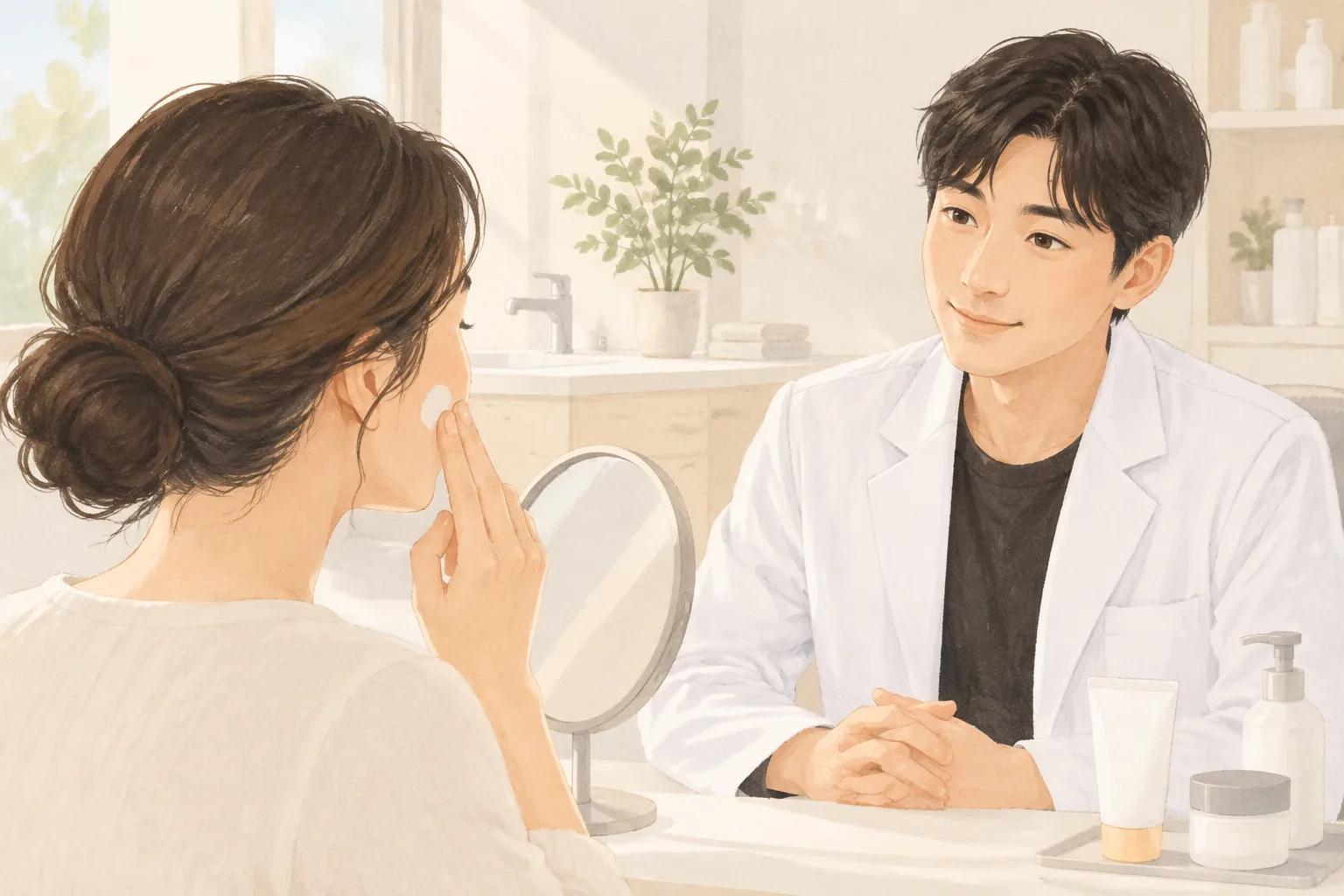
Moisturizing During recovery, support the skin barrier with moisturizing and repairing creams. Do not press hard on or massage injection sites where the skin booster was given.
Sun protection For a few days right after treatment the skin barrier is weak, so apply sunscreen more carefully than usual. Exposure during this period can easily lead to pigmentation.
Follow-up Check how quickly bruising and swelling are fading and adjust the next treatment date. Avoid saunas, intense exercise and alcohol on the day itself.
Common responses are redness, swelling, tenderness when pressed, small bruises and temporary numbness. They usually settle within a few days but may last longer. Injection sites can develop bruising and swelling, and rarely nodules, infection or allergic reactions. Lifting has rarely been reported to cause burns or blisters, small scars, temporary facial muscle weakness, or unwanted loss of fat-layer volume.
If you develop blisters, pain that keeps getting worse, or whitening at the injection site, contact the clinic right away rather than waiting. Medical attention is also needed if swelling and heat persist beyond a few days.
FAQ
Can I get a Rejuran skin booster and lifting on the same day?
If the areas do not overlap, they are sometimes done on the same day. However, both treatments pass through the dermis, and if redness and bruising overlap, it becomes hard to read which treatment caused the response. If the heated area is broad or the injection area overlaps exactly, the plan leans toward leaving an interval. Whether to do them on the same day or split them is decided in the consultation by laying the two treatment areas over each other.
How many sessions of a Rejuran skin booster, and at what interval?
PN and HA types are usually given over several sessions at 2–4 week intervals, with maintenance treatments considered afterward. The number of sessions depends on skin condition, area and injection volume. Since it is not a single-session treatment, it is better to confirm the total number and interval first and then set the schedule. In the consultation, confirm the total number of sessions based on your skin condition and injection area first, then place those sessions on the calendar at 2–4 week intervals so the schedule does not shift.
What if swelling lasts a long time after lifting?
Swelling and mild heat usually settle within 1–2 days, while tenderness when pressed or small bruises may last longer. If the planned skin booster date falls within that period, it is better to postpone it. If swelling worsens or heat continues beyond a few days, get medical attention before scheduling the planned treatment. Adjust the next injection date based on how quickly the swelling settles, and if the course is slower than expected, do not move the planned treatment earlier; postpone it as is.
I am worried about skin booster allergy or nodules.
Bruising and swelling can occur at the injection site, and rarely nodules, infection or allergic reactions appear. If you have an autoimmune disease, a history of reacting to tissue-derived products, or other allergies, you must tell the clinic before treatment. Also check which ingredients the product contains and whether you have had the same product before.
What should I look at when choosing a clinic?
Look at what the consultation explains rather than the device names. The criteria are which layer the cause of sagging is seen in, why that combination is recommended, how the schedule is set to avoid same-day overlap, and how far side effects and recovery time are discussed. It is also worth checking whether the doctor makes judgments based on records, rather than a place that presents analysis tool results as if they were a diagnosis. Also check whether authentic products and full dosing are used, and whether costs are explained on a standard pricing basis.
At a glance
Table 2 At a glance
Item
Key point
Can they be done together
It is a possible combination; same-day depends on whether the areas overlap
Division of roles
Deep layers and sagging by lifting, dermal hydration and texture by the skin booster
Overlapping layer
Both treatments pass through the dermis, so avoid stimulating the same area at once
Skin booster interval
Several sessions at 2–4 week intervals for PN and HA types
Lifting repeat
After 1 session, decide at roughly around 1 year based on the course
During recovery
Avoid saunas, alcohol and intense exercise on the day, and use sun protection
This article offers general health information. It is not a substitute for diagnosis or treatment based on your own condition, so please talk through your situation with a doctor.