Rosacea Treatment: Telling Diffuse Redness Apart from Visible Broken Capillaries
How to tell flushing that fades, persistent redness, visible broken capillaries and acne-like bumps apart, and how the approach differs by type.
Written by ATTITUDE Clinic Editorial Team
The sentence people bring up most often in consultations about a face that reddens easily is that they don't know which type of redness they have. Some flush hot after exercise or a drink and settle quickly; others wake up with pink still sitting on both cheeks. The name is the same, but when the cause differs, the approach differs too — so this article lays out how redness is divided and what changes for each type.
The short answer first
Rosacea is not one disease but a symptom picture made up of overlapping causes. Blood vessels that open briefly in response to a trigger and then return, fine vessels that stay open and keep the skin red, a barrier that has weakened and left skin sensitive, and inflammation alongside it (rosacea) each sit in a different place. So rather than asking which laser is best for redness, the order is to first sort out whether your redness comes from blood vessels or from inflammation and the barrier. Even on the same face, redness spread evenly across the centre of the cheeks and thick broken capillaries beside the nose are handled differently.
Why can't redness be explained by a single cause?
In dermatology, redness is an umbrella term covering any state in which the face takes on a red tone. According to Cleveland Clinic, rosacea is a common inflammatory skin condition that causes redness on the face and eyes, and its cause is not yet fully understood. Research has pointed to blood vessel and immune or nervous system involvement, overgrowth of the microscopic mites that live on skin (Demodex), certain bacterial infections, and dysfunction of the proteins that protect the skin — that is the extent of what is currently understood.
The important point is that these causes don't act one at a time in any single person. When blood vessel reactivity becomes sensitive on top of a weakened skin barrier, the same trigger produces far more redness. So rather than judging from the colour and extent of the redness alone, we also look at when it reddens, what makes it redden, and whether there is a period in which it settles completely. American Academy of Dermatology guidance notes that identifying and avoiding common triggers — heat, alcohol, spicy food — is part of the treatment plan.
How does redness that flares and settles differ from redness that stays?
According to Cleveland Clinic, flushing that heats the face frequently is often the earliest sign of rosacea, and the redness comes and goes. Persistent redness, by contrast, is classed separately: it does not disappear when you take off your makeup or when you wake up, and sits there like blush or a tan line. The two can coexist on the same face, but they are handled differently.
For the flushing kind, simply identifying and avoiding triggers reduces how often it flares. Persistent redness is a state in which the vessels under the skin stay open, so management of the cause is combined with treatment to narrow those vessels. The American Academy of Dermatology explains that topical medicines such as brimonidine gel and oxymetazoline cream narrow the vessels under the skin and can fade persistent redness for up to 12 hours, with the greatest fading at 3–6 hours after application. The colour returns, but applying them consistently every day may help reduce overall redness the longer they are used.
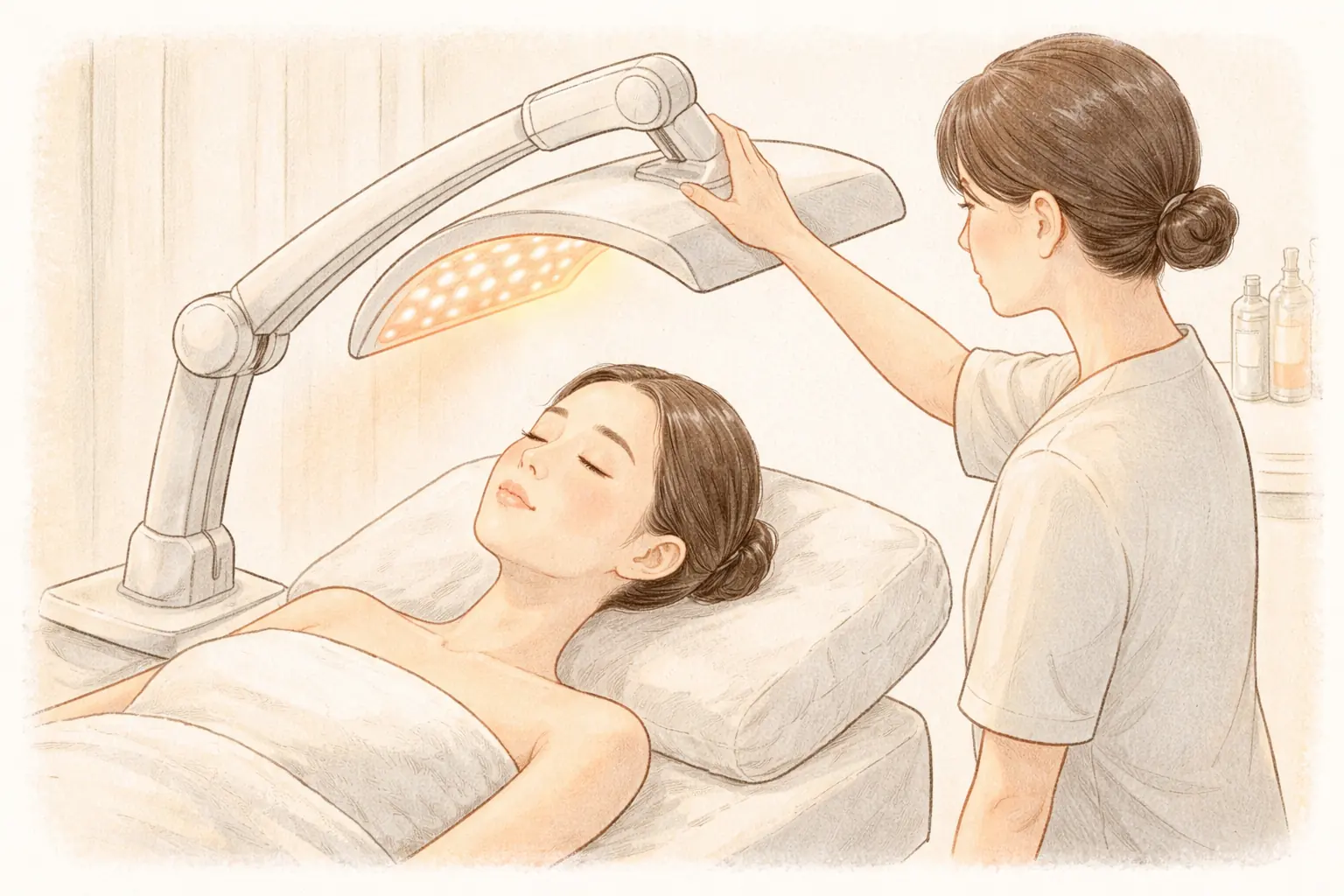
Treatments that use intense light are also an option for persistent redness. The same guidance explains that intense pulsed light (IPL, a light treatment that emits multiple wavelengths at once) may help with flushing and skin texture, and is gentler on the skin than laser but requires more sessions as a result. This is why the way medicines, light treatment and laser are combined shifts with the character of the redness.
Why should visible broken capillaries and overall facial redness be assessed separately?
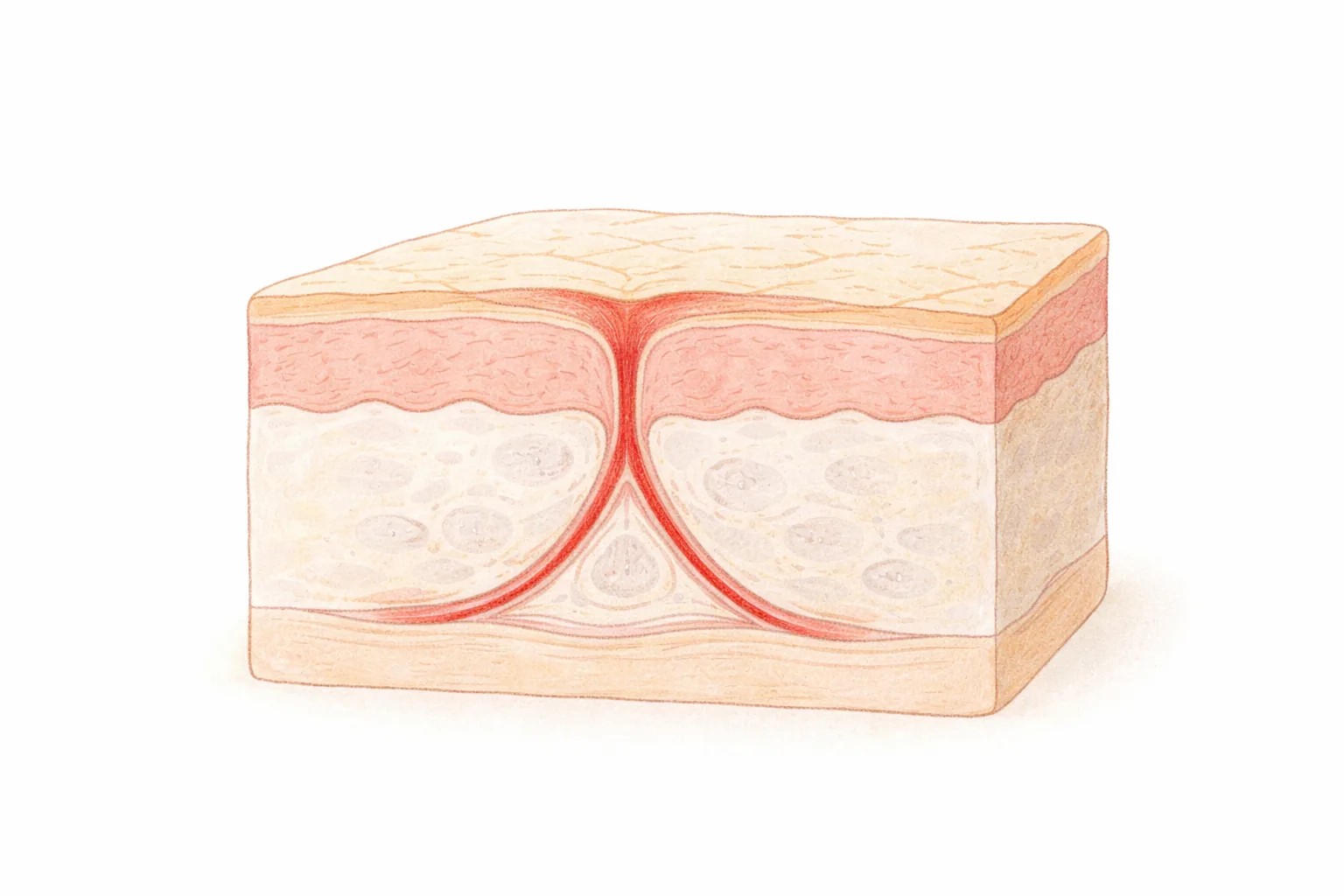
This is where most of the confusion around rosacea sits. Cleveland Clinic lists fine red lines showing through the skin as one of the major signs of rosacea, and classifies persistent redness with dilated, visible vessels separately as erythematotelangiectatic rosacea. In other words, redness spread evenly across the face and thick vessels that stand out clearly in one area are both vascular problems, but they look different.
Treatment response differs too. The American Academy of Dermatology describes the goal in persistent redness as returning the skin tone to what it was before the rosacea, and notes that an appropriate laser can reduce the colour change — red or pink in people with lighter skin tones, purple or brown in people with darker tones. Even with the same laser, the colour you are targeting changes the approach.
An ATTITUDE Clinic column explains that vascular concerns use a wavelength absorbed by oxygen-carrying haemoglobin, and describes the use of the 532nm vascular laser Vbeam and Genesis toning. Because the wavelength aimed at vessels differs from the one aimed at pigment, a picosecond laser for pigment cannot be expected to improve vascular concerns. This is where device choice splits depending on whether your main concern is redness spread across the whole face or broken capillaries that stand out in one spot.
Why do acne-like red bumps need a different approach?
When small papules and pustules rise on top of redness, it is easy to read as acne. Cleveland Clinic explains that in papulopustular rosacea, one type of rosacea, acne-like lesions filled with pus or fluid appear and the skin may swell, but unlike acne, rosacea does not produce blackheads. This is worth checking if acne medication isn't clearing things up and the centre of the face is unusually red.
In this type, medicines rather than lasers are often central. According to American Academy of Dermatology guidance, topical medicine starts to show slight change at 3–4 weeks, and a noticeable difference usually takes 2–3 months. Options include azelaic acid and slow-release benzoyl peroxide cream, and oral antibiotics are sometimes added when the effect is insufficient. Treating only the redness and repeating vascular laser can leave the inflammation itself untouched.
Why do settings, not device names, determine the result?
A laser is light energy gathered into a single wavelength, absorbed only by targets that respond to that wavelength and converted into heat or impact. This principle is called selective photothermolysis — concentrating energy on the target while disturbing the surroundings less. So a laser aimed at pigment and one aimed at vessels differ from the wavelength up, and with the same device, the result and the burden change with how energy, treatment area and intervals are set.
Another ATTITUDE Clinic column explains that wavelength, energy, treatment area and intervals are adjusted to the skin's condition so that the effect acts only on the target, and that the aim is a range of redness and warmth that settles within a few days. Vascular lasers can leave redness and swelling for several days, and bruising can take 1–2 weeks to fade, so anyone with plans coming up needs to time treatment accordingly. Excessively frequent toning has been reported in connection with mottled hypopigmented patches, so toning is usually spaced at least 1 week apart.
Discomfort also varies with settings and area. If you are sensitive to pain or have found previous treatments hard, topical anaesthetic can reduce the discomfort, and if the sensation becomes hard to bear during treatment you can tell us right away so the intensity can be adjusted.
Table 1 Why do settings, not device names, determine the result?
Type
What it looks like
Approach usually considered
What to check in consultation
Flushing
Flares hot in response to a trigger, then settles
Identifying and avoiding triggers, light or laser treatment if needed
When and why it reddens
Persistent redness
Pink to bright red that remains after makeup is removed
Topical medicines that narrow vessels, IPL or laser
Skin tone and extent of redness
Visible broken capillaries
Fine red lines on the nose and cheeks
Vascular laser types (Vbeam and similar)
How bruising and redness affect your schedule
Acne-like papules and pustules
Red papules and pustules, no blackheads
Topical medicines first, oral antibiotics if needed
Whether it responded to acne medication
Thickening of the nose
Skin thickens and becomes bumpy
An approach matched to the shape rather than laser alone
Whether the change in shape is progressing
Swipe sideways to see the whole table.
In short
Rosacea is the name of a symptom picture, and beneath it sit brief vascular reactivity, persistent redness, visible broken capillaries, inflammatory lesions and skin thickening. Depending on which is the main concern, medicines may take the lead or vascular laser may take the lead. Before the device, the order is to sort out the character of your redness.
If this sounds like your situation
If a wedding or a shoot is coming up
A treatment you are having for the first time right before the ceremony can overlap with redness or sensitised skin on the day. Vascular lasers can leave redness and swelling for several days, and bruising can take 1–2 weeks, so it is easier to control if you count back from the date and start with some room. Tell us the date of the ceremony first when you come in.
If you want to manage it steadily
Rather than going strong all at once, spacing treatments so the skin can recover puts less strain on it. Even for frequently repeated treatments such as toning, keep at least 1 week between sessions, and it helps to set a goal and fit only the treatments you need into the right timing.
If your skin is sensitive and stings with cosmetics
When the barrier is weakened, redness can linger longer even with the same settings. American Academy of Dermatology skin care guidance notes that ingredients such as fragrance, alcohol, menthol, glycolic and lactic acids, and urea can irritate sensitive skin. If cosmetics sting, tell us before treatment.
If you are a visitor on a short stay
When your stay is fixed, redness or dryness right after treatment can affect your next plans. If you tell us your return date and the dates of shoots or events in advance, the intensity and type of treatment can be adjusted to fit.
Tell us before your consultation
Knowing your recent sun exposure, the medicines you take or apply, the active ingredients in the cosmetics you use, any treatment that left your skin sensitive before, upcoming plans and your pain sensitivity helps us decide the type, intensity and timing of treatment.
How ATTITUDE Clinic handles this
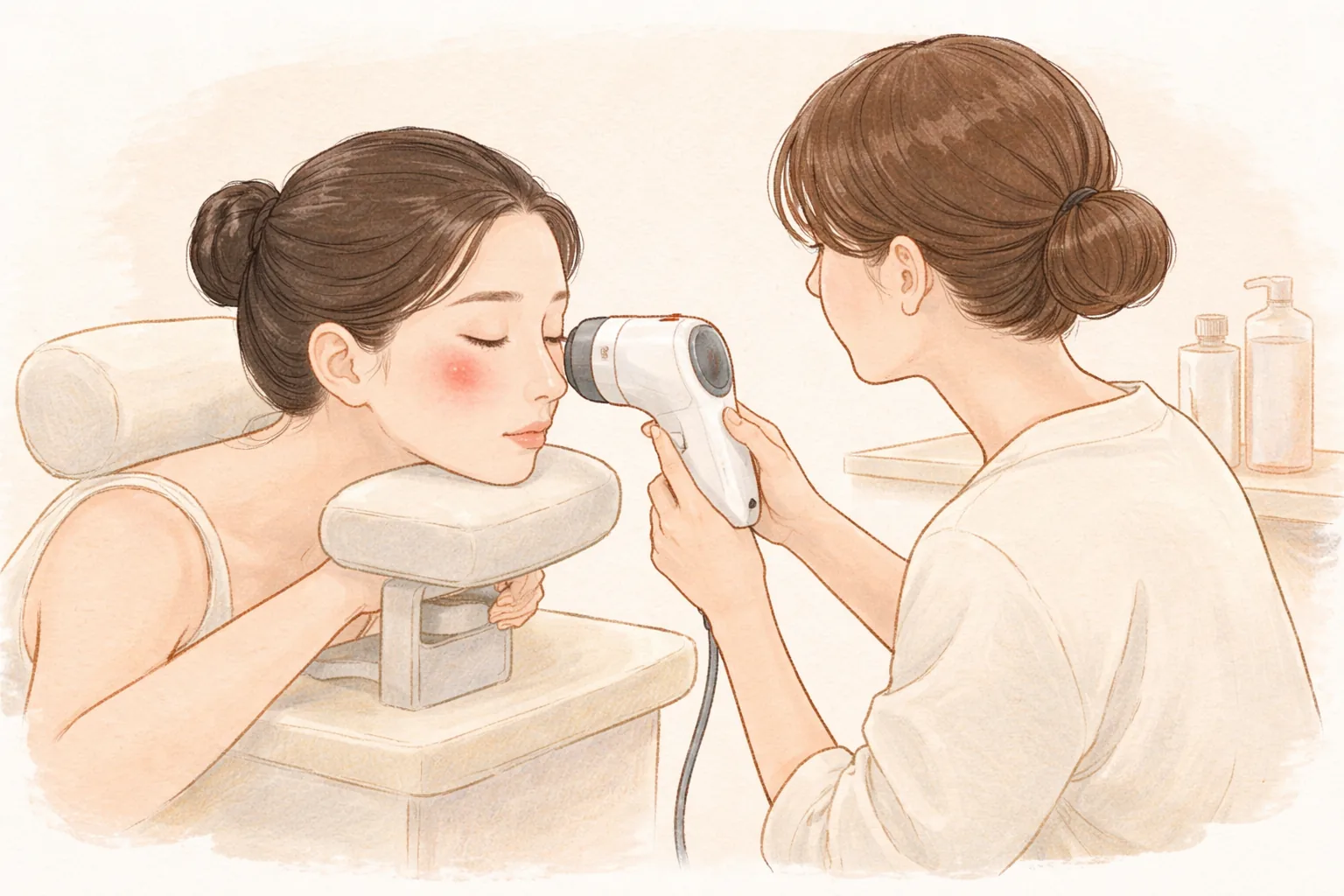
AI skin analysis record — Pigment, redness, texture, pores and other current skin conditions are recorded, and the doctor uses that record to judge the cause of the concern. The analysis tool records and organises information; it is not a medical diagnosis.
Direction set in a doctor consultation — Your schedule, pain sensitivity and skin history are added to the record to decide the type, intensity and timing of treatment together. This is also the stage where we sort out whether the redness comes from vessels or from inflammation and the barrier.
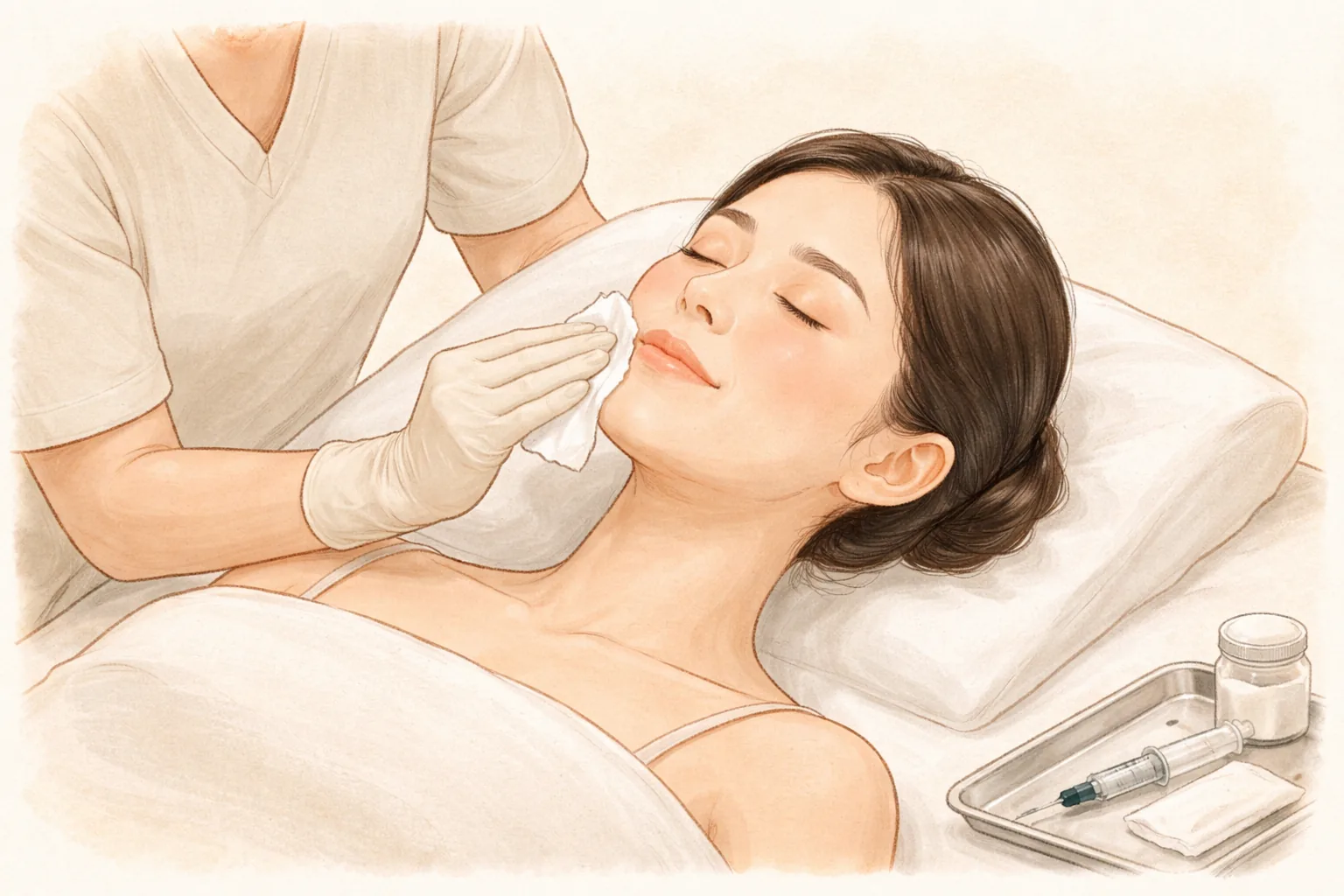
Treatment performed by the doctor — Topical anaesthetic is used where needed to reduce discomfort, and the doctor performs the treatment. We do not recommend treatment beyond what is needed.
Devices listed in ATTITUDE Clinic's treatment guide are divided by target. PicoPlus for pigment, the 532nm Vbeam for vessels, and an erbium YAG laser for the skin surface and texture, while 1064nm Genesis toning is used alongside for anti-ageing purposes. We work on the principles of genuine products, correct dosing and fair pricing, and carry out only as much as is needed.
Aftercare and side effects
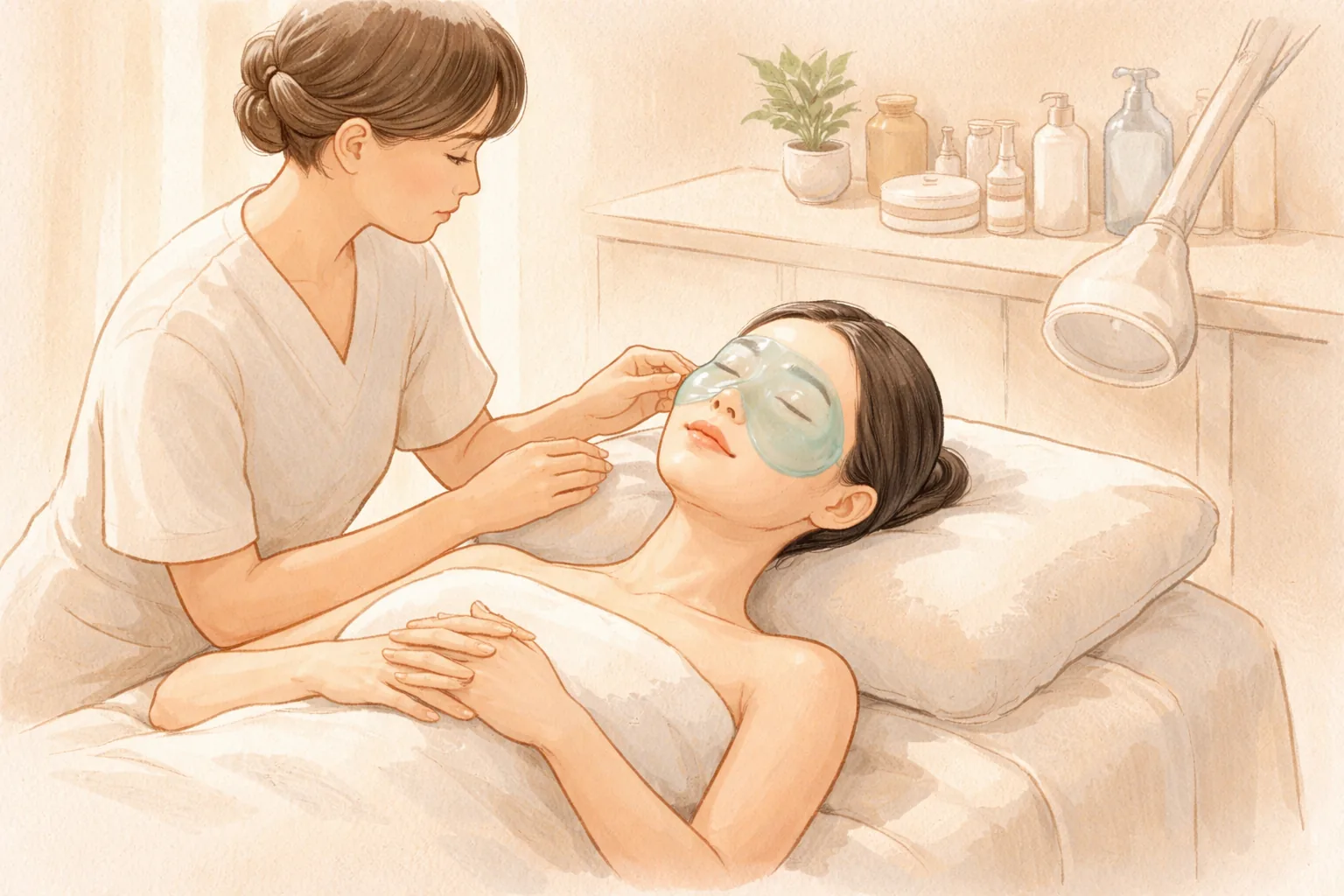
Calming — Skin is temporarily sensitive right after treatment. Avoid saunas, jjimjilbangs and vigorous exercise — anything that raises skin temperature — for the period you are advised.
Moisturising — Moisturise every day after washing your face. Even if your skin feels oily, moisturising helps reduce irritation.
Sun protection — For at least 2 weeks after treatment, apply SPF 50+ sunscreen and reapply every two hours outdoors. The American Academy of Dermatology recommends sunscreens containing zinc oxide or titanium dioxide.
Checking progress — If redness or warmth lasts more than 3 days or suddenly worsens, don't wait — come in and have it checked.
Common reactions are redness, swelling and stinging, and a thin crust may form depending on the treatment. Vascular lasers can cause bruising, and peeling-type treatments that act on the skin surface can produce crusting. Temporary pigmentation can occur, and rarely blisters, hypopigmented patches, infection or scarring may appear, or pigment may return over time.
A crust is the skin's own process of covering a wound, so it is safer not to pick at it and to let it fall off on its own. When washing your face, use lukewarm water and pat gently rather than rubbing.
Frequently asked questions
How do you tell facial redness apart from rosacea?
Redness of the face itself can arise from many causes, so redness alone does not confirm rosacea. Cleveland Clinic explains that rosacea is an inflammatory condition in which at least one of persistent redness, visible broken capillaries, acne-like lesions, skin thickening or eye symptoms is present. The American Academy of Dermatology advises examining the skin and eyes and asking about how symptoms appear and fade. Tests are sometimes needed to rule out other conditions that cause colour change on the face, such as lupus. If your redness does not respond to acne medication, or your eyes sting and look bloodshot, mention that in your consultation.
Can laser improve diffuse redness across the whole face?
Redness spread widely and broken capillaries that stand out in one area are both vascular problems, but they respond differently. The American Academy of Dermatology explains that an appropriate laser can reduce the red or purple colour change seen with different skin tones, and notes that intense pulsed light is gentler than laser but needs more sessions. Treating a wide area at high intensity all at once puts more strain on the skin than dividing it across sessions. The plan changes with the extent, skin tone and whether inflammation is present, so this is checked in consultation.
What about washing my face and using cosmetics at home?
Reducing irritation is the basic principle. The American Academy of Dermatology advises washing gently with a mild cleanser up to twice a day, and not rubbing or using exfoliating tools. Moisturise daily, and use a broad-spectrum sunscreen of SPF 30 or higher. Ingredients such as fragrance, alcohol, menthol, glycolic and lactic acids and urea can irritate sensitive skin, so a new product can be patch-tested on the inner arm for 7–10 days first.
How many sessions of vascular laser, and at what intervals?
It depends on the cause and extent of the redness. The ATTITUDE Clinic column gives 3–5 sessions at 4–6 week intervals as a common example for redness and vascular concerns, but explains that this is only a common example and varies with pigment depth, skin type and lifestyle. Since vessels cannot be completely prevented from dilating again, reinforcement timing is set while watching progress. The number of sessions and intervals are decided after the skin is checked at the first consultation.
What should I look at when choosing where to have rosacea treatment?
A few things come before the device list. Whether they check before treatment if your redness comes from vessels or from inflammation and the barrier. Whether they recommend only the treatments you need and avoid fixing the number of sessions or intensity in advance. Whether they explain pain, recovery time and aftercare fully in the consultation. And whether they are a place you can return to if something feels off after treatment. Cost varies with the extent of treatment and the number of sessions, so you will be guided on it in consultation.
At a glance
Table 2 At a glance
Item
Key point
What rosacea is
Not one disease but a symptom picture of overlapping causes
Commonly confused
Flushing that heats up briefly vs redness that does not fade
Broken capillaries vs overall redness
Both vascular, but extent and response differ
Acne-like lesions
If there are no blackheads, check for rosacea; medicines lead
What determines the result
Wavelength, energy, area and intervals more than the device
After treatment
Sun protection and moisturising, managing crusts and bruising
This article offers general health information. It is not a substitute for diagnosis or treatment based on your own condition, so please talk through your situation with a doctor.